
Cabinet declares 16 December a holiday for Queen Sirikit's royal cremation at Sanam Luang
Government offices close on 16 December 2026 as five days of ceremonies for Queen Sirikit, the Queen Mother, are held in the Grand Palace area.
Read more
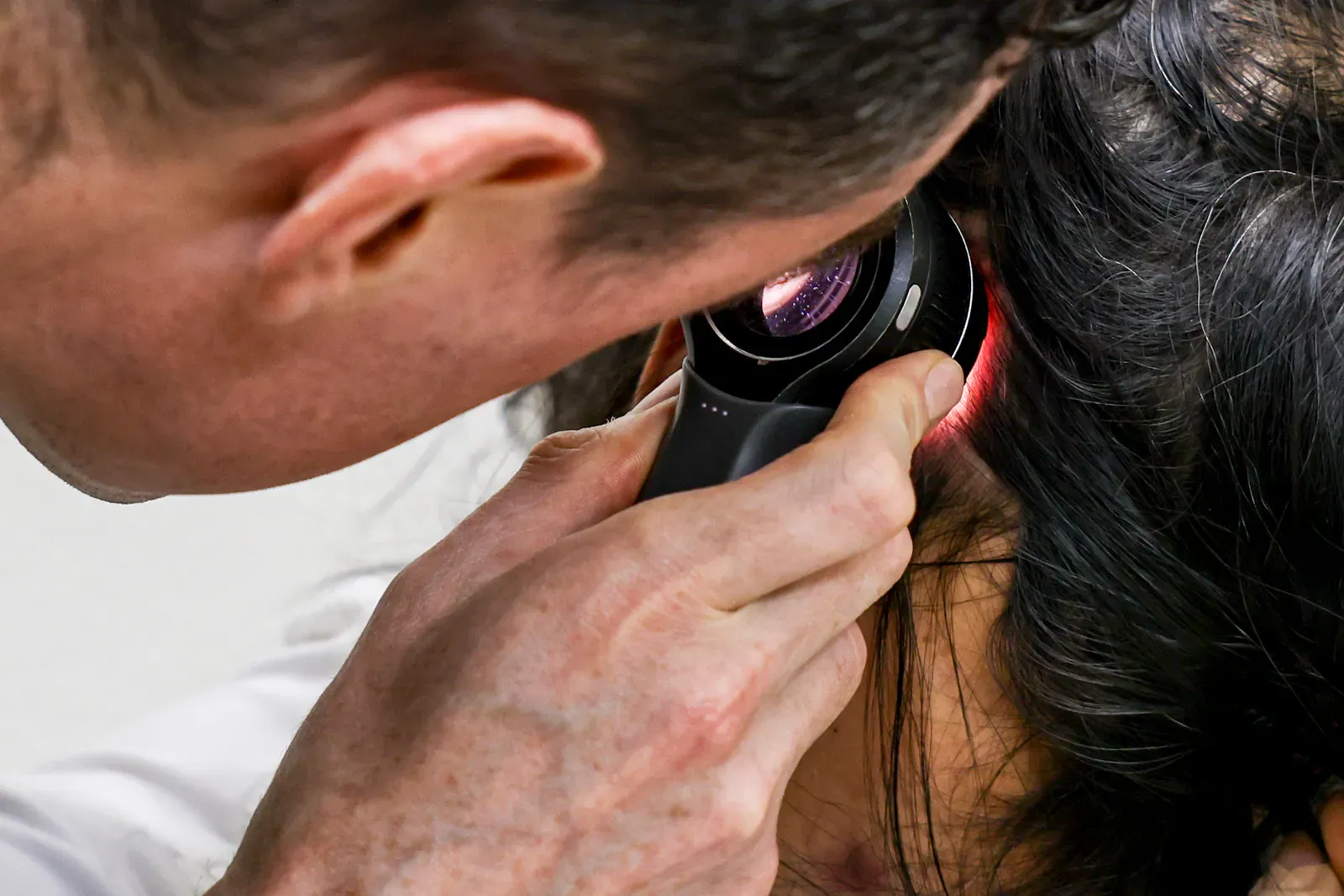
A Thai hair transplant is a day procedure that moves hair from the back of the head to thinning areas. Broker listings (Bookimed, October 2026) put a typical Bangkok procedure at about 85,100 to 118,400 THB (~2,500-3,480 USD). The harder question is which method and which clinic: FUE, FUT and DHI differ mainly in how grafts are taken and placed, and the ISHRS (International Society of Hair Restoration Surgery) says results depend on the surgeon’s credentials and experience. This guide covers the methods, dated broker prices, how to choose and vet a clinic, and the stay and flight home.
The ISHRS describes the ideal candidate as someone whose hair loss has stabilised, often with medication such as finasteride and minoxidil, who has enough donor hair, is medically safe for surgery and has realistic goals. It also notes that younger patients, for example in their 20s, carry more risk because further hair loss may follow. The NHS says a transplant suits permanent baldness that runs in families and is not usually suitable for other hair loss, such as alopecia areata, which causes bald patches.
The ISHRS also says a good surgeon is willing to say no when a transplant would be a bad idea, and may propose medication plus surgery.
All three move your own hair follicles from a donor area, usually the back of the scalp, to the recipient area. The difference is in the harvest and the placement.
| FUE | FUT | DHI | |
|---|---|---|---|
| Harvest | Individual follicular units removed with micro punches of 0.7 to 1.2 mm (ISHRS) | A strip of scalp removed, closed with stitches or staples, then split into grafts by technicians (ISHRS) | Same punch harvest as FUE (Acibadem International, a clinic group offering both) |
| Placement | Recipient sites opened first, grafts placed with forceps (Acibadem) | Grafts placed into recipient sites | An implanter pen (“Choi pen”) makes the site and places the graft in one motion (Acibadem) |
| Scarring | Many tiny scars, less noticeable (NHS); ISHRS states FUE is not scarless | A linear scar, usually hidden unless hair is very short (NHS, ISHRS) | Same donor-area scarring as FUE, since extraction is the same |
| Donor area | Usually shaved | Strip taken from the back of the head | Usually shaved; recipient shaving is often avoidable (Acibadem) |
| Broker price from, Bangkok, Oct 2026 | 2,400 USD | 3,800 USD | 3,000 USD |
Prices in the last row are broker “from” figures (Bookimed, Bangkok, October 2026).
DHI is a variation of FUE. Acibadem International, whose own blog is promotional but critiques several marketing claims, states that no large, well-designed randomised trials show DHI produces better growth, graft survival or density than skilled FUE, and that existing comparisons are small and often clinic-affiliated. The same blog says DHI sessions are often capped lower, roughly 1,500 to 3,000 grafts against 2,000 to 4,000 or more for FUE, and that DHI is commonly priced 20 to 50 percent higher per graft. It also describes “gold standard” and “scarless” labels as sales language.
If a Bangkok clinic sells DHI as a premium option, ask what it changes for your case (for example, whether you want to avoid shaving the recipient area) and compare the per-graft price with the clinic’s FUE price.
For FUE the ISHRS notes that tiny scabs form in the donor and recipient areas and are usually gently rubbed away one to two weeks later, though surgeon policies differ. For FUT the NHS says non-dissolvable stitches are usually removed after 10 to 14 days. Donor hair, once removed, is gone for good (ISHRS), which is why the number of grafts taken matters over a lifetime of hair loss.
These are broker prices, not clinic price lists. Bookimed is a medical-tourism broker that earns referral fees; its pages were updated in October 2026 and some figures on them conflict. Use them as a range to compare against a written quote.
| What | Broker range (Oct 2026) |
|---|---|
| Typical Bangkok hair transplant | 85,100-118,400 THB (~2,500-3,480 USD) |
| FUE, Thailand | typically ~2,400-3,000 USD |
| DHI, Bangkok | from ~3,000 USD |
| FUT, Bangkok | from ~3,800 USD |
| Unshaven (long-hair) technique, Bangkok | from ~3,900 USD |
Examples of broker-listed packages, priced in USD by the broker (October 2026):
Always ask for a written, itemised quote that states the graft count, who does the harvest and the placement, what follow-up is included, and whether hotel nights are extra. For how hair work compares with other procedures, see the cost guide by procedure and the plastic surgery prices and packages guide.
Bookimed’s Bangkok pages name hospitals and clinics including Bumrungrad, Asia Cosmetic Hospital, Wansiri Hospital, Intrarat Hospital, Dr. Chen Surgery Hospital International Center, ID Clinic Bangkok, Somchai Clinic, DGB Clinic and Vega Clinic. A broker listing is not an endorsement. This page does not rank clinics; the vetting steps below are how to choose one whose named surgeon, written quote and follow-up fit your case.
One hospital-side example: Bangpakok 9 International Hospital lists Dr. Aritaj Aiumtrakul in its Plastic Surgery Center for hair loss treatment and hair transplantation, covering FUE, FUT and a transplant with an implanter, with training listed at the Thai Global Hair Center. That is the hospital’s own profile, so check the doctor’s licence yourself using the steps below. The hospital says the doctor’s schedule may change and asks patients to call 1745 to book ahead.
Start with the licence checks Thai authorities publicise, then use the ISHRS and NHS questions. Choosing the best hair transplant in Thailand for you is a matter of these checks, not a ranking.
The NHS describes the procedure as usually done under local anaesthetic and sedation, so you are awake but should not feel pain. It usually takes a day with no overnight stay, and a large area may need two or more sessions on different days.
Timelines differ by clinic. Treat this as a rough guide and follow your surgeon’s written instructions.
| Stage | What the sources say |
|---|---|
| First days | Tight, achy, swollen scalp for a few days, temporary scabbing (NHS) |
| Days 2 to 5 | Bandages can usually come off after 2 to 5 days without touching the grafts (NHS) |
| Day 6 | Gentle hand washing can start (NHS) |
| 10 to 14 days | Non-dissolvable stitches usually removed, if used (NHS); FUE scabs gently rubbed away at 1 to 2 weeks (ISHRS) |
| First 2 weeks | Be very careful with the grafts; time off work is 1 to 2 weeks (NHS) |
| First month | Cut down on exercise (NHS) |
| A few weeks | Transplanted hair often falls out, then regrows; the root remains (NHS, ISHRS) |
| About 4 months | New hair usually appears (NHS) |
| 10 to 18 months | Full results should be visible (NHS); the ISHRS says often a year or more |
Acibadem International’s blog gives faster return-to-work figures for non-strenuous jobs (often 3 to 5 days) and 2 to 4 weeks before strenuous exercise, which is one clinic group’s view and shorter than the NHS guidance, so ask your surgeon which applies to you.
For one Bangkok clinic, Vega Clinic, the Bookimed page recommends 3 days in the clinic room and 14 days in a hotel, with accommodation not included in the price. The DGB Clinic listing says no hospital stay is required, so nights vary by clinic: ask yours for the stay it expects and plan around the follow-up your surgeon wants, not the cheapest return fare. For the practical side of a longer stay, see the recovery stay guide.
The figures below come from one US clinic page, not a regulator. Charles Medical Group (Boca Raton, Florida) published guidance on 7 July 2026 with minimum waits by method and flight length. Follow your surgeon’s advice over any general figure:
| Method | Flight under 6 hours | Flight over 6 hours |
|---|---|---|
| FUE | 24-48 hours | 7 days |
| FUT | 5-7 days | 10-14 days |
The same clinic says not to fly on the day of the procedure, and that people with a clotting history or high blood pressure should wait at least 4 days and speak to their surgeon and primary care doctor. For long flights it suggests walking the aisle every 1 to 2 hours on flights over 8 hours, drinking water, wearing a loose cap, and carrying medication in labelled containers with a letter from the surgeon. It attributes this to cabin pressure, which can push scalp fluid toward the face in the first 48 to 72 hours. Long-haul returns sit at the cautious end, so build the longer wait into your plan, and get the surgeon’s sign-off in writing. The flying after surgery timeline covers the general rules for any procedure and the fit-to-fly certificate.
No surgery is without risk. The ISHRS lists the greatest risks as overharvesting the donor area or taking grafts from outside the safe donor area, and side effects including scalp cysts, mild infections and temporary shedding of native hair (telogen effluvium), which should regrow. It says that with a qualified surgeon the risks should be relatively low and temporary.
The NHS lists a small risk of bleeding, infection or an allergic reaction to the anaesthetic, a small risk that the graft does not take and the hair falls out, a small risk of a noticeable scar, and the possibility that hair keeps thinning around the transplant. The NHS adds that if you are unhappy with the result or think the procedure was not done properly, you should speak to the surgeon who treated you, and contact the clinic promptly for severe pain or unexpected symptoms. Ask any Thai clinic what happens, and who pays, if a complication occurs after you have flown home.
Some Bangkok providers list facial hair work. Bangpakok 9 International Hospital’s profile for Dr. Aritaj Aiumtrakul lists beard and eyebrow transplants alongside scalp work. For a beard transplant in Bangkok, ask for the planned number of grafts, who performs the harvest and the placement, and the follow-up schedule, and request a written quote, as for scalp work.
The NHS states a transplant is not available on the NHS because it is cosmetic surgery, and the NHS quotes UK prices of 1,000 to 30,000 GBP depending on the scale. Because it is cosmetic, do not assume a travel or expat policy will pay for it or for a complication abroad. Get the insurer’s position in writing before you book, and see insurance vs cash for treatment for how to weigh the two.
If you take finasteride, minoxidil or any other hair loss medicine, bring the details to the consultation; your surgeon will want to know what you use.
See also: dermatologists and skin clinics, plastic surgery hospitals compared.
Last verified: October 2026. Prices and licensing rules change, so confirm both with the clinic and the Department of Health Service Support before you pay a deposit.
How to compare Bangkok aesthetic clinics: check the facility licence and doctor

SiamPic Hall, Siam Square One, Siam, Chitlom and Ploenchit, Bangkok
Phenix Pratunam, Pratunam, Bangkok
centralwOrld Square, Siam, Chitlom and Ploenchit, Bangkok
No events listed for today.
All events
5-star hotel
Siam, Chitlom and Ploenchit
5-star hotel
Sukhumvit: Nana and AsokYou're subscribed as