Cabinet declares 16 December a holiday for Queen Sirikit's royal cremation at Sanam Luang
Government offices close on 16 December 2026 as five days of ceremonies for Queen Sirikit, the Queen Mother, are held in the Grand Palace area.
Read more
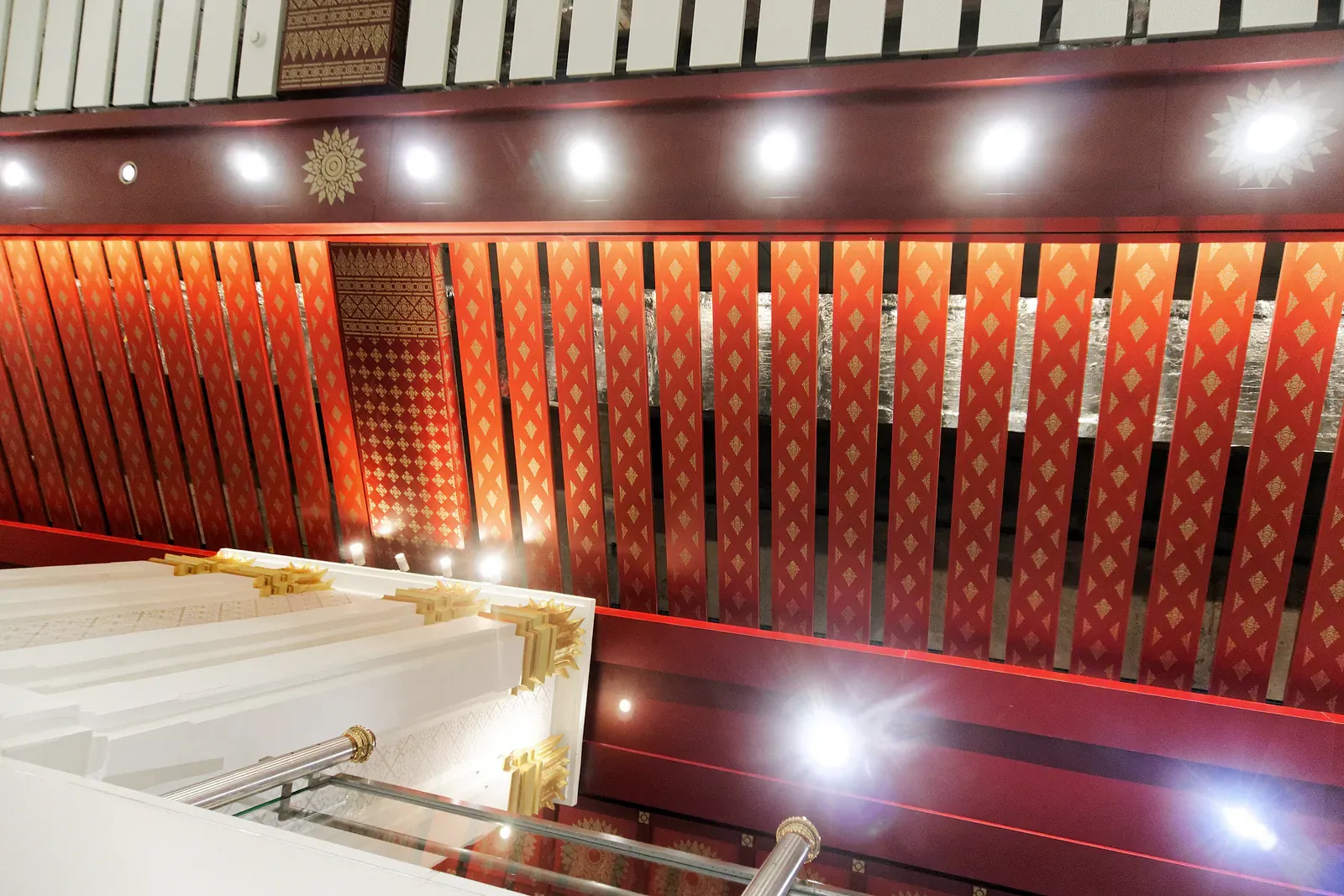
The Bangkok MRT is two lines for most visitors: the Blue Line, a 38-station loop-shaped route that passes Chinatown, the Old City, Sukhumvit, Silom and Chatuchak, and the Purple Line, a 16-station route from Tao Poon out to Nonthaburi. Both are run by Bangkok Expressway and Metro (BEM) for the Mass Rapid Transit Authority (MRTA). Since 1 June 2026 you pay by tapping an EMV contactless bank card at the gate, and the old stored-value cards no longer work. This guide covers how the two lines connect, where you change to the BTS and other rail, what you pay, and which sights each stop reaches. Facts were checked on 9 October 2026; fares, hours and payment rules change, so confirm them with MRTA or BEM before you travel.
For the wider picture of how the BTS Skytrain and the MRT fit together, start with the BTS and MRT guide. For the network map beyond these two lines, see Bangkok rail network explained.
The Blue Line opened in 2004 between Hua Lamphong and Bang Sue. Later extensions added Tao Poon (11 August 2017), the western branch to Lak Song (full service 29 September 2019) and the southern link from Tao Poon to Tha Phra (30 March 2020), which closed the loop. There are 38 operating stations, from BL01 Tha Phra to BL38 Lak Song. Trains are three-car sets running on third-rail power at up to 80 km/h, and the line is owned by the MRTA and operated by BEM.
The Purple Line (officially the Chalong Ratchadham Line) opened on 6 August 2016. It runs from Khlong Bang Phai (PP01) in Nonthaburi to Tao Poon (PP16), 16 operating stations over about 23 km, and BEM operates it. For a visitor its main uses are reaching Nonthaburi and changing at Tao Poon to the Blue Line.
| Blue Line | Purple Line | |
|---|---|---|
| Station codes | BL01 to BL38 | PP01 to PP16 |
| Operating stations | 38 | 16 |
| Opened | 3 July 2004 (loop closed 30 March 2020) | 6 August 2016 |
| Operator | BEM (MRTA owns the line) | BEM (MRTA owns the line) |
| Meets the other line at | Tao Poon (BL10) | Tao Poon (PP16) |
The Blue Line is not a simple circle. Think of it as a ring through the centre with a branch out to the west. Reading the station list in order, the northern arc runs Tao Poon, Bang Sue, Chatuchak Park, Phahon Yothin and Lat Phrao. The eastern side comes down through Phetchaburi, Sukhumvit and Lumphini to Si Lom and Sam Yan. Then it passes Hua Lamphong and Wat Mangkon, goes through Sam Yot and Sanam Chai in the Old City, and crosses under the Chao Phraya River to Itsaraphap on the Thonburi side. West of there, the route heads to Bang Wa and on to the end at Lak Song.
Tha Phra is where the loop meets itself. It is an elevated self-interchange: the lower platform 2 serves Itsaraphap and Tha Phra via Bang Sue, and the upper platforms 3 and 4 serve Charan 13 and Lak Song via Bang Sue. In practice: check the destination on the platform sign and the next-stop display, because the same station name appears on trains going in opposite directions around the loop.
Hua Lamphong was the southern end of the line from 2004 to 2019. Since the 2019 extension, the tracks drop about 30 m below it to pass beneath the river.
Some trains do not run the full length. Rush-hour service runs either the whole line or a short run from Bang Pho to Lak Song, and some trains end at Chatuchak Park or Bang Wa. If your train stops early, step off and wait for the next one with your destination on the sign.
The BTS and MRT are separate systems. Each interchange needs a walk, and you tap out of one system and tap into the other. The Blue Line stations that link to other rail:
| Blue Line station | Connects to | How |
|---|---|---|
| Chatuchak Park (BL13) | BTS Sukhumvit Line, Mo Chit | Station link |
| Sukhumvit (BL22) | BTS Sukhumvit Line, Asok | Footbridge to Asok |
| Si Lom (BL26) | BTS Silom Line, Sala Daeng | Covered skywalk |
| Bang Wa (BL34) | BTS Silom Line, Bang Wa (S12) | Same station name on both systems; separate tickets |
| Phetchaburi (BL21) | Airport Rail Link, Makkasan | Sheltered raised walkway; ticket systems not integrated |
| Bang Sue (BL11) | SRT Dark Red and Light Red lines, Krung Thep Aphiwat Central Terminal | Terminal sits above the station |
| Lat Phrao (BL15) | Yellow Line | Interchange |
| Hua Lamphong (BL28) | Hua Lamphong railway station | Underground passage |
The BTS and MRT guide covers the rule in detail, and the fares explained article walks through what a trip across both systems costs.
Bang Sue is the one to know for the north. Krung Thep Aphiwat Central Terminal sits above the Blue Line station and is where the SRT Red lines call; one Bangkok travel site describes it as the Red Line transfer used to reach Don Mueang Airport. Phetchaburi is the Blue Line’s link for the Airport Rail Link at Makkasan.
At Tao Poon. The station is elevated: the Blue Line platforms (1 and 2) are side platforms, the Purple Line platforms (3 and 4) are an island platform, and the concourse with ticket sales sits between the two.
It was not always this easy. The Purple Line opened in 2016 without a link to the Blue Line, and a free shuttle bus ran to Bang Sue station until the Blue Line was extended to Tao Poon on 11 August 2017. Since then, you can switch between the two lines inside the station without leaving the paid area. Follow the signs and escalators up to the Purple Line platforms.
Plan for the opening times: Purple Line first trains run at 05:30 from Khlong Bang Phai and 06:00 from Tao Poon, while the Blue Line starts at 05:30 on weekdays and 06:00 on weekends and holidays. A very early or very late transfer can be tight, so do not count on the last connection. A through-journey between the two lines also has its own fare ceiling, covered below.
Tap an EMV contactless bank card. MRTA announced on 27 February 2026 that EMV contactless payment would be fully in place from 1 June 2026, with one card covering all four MRTA-supervised lines. BEM is moving its gates to Account Based Ticketing.
What that means at the gate:
Fares are distance-based and calculated on the shortest route between two stations. Two sources give slightly different Blue Line ceilings (44 and 45 baht), so treat the top of the range as the mid-40s:
| Journey | Fare in THB | ~USD (rate of ~33.40 THB per USD, 30 Sep 2026) |
|---|---|---|
| Blue Line, shortest to longest | 17 up to the mid-40s | ~0.51 up to ~1.35 |
| Blue Line with a Purple Line transfer, top regular fare | up to 51 | ~1.53 |
| Blue plus Purple through-journey | capped at 72 | ~2.16 |
| Purple Line alone | 14 to 42 | ~0.42 to ~1.26 |
| Purple Line daily cap, contactless card | 40 per day until 30 November 2026 | ~1.20 |
The Blue Line figures reflect a fare revision dated 3 July 2026 in the Tisland guide. The Purple Line daily cap covers card payments between 1 December 2025 and 30 November 2026; do not assume one for the Blue Line. Verify the current fare with BEM before you rely on any figure here.
On weekdays the Blue Line runs about every 5 minutes until 07:00, between roughly 3.5 and 7 minutes from 07:00 to 09:00 depending on the section, every 6 minutes 40 seconds from 09:00 to 16:30, every 3 minutes 50 seconds from 17:00 to 20:00, and every 7 minutes 15 seconds from 21:00 to midnight. Sunday and holiday trains run about every 7 minutes 15 seconds from 06:00 to 17:00.
The Purple Line weekday peak gap is about 4 minutes 50 seconds, rising to about 8 minutes 30 seconds in the middle of the day. The Blue Line runs until about midnight; check BEM for the Purple Line last train.
Sanam Chai (BL31) is the stop for Rattanakosin Island, the old town. It is near Wat Pho, Saranrom Park, Museum Siam and Pak Khlong Talat, in the Royal Grand Palace area. The station has five exits and a free underground museum of items found during excavation, which opened on 27 November 2020.
Sam Yot (BL30) is the stop for the Giant Swing, Wat Suthat, Phahurat and Sampheng. It opened on 29 July 2019 and already has a transfer hall built for the future Purple Line extension.
Wat Mangkon (BL29) sits on Charoen Krung Road in the heart of Chinatown and takes its name from Wat Mangkon Kamalawat. Odeon Circle, Trok Texas and New Yaowarat Market are nearby. The station has Sino-Portuguese styling, dragon murals and a red and gold colour scheme.
Hua Lamphong (BL28) is under Rama IV Road in front of Bangkok (Hua Lamphong) railway station and joins it by an underground passage. Exit 1 leads toward Wat Traimit. The concourse holds a permanent exhibition on the history of the line.
Itsaraphap (BL32) is the only underground station on the Thonburi side. A tunnel under the Chao Phraya River links it to Sanam Chai. It is near Wat Arun Ratchawararam, Siriraj Hospital and Thonburi Railway Station. The station design uses a swan motif.
Lumphini (BL25) is on Rama IV Road at the Witthayu intersection. Exit 3 leads to Witthayu Road, with Lumphini Park across the road, and Exit 1B has an underground walkway to One Bangkok. The park’s King Vajiravudh monument is closer to the Sala Daeng intersection, which Si Lom (BL26) serves, so Si Lom is the better stop if the monument end of the park is your goal. Si Lom’s northeast exit is near the park entrance.
Sukhumvit (BL22) connects by footbridge to the BTS at Asok. Terminal 21, the Siam Society and Benchakitti Park are nearby. Queen Sirikit National Convention Centre (BL23) is the stop for the convention centre, Benchakitti Park and Khlong Toei Market. Thailand Cultural Centre (BL19) is the stop for the Thailand Cultural Centre and the Stock Exchange of Thailand.
Chatuchak Park (BL13) is beneath the eastern side of Chatuchak Park and is close to the eastern exit of Chatuchak Weekend Market. It links with the BTS at Mo Chit. The station opened on 3 July 2004.
The Blue Line does not reach Khao San Road, according to Tisland Travel.
For most itineraries, only as a link. Its stations include Bang Son, Nonthaburi Civic Center and Phra Nang Klao Bridge, where the Chao Phraya ferry pier sits (without fare integration). At Bang Son there is a connection to the SRT line without paid-area integration, and at Nonthaburi Civic Center the Pink Line has its own station, which opened on 21 November 2023.
Pick it if your hotel or plans are in Nonthaburi. Otherwise stay on the Blue Line.
The southern extension runs from Tao Poon to Khru Nai: 17 stations (10 underground, 7 elevated) over 23.63 km, at a cost of about 82 billion baht. Stations will include Parliament House, National Library, Democracy Monument, Sam Yot, Memorial Bridge and Wongwian Yai. Sam Yot will be the Blue Line transfer, and its transfer hall is already built.
Opening dates are not firm and range from 2027 to 2030. A sinkhole near the Vajira Hospital station site on 24 September 2025 affected the project. Do not plan a trip around this extension.
No. The Rabbit card is not accepted on the Blue or Purple lines. Use a contactless bank card or buy a single-journey token.
Visa, Mastercard and UnionPay contactless cards are accepted, but acceptance of a foreign card is not guaranteed. The MRTA payment notice warns that an EMV logo does not guarantee a foreign-issued card or wallet token will work, so carry a second card and cash.
At Tao Poon, which is station BL10 on the Blue Line and PP16 on the Purple Line. You stay inside the paid area and follow signs to the escalators up to the Purple Line platforms.
Phetchaburi connects to the Airport Rail Link at Makkasan by a sheltered walkway, and the two ticket systems are not integrated. Bang Sue connects to the SRT Red lines at Krung Thep Aphiwat Central Terminal. See Bangkok BTS and MRT fares explained for how fares add up across systems.
Single-journey plastic tokens are still in use at the time of writing. MRTA’s notice projects QR tickets replacing them from 1 January 2027, so check at the station.
Sources: Wikipedia articles on the MRT Blue Line, MRT Purple Line and the individual stations named above (read 9 October 2026); MRTA news release 33436 (27 February 2026); Little Big Red Dot payment notice summary (31 August 2026); Tisland Travel Blue and Purple Line guide (16 September 2026, fares checked 8 September 2026); thailand-business-news.com for the exchange rate (30 September 2026).
BTS and MRT fares in Bangkok explained, with the day-pass breakeven point in rides and the 2026 MRT cashless…
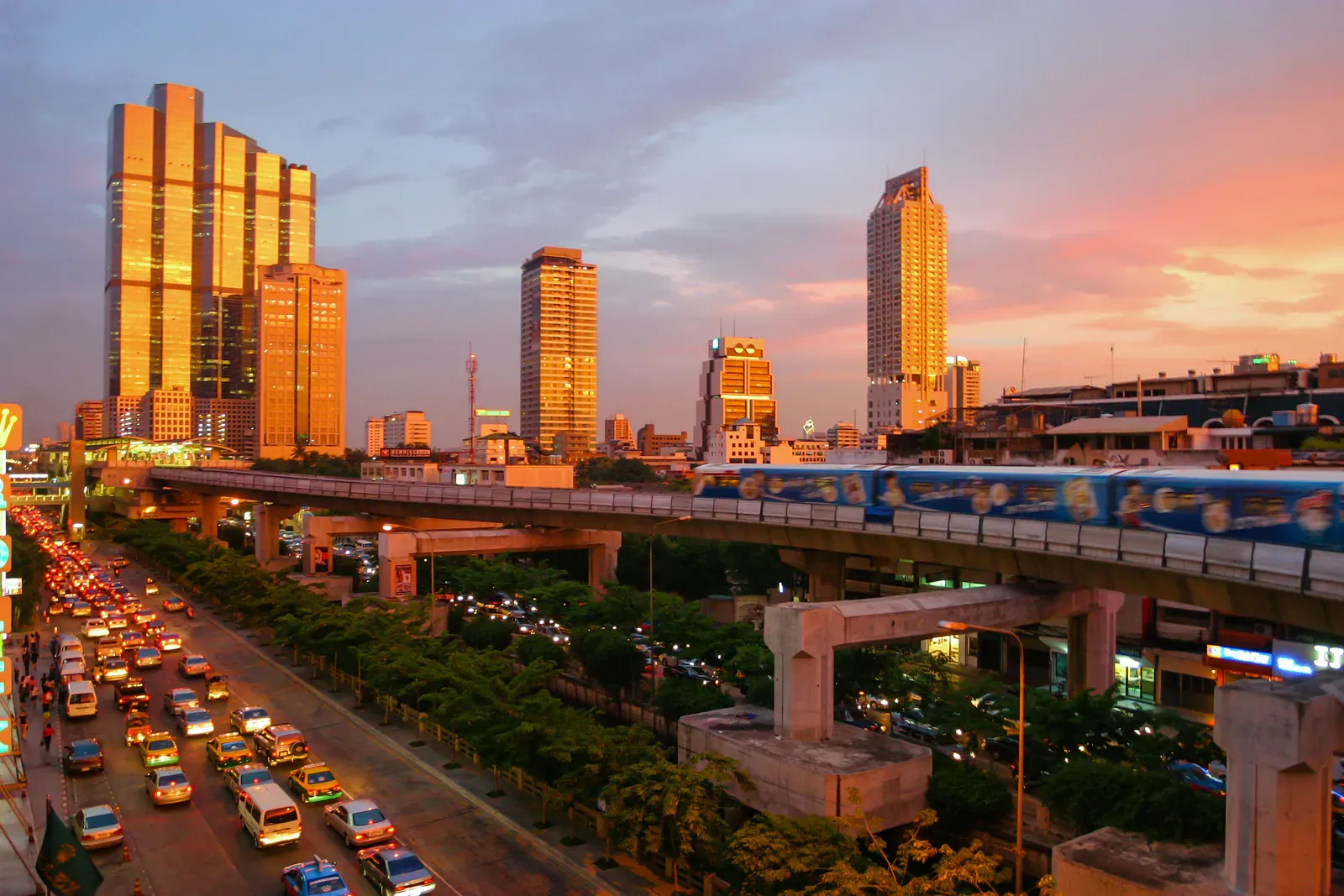
How Bangkok's BTS, MRT, Airport Rail Link and SRT systems fit together
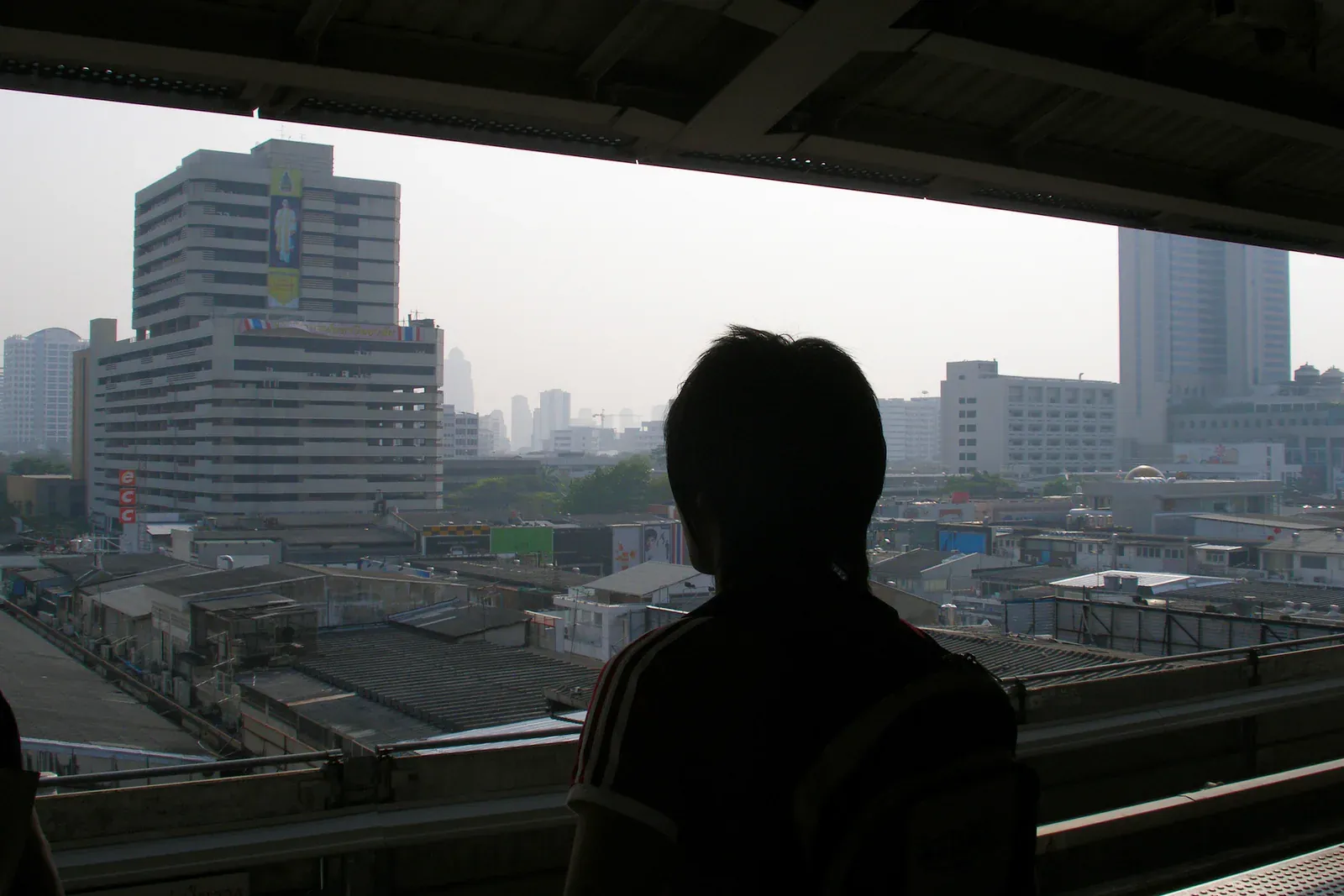
How Bangkok's BTS Skytrain and MRT subway fit together: lines, interchanges, tickets, fares, rush hour
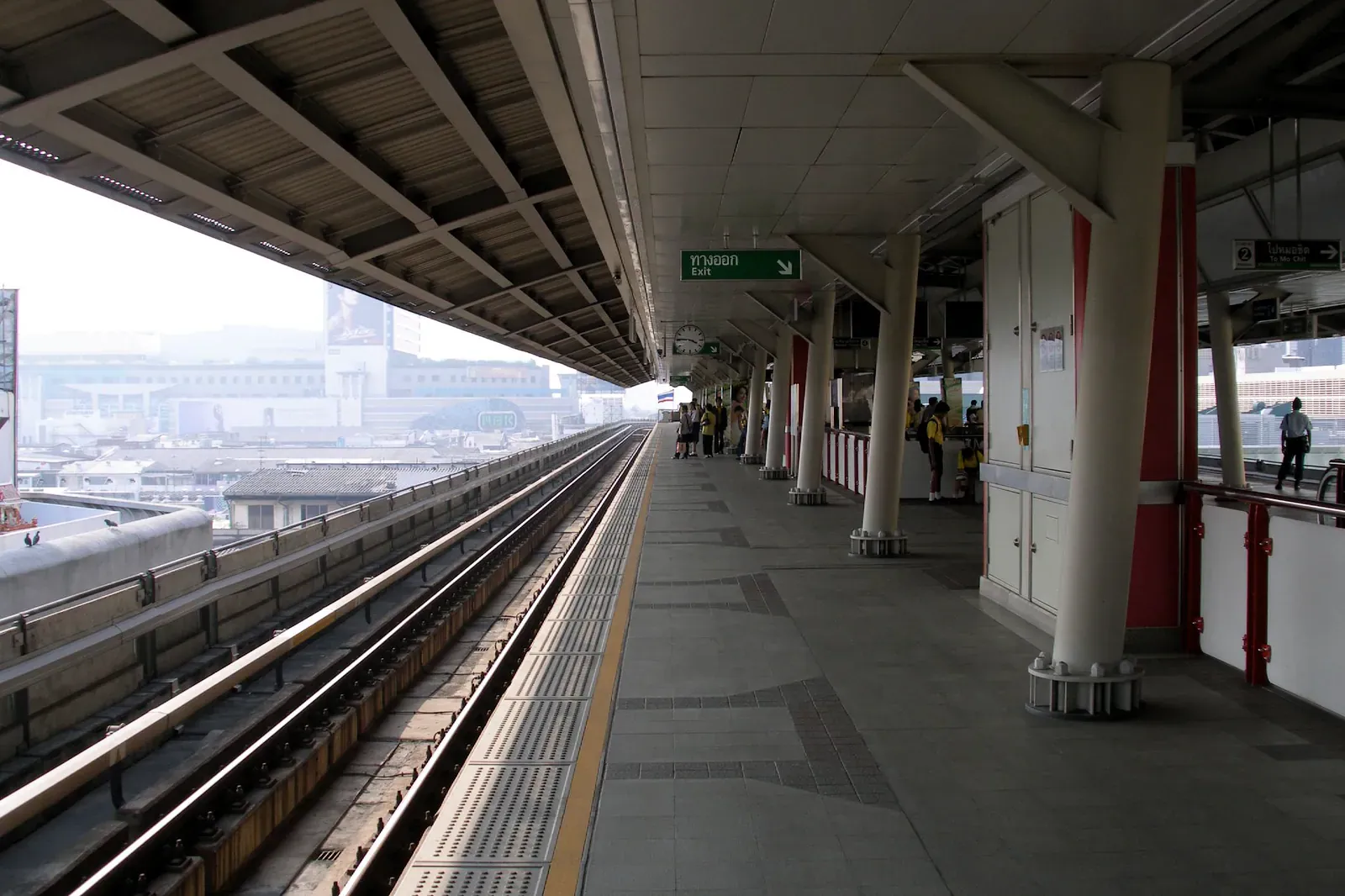
A guide to Bangkok's transport apps: Grab, Bolt, ViaBus, Google Maps and the BTS/MRT apps

SiamPic Hall, Siam Square One, Siam, Chitlom and Ploenchit, Bangkok
Phenix Pratunam, Pratunam, Bangkok
centralwOrld Square, Siam, Chitlom and Ploenchit, Bangkok
No events listed for today.
All events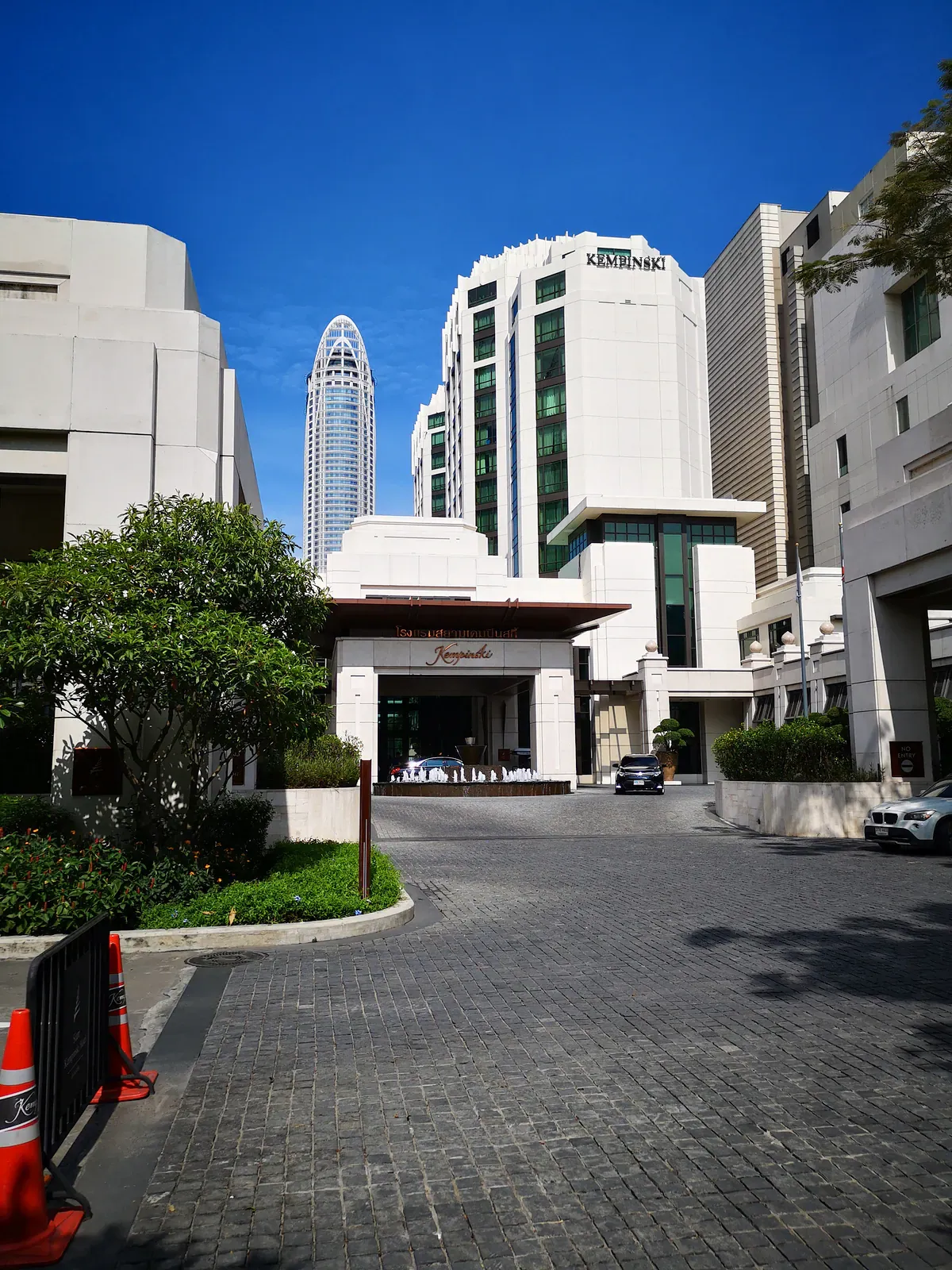
5-star hotel
Siam, Chitlom and Ploenchit
5-star hotel
Sukhumvit: Nana and AsokYou're subscribed as