Where to stay
Budget Hotels and Hostels in Bangkok
In brief
A guide to Bangkok's budget accommodation tiers, what actually matters in a cheap room, where budget stays cluster, and booking habits that avoid a bad night.
On this page
Cheap in Bangkok does not have to mean bad. The city has a deep budget accommodation market shaped by decades of backpacker traffic, and the difference between a great ฿400 room and a miserable one usually comes down to five or six specific, checkable things rather than price alone. To see how a bed fits your whole daily spend, read our Bangkok trip cost breakdown.
The budget tiers that exist here
Hostel dorms are the cheapest option, shared rooms of four to twelve beds with a shared bathroom down the hall, often with an attached common area, bar or rooftop that doubles as the hostel’s social hub. Quality ranges enormously: a well-run dorm has individual reading lights, power sockets and privacy curtains per bunk; a poorly run one is a bare room with mattresses and nothing else.
Hostel private rooms sit one step up: your own small room, sometimes with an en-suite bathroom, inside a hostel that still runs a shared common area and social atmosphere. This is often the best value tier in the city for a solo traveller who wants privacy at night but access to a hostel’s social scene during the day.
Guesthouses are small, independently run properties, typically converted shophouses or old apartment blocks, with basic private rooms and minimal shared facilities beyond maybe a small reception and breakfast counter. They vary hugely in upkeep and are worth judging room by room rather than assuming a category-wide standard.
Budget business hotels are small chain or independent hotels aimed at price-conscious domestic and regional travellers rather than backpackers specifically: functional rooms, reliable aircon, sometimes a small gym or breakfast room, and a more anonymous, transactional feel than a guesthouse or hostel.
Capsule-style properties offer a pod-style bed with more privacy than a dorm bunk but less space than a private room, aimed at solo travellers who want a middle ground; still relatively rare in Bangkok compared with some other Asian cities but growing.
Old-school Thai apartment hotels are ageing, family-run buildings offering monthly or long-stay rates at very low prices, basic and sometimes worn but often the cheapest legitimate long-stay option in a given area; see Serviced Apartments for Long Stays in Bangkok for how these compare against proper serviced apartments for anyone staying weeks rather than nights.
What actually matters in a cheap Bangkok room
- Aircon that works and is quiet. Bangkok is hot and humid year-round; a weak or noisy unit ruins sleep faster than almost anything else on this list. Ask to see the room and run the aircon for a minute before committing if you’re booking in person.
- A window that seals against street noise. Ground-floor and low-floor rooms on a main soi catch motorbike and delivery traffic from early morning; a room at the back of the building or on a higher floor is worth asking for.
- A private bathroom with proper drainage. Cheap Thai bathrooms are often wet-room style with a floor drain; a slow or blocked drain leaves standing water after every shower, a common and avoidable annoyance.
- A mattress that isn’t a plank. Budget Thai hotel mattresses vary from perfectly fine to punishingly firm; a couple of critical review mentions on this point are worth taking seriously.
- A lift if you’re above the third floor. Older guesthouses and apartment hotels sometimes have no lift at all; carrying luggage up four or five flights in the heat is worth avoiding if you have a choice.
- Security lockers, especially in dorms, ideally large enough for a full backpack and with your own padlock rather than a shared key system.
- A station within walking distance. The same rule that governs the rest of this site’s hotel advice applies just as hard at the budget end: rail access outweighs almost everything else in this city.
Where budget stays cluster
Khao San and the old town. The best-known backpacker strip in Southeast Asia: dense, cheap, loud, and built around a nonstop street scene of bars, food stalls and tour desks. No direct BTS or MRT station serves it, so factor a 15-20 minute walk or a short tuk-tuk into every trip elsewhere in the city. Noise runs late every night without exception, and our Khao San Road guide covers how to get there; light sleepers should look elsewhere or pay up for a room set well back from the main strip. For hotel-level picks in the cheaper districts, see Chinatown and the old city, Pratunam, Huai Khwang and Ratchada and hotels near Suvarnabhumi Airport.
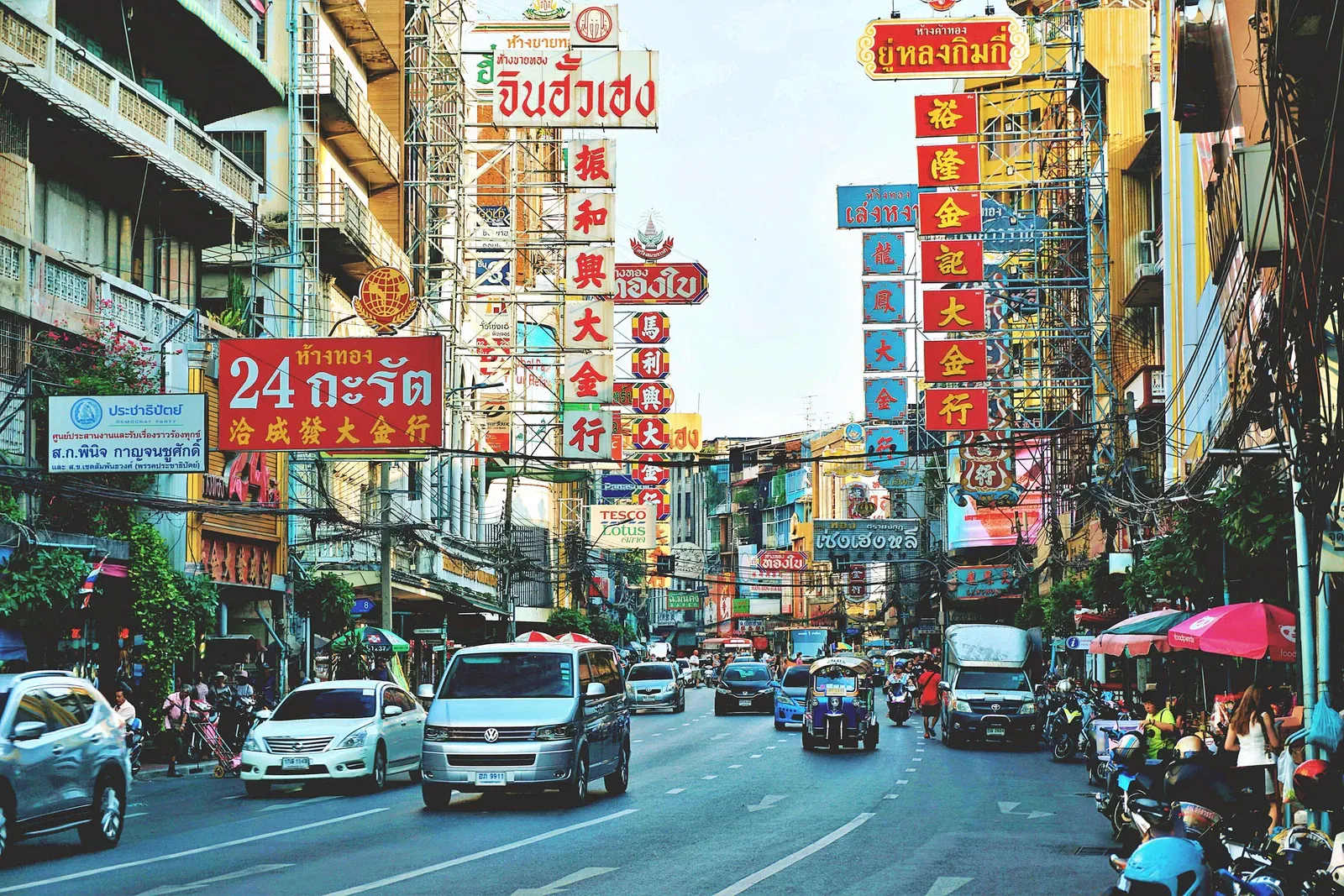
Chinatown. On the MRT Blue Line at Wat Mangkon, giving it rail access Khao San lacks. Cheap guesthouses and small hotels sit among gold shops and night-market food stalls; noise is more about market and street activity than nightlife, dying down earlier than Khao San most nights.
Silom’s side sois. Away from the main Silom Road nightlife strip, the narrow sois running off it hold a surprising number of budget guesthouses and small hotels within easy walking distance of the BTS and MRT interchange. Quieter than Khao San, with better transit than the old town, at a modest price premium over both.
Sukhumvit’s upper stations. On Nut, Bang Chak and Udom Suk carry a growing budget and mid-range hostel scene on the same BTS line as the expensive lower-Sukhumvit hotels, just a longer ride from the centre. This is often the best transit-to-price ratio in the budget tier: full rail access, a real neighbourhood feel, lower rates than anywhere closer to the centre.
Ratchathewi and Siam’s back streets. One stop off the central Siam interchange, Ratchathewi’s sois hold a solid cluster of budget and mid-range hotels within a short, flat walk of the station, putting the shopping district and onward rail connections close at hand for less than a Siam-adjacent rate.
Near the airports. Both Suvarnabhumi and Don Mueang have a scattering of very cheap short-stay hotels aimed at layovers and early flights; fine for a single night, not worth considering as a base for anything longer since neither area has a neighbourhood to speak of.
The honest trade-offs
A ฿200-a-night saving that costs an hour a day in traffic is not a saving. A cheaper guesthouse 20 minutes from the nearest station, reached only by taxi or a long, hot walk, often ends up costing more in time, comfort and actual transport spend than a slightly pricier bed a five-minute walk from a BTS entrance. Run the comparison honestly before booking on price alone.
Noise and price trade against each other predictably: Khao San’s cheapest beds sit closest to its loudest strip, and paying a little more for a room a block or two off the main road buys a genuinely better night’s sleep without moving areas entirely. The same logic applies within any budget cluster on this list.
A “boutique hostel” almost always means a design-led common area and marketing rather than materially better beds; check the actual room and bathroom photos and reviews rather than the branding.
Booking habits that matter
Arrival-time realities. Many budget properties, especially guesthouses and older hostels, have limited or unstaffed reception outside daytime hours. Confirm your check-in window if arriving on a late flight, and have a backup contact method (WhatsApp or Line, commonly used by small Thai operators) rather than assuming someone will be at the desk.
Deposits. Some hostels and guesthouses take a cash key or locker deposit on arrival, separate from anything paid online; keep enough small notes to cover this without a scramble.
Reading photographs critically. Wide-angle lenses and good lighting make small rooms look larger and older fixtures look newer than they are; cross-check against recent reviews and, where available, unedited guest photos rather than the property’s own listing images.
Long-stay discounts. Many budget properties, particularly guesthouses and apartment hotels, will quietly discount a stay of a week or more if you simply ask, even where no discount is advertised online. This is worth asking on arrival or by direct message before booking through a third party, since the saving rarely appears in the listed price.
Safety and valuables
Dorm rooms warrant a genuine lock and a locker large enough for anything you’d mind losing; don’t rely on a bag left on a bunk. Solo travellers, particularly women, generally do better in female-only dorms where offered, and it is reasonable to ask about a property’s gender-split policy before booking. Basic common sense applies more than any Bangkok-specific risk: use the locker, don’t leave electronics charging unattended in a shared space, and keep a photo of your passport separate from the physical document.
Solo travellers
The budget tier is where Bangkok’s solo-travel infrastructure is strongest: hostels with communal kitchens, rooftop bars and organised activities exist specifically to solve the solo-traveller problem of meeting people. Nana-to-Asok on Sukhumvit and Khao San both offer this in different flavours: Khao San leans younger and rowdier, Sukhumvit’s hostel scene leans slightly older and calmer.
Indicative price bands (2026)
Broad nightly bands only, not tied to any specific property. Rates swing hard by season (high season roughly November to February pushes prices up, low season roughly May to October pulls them down) and around major holidays, so treat these purely as a sense-check.
| Tier | Indicative nightly band (THB) | Approx. USD |
|---|---|---|
| Hostel dorm bed | ฿250-600 | $7-17 |
| Hostel private room | ฿700-1,400 | $20-40 |
| Guesthouse private room | ฿500-1,200 | $14-34 |
| Budget business hotel | ฿900-1,800 | $26-51 |
| Old-school apartment hotel (monthly) | ฿8,000-15,000/month | $225-425/month |
Common questions
Is Khao San safe and worth it for a first-time budget traveller?
It is generally safe by ordinary travel standards and remains the easiest place in the city to meet other travellers and find cheap food, but it is loud until late every night and has no direct rail station. If sleep and transit matter more to you than the party atmosphere, Sukhumvit’s upper stations or Chinatown offer a calmer, better-connected budget base; see Where to Stay in Bangkok for the area-by-area comparison.
What is the actual difference between a hostel and a guesthouse in Bangkok?
A hostel is built around a shared social space, often with dorm beds alongside private rooms and organised common areas or events; a guesthouse is typically a small, independently run property offering only private rooms with minimal shared facilities. Guesthouses suit travellers who want privacy and a quieter stay at a similar price point to a hostel private room.
Should I book budget accommodation in advance or on arrival?
Booking a few days to a week ahead is safest, especially in high season (November to February) or around major Thai holidays when good-value rooms fill first. Walking in on arrival can work in low season for flexibility, but carries the risk of ending up with whatever is left, often the noisiest or worst-maintained room in the building.
Can I actually negotiate a lower rate for a longer stay?
Yes, particularly at guesthouses and old-school apartment hotels rather than international hostel chains; asking directly for a weekly or monthly rate, even where none is advertised, often produces a meaningful discount. This is separate from the formal monthly-rate ladder covered in Serviced Apartments for Long Stays in Bangkok, which applies to a more polished, higher-cost tier.
Are budget hotels near the stations worth the extra cost over cheaper options further away?
Almost always, once you account for the time and money lost to taxis or long walks in the heat. A room 5 minutes from a BTS or MRT entrance at a slightly higher rate is usually cheaper in total than a bargain room 20 minutes away once daily transport is factored in.
What should solo female travellers know about budget stays?
Female-only dorms are common in Bangkok’s better hostels and worth requesting specifically if offered; ask about the gender-split policy before booking rather than assuming. Beyond that, ordinary precautions apply: use a locker for valuables, choose well-reviewed properties with 24-hour or clearly stated staffed reception, and favour areas with active street life at night, such as Sukhumvit’s upper stations or central Silom sois, over isolated back sois.
Written by
Mike Brochlowski
Founder and editor, travel photographer and designer
I'm Mike Brochlowski, a travel photographer and designer, and I currently live on Koh Samui, Thailand. I built BangkokWiki to put practical, checked information about Bangkok in one place. Every page is researched from official and primary sources, and the text names them. Where a page shows a checked date, that is when its facts were last confirmed. I also run samui69.com, a non-commercial guide to Koh Samui. If you spot an error or something out of date, tell me through the contact page and I will check it and correct the page.
Read all articlesWhere to stay
Pick the area before the hotel
Traffic and heat make Bangkok distances feel longer than they look on a map, so the area shapes a trip more than the hotel does. Our guides match areas to trip types and explain the trade-offs.

Places to stay
Find a hotel
More from Where to stay
- 13 min read

Newsletter
You're subscribed as