Transport
Bangkok BTS and MRT Guide: How Rail Works
How Bangkok's BTS Skytrain and MRT subway fit together: lines, interchanges, tickets, fares, rush hour, and where the rail network stops.
On this page
Bangkok’s rail network is not one system with one ticket. It is several separate networks, run by different operators, that happen to share a city and a handful of interchange stations. Understand that split first and the rest (fares, transfers, which line goes where) stops being confusing.
The networks, not “the BTS”
What locals and visitors lump together as “the Skytrain” or “the metro” is actually four distinct rail operations:
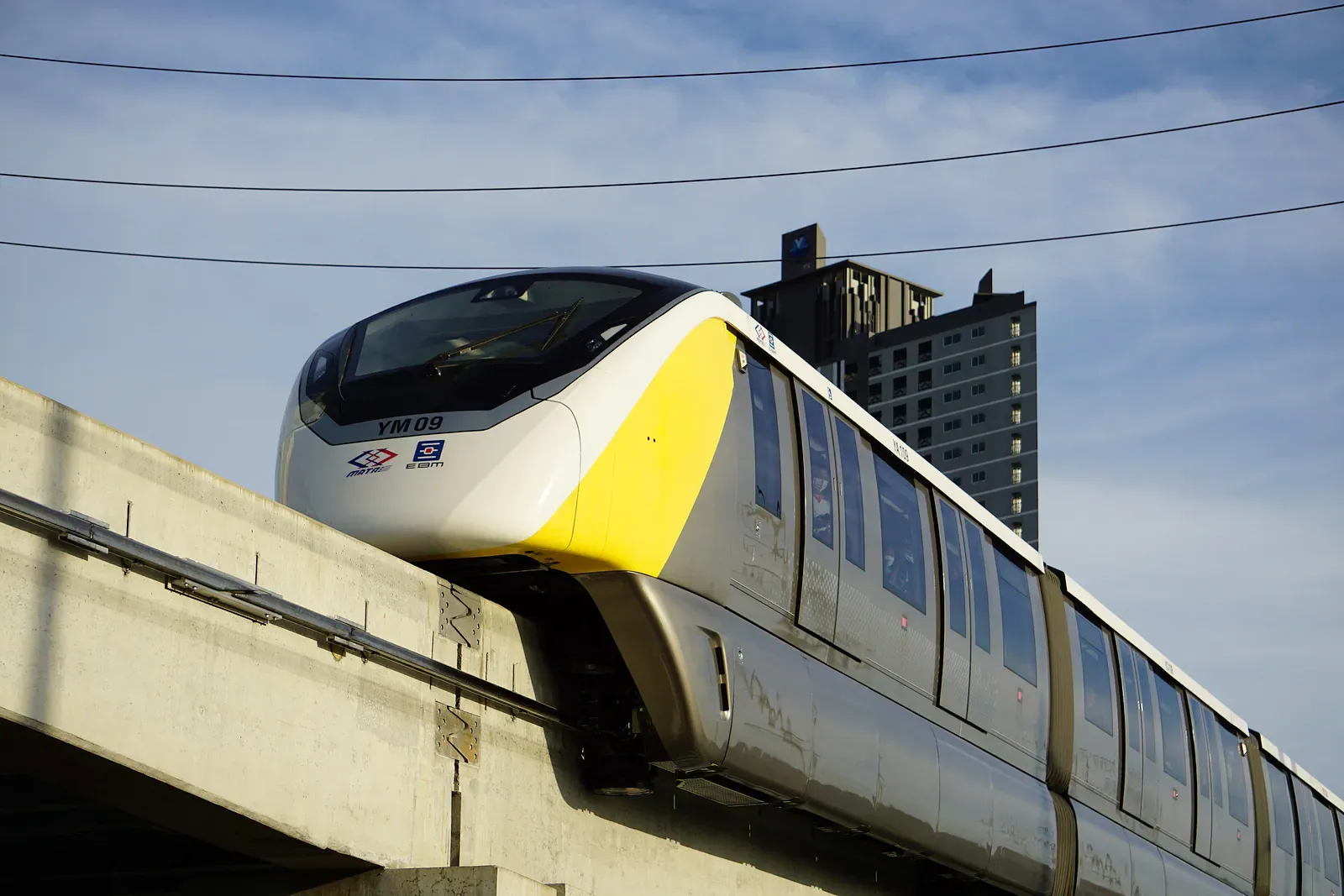
- BTS Skytrain: the elevated network, run by BTS Group, split into the Sukhumvit line (green, running roughly north-south through Mo Chit, Siam, Asok and out to Bearing and beyond) and the Silom line (also green on some maps but distinguished by station codes, running from the National Stadium area through Sala Daeng and across the river to Wongwian Yai and beyond).
- MRT: the underground and elevated subway, run by BEM (Bangkok Expressway and Metro), with the Blue line (a loop-shaped route through Chatuchak, Sukhumvit-area interchange stations, Silom, and under the river to Bang Sue and Bang Khae) and the Purple line (running from the northern suburbs into the city, meeting the Blue line at Tao Poon).
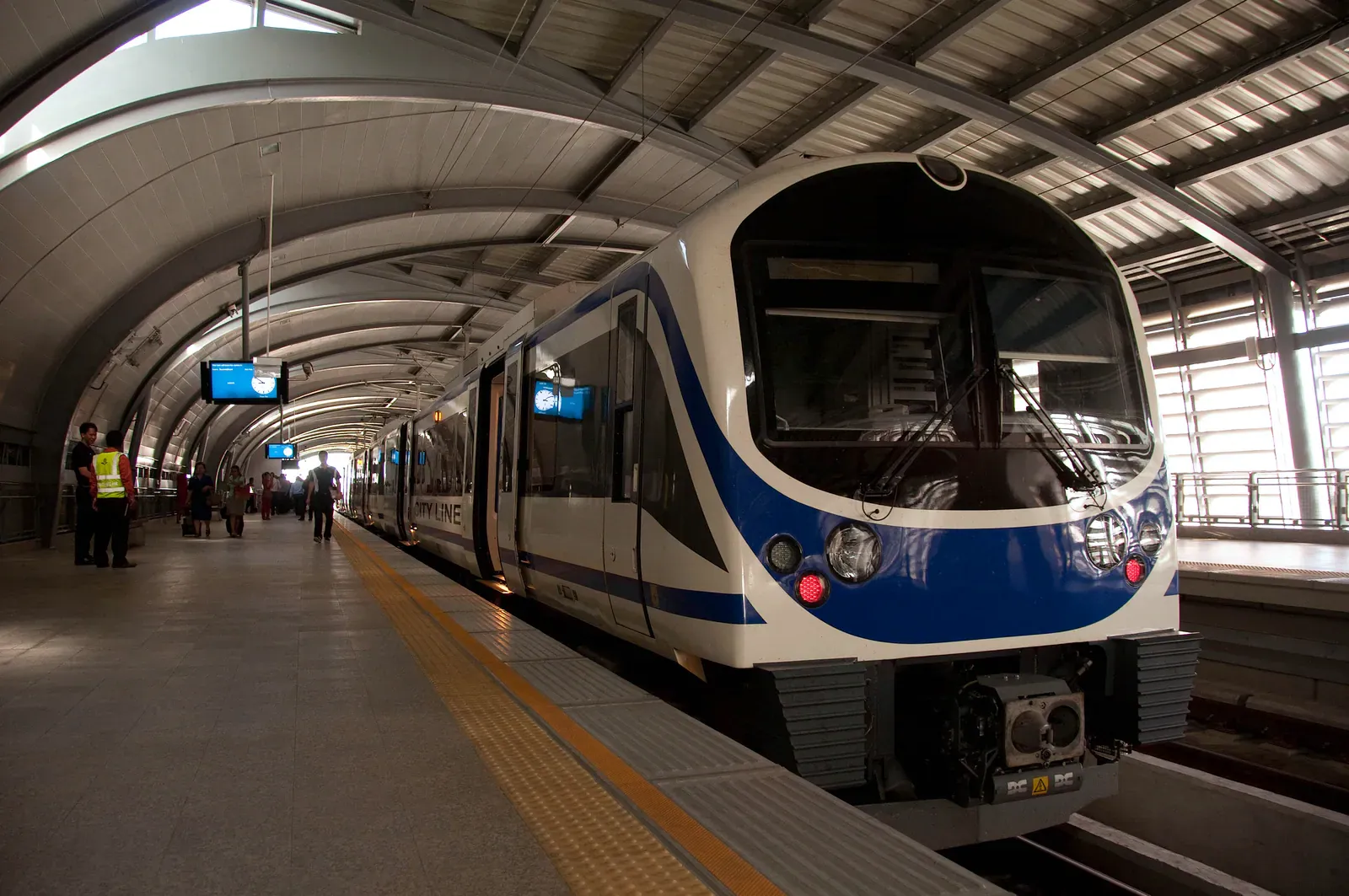
- Airport Rail Link (ARL): connects Suvarnabhumi Airport to the city centre at Phaya Thai, now under State Railway of Thailand control after an earlier operator handover. Full detail on getting into town from either airport is in Suvarnabhumi Airport to Bangkok city.
- SRT Red lines: the newer commuter rail (Dark Red and Light Red) radiating from Bang Sue Grand Station, mostly useful for reaching the northern and western suburbs rather than central sightseeing.
None of these share a ticketing system by default. That single fact explains most of the confusion first-time riders run into.
Line colours and station codes
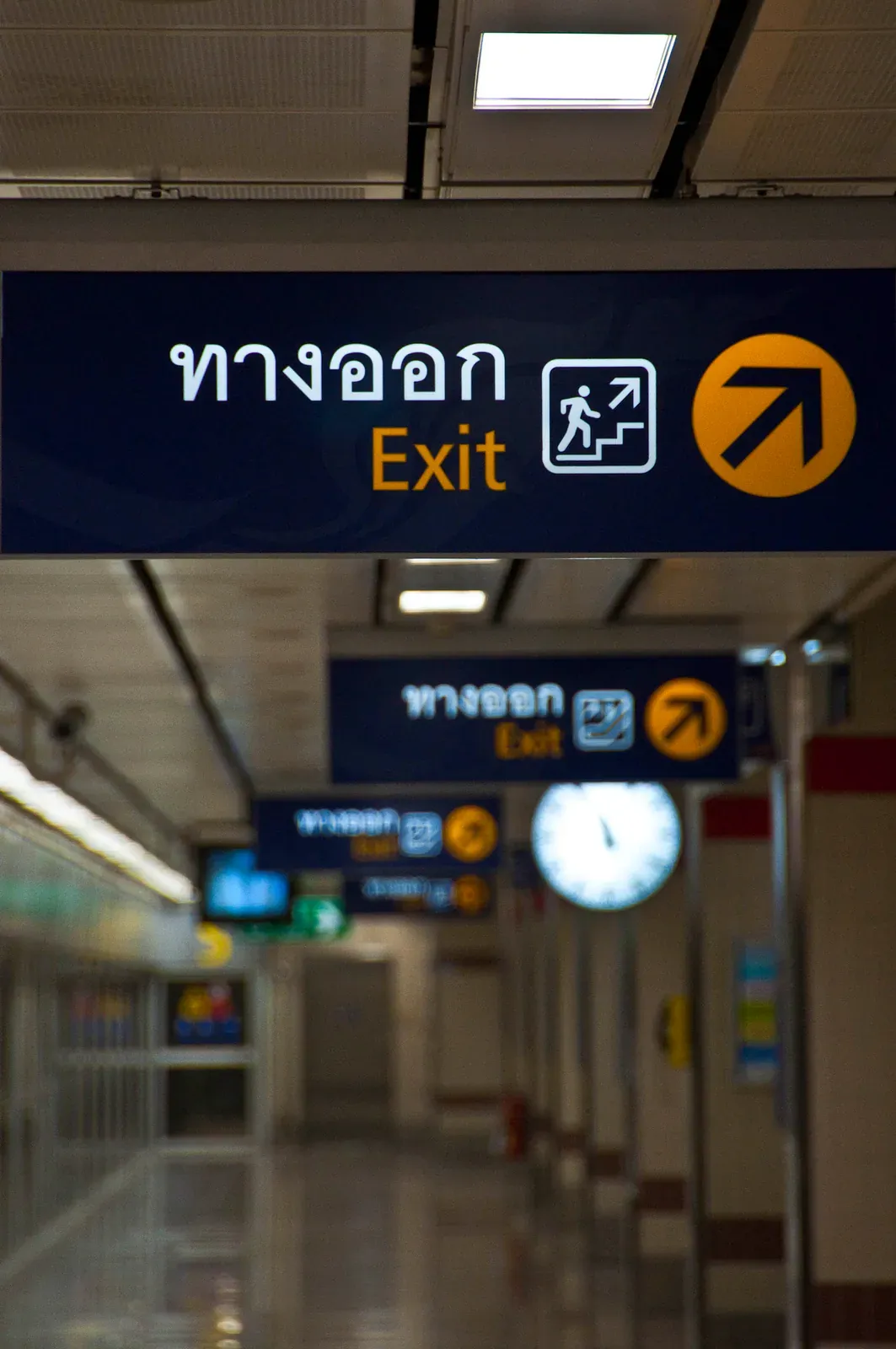
Every station has a two-part code: a letter prefix for the line, a number for its position. BTS Sukhumvit line stations are prefixed N (north of Siam) or E (east of Siam): so Mo Chit is N8, Asok is E4. The Silom line uses S, so Sala Daeng is S2. MRT Blue line stations use BL, Purple line uses PP, Airport Rail Link uses A.
The codes matter more than the colours once you are inside a station, because signage, maps and announcements all reference them, and two lines can look similar shades of the same colour on a printed map while being entirely different systems. When someone gives you a station, listen for the code: it disambiguates faster than the name, especially since several stations share similar-sounding Thai names.
Interchanges: convenient, but not seamless
Bangkok has real interchange stations where lines cross, but “interchange” rarely means walking through a single fare gate like in Singapore or Hong Kong. What it usually means:
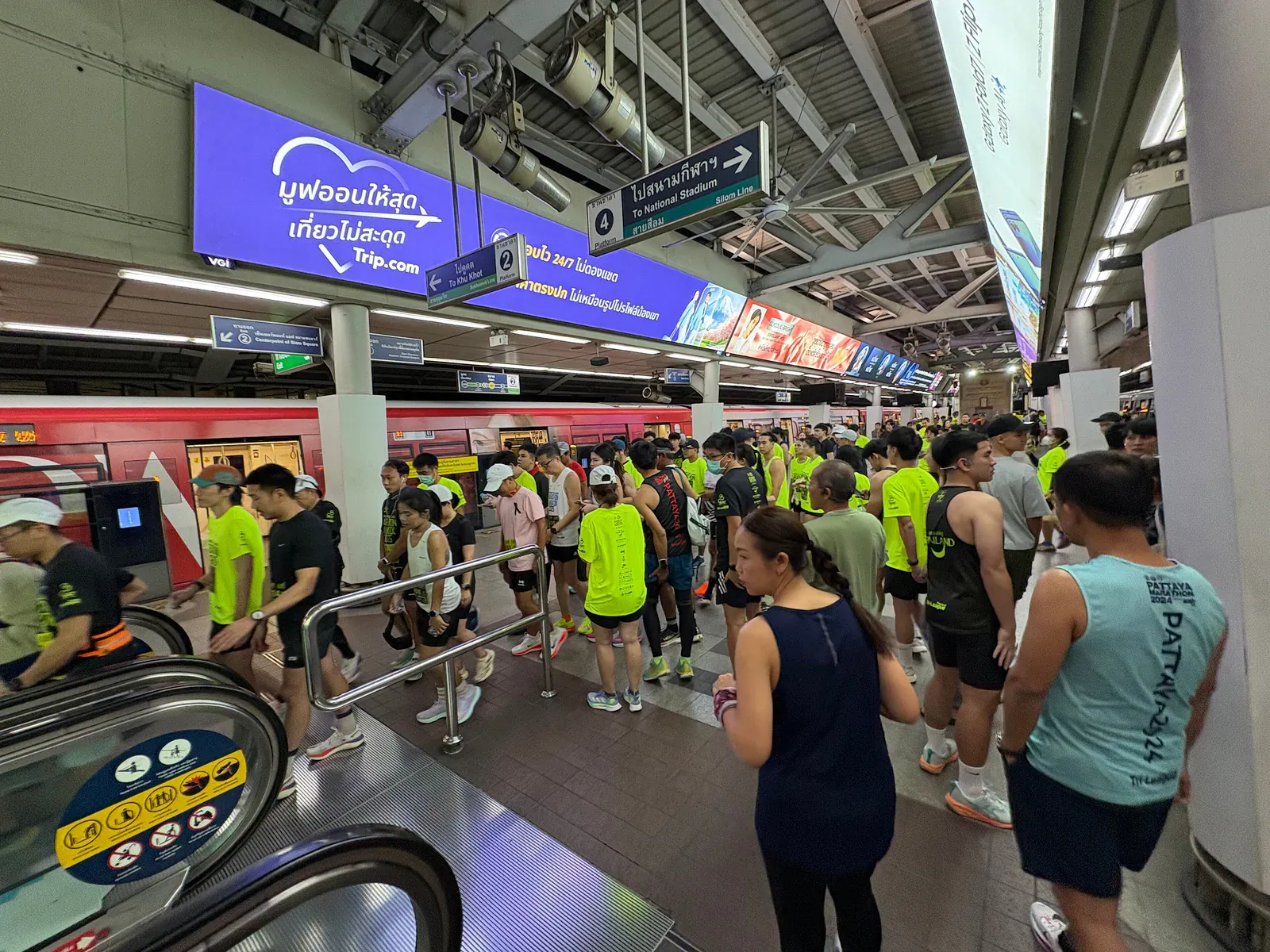
- Same-operator interchange (BTS Sukhumvit ↔ BTS Silom at Siam): a same-system transfer, but Siam station’s layout still means a walk across platforms and, at busy times, a queue to get onto the connecting platform.
- Cross-operator interchange (BTS ↔ MRT, e.g. Asok ↔ Sukhumvit, Mo Chit ↔ Chatuchak Park, Sala Daeng ↔ Silom): these stations are physically linked, sometimes by a covered walkway, sometimes by stairs and a short street-level stretch, but they are two separate paid systems. You exit one system’s fare gates, walk, and enter the other system’s fare gates on a new ticket or fare deduction. There is no through-ticketing between BTS and MRT as standard practice.
- Airport Rail Link ↔ BTS at Phaya Thai: another walk-and-re-tap transfer, not a same-platform connection.
The practical upshot: a trip that crosses from a BTS-only address to an MRT-only address will cost you two separate fares, not one combined fare, and will involve a walk of several minutes between concourses. Google Maps and Citymapper both model this reasonably well, but budget extra time beyond what the app estimates, especially at interchange stations during rush hour when the connecting corridors themselves get congested.
Tickets, stored value, and contactless
You have several ways to pay, and they are not identical across systems:
- Single-journey tokens: BTS uses plastic jetons/tokens bought from a machine or counter for one trip on the BTS system only. MRT uses a similar single-trip token (a coin-like token, tapped in and dropped in on exit) for its own system only.
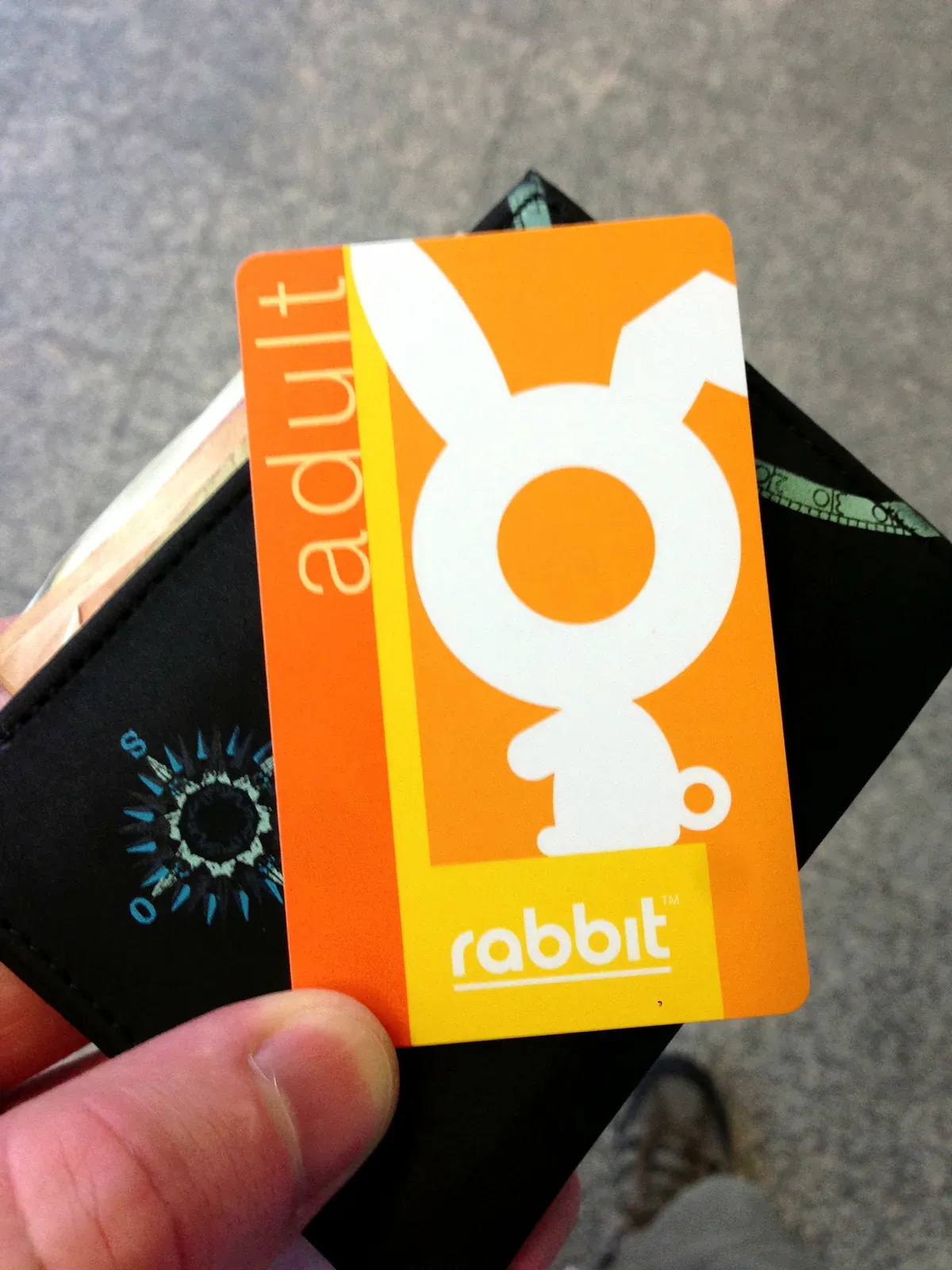
- Rabbit Card: BTS’s stored-value card, reloadable, works across BTS and some retail/partner locations, but historically has not been usable on MRT.
- MRT stored-value card: a separate reloadable card for the MRT system, not interchangeable with the Rabbit Card.
- Contactless bank cards and mobile wallets: increasingly accepted for tap-and-go fare payment on both BTS and MRT gates, which is the closest thing to a unified experience for a visitor, since it means not having to hold two separate physical cards. Coverage and enrolment details change, so check the operator’s own app or website before you rely on it for a trip that has to work first time.
For a short visit, buying single tokens at each system is fine. For anything longer than a few days, a stored-value card (or a contactless bank card if your bank supports transit tap-and-go here) saves real queueing time, particularly at machines during rush hour when lines for coins and small notes back up. If this is your first Bangkok trip entirely, your first two days in Bangkok without a car covers when to lean on rail and when to skip it during the jet-lagged first 48 hours.
Fares are distance-based, and that surprises people
Both BTS and MRT charge by distance travelled, not a flat fare per trip. A short hop of two or three stations is genuinely cheap; a cross-city journey from one end of a line to the other costs meaningfully more, and if that journey also crosses onto a second system, the second system charges its own distance-based fare on top.
As a rough, indicative-for-2026 sense of scale: a short BTS or MRT hop typically lands somewhere in the ฿17-25 (about $0.50-0.70) range, while a long single-system trip across most of a line can reach ฿45-62 (about $1.30-1.80). A journey that switches from BTS to MRT effectively pays two separate distance-based fares, so the combined cost can be noticeably higher than either fare alone. These figures move and the operators publish current fare tables and fare calculators in their own apps: treat any number here as a planning range, not a quote.
Two things trip up newcomers specifically:
- A short-looking trip on the map can still be two fares if it crosses systems, even if the physical distance is small: the Asok-Sukhumvit interchange is the classic example, where the platforms are metres apart but the fare gates are not shared.
- There is no daily cap or free transfer built in the way some cities offer. Frequent same-day travel across both systems adds up faster than a visitor used to a flat-fare or capped city expects.
Rush hour: what actually happens
Weekday rush hour, roughly 7:00-9:00 and 17:00-19:00, hits the interchange stations hardest: Siam, Asok, Mo Chit, Sala Daeng, Chong Nonsi (near Sathorn) all see platform crowding where staff may hold back entry for a train or two. Trains themselves run frequently enough that the wait for the next one is rarely the problem; the bottleneck is fare gates and stairs at the busiest interchanges.
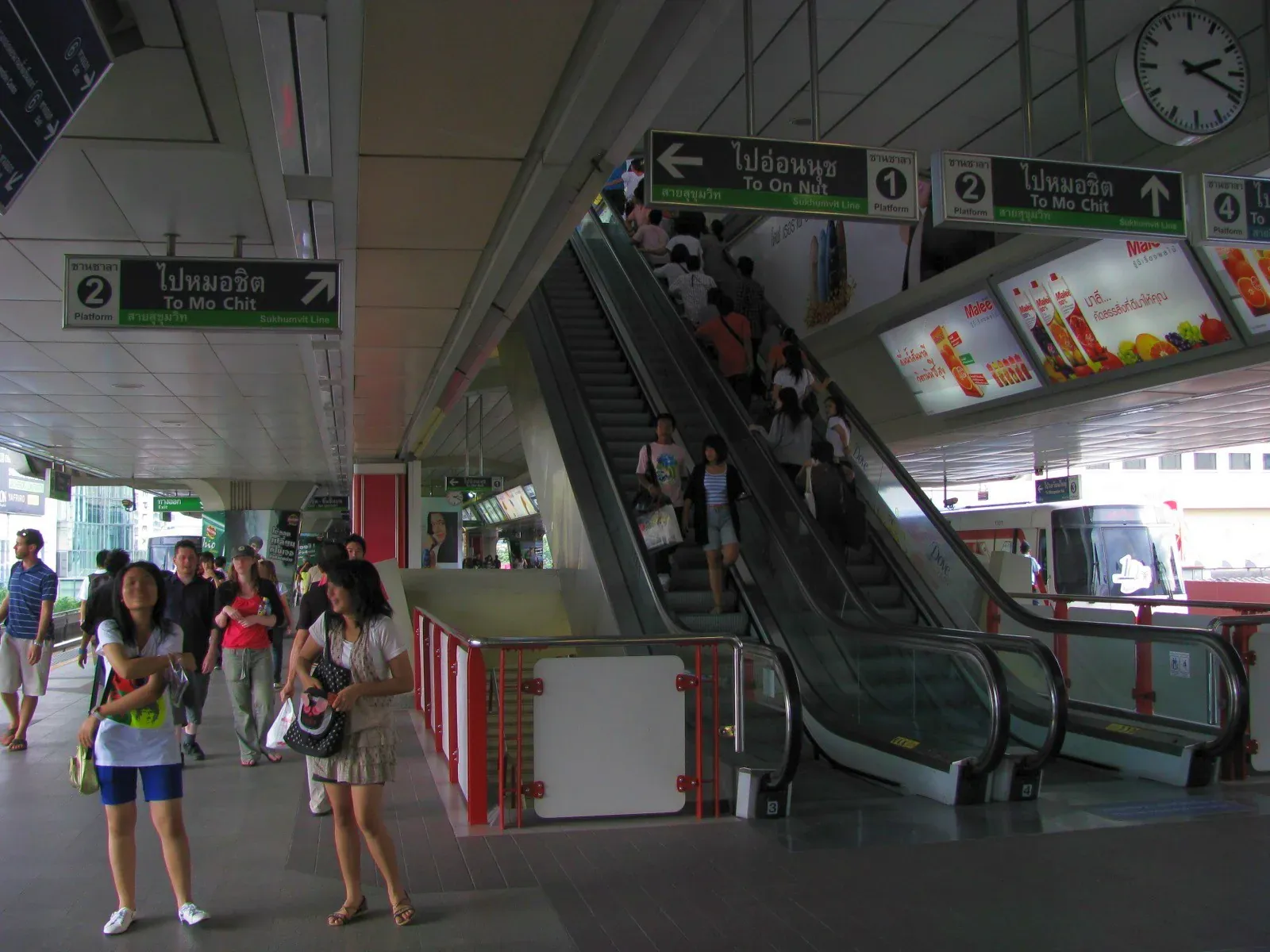
Practical adjustments: avoid arriving at a major interchange right at the top of rush hour if you have luggage or are travelling with children or an older relative; where possible, board at a quieter station a stop or two earlier so you’re not fighting for door space; and if a station looks genuinely packed, it is often faster to wait five minutes for the crowd to thin than to push through it. For event nights, see stadiums and arenas for events. For a major bus and van hub on the Sukhumvit line, see the Victory Monument guide.
Luggage and accessibility: not universal
BTS and MRT stations vary a lot in how easy they are for anyone with a suitcase, a wheelchair, or reduced mobility. Newer stations tend to have lifts to both concourse and platform level; older stations, especially some original BTS stations that predate accessibility requirements, may only have escalators and stairs, with a lift retrofitted at just one exit if at all. That single-exit lift is easy to miss if you come up the wrong staircase, and it may be a long walk around the station perimeter to reach it.
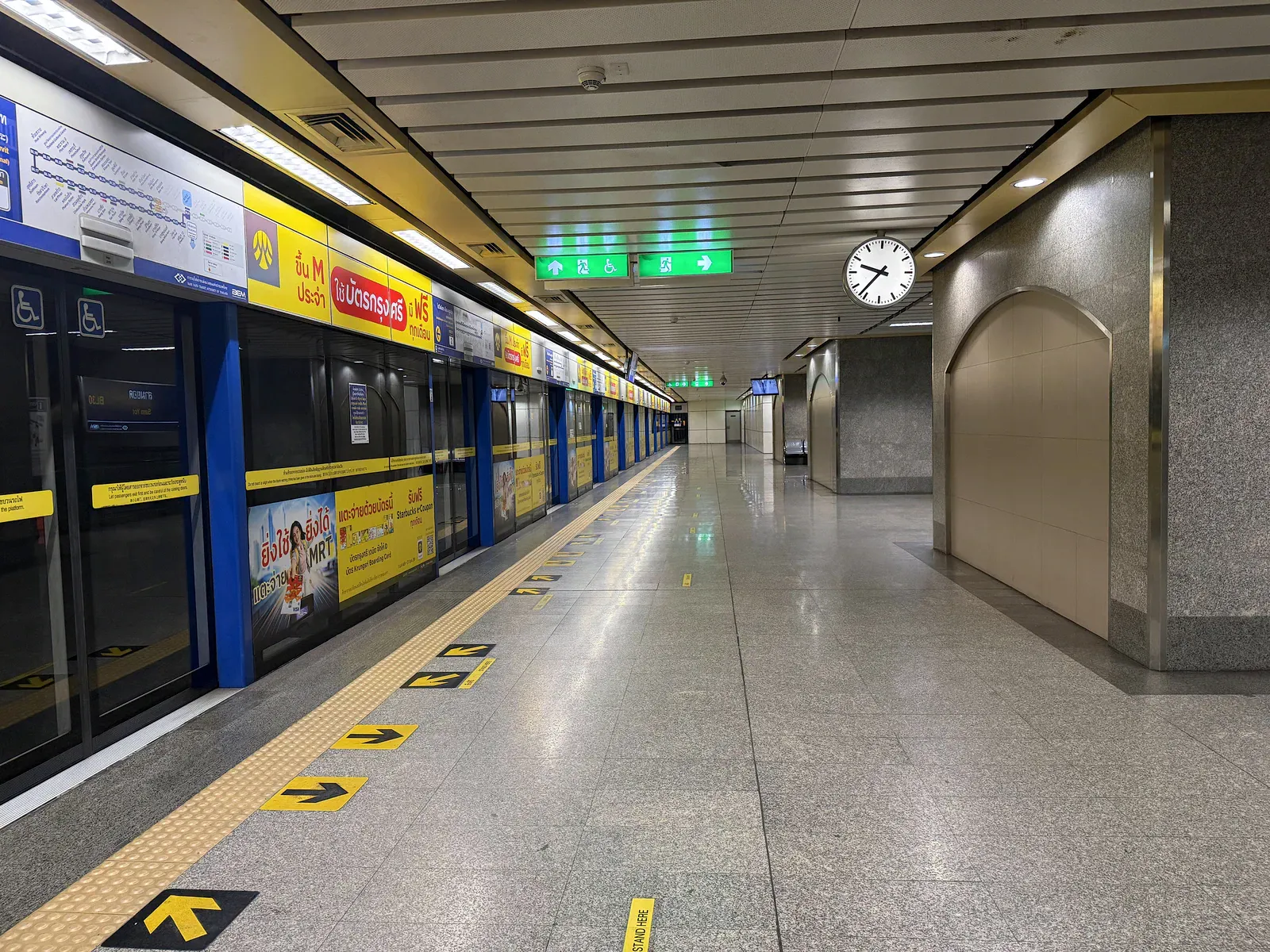
For anyone travelling with heavy luggage (arriving from the airport, moving between long-stay accommodation, or simply after a big shopping trip), check whether your origin and destination stations have step-free access before you commit to rail over a taxi. This matters most for seniors and for wheelchair users, for whom a missing lift is not an inconvenience but a blocked route. If in doubt, a metered taxi or ride-hailing car, covered in Bangkok taxi and Grab guide, removes the variable entirely. To base yourself on the lines, see hotels near BTS and train stations.
The skywalk network
Central Bangkok has an extensive elevated pedestrian skywalk network connecting several BTS stations to nearby malls, office towers and each other: most developed around Siam, Chit Lom, Phloen Chit and the Asok/Sukhumvit corridor. Skywalks let you move between stations and buildings without touching street level, which matters in both the rainy season and the hottest months, and they are genuinely useful for stringing together a walk between two stations that are close together but separated by a busy road.
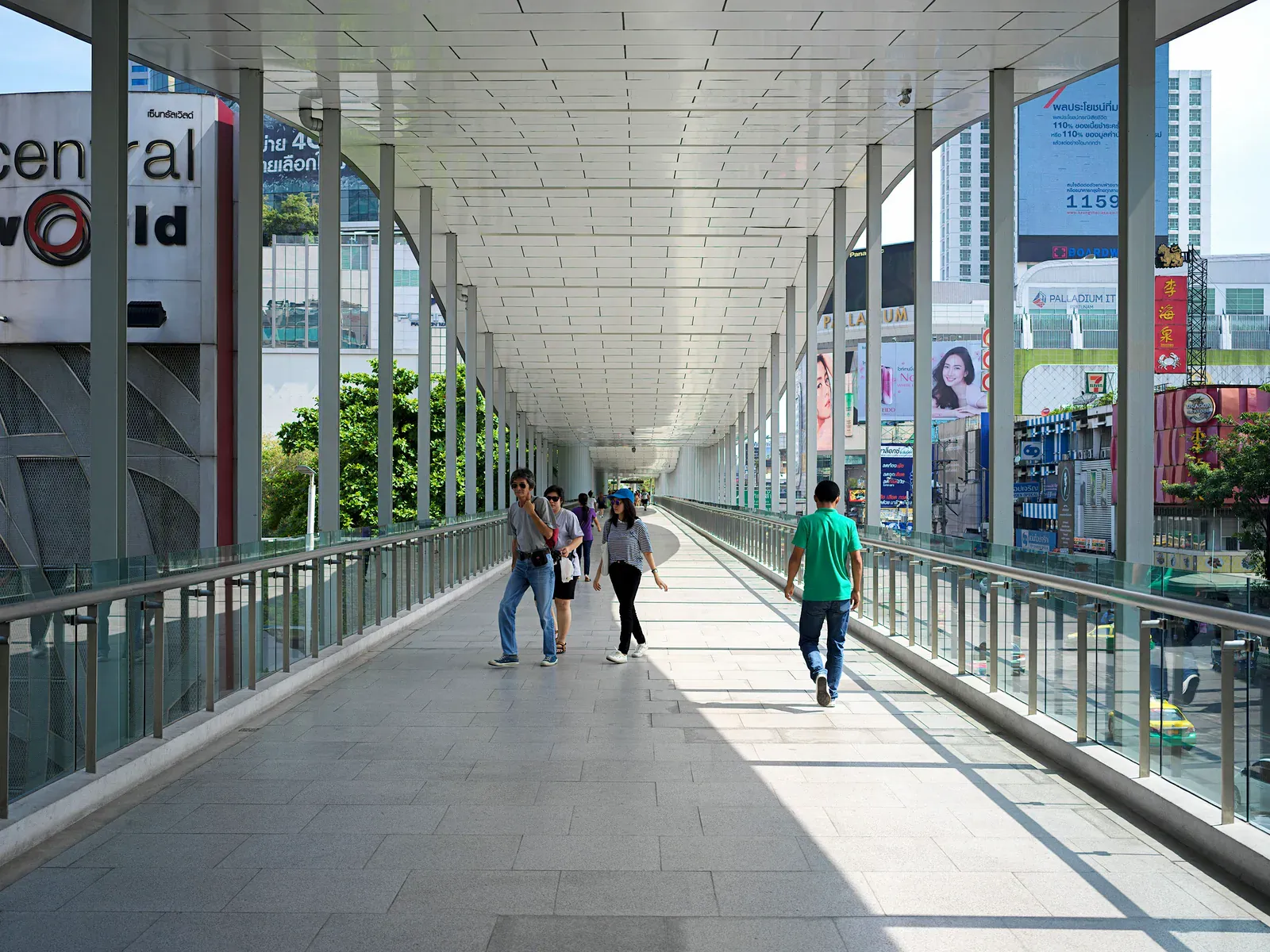
They are not marked as clearly as the rail lines themselves, and they are not universal: plenty of stations have no connected skywalk at all. Treat them as a bonus for the central, mall-dense stretch of the city rather than something you can rely on citywide.
Where rail does not reach
The BTS and MRT networks cover the central business and tourist core well but have real gaps:
- Old Town and the river side of the city: Rattanakosin Island, the Grand Palace area, and much of the riverside temple district are not directly served by rail. The Chao Phraya Express Boat and connecting piers fill this gap, and combining a short rail leg with a boat leg is often the fastest route into that part of the city.
- Many residential sois off the main roads: both networks run along main corridors; reaching an address down a side soi still means a final leg on foot, by motorbike taxi, or by short taxi ride once you’re street-level.
- Lower-density outer suburbs away from the lines: beyond a station’s immediate catchment, road transport takes over.
- Dusit and the islands: the Dusit district guide covers reaching that area, and islands near Bangkok covers trips that start where the rail ends.
Knowing when to give up on rail and switch modes is a skill in itself. If your destination is more than about 800 metres from the nearest station with no direct skywalk, or if it’s across the river without a bridge-adjacent station, a boat or a car usually beats a long walk in Bangkok heat. The airport-to-city guide and the taxi and Grab guide both cover those alternatives in detail.
A quick planning checklist
- Identify whether your trip stays on one system (BTS-only, MRT-only) or crosses: crossing means two fares and a walk.
- Check both your origin and destination stations for lift access if you have luggage, a buggy, or mobility needs.
- If travelling more than a couple of days, get a stored-value card or confirm your contactless bank card works at the gates, to skip token queues.
- Avoid the biggest interchanges at the peak of rush hour if you can shift your trip by even 20-30 minutes.
- For anywhere off the rail grid (old town, riverside, deep in a residential soi), plan the last leg by boat, taxi, or ride-hailing before you set off, not after you arrive at the nearest station.
Common questions
Can I use one card for both BTS and MRT?
Not reliably as a rule: the Rabbit Card and the MRT stored-value card are separate systems, though contactless bank card and mobile wallet tap-and-go is increasingly accepted on both, which is the closest thing to a unified option. Confirm current coverage with each operator’s app before depending on it for a trip.
Why did my short trip cost more than expected?
Almost always because it crossed from BTS to MRT (or vice versa), which charges as two separate distance-based fares even when the physical transfer is short. Check whether your route needs an interchange before you assume the fare from a single-system fare chart.
Are BTS and MRT stations wheelchair accessible?
Some are, some aren’t. Newer stations generally have lifts; some older BTS stations have only one lift covering a single exit, or none. Check the specific stations on your route in advance rather than assuming step-free access citywide.
What is the fastest way to reach the Old Town by rail?
There isn’t a direct one: the rail network doesn’t reach Rattanakosin Island. The practical route combines a BTS or MRT leg to a river-adjacent station or pier connection, then the Chao Phraya Express Boat for the final stretch.
Is it faster to take a taxi instead of the BTS or MRT?
During rush hour, rarely: road traffic on the same corridors is usually slower than the trains. Off-peak, over short distances, or with heavy luggage and no lift access at your stations, a taxi or ride-hailing car can beat rail on total door-to-door time; see the taxi and Grab guide for how that trade-off plays out.
Do BTS and MRT run all night?
No, both systems operate roughly from early morning until around midnight, with exact first/last train times varying by station and line. If you’re arriving or departing late at night, plan on road transport instead; late-night airport arrivals are covered in Suvarnabhumi Airport to Bangkok city.
Written by
Mike Brochlowski
Founder and editor, travel photographer and designer
I'm Mike Brochlowski, a travel photographer and designer, and I currently live on Koh Samui, Thailand. I built BangkokWiki to put practical, checked information about Bangkok in one place. Every page is researched from official and primary sources, and the text names them. Where a page shows a checked date, that is when its facts were last confirmed. I also run samui69.com, a non-commercial guide to Koh Samui. If you spot an error or something out of date, tell me through the contact page and I will check it and correct the page.
Read all articles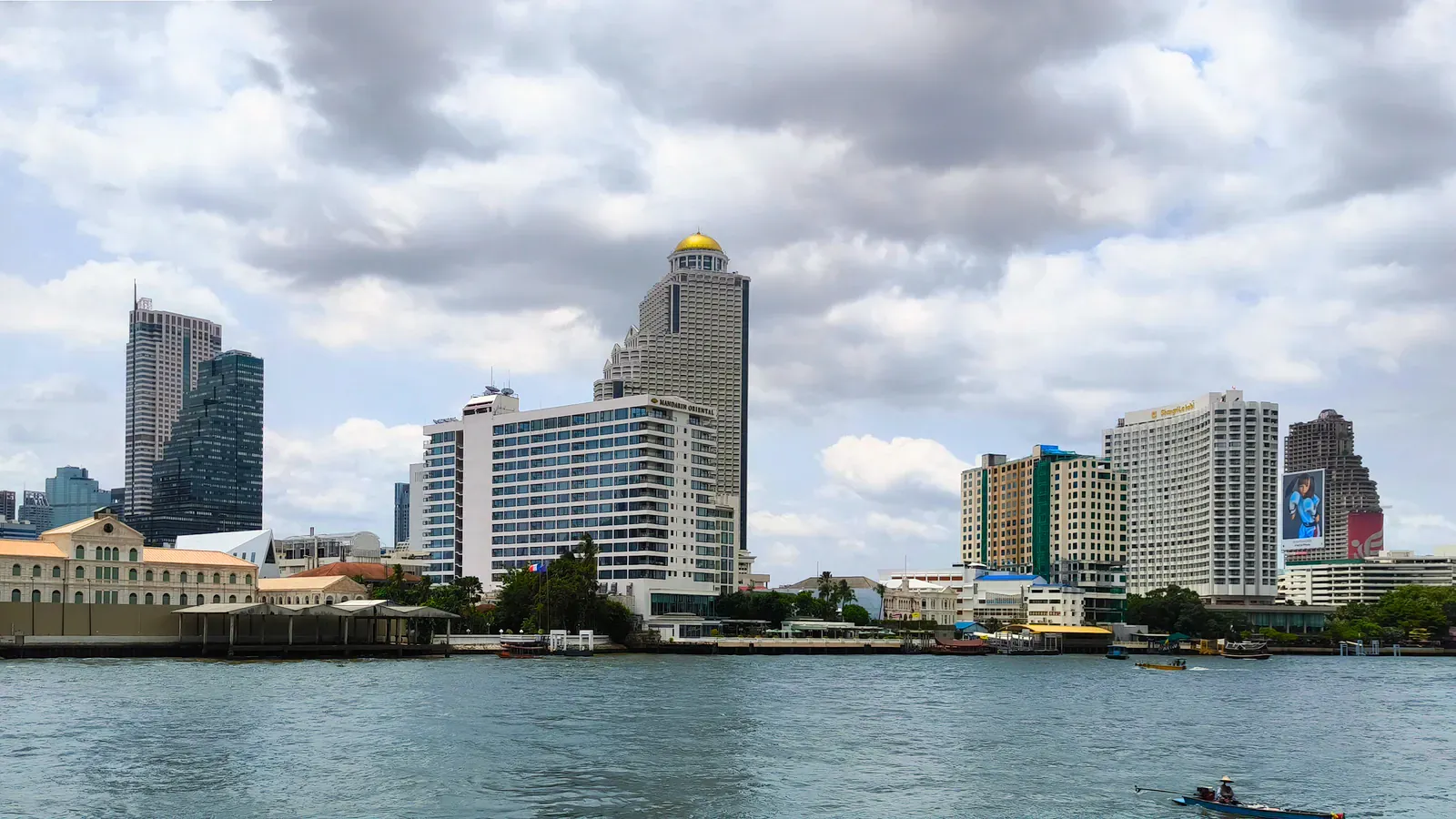
Where to stay
Pick the area before the hotel
Traffic and heat make Bangkok distances feel longer than they look on a map, so the area shapes a trip more than the hotel does. Our guides match areas to trip types and explain the trade-offs.

Places to stay
Find a hotel
Explore the other desks
More from Transport
- 9 min read
 10 min read
Airport Rail Link Bangkok: 8 Stops, 26 Minutes, 45 Baht
 6 min read
Bangkok BTS and MRT fares: single trip vs day pass

Newsletter
You're subscribed as