
Paperwork
90-Day Reporting and TM30 in Thailand Explained
How the 90-day address report and TM30 landlord notification work, who owes each one, how they interact, and the mistakes that cause trouble.
On this page
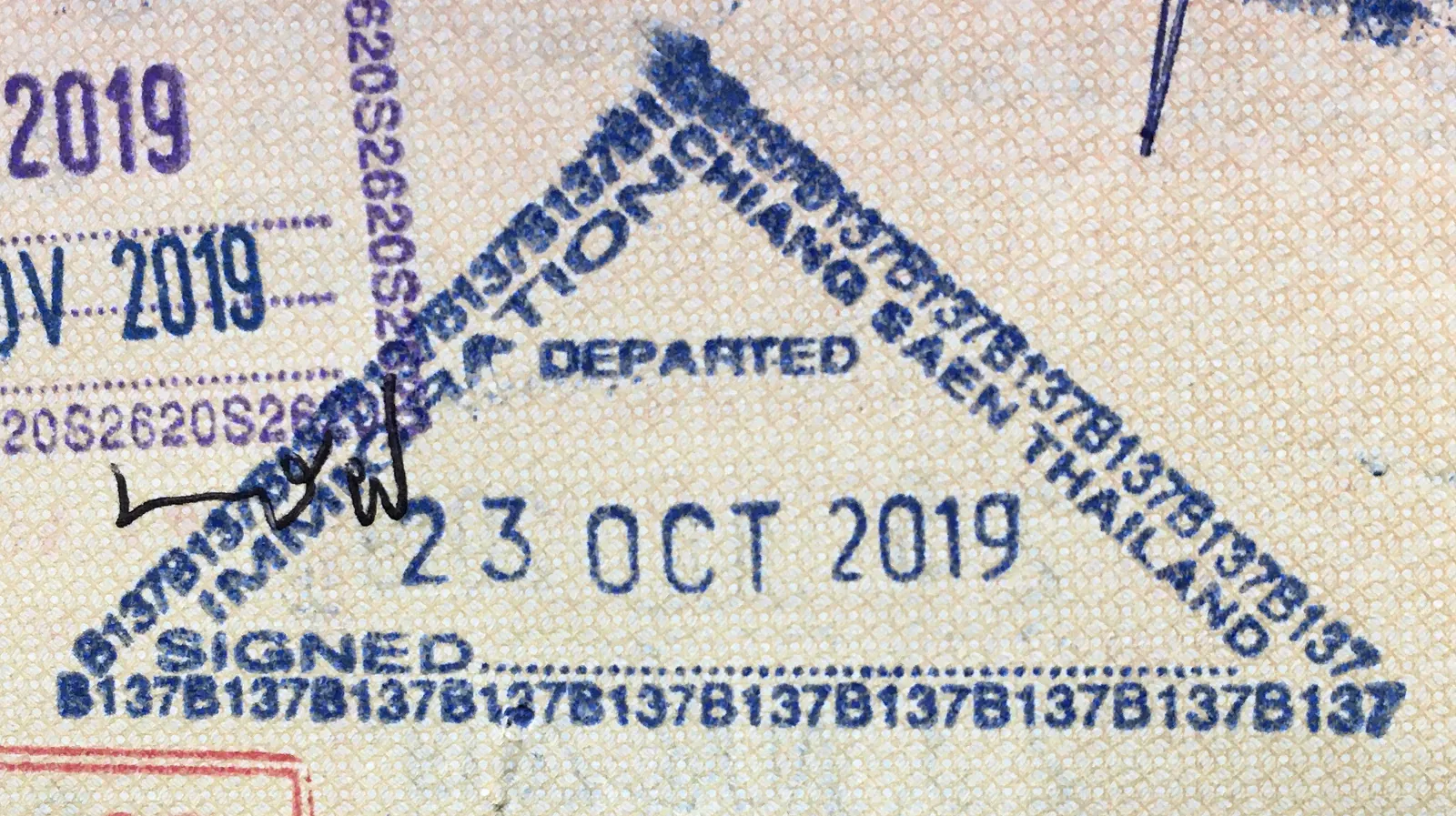
Long-stayers in Thailand get tangled in two separate duties that share a subject (your address) but sit on different people and different clocks. The 90-day report is yours to file. TM30 is legally your landlord’s, hotel’s or condo juristic office’s, though tenants often end up chasing it anyway. Missing either can quietly block other immigration transactions later.
This is general information, not immigration or legal advice. Rules, filing channels, fines and how strictly they’re enforced vary between immigration offices and change over time. Confirm current practice with the Thai Immigration Bureau, the specific office you deal with, or a licensed adviser before relying on anything here.
The 90-day report, on its own
Who owes it
Any foreign national who remains in Thailand continuously for a long stretch under a long-stay permission (a non-immigrant category, an extension of stay, or a visa like the DTV) generally owes a report confirming their current address at roughly the same interval, repeating for as long as they stay without leaving the country. It applies regardless of which long-stay basis got you there; the duty attaches to continuous presence, not to a specific visa type. For how the DTV’s own stay periods and extensions work, see the DTV visa guide.
The clock, and how leaving the country affects it
The reporting clock runs from your last entry, or from your last report, whichever is later. Each time you leave and re-enter Thailand, the clock is generally understood to reset: you start counting again from the new entry, rather than continuing a countdown from before you left. This is exactly why long-stayers who travel internationally often find they rarely, if ever, hit the actual reporting date: a trip abroad resets things.
Because the practical effect of any given trip depends on timing and on how the specific office interprets it, don’t assume a resets-the-clock rule protects you close to a deadline: file or check rather than guess.
Filing channels, as categories
Three broad channels exist, though not every office supports every one identically:
- In person, at the immigration office covering your registered address.
- By post, sending the required form and copies to the relevant office ahead of the due date.
- Online or via an app, through Immigration’s own digital channel, generally open for a window before and shortly after the due date.
Which channel is fastest or most reliable depends heavily on the office and on how recently the online system has been working smoothly: it has had documented periods of instability. Build in a buffer rather than filing at the very last permitted moment.
The receipt, and why you keep it
Filing produces a receipt or acknowledgement, usually stating the date of your next report. Keep every receipt, not just the most recent one. It’s the primary proof you filed on time if a later dispute arises, and immigration officers sometimes ask to see reporting history at extension appointments or other transactions. Treat it the same way you’d treat a tax receipt: filed somewhere you can find it in thirty seconds, not buried in an inbox.
Being late
Missing the window doesn’t cancel the duty: it just means filing late, generally with a fine involved. Exactly how the fine is calculated, and whether it differs between filing voluntarily late versus being caught unreported at another transaction, is set by the Immigration Bureau and applied with some variation by office; this article won’t state a figure as fact. What’s consistent across accounts is that filing late and voluntarily is better than not filing at all: a report that’s overdue by a few days is a minor administrative fix; being found unreported months later at an extension appointment is a much worse conversation.
Why a change of address matters
The 90-day report confirms your address is current in Immigration’s records. If you move and don’t get a fresh TM30 filed at the new address (see below), your next 90-day report can be rejected or complicated, because the two systems are meant to be consistent with each other. Report your move promptly rather than letting it slide until your next 90-day date is due.
TM30, on its own
Whose duty it legally is
TM30 is an address-notification duty that falls on the house master, owner, possessor or manager of the residence where a foreign national is staying: in practice, usually the landlord, the hotel, or the condo juristic office/management for a managed building. It is not, on paper, the foreign tenant’s own duty to file.
What triggers it
A TM30 notification is generally expected whenever a foreign national moves into a property, and again after certain trips abroad and re-entries, even short ones. The property side is meant to notify Immigration that a foreign national is resident there, tied to the address, not to the individual’s visa type.
Why a tenant often ends up doing it anyway
In practice, many landlords don’t know the rule exists, don’t want the administrative hassle, or are simply absent. Because a missing TM30 becomes the tenant’s problem at the next immigration transaction (see below), tenants frequently end up filing it themselves, with the landlord’s cooperation on paperwork, or push their agent or condo juristic office to handle it. This is worth settling before you sign a lease, not after you discover the gap at an extension appointment: see the rent category for what to check in a contract before moving in.
How a missing TM30 blocks other transactions
This is the sharp edge: Immigration officers commonly check that a current TM30 notification is on file for your address before processing other things: a 90-day report, an extension of stay, a re-entry permit application. If the TM30 is missing or stale, you can be sent away to sort it out before your actual business gets processed, sometimes at short notice and sometimes with a fine attached. This is precisely why the tenant, who has the most to lose from a delay, ends up chasing a duty that legally belongs to someone else.
Why the two get confused
They both concern your address. They’re filed with the same institution. A missing one can hold up the other. And in casual conversation people use “90-day report” loosely to mean “the address paperwork,” blurring a duty that’s yours with one that legally isn’t. Treat them as two separate systems that must agree with each other, not one task.
| 90-day report | TM30 | |
|---|---|---|
| Legal duty of | The foreign national | The house master / landlord / hotel / condo juristic office |
| What it confirms | You are still in Thailand, at this address, on this continuous stay | A foreign national is currently resident at this address |
| Triggered by | Time elapsed since last entry or last report | Moving in, and re-entry after travel |
| Resets on | Leaving and re-entering the country | Each new stay at the address, and re-entries |
| Consequence of gap | Late fine; possible friction at future transactions | Blocks 90-day reports, extensions and other transactions until fixed |
The practical playbook
What to keep in your document folder
- Every 90-day report receipt, oldest to newest, not just the latest.
- A copy of the TM30 notification (or its receipt) for your current address, and for any previous address you’ve held during your stay.
- Your lease or accommodation confirmation, matching the address on file.
- A note of your last entry date and your next 90-day due date.
When the landlord won’t file
- Ask directly, in writing, whether they’ve filed TM30 for your move-in: many will do it once asked, especially through a condo’s juristic office which handles this routinely for multiple foreign tenants.
- If they won’t or can’t, ask whether you can file it yourself with their cooperation on the property paperwork (title deed or lease details), or check whether the specific office accepts a tenant-initiated filing in the landlord’s name.
- Keep a written record of your attempts to get it filed. If a gap causes a problem later, having tried is better than having ignored it.
- For a new lease, raise TM30 responsibility as a condition before signing, not after moving in.
Preparing for an office visit
- Bring your passport, a printed or digital copy of your most recent 90-day receipt, and your TM30 evidence for the current address.
- Arrive with time to spare; queues and processing speed vary a lot by office and time of month, and some offices are visibly busier around public holidays or the start of a month.
- If you’re filing late, bring whatever explains the gap (travel dates, a change of address) even if it doesn’t waive a fine: a clear paper trail generally makes for a smoother visit.
- If you’ve recently changed address, bring both the old and new TM30 evidence where you can, since an officer may want to see the transition rather than just the current state.
- Photocopy the passport pages the office typically wants (photo page, visa or entry stamp, most recent stamp) before you go: some offices still ask for physical copies even where a digital record exists, and queuing twice for a photocopier inside the building wastes the time you saved by arriving early.
How the two duties interact with your visa type
Neither duty changes based on which long-stay visa or extension category got you into Thailand: a DTV holder, a retirement extension holder and a work-permit holder on a long-stay extension all owe the same 90-day report on the same logic, and their landlords or condo management owe the same TM30 duty. What differs is only the paperwork behind your underlying stay, which an officer may still ask about if your reporting history looks irregular. Keeping your long-stay basis current is a separate question from keeping these two reporting duties current, and letting one lapse doesn’t excuse the other.
Mistakes that cause the most pain
- Assuming a landlord filed TM30 without checking, then discovering the gap at an extension appointment.
- Losing old 90-day receipts, leaving no proof of a clean filing history.
- Filing the 90-day report at the wrong office: it generally has to go to the office covering your current registered address, not wherever is most convenient.
- Not updating TM30 after moving, which then snags the next 90-day report.
- Leaving reporting to the last possible day, with no buffer if a system is down or an office is slow.
Extension of stay and other transactions sit downstream of both of these duties being current: see the DTV visa guide for how that plays out for one specific route, and visa exemption and tourist visas for why short-stay visitors generally don’t hit either duty at all.
Common questions
Do short-stay tourists need to file a 90-day report?
Generally no: the duty attaches to continuous long-stay presence under a long-stay permission, not to a short visa-exempt or tourist-visa stay. If you’re unsure whether your specific stay counts, ask the Immigration Bureau or the office nearest you rather than guessing.
Can I file my 90-day report online every time?
Often yes, within the permitted filing window, but the online system’s availability and reliability has varied over time, and not every situation is accepted online. Keep an in-person or postal fallback in mind, especially close to a deadline.
What if I file TM30 myself and the landlord objects?
This is a case-by-case conversation best had with your specific immigration office, since the legal duty formally sits with the landlord. Where possible, get the landlord’s cooperation on the paperwork rather than trying to route around them entirely.
Does a hotel stay need a TM30?
Hotels generally handle this themselves as a routine part of registering foreign guests, since they are treated as the house master for stays on their premises. It becomes your personal problem mainly in private rentals and informal arrangements.
Is there a fine for late TM30 filing?
Fines exist and are set by the Immigration Bureau; this article deliberately doesn’t state a figure, because amounts and how strictly they’re applied vary and change. Ask the specific office, or a licensed adviser, for current numbers before assuming a cost.
If I change condos, do I need to do anything before my next 90-day report?
Yes: get TM30 filed for the new address as early as possible, ideally before your next 90-day report is due, since a mismatch between your reported address and Immigration’s TM30 record is one of the more common causes of friction at that appointment.
Written by
Mike Brochlowski
Founder and editor, travel photographer and designer
I'm Mike Brochlowski, a travel photographer and designer, and I currently live on Koh Samui, Thailand. I built BangkokWiki to put practical, checked information about Bangkok in one place. Every page is researched from official and primary sources, and the text names them. Where a page shows a checked date, that is when its facts were last confirmed. I also run samui69.com, a non-commercial guide to Koh Samui. If you spot an error or something out of date, tell me through the contact page and I will check it and correct the page.
Read all articles
Visas and paperwork
Staying in Thailand longer?
Visas, extensions, documents and banking for longer stays. Rules and fees change often and offices apply them differently, so check the official source before you act.

Places to stay
Find a hotel
Explore the other desks
More from Paperwork
- 9 min read
 5 min read
Getting a Thai Tax ID as a Foreigner in Bangkok
 9 min read
The Bangkok Immigration Office Survival Guide

Newsletter
You're subscribed as