Things to do
Best Museums in Bangkok and What Each One Offers
A category-by-category guide to Bangkok's museums: what you'll see, how long to allow, and which collections reward the heat and which don't.
At a glance
- Reading time
- 12 min read
- Chapters
- 17
- Published
- Sep 20, 2026
On this page
Bangkok’s museum scene is uneven by design, not accident: a handful of world-class house museums and design venues sit alongside underfunded national collections with patchy English labelling and buildings that were never air-conditioned for crowds. The trick is matching the venue to what you actually want, not working through a “top ten” list in order. This guide groups the city’s museums by what they’re for, tells you what to expect walking in, and is honest about which ones are worth the effort.
The national collections: strong material, weak delivery
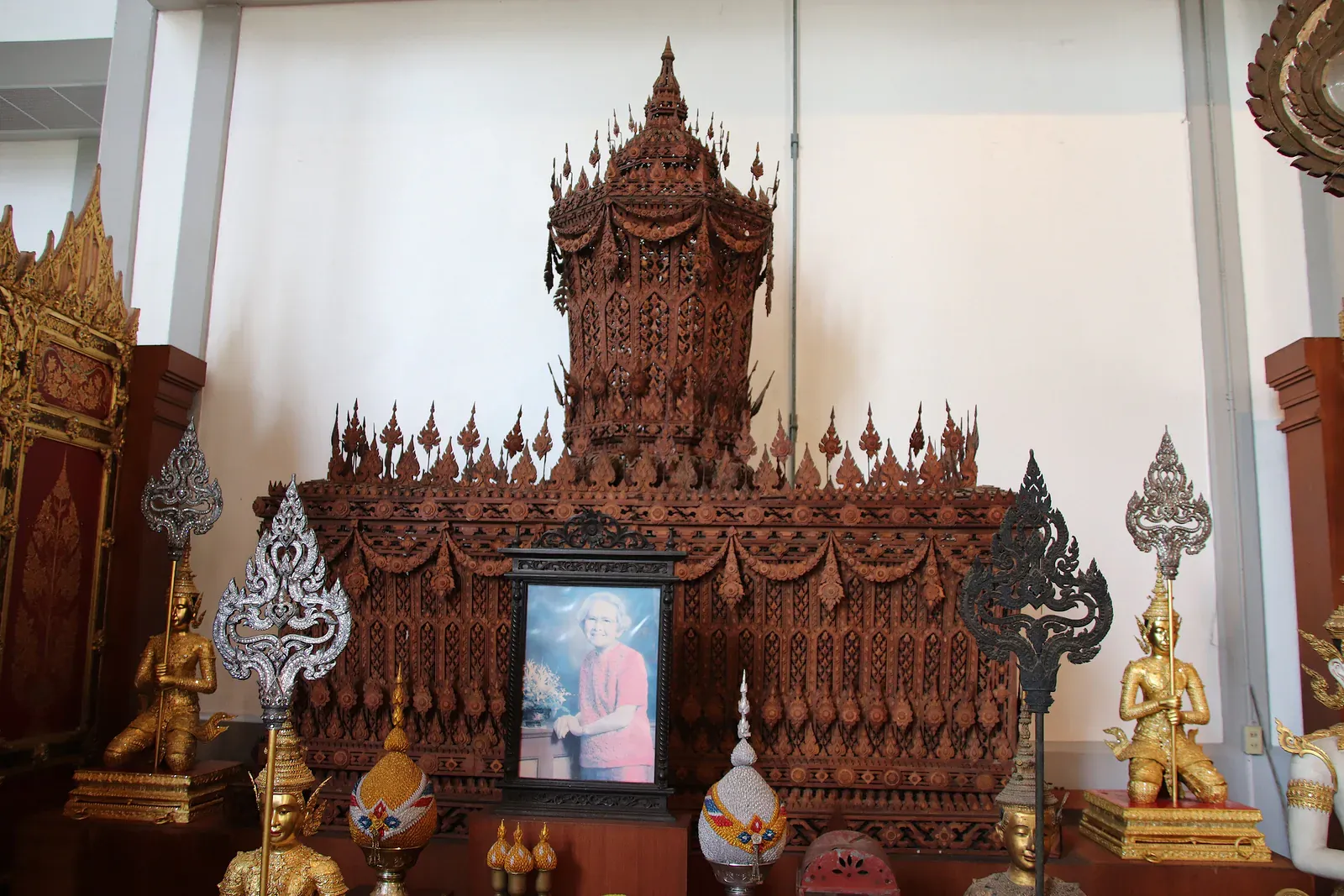
The National Museum Bangkok, beside Sanam Luang, holds the country’s largest collection of Thai art and archaeology: Buddha images spanning every major period and region, royal funeral chariots, weapons, ceramics and a genuinely important prehistoric section. The problem is presentation: English labelling is inconsistent between galleries, some buildings are un-air-conditioned former palace halls that get uncomfortably hot by late morning, and the layout sprawls across multiple structures without an obvious route. It rewards patience and, ideally, one of the volunteer-led English tours that run on certain days: check before you go, since the schedule changes. Allow two to three hours if you want to see the highlights rather than the whole complex, and don’t attempt it as a fast add-on to something else.
The Museum of Siam, near Sanam Chai, takes the opposite approach: a modern, multimedia exploration of Thai identity (where “Thai-ness” comes from, how it was constructed through food, migration, religion and politics) aimed squarely at making the subject accessible rather than exhaustive. It’s fully air-conditioned, well labelled in English, and works for visitors who want context rather than artefacts. It suits people who want to understand Thailand before or after a temple-heavy day, less so anyone wanting historical objects for their own sake.
The house museums: the city’s real strength
If Bangkok has a genuine museum highlight, it’s the compound houses rather than the national institutions.
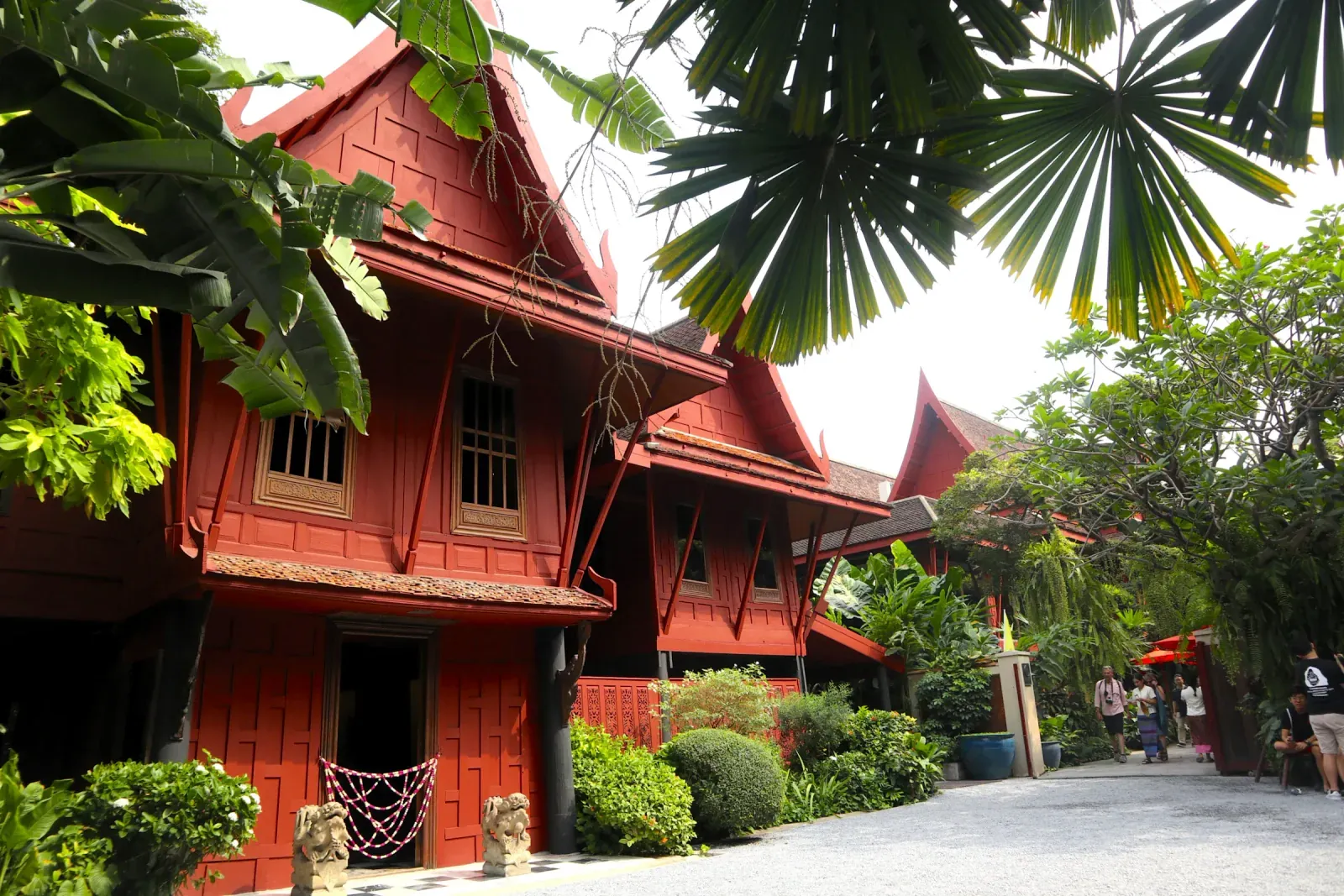
Jim Thompson House, close to National Stadium BTS, is a cluster of traditional teak houses assembled by the American silk entrepreneur who revived the Thai silk industry and then vanished without explanation in Malaysia in 1967. The buildings themselves (steep roofs, elevated on stilts, joined into one residence) are the exhibit as much as the Southeast Asian art and porcelain inside. Entry is normally via a timed, guided walkthrough in small groups, which controls crowding well but means you can’t linger at your own pace. Allow an hour including the garden. It’s shaded, calm, and one of the few Bangkok museums that works as a genuinely pleasant experience rather than an endurance test.
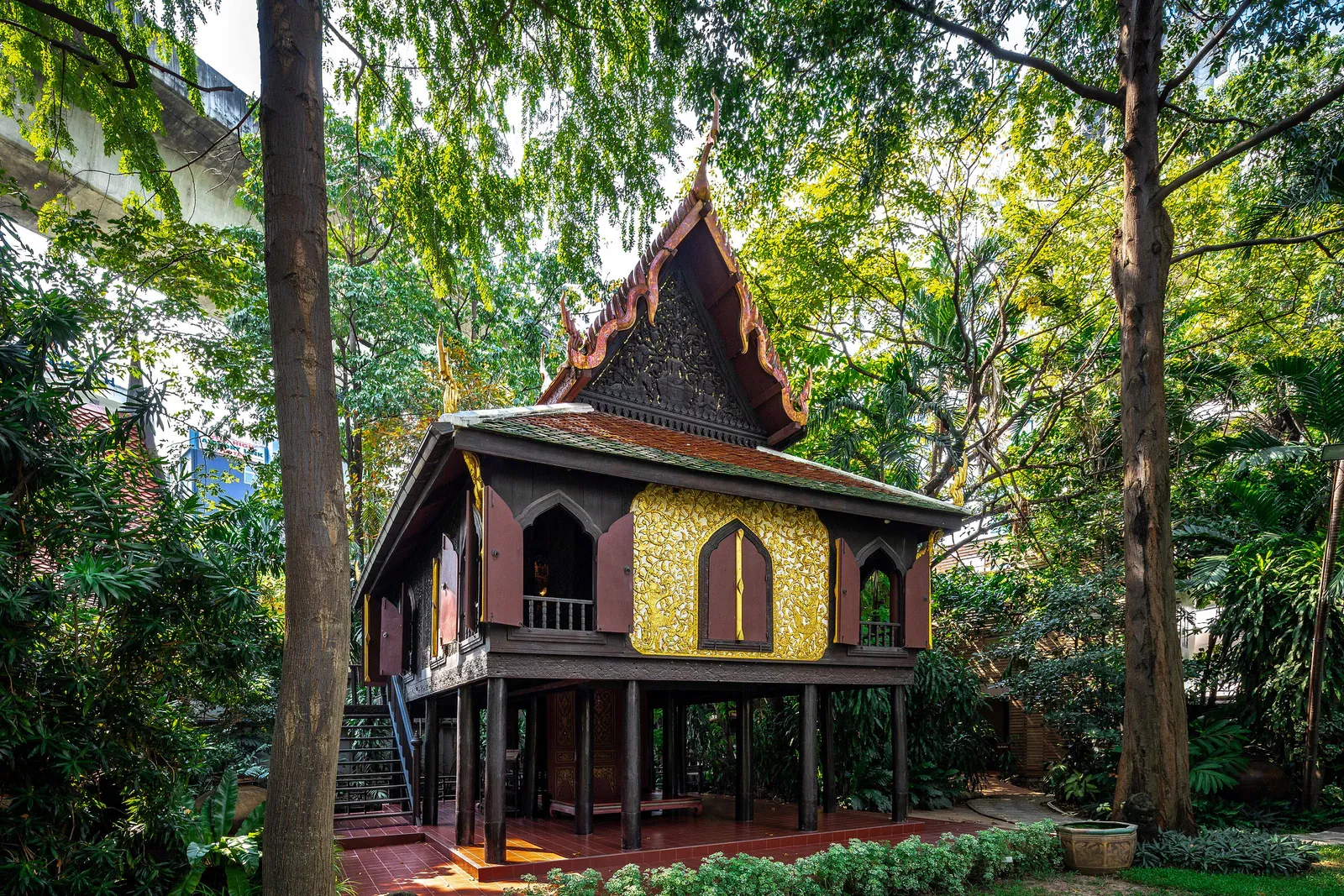
Suan Pakkad Palace, a short walk from Phaya Thai BTS, is a set of traditional Thai houses that belonged to a Thai prince and princess, arranged around ponds and gardens, with a lacquer pavilion (the Lacquer Pavilion, moved here from Ayutthaya) as the standout piece. It gets a fraction of Jim Thompson’s visitors despite comparable architectural interest, which means calmer viewing and no timed-entry bottleneck: the trade-off is thinner English interpretation in places.
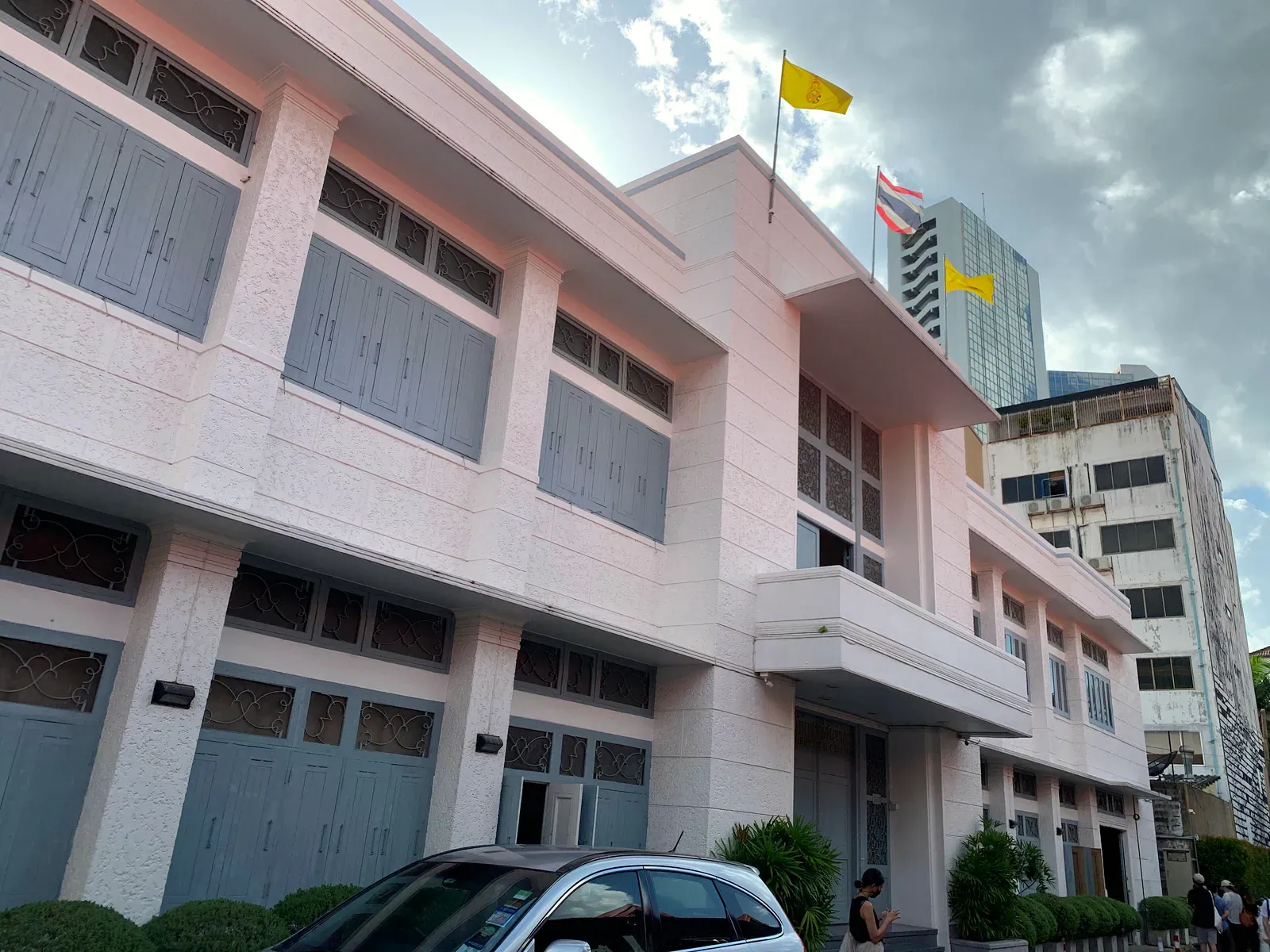
The Bangkokian Museum in a converted 1937 wooden house near the river is smaller and more modest again: a middle-class Bangkok household preserved as it might have looked mid-century, furniture and daily objects rather than art. It’s a fifteen- to twenty-minute visit, free or near-free, and works best as a quick, human-scale counterpoint to the grander houses rather than a destination in its own right.
Contemporary art institutions
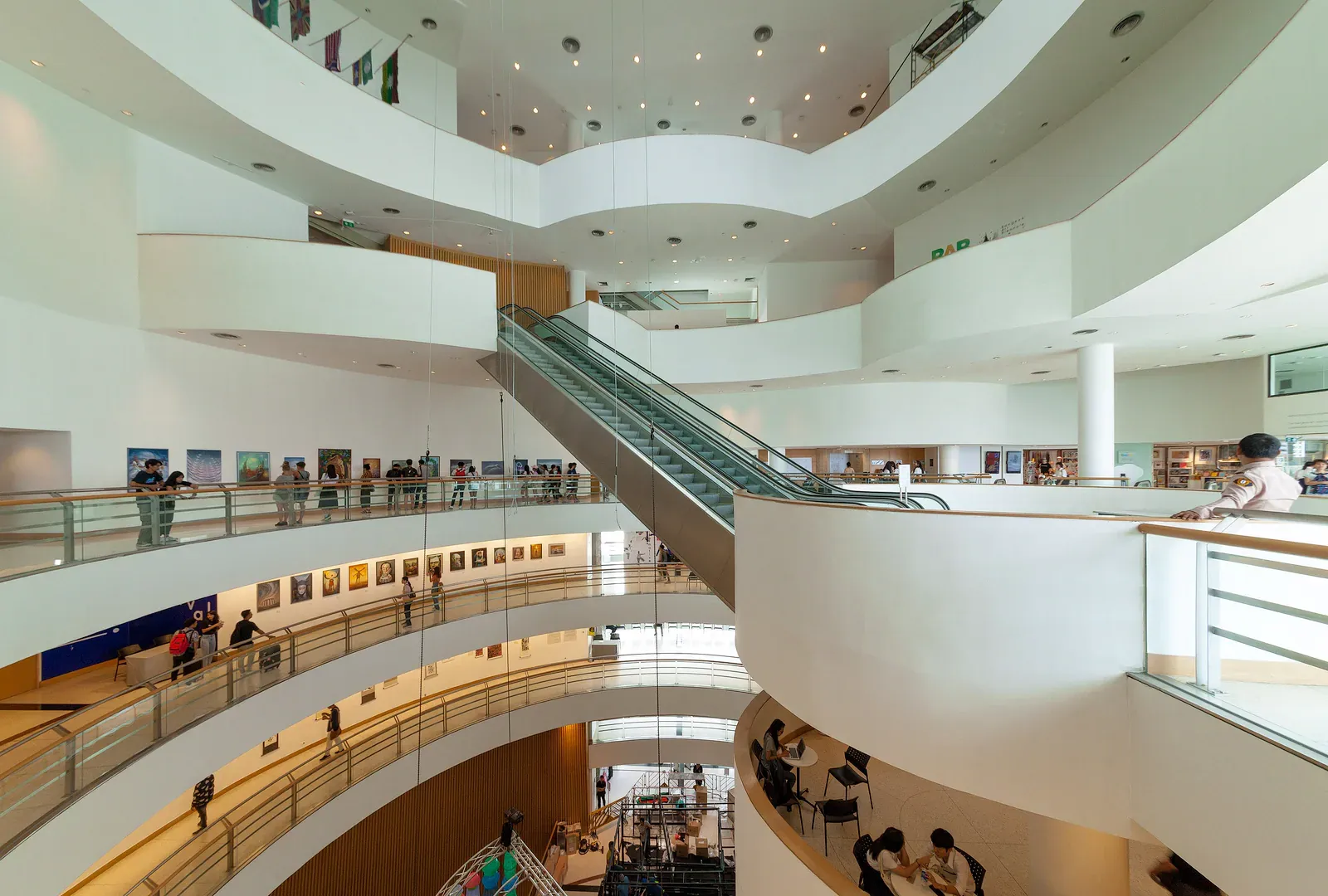
Bangkok’s contemporary scene has its own dedicated guide covering galleries and clusters in depth (see the full gallery guide) but two institutions belong in any general museum plan. The Bangkok Art and Culture Centre (BACC), opposite MBK at National Stadium BTS, is a multi-storey public gallery with rotating contemporary exhibitions, generally free to browse, and easy to combine with an afternoon around Siam. The Museum of Contemporary Art (MOCA Bangkok), further out near the Kamphaeng Phet/Chatuchak area, holds a substantial private collection of modern and contemporary Thai painting and sculpture across several floors: worth the detour for anyone serious about Thai modern art, less so as a casual stop given the distance from the central rail network.
The specialist and quirky collections
This is where Bangkok gets genuinely strange, in a good way. Two big outlying sites have their own guides: the Erawan Museum and the open-air Ancient Siam (Muang Boran).
- Siriraj hospital’s medical museums, across the river near Siriraj/Thonburi, group several collections under one roof: pathology, forensic medicine, parasitology and a prehistoric anatomy lab. The forensic and pathology sections display real preserved specimens and are not for the squeamish or for young children: this is the honest caveat, not a marketing line. English labelling is functional rather than polished. Budget 45-90 minutes.
- The Queen Sirikit Museum of Textiles, inside the Grand Palace grounds, covers royal Thai textile history and the revival of traditional weaving techniques, well curated and air-conditioned, and a natural add-on if you’re already doing the palace.
- The Bank of Thailand’s currency-related displays and other institutional collections cover the history of Thai money and banking: niche, free or near-free, and worth twenty minutes for anyone actually interested in the subject rather than a general visitor.
- TCDC (Thailand Creative & Design Center), in the Charoen Krung creative district, isn’t a museum in the traditional sense but runs design exhibitions and holds a public design library: more useful to design students and professionals than casual sightseers.
Royal and ceremonial sites
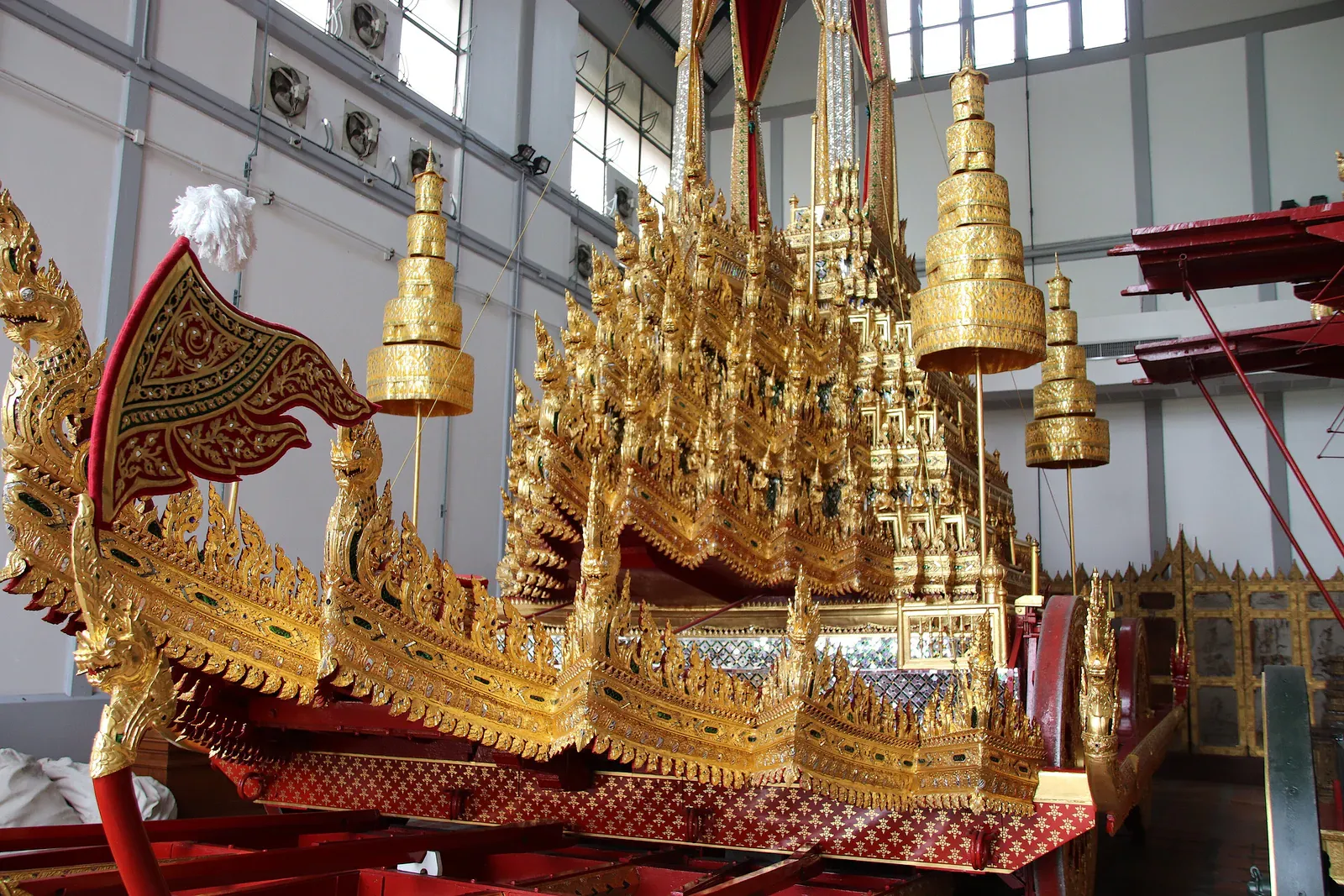
Vimanmek Mansion, within the Dusit Palace area, is the world’s largest golden teak building, built as a royal residence, and shows royal furnishings and personal effects across dozens of rooms via guided tours. The Royal Barges National Museum, on a Thonburi canal, houses the ornately carved and gilded ceremonial barges used in royal river processions: a striking, under-visited collection, best reached by a short cross-river or canal-boat trip rather than by road, given the awkward road access.
Temple museums attached to major wats
Several of Bangkok’s most-visited temples have a museum element bolted on. Wat Traimit, near Hua Lamphong/Wat Mangkon, houses the five-and-a-half-tonne solid gold Buddha image along with an exhibition on Bangkok’s Chinatown history in the same building: a natural pairing if you’re already in the area. Wat Pho has a smaller museum and traditional Thai massage school exhibits alongside the reclining Buddha itself, worth a look if you’re spending real time at the temple rather than a fifteen-minute drive-by. These work as add-ons to a temple visit already planned, not as standalone destinations.
The craft of museum-going in Bangkok’s heat
Bangkok punishes visitors who plan museum days the way they would in a temperate city. A few rules that make a real difference:
- Front-load outdoor or partially outdoor sites (the National Museum’s courtyards, Suan Pakkad’s gardens) for the morning, and save fully air-conditioned venues (Museum of Siam, BACC, MOCA) for early afternoon when the heat peaks.
- Two museums in one morning is realistic; three rarely is, once you account for travel time, queuing and the mental fatigue of reading labels in heat and humidity. Pick two that are geographically close: Wat Traimit and the Golden Buddha area, or Jim Thompson and BACC, both work as a pair.
- Guided tours earn their keep at Jim Thompson House and the National Museum specifically, because the architecture and objects need context that self-guided labelling doesn’t fully supply. Elsewhere, an audio guide or a good English information sheet is usually enough.
- Hydrate before you feel thirsty, and treat any un-air-conditioned building as a 30-45 minute limit for most visitors, less for seniors or young children.
Photography and accessibility
Photography rules vary by venue and sometimes by room within the same building: the Emerald Buddha viharn at the Grand Palace and closed cabinets of religious relics are common no-photography zones, while gardens and general galleries are usually fine. Assume flash is discouraged near textiles, lacquerwork and painted surfaces even where photography itself is allowed, and check signage at each entrance rather than assuming yesterday’s rule at a different museum applies here.
Accessibility is genuinely mixed. The house museums are the hardest: raised thresholds, wooden stairs, and uneven garden paths at Jim Thompson House and Suan Pakkad mean wheelchairs and prams struggle without assistance, and staff can’t always improvise a ramp on the spot. The National Museum’s older halls have steps and no consistent lift access between buildings. Modern venues (Museum of Siam, BACC, MOCA) are step-free and lift-equipped throughout, which makes them the safer choice for visitors with mobility needs who still want a real museum experience.
The free and low-cost end
Several venues on this list cost nothing or close to it, and a fuller breakdown of the free scene (including free days, donation-based temple museums and the creative-district walking route) lives in the free and cheap museums guide. As a rule of thumb, national and institutional venues charge a modest fee in the low hundreds of baht (roughly ฿100-300, or around US$3-9, indicative for 2026), while BACC’s main galleries and several temple museums operate on free entry or a donation box rather than a till.
For families
Families with children under ten generally do best at Museum of Siam (interactive, air-conditioned, built for engagement rather than reverence) and skip the Siriraj medical museums entirely: the forensic and pathology specimens are not appropriate for young kids regardless of how curious they are. Vimanmek Mansion’s tour pace is slow and formal, which tests small children’s patience; the Royal Barges museum’s single large hall of striking gilded boats tends to hold attention better in a shorter visit.
For a rainy afternoon
Fully indoor, fully air-conditioned options cluster around Museum of Siam, BACC, MOCA and the Queen Sirikit Museum of Textiles: all workable regardless of weather, unlike Suan Pakkad or the Royal Barges museum, where getting there involves exposed walking.
Matching interests to venues
| Interest | First pick | Second pick | The catch |
|---|---|---|---|
| Thai history and identity | Museum of Siam | National Museum Bangkok | The national museum’s labelling is inconsistent; go with a tour if you can |
| Modern and contemporary art | MOCA Bangkok | Bangkok Art and Culture Centre | MOCA is a real detour from the central rail lines |
| Design | TCDC | Queen Sirikit Museum of Textiles | TCDC suits practitioners more than casual browsers |
| The macabre | Siriraj medical museums | Wat Traimit (Chinatown history wing) | Not suitable for children or the squeamish |
| Architecture | Jim Thompson House | Vimanmek Mansion | Both require timed or guided entry, so you can’t set your own pace |
| Textiles | Queen Sirikit Museum of Textiles | Jim Thompson House | Jim Thompson’s textile focus is smaller than the name implies; it’s mostly the houses and general Asian art |
Three realistic morning pairings
Rather than a long list, three pairings that actually work geographically and thematically:
- Jim Thompson House then BACC. Both sit within a short walk of National Stadium BTS, so the transition costs almost no travel time. Do the house first, while you’re fresh and the timed tour slots are less oversubscribed, then cross to BACC for contemporary work once the day has warmed up and you want a fully air-conditioned floor to wander at your own pace.
- Wat Traimit’s Golden Buddha and Chinatown history wing, then a Chinatown walk. The museum element is small enough to finish in thirty to forty minutes, leaving the rest of the morning for Yaowarat’s street-level history and food before the midday heat sets in.
- Museum of Siam then the Grand Palace area’s Queen Sirikit Museum of Textiles. Both are near Sanam Chai MRT, both fully air-conditioned, and doing Museum of Siam first gives useful context on Thai identity before the more object-focused textile collection.
Pairings that look sensible on a map but don’t work in practice: anything involving MOCA Bangkok as a “quick add-on”, since the distance from the central rail network alone can eat ninety minutes round trip; and Suan Pakkad paired with the Royal Barges museum, which look close on paper but involve an awkward road or canal connection between them rather than a direct walk.
Guided tours versus going alone
A guide changes the experience most at sites where the objects need historical or religious context that a label can’t supply quickly: the National Museum’s period rooms, the murals and architecture at temple museum sites, and Vimanmek Mansion’s room-by-room royal history. Jim Thompson House builds a guide into the ticket by default, so the question doesn’t arise. Elsewhere (Museum of Siam, BACC, MOCA, the Queen Sirikit Museum of Textiles) the exhibits are designed to be self-explanatory through signage and multimedia, and a guide adds less relative value. If you’re choosing where to spend money on a guide rather than doing everything guided, put it toward the National Museum first.
Seasonal timing
The practical museum-going calendar in Bangkok runs opposite to what a visitor from a temperate climate might expect. The cooler season, roughly November to February, is when outdoor-heavy sites (the National Museum’s courtyards, Suan Pakkad’s gardens, the walk to the Royal Barges museum) are genuinely pleasant rather than an endurance exercise, and it’s worth weighting a trip’s museum-heavy days toward this window if your travel dates are flexible. April, the hottest month, is when the fully air-conditioned venues earn their keep hardest, and it’s also when queues at popular sites can be shorter, since a smaller share of visitors are willing to do outdoor sightseeing in that heat.
The honest verdict
Skip the idea of a comprehensive museum tour of Bangkok: the city doesn’t reward it the way Paris or London might. Instead, pick two or three venues that match a genuine interest, weight the plan toward the house museums and Museum of Siam if you only have one museum day, and treat the National Museum as something to do with a guide or on a cooler, less rushed day rather than as an obligatory box to tick.
Common questions
What is the single best museum in Bangkok for a first-time visitor?
Jim Thompson House is the strongest all-round choice: air-conditioned wait areas, a garden, a genuinely interesting story, and a manageable one-hour visit. Museum of Siam is the best second choice if you want context on Thai culture rather than one man’s history. For the wider background, see our Bangkok history and culture guide.
Is the National Museum Bangkok worth visiting?
The collection is excellent, but the experience is uneven: patchy English labelling, hot un-air-conditioned halls, and a sprawling layout. It’s worth it if you go with a guide or English-language tour, or if you have a genuine interest in Thai art history and don’t mind the heat.
Which Bangkok museums are not suitable for children?
The Siriraj medical museums, particularly the forensic and pathology sections, display real preserved specimens and are not appropriate for young children. Most other venues on this list are fine, with Museum of Siam being the most purpose-built for younger visitors.
Do I need a guide at Jim Thompson House?
Entry is generally structured as a small-group guided walkthrough rather than free roaming, so in effect, yes: a guide comes with the ticket rather than being optional. Confirm the current format before you go, since procedures at timed-entry sites change.
How many museums can I realistically see in one day in Bangkok?
Two is comfortable, three is possible only if they’re close together and you skip lunch or keep it brief. Heat, queuing and travel time between sites eat more of the day than most visitors expect.
Are Bangkok’s house museums wheelchair accessible?
Generally not well. Jim Thompson House and Suan Pakkad both involve raised wooden thresholds, stairs and uneven garden paths. Museum of Siam, BACC and MOCA are step-free and a better choice for visitors with mobility needs.
Part of
Written by
Mike Brochlowski
Founder and editor, travel photographer and designer
I'm Mike Brochlowski, a travel photographer and designer, and I currently live on Koh Samui, Thailand. I built BangkokWiki to put practical, checked information about Bangkok in one place. Every page is researched from official and primary sources, and the text names them. Where a page shows a checked date, that is when its facts were last confirmed. I also run samui69.com, a non-commercial guide to Koh Samui. If you spot an error or something out of date, tell me through the contact page and I will check it and correct the page.
Read all articles
Where to stay
Pick the area before the hotel
Traffic and heat make Bangkok distances feel longer than they look on a map, so the area shapes a trip more than the hotel does. Our guides match areas to trip types and explain the trade-offs.

Places to stay
Find a hotel
More from Things to do
- 12 min read
 12 min read
Free Museums in Bangkok: Where Culture Costs Nothing
 11 min read
Rattanakosin vs Chinatown: Bangkok's Historic Cores Compared

Newsletter
You're subscribed as