
Paperwork
Thailand Visa Exemption vs Tourist Visa
The difference between Thailand visa exemption on arrival and a tourist visa, how extensions and border runs work, and when to stop stacking stays.
On this page
Most short trips to Thailand run on visa exemption, a stay granted on arrival by nationality, not a visa you applied for. A tourist visa is a different, applied-for document with its own entry count and stay length. Confusing the two (or assuming last year’s day count still applies) is the single most common cause of an accidental overstay.
This is general information, not immigration or legal advice. Nationality eligibility, day counts, entry requirements and how they’re enforced change, sometimes with little notice. Confirm the current rules for your passport with a Royal Thai Embassy or consulate, or the Thai Immigration Bureau, before you travel: not from this page, and not from a forum post.
Current rule, checked 6 November 2026
Since 15 September 2026, visa exemption gives up to 30 days for tourism to ordinary-passport holders from 60 countries and territories. It replaced the 60-day exemption that covered 93. The 60 include the United States, United Kingdom, Canada, Australia, Germany, France, Switzerland and Austria. A few passports follow other schemes, for example 90 days for Argentina, Brazil, Chile, South Korea and Peru.
- How to check your nationality: open the visa exemption page of the Royal Thai Embassy or consulate for your country and look for your passport’s country on the list of 60. If it is not listed, check whether another scheme applies, or apply for a tourist visa before you fly.
- Tourism only: the exemption is for tourist visits. Travel documents for foreigners issued by the listed countries are not accepted.
- Onward ticket: show a confirmed air, train, bus or boat ticket out of Thailand within 30 days of arrival, otherwise a visa is needed before you enter.
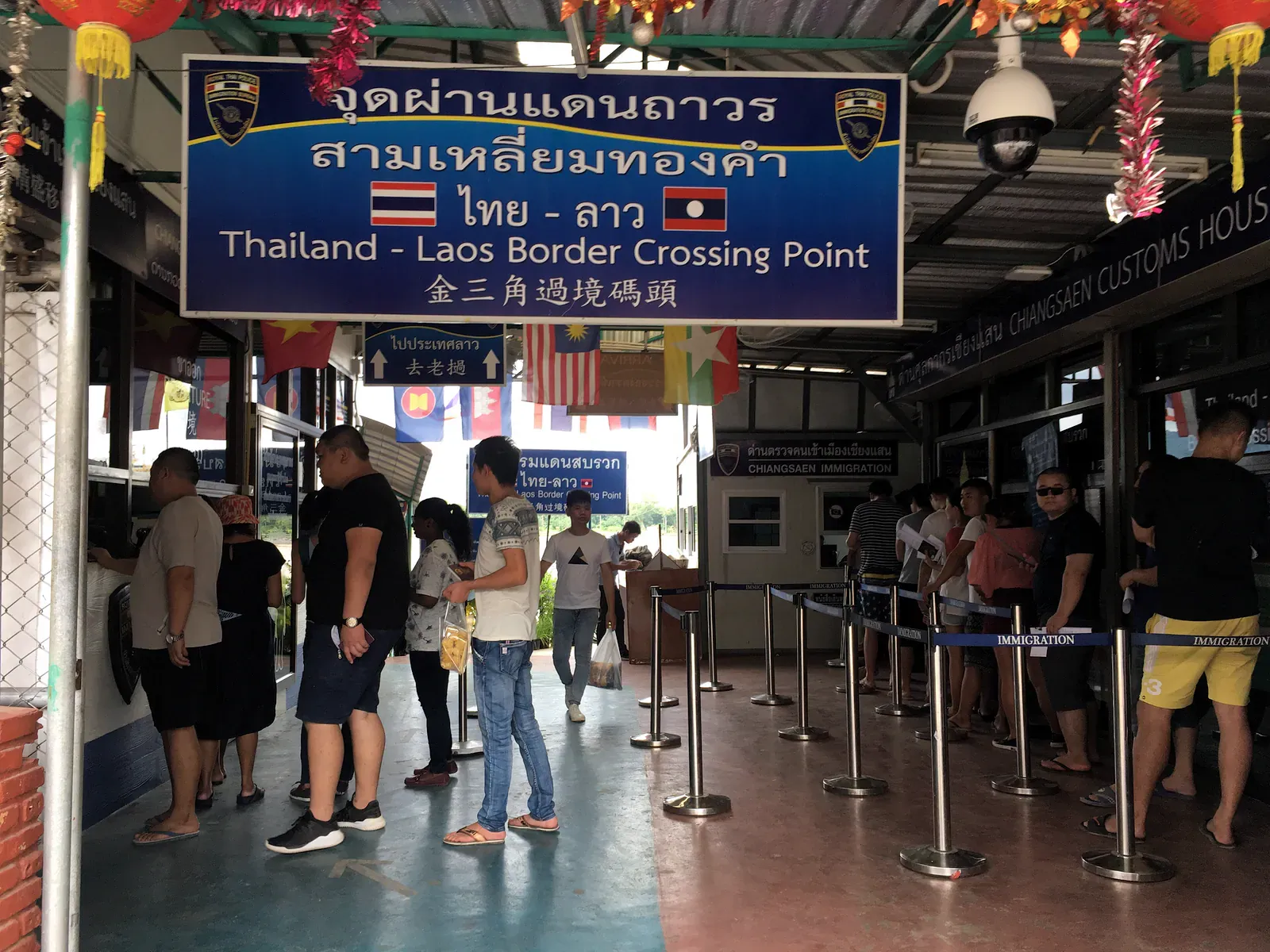
- Land and sea entries: limited to two per calendar year, except for nationals of Malaysia, Brunei, Indonesia and Singapore. This matters for border runs by land.
- Extension: granted at the immigration officer’s discretion and requested before the permitted stay ends.
Sources, checked 6 November 2026: Royal Thai Embassy pages in Doha (updated 16 September 2026), Copenhagen (updated 23 October 2026) and Oslo, and the Ministry of Foreign Affairs summary of the Cabinet decision of 19 May 2026.
Visa exemption vs an applied-for tourist visa
Visa exemption is a stay granted automatically at the border to nationals of countries Thailand has agreed to exempt from needing a visa for short tourism-type visits. You don’t apply for it in advance; you simply arrive, meet the entry conditions, and the immigration officer grants a stay of a set length tied to your nationality and the current rules. It typically comes with conditions (a return or onward ticket, sufficient funds, a genuine tourism purpose), and the exact day count has changed more than once in recent years, so treat any specific number as something to verify close to your travel date rather than something fixed.
A tourist visa, by contrast, is applied for in advance at a Royal Thai Embassy or consulate, or via the e-visa portal, before you travel. It generally comes in single-entry or multiple-entry form, with its own permitted stay per entry, and is aimed at travellers who want a longer stay than exemption offers, more certainty before flying, or multiple entries over a defined period without reapplying each time. It suits people whose nationality isn’t visa-exempt, or exempt nationals who want a longer or more flexible stay than the automatic entry offers. Related guides: Royal Thai embassies abroad guide.
Extension of stay vs a border run
Two different ways to deal with wanting more time, and they are not interchangeable:
- Extension of stay. Applying at a Thai Immigration office, inside the country, before your current permitted stay ends, to extend that same stay for a further period. This keeps you continuously within one legal stay period, with immigration’s own record of the extension.
- A border run. Leaving Thailand and re-entering, which ends your current permitted stay and starts a new one on re-entry: assuming the officer grants one. This is not a right, not a formal visa mechanism, and not guaranteed: officers can and do refuse entry, especially to travellers whose passport shows a pattern of frequent short exits and re-entries with no other basis for being in Thailand.
An extension is a documented administrative step; a border run is a fresh judgement call by whichever officer processes you that day. Relying on repeated border runs as a long-term strategy is exactly the pattern that increases the odds of a refusal: see the decision section below.
Why “how many days do I get” has no single answer
Three variables determine your actual permitted stay, and all three matter:
- Nationality. Thailand’s exemption list groups countries differently, with different day counts for different groups, and the list and counts are revised periodically.
- Entry mode. Visa-exempt entry, a single-entry tourist visa, and a multiple-entry tourist visa each carry their own stay length and rules, even for the same traveller.
- The officer at the border. Meeting the stated conditions doesn’t remove the immigration officer’s discretion. A thin-looking itinerary, no onward ticket, or a passport pattern that reads as someone living in Thailand on repeated short stays can result in a shorter stay being granted than the maximum, or in further questioning.
Because of this, “I got X days last time” is a weak basis for planning a future trip. Check current rules for your specific passport close to your travel date.
Entry requirements, as a category
Regardless of exemption or visa, officers and airlines commonly expect to see:
- Passport validity: a commonly cited standard is meaningful validity remaining beyond your intended stay, though the exact minimum has varied; check current guidance rather than assuming a specific number of months.
- Onward or return travel evidence: a booked flight or other onward travel out of Thailand within your permitted stay.
- Proof of funds: evidence you can support yourself for the visit, occasionally checked directly, more often a background condition that surfaces if something else about the entry looks irregular.
- Accommodation details: where you’re staying, at least for the first part of the trip.
- The arrival card system. Thailand operates a digital arrival card, completed online ahead of arrival, that officers check alongside your passport. Treat it as a mandatory pre-arrival step, not an optional convenience, and complete it within whatever window is currently specified before you fly.
Airlines check some of this before Immigration ever sees you
Airlines carry the cost of flying back a passenger Thailand refuses entry to, so check-in staff often verify onward tickets, arrival-card completion and sometimes visa documents before boarding: enforcing Thailand’s entry conditions as a practical filter, independent of what happens at the Thai border itself. Don’t assume that boarding the flight means you’ve cleared every requirement; it mainly means the airline was satisfied enough to let you on.
What actually happens at the immigration counter
Meeting the entry requirements on paper and clearing the counter smoothly are related but not identical: the officer in front of you is making a real-time judgement, not running a checklist.
What an officer is generally weighing. Beyond the documents themselves, an immigration officer is forming an overall impression: does the stated purpose of the trip match the traveller in front of them, does the passport’s entry-and-exit pattern look like normal travel or like someone using repeated short entries to live in Thailand, and does anything about the answers given at the counter sit awkwardly with the paperwork. None of this is published as a formal scoring system: it is trained judgement applied case by case, which is exactly why two travellers with similar paperwork can have noticeably different experiences at the same counter on the same day.
Secondary inspection. Most travellers clear primary immigration in a couple of minutes with no extra questions. A smaller number are sent to a secondary inspection area for closer questioning: this can be triggered by a passport pattern (frequent entries, prior refusals or overstays), inconsistent or incomplete answers at primary inspection, missing onward travel or accommodation evidence, or sometimes no obvious reason at all beyond routine spot-checks. Being sent to secondary inspection is not itself an accusation of wrongdoing, and most people sent there are cleared after answering a few additional questions, but it does mean having your documents genuinely in order, rather than assumed to be, matters more at that point than it did a minute earlier.
Presenting yourself and your documents well. A few habits make a routine entry stay routine: have your passport, printed or digital onward ticket, and accommodation confirmation actually accessible rather than buried in an email you’d need to search for; answer questions about your trip’s purpose plainly and consistently with what your documents show; and avoid volunteering plans that sound like they extend well past your permitted stay unless you’re also holding the visa or documentation to support that. None of this is about deception: it’s about not creating unnecessary friction for a genuine short trip by looking unprepared or inconsistent.
If you’re asked to wait or answer further questions, staying calm and cooperative is the practical approach regardless of how confident you are in your paperwork; raising the trip’s tone or disputing an officer’s process at the counter rarely helps and can make an otherwise routine check take longer. If an officer ultimately declines entry, that decision is theirs to make, and disputing it at the airport is generally far less productive than addressing whatever triggered it (a stronger onward-travel booking, a clearer purpose, a different long-stay route) before the next attempt.
Overstay: how it’s counted and why even a short one is a bad idea
Overstay is counted from the day after your permitted stay expires (whether that stay came from visa exemption, a tourist visa, or an extension) until the day you leave or are dealt with by Immigration. It applies uniformly regardless of how you arrived at your permitted stay date.
Consequences generally escalate with the length of overstay, in outline:
- A short overstay typically involves a fine assessed per day, payable on departure, and it still leaves a mark in your immigration record even if the amount is manageable.
- A longer overstay raises the likelihood of detention, formal deportation instead of a routine departure, and can trigger an entry ban on return: the length of any such ban has been described as scaling with how long the overstay ran, but exact thresholds and durations are for the Immigration Bureau to state, not this page.
- None of it is worth testing. Even travellers who’ve overstayed briefly by accident describe the departure process as stressful and time-consuming compared with leaving on time. There is no version of “just a day or two” that’s worth planning around.
If you realise you’re at risk of overstaying, dealing with it before the deadline (an extension, a report to Immigration, or simply leaving early) is always the better path than working out the consequences after the fact.
Border runs and repeated entries: tolerated, not a right
Thailand has, at times, tolerated travellers making repeated short exits and re-entries to keep restarting a visa-exempt stay, effectively living in the country long-term without a long-stay visa. That tolerance has never been a guarantee, and immigration policy attention to this pattern has shifted before and can shift again without notice.
Signals that tend to draw scrutiny or refusal:
- A passport showing many short exits and re-entries in a row, with little or no time actually spent outside Thailand.
- No visible reason for repeated visits beyond restarting the stay clock: no return ticket booked for a genuine trip, no clear tourism pattern.
- Entering and exiting at the same land border repeatedly, which reads differently to officers than varied international travel.
- Any prior refusal or flag on the passport from an earlier entry.
None of this is a fixed rule with a fixed threshold: it’s officer judgement applied inconsistently across border posts and over time, which is exactly why it’s a fragile long-term strategy rather than a stable one.
When to stop stacking short stays
If you’re renewing visa exemption or a tourist visa’s stay repeatedly, by extension or by border run, to remain in Thailand for months at a time, that’s a signal to look at a long-stay route built for your actual situation rather than continuing to patch together short stays:
- Remote workers and freelancers with non-Thai income: see the DTV visa guide for a route built specifically for this, with a defined evidence set and a legitimate basis for a long stay.
- People pursuing Muay Thai, Thai cooking or medical treatment long-term: the same DTV route covers Soft Power activities, again in the DTV visa guide.
- Retirees and those planning to settle long-term: a dedicated retirement route exists with its own financial and age requirements, in the retirement category.
- Anyone taking local employment or starting a Thai business: that requires a work-permit-linked route, not a tourist entry stacked repeatedly, covered in the business category.
Whichever route fits, remember that any long-stay basis comes with its own ongoing duties once you’re settled: see 90-day reporting and TM30 for what continues after the entry question is solved.
Comparing the short-stay options
| Visa exemption | Tourist visa (single-entry) | Tourist visa (multiple-entry) | |
|---|---|---|---|
| Applied for in advance | No: granted at the border | Yes: at an embassy/consulate or e-visa portal | Yes: at an embassy/consulate or e-visa portal |
| Eligibility | By nationality, per current agreements | Most nationalities not exempt, and exempt nationals wanting a different stay | Same as single-entry |
| Stay length | Set by nationality and current rules; verify before travel | Set per entry; verify current length | Set per entry, repeated across multiple entries within the visa’s validity |
| Extension in-country | Generally possible once, at an immigration office | Generally possible once, at an immigration office | Generally possible once per entry, at an immigration office |
| Best suited to | Short trips from exempt-list countries | A single longer trip, or non-exempt nationals | Frequent short trips over a period without reapplying each time |
Common questions
How many days do I get on arrival without a visa?
Since 15 September 2026, up to 30 days for tourism if your passport is one of the 60 on the exemption list (see the current rule above). Other nationalities follow different schemes or need a visa, and Thailand has changed these day counts more than once. Check with a Royal Thai Embassy or consulate, or the Immigration Bureau, shortly before you fly rather than relying on a number from an old trip or an article.
Can I extend a visa-exempt stay?
Generally yes, once, at a Thai Immigration office before the stay expires, though the extension length and any conditions are for Immigration to confirm at the time. This is different from leaving and re-entering to get a fresh stay.
What is the Thailand Digital Arrival Card and do I need it?
It’s a mandatory pre-arrival digital submission that immigration officers check alongside your passport on entry. Complete it within the current required window before you fly; treat it as a hard requirement, not optional. Related guides: TDAC step-by-step guide.
What happens if I overstay by just one day?
You still owe a fine and it’s still recorded, even for a very short overstay. It’s not automatically catastrophic, but there is no threshold below which it’s officially fine to be late: leave on time or extend beforehand.
Are border runs illegal?
Not inherently: leaving and re-entering is normal travel. What draws scrutiny is an obvious pattern of repeated short exits used purely to restart a stay with no genuine travel purpose, which an officer can refuse at their discretion.
When should I get a proper visa instead of extending my tourist stay?
If you find yourself repeatedly extending or border-running to stay in Thailand for months at a stretch, that pattern itself is the signal: look at a route built for your actual purpose, such as the DTV for remote work or Soft Power activities, rather than continuing to stack short stays.
Written by
Mike Brochlowski
Founder and editor, travel photographer and designer
I'm Mike Brochlowski, a travel photographer and designer, and I currently live on Koh Samui, Thailand. I built BangkokWiki to put practical, checked information about Bangkok in one place. Every page is researched from official and primary sources, and the text names them. Where a page shows a checked date, that is when its facts were last confirmed. I also run samui69.com, a non-commercial guide to Koh Samui. If you spot an error or something out of date, tell me through the contact page and I will check it and correct the page.
Read all articles
Visas and paperwork
Staying in Thailand longer?
Visas, extensions, documents and banking for longer stays. Rules and fees change often and offices apply them differently, so check the official source before you act.

Places to stay
Find a hotel
Explore the other desks
More from Paperwork
- 9 min read
 9 min read
The Bangkok Immigration Office Survival Guide
 11 min read
DTV Visa for Thailand: Guide for Remote Workers

Newsletter
You're subscribed as