Cabinet declares 16 December a holiday for Queen Sirikit's royal cremation at Sanam Luang
Government offices close on 16 December 2026 as five days of ceremonies for Queen Sirikit, the Queen Mother, are held in the Grand Palace area.
Read more
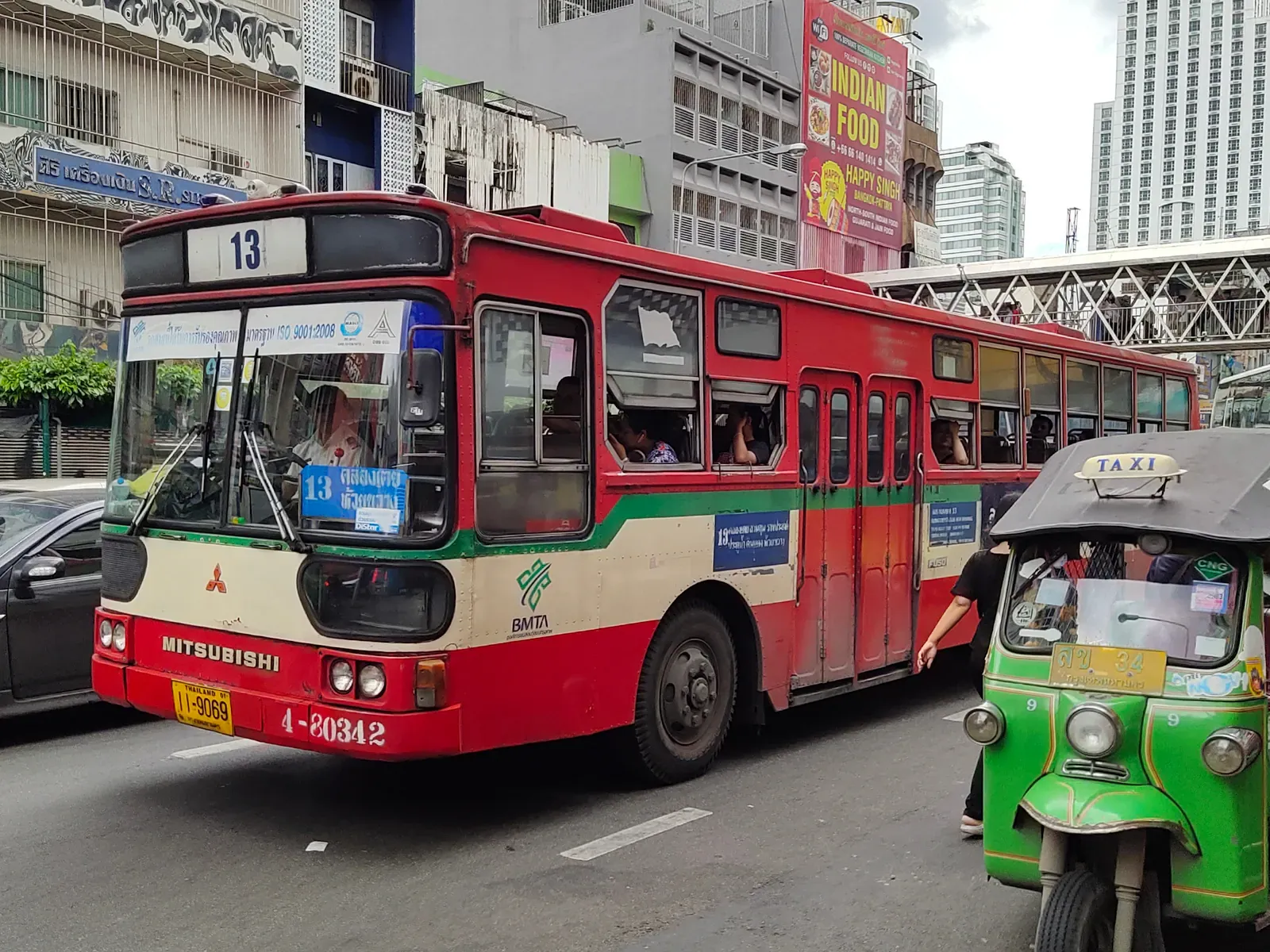
Bangkok’s bus network is cash-cheap, goes almost everywhere, and confuses newcomers within the first ride. The short version: red-cream buses are the no-frills BMTA fleet at 8 to 10 THB (about 0.25 to 0.30 USD, checked September 2026), coloured air-conditioned buses cost more by distance, route numbers are mid-reform so you’ll see two numbering systems on the same bus, and you pay a conductor in cash, in person, once you’re aboard.
None of that is written on a single sign anywhere in the city. This guide is that sign.
The Bangkok Mass Transit Authority, BMTA, operates the classic red-cream “ordinary” fan buses that most people picture when they think of a Bangkok bus: no air conditioning, open windows, a conductor who walks the aisle collecting fares. Alongside BMTA, a mix of private operators runs air-conditioned buses in various liveries, and Thai Smile Bus, a newer electric operator, runs dark blue buses with their own branding.
All of them serve fixed routes on fixed roads, unlike Grab or a metered taxi, which is the trade-off: buses are the cheapest motorised way to move around the city, and also the slowest and least predictable, since they sit in the same traffic as everyone else with no dedicated lane on most routes.
Colour signals the vehicle type and fare band, not the destination or the route. Learn this once and every bus stop sign makes more sense:
| Colour | Type | What it means for you |
|---|---|---|
| Red and cream | BMTA ordinary (fan) | Cheapest fare, no air conditioning, windows open |
| Cream and blue | Air-conditioned | Mid-range fare, charged by distance |
| Yellow and orange | Air-conditioned (Euro 2 engine) | Mid-range fare, charged by distance |
| Blue (NGV) or dark blue | Air-conditioned or electric (Thai Smile Bus) | Higher mid-range fare, charged by distance |
A red-cream bus and a blue bus can run the exact same route number and stop at the exact same signs. The colour only tells you which fare table applies once you’re aboard, never which stops the bus makes.
Bangkok has been rolling out a new zone-based numbering format, written as Z-NN, where Z is a zone from 1 to 4 and NN is the route number within that zone. The reform is meant to make the network more logical, but as of this guide’s research pass the old, familiar route numbers (the “8”, the “25”, the “509” everyone already knows) are still displayed too, usually in brackets next to the new code.
Practically, this means a single bus can display something like “8” and “1-8” on the same destination board. Neither is wrong. The transition is real and it isn’t finished, so budget a moment of confusion on your first few rides rather than assuming you misread the sign.
Fares split cleanly by bus type, and the ordinary red-cream fleet is genuinely one of the cheapest rides in the city.
| Bus type | Fare (THB) | Fare (~USD, checked September 2026) |
|---|---|---|
| Ordinary (red-cream), daytime | 8 | ~0.25 |
| Ordinary (red-cream), night (23:00-05:00) | 9.5 | ~0.30 |
| Ordinary using an expressway | 10 | ~0.30 |
| Air-conditioned (cream-blue) | 13-21, by distance | ~0.40-0.60 |
| Air-conditioned (yellow-orange, Euro 2) | 14-26, by distance | ~0.40-0.75 |
| Air-conditioned (blue NGV) or electric (Thai Smile Bus) | 15-25, by distance | ~0.45-0.75 |
Air-conditioned buses that use an expressway add a 2 THB surcharge between 05:00 and 23:00. None of these numbers move fast, but bus fares in Thailand are reviewed periodically, so treat this table as a checked-2026 snapshot rather than a permanent price.
There’s no tap card that covers the whole bus network yet. A card scheme called Mangmoom, run jointly by a Thai bank and the metro authority, already covers several rail lines for Thai ID holders, and officials have stated a goal of eventually folding buses into the same common-ticketing system. That’s a stated plan, not a working bus payment method today.
For now, the process on an ordinary or aircon bus is simple, but a few habits make it smooth:
BTS and MRT cover the central, tourist-dense core well, but Bangkok’s bus network reaches far past both, into residential sois and outer districts no rail line touches. For a resident running errands two neighbourhoods over, or a visitor headed somewhere genuinely off the rail grid, a bus at 8 to 10 THB beats a taxi’s fare by a wide margin, even accounting for the extra time. If you’re weighing bus against every other option side by side, what transport actually costs in Bangkok lays out three full monthly scenarios, and the best transport apps in Bangkok covers which app actually tracks a bus in real time rather than just showing you a scheduled time. For a busy interchange, see our Victory Monument guide.
For a short trip, probably not the first mode to reach for: no air conditioning on the ordinary fleet, no English announcements, and a numbering system mid-reform is a lot to navigate on day one. For anyone staying longer, or genuinely curious about how residents actually get around, it’s worth one deliberate trial ride on a route you already know by rail or taxi, so a wrong stop costs you nothing but time.
Not strictly required, but strongly recommended. Conductors on the cash-only ordinary fleet don’t always carry enough change for a large note, so carrying small denominations avoids holding up the bus.
Yes; see the best transport apps in Bangkok for the app that tracks live bus position, since Google Maps shows scheduled times rather than where a specific bus actually is.
Bangkok is partway through a reform to a zone-based Z-NN numbering format. Most buses display the new code alongside the old, familiar route number in brackets, and both are valid; the transition hasn’t finished citywide.
They’re a normal part of daily life for residents and carry no unusual risk, but the ordinary fleet has open windows, no air conditioning, and no English signage, which makes a first ride more disorienting than dangerous. Keep valuables secure as you would on any crowded public transport.
Not as a general rule in 2026. Buses remain largely cash-only; the Mangmoom card and any wider common-ticketing rollout currently centre on rail, with bus integration stated as a future goal rather than a live option.
A guide to Bangkok's transport apps: Grab, Bolt, ViaBus, Google Maps and the BTS/MRT apps
How the Bangkok MRT Blue loop and Purple Line work: key transfers, contactless payment since June 2026
Which airlines fly to Bangkok from London nonstop (Thai, EVA, British Airways from Gatwick)
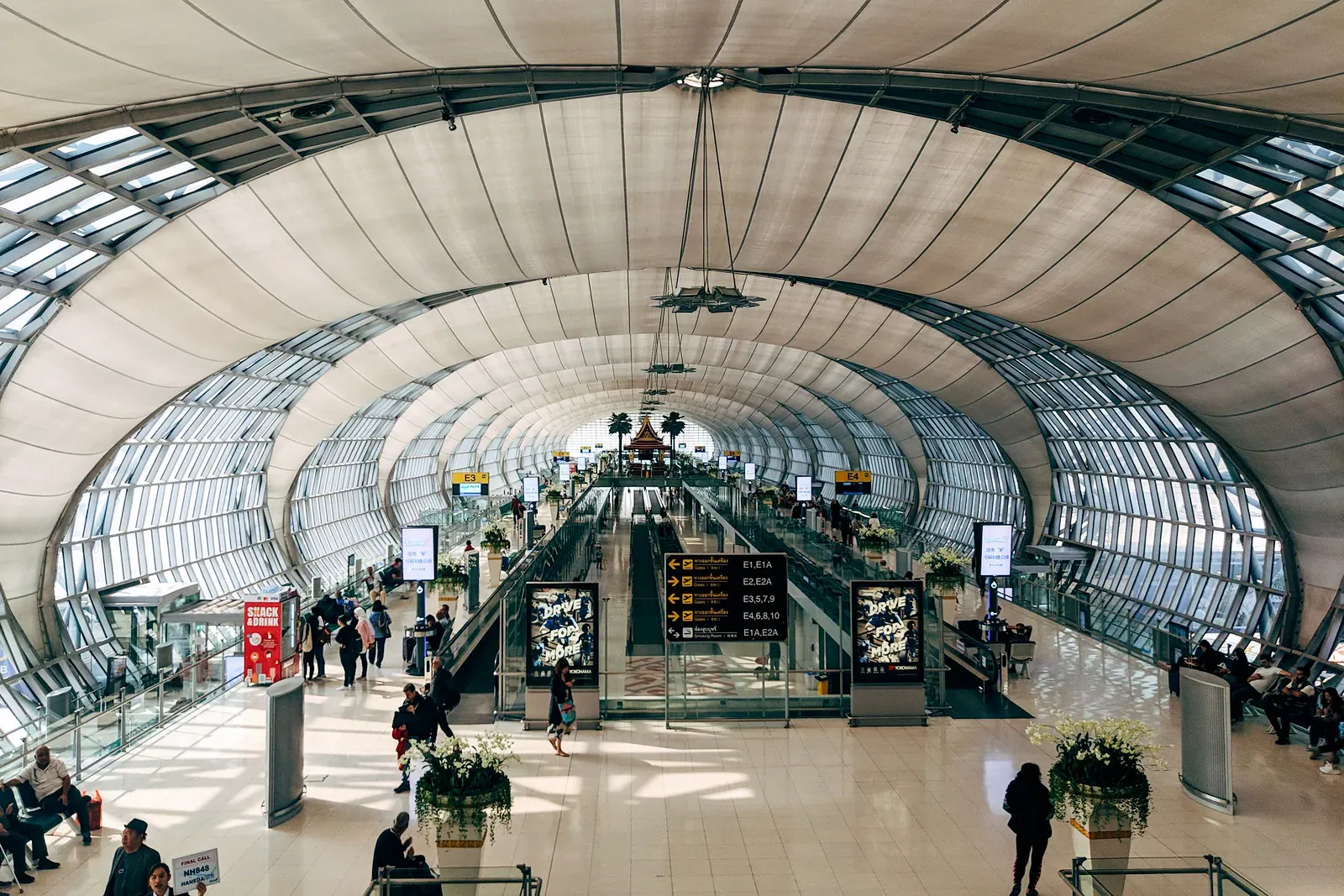
Suvarnabhumi (BKK) explained floor by floor: arrivals, immigration, SIMs, taxis and train

SiamPic Hall, Siam Square One, Siam, Chitlom and Ploenchit, Bangkok
Phenix Pratunam, Pratunam, Bangkok
centralwOrld Square, Siam, Chitlom and Ploenchit, Bangkok
No events listed for today.
All events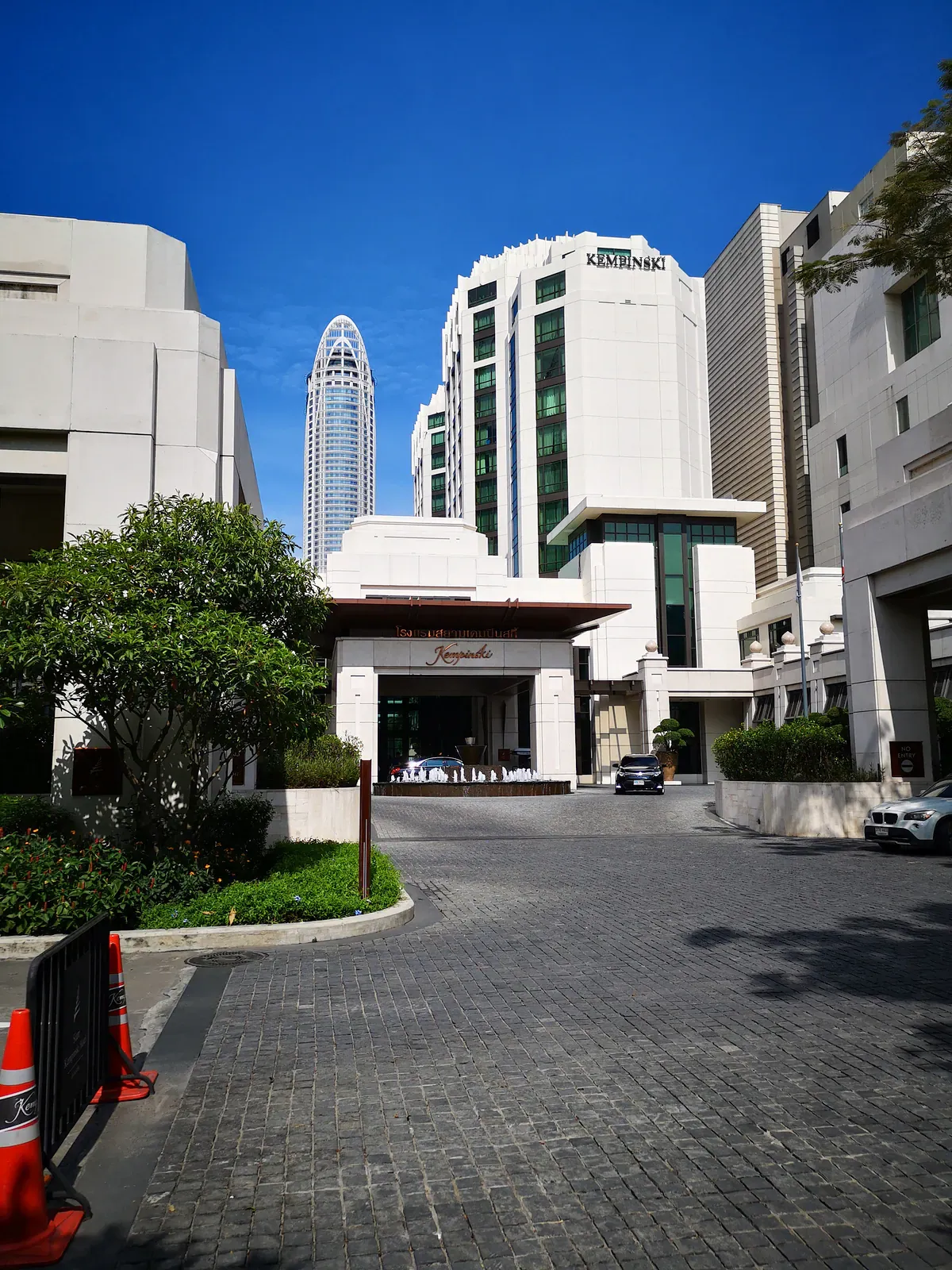
5-star hotel
Siam, Chitlom and Ploenchit
5-star hotel
Sukhumvit: Nana and AsokYou're subscribed as