Cabinet declares 16 December a holiday for Queen Sirikit's royal cremation at Sanam Luang
Government offices close on 16 December 2026 as five days of ceremonies for Queen Sirikit, the Queen Mother, are held in the Grand Palace area.
Read more
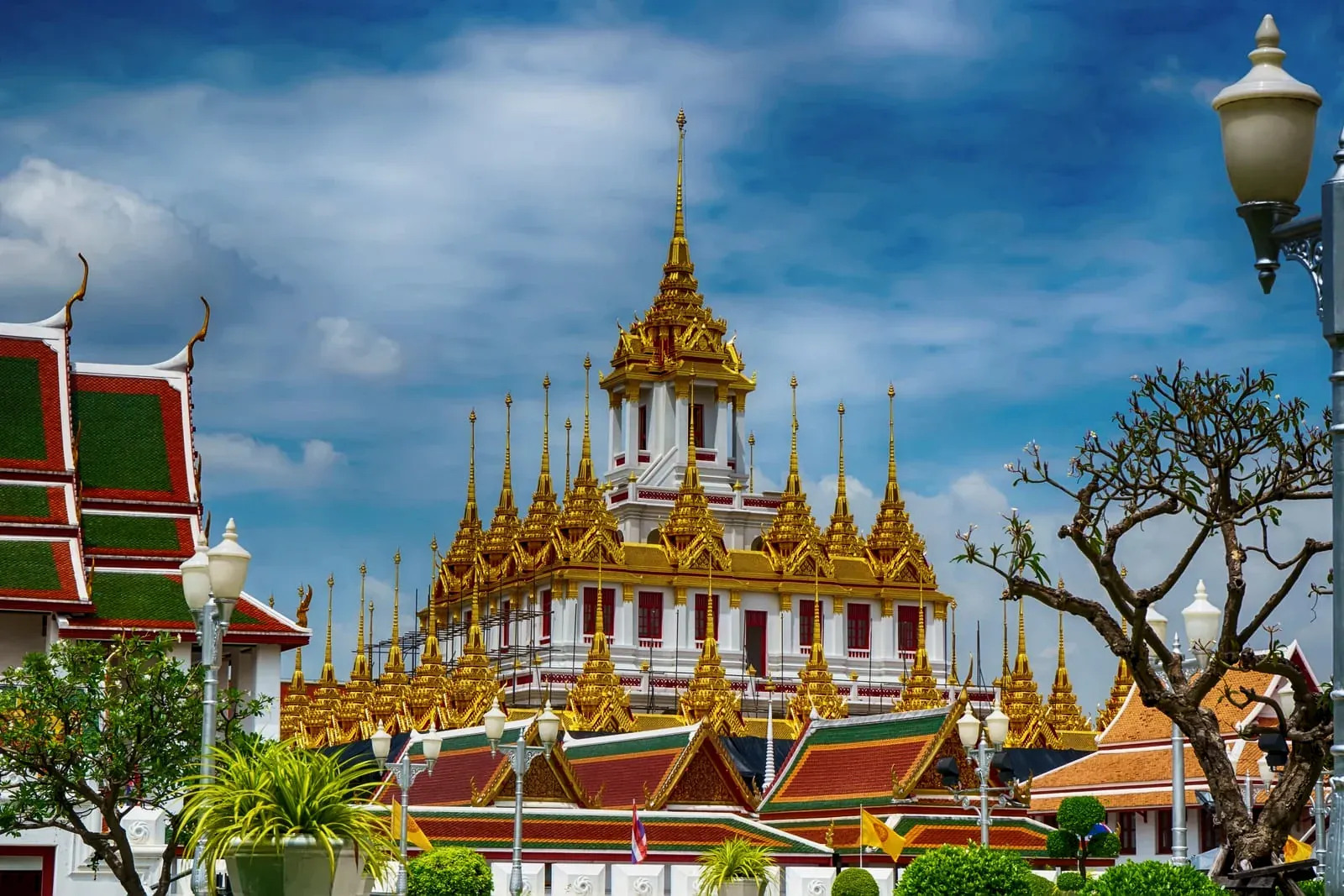
Wat Ratchanatdaram Worawihan (วัดราชนัดดารามวรวิหาร) is an active Buddhist temple in Bangkok’s Old City, opposite the Golden Mount. Ordered in 1846 by King Rama III, its centerpiece Loha Prasat (“metal castle”) rises about 36 m across seven stories crowned by 37 metallic spires. You can walk there in about 15 minutes from Sam Yot MRT station on the Blue Line, or in 3 minutes from Phan Fa canal pier.
Standing at the corner of Maha Chai Road and Ratchadamnoen Klang Road in Phra Nakhon, Wat Ratchanatdaram Worawihan draws visitors for Loha Prasat, a tiered pavilion topped by symmetrical metallic spires. Inside, a spiral staircase climbs past quiet cloisters where monks meditated, leading to an open top level with 360-degree views and a Buddha relic shrine.
The temple gets relatively few tourists despite its position near major sights, unlike busier stops in our guide to famous temples in Bangkok. Beyond the pavilion, the complex holds an ordination hall with classic murals, a copper Buddha image, shaded cloister walkways, and an amulet market, so it fits an Old City temple hopping route.
The address is 2 Maha Chai Road, at the corner of Ratchadamnoen Klang Road, Phra Nakhon, Bangkok 10200, opposite the Golden Mount. The Roman-style Phan Fa Lilat Bridge over Khlong Bang Lamphu lies in front of the temple.
By rail, take the MRT Blue Line to Sam Yot station and walk 11 to 15 minutes. By canal, ride the Saen Saep canal boat (fare 9 THB, about $1, checked 20 November 2026) to the last stop at Phan Fa, then walk about 3 minutes west. From the Chao Phraya Express Boat, leave at Tha Chang (N9) and walk about 25 minutes. From Khao San Road, the walk takes about 15 minutes.
| Route | Stop or pier | Walk to temple |
|---|---|---|
| MRT Blue Line | Sam Yot station | About 11 to 15 minutes |
| Saen Saep canal boat | Phan Fa (last stop) | About 3 minutes west |
| Chao Phraya Express Boat | Tha Chang (N9) | About 25 minutes |
| On foot | Khao San Road | About 15 minutes |
King Rama III (Nangklao) ordered Wat Ratchanatdaram in 1846 for Princess Somanass Waddhanawathy. She is described as his granddaughter or niece, and the name Ratchanatdaram is translated as “Temple of the Royal Niece”. She later became a queen of King Rama IV, who built Wat Sommanat Worawihan in her memory.
Loha Prasat copies ancient Buddhist structures at Shravasti in India and Anuradhapura in Sri Lanka, and Siamese craftsmen went to Sri Lanka in the 1840s to study one. Accounts differ on what survives: one guide says neither original does, while Wikipedia calls Bangkok’s pavilion one of two such structures remaining in the world.
Construction was not finished during Rama III’s reign. In 1864, a copper Buddha image was placed in the ordination hall and named Phra Setthamuni by King Rama IV. Work on Loha Prasat restarted in 1960 under King Rama IX with the Fine Arts Department. A late 1940s cinema that blocked the view was demolished in the late 1980s, leaving today’s plaza with a Royal Reception Pavilion and a bronze statue of Rama III. King Rama IX led a ceremony enshrining a Buddha relic at the top in 1995. The temple was submitted for UNESCO World Heritage consideration in 2005 and opened to the public in 2007. Scaffolding returned in 2016, and the black spires were given a golden covering.
The visit covers Loha Prasat itself and the surrounding temple grounds, with the ordination hall and the amulet market.
Loha Prasat rises about 36 m across seven stories on three levels. Thirty-seven spires crown the pavilion: 24 on the lowest level, 12 on the middle level, and 1 at the top. They stand for the 37 Bodhipakkhiya Dharma, the qualities leading to enlightenment. Start at the ground-floor display, which explains the building’s history in Thai and English.
Visitors climb a spiral staircase linking the levels. Each level has cloisters where monks meditated, with higher levels for higher-ranking monks.
The open top level gives 360-degree views of the Golden Mount, Rattanakosin Exhibition Hall, Democracy Monument, and Ratchadamnoen Avenue. A short stair at the top leads to the shrine holding the Buddha relic enshrined in 1995.
The viharn (ordination hall) runs parallel to the canal on square pillars, with Loha Prasat standing west of it. Inside are classic murals and the copper Phra Setthamuni Buddha image placed in 1864. Shaded cloister walkways run through the grounds, and the adjacent Wihan Phra Chutithamnarasop has floral murals.
An amulet market operates at the temple. Stalls sell Buddhist amulets with designs of temples, monks, Hindu deities, and kings, with King Rama V the most popular.
Entry is walk-in. Plan with a buffer for fees and hours.
The most recent dated guides list entry to Loha Prasat at about $1 (20 THB) for non-Thai visitors and about $1 (10 THB) for Thai visitors, with children under 15 free (checked 20 November 2026). A 2023 Trip.com review and one guide report no fee, a Google review says Thai visitors enter free, and another guide says the grounds are free with donations welcome.
The most common schedule is 08:00 to 17:00 daily, given by a Khao San Road guide (verified March 2026) and three other listings. Other sources give 09:00 to 17:00, 08:30 to 18:00, or 09:00 to 16:00, and one reviewer advises checking hours. Arriving between 09:00 and 16:00 fits all of these listings. The listed temple phone number is +66 2 224 8807.
This is an active place of worship: wear modest clothing covering shoulders and knees, and carry a light scarf or sarong since not all temples lend wraps. Remove shoes before entering any building with a Buddha image. Posing irreverently with Buddha images is an offense in Thailand, and some interiors ban photos. For full temple rules, see our temple etiquette and dress code guide.
The climb uses spiral stairs, and AAA lists the site as not wheelchair friendly. Another site claims accessible parking and restrooms, but access to the tower itself is doubtful.
Arrive just after opening for near-empty courtyards, or come in the late afternoon for golden-hour photos. Midday is hot, so plan the climb for morning or late afternoon. A February 2026 review described a Saturday late afternoon as calm with good sunset light.
Closing times in listings range from 16:00 to 18:00, so enter the pavilion well before late afternoon ends. About 3 of 22 reviews recommend night lighting or sunset light for photos.
Of 22 reviews, about 8 praise the view from the upper levels, about 8 the architecture, metal spires or history, and about 7 say it is quiet or less crowded than the Grand Palace and similar temples. About 5 mention low or no entry cost, and about 4 single out the ordination hall, murals, or Phan Fa bridge. About 7 carry a mild reservation, such as a smaller scale than other major temples, midday heat, a newer look than guides claim, strict local rules, or unclear hours.
For quieter temples elsewhere in the city, see our guide to lesser-known temples.
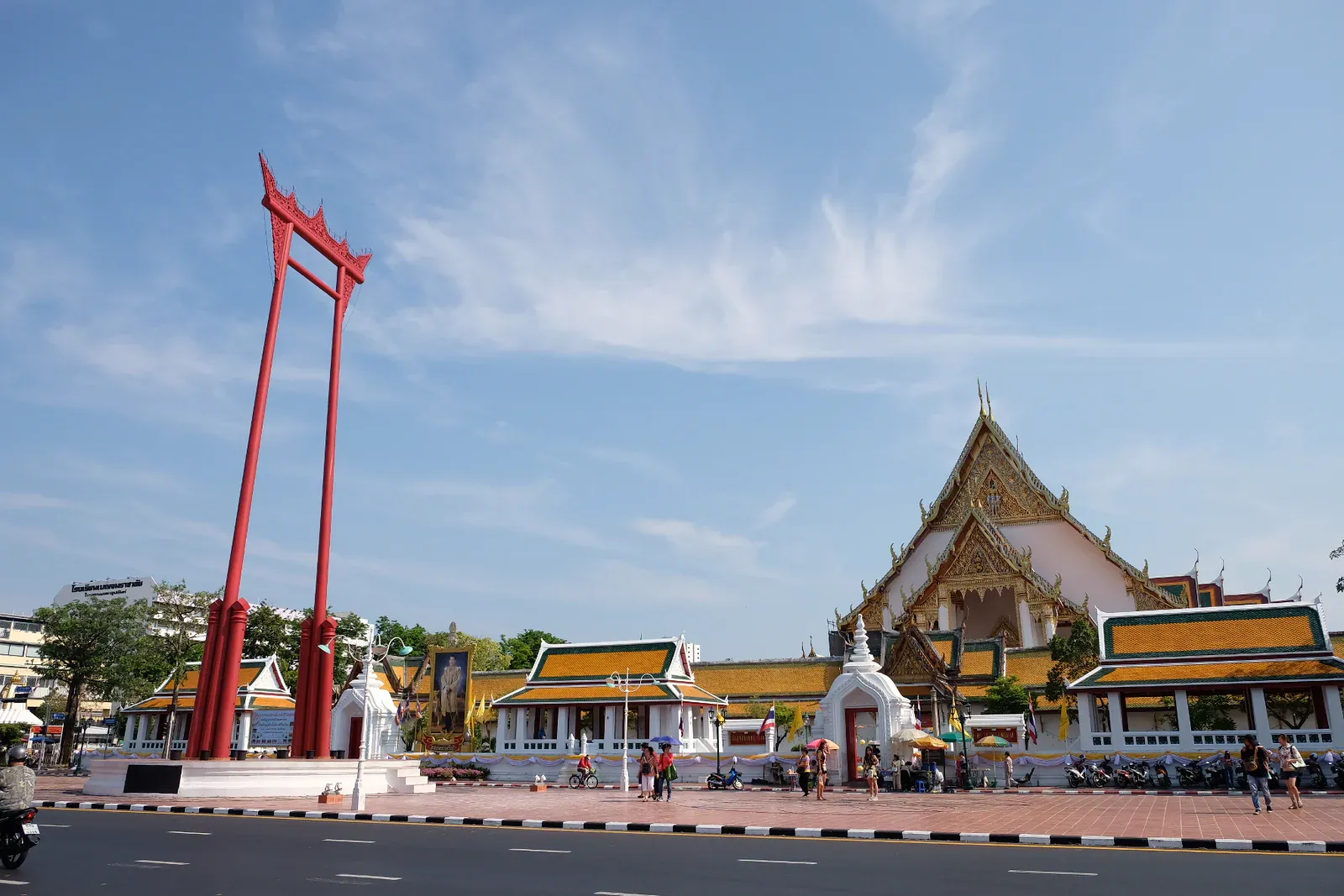
Plan a visit to Wat Suthat in Bangkok's Old City: 8 m bronze Buddha, Rama III murals, the Giant Swing
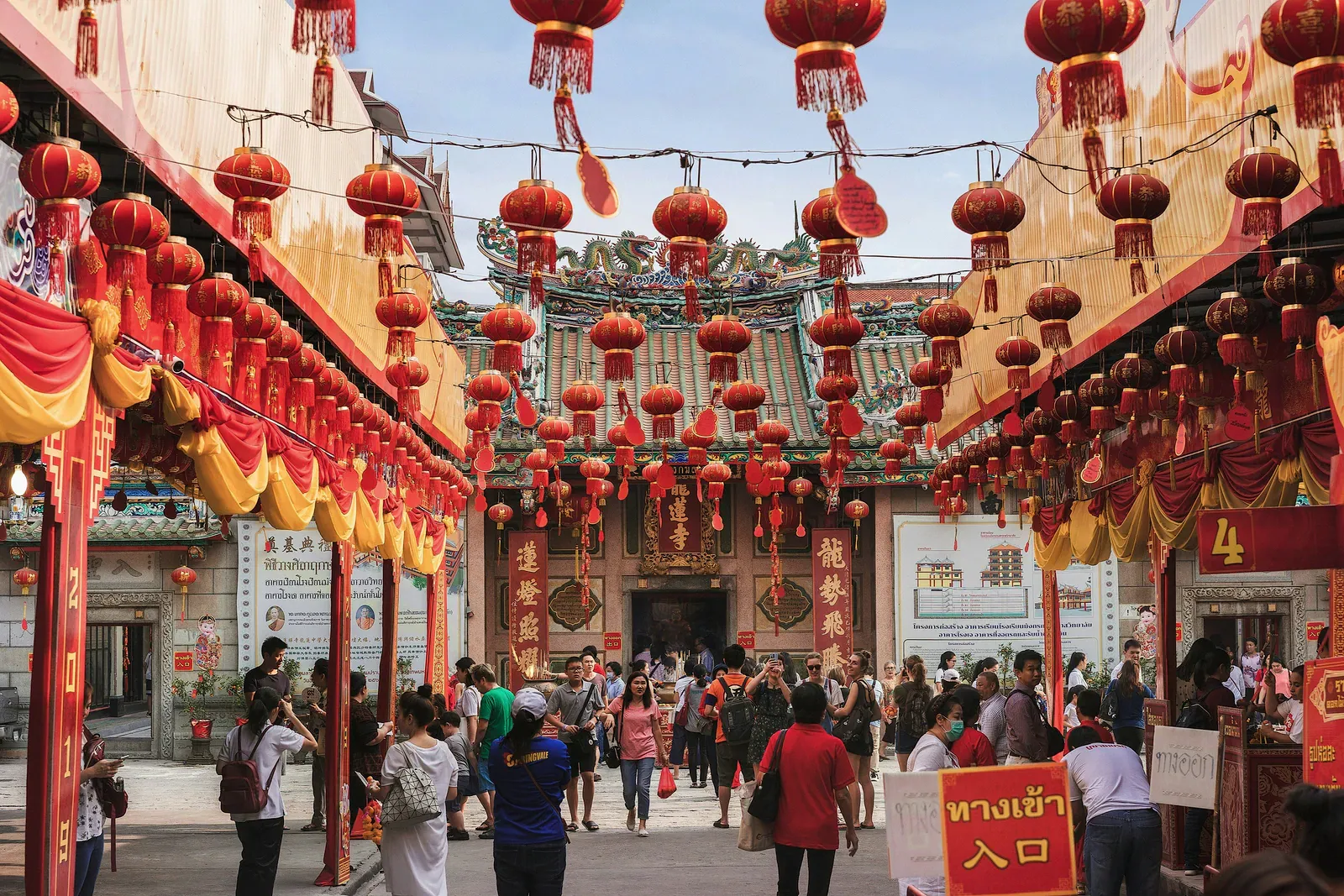
Plan a visit to Wat Mangkon Kamalawat (Wat Leng Noei Yi) off Charoen Krung Road: free entry, MRT exit
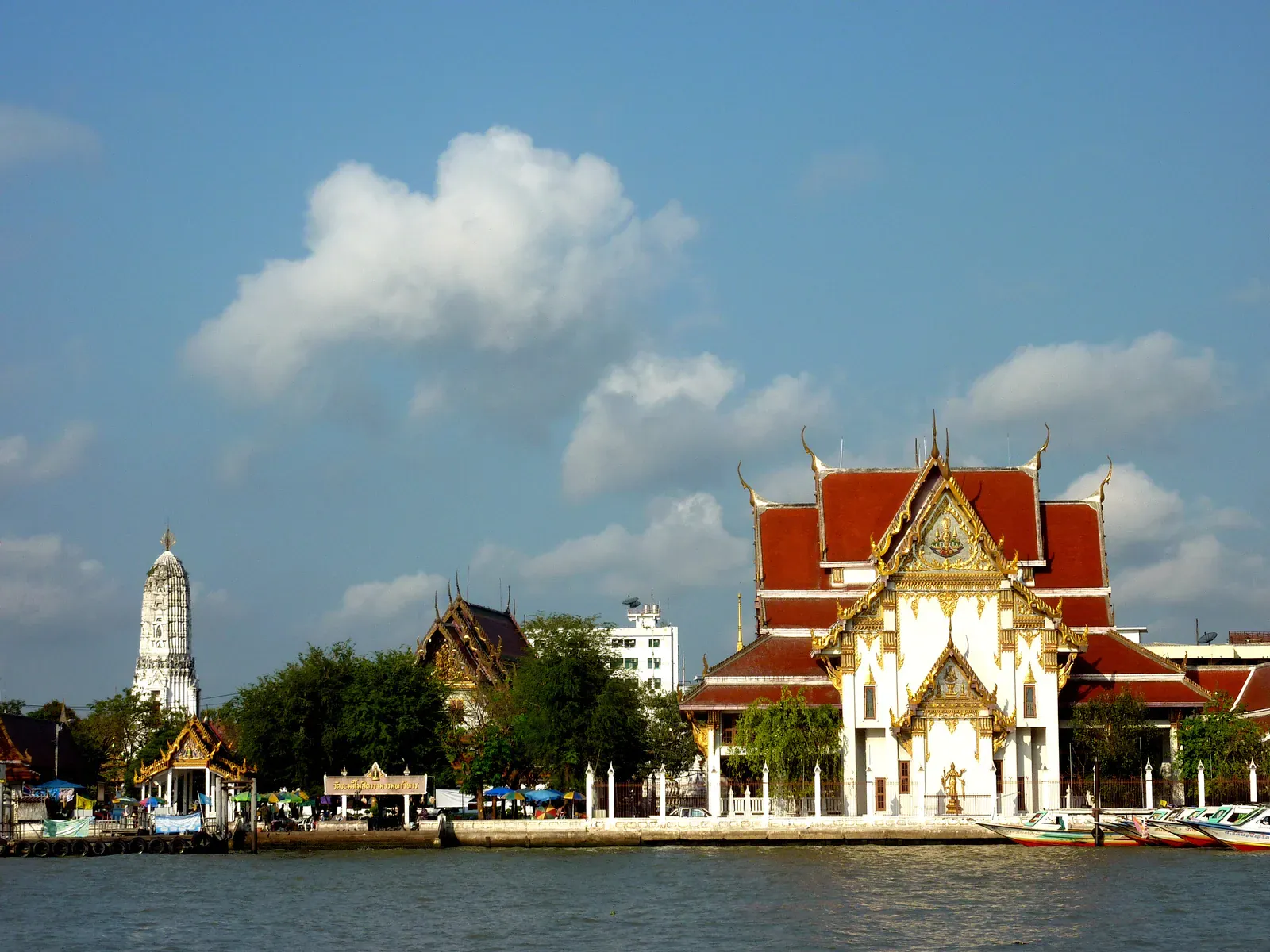
Visit Wat Rakhang on Bangkok's Thonburi riverfront: free entry, 2-minute Tha Chang ferry, opening hours
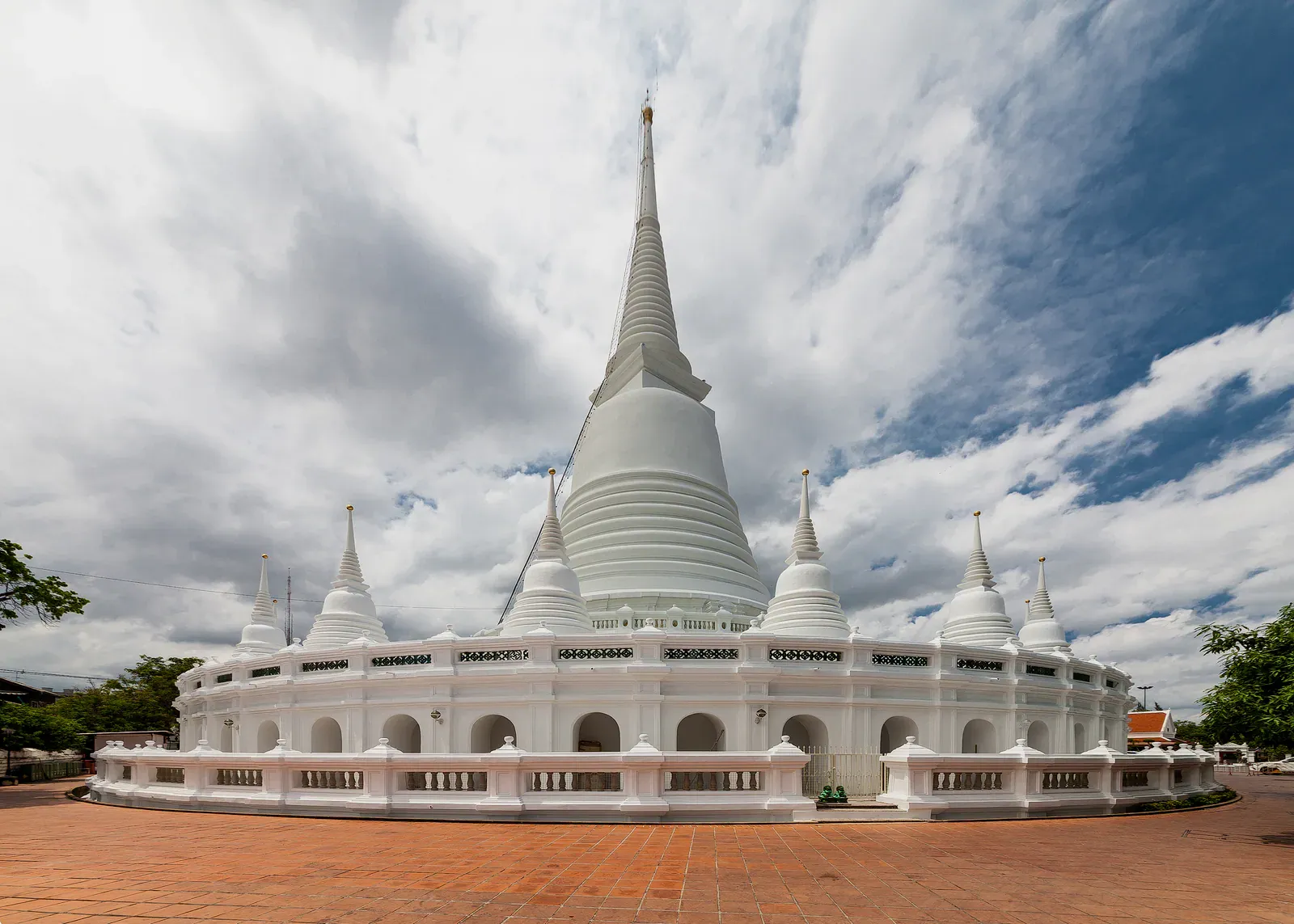
Visit Wat Prayurawongsawas in Thonburi near Memorial Bridge for free entry, a 60.5 m climbable stupa
SiamPic Hall, Siam Square One, Siam, Chitlom and Ploenchit, Bangkok
Phenix Pratunam, Pratunam, Bangkok
centralwOrld Square, Siam, Chitlom and Ploenchit, Bangkok
No events listed for today.
All events
4-star hotel
Old City and ChinatownYou're subscribed as