
Paperwork
The Bangkok Immigration Office Survival Guide
How to get through Bangkok's Chaeng Watthana immigration office: which counter for which transaction, when queues are shortest, and what gets you turned away.
On this page
Bangkok’s main immigration office is not one counter, it is a system: several transaction types, several queues, and at least two locations depending on what you actually need. Get the system wrong and you can lose a whole morning to a queue you never needed to join. This guide treats it that way: which building, which counter, which hour, and what actually gets an application turned away.
Two offices, not one
Most long-stay foreigners in Bangkok only ever need one address: Immigration Division 1, inside the Chaeng Watthana Government Complex, Building B, in Laksi district. This is where extensions of stay, 90-day reports, re-entry permits and most routine transactions happen. It is a genuinely large facility, reported as the busiest immigration office in the country, and it can feel like a maze on a first visit: multiple entrances, several floors of counters, and a building shared with other government departments that have nothing to do with immigration at all. Arrive expecting to ask directions once, even with a map in hand, and it will feel far less overwhelming than arriving expecting to walk straight to the right desk.
A second, much smaller office exists for a specific slice of applicants: the One-Stop Service Center, now branded the Thailand Investment and Expat Services Center (TIESC), which relocated in March 2025 to One Bangkok’s Parade Zone on Rama IV Road. This office handles BOI-linked and investment-tied visa and work permit services, not ordinary walk-in transactions. If your work permit or visa is tied to a BOI-promoted company, this is very likely where you actually need to go, not Chaeng Watthana, and knowing that before you travel saves a wasted trip.
| Office | Handles | Who uses it |
|---|---|---|
| Chaeng Watthana (Immigration Division 1) | Extensions, 90-day reports, re-entry permits, TM30-linked matters | Almost everyone: tourists converting status, nomads, retirees, most work permit holders |
| One Bangkok TIESC (One-Stop Service Center) | BOI-linked visa and work permit services, investment-tied applications | BOI-promoted company employees, investors, a narrower group |
Which counter for which transaction
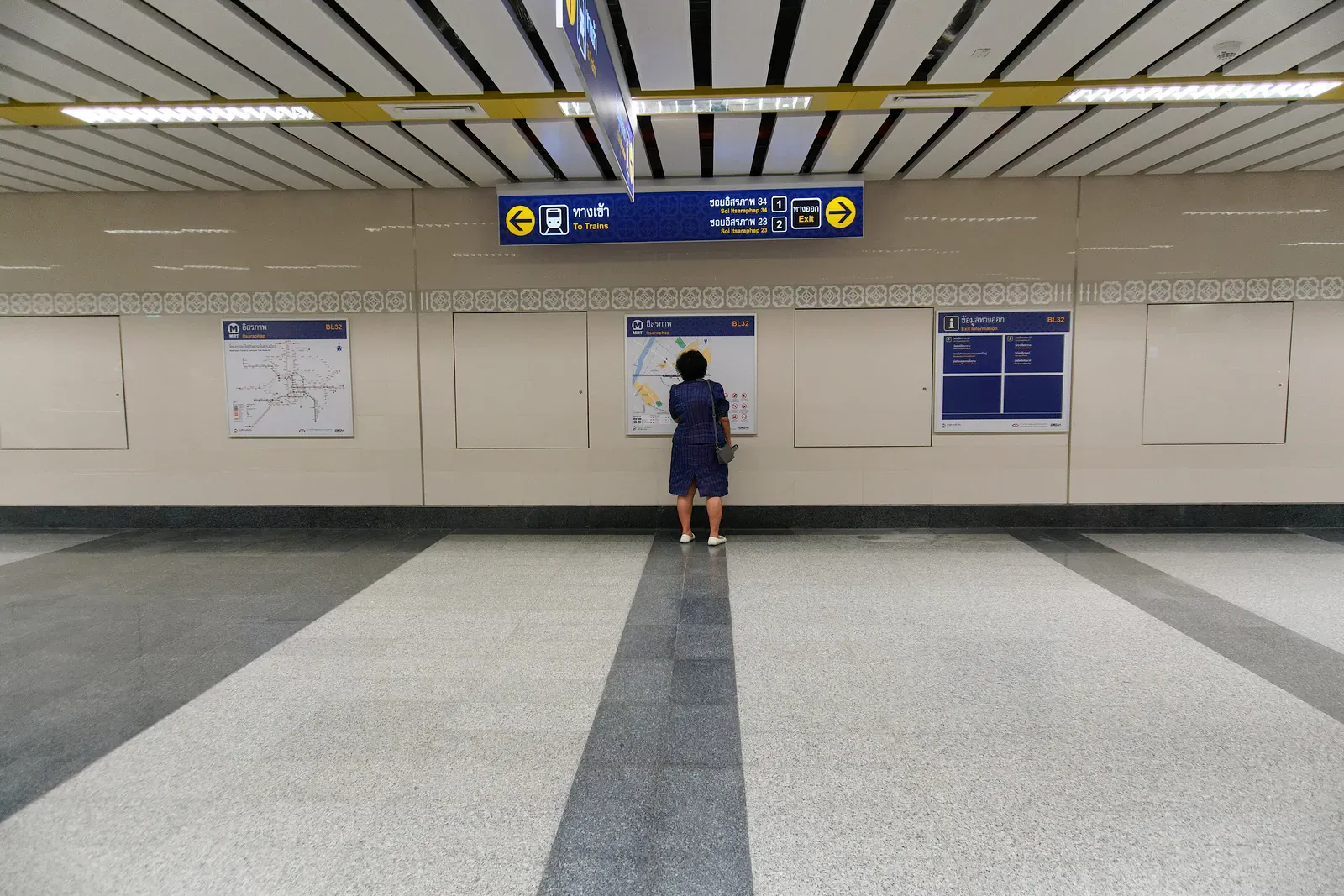
Chaeng Watthana is not a single queue. Extensions of stay and 90-day reports are handled together but sit apart from re-entry permits, which run on a separate phone line and, by extension, a separate desk. Corrections, TM30 questions and other administrative matters have their own routing again. Walking in and taking any available ticket is how people end up requeuing after twenty minutes in the wrong line: check the signage (English is posted) or ask the information desk which queue matches your specific transaction before you take a number.
This matters more than it sounds. A re-entry permit visit and an extension visit are functionally different appointments that happen to share a building, and conflating them is the single most common first-timer mistake reported in expat forums. Related guides: guide to vetting visa agents in Bangkok.
How the queue system actually works
Queue numbers at Chaeng Watthana are transaction-specific, not universal. Arriving does not mean joining “the line” for the building, it means joining one of several parallel lines depending on what counter your transaction routes to. A handful of practical patterns show up consistently in traveller and forum reporting:
- Numbers are issued per transaction type, so a low number at one counter says nothing about the wait at another.
- Arriving before the office opens generally gets a meaningfully lower number than arriving mid-morning.
- The whole office closes for a lunch break around midday, and nothing moves during that window.
- Some transactions increasingly favor or require an online appointment slot rather than a pure walk-in queue; check ahead if the transaction you need has moved to a booking system since your last visit.
- Before 8:30am
- 20-45 min
- 9:00-10:30am
- 45-100 min
- 11:00am-12:00pm
- 70-130 min
- After 1:00pm reopening
- 40-90 min
Source: Editorial estimate synthesised from forum and travel-agency reporting patterns (thaivisaexpert.com and traveller accounts), not a measured statistic, checked September 2026
Treat that chart as a pattern, not a promise: a single officer calling in sick or a visiting delegation can throw any given morning off completely.
How easy each transaction actually is
- 90-day report short, well-understood, often has an online alternative
- 4.5 out of 5
- Extension of stay document-heavy, longer queue, officer discretion
- 2.5 out of 5
- Re-entry permit quick if you already have your extension in order
- 4 out of 5
- TM30 correction often needs the landlord or juristic office involved
- 2 out of 5
Editorial rating, 1 to 5, based on typical document load and queue length. Individual cases vary.
The pattern above is not about which transaction is bureaucratically complex on paper, it is about how long you will actually stand there. A 90-day report is procedurally simple and usually fast. An extension of stay brings in more document checks and more officer judgment calls, and that is where a missing paper turns a 45-minute visit into a multi-hour one, or a same-day rejection.
What to bring, every time
- Passport, with the visa or entry stamp page for the current stay.
- The specific form for your transaction, filled in ahead of time where possible.
- Photocopies of your passport photo and visa pages (offices often still want physical copies even where digital records exist).
- A passport-style photo, if your transaction requires one.
- Proof of address or TM30 evidence, particularly if you have moved recently. See 90-day reporting and TM30 for how the two systems interact and why a mismatch between them is the single most common cause of friction at the counter.
- A pen. Queues move slower than they need to when someone is filling out a form at the counter instead of before they reach it.

Getting there
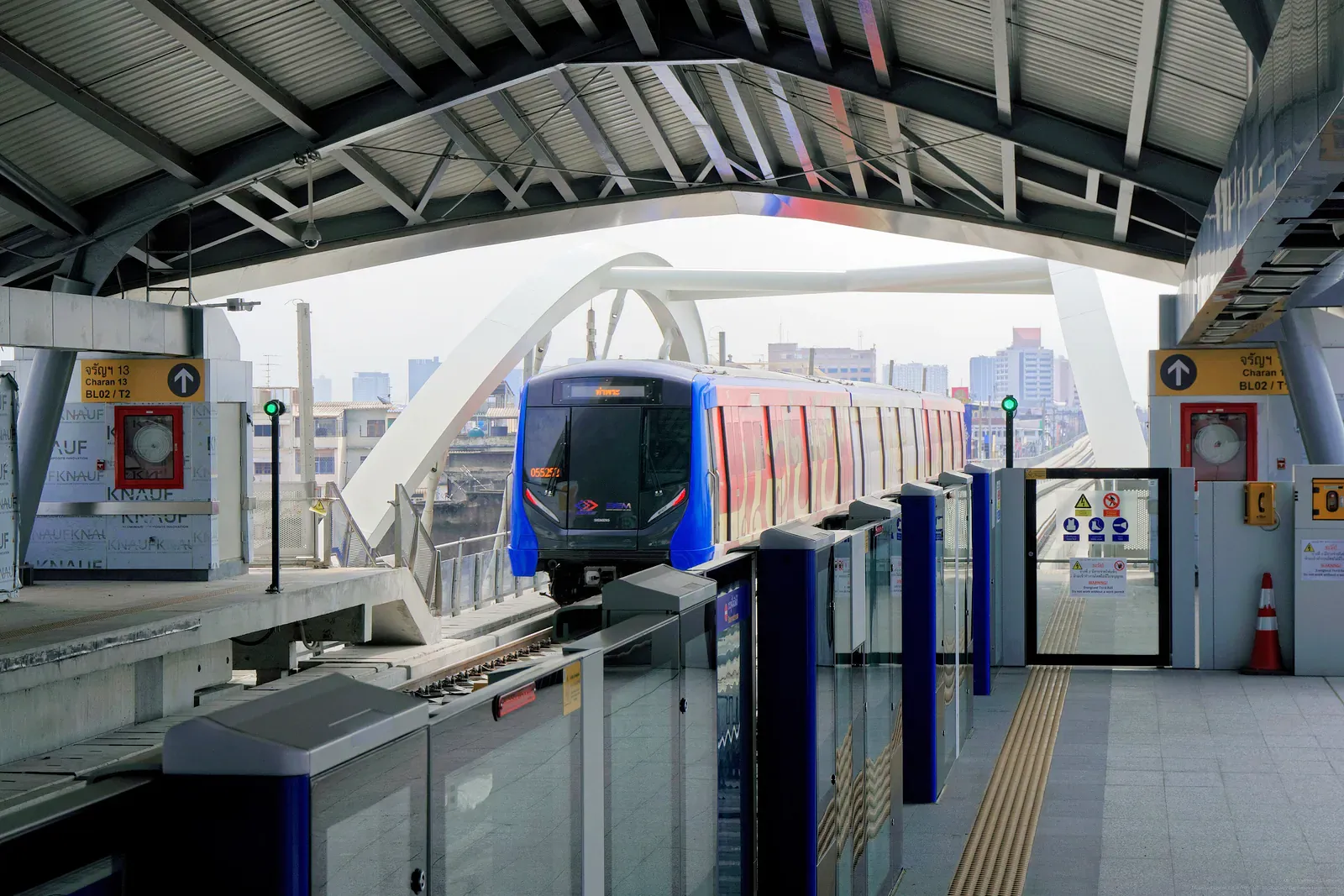
Chaeng Watthana Government Complex sits on the Pink Line, served directly by Chaeng Watthana 14 station, a short walk from Building B. For anyone coming from central Bangkok without a direct Pink Line connection, that usually means a BTS or MRT ride to an interchange station followed by the Pink Line leg, or a taxi for the last stretch if you are travelling with paperwork you would rather not carry through multiple transfers. Some travellers report a free shuttle service operating within the complex itself; if you are relying on it, confirm the current schedule on arrival rather than planning around a fixed timetable, since shuttle schedules are exactly the kind of detail that changes without much notice.
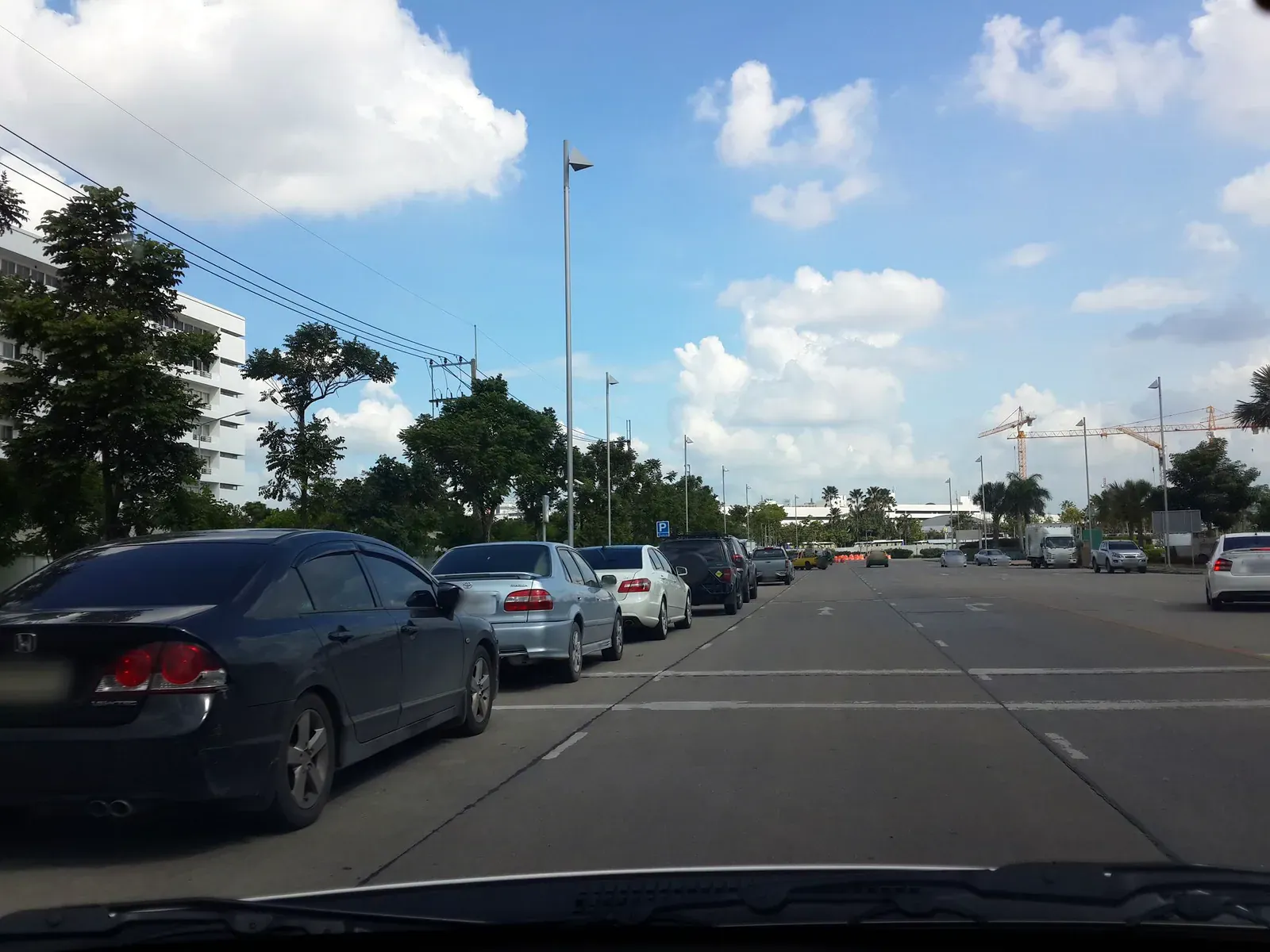
Driving yourself is possible, and the complex has parking, but Chaeng Watthana Road carries heavy traffic for much of the working day, and the walk from a parking area to the correct building can be longer than the train option once you account for it. For a routine transaction with no heavy paperwork to carry, the train is usually the less stressful choice.
Holidays and closures
Immigration offices close on official Thai public holidays, and the government has occasionally announced extended closures around New Year that run longer than the standard calendar would suggest. There is no single, permanently reliable published list this article can safely reproduce as fact, since holiday calendars and any extended-closure announcements change year to year. Before a trip, particularly around a long weekend or the turn of the year, check the current public holiday calendar and, if possible, the office’s own posted notice rather than assuming a normal Monday-to-Friday schedule holds.
What actually gets an application turned away
- Arriving during the lunch closure. Nothing is processed while the office is shut for lunch, regardless of your queue number.
- A TM30 or address record that does not match what you are declaring on the transaction in front of you.
- Incomplete photocopies. Offices that expect physical copies will send you to find a copier rather than accept a digital file on your phone.
- Turning up for the wrong counter. A queue number pulled for the wrong transaction type does not transfer to the right one; you requeue.
- Missing the underlying deadline, such as a 90-day report filed well past its window or an extension attempted after the permitted stay has already lapsed. See Thai visa extension mistakes that cost you your stay for the recurring failure patterns behind this one specifically.
- Bringing a photocopy that does not match the current stamp. A copy taken before your most recent entry or extension is functionally useless if an officer expects to see the current one; recopy after every trip abroad rather than reusing an old set.
None of these are exotic problems. They are the same handful of avoidable errors, repeated by different people every week, and every one of them is fixable by checking before you queue rather than after. The pattern behind almost all of them is the same: something that was true last visit quietly stopped being true, and nobody checked before showing up.

If your visa or work permit is BOI-linked
If your immigration business is tied to a BOI-promoted company, a wealthy-visa scheme, or an investment-linked visa, check whether your transaction actually belongs at One Bangkok’s TIESC rather than Chaeng Watthana before you travel across town. The two offices are not interchangeable, and a transaction correctly routed through TIESC will generally move faster than the same paperwork joining Chaeng Watthana’s general queues, simply because it is a smaller, more specialised operation built for exactly that caseload.
Converting or changing your visa category first
A meaningful share of Chaeng Watthana visits are not simple renewals, they are the first step in changing what kind of stay someone holds. If that describes your situation, work out whether you are renewing the same category or converting to a different one before you queue, since the two require different documents and sometimes different counters entirely: see renewing vs changing your Thai visa category for that distinction in full. Someone in the middle of a permanent residence application will also pass through this same building repeatedly over a period of years; the permanent residence application guide covers what that longer relationship with the office actually looks like. Anyone assembling this alongside their wider first-year paperwork can check the document checklist for a first year as a foreigner in Bangkok for the fuller sequence.
Common questions
Can I book an appointment online instead of queuing?
For some transactions, yes, and the option has been expanding. Availability depends on the specific service and can change, so check the current booking channel for your transaction before assuming a walk-in queue is your only route.
Is Chaeng Watthana the only immigration office that matters in Bangkok?
For almost all routine long-stay business, yes. The exception is BOI-linked and investment-tied services, which route through the separate One Bangkok TIESC office instead.
What is the single biggest time-waster at the office?
Queuing at the wrong counter for your transaction, and arriving during or just before the lunch closure without accounting for it. Both are entirely avoidable by checking before you go.
Should I use an agent instead of going myself?
Plenty of long-stay foreigners do, particularly for a first extension or a transaction they find confusing, and it can genuinely save a wasted trip if your case has an unusual wrinkle. It is not a requirement for routine, well-documented transactions: a 90-day report or a straightforward re-entry permit is well within reach of a first-timer who reads the current requirements and arrives early. Weigh the fee against the value of your own morning, not against some assumption that the office is impossible to get through alone.
Last verified: September 2026. Office hours, queue systems and appointment-booking availability change; confirm current details with the Immigration Bureau or the specific office before relying on anything above.
Written by
Mike Brochlowski
Founder and editor, travel photographer and designer
I'm Mike Brochlowski, a travel photographer and designer, and I currently live on Koh Samui, Thailand. I built BangkokWiki to put practical, checked information about Bangkok in one place. Every page is researched from official and primary sources, and the text names them. Where a page shows a checked date, that is when its facts were last confirmed. I also run samui69.com, a non-commercial guide to Koh Samui. If you spot an error or something out of date, tell me through the contact page and I will check it and correct the page.
Read all articles
Visas and paperwork
Staying in Thailand longer?
Visas, extensions, documents and banking for longer stays. Rules and fees change often and offices apply them differently, so check the official source before you act.

Places to stay
Find a hotel
Explore the other desks
More from Paperwork
- 9 min read
 11 min read
DTV Visa for Thailand: Guide for Remote Workers
 12 min read
Thailand Visa Exemption vs Tourist Visa

Newsletter
You're subscribed as