
Health
Paying for Treatment in Thailand: Insurance vs Cash
Does travel insurance cover surgery in Thailand? How cash payment, guarantee-of-payment letters and evacuation cover actually work at Bangkok hospitals.

On this page
Every Bangkok hospital bill eventually reduces to one of two questions: who is paying, and when. A private hospital will treat you regardless of nationality or insurance status, but it will not start a planned procedure, and in most cases will not even admit you for an emergency, without first establishing how the bill gets settled: either a guarantee from an insurer or a deposit from you. This article is narrowly about that mechanic: what “paying cash” actually involves, what travel insurance will and won’t pay for, how a guarantee of payment works when you do have cover, and how much evacuation insurance is realistically enough. For how cover itself is structured (policy types, terms, claims), see the general health insurance guide; this piece is about the money moving at the point of treatment, not about choosing a policy.
The two payment paths, in outline
Every admission to a private Bangkok hospital resolves one of two ways.
| Path | How it works | What it requires of you |
|---|---|---|
| Cash / self-pay | You settle the bill yourself, either on discharge or via a deposit before treatment, then claim reimbursement from any insurer afterwards if you have one | Access to enough cash or credit to cover the bill upfront, and the discipline to keep every invoice and medical report for a later claim |
| Insurer-arranged (guarantee of payment) | Your insurer confirms cover with the hospital directly and issues a guarantee of payment (GOP), so the hospital bills the insurer’s negotiated rate instead of asking you for cash | A policy the hospital’s insurance desk can verify quickly, and enough lead time (hours for an emergency, ideally days for a planned admission) for the GOP to be issued before treatment starts |
Both paths are completely normal in Bangkok’s private hospital system; neither marks you as a “difficult” patient. What changes is timing and cash-flow risk: cash means you carry the exposure until reimbursement arrives, weeks later, if it arrives at all; a GOP shifts that exposure to the insurer from the outset, provided the hospital and insurer can actually agree on cover before you need care.
What “paying cash” actually means at a private hospital
Thai private hospitals almost universally ask for an upfront deposit before a planned admission, and often before starting emergency treatment beyond immediate stabilisation, when no insurer or documented ability to pay is on file. As a general, dated planning range (not a quote for any specific hospital or procedure), self-pay deposits for a routine planned admission commonly sit in the low tens of thousands of baht, and a deposit for major surgery can run well into six figures in baht terms; treat any figure here, including this one, as indicative only for 2026 and always ask the specific hospital’s billing office for a current, written estimate before you commit.

The practical sequence for a self-pay patient:
- Get a written, itemised estimate before any planned procedure: Bangkok hospitals do not publish comparable price lists, and the only reliable number is the one your specific case generates after assessment.
- Expect a deposit request proportional to the estimate, payable by card or bank transfer in most hospitals catering to foreign patients.
- Settle the balance on discharge, once final costs (medication, extended stay, additional tests) are reconciled against the deposit.
- Keep every document: the itemised final invoice, medical report, and any receipts. These are exactly what a travel insurer will ask for if you intend to claim reimbursement afterwards.
Self-pay is not a fallback for people without insurance only. Plenty of insured patients still pay cash deliberately: because their hospital has no direct-billing relationship with their insurer, because the claim is small enough that reimbursement is simpler than arranging a GOP, or because they’re using a policy with a large deductible that would make the insurer’s involvement pointless below a certain bill size.
Guarantee of payment: how it works when you do have cover
A guarantee of payment (GOP) is the mechanism that lets an insured patient skip the deposit. It works like this:
- You or the hospital contacts your insurer’s assistance line, ideally before a planned admission, or as early as possible after an emergency arrives at the hospital.
- The insurer verifies your policy and coverage against the estimated cost: sum insured, remaining annual limit, and whether the diagnosis is excluded (most commonly for a pre-existing condition).
- If approved, the insurer issues a GOP directly to the hospital, and the hospital proceeds without asking you for a deposit, billing at whatever rate its contract with that insurer specifies.
- Anything outside the GOP’s approved scope (an added test, a longer stay, an upgraded room) typically needs a fresh authorisation; ask the insurance desk to flag anything not already covered rather than finding it on the final bill.
A GOP depends on two things going right: your hospital needs an existing direct-billing relationship with your specific insurer (not every hospital-insurer pair has one), and your insurer needs to actually confirm cover before treatment: which is why calling ahead for anything non-emergency matters far more than most people expect. Without either of those, you’re effectively back to the cash path even though you hold a valid policy, and you’ll be reimbursed afterwards rather than covered upfront.

Does travel insurance cover surgery in Thailand?
This is the single most misunderstood point in medical payment planning, and the honest answer is: it depends entirely on why the surgery is happening.
- Unexpected illness or injury during a trip (an accident, an acute appendicitis, a sudden cardiac event) is exactly what standard travel insurance is designed to cover, generally including any surgery that’s medically necessary as emergency treatment for that new, unforeseen condition.
- A planned, elective procedure you travelled to Thailand specifically to have (a scheduled joint replacement, a cosmetic procedure, dental implants, a health screening that turns into a booked treatment) sits outside what a standard travel insurance policy is built for, and most travel policies explicitly exclude treatment that was the purpose of the trip or arranged before departure.
- A pre-existing condition, even if it flares up unexpectedly during the trip, is commonly excluded or requires prior disclosure and an additional premium under most travel policies, quite apart from the planned-versus-emergency distinction above.
The practical rule: travel insurance is emergency cover for the unforeseen, not a way to fund a booked medical-tourism trip. If you’re travelling to Bangkok specifically for a procedure (see the hip and knee replacement guide for one common example), you need a different product, covered next, not a standard travel policy bought as an afterthought.
Medical tourism insurance: a distinct, narrower product
Medical tourism insurance (sometimes sold as “surgery abroad” or “medical travel” cover) is a separate category from both general travel insurance and long-term expat health insurance. It’s built around the specific risk profile of someone travelling deliberately for a booked procedure, and typically focuses on:
- Complications arising from the planned procedure itself (an infection, a readmission, a revision) rather than the procedure’s own cost, which is usually paid directly to the hospital by the patient.
- Travel disruption tied to the treatment: trip cancellation or curtailment if the procedure can’t proceed as planned, and cover for a companion’s travel in some products.
- Repatriation if a complication requires transport home for further care.
This is a materially different product from a policy that would fund the surgery’s own cost, and the two get confused constantly in generic travel-insurance marketing. Before booking a procedure, read the policy’s definition of what it actually pays for: “medical tourism insurance” as a label doesn’t guarantee the underlying surgery is covered; in most cases it isn’t, and you’re expected to pay the hospital for the procedure itself through one of the two payment paths above.
Medical evacuation insurance: how much is actually enough
Medical evacuation cover pays for emergency transport to a better-equipped facility: commonly Bangkok from a smaller Thai city or another country in the region, or an international flight home with a medical escort for a serious case. This is worth treating as its own line item, separate from your treatment cover, because the costs involved are large enough to bankrupt an underinsured traveller on their own.
As a general, dated 2026 planning range rather than a quote: air-ambulance transport within the region has been reported in the low tens of thousands of US dollars, and a long-haul international medical evacuation requiring intensive-care-level support in transit has been reported well into six figures. Several travel-insurance commentators specifically flag that many budget policies cap evacuation cover far below what a genuine international evacuation costs: meaning a policy can look adequate on price while leaving a six-figure gap in the one scenario where evacuation cover actually matters. Verify the specific evacuation limit on any policy before you buy it, and treat a low or unstated cap as a real gap, not a technicality: this is exactly the kind of number that changes between policies and over time, so check the current figure with the insurer directly rather than relying on any guide, including this one.

Evacuation cover is one of the areas Thailand’s insurance regulator, the Office of Insurance Commission, requires licensed insurers to disclose clearly in policy documents: reading that specific clause, rather than the marketing summary, is the reliable way to know what you actually bought.
Reimbursement claims: what insurers actually want to see
If you pay cash and intend to claim afterwards, the claim’s success depends almost entirely on documentation gathered at the hospital, not on anything you do once you’re home. A reimbursement claim for hospital treatment in Thailand typically needs:
- The original itemised invoice, broken down by line item (consultation, tests, medication, room charge, procedure fee) rather than a single lump-sum receipt: a summary total without a breakdown is one of the most common reasons insurers ask for more information before paying.
- A medical report from the treating doctor describing the diagnosis, treatment given and why it was necessary, in enough detail for the insurer’s own medical assessor to judge whether it falls within the policy’s cover.
- Proof of payment: the hospital’s official receipt showing the amount was actually settled, separate from the invoice showing what was charged.
- Your policy number and any pre-authorisation reference, if you contacted the insurer before treatment even without arranging a full guarantee of payment.
Ask the hospital’s insurance or billing desk for a “claim pack” before you leave: most hospitals used to treating foreign patients know exactly what a reimbursement claim needs and will assemble it for you on request, which is far easier than trying to reconstruct it from memory and scattered receipts after you’ve left the country or returned home.
Cash reserves: what to actually keep accessible
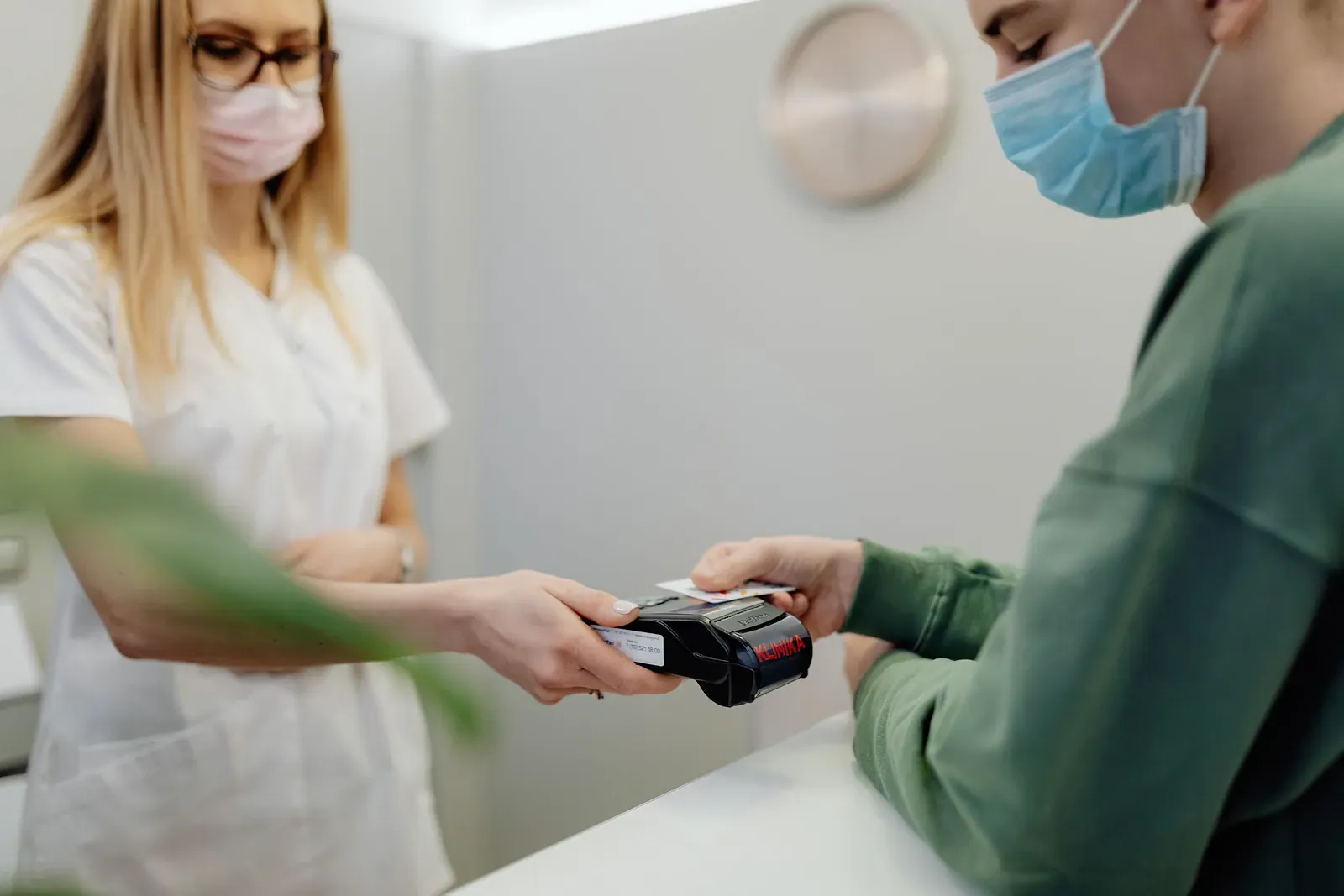
Anyone planning treatment in Thailand (insured or not) benefits from thinking through cash-flow risk before it’s urgent. A card with a high enough limit to cover a plausible deposit, a way to receive an emergency transfer quickly, and knowing in advance which of your cards or accounts a specific hospital accepts are all worth confirming before you need them, not during a hospital admission. This applies even to well-insured patients: a GOP can take hours to arrange for an emergency arriving outside normal business hours, and a hospital may still ask for a temporary deposit to begin treatment while it waits for the insurer’s confirmation, refunding or crediting it once the GOP comes through.
A decision framework
| Situation | Realistic path |
|---|---|
| Sudden illness or accident during a short trip | Standard travel insurance, assuming the condition isn’t excluded as pre-existing |
| A booked, planned procedure (surgery, dental, cosmetic) | Self-pay for the procedure itself (via one of the payment paths above), plus separate cover for complications and evacuation if you want it |
| Long-term resident needing ongoing access to care | An international or local expat health plan with direct billing: see the health insurance guide |
| Any of the above, plus travel to a smaller city or another country in the region | Confirm evacuation cover explicitly and its stated limit, regardless of which of the above applies |
| Choosing which hospital to use under any of these paths | The hospital’s own accreditation and tier matter independently of how you’re paying: see choosing a hospital and the comparison of JCI, private and public hospitals |
Common mistakes
- Assuming “I have travel insurance” answers the question. It answers it only for unexpected illness or injury: a booked procedure is a different risk category entirely, and most travel policies say so explicitly if you read the exclusions.
- Not calling the insurer until arrival at the hospital. A GOP takes time to arrange; leaving it until you’re at the admissions desk for a planned procedure risks falling back to a cash deposit even though a valid policy exists.
- Buying the cheapest evacuation cover available without checking the cap. A policy that looks complete can cap evacuation at a fraction of what a genuine international medical flight costs.
- Not keeping documents when paying cash. Reimbursement claims are commonly rejected or delayed for missing itemised invoices or medical reports: collect everything at the hospital, not after you’ve left the country.
- Confusing “medical tourism insurance” with cover for the procedure’s own cost. Read what the specific policy actually pays for before assuming it funds the surgery itself.
This article is general information about how hospital payment and travel insurance mechanics typically work in Thailand, not financial or medical advice, and it does not recommend any specific insurer, broker or product. Insurance terms, evacuation limits and hospital deposit practices change and vary by provider: confirm current terms directly with the insurer and the specific hospital, in writing, before you travel or commit to treatment.
Common questions
Does travel insurance cover surgery in Thailand?
Only for medically necessary treatment of an unexpected illness or injury that occurs during the trip. A planned, booked procedure (the reason you travelled) generally falls outside standard travel insurance and needs to be paid for separately, most often out of pocket at the hospital.
What is a guarantee of payment, and how do I get one?
It’s a document your insurer issues directly to the hospital confirming it will pay for your treatment, which lets the hospital admit you without a cash deposit. You or the hospital contacts the insurer’s assistance line, the insurer verifies your policy and the estimated cost, and issues the GOP if it approves, ideally arranged before a planned admission rather than at the door.
Can I just pay cash and claim it back later?
Yes, and many patients do, whether or not they have insurance. Keep every itemised invoice and medical report, because incomplete documentation is one of the most common reasons a reimbursement claim is delayed or rejected.
How much medical evacuation insurance do I actually need?
Enough to cover a genuine international air-ambulance transport, not just a domestic transfer: some budget policies cap evacuation well below what a serious international evacuation has been reported to cost. Check the specific limit stated in the policy document rather than assuming a policy is adequate because it includes an evacuation benefit at all.
Is medical tourism insurance the same as cover for my procedure?
Usually not. Medical tourism insurance typically covers complications, travel disruption and repatriation connected to a planned procedure, not the cost of the procedure itself, which is generally paid directly to the hospital. Read the policy’s actual definitions before assuming otherwise.
Do Bangkok hospitals require a deposit even in an emergency?
For immediate life-threatening stabilisation, no, but once you’re stable, the hospital will typically ask for a guarantee of payment or a deposit to continue non-emergency treatment or admission, the same as for a planned case. This is standard practice across Thai private hospitals, not a sign the hospital doubts you.
Written by
Mike Brochlowski
Founder and editor, travel photographer and designer
I'm Mike Brochlowski, a travel photographer and designer, and I currently live on Koh Samui, Thailand. I built BangkokWiki to put practical, checked information about Bangkok in one place. Every page is researched from official and primary sources, and the text names them. Where a page shows a checked date, that is when its facts were last confirmed. I also run samui69.com, a non-commercial guide to Koh Samui. If you spot an error or something out of date, tell me through the contact page and I will check it and correct the page.
Read all articles
Medical stays
Planning treatment in Bangkok?
See dated price ranges for common procedures, what each package includes and how to choose a hospital or clinic. Prices are indicative only, and nothing here replaces advice from a clinician.

Places to stay
Find a hotel
Explore the other desks
More from Health
- 7 min read
 9 min read
Cancer Treatment in Bangkok: Get a Second Opinion First
 10 min read
Heart Surgery in Bangkok: Bypass vs Angioplasty Cost

Newsletter
You're subscribed as