Travel
3 Days in Bangkok: A Realistic First-Visit Itinerary
A walkable, heat-aware 3-day Bangkok itinerary: old town and river, modern city and rooftops, then a choice of Chatuchak, Chinatown or Ayutthaya.
At a glance
- Reading time
- 11 min read
- Chapters
- 8
- Published
- Sep 20, 2026
On this page
Three days is enough to see Bangkok’s old town, its modern core and one proper day trip, provided you accept two facts up front: the heat peaks hard after midday, and crossing town at the wrong hour on the road can eat two hours you don’t have. This plan works with both constraints rather than against them, using the river and the rail network as the spine and keeping each day to three or four real anchors instead of a checklist of ten.
The order matters. Day 1 covers the old town and the river, which is best done early before the heat and the crowds both build. Day 2 moves to the modern city (Siam, a park, a sunset rooftop, a night market), which tolerates a later start. Day 3 branches: Chatuchak if your visit lands on a weekend, Chinatown and a food crawl if it doesn’t, Ayutthaya for a full day out of the city, or a slower canal-and-Thonburi morning if you’d rather not do a fourth big day. For the free version of much of this plan, see free things to do in Bangkok; if rain disrupts any of it, see Bangkok rainy day activities.
The three days at a glance
| Day | Morning | Afternoon | Evening | Transport spine |
|---|---|---|---|---|
| 1: Old town & river | Grand Palace, Wat Pho | Chao Phraya express boat to Wat Arun, Tha Tien | Riverside dinner or a boat-view meal | Express boat + short walks |
| 2: Modern city | Siam malls, Jim Thompson House | Lumphini or Benjakitti Park | Rooftop bar at sunset, night market | BTS Skytrain |
| 3: Choice | Chatuchak / Chinatown / Ayutthaya / Thonburi canals | Continues from morning pick | Depends on branch | MRT, BTS, boat or van, depending on branch |
Before you plan the days: three constraints that shape everything
Heat. Bangkok’s midday sun from roughly 11:00 to 15:00 is genuinely draining, especially for anyone not used to tropical humidity. Every day below is built to put outdoor walking in the morning and put the middle of the day indoors, on a boat, or resting somewhere air-conditioned.
Traffic. Road journeys that look short on a map can take 45 minutes to over an hour at peak times, particularly weekday mornings and early evenings. The BTS Skytrain, MRT subway and Chao Phraya express boat don’t hit traffic, so this itinerary routes around road transport wherever a rail or river option exists.
Pace. Three or four anchor stops a day is realistic for a first-time visitor dealing with heat and jet lag. Trying to fit in eight sights guarantees you’ll be rushing through half of them and enjoying none. Each day below names what to drop first if you’re flagging.
Day 1: old town and the river
Start early, ideally arriving at the Grand Palace complex around when it opens, both to beat the heat and to beat the tour-bus crush that builds through the late morning. Dress code is enforced here and at the temples that follow: shoulders and knees covered, no flip-flops for temple interiors. Bring a light scarf or a spare shirt if you’re not sure your outfit will pass; vendors near the entrance also sell cover-ups at a markup.
- Grand Palace and Wat Phra Kaew (the Temple of the Emerald Buddha, inside the palace grounds). Budget two hours minimum. This is the single busiest sight in the city and the one place where an early start genuinely changes the experience.
- Wat Pho, a short walk south. Home of the reclining Buddha and a genuinely relaxing complex once you’re past the entrance, far less crowded than the palace next door. An hour is enough unless you want a traditional Thai massage at the school on site, which is worth the extra time if your legs need it.
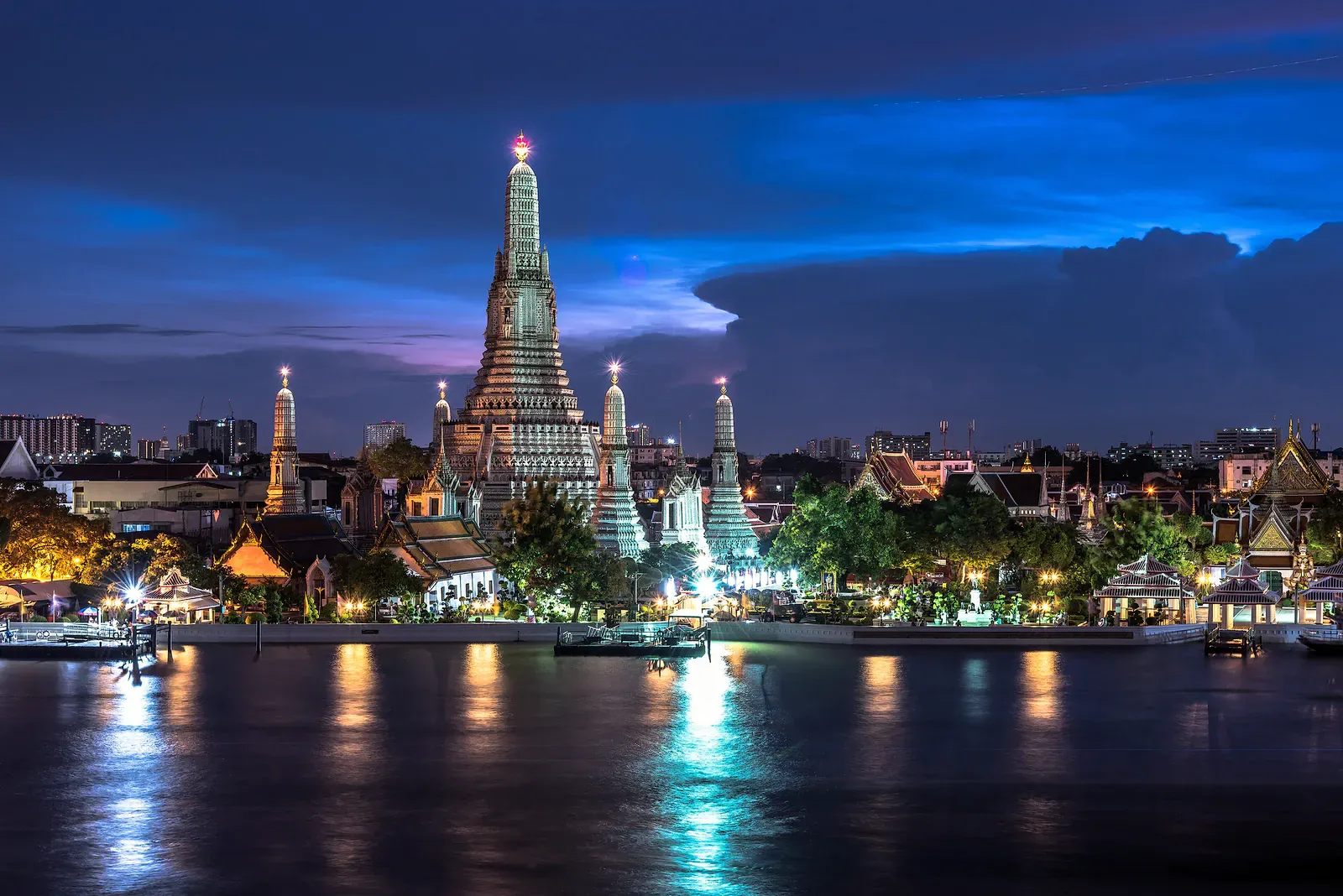
- Tha Tien pier, a few minutes’ walk from Wat Pho. Take the cross-river ferry (a few baht, cash, immediate) over to Wat Arun, the Temple of Dawn, whose river-facing prang is the classic Bangkok postcard shot. Climbing the steep central steps is optional and not for anyone with knee or balance concerns.
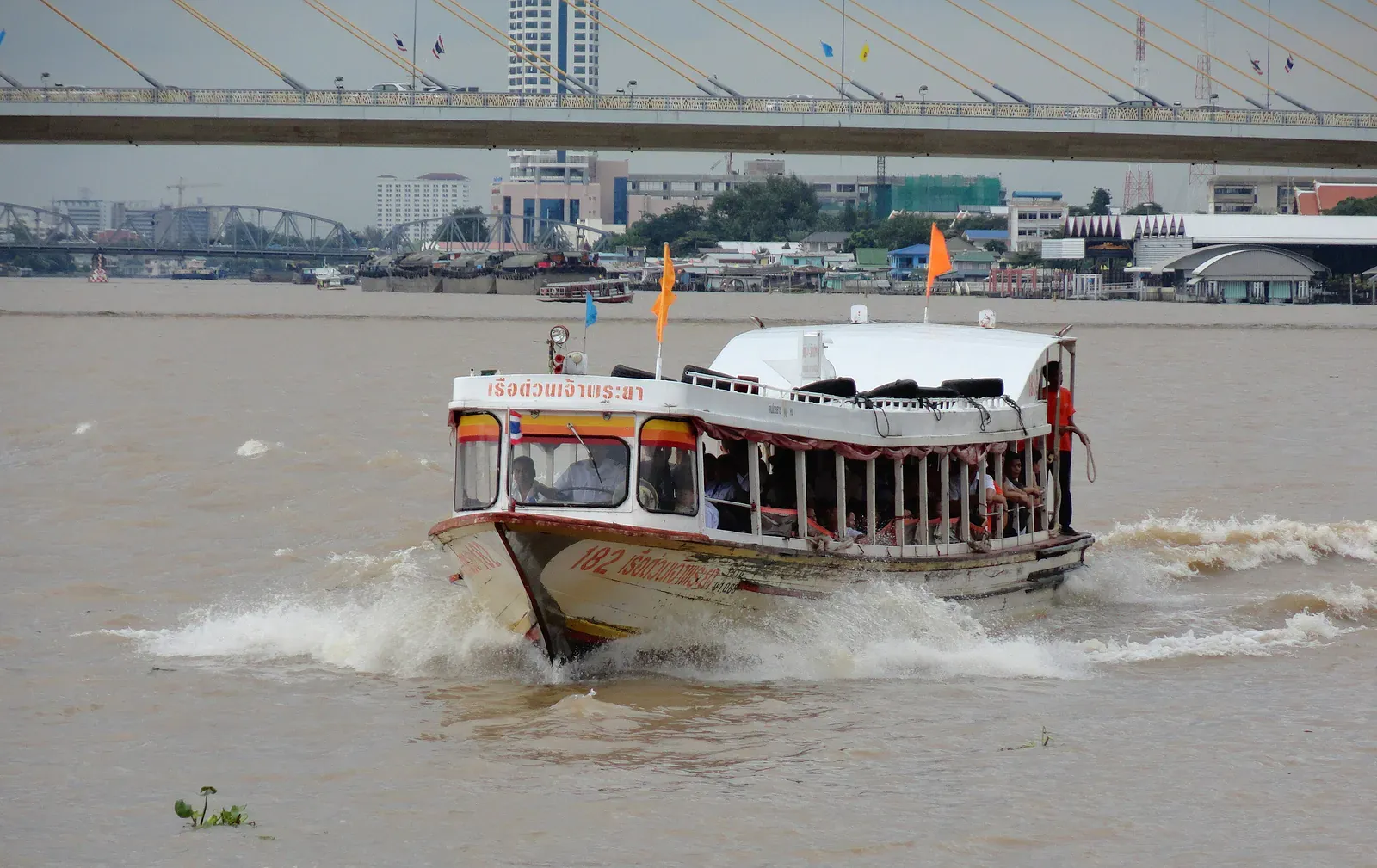
- Back at Tha Tien, pick up the Chao Phraya Express Boat heading downriver or upriver depending on where you’re staying, or simply ride it one stop for the view. The orange-flag boat is the tourist-friendly line with English announcements at most piers; check the current route map at the pier noticeboard, since lines and stops do shift.
By early afternoon the heat is at its worst, which is the cue to break: a riverside café, an air-conditioned lunch near Tha Tien, or a slow boat ride are all better than pushing on to a fourth temple. If you have energy left, Wat Saket (the Golden Mount) and the Giant Swing area are a reasonable add-on later in the afternoon once the heat has eased slightly, reached by a longer walk or a short taxi.
Evening: a riverside restaurant, several of which sit right on the water near Tha Tien and further downriver toward Charoen Krung, makes a good close to a temple-heavy day: you get the Wat Arun view again, now lit up after dark, without another round of walking in the heat.
Rain plan: the palace and Wat Pho complexes are mostly open-air with some covered walkways; a downpour turns a comfortable morning into a miserable one fast. If rain is forecast for the morning, flip Day 1 and Day 2: do the indoor, rail-connected city day first and save the open-air old town for a drier morning.
What to drop if tired: Wat Arun’s climb is the first thing to skip: the view from the pier and the boat is nearly as good as the view from the steps. The Golden Mount add-on is the second thing to cut.
Day 2: the modern city
This day starts later and leans entirely on the BTS Skytrain, which means no dependence on road traffic and no early alarm required.
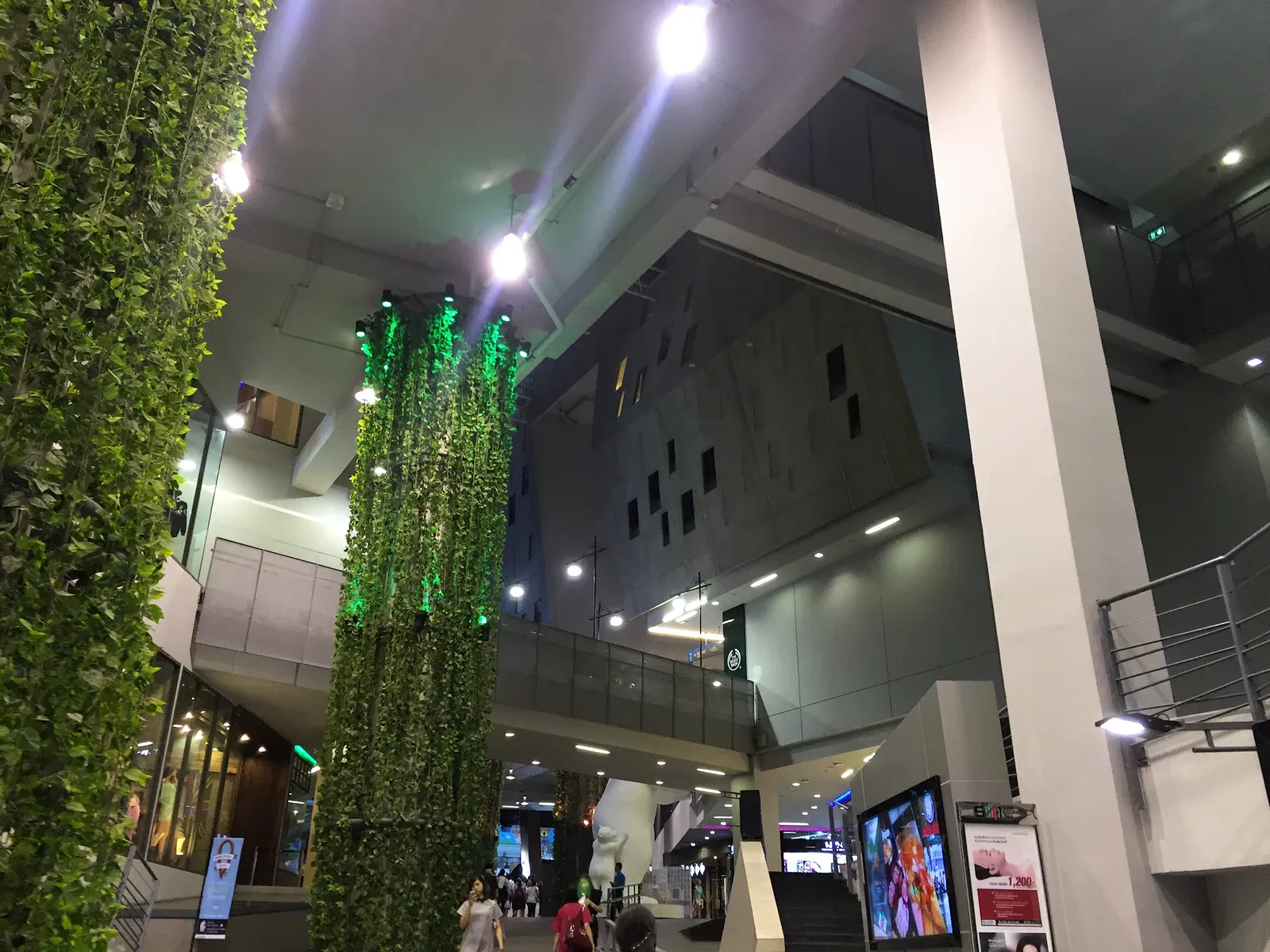
- Siam (Siam BTS station, interchange for both Skytrain lines). The Siam Paragon, Siam Center and Siam Discovery cluster is Bangkok’s mall spine: worth an hour or two for air-conditioned browsing, the aquarium if you have kids in tow, and a food court lunch that punches well above its casual setting.
- Jim Thompson House, a short walk or a couple of minutes by taxi from Siam or National Stadium BTS. A genuinely calm teak-house museum built around the story of the American silk entrepreneur who vanished in 1967, a good counterweight to the malls either side of it, and shaded enough to visit around midday.
- A park in the mid-to-late afternoon once the worst heat has passed: Lumphini Park (Lumphini or Silom MRT) for its lake, monitor lizards and open lawns, or Benjakitti Park (Queen Sirikit National Convention Centre MRT) for its newer boardwalk through wetland forest. Either works as a shaded, green reset between the malls and the evening.
- Rooftop bar at sunset. Bangkok’s rooftop bars cluster around Silom, Sathorn and lower Sukhumvit, most reachable by BTS or MRT plus a short walk. Dress codes exist at the smarter ones (closed shoes and no shorts or sandals for men, in most cases), so check before you go if you’re aiming for a specific one. Arrive before sunset to get a seat with a view; drink prices here run well above street level, which is the trade for the view.
- Night market. Depending on the night and the season, options include the markets around Ratchada (MRT Thailand Cultural Centre) or the riverside night market near Charoen Krung. These are as much about the food stalls and the atmosphere as the shopping.
Rain plan: this entire day survives rain well. Siam, Jim Thompson House and most rooftop bars are covered or fully indoor, and the mall-to-mall connections around Siam let you stay dry for hours. Swap the park for extra mall time and push the rooftop to whenever the rain breaks.
What to drop if tired: the park is the most skippable single stop on this day (pleasant but not essential), followed by the night market if you’ve already eaten well at the mall food court.
Day 3: pick your branch
Day 3 depends on the calendar and your energy levels more than the other two days. Pick one.
Branch A: Chatuchak Weekend Market (weekends only)
Chatuchak (Mo Chit BTS or Chatuchak Park/Kamphaeng Phet MRT) only runs at full scale on Saturdays and Sundays, so this branch only applies if your three days include a weekend day. It’s one of the largest markets in the world by stall count, organised loosely by section (clothing, home goods, antiques, pets, food), and it is easy to get lost in for hours. Go early, before both the heat and the crowds peak, wear comfortable shoes, and accept that you will not see all of it. Bargaining is normal on unpriced items; food stalls are generally fixed-price.
Branch B: Chinatown and a food crawl
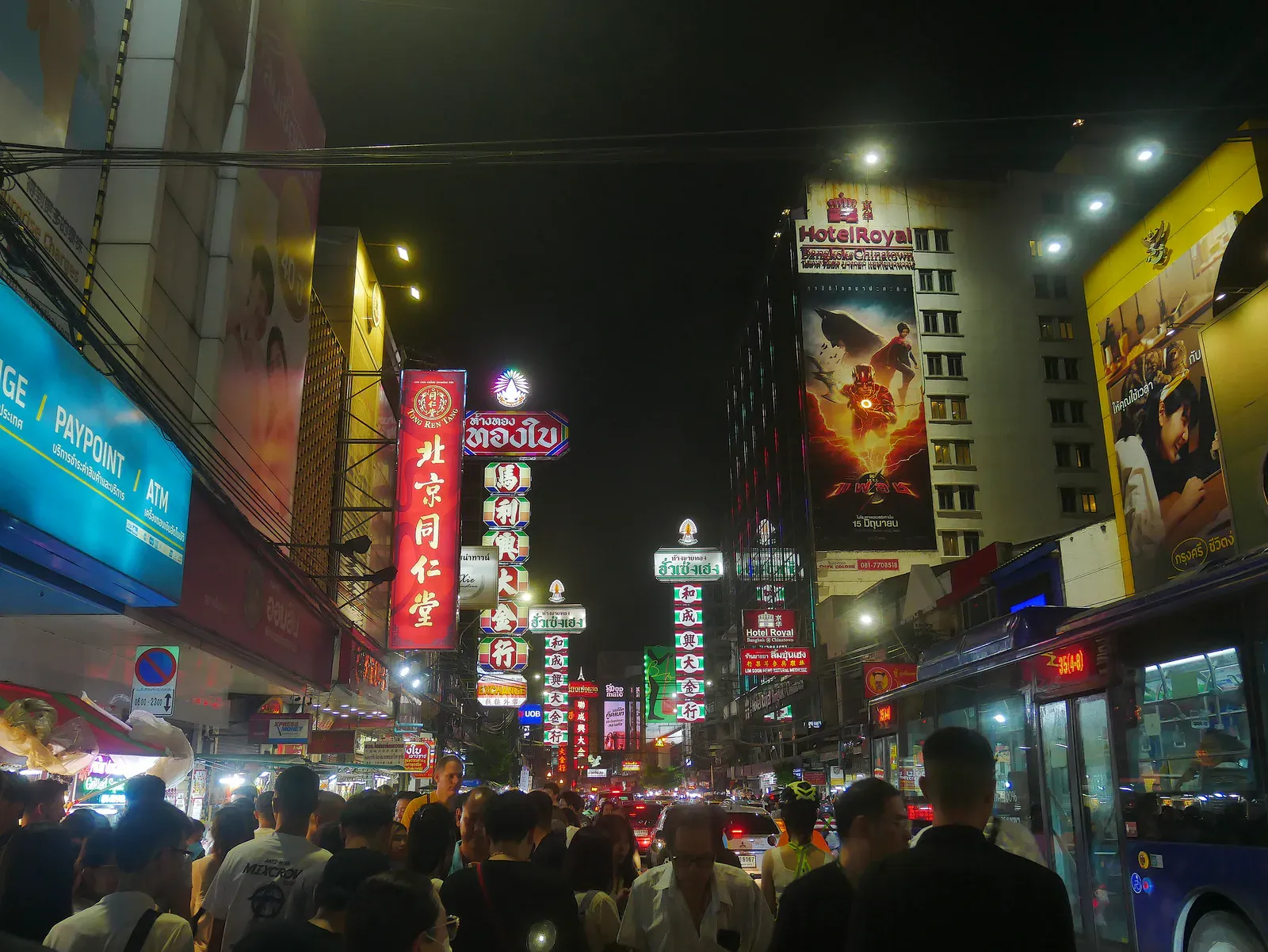
Chinatown (Wat Mangkon MRT, or a short walk from Hua Lamphong) rewards an early-evening visit as much as a daytime one, when the street-food stalls along Yaowarat Road light up. A daytime visit suits the temples and gold shops; an evening visit suits the food. Either way, go hungry, order small portions from several stalls rather than one big meal at one, and expect the main road to be genuinely crowded and slow-moving after dark: that’s the point.
Branch C: Ayutthaya day trip
The former Siamese capital, roughly an hour and a half from Bangkok by train or a similar time by road, is a genuinely different experience from anything in the city: brick temple ruins spread across a river-bound old town, best explored slowly rather than rushed. This is a long day (leave early, expect to be back after dark), and it eats your entire Day 3, so it doesn’t combine with a Bangkok morning first. Sun exposure among the ruins is intense with almost no shade, so this is the one branch where a hat and water matter more than anywhere else on this itinerary.
Branch D: canals and Thonburi (a slower option)
For a lower-key morning that skips a full day trip, a longboat ride through the Thonburi canals (khlongs) on the river’s west bank shows a quieter, still-residential side of Bangkok: stilt houses, small canal-side temples, and a version of the city that predates the expressways. This pairs well with a relaxed afternoon back on the east bank rather than a second big push.
Variants
With kids. Day 1’s temples hold children’s attention for a limited window: plan for a shorter palace visit and build in the boat rides themselves as entertainment. Day 2’s Siam cluster has an aquarium and enough air-conditioned space to absorb an afternoon meltdown. Skip Ayutthaya’s shadeless ruins with very young children; Chatuchak’s pet section is usually a hit, but the crowds and heat are real risks with a stroller.
With limited mobility. Wat Pho’s grounds are flatter and easier than the Grand Palace’s, which has more stairs and uneven stone. Skip Wat Arun’s central climb entirely and enjoy it from the pier. The BTS and MRT both have lifts at most, though not all, stations: check the specific station if this is a hard requirement. Ayutthaya’s ruins involve uneven ground and are the hardest branch for reduced mobility; Chinatown’s food crawl is the easiest, since you can sit rather than walk between stalls.
In the rainy season. Lean toward Day 2’s indoor spine first, keep the old town for whichever morning starts driest, and treat Ayutthaya as weather-dependent: shadeless ruins in a downpour are miserable rather than dangerous, but not worth it. See Bangkok rainy day activities for a full wet-weather plan if the whole three days turns wet.
For a repeat visitor. Swap Day 1’s big two for a quieter temple you haven’t done, take the canal branch on Day 3 instead of the market or the ruins, and use the freed-up time for a neighbourhood you skipped the first time: Ari’s café strip or the Thonglor/Ekkamai area both reward an unstructured afternoon more than another checklist stop.
Money, timing and getting a rail or transit card
Get a stored-value rail card early (it works across BTS and, for some cards, MRT), so you’re not queuing for single tickets at every station on a tight schedule. Express boat fares are paid in cash or by tapping at the pier, depending on the boat line; keep small notes and coins on you for piers, cross-river ferries and market stalls, since not everything takes cards. As a rough, indicative 2026 guide: a cross-river ferry runs a few baht, a BTS or MRT hop a few tens of baht, and Grand Palace admission is a more significant single-ticket cost: check the official site for the current figure before you go, since these are not to be relied on as fixed.
Common questions
Is 3 days enough time in Bangkok?
Yes, for a first visit focused on the old town, the modern city core and one day trip or market day. It’s tight if you also want to add Ayutthaya, Chatuchak and a slow neighbourhood day all at once: pick one Day 3 branch rather than trying to stack them.
Should I do the Grand Palace or Wat Pho first?
Grand Palace first, early, because it draws the largest crowds and has the strictest dress-code checks at entry. Wat Pho is calmer at almost any hour and works well as a mid-morning follow-on once the palace is done.
What if my 3 days don’t include a weekend?
Skip the Chatuchak branch and take Chinatown, Ayutthaya or the Thonburi canal morning instead on Day 3: all three run every day of the week, unlike the full-scale market.
How much walking does this itinerary involve?
Day 1 is the most walking-heavy, mostly flat ground between the palace, Wat Pho and Tha Tien pier. Day 2 is lighter, broken up by air-conditioned malls and the BTS. Day 3 varies hugely by branch: Ayutthaya and Chatuchak both involve a lot of walking in the sun, while the Thonburi canal branch is mostly seated.
Do I need to book the Grand Palace or Wat Pho in advance?
Check the official site closer to your date for current entry arrangements, since these details change. What doesn’t change is the value of arriving early: queues and heat both build through the morning regardless of the booking system in place.
What should I do if it rains on my temple day?
Swap the order: move Day 2’s indoor, rail-connected plan to whichever morning is wettest, and save the old town’s mostly open-air sights for drier weather. See Bangkok rainy day activities for a longer list of indoor options if the rain doesn’t let up.
Written by
Mike Brochlowski
Founder and editor, travel photographer and designer
I'm Mike Brochlowski, a travel photographer and designer, and I currently live on Koh Samui, Thailand. I built BangkokWiki to put practical, checked information about Bangkok in one place. Every page is researched from official and primary sources, and the text names them. Where a page shows a checked date, that is when its facts were last confirmed. I also run samui69.com, a non-commercial guide to Koh Samui. If you spot an error or something out of date, tell me through the contact page and I will check it and correct the page.
Read all articles
Where to stay
Pick the area before the hotel
Traffic and heat make Bangkok distances feel longer than they look on a map, so the area shapes a trip more than the hotel does. Our guides match areas to trip types and explain the trade-offs.

Places to stay
Find a hotel
Explore the other desks
More from Travel
- 5 min read
 8 min read
2 Days in Bangkok: Built Around What Closes at 3:30pm
 10 min read
A Cruise Passenger's Day in Bangkok: The Real Time Budget

Newsletter
You're subscribed as