Things to do
Ayutthaya Day Trip From Bangkok: How to Do It
How to plan an Ayutthaya day trip from Bangkok: train versus car, which ruins to see, tickets, timing and getting back before evening traffic.
At a glance
- Reading time
- 13 min read
- Chapters
- 14
- Published
- Sep 20, 2026
On this page
Ayutthaya was Siam’s capital for four centuries until a Burmese army sacked it in 1767, and what’s left is a UNESCO-listed historical park scattered across a modern working town on an island between three rivers. A day trip works, but only if you plan around the geography: the ruins aren’t clustered in one walkable zone, so how you move between them decides whether you see five temples or fifteen.
What Ayutthaya actually is
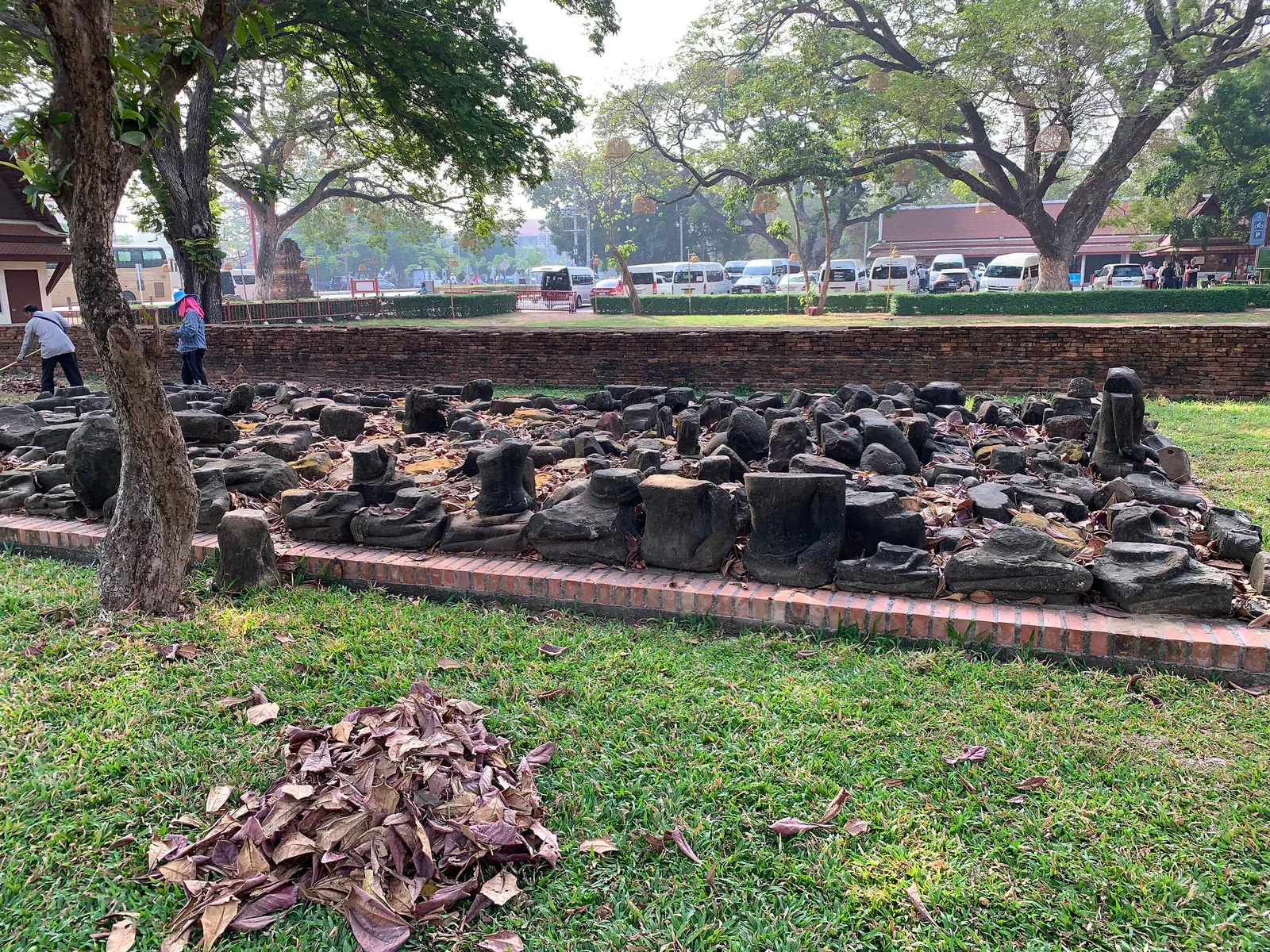
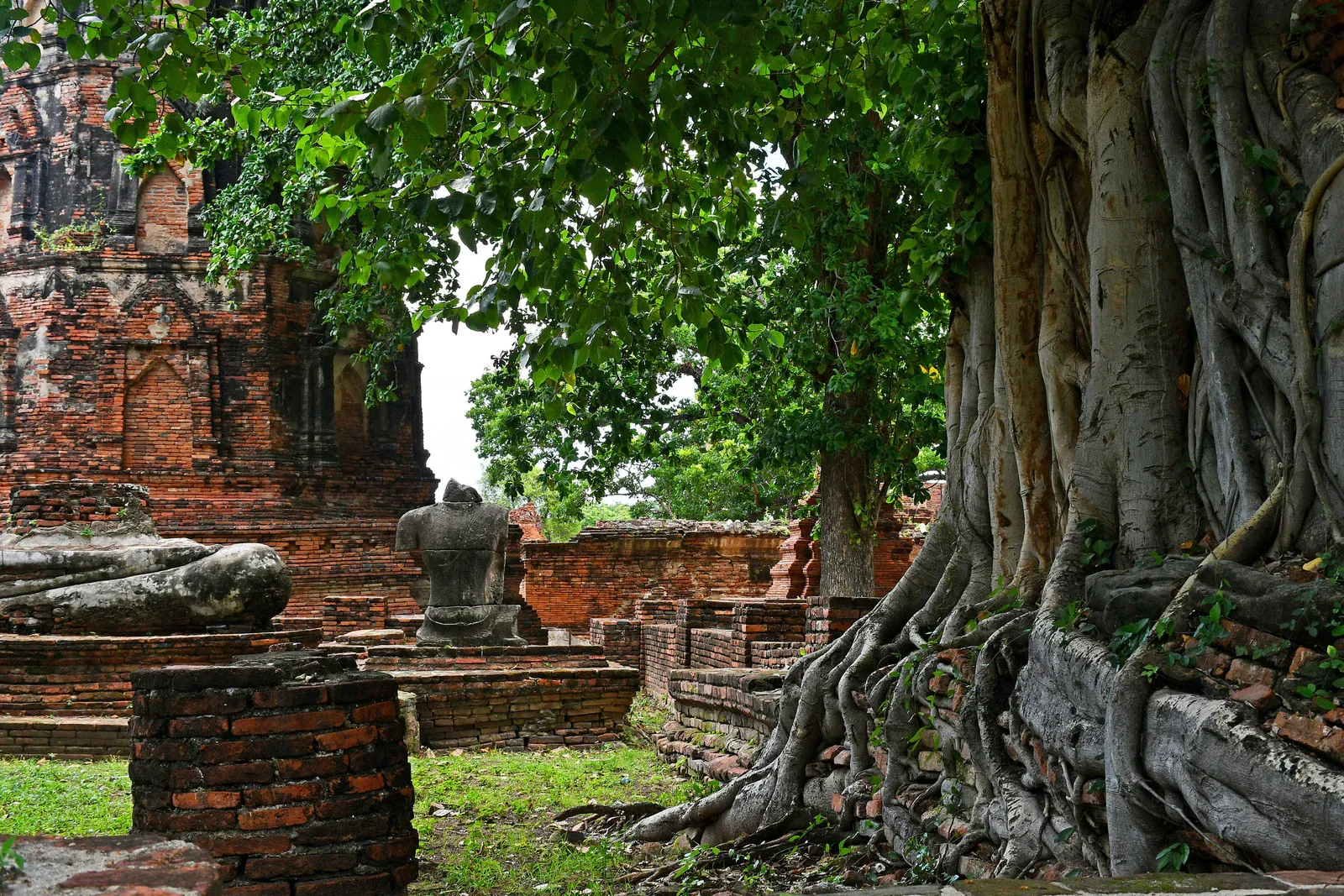
The old city sits on an island formed by the Chao Phraya, Lop Buri and Pa Sak rivers, a defensive choice that made sense for a fifteenth-century capital and now means the historical park is threaded through with water, bridges and a functioning provincial town rather than sealed off as a museum piece. At its height Ayutthaya was one of the largest cities in the world, a trading hub that hosted merchants, missionaries and diplomats from Persia, Japan, France and the Dutch East India Company. The 1767 sack by the Konbaung army ended the kingdom’s capital status for good: the court relocated first to Thonburi, then across the river to what became Bangkok, and left the temples burned, the Buddha images decapitated for their gold, and the brick cores of dozens of monasteries standing bare against the sky.
That history explains the site layout better than any map. The temples were never meant to be a single compound; they were a royal capital’s worth of monasteries, palaces and administrative buildings, spread across an island roughly 4km by 2km, with more sites again across the river on both banks. Nothing about visiting Ayutthaya is walkable in the way a single wat in Bangkok is walkable. Accept that early and the day gets much easier to plan.
Getting there: the honest comparison
Trains to Ayutthaya run from Krung Thep Aphiwat Central Terminal, Bangkok’s newer main station in the north of the city, which took over most long-distance services from the old Hua Lamphong terminus a few years ago; a handful of ordinary services still use Hua Lamphong, so check which station your specific train uses when you look up times. The ride itself is slow, un-air-conditioned on the cheapest ordinary-class carriages, and genuinely part of the experience: you’re riding the same line Ayutthaya’s own commuters use, past rice paddies and level crossings, for a fare that’s a small fraction of any other option.
Minivans leave from various depots around the city and Mo Chit’s northern bus terminal, running faster and more directly along the motorway, with the trade-off of being packed tighter and driven with more urgency than most visitors are used to. A private car or driver, booked for the day, removes both the timetable and the crowding problem, at several times the cost, and gives you a driver who can also handle the connections between temple clusters once you arrive, useful if your group includes anyone who tires easily in the heat. Organised bus tours bundle transport, a guide and usually lunch into one price, trading flexibility for not having to think about logistics at all, a trade-off worth making here in a way it may not be for a coastal day out like the ones covered in the beaches near Bangkok guide, where public transport alone is usually straightforward enough. River-cruise-plus-coach combinations run one leg by boat along the Chao Phraya and the other by road, which makes for a more scenic and considerably slower journey, a full day dominated by transport rather than temples, better suited to travellers who want the river as much as the ruins.
| Option | Cost band (2026, indicative) | Journey time | Comfort | Flexibility |
|---|---|---|---|---|
| Ordinary train (Krung Thep Aphiwat) | ฿15-20 (~US$0.40-0.55) | 1.5-2 hours | Basic, fan-cooled | High: go/return whenever a train runs |
| Minivan | ฿70-100 (~US$2-3) | 1-1.5 hours | Cramped, air-conditioned | Medium: fixed departure points |
| Private car/driver, full day | ฿1,800-3,500+ (~US$50-100) | 1-1.5 hours | High | Highest: your schedule entirely |
| Organised bus tour | ฿1,200-2,500+ (~US$35-70) per person | 1.5-2 hours | Medium-high | Low: fixed itinerary and pace |
| River cruise + coach combo | ฿2,000-4,500+ (~US$55-130) per person | Half-day-plus for transport alone | High | Low: scenic but slow |
Confirm current fares before travelling; these are broad indicative bands, not quotes, and minivan and tour prices in particular shift by season and operator.
Getting around once you’re there
Once in Ayutthaya, a hired bicycle is the classic budget option and genuinely pleasant outside the hottest months: flat terrain, quiet backstreets, and the option to detour on a whim. It stops being pleasant in the build-up to the hot season, roughly March to May, when midday temperatures and humidity make cycling between temples a genuine endurance exercise rather than a scenic ride; a shaded rest every couple of stops becomes necessary, not optional. A rented motorbike covers ground faster with the same heat problem, and needs a rider comfortable with Thai provincial road habits. Tuk-tuks hired by the hour are the practical middle ground: a driver who knows the layout, air moving over you between stops, and no navigation to worry about, for a negotiated hourly rate that comfortably beats a private car for a single day’s sightseeing. A car, whether self-driven or with your Bangkok driver continuing on, is the most comfortable option and the only sensible one for anyone visiting in peak heat with young children or older relatives in the group.
The ruins, grouped into a workable route
The most efficient day treats Ayutthaya as four zones rather than a temple-by-temple checklist.
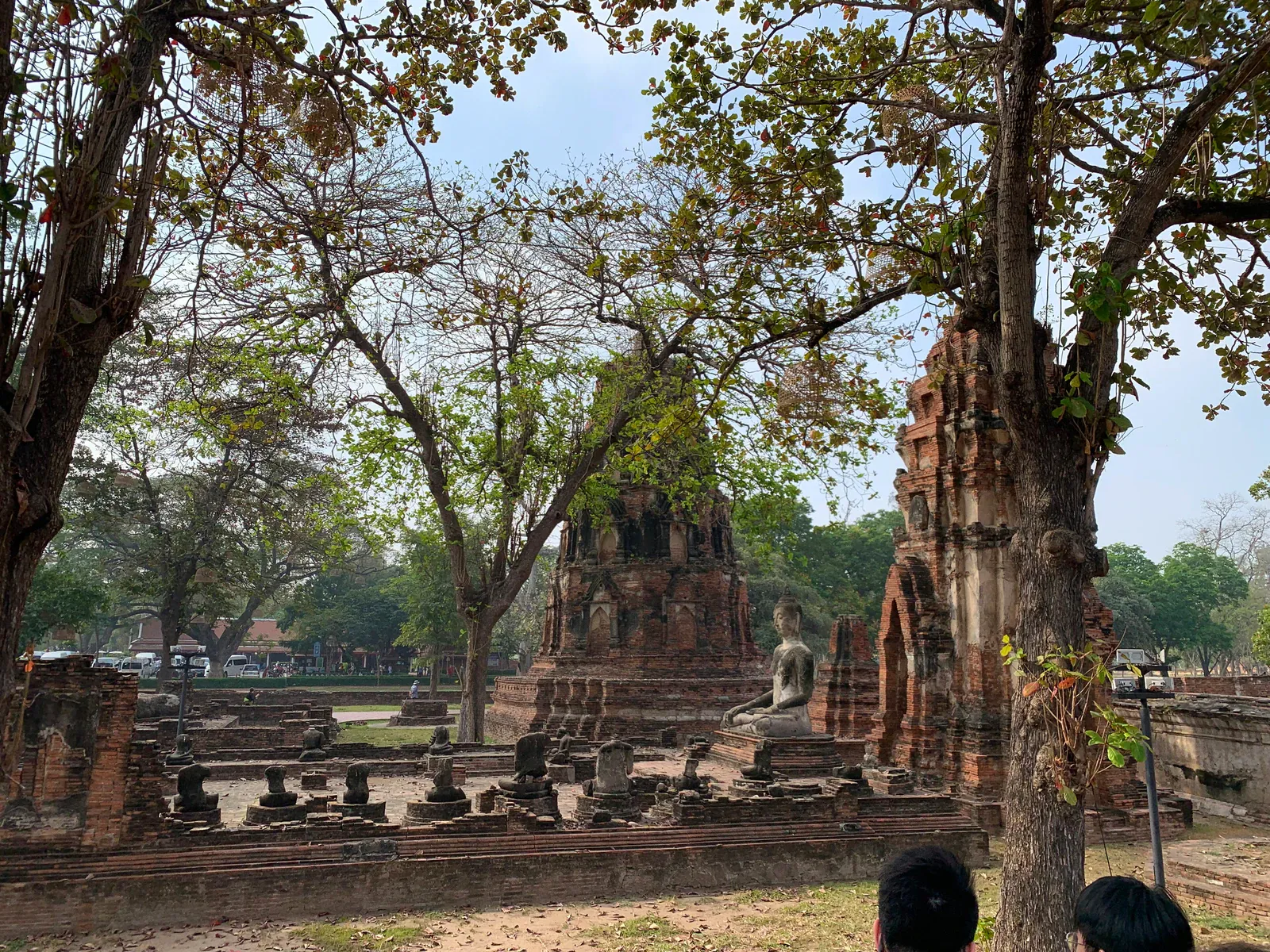
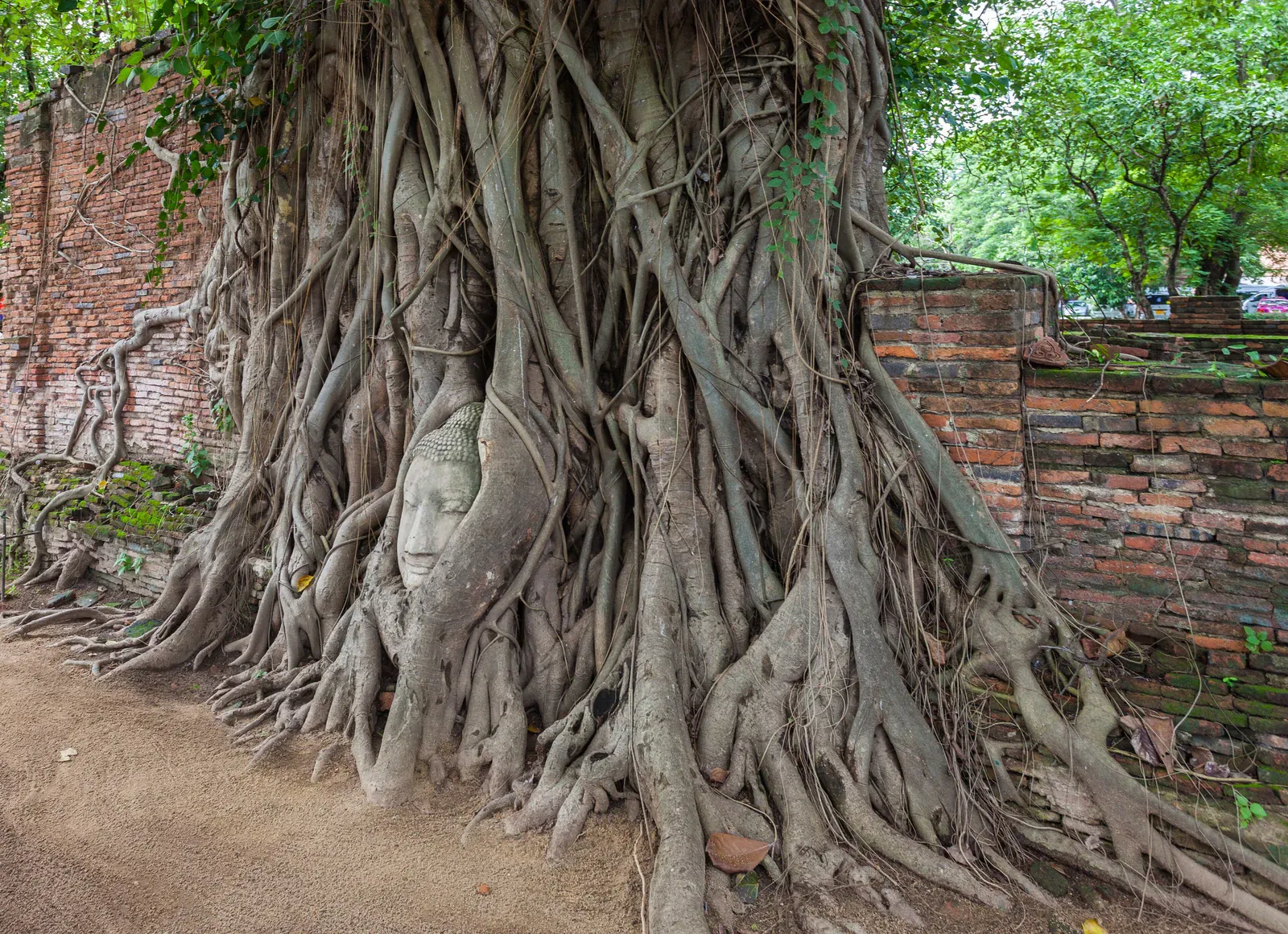
The central island cluster holds the headline sites within a short drive or ride of each other: Wat Mahathat, home to the Buddha head famously grown into the roots of a bodhi tree, a genuinely striking image, but treat it with the same etiquette as any Buddha image, meaning don’t pose above its height, and keep photography respectful rather than performative. Wat Ratchaburana sits directly opposite with a climbable central prang and crypt. Wat Phra Si Sanphet, the former royal temple within the old palace grounds, has three iconic bell-shaped chedis that appear on postcards of the whole country. Wat Phra Ram, facing an ornamental pond, rounds out the cluster.
The riverside temples sit across the water and need a short ferry crossing or a road bridge detour: chiefly Wat Chaiwatthanaram, a Khmer-style temple on the Chao Phraya’s bank that’s arguably the single most photogenic site in Ayutthaya, especially at golden hour, and worth the extra half-hour it costs to reach.
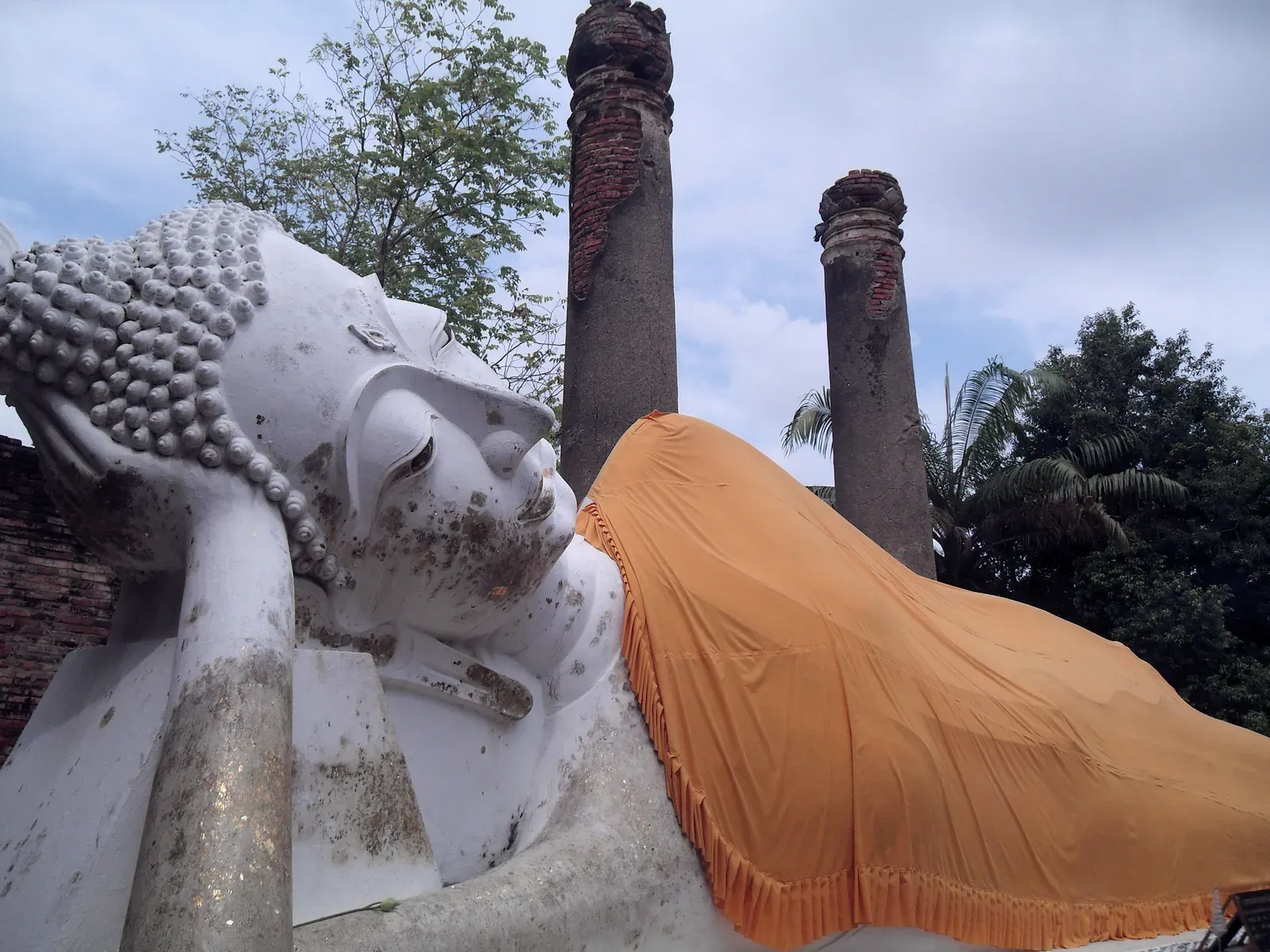
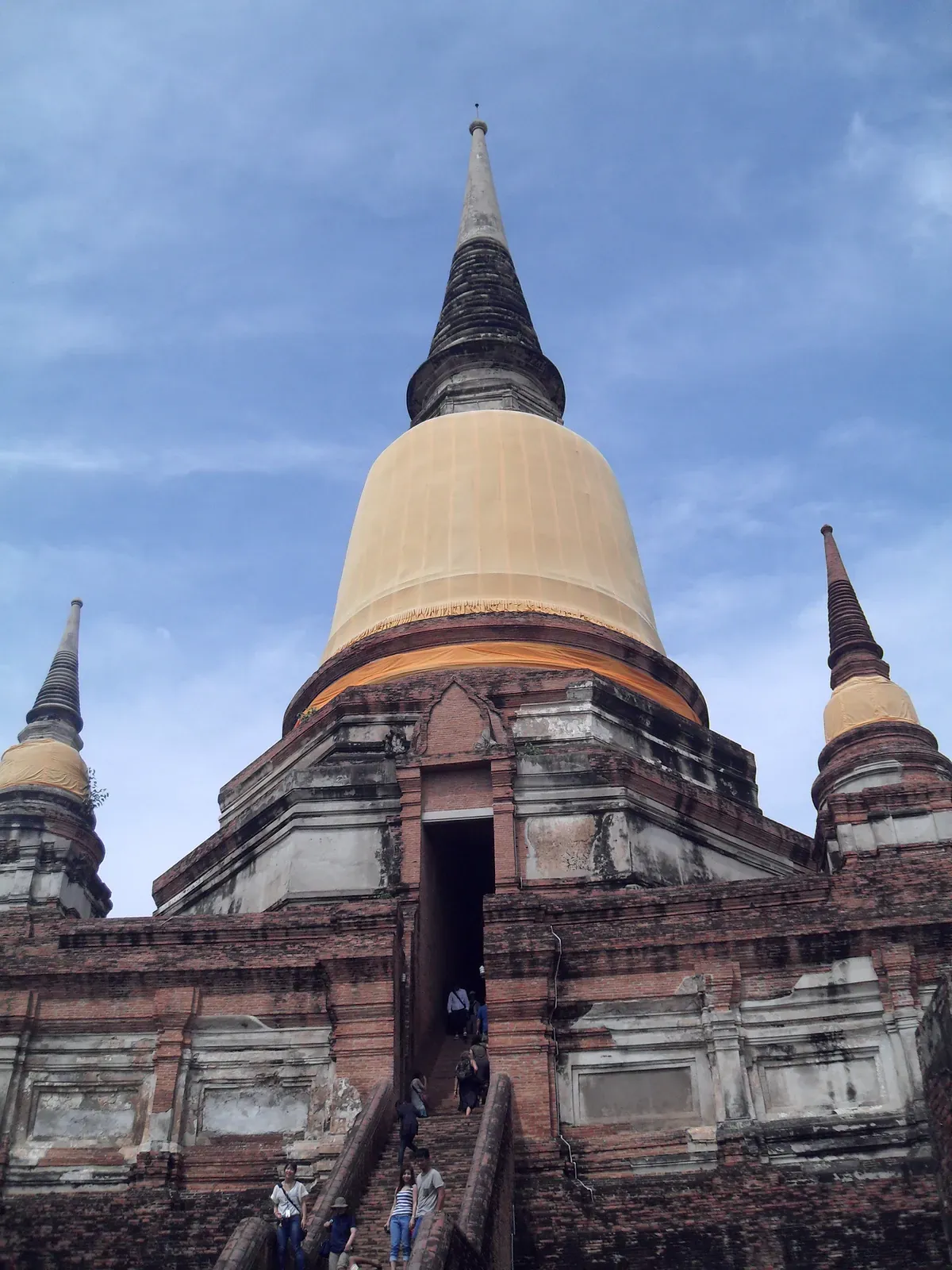
The reclining Buddha and outlying sites include Wat Lokayasutharam, an open-air reclining Buddha statue with no roof or walls, striking for how exposed and undefended it feels compared with the enclosed images elsewhere, and Wat Yai Chai Mongkhon, known for its tall chedi and rows of seated Buddha images.
The palace ruins and museums, the old Grand Palace (Wang Luang) foundations near Wat Phra Si Sanphet, the Chao Sam Phraya National Museum holding treasures recovered from the temple crypts, and the Ayutthaya Historical Study Centre, which does the best job of any single stop at explaining what the city looked like before 1767, give context that the bare brick ruins alone don’t provide. Fitting a museum in early, before the ruins themselves, makes everything afterward easier to place mentally.
Tickets and what they actually buy you
Ayutthaya has no single admission fee for the historical park as a whole; it’s an open zone of roads and temples, and most sites simply charge their own small entrance fee at the gate, generally payable in cash. A combined ticket covering several of the major temples exists and is worth buying if you’re planning to see more than three or four sites, since it works out cheaper than paying individually and saves queuing at each gate, but combined-ticket coverage varies by which temples are included, so check what’s on it before assuming it covers everywhere on your list. A few sites, including the open-air reclining Buddha, have no fee at all. Treat any specific number you read as indicative for 2026 and confirm at the gate; these fees do get revised.
Opening follows a fairly consistent daily pattern across the main sites, generally from mid-morning-adjacent early hours through to early evening, though a handful close slightly earlier or run to different patterns: worth building a small buffer into your plan rather than arriving at a gate five minutes after it shuts.
Dress, etiquette and the elephant question
These are still active, sacred sites for many Thai visitors, not open-air museum exhibits, even where the roof has long gone. Cover shoulders and knees, remove shoes where signed, and don’t climb on ruins marked as off-limits: some structures are genuinely unstable. Photography of Buddha images should keep you at or below the image’s own height; standing above a Buddha head for a photo, however famous the tree-root image is, reads as disrespectful to Thai visitors even if it’s technically permitted.
Elephant riding is offered around Ayutthaya, and the honest answer is don’t. The riding and performance industry is widely condemned on welfare grounds by conservation and animal-welfare organisations: the training methods, the saddle weight and the long working hours involved are well documented, and a day trip’s worth of photographs isn’t worth the animal’s welfare cost. If you want an elephant encounter, look specifically for a genuine no-riding sanctuary model instead, and vet it before committing rather than booking whatever’s offered on the day.
Heat, shade, water and lunch
Ayutthaya has almost no natural shade at most of the ruin sites: brick and stone that has stood in the open for over two centuries doesn’t shelter anyone. Carry more water than feels necessary, wear a hat, and treat the early morning and late afternoon as the windows for the most exposed sites, saving anything covered or museum-based for the midday peak. Lunch options cluster around the town centre and the riverside near the main temple zones, ranging from simple noodle and rice shops to riverside restaurants aimed squarely at day-trippers; neither requires booking, and a lunch stop doubles as the natural pause to wait out the worst of the midday sun.
A full-day itinerary
- Early morning: depart Bangkok on the first practical train or car departure, aiming to arrive by mid-morning.
- Morning: start at the Ayutthaya Historical Study Centre or Chao Sam Phraya Museum for context, then move to the central cluster: Wat Mahathat, Wat Ratchaburana, Wat Phra Si Sanphet, Wat Phra Ram.
- Midday: break for lunch during the hottest hours, ideally somewhere with shade or air conditioning.
- Early afternoon: cross to Wat Chaiwatthanaram for the riverside temple, timed loosely toward the softer afternoon light if your schedule allows.
- Late afternoon: finish at Wat Lokayasutharam’s open-air reclining Buddha or Wat Yai Chai Mongkhon, both easier to appreciate without the harshest sun overhead.
- Evening: head back toward Bangkok before the last comfortable window closes, see the timing note below.
A shorter half-day version
For a tighter schedule, arriving mid-morning and leaving by early-to-mid afternoon, concentrate entirely on the central cluster plus one further site: Wat Mahathat, Wat Ratchaburana and Wat Phra Si Sanphet within a short ride of each other, then either the museum for context or Wat Chaiwatthanaram for the single best photograph of the trip, depending on which matters more to you. This skips the outlying reclining Buddha and the full palace-and-museum circuit, but delivers the headline sights in roughly half the time.
For another heritage day trip, see our Muang Boran (Ancient Siam) guide.
Weather, seasons and the best time to go
The cool season, roughly November through February, is the most comfortable window for a day of walking between exposed ruins: lower humidity, milder daytime temperatures, and a genuinely different experience from the same sites in April. The hot season, March into May, pushes midday temperatures high enough that a full day outdoors becomes a matter of managing risk rather than simply sightseeing; if you can only visit then, front-load the itinerary into the early morning, retreat indoors or into shade at midday, and accept seeing fewer sites. The rainy season, roughly June through October, brings sudden downpours rather than constant rain, and a poncho or umbrella dealt with in minutes rarely derails a whole day: the upside is a greener, less crowded park and softer light for photographs. Whichever season, the earliest possible start pays off twice over: cooler temperatures and thinner crowds at the most popular ruins before tour buses arrive mid-morning.
What to pack for the day
- A refillable water bottle, topped up whenever you pass a shop: you’ll get through more than you expect.
- A hat and high-SPF sunscreen; shade is scarce at most sites.
- A light scarf or shirt to cover shoulders quickly if a temple’s dress code is stricter than what you’re wearing.
- Comfortable closed shoes: brick and gravel underfoot punishes sandals over a full day.
- Cash in small notes for individual temple entrance fees, since not every gate handles cards.
- A portable phone charger if you’re relying on your phone for maps or photos all day.
Getting back without hitting the evening wall
The road back into Bangkok slows sharply from the late afternoon as commuter traffic builds, and a private car or minivan caught in it can turn a 1.5-hour journey into well over two. The train has the advantage here: it runs on its own track regardless of road conditions, so a return departure timed for later afternoon avoids the worst of it entirely. If travelling by road, aim to be leaving Ayutthaya by mid-afternoon rather than early evening, and build the return into your day’s plan from the start rather than treating it as an afterthought once you’re tired and out of daylight. Travellers combining this with a longer trip further afield, such as the Kanchanaburi day trip, should note that route runs from a different Bangkok station entirely, so the two don’t combine into a single day.
Photography and the light
Ayutthaya’s brick-red ruins photograph differently across the day. Midday sun flattens the texture of the weathered brick and washes out the sky behind the chedis, which is part of why the central cluster is worth visiting early before the light gets harsh. Wat Chaiwatthanaram in particular rewards a late-afternoon visit, when low sun rakes across its Khmer-style prangs and the reflections in the surrounding water become usable. The tree-root Buddha head at Wat Mahathat is shaded for much of the day by its own tree, which softens contrast but also means a tripod-free phone photo can come out darker than expected: worth a moment’s patience rather than a flash, which isn’t appropriate that close to the image anyway. Sunset from the riverside near Wat Chaiwatthanaram or Wat Phutthaisawan across the river is a reasonable way to close a day trip if your return transport timing allows it, though for most visitors the earlier evening train or car departure matters more than an extra half-hour of light.
Common questions
Do I need a guide to visit Ayutthaya?
No. The main sites have enough on-site signage to follow the history in outline, and a guide adds most value at the Historical Study Centre or for anyone wanting the deeper context of the 1767 siege and the kingdom’s earlier centuries. A private driver who knows the layout can substitute for much of a guide’s logistics value without the extra cost.
Is one day enough for Ayutthaya?
Yes, for the headline sites: the central cluster plus one riverside temple is entirely doable between a mid-morning arrival and a mid-afternoon departure. Seeing everything, including every outlying temple and both museums properly, needs closer to two days.
Should I cycle around Ayutthaya?
Outside the hot season, cycling is genuinely one of the best ways to see the ruins: flat, quiet and flexible. From roughly March to May, treat cycling as a serious heat risk rather than a charming option, and switch to a tuk-tuk or car instead.
Can I combine Ayutthaya with Bang Pa-In Palace?
Many organised tours do, since the summer palace sits a short distance further south and adds a completely different, much more recent architectural style to the day. It’s a reasonable add-on for a tour but makes an already tight self-organised day trip tighter still.
What should I wear to Ayutthaya’s temples?
Shoulders and knees covered, comfortable closed shoes for uneven brick underfoot, and something you don’t mind getting dusty. Bring a scarf or light layer if you’re between sites in strappier clothing, since a few temples enforce dress rules more strictly at the gate than others.
How does Ayutthaya compare with other day trips from Bangkok?
It’s the easiest and quickest of the classic day trips, well ahead of the longer haul to Kanchanaburi and in a different category entirely from a coastal outing: see the beaches near Bangkok guide for why the coast usually needs more than a day. If you only have time for one history-focused day trip, Ayutthaya’s shorter travel time makes it the more forgiving choice.
Is Ayutthaya worth it if I’ve already seen Bangkok’s temples?
Yes, it’s a genuinely different kind of site. Bangkok’s major temples are intact, gilded and still in active religious use; Ayutthaya’s ruins show the scale and violence of the kingdom’s end in a way no restored building can, and the open, roofless reclining Buddha in particular gives a sense of history that a polished temple doesn’t.
Part of
Written by
Mike Brochlowski
Founder and editor, travel photographer and designer
I'm Mike Brochlowski, a travel photographer and designer, and I currently live on Koh Samui, Thailand. I built BangkokWiki to put practical, checked information about Bangkok in one place. Every page is researched from official and primary sources, and the text names them. Where a page shows a checked date, that is when its facts were last confirmed. I also run samui69.com, a non-commercial guide to Koh Samui. If you spot an error or something out of date, tell me through the contact page and I will check it and correct the page.
Read all articles
Where to stay
Pick the area before the hotel
Traffic and heat make Bangkok distances feel longer than they look on a map, so the area shapes a trip more than the hotel does. Our guides match areas to trip types and explain the trade-offs.

Places to stay
Find a hotel
More from Things to do
- 12 min read
 12 min read
Beaches Near Bangkok: The Honest Guide
 9 min read
Bangkok Must-Do Experiences, Scored by Time, Cost, Crowd

Newsletter
You're subscribed as