Travel
Using Bangkok as Your Base for Southeast Asia Travel
Bangkok as a base for Southeast Asia travel: flight-time bands, airport choice, weekend-trip logistics, and how it compares to other nomad hubs.
At a glance
- Reading time
- 11 min read
- Chapters
- 10
- Published
- Sep 20, 2026
On this page
Every nomad guide to Bangkok says some version of “great regional hub” and moves on. That’s true but useless without specifics: which airport for which trip, how long the flights actually run, and what a realistic weekend or long-weekend loop looks like once you account for immigration queues and transit time on both ends. This guide covers the practical routing logic (Bangkok’s two airports, the rough flight-time bands to the rest of the region, and how to plan a trip that doesn’t eat your whole weekend in transit) rather than repeating the generic “Bangkok is well connected” line every other guide already gives you.
Two airports, and which one you’ll actually use
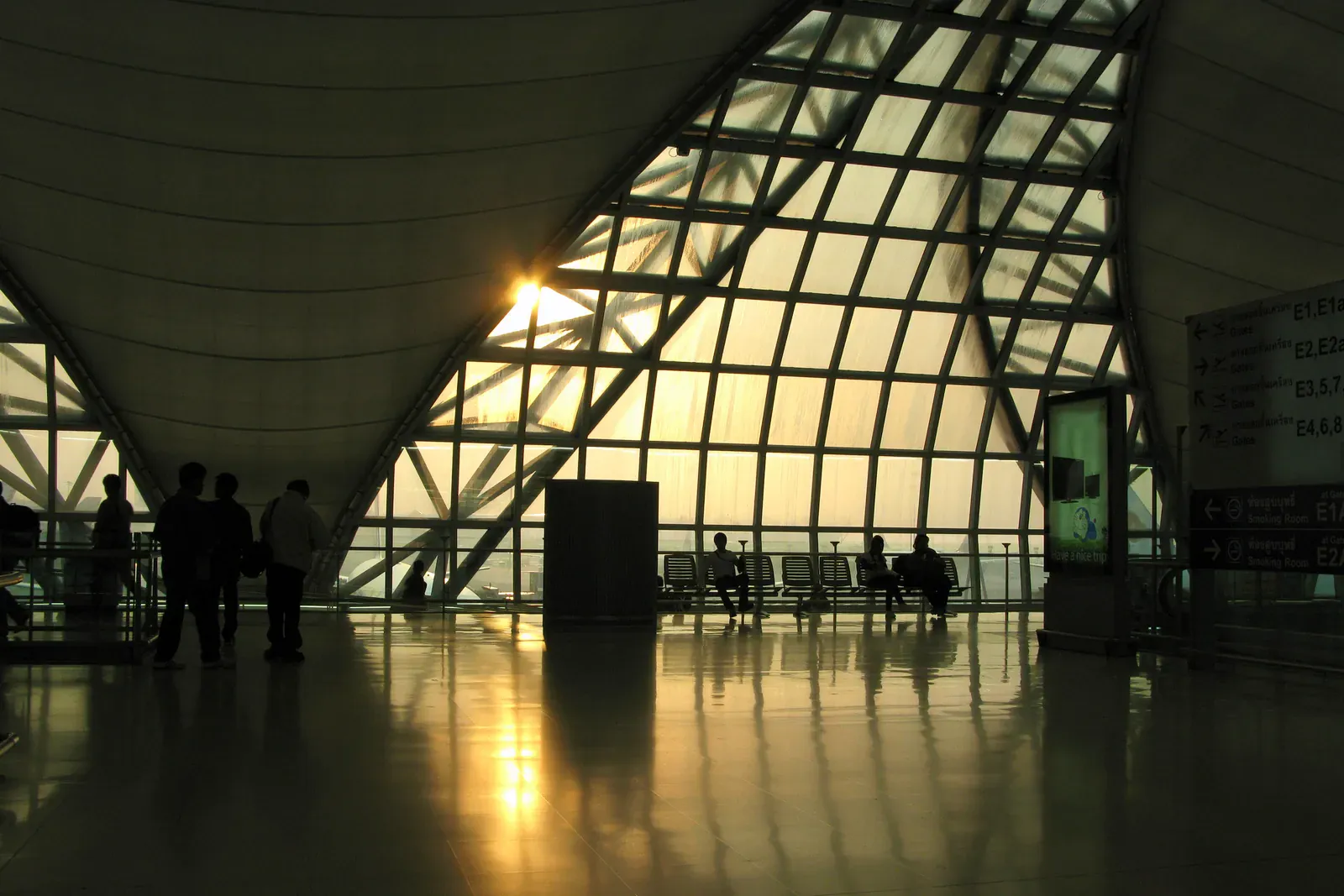
Bangkok has two international airports, and knowing which one serves which route saves real time:
- Suvarnabhumi (BKK) is the larger, newer of the two and handles the majority of long-haul and full-service carrier traffic, along with a large share of regional routes. If you’re flying a full-service regional airline (Thai Airways, Singapore Airlines, and similar) or a long-haul route with a regional stopover, this is generally your airport.
- Don Mueang (DMK) is the older airport, now positioned primarily for budget and low-cost carriers on regional routes: AirAsia and several other low-cost operators base a large share of their Thailand operations here. Many of the cheapest short regional hops, especially within Southeast Asia, depart from Don Mueang rather than Suvarnabhumi.
The two airports are a meaningful distance apart by road, connected by shuttle bus and, depending on traffic, a taxi ride that can run anywhere from brisk to painfully slow. If your itinerary has you flying into one and needing to leave from the other on the same visit (for a connecting regional trip, say), budget genuinely generous transfer time, especially around Bangkok’s rush-hour windows, and check current shuttle timetables and taxi options before you rely on a tight connection between them. For the fuller mechanics of getting around the city itself once you land, the main Bangkok digital nomad guide covers transport in more depth.
Rough flight-time bands from Bangkok
These are broad geographic bands, not fixed schedules or fares: treat them as a planning shape for how far a given trip is worth budgeting time for, and always check current routes and timings directly with an airline or search engine before booking:
| Destination region | Typical flight time | Realistic for |
|---|---|---|
| Indochina (Vietnam, Cambodia, Laos, Myanmar) | Roughly 1-1.5 hours | A genuine weekend trip, even a long weekend day-return in some cases |
| Malaysia, Singapore | Roughly 2 hours | A comfortable weekend trip with time to actually do something |
| Southern China, the Philippines, Indonesia (western) | Roughly 3-4.5 hours | A long weekend or a short week; tight as a two-day trip once transit time is added |
| Northeast Asia (Japan, South Korea, Taiwan) | Roughly 5-6.5 hours | A full week trip more comfortably than a weekend; possible as a long weekend if you’re disciplined about transit time |
| South Asia (India, Sri Lanka) | Roughly 3.5-5 hours depending on city | A long weekend to a full week |
| Australia | Roughly 8-9.5 hours | A dedicated trip, not a weekend add-on |
Budget carriers operate a large share of the shorter regional routes in particular, which is a genuine advantage of flying out of Bangkok compared with many other potential nomad bases in the region, but low fares often come with early or late departure times, stricter baggage allowances and less flexible rebooking, so factor that into whether a short trip is actually restful or just logistically exhausting. For trips that skip the airport, see islands near Bangkok and how to get there.
What a realistic weekend trip looks like
A “weekend trip” from Bangkok is rarely a full 48 hours of destination time once you account for the edges. A useful way to plan it:
- Subtract transit on both ends. Getting to whichever airport you’re using, security and immigration queues, and the same in reverse at your destination easily consumes half a day round trip even on a 1.5-hour flight.
- Match the flight-time band to your actual time budget. A destination in the 1-2 hour band genuinely supports a Friday-evening-to-Sunday-night loop with a full two days on the ground. Anything in the 5+ hour band works far better as a proper week or long weekend than a compressed two-nighter.
- Check visa requirements for the destination separately, not just your Thai re-entry. Some Southeast Asian countries have their own visa-exemption or e-visa requirements for your nationality that are entirely independent of Thailand’s rules, and these have also been shifting in various countries across the region: verify with the destination country’s own immigration authority or embassy before you book, not with a Thailand-focused guide.
- Confirm your Thailand re-entry position before you leave, especially if you’re travelling on a visa-exempt stamp or partway through a visa’s stay period, see visa run destinations from Bangkok for how repeated short trips out and back are now viewed differently than they used to be, since a “quick regional trip” and a “visa run” can look identical to an immigration officer even when your intent is different.
Re-entering Thailand: the arrival-card detail people forget
Every trip out of Bangkok is also a trip back in, and Thailand’s own arrival requirements apply to you exactly as they would to a first-time visitor, regardless of how many times you’ve entered before. As of 2026, Thailand requires arriving travellers to complete a digital arrival card (commonly referred to as the TDAC) before or on arrival, in addition to whatever visa or exemption status you’re entering under. This is a separate step from your visa itself, and it’s worth building into your return-trip checklist alongside re-checking your remaining visa-exempt days or visa validity: arriving without having completed it, or with details that don’t match your booking, can cost you time at immigration on a trip where you’re already tired from a short-haul flight. Confirm the current arrival-card process directly through official Thai government channels before each trip, since the format and requirements have been adjusted more than once since introduction. Related guides: TDAC step-by-step guide.
Seasonal timing across the region
Southeast Asia doesn’t share one weather calendar, which is actually useful for a Bangkok-based rotation: when one part of the region is in its wet season, another is often dry.
- Mainland Southeast Asia (Vietnam, Cambodia, Laos, and Thailand itself) broadly shares a wet season roughly from May to October and a drier season from November to April, though local variation within each country is significant.
- Maritime Southeast Asia (Indonesia, the Philippines, Malaysia’s east coast) runs on a different pattern, with some areas wettest exactly when the mainland is driest, and typhoon risk affecting the Philippines and parts of Vietnam more than the rest of the region during certain months.
- Bangkok’s own burning season, roughly December through March or April, is actually a good prompt to travel outward regionally rather than a reason to avoid travel altogether, see escaping Bangkok’s burning season for which nearby destinations tend to have cleaner air during exactly the weeks Bangkok’s is worst.
None of this should be treated as a firm forecast for any specific trip: always check a real weather forecast and current conditions for your specific destination and dates before booking, especially around typhoon season in the northern part of the region.
Building a rotation instead of one-off trips
Nomads who actually use Bangkok’s hub position well tend to think in a rotation rather than picking destinations one at a time:
- A short-haul rotation (Vietnam, Cambodia, Laos, Malaysia, Singapore) for frequent, low-cost, low-fatigue trips, good for a change of scenery every few weeks without burning much budget or time.
- A mid-haul rotation (Philippines, Indonesia, southern China) for a proper week away every couple of months, often timed around a slow period at work or a stretch when Bangkok’s air quality or heat makes leaving genuinely appealing, see escaping Bangkok during burning season for how that specific timing works.
- A long-haul trip or two a year (Japan, Korea, Australia, further afield) planned properly in advance rather than squeezed in, since these routes don’t reward last-minute budget-carrier logic the way the short-haul band does.
This rotation approach also smooths out the cost side: a string of cheap short-haul trips plus one or two planned long-haul trips a year tends to average out to a more predictable travel budget than either extreme on its own.
How Bangkok compares as a hub to other nomad bases
Bangkok’s specific advantage over several competing Southeast Asian nomad hubs is the combination of two airports serving different carrier tiers, a dense budget-carrier network across the region, and a genuinely central geographic position relative to both mainland and maritime Southeast Asia. Bases further from the mainland (parts of Indonesia, for instance) tend to have better connections to their immediate archipelago but weaker, pricier links to mainland Southeast Asia and beyond. A base in Vietnam or the Philippines typically has strong connections to East Asia but a less central position for reaching the rest of Southeast Asia in one short hop. None of this makes Bangkok objectively “best”: it depends entirely on which regions you actually want to reach regularly, but it’s a genuine structural advantage if your travel plans span the whole region rather than one sub-area of it. For a closer look at one rival destination, see our Bangkok or Phuket comparison.
Budget carriers: the real trade-offs
The low-cost carriers that make Bangkok’s short-haul network so cheap come with real trade-offs worth planning around rather than discovering at the gate:
- Baggage allowances are tighter and pricier to add to than full-service carriers, which matters if your work gear (laptop, second monitor, camera equipment) pushes you over a strict cabin-weight limit.
- Schedules skew to early morning and late evening slots, since airports charge less for off-peak landing slots, great for the fare, less great if an early departure means losing half a work day either side of the trip.
- Rebooking and delay handling are less flexible than full-service carriers, so a missed connection or a cancelled flight can cost more in both time and money to fix. Comprehensive travel insurance that covers trip delays and missed connections is worth having if you travel this rotation regularly, not just for one big annual trip.
- Secondary airports are common on budget routes even within a single destination country, which can add an hour or more of ground transport on the far end that isn’t obvious from the flight time alone: check exactly which airport a budget fare lands at before assuming it’s the main one.
None of this is a reason to avoid budget carriers, which remain the backbone of what makes Bangkok’s hub position genuinely useful for frequent regional travel, it’s a reason to build a bit of buffer into your planning rather than scheduling trips back-to-back with client calls on either end.
Working around the trip, not just to it
A regional trip works better with a small amount of pre-planning around your actual work, not just the flight:
- Check your destination’s internet and workspace reality before you assume you can work from anywhere. Some popular short-haul destinations have excellent coworking and café culture in their main cities; others are much thinner outside a couple of well-known spots. If reliable connectivity matters for the trip, research this specifically rather than assuming Bangkok-level infrastructure everywhere nearby.
- Decide in advance whether it’s a working trip or a break, and tell clients or teammates accordingly. A short regional hop with vague “I’ll be reachable” plans tends to produce the worst of both worlds: neither a real rest nor real productivity.
- Keep your Bangkok base running while you’re away: rent, subscriptions and any coworking membership continue regardless, so factor short trips into your monthly cost picture rather than treating them as free time away from your budget. The cost of living breakdown for Bangkok nomads covers how to budget for a base you leave periodically without wasting the fixed costs.
Common questions
Which Bangkok airport should I fly from for a regional trip?
Check your specific airline and route rather than assuming: budget carriers on short regional hops often use Don Mueang, while full-service regional and long-haul carriers more often use Suvarnabhumi. The two airports are far enough apart that getting this wrong can cost you significant transfer time.
How far in advance should I book regional flights from Bangkok?
This varies by route, season and carrier, and this guide won’t invent a specific booking window: regional budget-carrier pricing tends to move with demand and season more than with a fixed advance-booking rule, so comparing current prices across a few weeks of potential travel dates is more reliable than following a generic “book X weeks ahead” rule.
Is a weekend trip really worth it for a 1-hour flight?
For destinations in the 1-2 hour flight-time band, yes, provided you’re realistic about how much of the weekend transit actually consumes, a genuine two-day stay is achievable, but a Friday-night-to-Sunday-afternoon trip to a 4+ hour destination usually isn’t, once you subtract both ends’ transit and immigration time.
Do I need a separate visa for every country I visit from Bangkok?
Often, yes, and it’s entirely independent of your Thai visa status. Many Southeast Asian countries have their own visa-exemption rules, e-visa systems or visa-on-arrival options that vary by your nationality and have been changing in various countries across the region: check the specific destination country’s current requirements before booking, rather than assuming your Thai visa status carries over.
Does frequent regional travel affect my Thai visa or tax position?
It can interact with both in ways worth checking separately. Repeated short trips out and back can resemble a visa-run pattern to Thai immigration even when your intent is genuine regional travel, see visa run destinations from Bangkok, and time spent outside Thailand reduces your day count toward the 180-day tax-residency threshold, which is sometimes a deliberate part of a nomad’s travel planning rather than a side effect.
Is it cheaper to base myself somewhere closer to the specific countries I visit most?
Possibly, if your travel is heavily concentrated in one sub-region: a base in Vietnam might beat Bangkok for someone who mostly bounces around mainland Southeast Asia and rarely goes further. Bangkok’s advantage is breadth rather than being cheapest to any single destination: it’s the base that keeps the most regions within an easy, low-cost hop at once, which matters most if your travel pattern (or your client base) spans the region rather than concentrating in one corner of it.
Written by
Mike Brochlowski
Founder and editor, travel photographer and designer
I'm Mike Brochlowski, a travel photographer and designer, and I currently live on Koh Samui, Thailand. I built BangkokWiki to put practical, checked information about Bangkok in one place. Every page is researched from official and primary sources, and the text names them. Where a page shows a checked date, that is when its facts were last confirmed. I also run samui69.com, a non-commercial guide to Koh Samui. If you spot an error or something out of date, tell me through the contact page and I will check it and correct the page.
Read all articles
Where to stay
Pick the area before the hotel
Traffic and heat make Bangkok distances feel longer than they look on a map, so the area shapes a trip more than the hotel does. Our guides match areas to trip types and explain the trade-offs.

Places to stay
Find a hotel
Explore the other desks
More from Travel
- 11 min read
 5 min read
One Day in Bangkok: The Realistic Version
 6 min read
Bangkok Dining Etiquette: Mistakes Tourists Make at the Meal

Newsletter
You're subscribed as