Travel
Where Digital Nomads Go When Bangkok's Burning Season Hits
A remote worker's plan for escaping Bangkok burning season digital nomads face each year, with clean-air options and honest trade-offs.
At a glance
- Reading time
- 11 min read
- Chapters
- 13
- Published
- Sep 20, 2026
On this page
Every dry season, Bangkok’s air gets bad enough that remote workers who can move their laptop start asking the same question: where do I go, and for how long. This isn’t a one-off crisis: it’s an annual pattern that a nomad’s schedule can actually plan around, if you understand the timing, know where to check real numbers instead of guessing, and pick a destination trade-off you can live with. This guide covers the pattern itself, where nomads realistically go, and how an escape interacts with your visa and work commitments.
The pattern, not a single bad week
Thailand’s dry-season smog isn’t random. Cool, still air in the dry months traps pollution close to the ground instead of letting it disperse, and the problem compounds when regional agricultural burning adds smoke on top of Bangkok’s usual traffic and construction dust. Roughly, Bangkok’s own PM2.5 problem runs from December through March, sometimes stretching into April, with no single fixed start or end date: it depends on weather patterns each year. The rainy season, roughly June through October, reliably clears the air because rain washes particulates out of the atmosphere, which is why almost nobody talks about escaping Bangkok’s air in August.
Northern Thailand’s version of this is worse and later. Chiang Mai and the wider north see a burning season tied to agricultural field-clearing across the region, including in neighbouring countries, that typically runs from around January through April and peaks in March. In peak weeks, northern Thailand’s readings have ranked among the worst in the world, regularly exceeding Bangkok’s worst days. If your mental model is “just go to Chiang Mai to escape Bangkok’s smog,” check the calendar first: for a chunk of the season, you’d be moving toward worse air, not away from it. The comparison is covered in more depth in Bangkok vs Chiang Mai for digital nomads, which is worth reading before you assume north is better than central.
Why this matters for someone who works from home
Poor air quality is a home-office problem in a way it isn’t for someone who’s outdoors briefly and then leaves. If you work from a condo or a coworking space in Bangkok during the worst weeks, you’re breathing whatever gets through your windows and your building’s ventilation for eight-plus hours a day, most days. Fine particulate matter (PM2.5) is small enough to penetrate deep into the lungs and has been linked to respiratory and cardiovascular effects with sustained exposure: this is a real health consideration, not just a discomfort one, and it’s worth taking seriously rather than shrugging off as “just Bangkok in winter.”
The practical response isn’t panic, it’s a plan: know when the risk window opens, check real data instead of assuming, and have a fallback: whether that’s a good air purifier and fewer outdoor hours, or actually relocating for part of the season.
How to check the real numbers instead of guessing
Don’t rely on memory of “last year was bad” or a headline. Air quality changes week to week and even day to day depending on wind and rain, so check current data before deciding to travel or stay put:
- IQAir publishes real-time and historical air quality index (AQI) data for Bangkok and cities worldwide, with a simple colour-coded scale.
- AQICN (the World Air Quality Index project) offers a similar real-time map with station-level detail across Thailand.
- Air4Thai, run by Thailand’s Pollution Control Department, is the official government source and includes station-by-station PM2.5 readings across the country, including northern provinces.
Checking one of these for a week or two before deciding whether to leave (and again for your prospective destination) beats planning off assumptions. AQI figures move constantly; treat any number you read today as a snapshot, not a forecast.
Staying in Thailand: the southern islands and the south generally
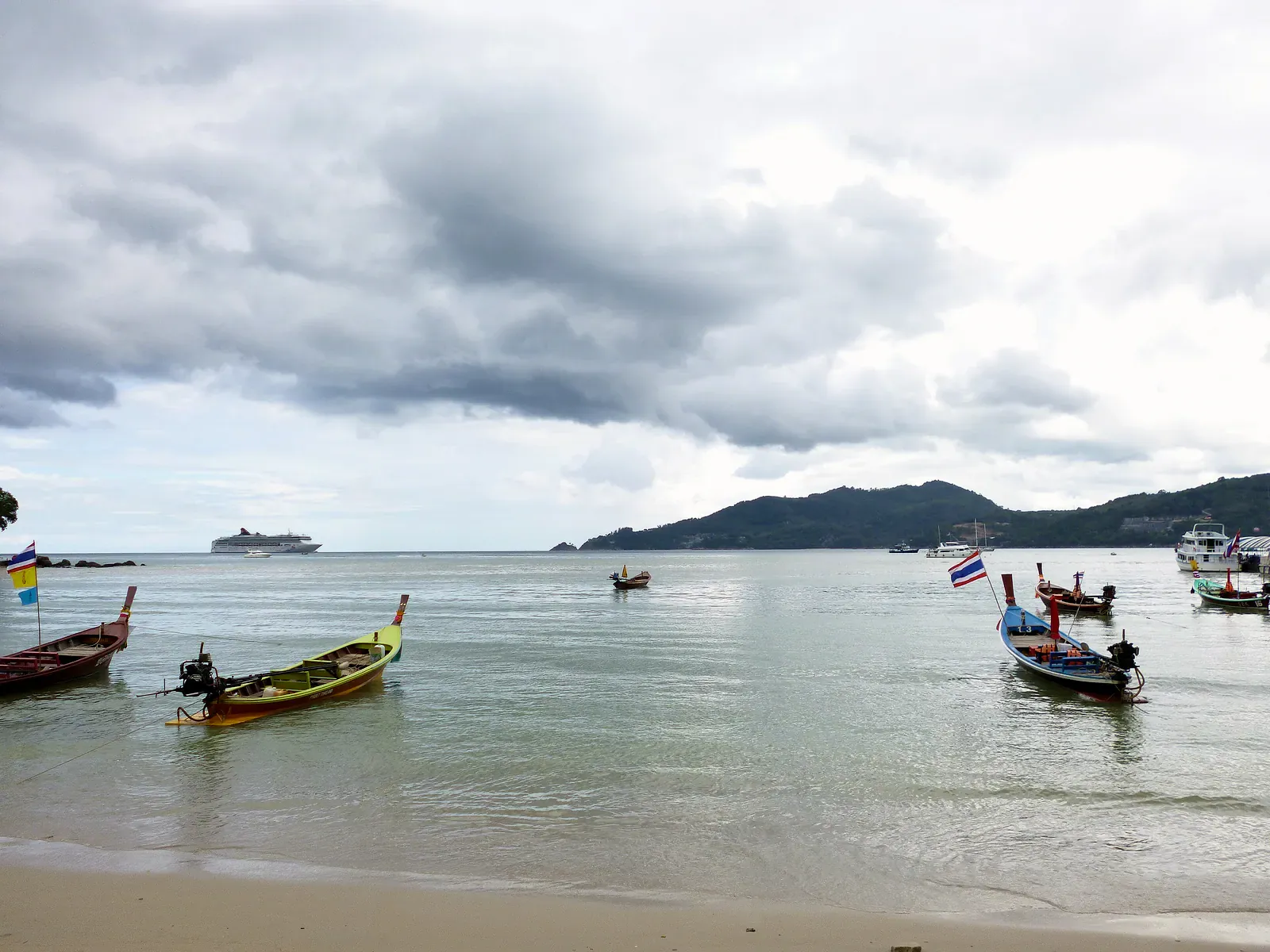
The most common in-country escape is south. Southern Thailand, the Andaman coast (Phuket, Krabi) and the Gulf islands (Koh Samui, Koh Phangan, Koh Tao), sits far enough from both Bangkok’s urban pollution sources and the northern burning region that its dry-season air quality is generally, though not universally, better during the worst weeks of Bangkok and Chiang Mai’s seasons. It’s also within a short flight of Bangkok, which matters if you need to come back for admin, banking or a visa appointment.
The trade-offs are real, though. Southern Thailand’s islands have thinner coworking infrastructure than Bangkok, less reliable fibre in some areas, a more tourist-driven cost structure in peak season (which overlaps with the same December-March window), and a much smaller professional nomad community than Bangkok’s. It’s a reasonable few-week retreat for cleaner air and a change of pace; it’s a harder full relocation if your work depends on dense coworking, fast admin access or a large professional network. Weigh this against Bangkok as a base for Southeast Asia travel, which covers how easily you can dip in and out of Bangkok from elsewhere in the region.
Leaving the country: where regional air is typically better in this window
Some nomads use the December-March stretch to leave Thailand entirely, which also has visa-cycle advantages if you’re managing entry stamps. Destinations that are generally less affected by the same regional burning pattern during these months include:
- Southern Vietnam (Ho Chi Minh City, coastal areas): a different weather system, generally milder dry-season air issues than the Thai-Myanmar-Laos burning belt.
- The Philippines: an island nation without the same continental agricultural-burning exposure, though its own cities have separate, mostly traffic-driven pollution issues year-round.
- Peninsular Malaysia’s east coast and Malaysian Borneo: usually clearer in this window, though Malaysia has its own occasional smoke-haze events tied to regional burning in different months, so check current data rather than assuming it’s always clean.
None of these is guaranteed clean on any given day: check current AQI before booking, the same way you would for anywhere in Thailand. The bigger planning question is how a country-exit interacts with your Thai visa status: a DTV holder needs to think about re-entry requirements and validity windows, and this is exactly the kind of detail worth confirming against your specific visa type before you book flights, see the DTV visa and bank account guide for the visa mechanics, and note that time spent outside Thailand also affects your day-count for Thailand’s 180-day tax residency rule if that’s relevant to your situation.
Budgeting an escape trip
An escape doesn’t have to mean an expensive trip. If you’re staying within Thailand, a few weeks on Koh Samui or Koh Phangan in a modest condo or guesthouse with basic coworking access runs, indicatively for 2026, somewhere around ฿25,000-45,000 ($715-1,285) a month depending on accommodation standard and season, broadly comparable to or a little above a lean Bangkok budget, since island rents in peak season aren’t cheap. A short regional flight to Vietnam or the Philippines for two to four weeks, including a mid-range place to stay and basic coworking or cafe work days, indicatively runs ฿35,000-70,000 ($1,000-2,000) depending on flights and length of stay. These are broad planning ranges, not quotes: verify current flight and accommodation costs before committing.
Building the pattern into your annual plan
The nomads who handle this best treat it as a known seasonal cost of basing in Bangkok, not a surprise. In practice that looks like: watching AQI data from around November, having a shortlist of one or two fallback locations already scouted (so you’re not researching from scratch while already breathing bad air), keeping accommodation flexible enough in December-March to leave on short notice if you choose to, and deciding in advance what AQI threshold would actually trigger a move for you, since everyone’s tolerance and health situation differs. Some nomads decide the whole thing isn’t worth the disruption and simply invest in a strong air purifier and reduce outdoor time instead: that’s a legitimate choice too, not a lesser one.
What actually helps if you decide to stay
Not everyone can or wants to leave for two to three months a year, and staying through burning season with sensible mitigations is a completely reasonable choice, especially if your work or living situation makes travel disruptive. A few things make a measurable difference:
- A proper air purifier sized for your room, run continuously during the worst weeks, not switched on only when the sky looks visibly hazy: by the time pollution is visible, indoor levels have often already climbed. Look for a unit with a HEPA filter rated for your room’s actual square metreage, not the smallest one on the shelf.
- Sealing obvious gaps around windows and doors reduces infiltration in older buildings; newer high-rise condos with better-sealed windows generally fare better than low-rise buildings with more air gaps.
- A well-fitted respirator-grade mask (not a surgical or cloth mask, which filter poorly against PM2.5) for the days you do need to be outside for any length of time.
- Tracking indoor air quality, not just the outdoor number: a basic indoor PM2.5 monitor tells you whether your mitigations are actually working, rather than assuming they are.
- Rescheduling outdoor exercise to the cleanest hours or moving it indoors entirely during spikes; outdoor exertion increases the volume of polluted air you inhale.
None of this makes the air outside any cleaner, but it meaningfully reduces your personal exposure, which is the part you actually control.
How this fits into a longer-term routine
Nomads who’ve based in Bangkok for more than one dry season tend to converge on one of a few patterns rather than deciding fresh each year. Some build an annual “southern loop”: heading to the Gulf islands or Andaman coast for six to ten weeks across the worst stretch, timed loosely around when AQI data starts climbing, and returning once the rains are close. Others use the window for a longer regional trip they’d have taken anyway (visiting family, attending a conference, or doing a multi-country swing through Southeast Asia) and simply schedule it to overlap with the bad months rather than treating it as a dedicated pollution trip. A smaller group stays put every year and leans entirely on indoor mitigation, treating it the way someone in a cold climate treats winter: an annual condition to manage, not escape.
Whichever pattern you land on, the planning cost is mostly about accommodation flexibility. A long fixed-term lease in Bangkok makes a multi-week departure feel wasteful (you’re paying rent on an empty condo) unless you sublet or use a service apartment with more flexible terms during exactly this window. Nomads who know they’ll want to leave every dry season sometimes deliberately choose shorter or more flexible lease terms for this reason, even at a small premium over a standard annual lease.
Destination options at a glance
| Option | Distance from Bangkok | Air quality vs Bangkok in peak season (indicative) | Main trade-off |
|---|---|---|---|
| Southern Thai islands (Samui, Phangan, Tao) | Short flight | Usually better | Thinner coworking and community; peak-season tourist pricing |
| Phuket / Krabi (Andaman coast) | Short flight | Usually better | Similar seasonal pricing; more infrastructure than smaller islands |
| Southern Vietnam | Short-medium flight | Usually better | New visa rules to check; different cost of living |
| Philippines | Medium flight | Usually better, but city traffic pollution year-round | Separate visa process; less direct Bangkok flight overlap with regional hub routes |
| Peninsular Malaysia / Borneo | Short-medium flight | Usually better, but occasional regional haze events | Own occasional smoke-haze risk in other months |
| Stay in Bangkok with mitigation | None | Worse, managed indoors | No travel disruption; ongoing purifier and monitoring cost |
Treat every “usually better” in that table as a starting assumption to verify with current AQI data, not a guarantee for the specific week you’d be travelling.
Working remotely while you’re away
An escape trip only works if your work actually travels with you cleanly. Before you book anything, confirm the basics: does your destination have coworking or reliable cafe wifi if your accommodation’s connection is unproven, does the time zone shift meaningfully change your overlap with clients or teammates, and do you have a backup connectivity option (a local SIM with data, or a portable hotspot) in case your primary wifi drops during a call. Southern Thailand and most of the regional alternatives listed above are close enough to Bangkok’s GMT+7 zone, or only an hour or two off, that client-facing schedules rarely need to change: Vietnam and the Philippines share Bangkok’s time zone or sit an hour ahead, which is a genuinely convenient side benefit of staying in the region rather than crossing further afield. If your clients are in the US or Europe, the shift from Bangkok to any of these destinations is negligible next to the overlap challenge you already manage year-round, worth a look if you haven’t mapped it out: working Bangkok hours against US and European clients.
Banking and payments are usually a non-issue for short regional trips if you already use an international-friendly setup, but it’s worth testing card and transfer access from your destination a few days before you need it rather than discovering an issue mid-trip. If your escape plan involves being outside Thailand for a meaningful stretch, revisit your DTV re-entry conditions and, separately, keep a rough running count of days inside versus outside Thailand for the year: useful for tax residency planning regardless of why you left.
Learning from a full season before committing
If this is your first dry season in Bangkok, resist the urge to book a two-month escape before you’ve actually seen how bad it gets for you personally. Air quality tolerance varies a lot between individuals: some people notice symptoms (eye irritation, throat irritation, fatigue) at moderate AQI levels, others don’t notice much until readings are firmly in unhealthy territory. A reasonable first-year approach: track AQI daily from December, note how you personally feel on the worse days, and use that information to calibrate next year’s plan rather than guessing. Nomads who’ve been through several Bangkok dry seasons tend to have a specific personal AQI number in mind that triggers action, built from that kind of first-hand experience rather than a generic recommendation. Talking to others who’ve been through it (in the city’s nomad Facebook groups and coworking communities, covered in digital nomad meetups and communities in Bangkok) is a fast way to calibrate expectations before your first season, since plenty of people are happy to share what worked and what didn’t.
Common questions
When exactly does Bangkok’s burning season start and end?
There’s no fixed date: it depends on that year’s weather. Roughly, elevated PM2.5 risk in Bangkok runs December through March, sometimes into April, with the worst episodes typically clustering in the January-March stretch. Always check current AQI data rather than relying on a fixed calendar.
Is Chiang Mai a good place to escape Bangkok’s pollution?
Not during peak burning season. Northern Thailand’s agricultural-burning season generally runs January through April, peaks in March, and frequently produces worse readings than Bangkok. It’s a better escape outside that window, not during it.
Where can I check real-time air quality before deciding to travel?
IQAir, AQICN and Thailand’s official Air4Thai service (run by the Pollution Control Department) all publish current and historical AQI data for Bangkok and other Thai cities: check one of these directly rather than relying on last year’s experience.
Does leaving Thailand during burning season affect my visa?
It can, depending on your visa type and re-entry conditions, and this is a detail worth verifying against your specific visa before booking travel: see the linked DTV and tax residency guides for the mechanics that matter most to remote workers.
Written by
Mike Brochlowski
Founder and editor, travel photographer and designer
I'm Mike Brochlowski, a travel photographer and designer, and I currently live on Koh Samui, Thailand. I built BangkokWiki to put practical, checked information about Bangkok in one place. Every page is researched from official and primary sources, and the text names them. Where a page shows a checked date, that is when its facts were last confirmed. I also run samui69.com, a non-commercial guide to Koh Samui. If you spot an error or something out of date, tell me through the contact page and I will check it and correct the page.
Read all articles
Where to stay
Pick the area before the hotel
Traffic and heat make Bangkok distances feel longer than they look on a map, so the area shapes a trip more than the hotel does. Our guides match areas to trip types and explain the trade-offs.

Places to stay
Find a hotel
Explore the other desks
More from Travel
- 11 min read
 5 min read
One Day in Bangkok: The Realistic Version
 6 min read
Bangkok Dining Etiquette: Mistakes Tourists Make at the Meal

Newsletter
You're subscribed as