Travel
How to Plan a Bangkok Itinerary: Group by Area, Not Day
The method competitor guides bury as an aside: group Bangkok sights by area and transit line first, then let day count follow, not lead.
At a glance
- Reading time
- 11 min read
- Chapters
- 12
- Published
- Sep 30, 2026
On this page
Plan a Bangkok itinerary by area first, day count second. List what you want to see, group those sights into a handful of area clusters connected by one transit line, sequence the clusters by heat and opening hours, then let the number of days fall out of that plan rather than forcing sights into a fixed day-by-day template. Competitor guides mention this in passing, usually one sentence before diving into a canned “Day 1, Day 2, Day 3” list. This article makes the method itself the point, so you can build a one-day, two-day or week-long trip with the same four steps.
Why the canned day-by-day list goes wrong
A generic “Day 1: temples, Day 2: shopping, Day 3: day trip” itinerary looks organized on the page, but it often ignores where things actually sit on the map. Two sights that “belong together” thematically, a temple and a museum, say, can be on opposite sides of the city, connected only by a slow road crossing. Follow the list and you’ll spend a chunk of a short trip in traffic rather than seeing anything.
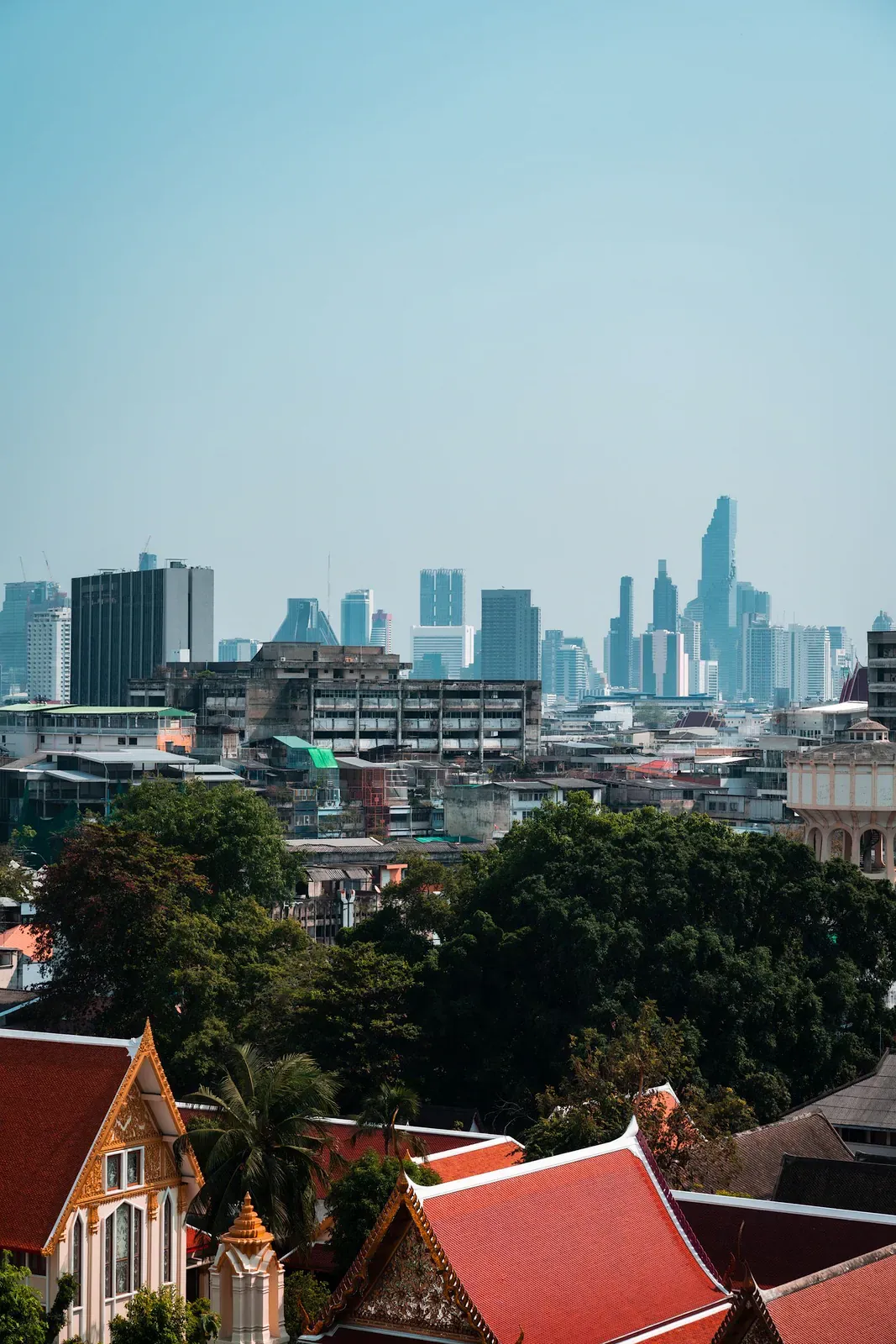
The area-grouping method flips the order: geography and transit lines decide the grouping, and theme is secondary. It’s the same principle every long-time Bangkok resident uses without thinking about it, and the same one buried as an aside (“try to group your sights by area”) in most competitor guides right before they hand you a fixed schedule anyway.
Step 1: list your sights, then sort by area, not by type
Start with an unordered list of everything you actually want to see or do, no more than 10-15 items for a first visit. Struggling to narrow it down? Bangkok’s must-do experiences, ranked by time, cost and crowd scores the contenders before you even start sorting by area. Then, instead of sorting that list by category (temples, markets, museums), sort it by which part of the city each item sits in. Most Bangkok sights cluster into a small number of recognizable areas, and a sight’s area matters more to your schedule than its type.
This single sorting step is where most of the planning value comes from. A temple, a market and a viewpoint in the same area cost you almost nothing extra to combine; the same three items spread across three areas cost you three separate transit legs.
The area clusters, and what each is actually good for
| Area cluster | Transit line | Typical experience type |
|---|---|---|
| Old town (Rattanakosin) | MRT Blue Line (Sanam Chai), river boat | Major temples, palace, river views, open-air walking |
| Chinatown (Yaowarat) | MRT Blue Line (Wat Mangkon) | Street food, gold shops, night market atmosphere |
| Siam | BTS Skytrain interchange | Malls, museums, the central transfer point for the whole network |
| Sukhumvit (lower) | BTS Sukhumvit Line | Restaurants, nightlife, international dining, business hotels |
| Silom/Sathorn | BTS Silom Line, MRT | Business district, rooftop bars, some temples |
| Chatuchak/Mo Chit | BTS Sukhumvit Line, MRT | Weekend market, parks, northern city edge |
None of these clusters is a single-venue stop: each holds several sights worth combining in one visit, which is the entire point of grouping by area rather than chasing one famous name at a time. If you’re weighing a specific neighbourhood in more depth for where to stay rather than what to see, that’s a different question from this one and belongs on an area-guide page, not an itinerary. For how these areas sit on the map, see our Bangkok map and neighbourhood guide, and for the basics, Bangkok quick facts.
Step 2: sequence the clusters by heat and hours, not by map order
Once you have your clusters, order the days around two constraints that don’t care about your preferences: heat and opening hours. Bangkok’s midday sun, roughly 11:00 to 15:00, is genuinely draining for outdoor walking, and several major old town sights, most notably the Grand Palace, stop admitting visitors mid-afternoon (last entry 3:30pm, checked September 2026). That makes the old town cluster a morning-first cluster almost by default: anything open-air and time-limited goes early, anything indoor and rail-connected can absorb a later start or a rain delay.
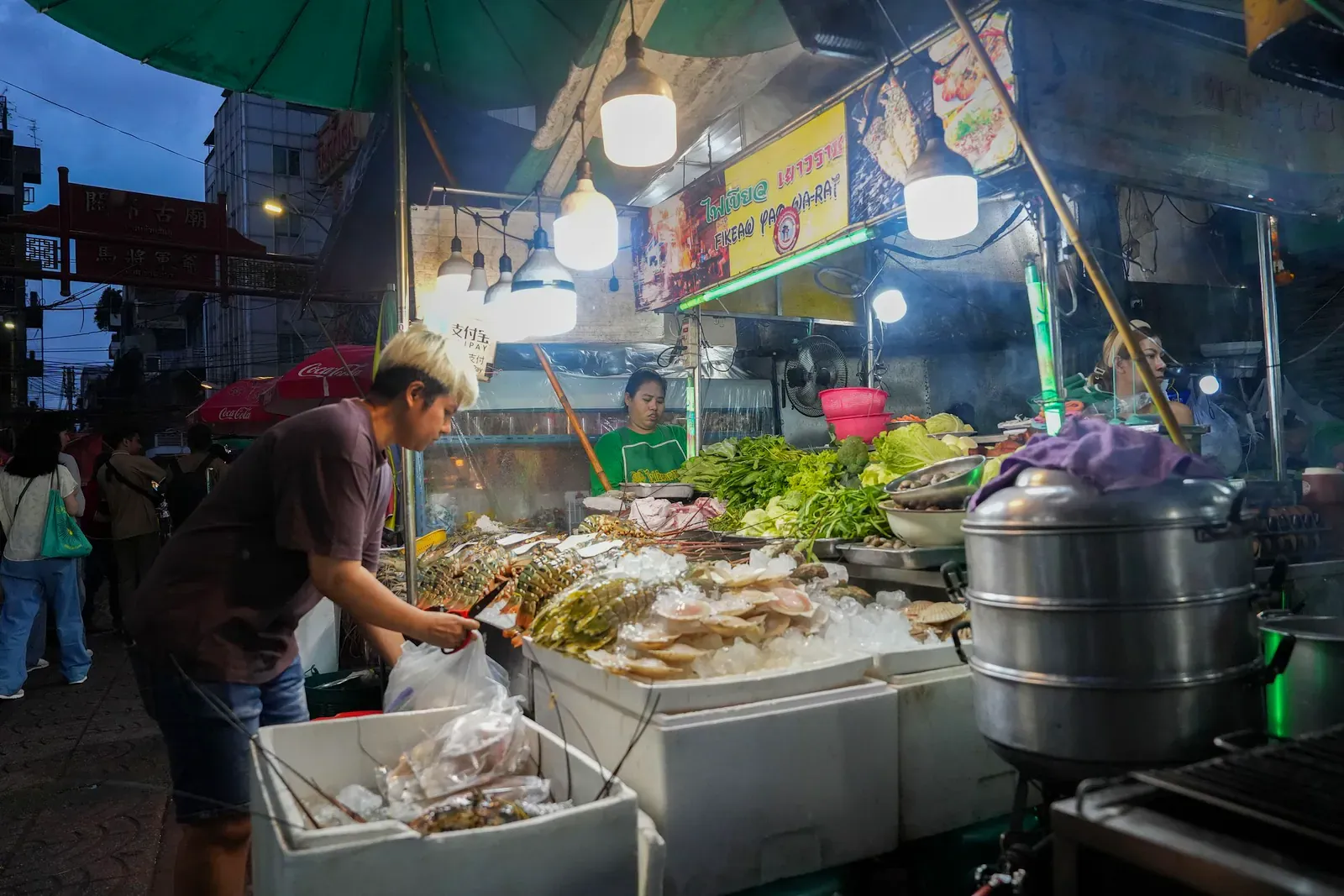
Chinatown works well as an evening cluster, since its food-stall atmosphere is better after dark than during the day. Chatuchak only exists as a full-scale cluster on specific days (Friday evening, Saturday and Sunday daytime, checked September 2026), so it has to be scheduled around the calendar, not just around energy levels.
How far apart are the clusters, really?
- Old town to Chinatown
- 10-15 min
- Siam to Sukhumvit (Asok)
- 8-10 min
- Siam to Silom/Sathorn
- 10-12 min
- Old town to Siam
- 20-30 min
- Siam to Chatuchak (Mo Chit)
- 17-20 min
- Old town to Chatuchak
- 25-30 min
Source: Editorial estimate from BTS/MRT scheduled journey times and known interchange walking distances, not a live app quote. Checked September 2026.
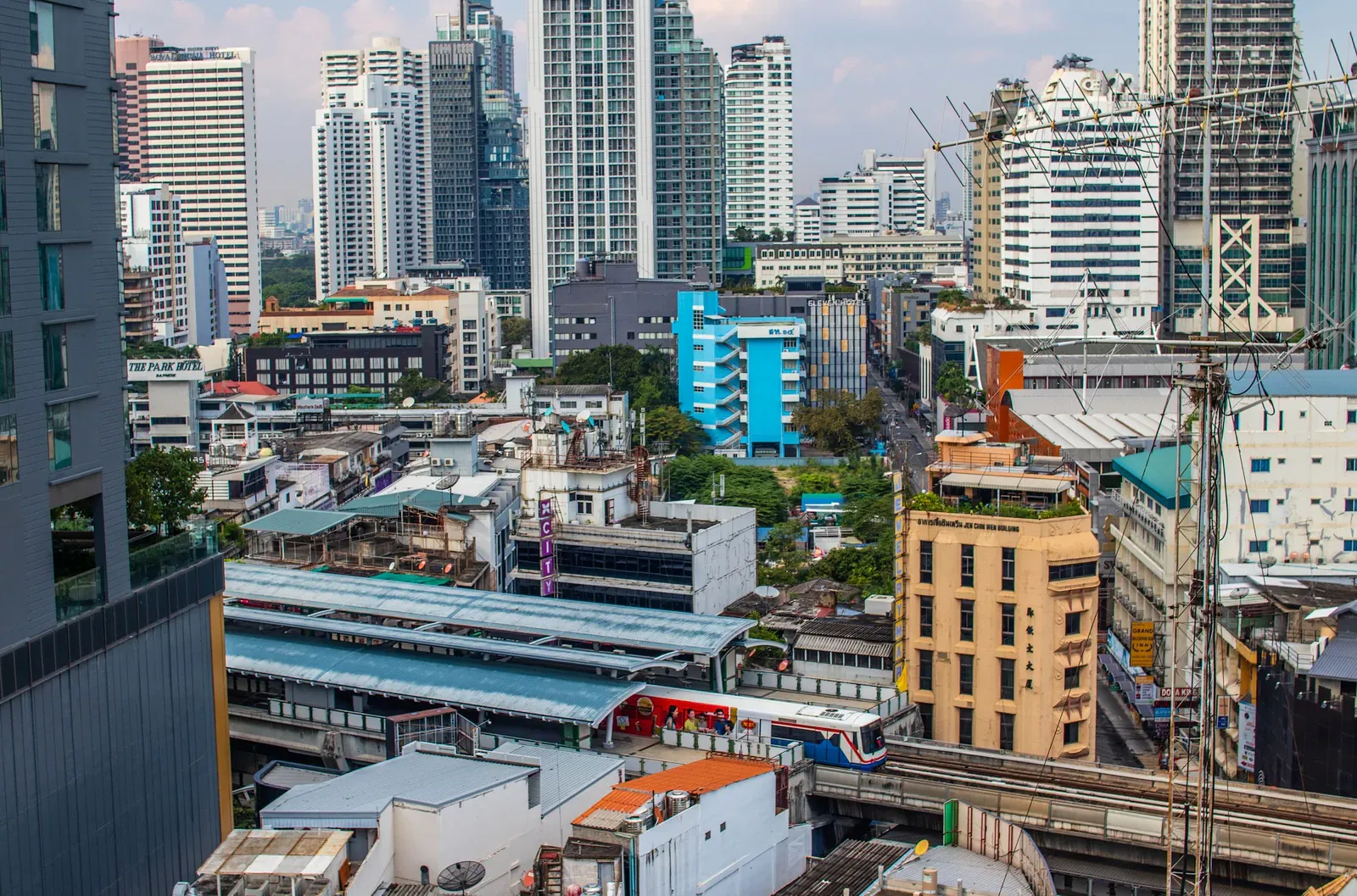
The pattern that matters here: clusters on the same rail line (Siam to Sukhumvit, Siam to Silom) transfer fast, while the old town, which sits off the BTS network entirely and relies on the MRT or the river, always costs more time to reach from anywhere else. That’s a strong argument for treating the old town as its own dedicated block rather than trying to combine it with a same-day Siam or Sukhumvit stop.
Step 3: pick a pace before you pick a day count
- Relaxed (1-2 clusters/day) best for heat tolerance, repeat visitors, families with young kids
- 5 out of 5
- Moderate (2-3 clusters/day) the realistic default for most first-time visitors
- 3.5 out of 5
- Packed (3+ clusters/day) workable only with an early start and low heat sensitivity
- 1.5 out of 5
Editorial rating: how sustainable each pace is across a multi-day trip, 1 to 5.
A relaxed pace treats one or two clusters as a full day, with real time to linger; a packed pace tries to squeeze three or more clusters into one day and generally means rushing through at least one of them. Most first-time visitors underestimate how much a single old town cluster alone, done properly with a stop for lunch and a break from the heat, actually fills a morning and early afternoon. Pick honestly, not aspirationally: a pace chosen for the trip you wish you had energy for usually costs you the afternoon of Day 2.
Step 4: turn clusters into days
This is the step where “how many days” finally gets answered, as an output rather than an input. Count your clusters, apply your chosen pace, and the day count falls out automatically:
- One cluster feels like plenty for a day at a relaxed pace, or two at a moderate pace.
- The old town is its own day, given the morning deadline and its distance from everything else.
- Chatuchak only fits on a day that touches a weekend, so check your dates before assigning it a slot.
- Add a buffer day if your trip includes a day trip out of the city (Ayutthaya, for instance): it doesn’t combine with any in-city cluster.
For a single day, this usually means picking one cluster and building the whole day around it: see one day in Bangkok for exactly that approach applied to a single-area day. For two days, it typically means the old town on day one and either Chatuchak or a Siam-Chinatown combination on day two, worked through in full in 2 days in Bangkok. Three days adds real breathing room for a day trip or a slower neighbourhood day, covered in 3 days in Bangkok.
A worked example: from wishlist to plan
Here’s the method run start to finish on a realistic first-timer’s wishlist: Grand Palace, Wat Pho, Wat Arun, Jim Thompson House, Chatuchak Weekend Market, a rooftop bar, and a Chinatown food crawl. Seven items, no obvious day-by-day structure yet.
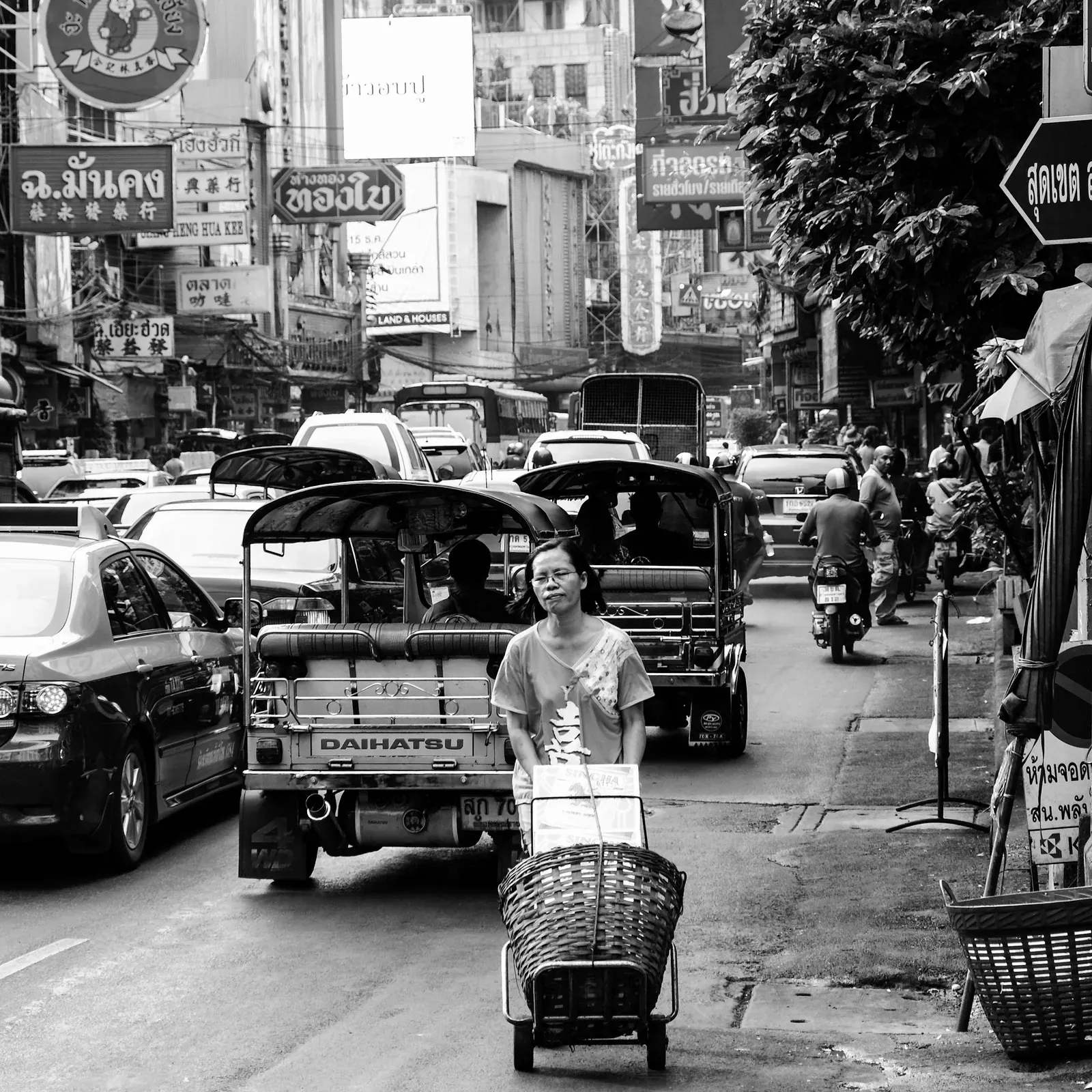
Sorted by area, three clusters fall out immediately. Grand Palace, Wat Pho and Wat Arun all sit in the old town, walkable or a short ferry hop from each other: that’s one cluster, done. Jim Thompson House and the rooftop bar both sit on or near the BTS network in the Siam/Silom corridor: a second cluster. Chatuchak is its own cluster by definition, since nothing else on the list is anywhere near Mo Chit. Chinatown, on this particular list, stands alone too: a fourth cluster, best scheduled as an evening rather than a full day.
Apply the hour and heat constraints next. The old town cluster has to go first, on the most rested morning of the trip, because of the Grand Palace’s early cutoff. Chatuchak only fits a day that touches Friday evening or the weekend. That leaves the Siam/Silom cluster and the Chinatown evening as the flexible pieces, slotted wherever the calendar and the weather cooperate best.
At a moderate pace (two to three clusters a day), this wishlist comfortably becomes a three-day trip: old town on day one, Chatuchak (assuming a weekend lands somewhere in the trip) on day two, and Siam/Silom during the day plus Chinatown in the evening on day three. Push to a relaxed pace and the same list stretches to four days without adding a single new sight, just more room to linger in each cluster. The list didn’t change. The day count did, because it was always an output of the clusters and the pace, not an input decided in advance.
Common itinerary mistakes to avoid
- Building the trip around a day count instead of a cluster count. “We have 3 days, so 3 areas” sounds neat but ignores that the old town alone can eat a full day.
- Splitting one cluster across two days. If you didn’t finish Sukhumvit’s sights, go back the next morning rather than starting a whole new cluster and returning later; the transfer cost adds up.
- Scheduling Chatuchak on a weekday. It runs at reduced scale outside Friday evening and the weekend daytime window; a weekday visit means an empty market, not a quieter one.
- Ignoring the Grand Palace’s early cutoff. A 3:30pm last-entry deadline (checked September 2026) has derailed more first mornings than any other single scheduling detail in Bangkok.
- Treating “close on the map” as “close in transit time.” The BarChart above shows why: two points a similar map distance apart can differ by 15 minutes or more depending on whether they share a rail line.
- Overloading the packed pace for the whole trip, rather than reserving it for a single high-energy day. A trip that’s packed start to finish usually produces at least one afternoon of real fatigue.
Planning steps, in order
- List 10-15 sights you actually want to see, no filtering yet.
- Sort that list by area cluster, using the table above as a starting map.
- Note which clusters have hard time constraints (old town’s early cutoff, Chatuchak’s weekend-only days).
- Pick a pace (relaxed, moderate or packed) and be honest about it.
- Count clusters, apply the pace, and let the day count fall out.
- Sequence the days: time-limited and weather-exposed clusters early in the trip, flexible and indoor clusters later.
- Check the current opening hours and admission details for your top two or three anchor sights before you travel; these move year to year.
- Build in one buffer or rest block if the trip runs more than three days.
Budget and transit, briefly
Grouping by area also keeps transport costs down, since most of a day’s movement happens within one rail line rather than crossing the city multiple times. For a fuller breakdown of what things actually cost by price tier, see budget things to do in Bangkok; for a route built entirely without taxis, see a full Bangkok day without a taxi.
Common questions
How many days do I need in Bangkok?
It depends on how many area clusters you want to cover and at what pace, not on a fixed number. One cluster at a relaxed pace fills a day; most first-time visitors land on two to three days covering the old town plus one or two modern-city clusters. Use the four-step method above rather than picking a day count first.
What’s the biggest mistake people make planning a Bangkok trip?
Building the schedule around a fixed day-by-day template instead of around area clusters and transit lines. It leads to sights that sound good together on paper being scheduled on the same day despite sitting on opposite sides of the city.
Should I stay in one area or move hotels during my trip?
For most trip lengths, one well-connected base (Siam, Sukhumvit or Silom/Sathorn, all on the BTS) works better than moving hotels, since you can reach most clusters from any BTS-connected base within 10-30 minutes. Moving hotels mid-trip only makes sense on longer stays where a specific area’s character matters more than the convenience of staying put.
How many neighbourhoods should a first-time visitor try to see?
Three to four area clusters covers a genuinely varied first trip without overloading it: the old town, one modern BTS-connected cluster (Siam, Sukhumvit or Silom), Chinatown, and Chatuchak if the dates allow. Trying to add a fifth or sixth usually means shortchanging the ones already on the list.
Does this method work for a trip longer than a week?
Yes, and it scales cleanly: more days simply means more clusters, or a slower pace through the same clusters, or day trips added as their own blocks. The four steps (list, sort by area, sequence by constraint, pick a pace) don’t change with trip length.
Written by
Mike Brochlowski
Founder and editor, travel photographer and designer
I'm Mike Brochlowski, a travel photographer and designer, and I currently live on Koh Samui, Thailand. I built BangkokWiki to put practical, checked information about Bangkok in one place. Every page is researched from official and primary sources, and the text names them. Where a page shows a checked date, that is when its facts were last confirmed. I also run samui69.com, a non-commercial guide to Koh Samui. If you spot an error or something out of date, tell me through the contact page and I will check it and correct the page.
Read all articles
Where to stay
Pick the area before the hotel
Traffic and heat make Bangkok distances feel longer than they look on a map, so the area shapes a trip more than the hotel does. Our guides match areas to trip types and explain the trade-offs.

Places to stay
Find a hotel
Explore the other desks
More from Travel
- 5 min read
 10 min read
A Cruise Passenger's Day in Bangkok: The Real Time Budget
 8 min read
2 Days in Bangkok: Built Around What Closes at 3:30pm

Newsletter
You're subscribed as