Transport
Bangkok Train Stations: Which One Is Your Train At?
Long-distance trains leave Krung Thep Aphiwat, not Hua Lamphong, since January 2023. See which Bangkok train station serves which route and how to reach it.
On this page
Bangkok has three train stations that matter to a traveller, and the one most guides still name first is the wrong one for long-distance trips. Since 19 January 2023, every long-distance train, including the sleepers to Chiang Mai, Nong Khai and Hat Yai, starts at Krung Thep Aphiwat Central Terminal in Bang Sue, north of Hua Lamphong. Hua Lamphong, the 1916 terminus, now handles local and excursion trains. Thonburi, across the river, runs two daily local trains to Kanchanaburi and Nam Tok.
Prices below were checked on 9 October 2026. USD figures use 33.40 THB per USD (Thailand Business News, 30 September 2026), so treat them as approximate.
Which Bangkok train station does my train use?
Start with where you are going. This table follows the station changes made in January 2023.
| Going to | Station | Note |
|---|---|---|
| Chiang Mai, Nong Khai | Krung Thep Aphiwat | Northern and Northeastern line trains leave from platforms 1 and 2 |
| Hua Hin, Surat Thani, Hat Yai, Padang Besar | Krung Thep Aphiwat | Southern line trains leave from platforms 7 and 8 |
| Ayutthaya (local train) | Hua Lamphong | Third class, 20 THB (~USD 0.60), no reservation |
| Pattaya, Aranyaprathet, Ban Klong Luk | Hua Lamphong | Eastern line, check current status first |
| Kanchanaburi, River Kwai Bridge, Nam Tok | Thonburi | Two daily local trains |
| Rangsit (Dark Red Line), Taling Chan (Light Red Line) | Krung Thep Aphiwat | SRT commuter lines |
Seat61 notes that screens do not show platform numbers, so confirm on the day. If your route is not in the table, call the State Railway of Thailand (SRT) line on 1690, which runs 24 hours, or check its real-time system at ttsview.railway.co.th.
Krung Thep Aphiwat Central Terminal: the new Bangkok train station
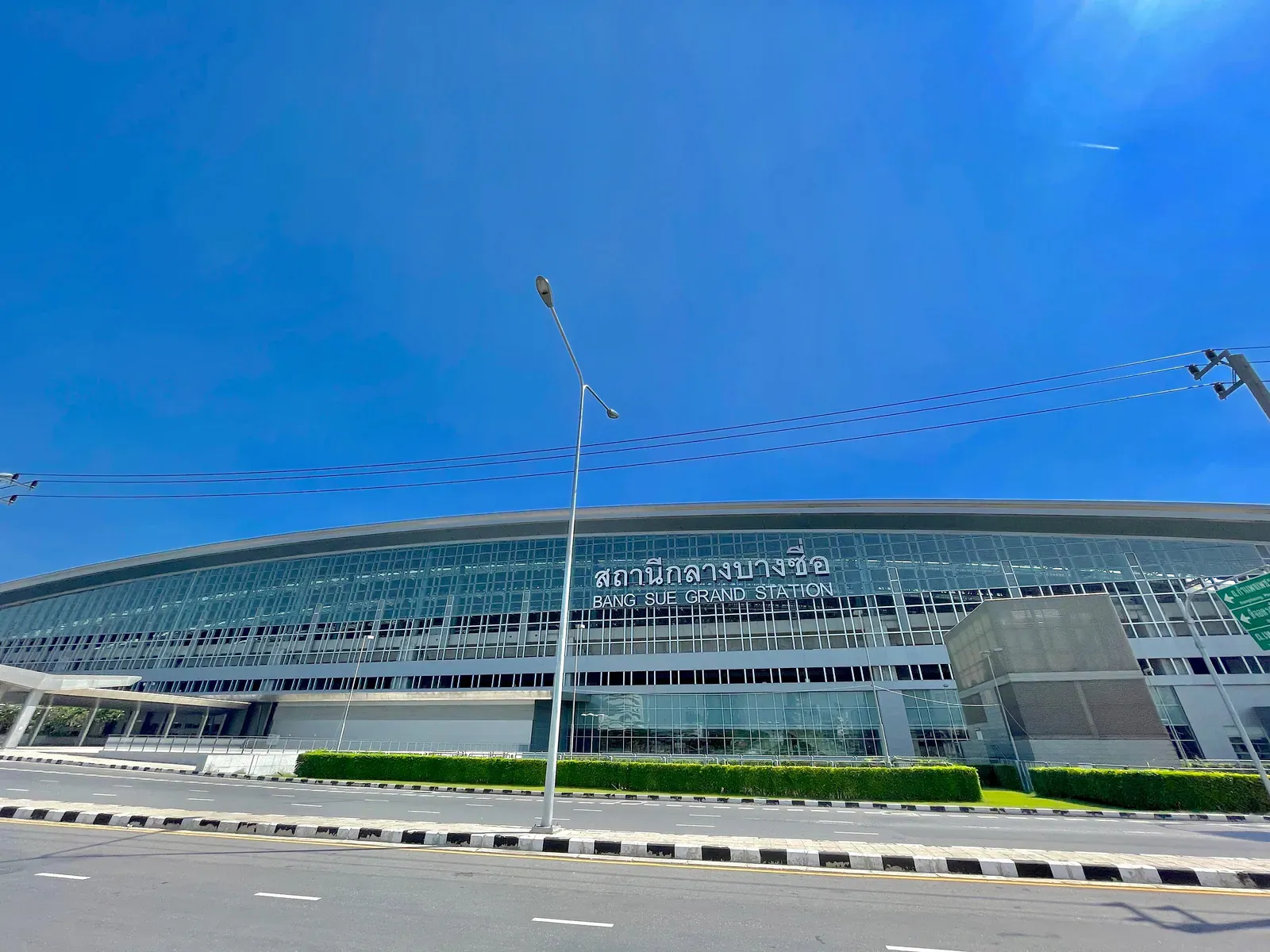
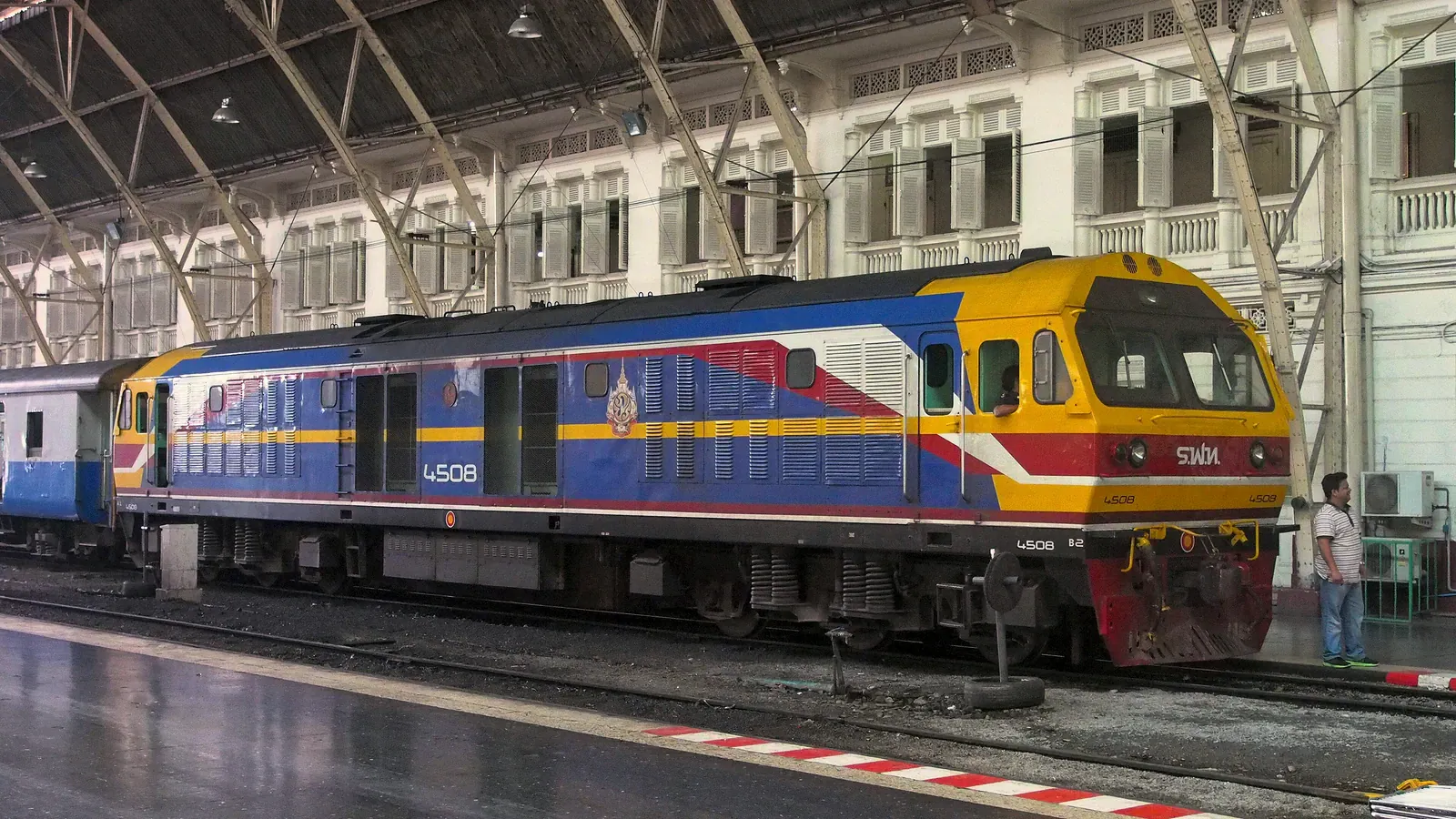
Krung Thep Aphiwat Central Terminal is the station that used to be called Bang Sue Grand Station. It opened on 2 August 2021 for a public trial of the SRT Red Lines, and the first long-distance trains arrived on 19 January 2023, when 52 services moved over from Hua Lamphong. If you search for the “bangkok new train station”, this is it.
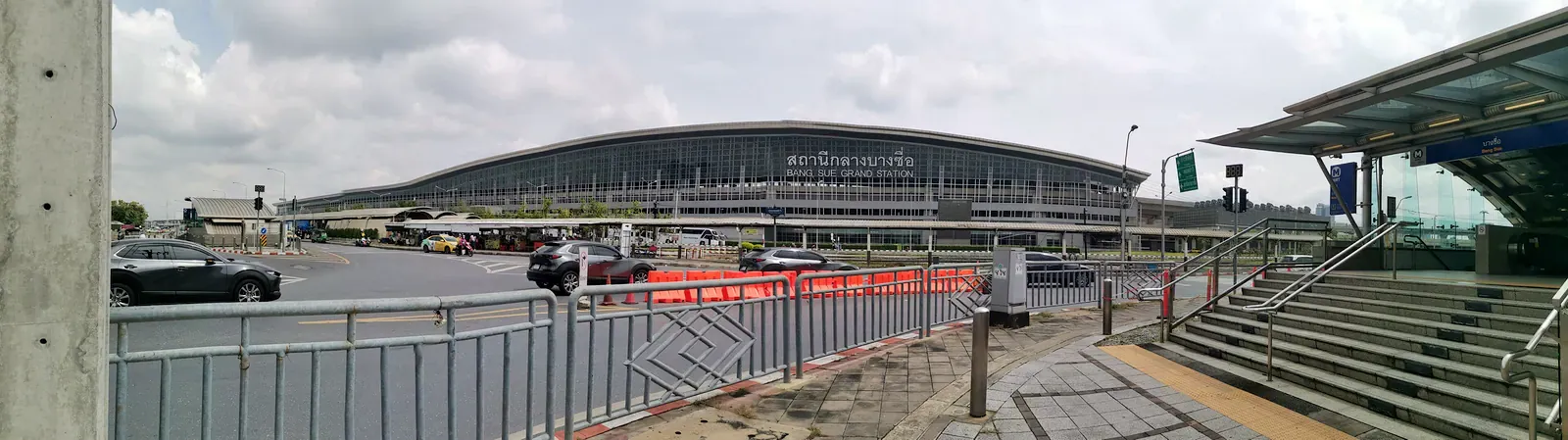
The building is huge. Its platforms are some 600 m long, per Wikipedia, and the long-distance and Red Line trains use the second floor. The ground-floor concourse holds the ticketing and waiting areas and is the only air-conditioned part of the station.
Where does everything sit inside?
- Ticket office: Gate 4 is the main entrance for the long-distance ticket office.
- Left luggage: touch-screen lockers near the ticket office, about 230 THB (~USD 6.90) per 24 hours.
- Platforms: access opens about 20 minutes before departure. Screens do not show platform numbers, so listen for announcements.
- Toilets and showers: toilets are free. Showers are free too, but you ask an attendant to unlock one and bring your own soap and towel.
How do you get to Krung Thep Aphiwat?
From Hua Lamphong, the station guide at Seat61 (page updated 1 October 2026) lists four routes. The Bang Sue stop on the MRT Blue Line is underground and linked to the terminal by a walkway.
- MRT Blue Line: take the Blue Line to Tha Phra, change to the Blue Line towards Bang Sue. About 31 minutes on the train and roughly 50 minutes door to door, fare 43 THB (~USD 1.29). The BTS and MRT guide explains tickets and cards, and the interchange stations guide covers the walk between systems.
- Taxi: about 25 minutes and around 130 THB (~USD 3.89) from downtown. Ask for Gate 4.
- Local train: a ride from Hua Lamphong to Bang Sue Junction costs 2 THB (~USD 0.06), bought on the day. Bang Sue Junction is across the road from the terminal.
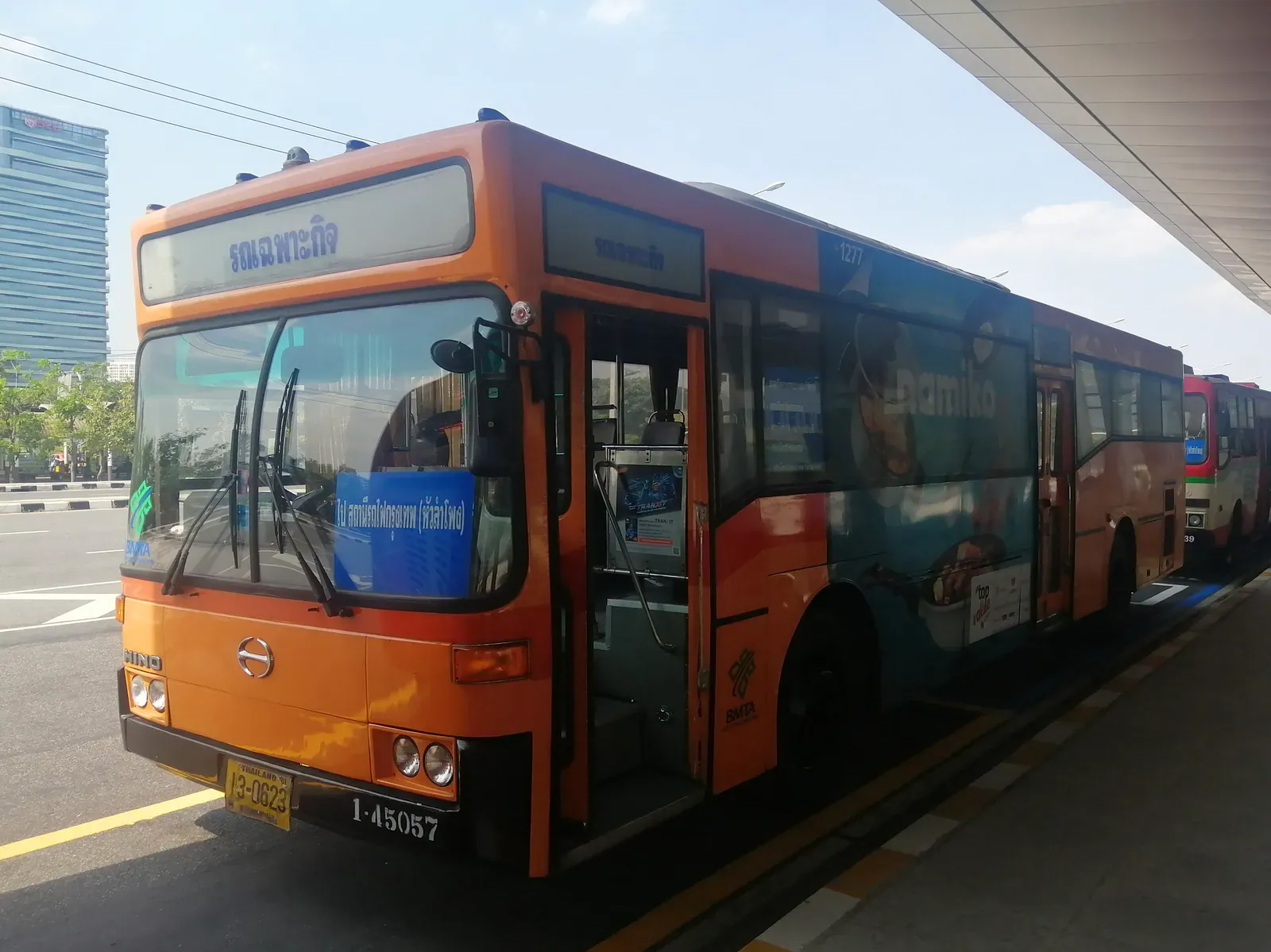
- Bus: local bus 49 leaves Hua Lamphong every 15 to 20 minutes from 05:00 to 21:00 and takes 30 to 60 minutes. The free shuttle that once linked the two stations has been discontinued.
For the Bangkok train station BTS question: the rail link to the terminal is the MRT Blue Line to Bang Sue.
What else runs from the terminal?
The SRT Dark Red Line runs to Rangsit and the Light Red Line to Taling Chan, both from the same building. The rail network guide shows how those lines fit with the BTS and MRT. The third-floor high-speed tracks are for planned services, including the Don Mueang to Suvarnabhumi to U-Tapao link.
Hua Lamphong: what still leaves from the old terminus
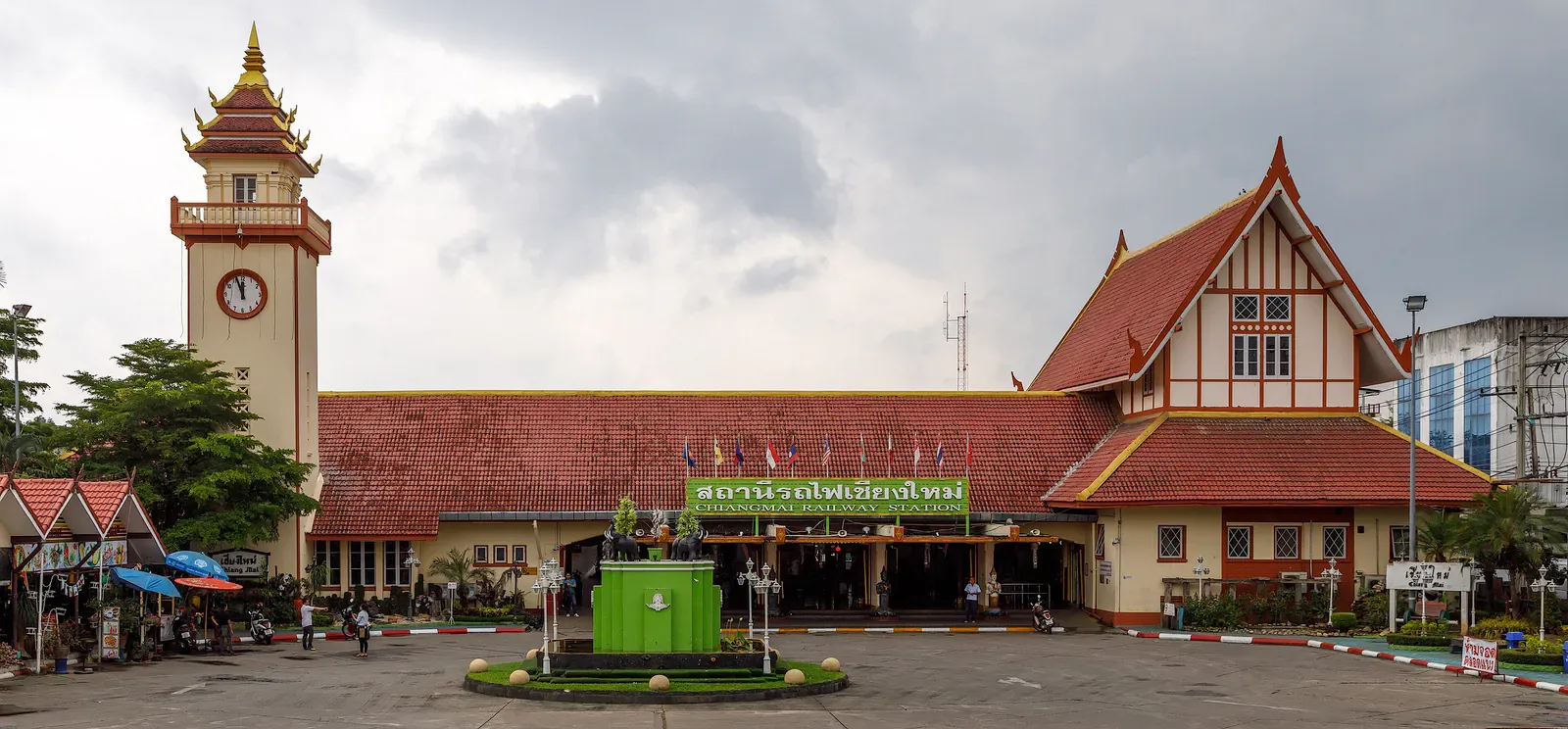
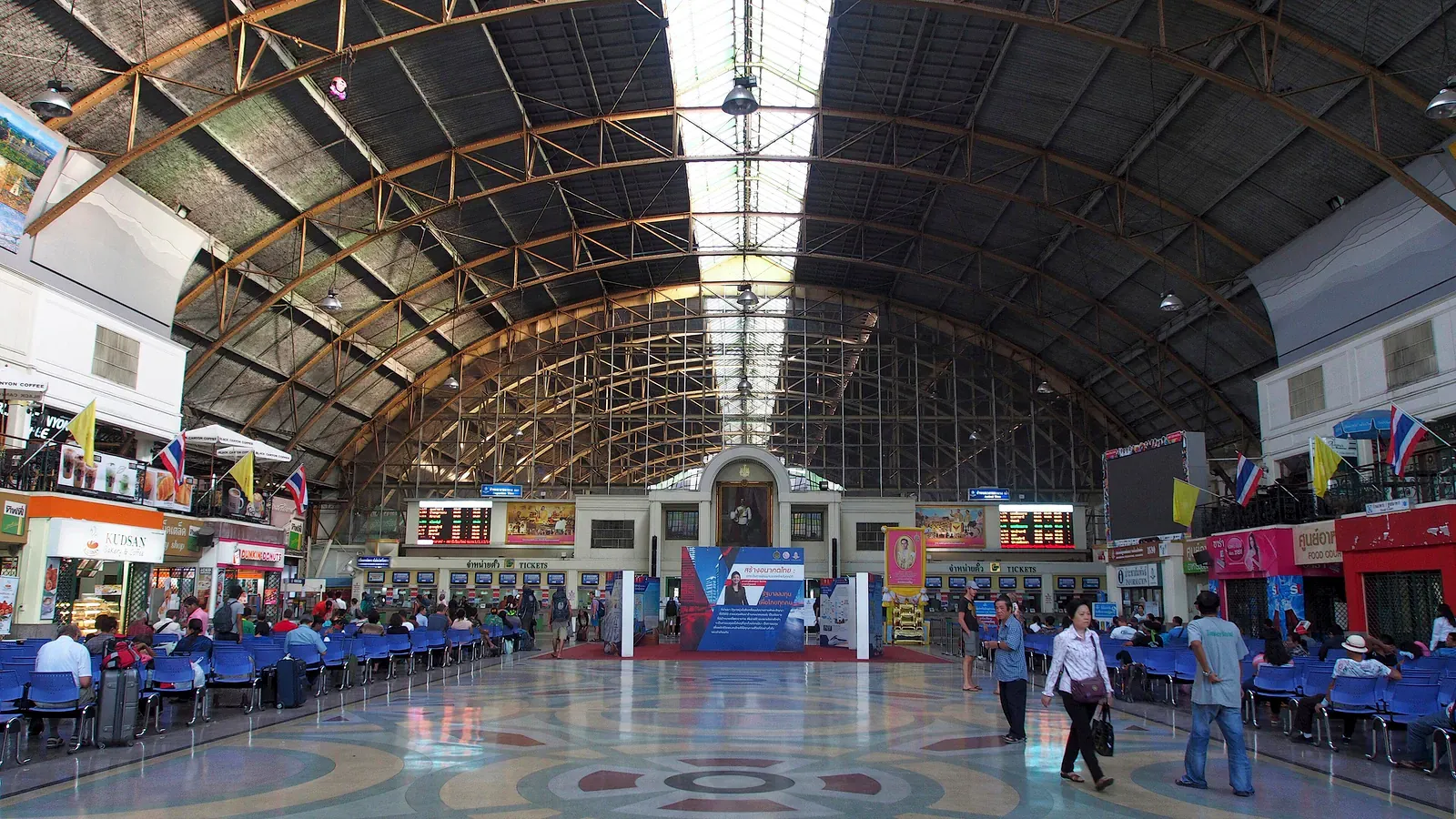
Hua Lamphong opened on 25 June 1916 and was renamed Bangkok (Hua Lamphong) railway station on the same day the long-distance trains moved out. Before 2020, Wikipedia records, it handled about 200 trains and roughly 60,000 passengers a day.
Which trains still use Hua Lamphong?
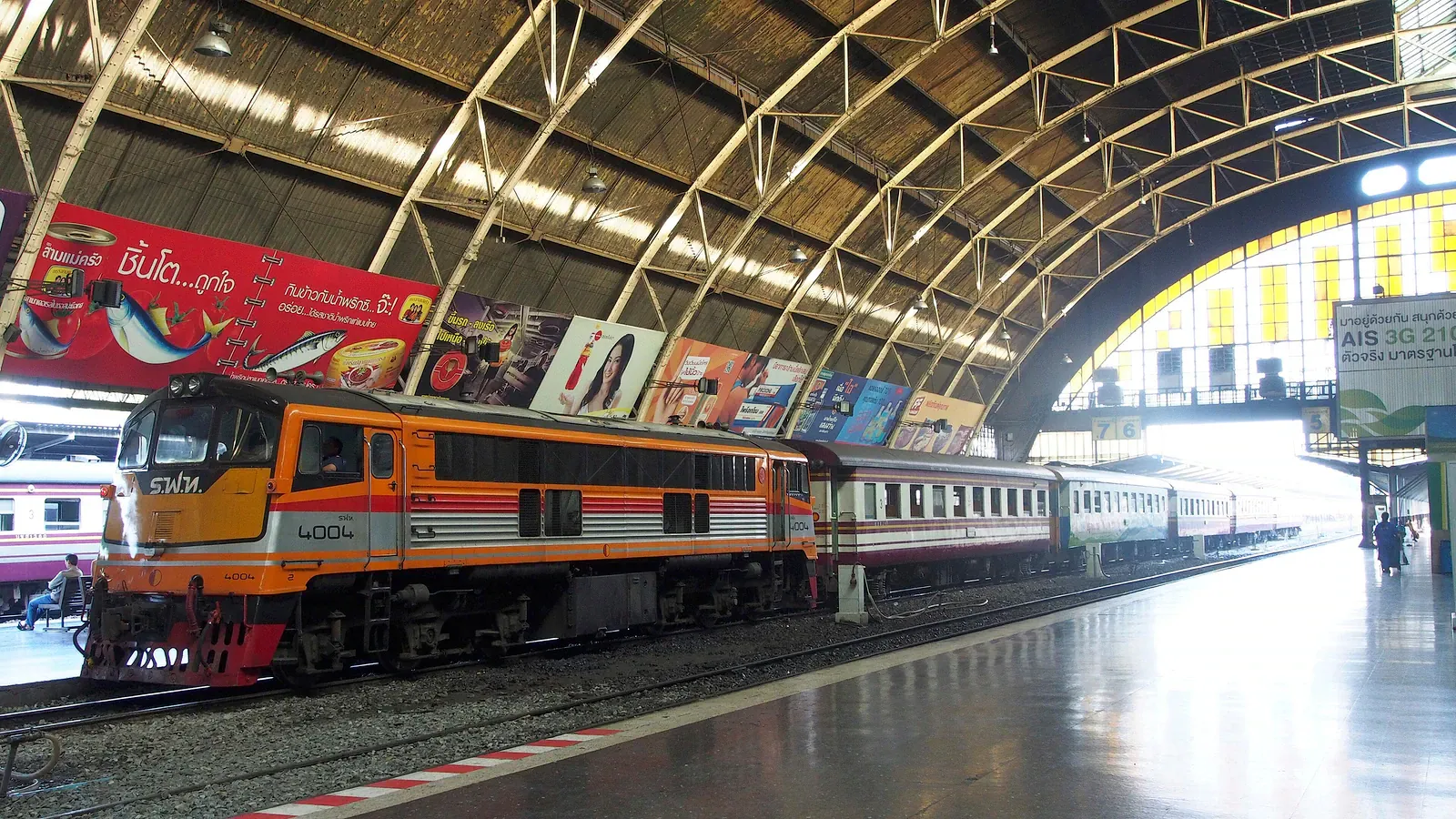
- Local trains to Ayutthaya: third class, 20 THB (~USD 0.60), no reservation needed.
- Eastern line trains: services towards Aranyaprathet and Ban Klong Luk, plus trains to Pattaya.
- Excursion trains: Seat61 mentions a weekend excursion train from here, while the daily Kanchanaburi trains run from Thonburi, so confirm which station your ticket names.
- Local and commuter trains: Seat61 counts about 13 local departures.
The Eastern line has been disrupted. Reports from December 2025 say services beyond Sa Kaeo were cut back “until further notice”, and sources disagree on exactly where trains end. Check with SRT on 1690 before you plan a border trip.
How do you reach Hua Lamphong?
Hua Lamphong MRT station is linked to the railway station by an underground passage, which has been open since 2004. A taxi to a city-centre hotel runs about 50 THB (~USD 1.50), per Seat61.
Left luggage at Hua Lamphong is permanently closed. If you arrive early for a train from Krung Thep Aphiwat, use the lockers there instead (see above).
The ticket windows are on the concourse to the left of the King’s portrait, and an information counter hands out pocket timetables in English.
Thonburi (Bangkok Noi): the small station across the river
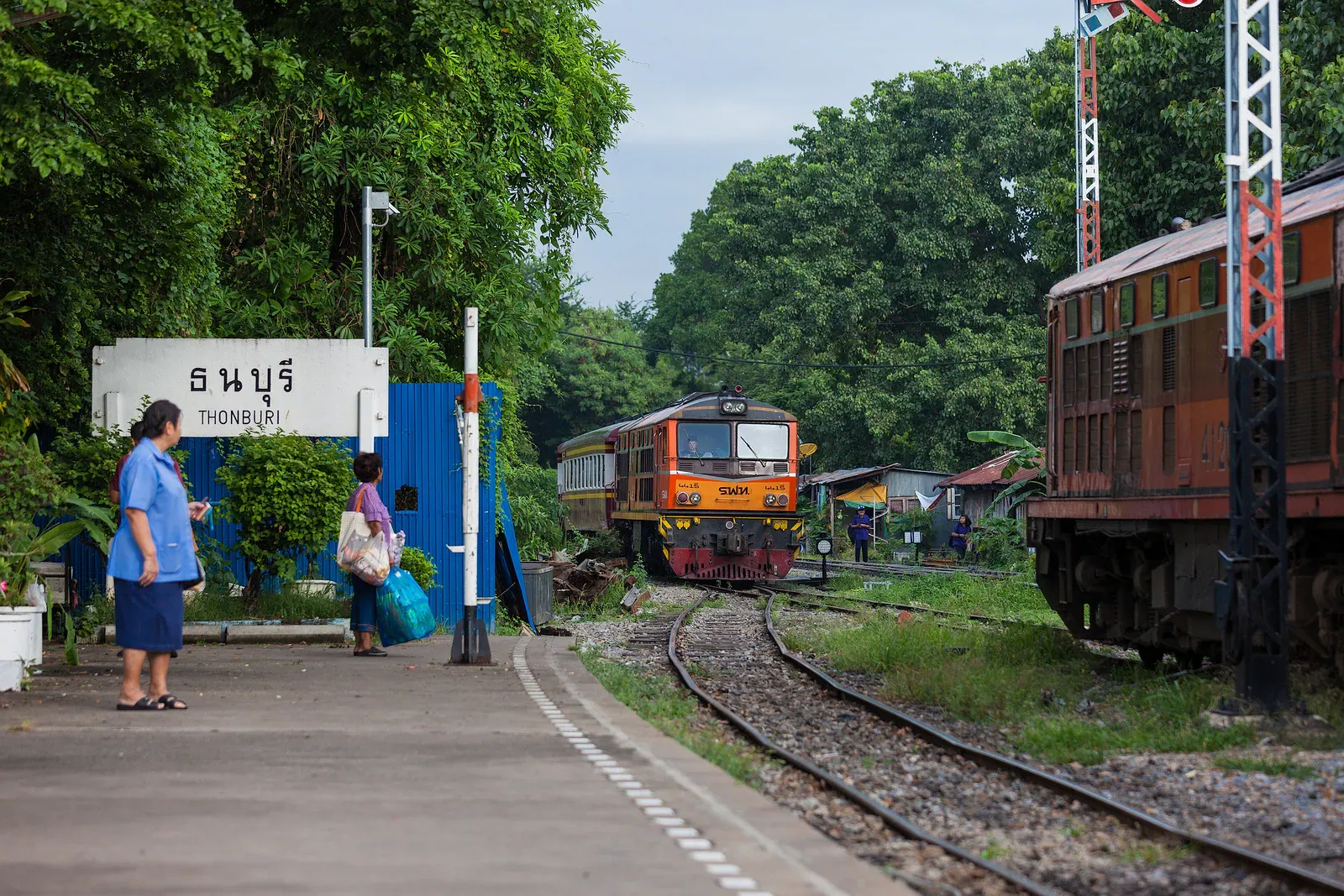
Thonburi station, also called Bangkok Noi, sits on the west bank of the Chao Phraya in Bangkok Noi district. It was the original terminus for trains to Hat Yai and Malaysia until the Rama VI Bridge opened in 1926. Today its trains include the Death Railway line towards Kanchanaburi.
Which trains leave from Thonburi?
The Thai Train Guide timetable (last updated 15 December 2023) lists train 257 at 07:45 and train 259 at 13:55, two trains a day to Kanchanaburi and Nam Tok. Another source gives the first departure as 07:50, so arrive early. Foreigners pay a fixed 100 THB (~USD 2.99) on this line regardless of distance, and the carriages are third class with fans and open windows. The train36 station guide adds a few daily trains south to Nakhon Pathom, Ratchaburi and Gulf coast towns, and cheap commuter trains towards Salaya.
Short local trips such as Kanchanaburi are sold only at the station on the day, per Seat61. The station counter sells tickets to any destination in Thailand, and its phone number is 02-418-4310.
How do you get to Thonburi station?
Do not confuse the current station with the old Thonburi station about 1 km away, which is now part of Siriraj Hospital and houses a museum. Pick the route that suits your hotel.
- MRT: Seat61 gives a 9-minute, 750 m walk from Bang Khun Non station on the MRT Blue Line.
- River boat: take an express boat to Wang Lang (Siriraj) pier, number 10, or Thonburi Railway pier, number 11. Per train36, only the Orange, Yellow and no-flag boats stop at Thonburi Railway pier. The Chao Phraya piers guide explains the boat colours.
- Cross-river ferry: from Tha Phra Chan, Maharaj or Tha Chang piers to Wang Lang costs 3 THB (~USD 0.09).
- Last stretch: the walk from the piers is about 1 km, roughly 15 minutes. A motorbike taxi costs about 15 THB (~USD 0.45) from Thonburi Railway pier or 20 to 30 THB from Wang Lang. A tuk-tuk or metered taxi is about 40 to 60 THB (~USD 1.20 to 1.80).
How do I book tickets for each station?
Booking windows depend on how much of a long-distance train’s route you ride, per Seat61.
| Share of the route | Booking opens |
|---|---|
| More than 59% | Up to 6 months ahead |
| 25% to 59% | 30 days ahead |
| Under 25% | 1 day ahead |
Short local trips from Hua Lamphong or Thonburi are sold at the station on the day. For long-distance trips, phone SRT on 1690 at least 5 days ahead, then collect and pay within 24 hours, with your passport number ready. A passport may also be required at the counter. Book early for New Year (30 December to 3 January) and Songkran (usually 11 to 16 April).
What should I know about the sleeper trains?
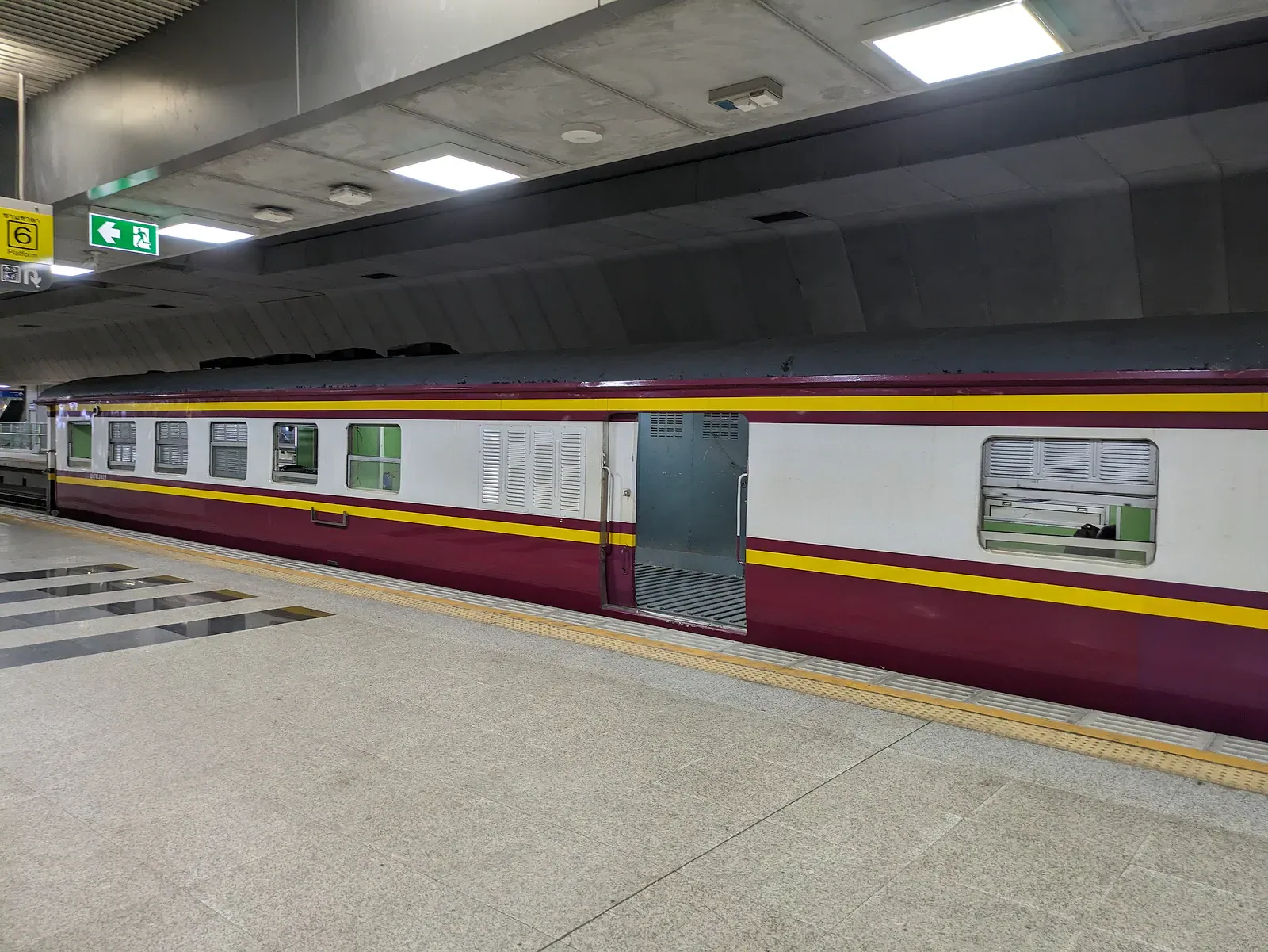
All sleeper trains leave from Krung Thep Aphiwat. That answers the common question about the Bangkok sleeper train station.
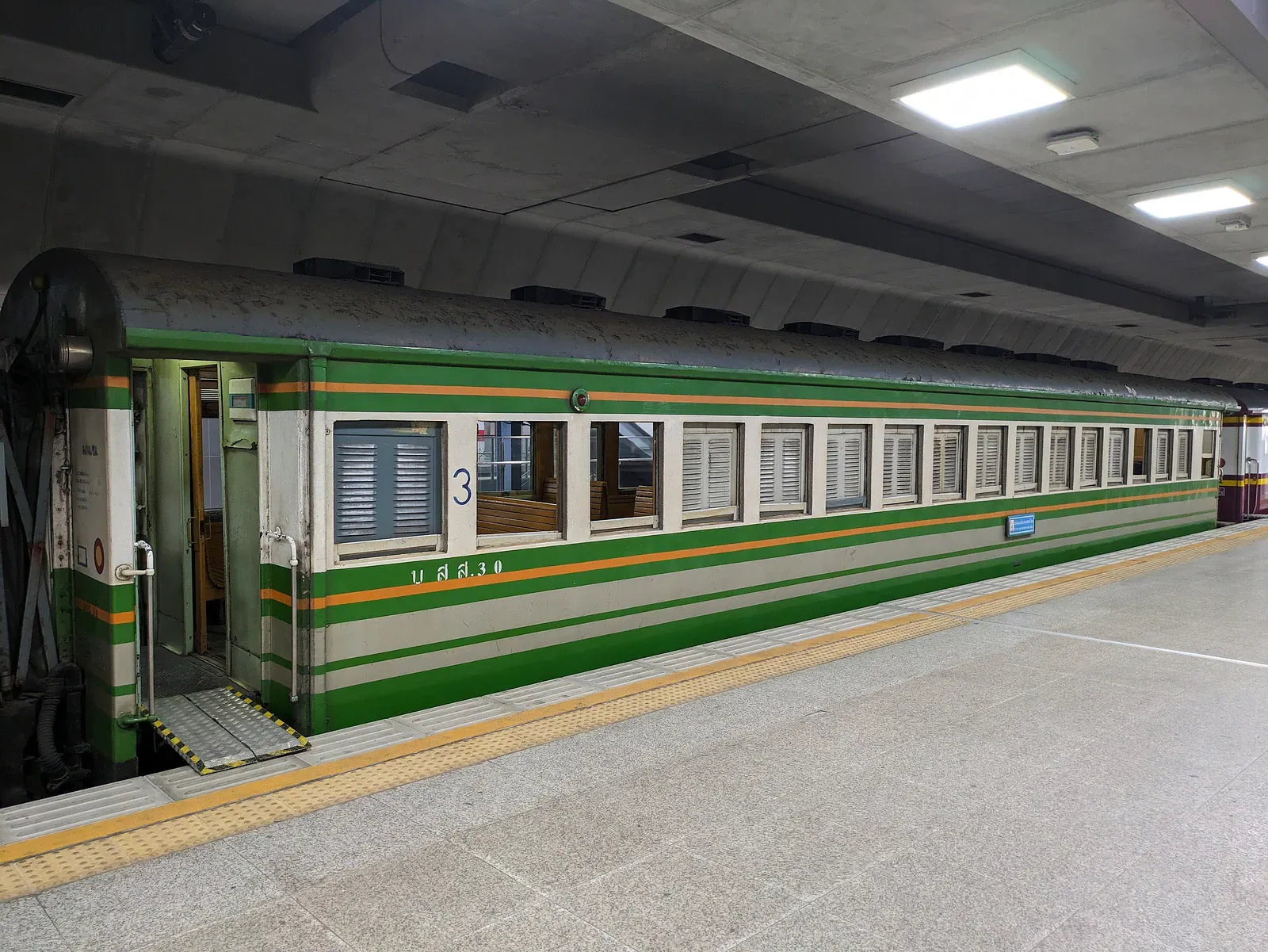
Seat61 describes the sleeper types:
- First class: two-berth compartments, usually one sleeping car per train. To get a whole compartment, buy one upper and one lower berth together.
- Second class, air-conditioned: open-plan bays with curtains for privacy. Upper berths are slightly cheaper but narrower.
- Second class, non-air-conditioned: cheaper, with windows that open.
The newest Chinese-built sleeping cars run on trains 9, 10, 23 to 26 and 31 and 32.
Which station is best for your trip?
- Overnight to the north, northeast or deep south: Krung Thep Aphiwat. Platforms open about 20 minutes before departure, so allow time in the concourse.
- Ayutthaya on the cheap: Hua Lamphong, with its MRT link and no reservation needed.
- Kanchanaburi and the Death Railway: Thonburi.
- Staying near the river: the Chao Phraya boat to Wang Lang pier is one way to reach Thonburi. The rail network guide shows how the rail lines connect.
Onward by rail: Bangkok to Hua Hin, Bangkok to Hat Yai, Bangkok to Khao Yai, Bangkok to Chiang Mai and airport rail link guide.
Common questions
Is Hua Lamphong still open?
Yes. Hua Lamphong remains open for local, commuter and excursion trains, but long-distance trains stopped using it on 19 January 2023. A planned conversion to a museum was delayed.
Which Bangkok station do trains to Chiang Mai use?
Krung Thep Aphiwat Central Terminal. Northern line trains to Chiang Mai leave from platforms 1 and 2, according to Seat61.
Is Bang Sue the same as Krung Thep Aphiwat?
The terminal was called Bang Sue Grand Station before its ceremonial name, chosen by King Vajiralongkorn, replaced it. The old Bang Sue Junction station stands across the road and still handles local and commuter trains.
What is the timetable for Bangkok train stations?
Call SRT on 1690 or check ttsview.railway.co.th for current times.
Can I leave bags at the station?
At Krung Thep Aphiwat, yes: lockers cost about 230 THB (~USD 6.90) per 24 hours. At Hua Lamphong, left luggage is permanently closed.
Is there a free shuttle between Hua Lamphong and the terminal?
No. The free shuttle was discontinued, according to Seat61. Use the MRT, a taxi, bus 49 or the 2 THB local train to Bang Sue Junction.
Do I need my passport to buy a train ticket?
A passport may be required to buy a ticket at the station, according to Seat61, and SRT phone bookings ask for your passport number.
Written by
Mike Brochlowski
Founder and editor, travel photographer and designer
I'm Mike Brochlowski, a travel photographer and designer, and I currently live on Koh Samui, Thailand. I built BangkokWiki to put practical, checked information about Bangkok in one place. Every page is researched from official and primary sources, and the text names them. Where a page shows a checked date, that is when its facts were last confirmed. I also run samui69.com, a non-commercial guide to Koh Samui. If you spot an error or something out of date, tell me through the contact page and I will check it and correct the page.
Read all articles
Where to stay
Pick the area before the hotel
Traffic and heat make Bangkok distances feel longer than they look on a map, so the area shapes a trip more than the hotel does. Our guides match areas to trip types and explain the trade-offs.

Places to stay
Find a hotel
Explore the other desks
More from Transport
- 10 min read
 9 min read
Bangkok to Phuket: Flight, Overnight Bus or Train Combo
 9 min read
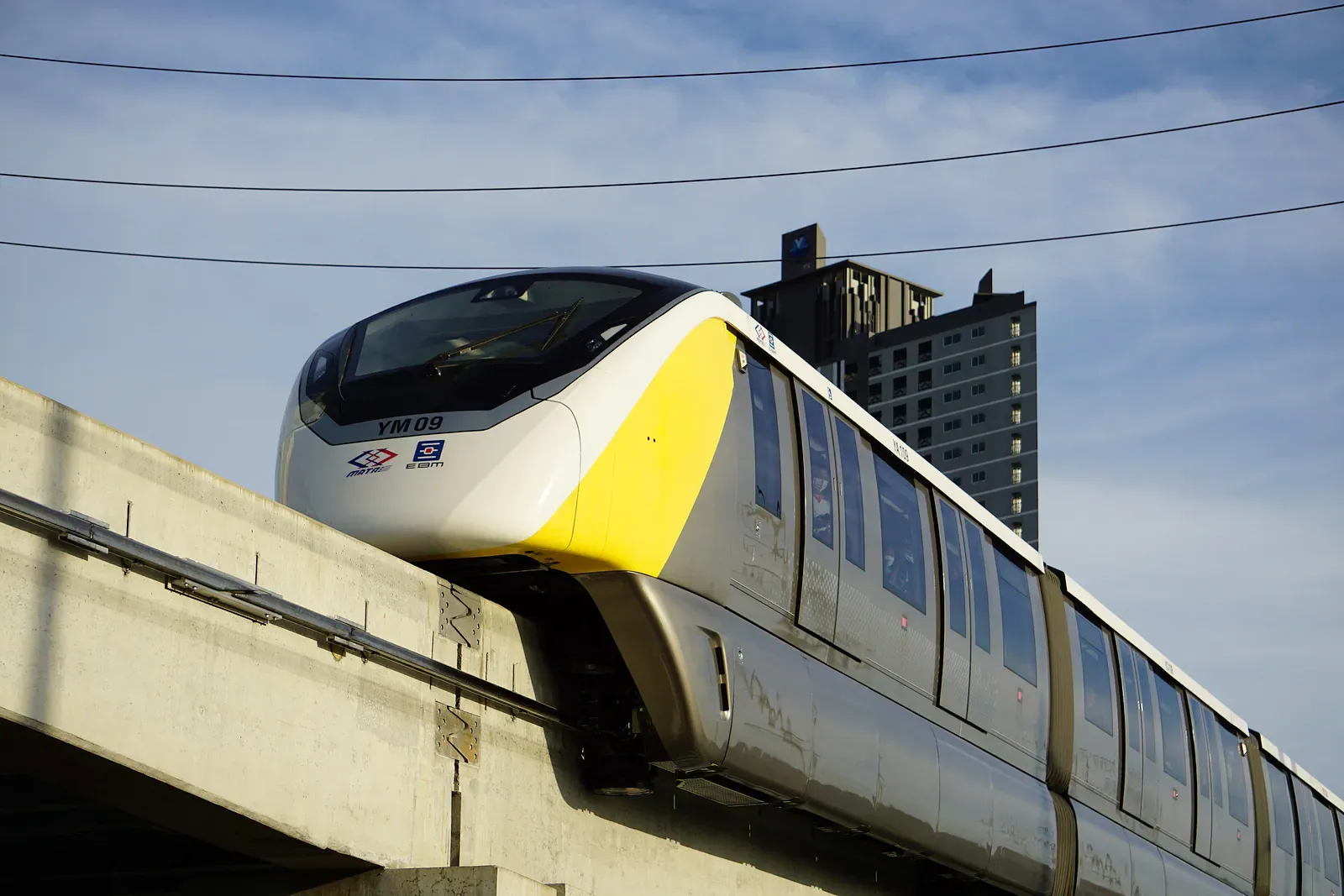
Bangkok's Yellow and Pink Line guide: stations and fares

Newsletter
You're subscribed as