Transport
What transport actually costs in Bangkok: three real budgets
Three monthly Bangkok transport budgets, rail-only to taxi-heavy, priced from real BTS, MRT, bus and Grab fares, in THB and ~USD, checked September 2026.
On this page
Bangkok transport can cost as little as 1,300 THB a month (roughly 37 USD, checked September 2026) or well over 7,000 THB, and the difference has nothing to do with luck. It comes down to which modes you default to. Cost-of-living roundups usually bury transport inside one line of a much bigger budget. This page prices out three distinct, named ways of getting around the city, built from this category’s own per-mode fare data, so you can see exactly where your own habits land.
Three budgets at a glance
- BTS/MRT-only commuter
- 1,300-2,500 THB
- Occasional-Grab tourist/expat
- 1,800-2,600 THB
- Taxi-heavy visitor
- 7,000-9,500 THB
Source: Editorial calculation from this category's fare pages and 2026 cost-of-living roundups, checked September 2026
The taxi-heavy scenario can cost more than four times the rail-only one for getting around the same city. The difference is not the city. It’s the mode.
Which of these scenarios actually fits you depends on more than budget alone; see getting around Bangkok by traveler type for how trip choices shift by who’s travelling.
Scenario A: the BTS/MRT-only commuter
This is the rider who lives near a station and structures their life around the rail network: work commute, weekend errands, the occasional longer trip, almost all of it on BTS or MRT.
- Monthly range: 1,300-2,500 THB (roughly 37-71 USD)
- Typical pattern: two rail trips a day, five or six days a week, fares mostly in the 17-45 THB band
- Who it suits: residents within easy walking distance of a station, anyone commuting the same route daily where a Rabbit card or stored value removes the friction of buying single tickets
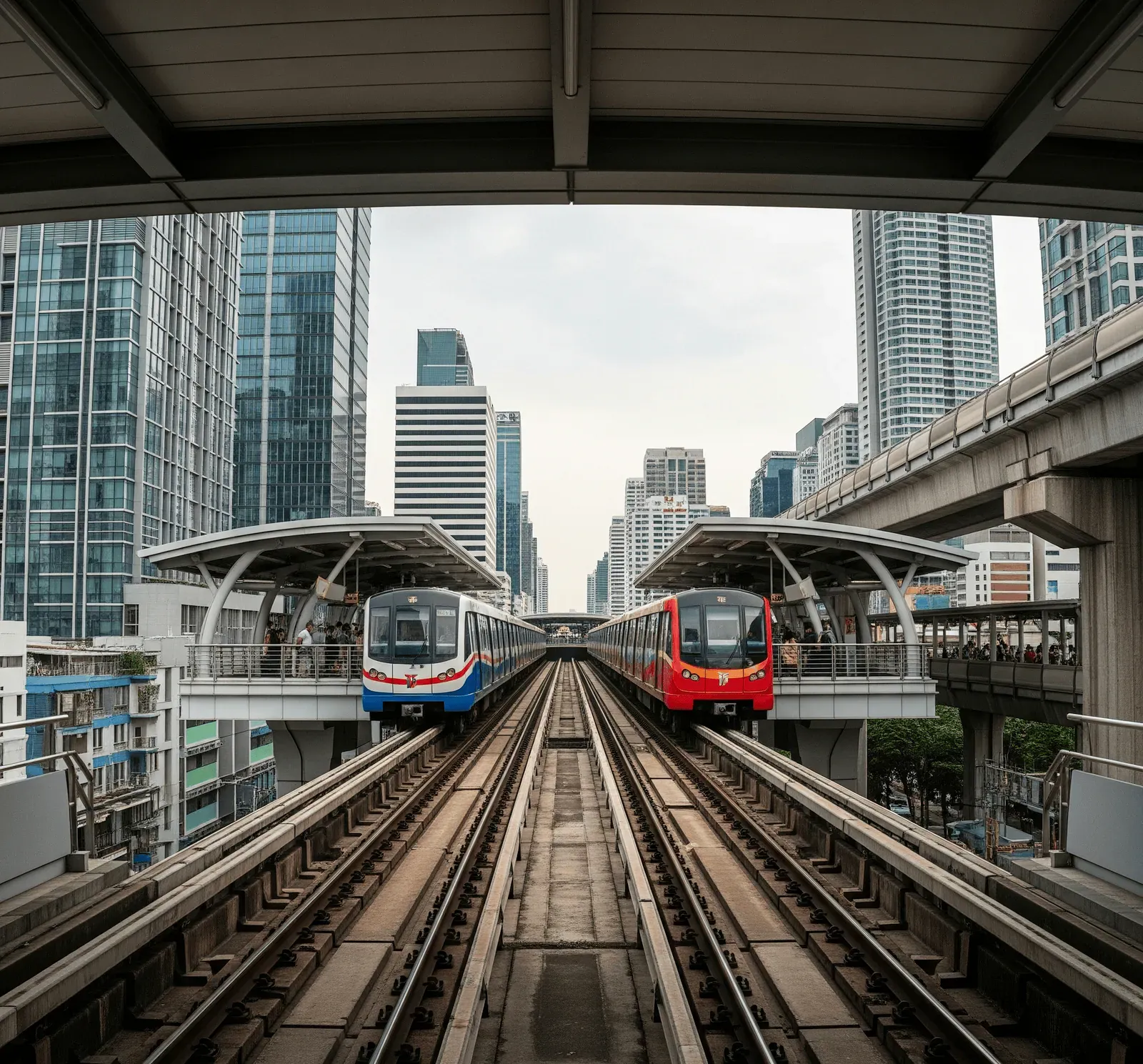
The ceiling here is set by distance-based fares: a rider doing longer cross-town hops daily lands nearer 2,500 THB, while someone with a short, station-to-station commute can sit closer to 1,300 THB. See Bangkok’s BTS and MRT fares for the single-trip and day-pass math behind this number.
Scenario B: the occasional-Grab tourist or expat
This rider leans on rail for most trips but doesn’t fight it when a destination isn’t near a station, or when it’s raining, or when a Grab is simply faster for a short cross-town hop.
- Monthly range: roughly 1,800-2,600 THB (51-74 USD), editorial estimate
- Typical pattern: about 20 rail trips a month (around 600 THB) plus 8-10 Grab or taxi rides (around 1,000-1,200 THB at typical short-to-medium fares)
- Who it suits: a multi-week visitor, or a newer expat still learning which neighbourhoods sit near a station and which don’t
Scenario C: the taxi-heavy visitor
This rider defaults to taxi or Grab for nearly everything, usually because they’re unfamiliar with the rail map, travelling with luggage, or simply prioritising door-to-door convenience over cost.
- Monthly-equivalent range: roughly 7,000-9,500 THB (200-270 USD) if sustained for a full month, editorial estimate
- Typical pattern: about two taxi or Grab rides a day at a 120-150 THB average fare
- Who it suits: a short stay where the time saved matters more than the baht saved, someone travelling with mobility limitations or heavy luggage, or a first week in the city before the rail map makes sense
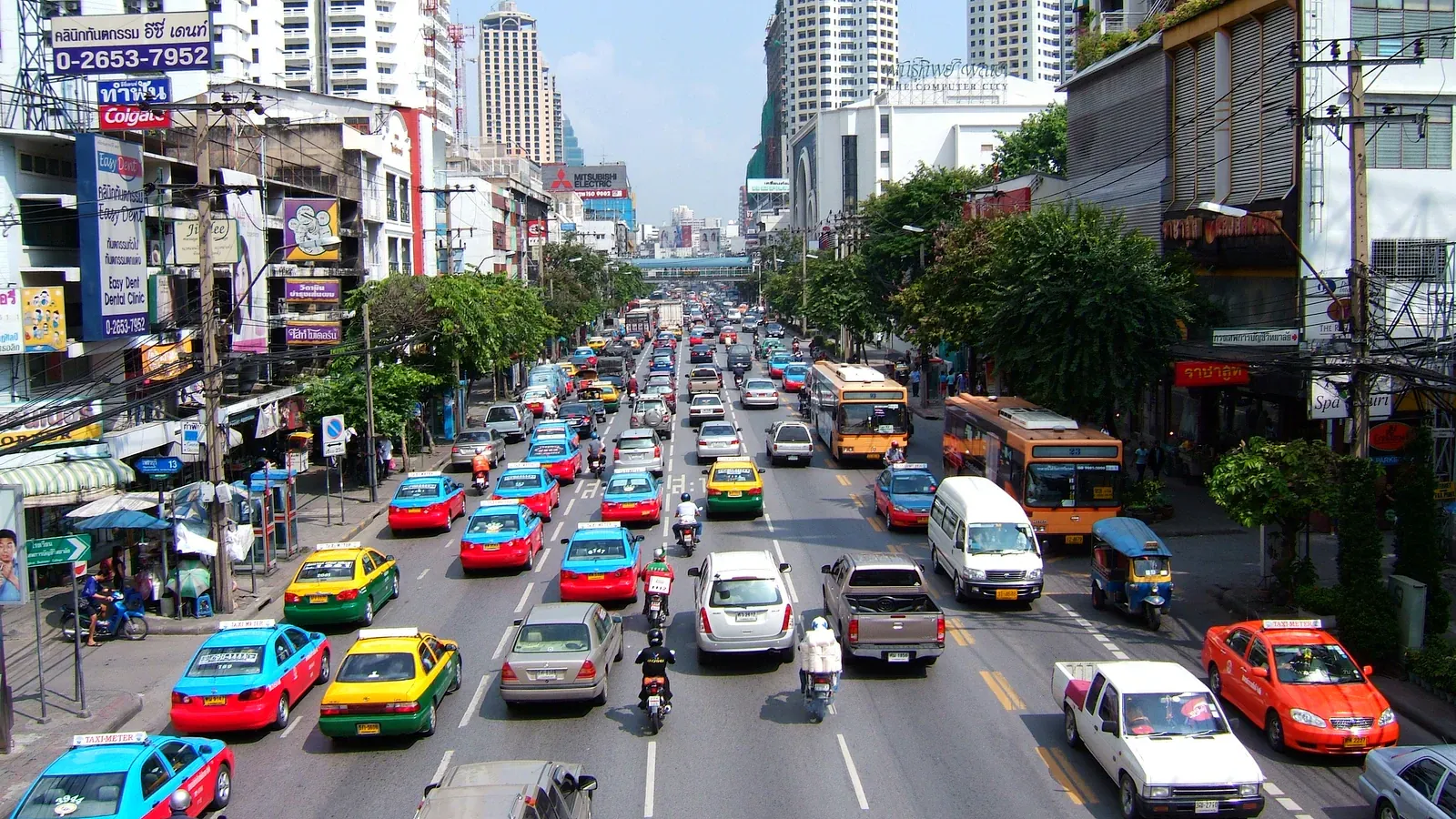
This is framed as a monthly-equivalent rather than a typical resident budget, because almost nobody who lives in Bangkok long-term actually spends every single trip on taxis. It’s the honest ceiling: what happens if convenience wins every time. For the taxi math itself, see Bangkok’s taxi fare explained.
Per-mode unit costs, side by side
| Mode | Typical single-trip cost | ~USD | Best for |
|---|---|---|---|
| BTS / MRT | 17-65 THB (distance-based) | 0.50-1.85 | Any trip that runs parallel to a rail line |
| BMTA bus, regular (red-cream) | 8-10 THB | 0.20-0.30 | Routes rail doesn’t reach, riders comfortable with cash-only, exact-change fares |
| BMTA bus, air-conditioned | 12-26 THB | 0.35-0.75 | Longer bus routes, a cooler ride for a small premium |
| Metered taxi | 35 THB flag-fall, roughly 6.50 THB/km rising with distance | from 1 | Door-to-door trips, luggage, groups splitting the fare |
| Grab (car) | Base around 40-60 THB, short cross-town hop 60-150 THB | 1.15-4.30 | No-haggle convenience, an upfront fare estimate |
| Grab (bike) or motorbike taxi | 20-50 THB for a short soi hop | 0.60-1.45 | Beating traffic on a short, congested last-mile stretch |
The same trip, priced three ways
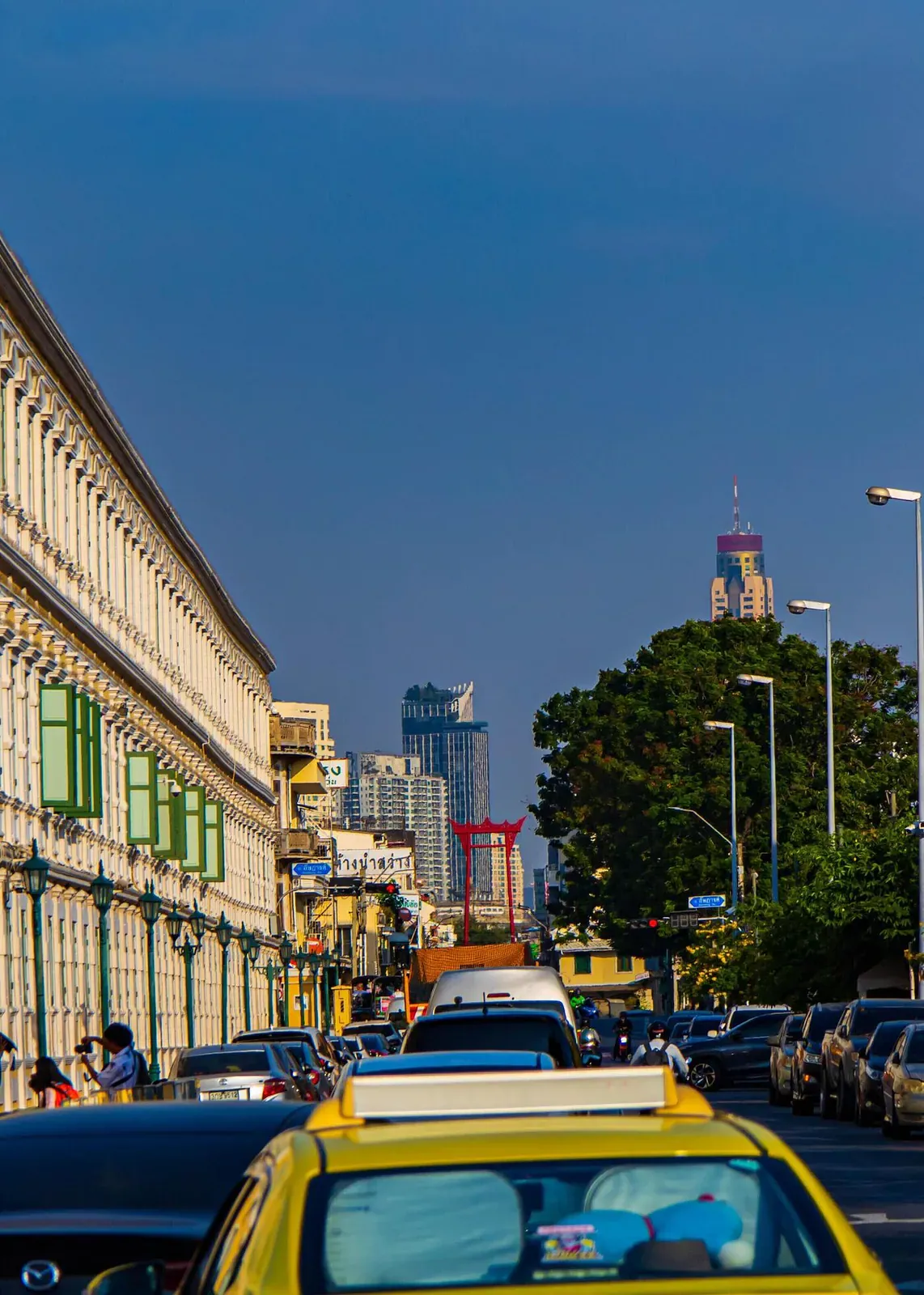
Ranges are useful for planning a month. A single trip is easier to feel in the moment, so here’s one common route, Asok (BTS E4, Sukhumvit Line) to Siam (BTS CEN, interchange station), roughly 3 km, priced across the three main options using this category’s own fare structure.
| Mode | Cost | Time | Trade-off |
|---|---|---|---|
| BTS (Sukhumvit to Siam line, one transfer) | 25-35 THB | 12-18 min | Fixed price, unaffected by traffic |
| Metered taxi, off-peak | 60-80 THB | 10-15 min | Fast when roads are clear, no transfer walk |
| Metered taxi, rush hour | 110-150 THB | 25-40 min | Same route, more than double the price and the time |
| Grab, off-peak | 70-100 THB | 10-15 min | Upfront price certainty, small booking-fee premium over the meter |
The rail fare barely moves regardless of when you travel. The road fares roughly double in both price and duration at rush hour for the identical trip. That single comparison is the whole argument for defaulting to rail on any route it actually covers, and it’s why Scenario A above costs a fraction of Scenario C for people covering broadly similar ground across a month.
Why the gap between scenarios is so large
The four-times difference between the rail-only and taxi-heavy scenarios isn’t a pricing quirk, it’s structural. A BTS or MRT fare is fixed by distance regardless of traffic. A taxi or Grab fare is not: Bangkok’s rush-hour congestion adds a per-minute charge on top of distance, so the exact same route can cost close to double depending purely on when you travel. Road transport also carries convenience charges baked in, an airport surcharge, an expressway toll, a Grab booking fee, none of which rail has an equivalent of.
The honest way to think about it: rail is cheap because it’s fixed-cost and traffic-proof. Road transport is flexible and door-to-door, and you pay a real premium for both of those things every single time traffic is bad.
Where each scenario actually breaks down
No one sticks to one mode all month, and the scenarios above are ranges for a reason.
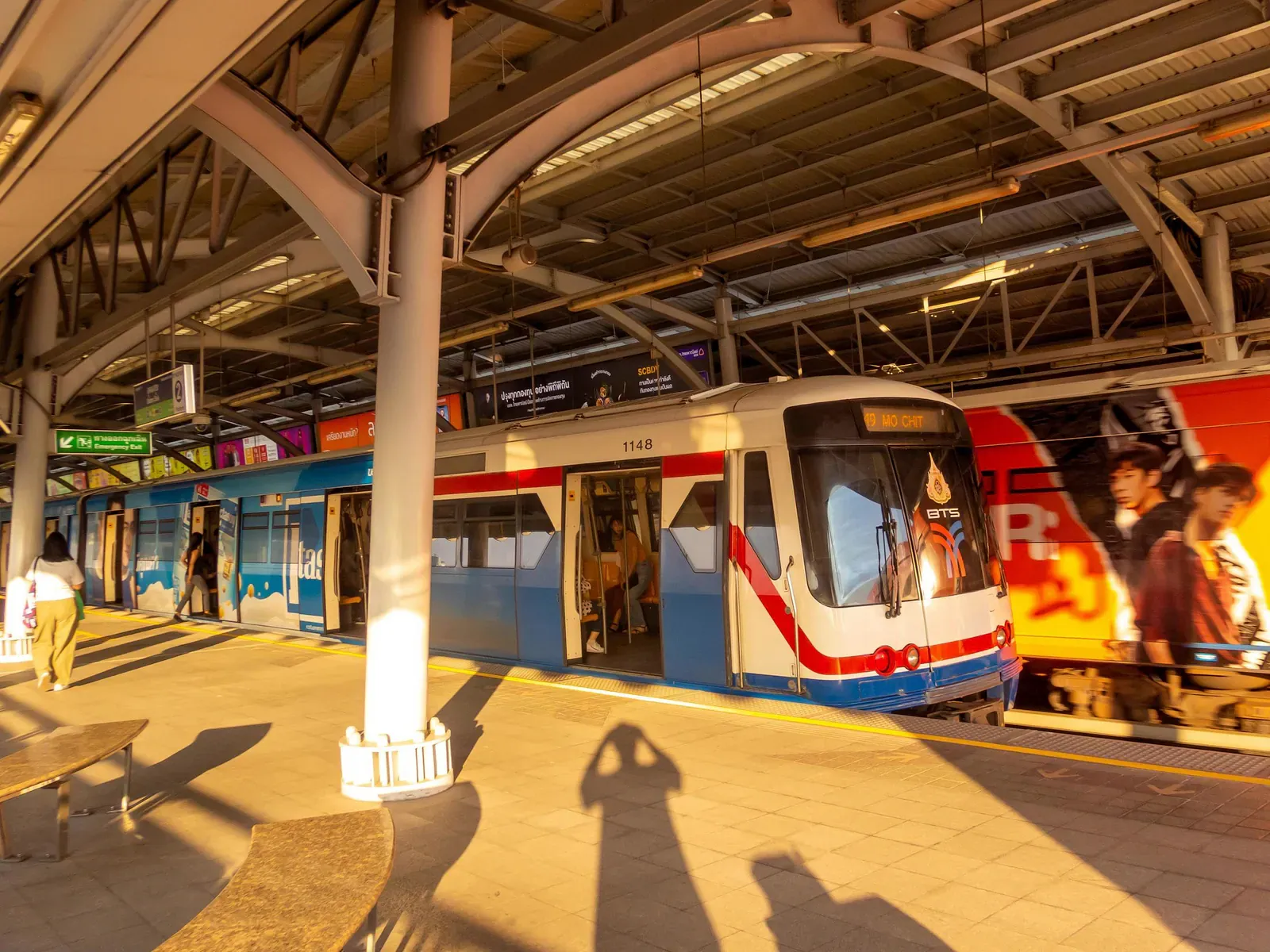
- The rail-only budget breaks down on a day with a destination genuinely not served by BTS or MRT, or when carrying enough luggage that station stairs and interchange walks stop being reasonable.
- The Grab-occasional budget breaks down during a stretch of daily rain or a week with several early-morning airport-adjacent trips, both of which push more spend onto the road-transport side than the monthly average assumes.
- The taxi-heavy budget breaks down the moment a visitor becomes a resident: paying the taxi-heavy rate every day for a full year would run 84,000-114,000 THB annually on transport alone, which is exactly why almost no long-term resident actually lives in that scenario.
Cutting your own transport bill
- Move rail-adjacent trips off taxi and onto BTS/MRT first. Even at the top of the rail fare range, a single trip rarely exceeds a Grab booking fee alone.
- Save motorbike taxis for the genuine last-mile problem: the long soi between a station and your actual door, not as a general-purpose taxi substitute.
- Check the day-pass breakeven before buying one. As the BTS/MRT fares page breaks down, a day pass only wins with enough rides in a single day, otherwise per-trip fares are cheaper.
- Batch road trips outside the 7:30-9:30am and 5-7:30pm windows when possible; the same taxi or Grab route can run close to double the price stuck in rush-hour traffic.
- Use buses for routes rail simply doesn’t reach, once you’re comfortable with the cash-only, exact-change norm; a bus fare is a fraction of the equivalent taxi cost.
Going out to play golf? See the golf courses comparison.
What’s changing, and why it matters for your budget
Two changes worth watching don’t affect today’s numbers but will affect next year’s. MRT’s shift to EMV contactless payment removes a small friction cost (queueing for stored-value top-ups) without changing the fare itself. The proposed 17-45 THB shared fare cap across BTS, MRT, Airport Rail Link and the Pink and Yellow lines, targeted for 1 January 2027, would mainly benefit riders whose trips currently cross multiple rail operators and pay for each leg separately. Neither is in effect yet: both are described in detail, with sources, on the BTS and MRT fares page.
Common questions
What’s the cheapest way to get around Bangkok?
Sticking to BTS and MRT for any trip that runs near a station, and using cash-fare buses for the rest, keeps most riders in the 1,300-2,500 THB a month range. Cheaper still is possible for someone making very few trips, but that range represents a realistic, comfortable rail-first baseline.
How much should I budget for transport as a tourist in Bangkok?
For a typical multi-day visit mixing rail with some Grab or taxi convenience, plan on roughly 60-90 THB per rail trip and Grab/taxi day and adjust up if you’re taking several taxi rides daily; the occasional-Grab scenario above scales down cleanly to a per-day or per-week trip.
Is it worth getting a Rabbit card or day pass to save money?
A Rabbit card pays off through convenience once you’re making regular BTS trips over several days; a day pass only pays off with enough same-day rides. See the BTS and MRT fares page for the exact breakeven math.
Why is taxi transport so much more expensive than rail in Bangkok?
Distance-based rail fares are fixed regardless of traffic. Taxi and Grab fares add a per-minute charge when stuck in traffic, plus surcharges rail doesn’t have, which is why the same trip can cost multiples more by road than by rail, especially at rush hour.
Should I budget differently for the rainy season?
Yes, a little. Heavy rain pushes more riders onto Grab and taxis at once, which tends to trigger surge pricing on ride-hailing fares and adds waiting time to a metered taxi’s meter. Building in a small buffer, rather than assuming your dry-season averages hold in September and October, avoids an unpleasant surprise mid-month.
Written by
Mike Brochlowski
Founder and editor, travel photographer and designer
I'm Mike Brochlowski, a travel photographer and designer, and I currently live on Koh Samui, Thailand. I built BangkokWiki to put practical, checked information about Bangkok in one place. Every page is researched from official and primary sources, and the text names them. Where a page shows a checked date, that is when its facts were last confirmed. I also run samui69.com, a non-commercial guide to Koh Samui. If you spot an error or something out of date, tell me through the contact page and I will check it and correct the page.
Read all articles
Where to stay
Pick the area before the hotel
Traffic and heat make Bangkok distances feel longer than they look on a map, so the area shapes a trip more than the hotel does. Our guides match areas to trip types and explain the trade-offs.

Places to stay
Find a hotel
Explore the other desks
More from Transport
- 9 min read
 11 min read
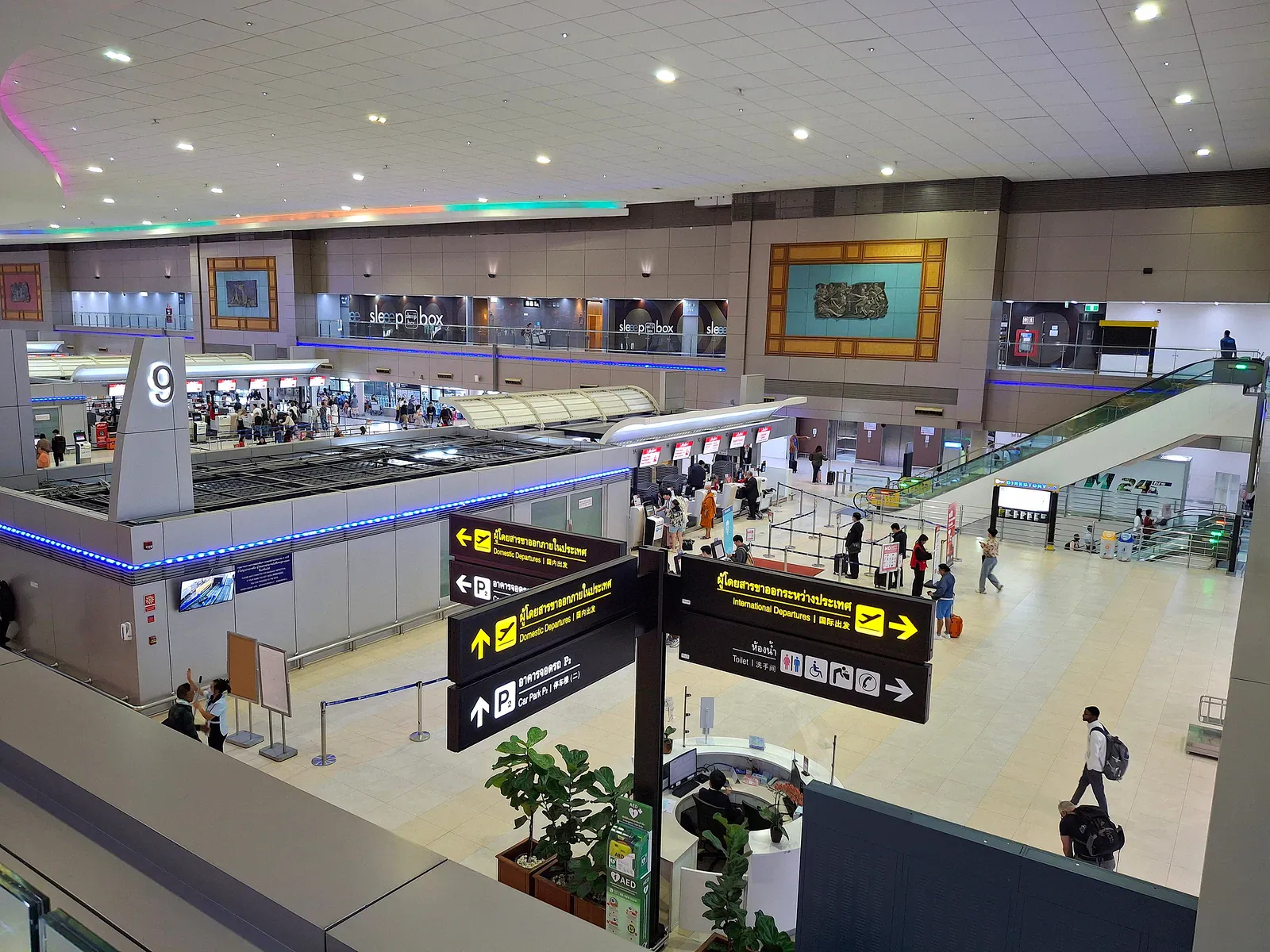
Suvarnabhumi Airport to Bangkok City Guide
 9 min read
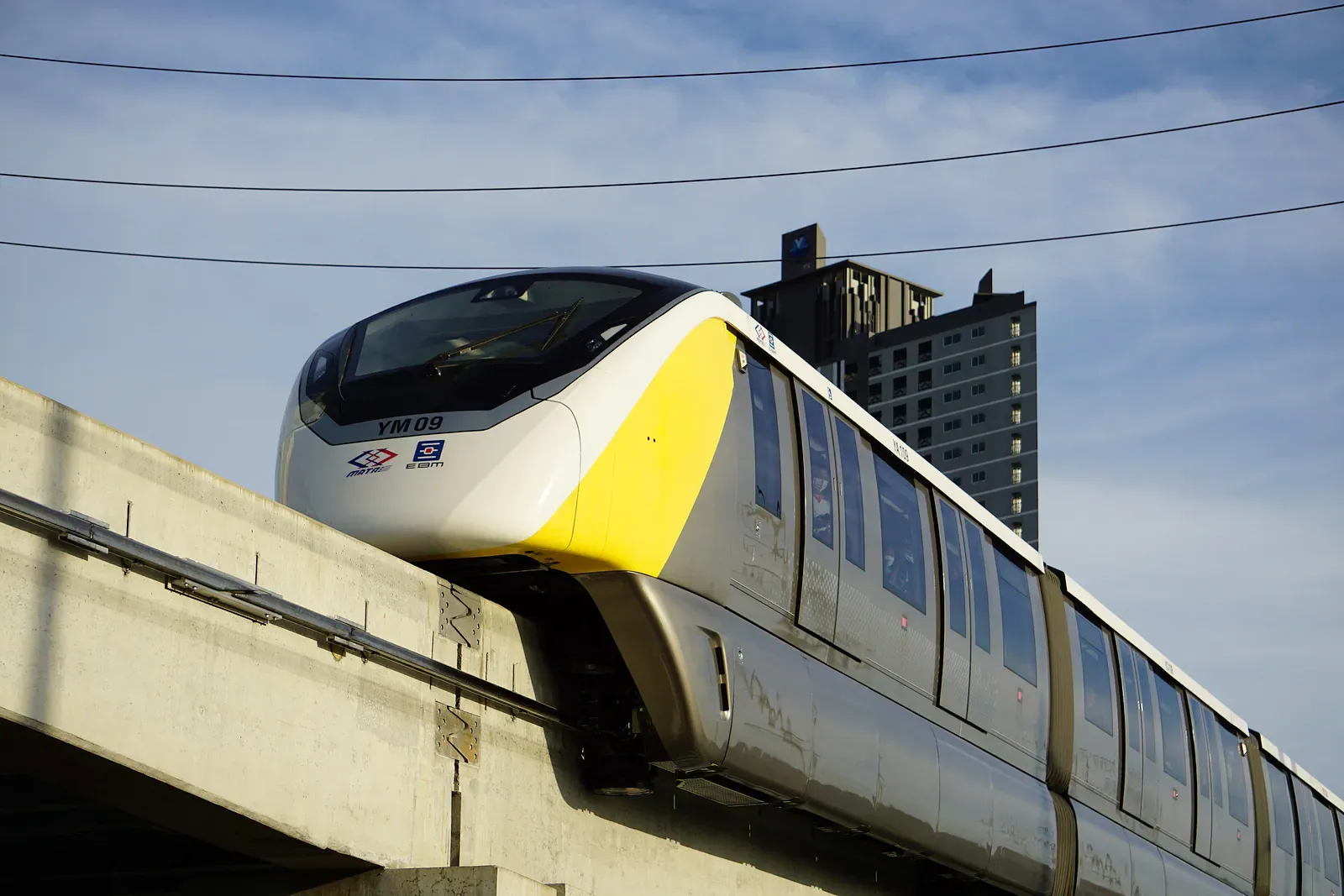
Bangkok's Yellow and Pink Line guide: stations and fares

Newsletter
You're subscribed as