
Health
JCI, Private and Public Hospitals in Bangkok: How to Choose
How JCI accreditation works, how the international, Thai private and public hospital tiers really differ, and which one fits your treatment and budget.

On this page
Bangkok gives a foreigner three genuinely different ways to get treated, not one hospital system with a marketing badge on top. A JCI-accredited international hospital, a mainstream Thai private hospital and a public or university teaching hospital can sit a few kilometres apart, treat the same condition, and differ hugely on price, waiting time, English-language support and which department is actually strongest for your case. Defaulting to the flagship international hospital because it’s the name you recognise, or ruling out a public or university hospital without finding out it has the country’s deepest department for your exact condition, is one of the more expensive, avoidable mistakes a medical traveller makes here.
This article compares the three tiers directly, then goes deep on JCI accreditation specifically, because its logo sits on almost every hospital a foreigner would consider: understanding what it actually checks, and what it doesn’t, is one of the few genuinely useful filters available before you book anything. For the broader mechanics of choosing a hospital and a department once you’ve settled on a tier, see the general guide to choosing a Bangkok hospital; this piece goes deeper on the tiers themselves and on accreditation.
The three tiers, side by side
The boundaries blur in practice (a mainstream private hospital can have an outstanding cardiac unit, and a public teaching hospital can outperform a flagship international one for a rare condition) but the general shape holds across cost, speed, language and specialist depth.
| JCI-accredited international hospitals | Thai private hospitals | Public and university (teaching) hospitals | |
|---|---|---|---|
| What it is | Large private hospitals built around foreign and medical-tourism patients, with a dedicated international patient department | Private hospitals serving mainly the domestic market, some with a smaller international wing | Government-funded hospitals, often attached to a medical faculty, serving the general Thai population |
| Who it suits | Medical tourists, short visits, anyone who wants a predictable English-first process and can pay for it | Residents comfortable with some Thai-language process, routine to moderately complex care, a lower bill without losing much quality | Complex or rare conditions, long-term residents with language support, budget-conscious planned care |
| Cost | Highest | Middle | Lowest |
| Typical process | Same-day or next-day specialist appointments, minimal queuing, concierge and interpreter support throughout | Appointment-based and generally efficient; less English-first infrastructure at reception and on the ward than the international tier | Walk-in outpatient registration and queue numbers are common; specialist clinics often run on fixed days rather than on demand |
| English-language support | Built into the whole visit, from reception to discharge | Doctors are usually fluent; nursing, reception and paperwork vary by hospital | Limited and inconsistent outside a few flagship departments or a hospital’s private wing |
| Specialist depth | Broad rosters across common conditions; can be shallower than a teaching hospital for a genuinely rare disease | Strong for common specialities; depth for a niche condition depends on the individual doctor | Often the country’s deepest experience for complex, rare or research-intensive conditions, because referral pathways concentrate the hardest cases there |
The trade-off in one line: the international tier sells comfort, speed and English-language service and charges for all three; the Thai private tier gives up some of that polish for a meaningfully lower bill without a real drop in clinical quality for most conditions; and the public/university tier can be both the cheapest and, for the right condition, the clinically deepest option: at the cost of navigating a system built for Thai-speaking patients, not visitors.
What JCI actually audits
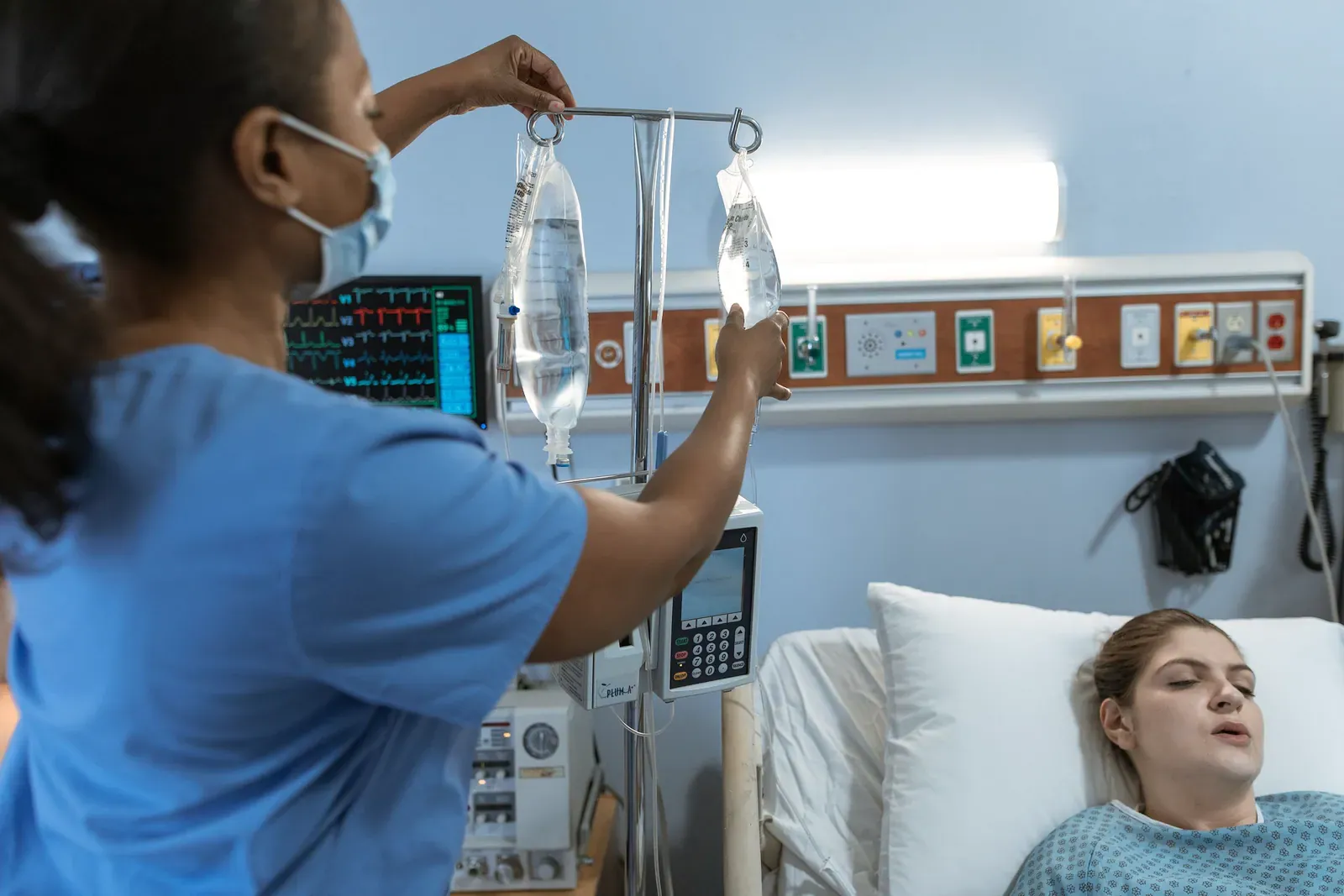
JCI (Joint Commission International) is the international arm of the US-based Joint Commission, and it accredits hospitals against a published set of standards grouped into two broad categories: patient-centred standards (how patients are identified, assessed, treated and discharged, how consent and care planning work) and healthcare-organisation management standards (quality improvement systems, infection control, medication management, staff credentialing, facility and fire safety, information management). A survey works through well over a thousand measurable elements, checked by surveyors who spend several days on site tracing real patients through the hospital, interviewing staff at every level, and reviewing records rather than just checking policy documents against a checklist.
A core part of every survey is the International Patient Safety Goals (IPSGs), six specific, high-stakes areas JCI singles out because they cause a disproportionate share of preventable harm globally:
| Goal | What it covers |
|---|---|
| Identify patients correctly | At least two identifiers (never a room number) before any treatment, test or medication |
| Improve effective communication | How verbal orders, handovers and critical results are read back and confirmed |
| Improve the safety of high-alert medications | Look-alike/sound-alike drugs, concentrated electrolytes, storage and labelling controls |
| Ensure correct-site, correct-procedure, correct-patient surgery | Site marking, a formal time-out before any procedure |
| Reduce the risk of healthcare-associated infections | Hand hygiene compliance, sterilisation, isolation protocols |
| Reduce the risk of patient harm from falls | Fall-risk screening and mitigation, particularly for older patients |
These six goals are worth knowing on their own, independent of the JCI brand: they’re a reasonable mental checklist for judging any hospital, accredited or not: does staff check your identity before giving you medication, is there a visible time-out ritual before procedures, do staff wash their hands between patients.

What accreditation is not
Accreditation is hospital-wide and systems-focused. It says the organisation has passed an external audit of its safety processes and management systems. It does not mean every department is equally strong, it does not rank or vet individual doctors, and it says nothing about price. A hospital can be JCI-accredited and still have a mediocre department for your specific condition, sitting alongside an excellent one two floors up. Judging the department and the named consultant is covered in the general hospital-choosing guide: accreditation is a floor, not a ranking, and it says nothing about how a hospital compares with a good department at a Thai private or university hospital that never pursued JCI at all.

The accreditation and re-accreditation cycle
JCI accreditation is not a one-time award. The standard cycle is three years: a hospital passes an initial on-site survey, then must pass a full on-site resurvey roughly every three years to keep the “Gold Seal of Approval.” Between full surveys, JCI has moved toward periodic virtual touchpoints with the hospital’s own quality team, intended to catch drift before the next on-site visit rather than let three years pass with no external check at all.
Two practical consequences follow from this cycle:
- A hospital’s accreditation has a start and an expiry date, tied to a specific survey, not an open-ended status. A hospital that says “JCI-accredited” without a date could be mid-cycle and current, or could be describing a status that lapsed.
- Re-accreditation is a genuine resurvey, not a rubber stamp. Hospitals can and do lose accreditation, or receive conditional findings requiring a corrective action plan, if a resurvey finds the systems have slipped. A hospital’s own count of “consecutive re-accreditations” (many Bangkok hospitals cite this, a fourth, sixth, seventh cycle) is a genuine, checkable claim, not just marketing copy, provided the underlying certificate is current.

JCI versus Thai HA versus disease-specific certification
Three different things get called “accreditation” or “certification” around Bangkok hospitals, and they answer different questions.
| Standard | Run by | What it checks | Scope |
|---|---|---|---|
| JCI accreditation | Joint Commission International (US-based, applies a single global standard) | Hospital-wide patient safety and management systems, against an international benchmark | Whole hospital |
| Thai HA | Thailand’s Healthcare Accreditation Institute (a Thai public organisation) | The same underlying idea (audited safety and quality systems) calibrated to the Thai healthcare context and applied across a much larger share of Thai public and private hospitals | Whole hospital |
| JCI Clinical Care Program Certification (disease/procedure-specific) | Joint Commission International | A named clinical programme (e.g. a stroke pathway, a joint-replacement programme) against evidence-based clinical guidelines and its own performance measurement, on top of an existing accreditation | One programme or department, not the whole hospital |
Thai HA is not a lesser or “consolation” standard: it’s the domestic system that the great majority of Thai hospitals, including many respected university and public hospitals that never pursue JCI at all, are actually measured against. A hospital holding Thai HA without JCI can have an excellent department; JCI is aimed at the international benchmark private hospitals lean on to signal to foreign patients and insurers. Several of Bangkok’s largest public teaching hospitals and their private wings hold both. Where JCI’s disease-specific certification exists for a particular programme, it’s a stronger, more targeted signal than the hospital’s general accreditation: worth asking about directly for a specific procedure like a joint replacement or a cardiac programme.
A related, narrower mark worth knowing: laboratory-specific accreditation (commonly ISO 15189 for medical laboratories) certifies the hospital’s lab specifically (competence, accuracy and quality control of test results) separately from the hospital-wide JCI or Thai HA status. It’s a reasonable thing to ask about if you’re relying heavily on lab-based diagnosis or monitoring.
Why Thailand has so many JCI-accredited hospitals
Bumrungrad Hospital became the first hospital in Asia to hold JCI accreditation in 2002, and Thailand has added to that count steadily since. Independent trackers of JCI’s public list put Thailand’s total in the several dozens as of late 2025 (among the highest of any single country and the largest concentration in Southeast Asia) though the figure moves as certificates expire and new ones are awarded, so treat any specific count, including this one, as dated and re-check JCI’s own list.
The concentration isn’t an accident. Thailand’s government has explicitly pursued a “medical hub” strategy for over two decades, promoting the private hospital sector for medical tourism through trade promotion, Board of Investment incentives, and streamlined pathways for foreign patients. JCI accreditation functions as the internationally recognised credential that opens doors with foreign insurers, embassy referral lists and patients with no independent way to judge a Thai hospital’s quality: which is why it skews almost entirely toward the private, internationally-facing tier rather than acting as a general marker of Thai healthcare quality. Public and university hospitals compete on a different basis: patient volume, teaching mandate and specialist depth, which is why several of the country’s strongest departments sit inside hospitals that never pursued JCI.
Scale matters too. Several Bangkok hospital groups have pursued JCI accreditation across many sites rather than just one flagship, so the same brand name can cover both an accredited hospital and a smaller, non-accredited satellite clinic. This is why checking the specific facility, not just the group name, is worth the extra minute.
How to verify a hospital’s accreditation status yourself
Don’t take a hospital’s own homepage badge as the final word: badges get left up after a certificate lapses, and “JCI-accredited” sometimes appears next to a hospital group’s name when only one hospital in the group actually holds the certificate. Three checks, in order of usefulness:
- Search JCI’s own public accreditation directory. Joint Commission International publishes a searchable list of currently accredited organisations on its own website, listing the organisation, country and city. This is the only source that reflects a live, current status rather than a hospital’s own claim.
- Ask the hospital directly for the certificate and its expiry date. A hospital with nothing to hide will show you the certificate number and dates without friction. If a hospital or an intermediary clinic can’t produce this when asked, treat the claim as unverified.
- Check the baseline license separately. Every legally operating hospital in Thailand holds a licence from Thailand’s Ministry of Public Health regardless of JCI or Thai HA status: that’s the legal floor, not an accreditation. If you want to check a hospital’s Thai HA status specifically, Thailand’s Healthcare Accreditation Institute maintains its own public information; go to the source rather than a hospital’s self-description.
This matters most when you’re dealing with a smaller clinic, a satellite branch of a well-known hospital brand, or an agent booking treatment on your behalf: the accreditation may genuinely belong to the flagship hospital and not to the specific facility where you’ll actually be treated.
What accreditation does and does not tell a medical traveller
| Question | Does accreditation answer it? |
|---|---|
| Does this hospital have audited, externally verified safety systems? | Yes, that’s the core of what accreditation checks |
| Is this specific department strong for my condition? | No, accreditation is hospital-wide, not department-by-department |
| Is this specific doctor right for my case? | No, ask about the named consultant’s training and case volume directly |
| Will the price be reasonable? | No, accreditation and price are unrelated; get a written itemised estimate |
| Will my experience match the reviews I read? | No, individual outcomes vary regardless of accreditation status |
| Is this facility legally allowed to operate? | Only indirectly, the Ministry of Public Health licence is the actual legal baseline, held separately |
Use accreditation as a genuine positive filter (a hospital that passed an external systems audit clears a real bar an unaudited facility hasn’t) but treat it as the first filter in a sequence, not the last. It tells you the plumbing works; it doesn’t tell you whether the specialist behind a specific door is right for you, or whether the international tier is even the right tier for your case.

Public and university hospitals: what a foreigner actually gets
This tier is the one most medical-tourism guides skip past, usually because it’s harder to sell.
For other state hospitals, see public hospitals beyond the big names and our Vajira Hospital guide.
The queue and referral system. Thailand’s public system is built around Thai nationals enrolled in the Universal Coverage Scheme or Social Security Scheme, which route a member through a registered first-contact facility that refers upward for specialist care. A foreign visitor or non-working expat almost never sits inside that pathway: you’re a self-pay patient, which usually means walking into a public or university hospital’s outpatient department directly and registering for a specific clinic. Expect a queue number, and, at teaching hospitals especially, specialist clinics that run on fixed days rather than on demand: the practical challenge is often finding which day a department sees new patients as much as how long the line is.
Why the teaching departments run deep. Hospitals attached to a medical faculty (Siriraj, Ramathibodi and King Chulalongkorn Memorial in Bangkok, and regional equivalents such as Songklanagarind and Srinagarind) function as the country’s tertiary referral centres. Other hospitals refer their most complicated and unusual cases upward to them, and they run active research programmes, clinical trials and named centres of excellence that a private hospital doesn’t necessarily replicate. That referral concentration is why a teaching-hospital specialist has often seen more cases like a rare one than a private-hospital counterpart: the system funnels the hardest cases there by design.
Language and process barriers. Beyond a handful of well-trodden international-facing clinics, Thai is the default working language: reception, nursing staff, consent forms, discharge instructions and signage skew Thai-only, so an English-speaking specialist doesn’t guarantee an English-language experience for the rest of the visit. Bringing a Thai-speaking companion, or arranging an interpreter, is a genuine planning step, particularly before any consent decision. The administrative layout (which building, floor and day for which clinic) is also less signposted for a first-time foreign visitor than at an international hospital’s patient desk, so budget more time than you’d expect.
The private-wing middle path. Several major teaching hospitals run a separate, fee-charging private or international wing alongside the general public hospital, giving access to the same faculty’s specialists with more English support and faster scheduling, for a bill typically closer to (though usually still below) the international tier. Siriraj Piyamaharajkarun Hospital, under the Siriraj/Mahidol University faculty, and King Chulalongkorn Memorial Hospital’s private clinic service are examples of this model, not a recommendation of either over the other. Asking a teaching hospital directly whether it runs a private service is worth doing before assuming the only options are the public queue or a separate private hospital.
When to genuinely consider this tier. A complex or rare diagnosis where case experience matters more than comfort; a long-term resident with workable Thai or a support network; a planned procedure where a longer wait is an acceptable trade for a materially lower bill; anyone already inside the Social Security scheme through Thai employment. It’s a weaker fit for a short trip with no time to navigate an unfamiliar system, a genuine emergency, or anyone without language support arranged.

Choosing a tier for your case
There’s no single right tier: the right one depends on what you’re treating, who’s paying, how urgent it is, and how much time you have to spend navigating the system.
For mid-tier private examples, see our guides to Bangkok Christian Hospital and Yanhee Hospital.
| Your situation | Tier that usually fits | Why |
|---|---|---|
| Routine, well-defined problem (check-up, minor illness, straightforward dental treatment) | Thai private hospital, or a clinic | A full international-tier workup is rarely needed; a mainstream private hospital is fast and mid-priced with low language risk |
| Complex, rare or unclear diagnosis | Public/university teaching hospital, or a named international-hospital specialist with that exact sub-speciality | Case-volume and research depth matter more than lobby comfort; verify the individual doctor’s experience either way |
| Genuine emergency | Whichever hospital the ambulance or dispatcher takes you to | Speed and proximity beat tier preference; you generally don’t choose the destination in the moment |
| Planned care, insured with direct billing | Whichever hospital sits in your insurer’s direct-billing network, usually international or Thai private | Avoids an upfront cash outlay; confirm the network status before booking, not at check-in, as covered in the health insurance guide |
| Planned care, paying cash | Thai private or public/university, weighed against your own time and language support | The biggest cost gap versus the international tier sits here; a written estimate from each option lets you compare properly |
| Short visit or medical tourist | International hospital | Time pressure and unfamiliarity make the international tier’s process and English support worth the premium |
| Long-term resident, ongoing condition | Whichever tier fits the condition, then stay with one hospital and one doctor | Continuity of care matters more than which tier once you’re settled in |
None of this makes JCI accreditation irrelevant: inside the international tier it’s still the most useful filter for hospitals with audited safety systems, and a fair tie-breaker between two similar private hospitals. But it answers a different question than which tier suits your case: accreditation confirms a hospital’s systems passed an audit, not that its tier, department or price fits you. Weigh it once you’ve decided the international tier is right (a short visit, an emergency, no local language support), not as a reason to pick that tier over a cheaper one that could treat your condition just as well.
Whichever tier you land on, the sequence from there matches the hospital-choosing guide: verify accreditation or Thai HA status, judge the department’s depth and the named consultant’s training, then confirm logistics: insurance direct billing, and how records and follow-up will work once you’ve left.
This is general information about how Bangkok’s hospital tiers and accreditation systems work, not medical advice, and it should not be read as a recommendation of any specific hospital or tier. Accreditation status, licensing and clinical suitability for your own condition should always be verified directly and currently, with the hospital, with JCI’s own published list, and with a qualified clinician, before you commit to treatment.
Common questions
What does JCI accreditation actually mean?
It means the hospital has passed an external audit by Joint Commission International against a published set of patient-safety and management-systems standards, covering things like patient identification, medication safety, infection control and staff credentialing. It’s hospital-wide and systems-focused: it doesn’t rank individual departments or doctors, and it says nothing about price.
Is a JCI-accredited hospital always the right choice over a Thai private or public hospital?
Not automatically. JCI accreditation is a genuine positive signal about audited safety systems, but a Thai private hospital or a public/university teaching hospital without JCI can have an equally good or better department for your specific condition, often at a materially lower price. The right tier depends on how routine or complex your case is, how much time you have, and how much language support you need, not on accreditation alone.
What’s the real difference between a public hospital and a private hospital in Bangkok?
Public and university hospitals cost less and, for complex or rare conditions, often have the country’s deepest specialist and research experience, but expect Thai-language process, walk-in queues and less signposted logistics. Private hospitals, Thai or international, cost more but offer faster scheduling, stronger English-language support and a more predictable process from booking to discharge.
Can foreigners actually get treated at Thai public or university hospitals?
Yes. Foreigners aren’t part of the referral pathway built for Thai Universal Coverage or Social Security members, but you can generally register directly as a self-pay patient at a public or university hospital’s outpatient department. Expect Thai to be the default working language outside a few flagship clinics, and consider bringing a Thai-speaking companion or interpreter, especially for anything involving a diagnosis or consent decision.
How is JCI different from Thai HA?
JCI applies a single international standard and is the credential Thailand’s internationally-facing private hospitals pursue for foreign patients and insurers. Thai HA is Thailand’s own national accreditation system, run by the country’s Healthcare Accreditation Institute, applied much more broadly across Thai public, university and private hospitals. Many large hospitals and their private wings hold both; holding Thai HA without JCI doesn’t mean a hospital is weaker.
Is paying for JCI accreditation worth it, or does an unaccredited hospital mean unsafe care?
Accreditation is worth using as a filter once you’ve already decided the international tier fits your case: it’s not, by itself, a reason to pick that tier over a cheaper one. And no, unaccredited doesn’t mean unsafe: plenty of respected Thai private and public/university hospitals operate legally under Thailand’s Ministry of Public Health licensing without pursuing JCI, since accreditation is a voluntary process pursued mainly by hospitals competing for international and insurance-referred patients.
How do I check if a hospital’s JCI accreditation is actually current?
Search JCI’s own public directory of accredited organisations rather than relying on a hospital’s website badge, and ask the hospital directly for its certificate number and expiry date if you can’t find it or want to confirm the specific facility, not just the parent brand, is covered.
Written by
Mike Brochlowski
Founder and editor, travel photographer and designer
I'm Mike Brochlowski, a travel photographer and designer, and I currently live on Koh Samui, Thailand. I built BangkokWiki to put practical, checked information about Bangkok in one place. Every page is researched from official and primary sources, and the text names them. Where a page shows a checked date, that is when its facts were last confirmed. I also run samui69.com, a non-commercial guide to Koh Samui. If you spot an error or something out of date, tell me through the contact page and I will check it and correct the page.
Read all articles
Medical stays
Planning treatment in Bangkok?
See dated price ranges for common procedures, what each package includes and how to choose a hospital or clinic. Prices are indicative only, and nothing here replaces advice from a clinician.

Places to stay
Find a hotel
Explore the other desks
More from Health
- 11 min read
 9 min read
Bangkok Hospital Network: BDMS Branches Compared
 9 min read
Weight Loss Surgery in Bangkok: Eligibility Before the Price

Newsletter
You're subscribed as