
Health
Best Hospitals in Bangkok for Foreigners
A practical guide to choosing a Bangkok hospital: care tiers, what accreditation really means, and how visits, payment and emergencies actually work.

On this page
There is no single “best hospital in Bangkok”: there is a best hospital for your condition, your budget and your language, on a given day. Bangkok has one of the densest concentrations of private healthcare in Southeast Asia, spread across several distinct tiers that serve different needs and charge very differently for the same problem. This guide is about how to judge a hospital for your own case, not a ranking.
The tiers of Thai healthcare a foreigner meets
Foreigners in Bangkok typically encounter four rough tiers of care. They overlap: a Thai private hospital can have an excellent cardiac unit, and a government teaching hospital can outperform a private one for a rare condition, but the general shape holds.

For state options beyond the big names, see public hospitals beyond the big names.
| Tier | What it is | Strengths | Typical cost |
|---|---|---|---|
| International private hospitals | Large private hospitals built around foreign and medical-tourism patients, with dedicated international patient services | English-language systems, concierge and interpreter support, predictable process, broad specialist rosters | Highest |
| Thai private hospitals | Private hospitals serving mainly the domestic market, some with an international wing | Strong clinical quality at a lower price than the international tier; less English-language infrastructure | Middle |
| University and government hospitals | Public and teaching hospitals attached to medical faculties | Often the deepest specialist and research expertise for complex or unusual conditions; heavy patient loads | Lowest of the hospital tiers, sometimes with long waits |
| Clinics | Single-specialty or general practice clinics, from single-doctor rooms to large specialist chains | Fast for routine, well-defined problems (a skin issue, a vaccination, a dental check); not equipped for anything requiring admission | Varies widely |
The practical takeaway: the international-hospital tier is built for comfort, speed and English-language service, and it charges for all three. The Thai private and university tiers can deliver equal or better clinical outcomes for many conditions at a lower price, if you’re willing to navigate more Thai-language process. Clinics are for a single, well-defined problem, not for anything that might need imaging, admission or a specialist team.
What accreditation means, and what it doesn’t
Two accreditation marks come up constantly when hospitals in Thailand describe themselves. It’s worth understanding what each one actually checks.
JCI (Joint Commission International) is an international accreditation body that audits hospitals against a global set of patient-safety and quality-management standards. Thailand has one of the largest concentrations of JCI-accredited hospitals in Southeast Asia, almost entirely in the private, internationally-oriented tier. JCI accreditation is a real, externally audited standard (it is not a marketing sticker a hospital can simply buy) but it certifies systems and processes (safety protocols, infection control, how records are kept, how consent is handled), not that a specific department or a specific doctor is the right choice for your condition.
Thai HA (Hospital Accreditation), run by Thailand’s national Healthcare Accreditation Institute, is the domestic equivalent, applied much more broadly across private and public hospitals. It reflects the same idea (audited quality and safety systems) calibrated to the Thai healthcare context rather than an international benchmark. A hospital can hold Thai HA without JCI and still run a genuinely strong department; a lot of respected Thai private and university hospitals fall into exactly this category. Some hospitals hold both.
What neither accreditation guarantees: that the specific specialist you’ll see is the best available for your condition, that prices are reasonable, that a given department is strong (accreditation is largely hospital-wide, not department-by-department), or that your experience will match another patient’s. Treat accreditation as a baseline filter (a hospital that has passed an external safety and systems audit is a reasonable starting point), not as the deciding factor.
Judge the department, not the lobby
The single most common mistake foreigners make is choosing a hospital by its building, its marble lobby and its international patient centre, then discovering the specific department they need is not where the hospital’s real strength lies. A few things matter more than the lobby:

For a private hospital outside the biggest brands, see our MedPark guide.
- The department’s depth for your condition, not the hospital’s general reputation. A hospital can be excellent for cardiac care and unremarkable for orthopaedics, or the reverse. Ask what the department specifically handles, how often, and whether it has sub-specialists in your exact issue.
- The named consultant, not just the brand. Once you’re referred to a specific doctor, that doctor’s own training, focus area and case experience matter more than the hospital’s name on the door. It is reasonable to ask about a doctor’s specific sub-specialty before committing to a treatment plan.
- Language support and interpreter availability, especially outside the flagship international hospitals. A hospital with strong English support at reception may still put you in front of a specialist with limited English: ask in advance whether an interpreter will be present for the consultation itself, not just at check-in.
- What the international patient department actually does. These desks are genuinely useful for appointment coordination, translation, insurance liaison and logistics, but they are administrative, not clinical. They don’t change who treats you or what a department can do; treat them as a service layer on top of the medical decision, not a substitute for it.
- Second opinions. For anything major (surgery, a serious diagnosis, a significant ongoing treatment), a second opinion at a different hospital is normal practice in Thailand and rarely resented. It costs another consultation fee and a delay of days, which is usually worth it against a major decision.
- How records and imaging move with you. Ask explicitly how you’ll receive copies of scans, lab results and clinical notes (on paper, on disc, or through a patient portal) and keep your own copy rather than assuming the hospital will forward them to a future provider automatically.
- Continuity of care when you fly home. If you’re a medical tourist or a part-year resident, ask what happens after you leave: who reviews follow-up results, how a complication would be handled remotely, and what a written summary for your home doctor will contain. This matters more for anything involving dental or surgical treatment planned across more than one visit. For rooms close to the main hospitals, see hotels near Bangkok hospitals.
How a hospital visit actually works
The mechanics differ enough from many home systems that it’s worth knowing before you show up.

For language support, see English-speaking clinics and doctors and Japanese medical care in Bangkok.
Walk-in versus appointment. Larger private hospitals generally accept walk-ins for general consultation, triaged like a same-day clinic, though a pre-booked appointment with a specific specialist is faster and more common for anything beyond a first visit. University and government hospitals lean more heavily on scheduled queues and referral pathways, and English-language booking may be limited.
Payment-first is the norm. Thai hospitals, private ones especially, generally expect payment, or a confirmed way to pay, before or at the point of treatment, not after, the way some national health systems work. For outpatient visits this usually means paying at the cashier after the consultation and before leaving. For anything requiring admission, expect a deposit to be requested on arrival, calculated from an estimated cost of your stay.
Insurance: guarantee-of-payment versus pay-and-claim. If you hold a policy with a direct billing relationship with the hospital, the insurer can issue a guarantee of payment (GOP) letter that lets you skip the upfront deposit for covered treatment: the hospital bills the insurer directly. Without that relationship, the usual path is to pay the hospital yourself and submit the claim to your insurer afterwards for reimbursement. Confirm which situation you’re in before you’re admitted, not during check-in; the mechanics and what can go wrong are covered in full in the health insurance guide.
What an emergency actually looks like. In a genuine emergency, an ambulance will take you to the nearest appropriate hospital or the one specified by the dispatcher: you generally don’t get to choose the destination hospital in the moment, and it may not be the hospital where your regular doctor or your insurance network sits. This matters: know which major private hospitals are near where you live and work, keep your insurance card and passport reachable, and understand that if you’re taken to a hospital outside your insurer’s direct-billing network, you may need to pay upfront and claim afterwards. If you have a choice and the situation allows it (a serious but non-immediately-life-threatening issue), heading to a hospital where you already have records on file speeds everything up.
For retirees: chronic conditions, prescriptions and pharmacy access
For long-stay retirees, the pattern of care shifts from occasional visits to ongoing management. A few points worth planning around:
- Chronic-condition management (diabetes, hypertension, cardiac conditions and similar) works well in Bangkok’s private and university hospitals, generally with structured follow-up visits and lab monitoring, but continuity depends on staying with one hospital and one specialist rather than shopping around each time. Bring your full medical history and current medication list to the first visit, ideally translated or at least clearly listed by generic drug name.
- Repeat prescriptions usually require a periodic follow-up consultation rather than an indefinite refill: practice varies by hospital and by drug, and some controlled medications have stricter rules. Don’t assume a prescription from home will simply be reissued; ask your Bangkok doctor directly what the renewal cycle looks like for your specific medications.
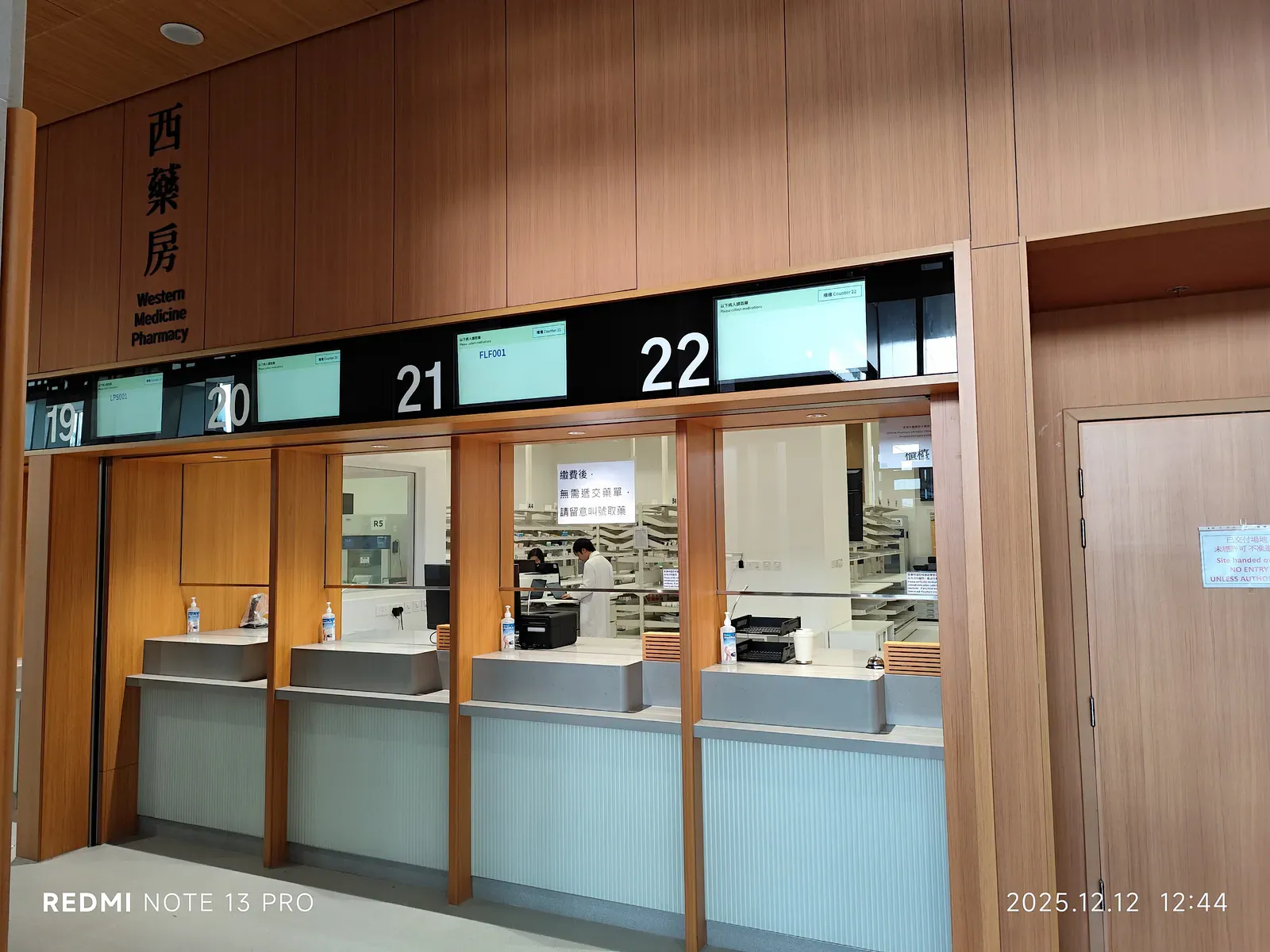
- Pharmacy access is broad: hospital pharmacies, large chain pharmacies and independent pharmacies are common across the city, and many everyday medications are available without the tighter prescription controls seen in some Western countries. That said, rules do vary by drug class, and a pharmacist is not a substitute for your treating doctor when it comes to an existing chronic condition: use the pharmacy for convenience and top-ups, not for changing a treatment plan.
- Bringing medication from home across a border is generally fine for personal use in reasonable quantities, but controlled substances and some prescription-only drugs can trigger customs or import questions; if you rely on a specific medication, it’s worth confirming its status before travel rather than discovering a problem at the airport.
Transport and accessibility
Bangkok’s international hospital cluster follows the transit network fairly closely, which matters for regular visits and for accessibility. A concentration of major private hospitals sits along the Sukhumvit BTS corridor, roughly through the Nana, Asok, Phrom Phong and Thong Lo stations, with another cluster around the Silom and Sathorn area served by the BTS Silom line and connecting MRT stations. Several large hospitals run their own shuttle services from the nearest station during the day, which is worth asking about rather than assuming a long walk in Bangkok heat and traffic.

Accessibility for older or mobility-limited patients is generally good at the larger private hospitals (lifts, step-free entrances and wheelchair loan are standard) but varies more at smaller clinics and older public-hospital buildings, so it’s worth asking directly if mobility is a concern rather than assuming. If you’re planning a longer stay in Bangkok built partly around ongoing medical care, it’s also worth reading the health insurance guide alongside this one, since insurance access and hospital choice are closely linked decisions.
Prices are not published in a comparable way
Thai hospitals do not generally publish a single, comparable price list the way a retailer might. A quoted figure for “a consultation” or “a procedure” varies by hospital, by doctor, by exact diagnosis and by what tests or follow-up are bundled in, and a number you read online (including anywhere on this site) should be treated as an indicative range for 2026 at best, not a quote. The only reliable price is one given in writing by the hospital after it has actually assessed your case. Ask for an itemised estimate before agreeing to any non-emergency procedure, and ask explicitly what is and isn’t included: room type, doctor’s fee, medication, follow-up visits and any lab work are often billed separately.
None of this is medical advice. This is general information about how Bangkok’s hospital system works; it doesn’t replace a consultation with a qualified clinician, and prices, availability and accreditation status should always be verified directly with the hospital before you act.
Common questions
Is a JCI-accredited hospital always better than a non-accredited one in Bangkok?
Not automatically. JCI accreditation confirms audited safety and quality systems hospital-wide, which is a genuine positive signal, but it doesn’t rank individual departments or doctors. A Thai HA-accredited hospital or a university hospital without JCI can still have an excellent department for your specific condition.
Can I choose which hospital an ambulance takes me to?
Usually not in a genuine emergency: the crew takes you to the nearest appropriate or dispatcher-assigned hospital. If your situation allows some choice, naming a hospital where you already have records can help, but safety and proximity take priority over preference.
Do Bangkok hospitals take walk-in patients?
Larger private hospitals generally do for general consultations, though a booked appointment is faster for a specialist. University and government hospitals rely more on scheduled queues and referral, with less English-language booking support.
How do I get a second opinion in Bangkok?
Book a consultation at a different hospital and bring copies of your existing records, scans and lab results. It’s routine practice in Thailand for significant diagnoses or before surgery, and hospitals don’t treat the request as unusual.
Will my regular hospital handle repeat prescriptions for a chronic condition?
Generally yes, but usually tied to periodic follow-up visits rather than an indefinite refill, and the exact renewal cycle varies by hospital and by medication. Ask your specific doctor how your prescription will be managed before you rely on it long-term.
What should I bring to a first hospital visit in Bangkok?
Your passport, any existing insurance card or policy details, a list of current medications by generic name, and copies of relevant medical records or recent scans if you have them. This speeds up both the consultation and any insurance guarantee-of-payment process if you need it.
Written by
Mike Brochlowski
Founder and editor, travel photographer and designer
I'm Mike Brochlowski, a travel photographer and designer, and I currently live on Koh Samui, Thailand. I built BangkokWiki to put practical, checked information about Bangkok in one place. Every page is researched from official and primary sources, and the text names them. Where a page shows a checked date, that is when its facts were last confirmed. I also run samui69.com, a non-commercial guide to Koh Samui. If you spot an error or something out of date, tell me through the contact page and I will check it and correct the page.
Read all articles
Medical stays
Planning treatment in Bangkok?
See dated price ranges for common procedures, what each package includes and how to choose a hospital or clinic. Prices are indicative only, and nothing here replaces advice from a clinician.

Places to stay
Find a hotel
Explore the other desks
More from Health
- 7 min read
 9 min read
Cancer Treatment in Bangkok: Get a Second Opinion First
 10 min read
Heart Surgery in Bangkok: Bypass vs Angioplasty Cost

Newsletter
You're subscribed as