Things to do
Free Things to Do in Bangkok
Parks, temples, riverside walks, markets and viewpoints that cost nothing to enter, plus what free actually costs in transport, heat and honesty about scams.
At a glance
- Reading time
- 10 min read
- Chapters
- 15
- Published
- Sep 20, 2026
On this page
Bangkok gives away more than most cities its size: public parks, the cross-river ferry, dozens of temples with no entry charge, and a street-market culture that’s worth watching even if you buy nothing. None of it is truly zero-cost (you’ll still pay for transport, water and the odd impulse buy), but the entry price on most of what follows is nothing.
This is a companion to 3 days in Bangkok, which covers the paid landmarks (Grand Palace, Wat Pho’s interior halls) that anchor a first visit. Use this list to fill the gaps around them, or to build an entire visit on a tight budget.
Parks, and what each is good for
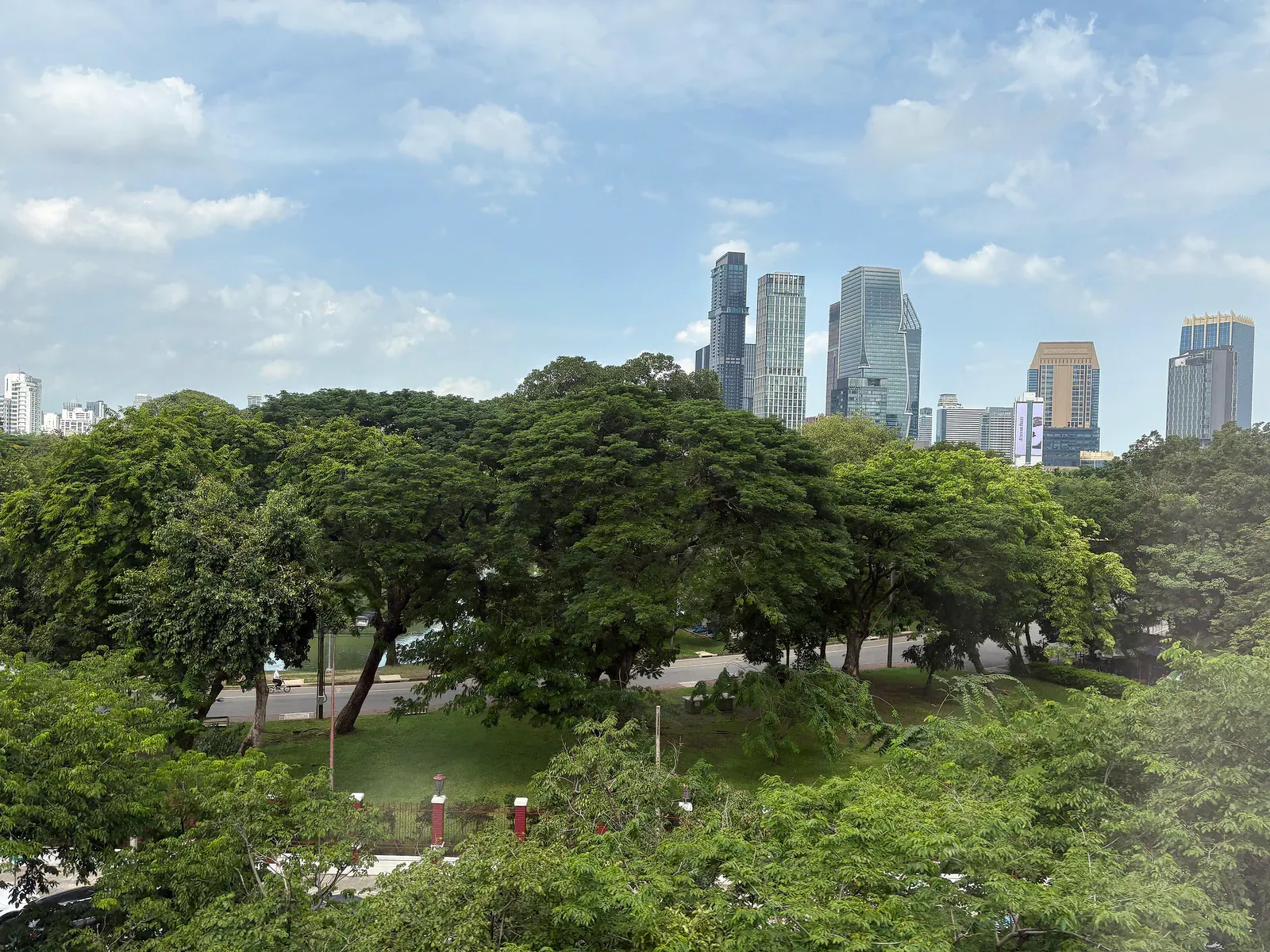
Lumphini Park (Lumphini or Silom MRT) is the closest thing Bangkok has to a signature park: a lake with paddle boats for hire, wide lawns, an outdoor gym area, and monitor lizards that patrol the water’s edge, genuinely startling the first time you see one. Early morning brings joggers, tai chi groups and the coolest air of the day; late afternoon brings families and a livelier, more social crowd. Midday is quiet because it’s simply too hot to enjoy the open lawns.
Benjakitti Park (Queen Sirikit National Convention Centre MRT) is newer and built around a boardwalk through restored wetland forest next to a lake, shadier in parts than Lumphini and a good spot for a slow walk rather than a workout.
Chatuchak Park and the Rot Fai Park cluster (Mo Chit BTS / Kamphaeng Phet MRT) sit right next to the weekend market, so they double well as a rest stop before or after Chatuchak, or as a green space on a non-market weekday when the stalls themselves are shut.
Benchakitti Forest Park and smaller pocket parks scattered through residential districts rarely make the highlight lists but are genuinely pleasant for anyone staying nearby: check what’s within walking distance of your hotel rather than always crossing town for the famous ones.
Temples with no entry charge
Not every Bangkok temple charges admission: that’s mostly a feature of the handful of major tourist sites, and most working neighbourhood temples are free to enter. A rough rule of thumb: temples that appear on every top-ten list and have ticket booths at the gate (the Grand Palace complex, and some others at busy times) charge; smaller neighbourhood wats, and several larger ones without a formal ticket booth, don’t. Wat Suthat, near the Giant Swing, and Wat Traimit (home of the Golden Buddha, though the Buddha hall itself sometimes carries a separate charge, check on arrival) are both worth checking directly rather than assuming. Dress code applies at every temple regardless of whether entry is free: shoulders and knees covered, shoes off inside halls.
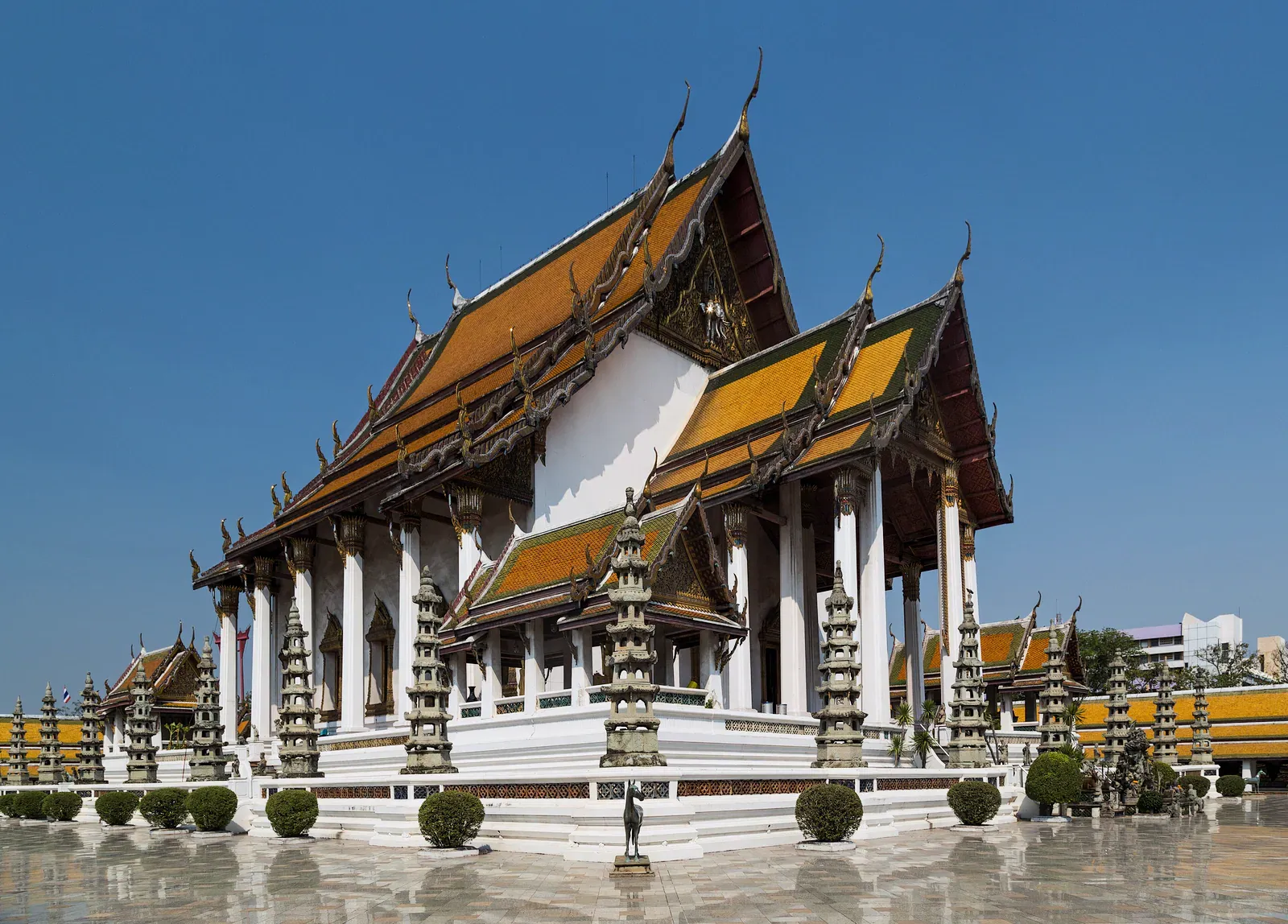
The safest approach if budget is the priority: pick two or three well-reviewed neighbourhood temples near where you’re staying rather than chasing the famous paid ones, and treat any temple that does charge as a deliberate, occasional splurge.
The riverside and the cheapest view in the city
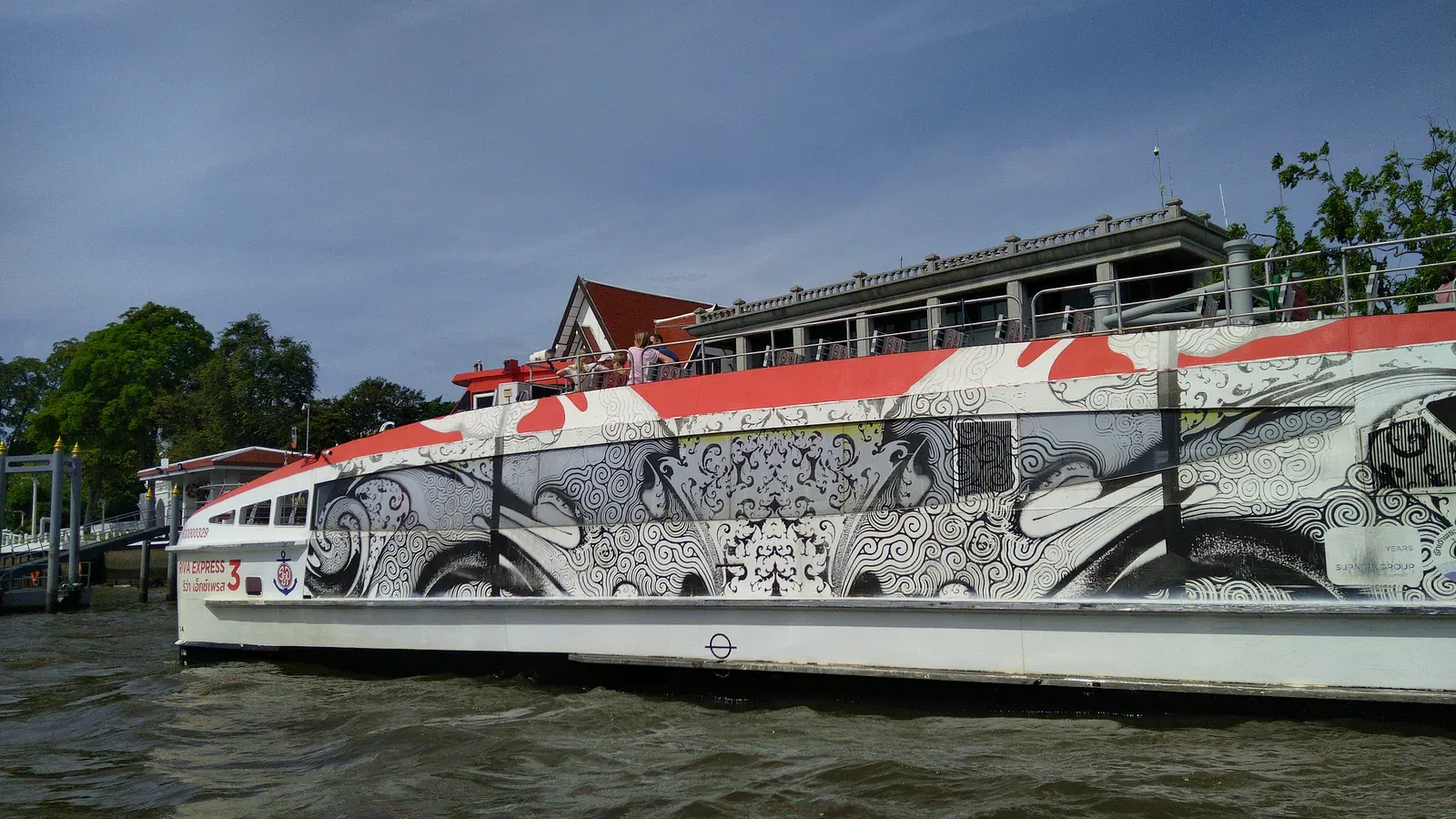
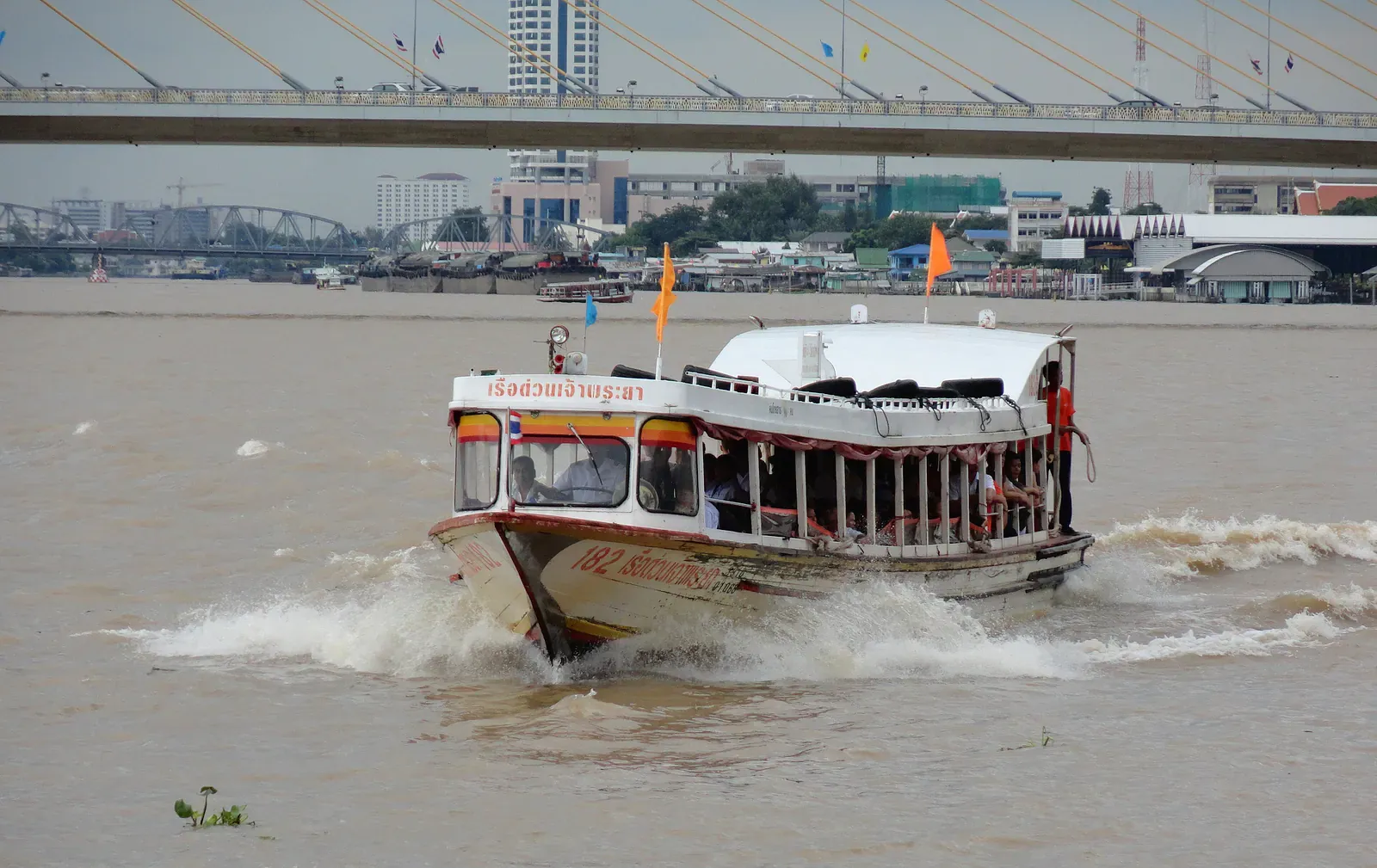
The Chao Phraya Express Boat and the various cross-river ferries are not free, but they are the cheapest sustained entertainment in Bangkok: a few baht for a ferry crossing, a low fare for a longer express-boat hop, and a view of the riverside skyline, temple spires and working boat traffic that a paid rooftop bar charges many times more to replicate at night. Ride one end to end with no particular destination and you’ve spent less than a coffee for what amounts to a moving viewpoint.
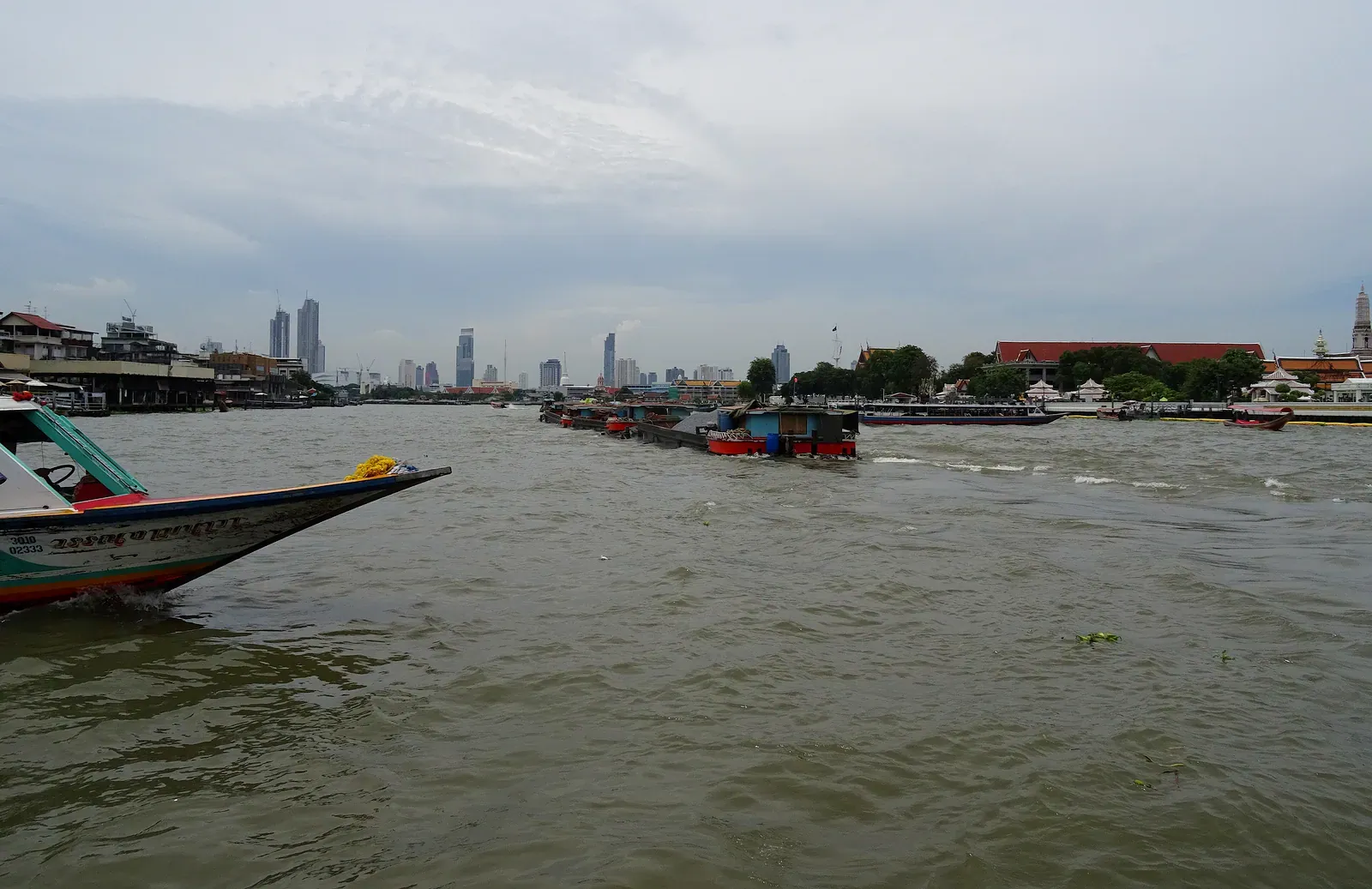
Riverside walking paths on both banks (through Tha Tien, past Wat Arun’s pier, and along the promenades near Charoen Krung and the newer riverside developments), cost nothing and are at their best in the early morning or after the sun drops, both for the light and for the heat.
Markets as a free spectacle
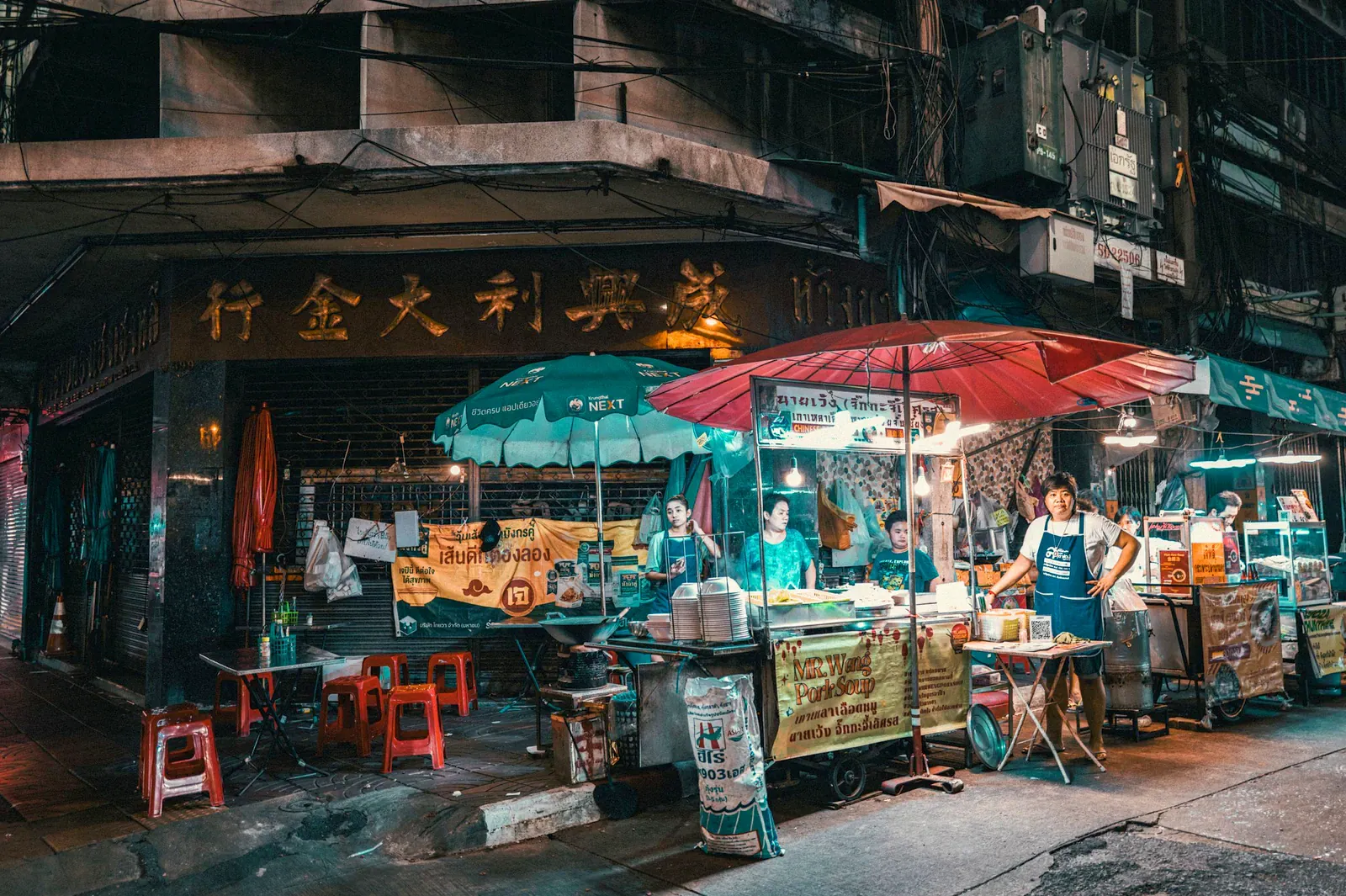
You don’t have to buy anything to get value from Bangkok’s markets. Chatuchak Weekend Market (weekends only) is worth wandering purely as a spectacle even on a zero-spend day: the sheer density and variety is the attraction in itself. Talad Rot Fai night markets and the stalls along Yaowarat Road in Chinatown work the same way after dark: browsing, smelling, watching the cooking is free, and the pressure to buy is lower than in a lot of tourist-market cultures. The one thing that isn’t free is the food, and the one thing worth budgeting for even on a free-things trip is a few small street-food purchases, because skipping them means missing most of what makes these markets worth visiting.
Art, culture and museums that don’t charge
Bangkok Art and Culture Centre (BACC), near National Stadium BTS, runs rotating exhibitions with no general admission charge, and its central atrium alone (a spiralling, gallery-lined space) is worth the visit. Several smaller independent galleries around the city, particularly in the Charoen Krung creative district, also run free shows; check current listings before you go since programming changes often. University galleries and cultural centres attached to the city’s larger universities sometimes open free exhibitions to the public: again, worth checking rather than assuming.
Free viewpoints: public floors and skywalks
Several shopping malls and mixed-use towers have public observation floors, sky-bridges or terrace areas that are free to access even if you don’t spend a baht inside: the trade-off is that these change without much notice as buildings alter their public-access policies, so treat any specific free-viewpoint recommendation as something to verify on the day rather than rely on from an old article. The BTS and MRT elevated platforms themselves offer a decent elevated city view at several stations, essentially free with your fare. Pedestrian skywalks connecting BTS stations to nearby malls (around Siam and Asok in particular) are worth walking rather than taking the direct route, for the street-level view down onto the traffic and market stalls below.
Festivals and street events (season-dependent)
Bangkok’s calendar includes several free public festivals and events through the year (river-based light festivals, temple fairs, and neighbourhood street events), but timing and scale vary year to year and many depend on the lunar calendar, so a specific date printed in an old article is not reliable. Check what’s running during your actual travel dates rather than planning around a remembered festival name. Songkran, the Thai New Year water festival in April, is the best-known example and turns entire streets into free, public water fights: glorious if you’re dressed for it, disruptive if you’re not expecting it. For what is on right now, see our Bangkok events this week guide.
Canal and neighbourhood walks
Beyond the express boat, a slow walk along Thonburi’s smaller canals (khlongs), reached by a short ferry hop across the river, shows stilt houses and small canal-side temples with no entry cost beyond the ferry fare. Talat Noi, a small riverside neighbourhood near Chinatown known for its street art and old machine-shop alleys, rewards an unhurried wander with a camera and costs nothing beyond the walk itself. Residential sois in areas like Ari or around Ban Krua (near Jim Thompson House) offer the same low-key reward: no ticket booth, just a genuinely different texture of the city than the main tourist strips.
University and community spaces
Chulalongkorn University’s central campus, walkable from Siam, has open green space and architecture worth a short detour. Several universities host free public talks, film screenings or exhibitions open to outsiders: check current listings if that interests you. Public libraries in Bangkok are limited compared with some cities, but the ones that exist are free to enter and often air-conditioned, which counts for something on a hot afternoon.
The big exceptions: library and museum days
A handful of Bangkok’s national museums and cultural sites run occasional free-admission days or reduced rates for specific groups (students, seniors, Thai nationals), policies that change and are easy to get wrong from an old source, so check the official site for the specific museum before planning a visit around a “free day” you read somewhere. Don’t build an itinerary around an assumed free day without confirming it applies to your visit.
What “free” actually costs
Being honest about this matters more than the list above. Every free activity in this article still costs something in practice:
- Transport. BTS, MRT, boat and ferry fares add up across a day of hopping between free sights, even if each single fare is low.
- Heat. A “free” afternoon spent walking outdoors in the sun costs you in fatigue and, realistically, in the cold drinks and shade breaks you’ll end up paying for.
- The inevitable small purchase. A market you browse for free will still pull you in for a snack, a drink or a trinket, and that’s fine: it’s part of the experience, just budget for it rather than pretending a market day will be truly zero-spend.
Genuinely cheap, not free: a ฿ scale
For anyone building a tight-budget day around this list, here’s roughly where the next tier up sits, all indicative for 2026:
- ฿ (street level): a single street-food dish, a bottle of water, a ferry crossing: each typically in the low tens of baht (roughly under US$1-2).
- ฿฿ (market and casual): a full market meal from several stalls, a short taxi or ride-hailing trip, a coworking day pass: typically in the moderate tens to low hundreds of baht (roughly US$3-10).
- ฿฿฿ (attractions and paid entry): a paid temple or museum ticket, a rooftop bar drink, a guided tour: from around a hundred baht up into the low thousands for the priciest single-ticket items (roughly US$5-50-plus). Always check the official current price before you go; these move.
Scams that target people looking for free things
The classic version: someone near a major temple tells you it’s “closed today for a Buddhist holiday” or “closed for cleaning,” then offers to take you somewhere else: usually a gem shop, a tailor, or a tour that ends in a commission-paying stop. Temples are very rarely actually closed to visitors during normal hours, and the redirect is a well-known routine specifically because tourists looking for free or low-cost sights are the target audience. If you’re told a free, well-known temple is closed, verify at the gate yourself or with an official source before believing a stranger, and treat an unsolicited tuk-tuk offer at a suspiciously low price as a sign you’re being steered toward a commission stop, not a bargain.
A milder version targets the free-viewpoint idea specifically: someone directs you to a “better, free rooftop” that turns out to be a paid venue with an aggressive minimum spend once you’re seated. Check a viewpoint’s actual access policy yourself rather than following a stranger’s tip on the street.
Weekly rhythm: what’s free on which day
| Day | Notable free or near-free options |
|---|---|
| Monday | Neighbourhood temples, parks, BACC exhibitions (check current opening days) |
| Tuesday | Same as Monday; some museums close on Mondays or Tuesdays: verify before a special trip |
| Wednesday | Parks, riverside walks, Talat Noi wandering |
| Thursday | Same as midweek; good day for a quiet park visit before weekend crowds |
| Friday | Evening street-food markets pick up; good night for a free riverside walk after dark |
| Saturday | Chatuchak Weekend Market opens; parks busiest with local families |
| Sunday | Chatuchak still running; some streets around Chinatown and old town see closures for pedestrian events: check locally |
Museum and gallery closing days vary by venue and change over time, so this table is a rhythm, not a schedule: confirm specifics for any single venue before building a day around it.
Common questions
Is Bangkok expensive for tourists?
It doesn’t have to be. Transport, street food and free sights (parks, temples, riverside walks) can carry an entire budget day, with spending concentrated on the handful of paid landmarks you actually choose to prioritise.
Are all Bangkok temples free to enter?
No. Most neighbourhood temples are free; the handful of major tourist sites with ticket booths, most notably inside the Grand Palace complex, charge admission. When in doubt, check on arrival rather than assuming either way.
What’s the cheapest way to see the river?
The cross-river ferries and the Chao Phraya Express Boat, both at low, indicative fares for 2026: far cheaper than a dinner cruise or a private boat charter, and arguably a better view of daily river life.
Is Chatuchak Market free to enter?
Yes, entry itself is free; you only pay for what you buy. It only runs at full scale on Saturdays and Sundays.
How do I avoid the “temple is closed” scam?
Treat any unsolicited claim that a well-known temple is closed with suspicion, especially from someone offering an alternative on the spot. Verify at the gate or with an official source, and remember that a genuinely low-priced tuk-tuk offer is usually a sign you’re being routed to a commission stop.
Can I spend an entire day in Bangkok for free?
Close to it. A morning temple walk, a park in the afternoon, and a market browse in the evening can be done for little more than transport fares and a few small food purchases: genuinely free entry throughout, with spending limited to getting around and eating.
Written by
Mike Brochlowski
Founder and editor, travel photographer and designer
I'm Mike Brochlowski, a travel photographer and designer, and I currently live on Koh Samui, Thailand. I built BangkokWiki to put practical, checked information about Bangkok in one place. Every page is researched from official and primary sources, and the text names them. Where a page shows a checked date, that is when its facts were last confirmed. I also run samui69.com, a non-commercial guide to Koh Samui. If you spot an error or something out of date, tell me through the contact page and I will check it and correct the page.
Read all articles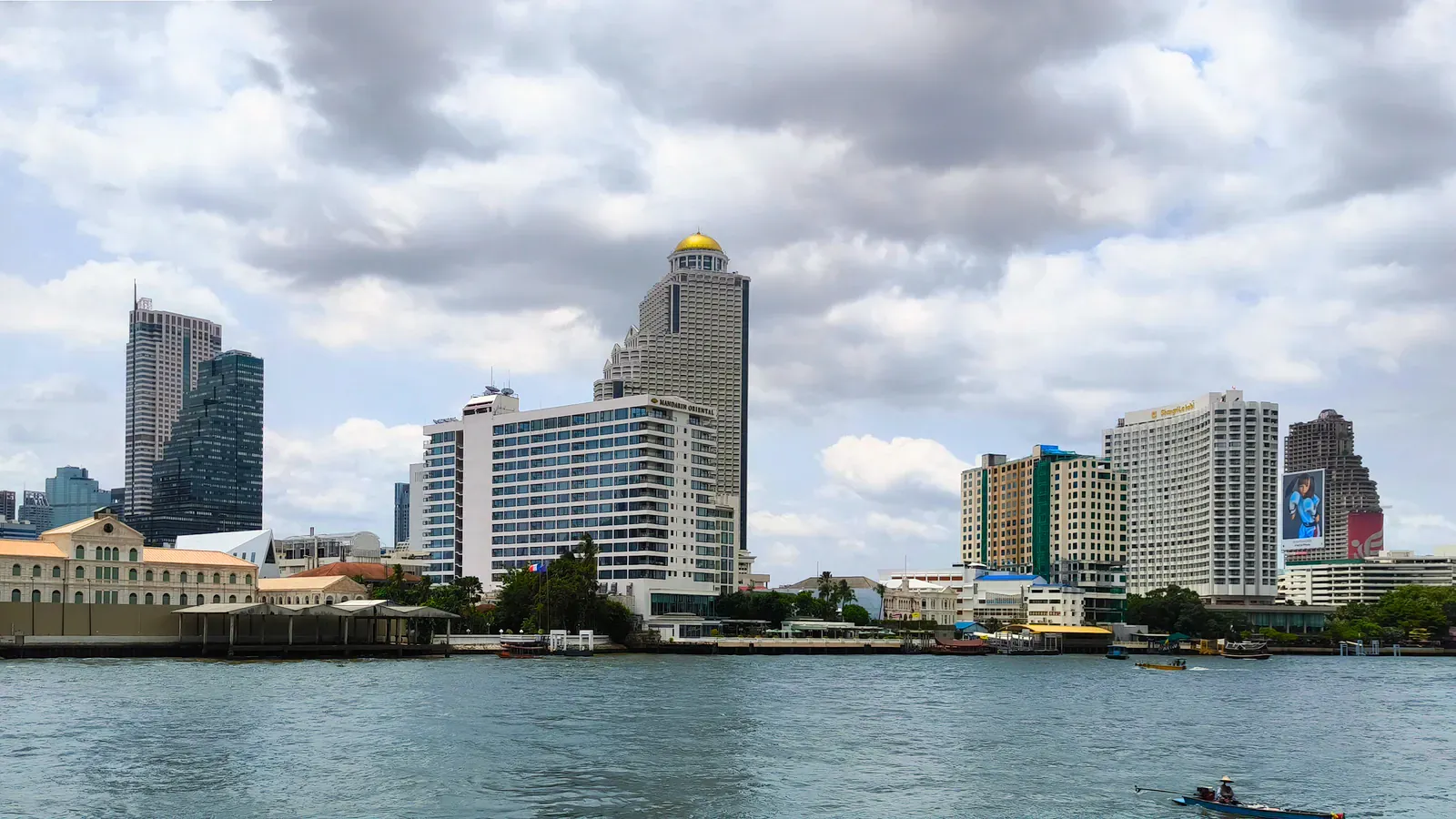
Where to stay
Pick the area before the hotel
Traffic and heat make Bangkok distances feel longer than they look on a map, so the area shapes a trip more than the hotel does. Our guides match areas to trip types and explain the trade-offs.

Places to stay
Find a hotel
More from Things to do
- 10 min read
 9 min read
Bangkok Must-Do Experiences, Scored by Time, Cost, Crowd
 7 min read
Budget Things to Do in Bangkok: What Actually Costs Money

Newsletter
You're subscribed as