Things to do
Kanchanaburi Day Trip From Bangkok Guide
Planning a Kanchanaburi day trip: the Death Railway history, the bridge on the River Kwai, Erawan waterfalls, transport options and whether one day is enough.
At a glance
- Reading time
- 12 min read
- Chapters
- 14
- Published
- Sep 20, 2026
On this page
Kanchanaburi sits roughly 130km west of Bangkok, far enough that a day trip means a genuinely long day, not a relaxed outing. It holds two very different reasons to visit (a heavy, important piece of Second World War history along the Death Railway, and the Erawan waterfalls in the national park beyond), and trying to do both properly in a single day usually means doing neither one well.
What’s actually there
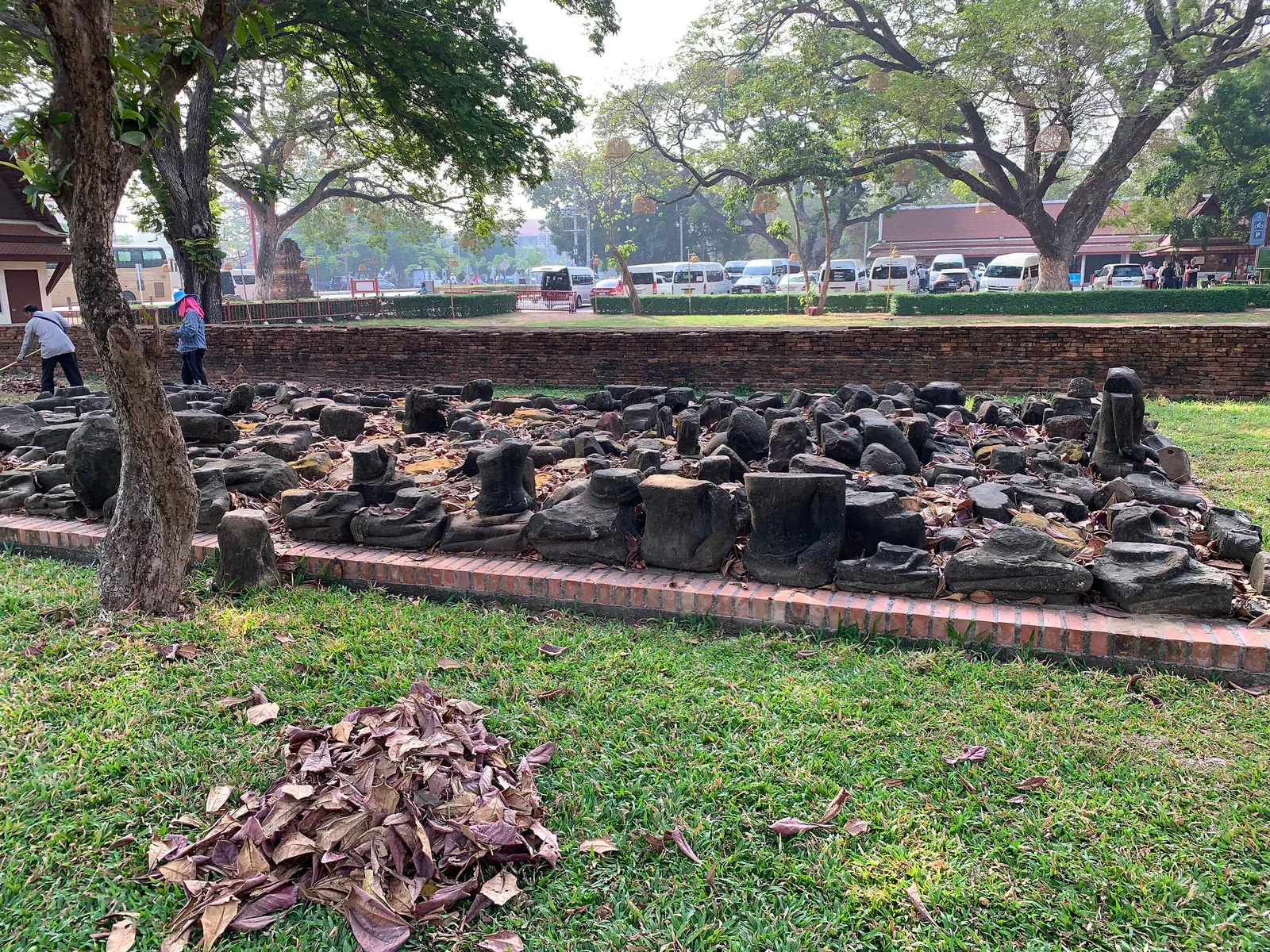
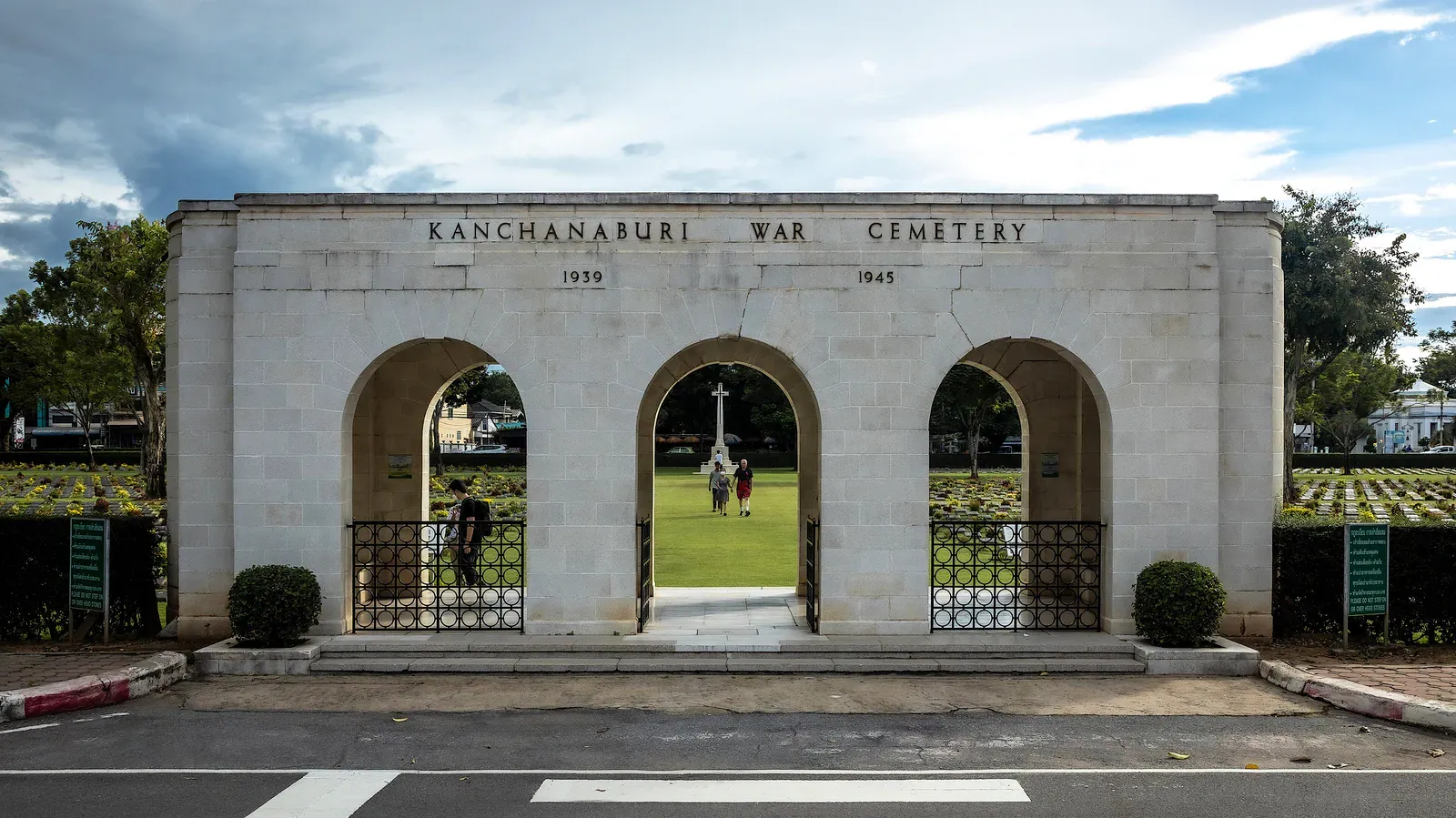
The bridge over the River Kwai and the Death Railway running north from it are the historical core: a rail line built by the Japanese military during the Second World War to supply troops in Burma, running along a route the British had earlier judged too difficult to build. The war cemeteries, chiefly the Kanchanaburi War Cemetery near the town centre, hold the graves of Allied prisoners of war who died building the line, row after row of identical markers in a maintained, quiet garden setting that gives a clearer sense of scale than any single number could. The museums (most notably the Thailand-Burma Railway Centre and the older JEATH War Museum) each take a different angle on the same history, one built around meticulous historical research and interactive displays, the other more raw and improvised, closer to a memorial assembled by those who lived through it.
Beyond the railway history, Erawan National Park holds a multi-tiered waterfall that’s one of the most photographed natural sites within reach of Bangkok, alongside a river with raft houses for those extending the trip overnight, and caves and viewpoints further into the park for anyone with more time.
The history, treated properly
The Death Railway, more formally the Burma Railway, was built between 1942 and 1943 to move Japanese military supplies between Thailand and Burma, bypassing the sea route that Allied forces controlled. It was built under brutal forced-labour conditions by Allied prisoners of war (British, Australian, Dutch and American chiefly) alongside a considerably larger number of conscripted Asian labourers, drawn from Malaya, Burma, Thailand, Vietnam and the Dutch East Indies, working under similar or worse conditions with far less documentation of their fate. Disease, starvation, exhaustion and brutal treatment killed workers on a scale generally described as in the tens of thousands among the POWs alone and considerably higher again among the Asian labourers, whose exact numbers were never as carefully recorded. Treat any specific casualty figure you read with some caution (historians differ on the totals for the Asian labour force in particular) but the scale, in general terms, was catastrophic on both sides of that divide.
This matters for how you visit. The bridge, the cemeteries and the railway line are a memorial to that history first and a tourist attraction a distant second. Photographs at the cemeteries should be taken with the same restraint you’d bring to any war grave; loud or performative behaviour at the bridge itself, while common among the crowds who visit for the photo opportunity, sits uncomfortably against what the site actually represents.
Getting there: comparing the options
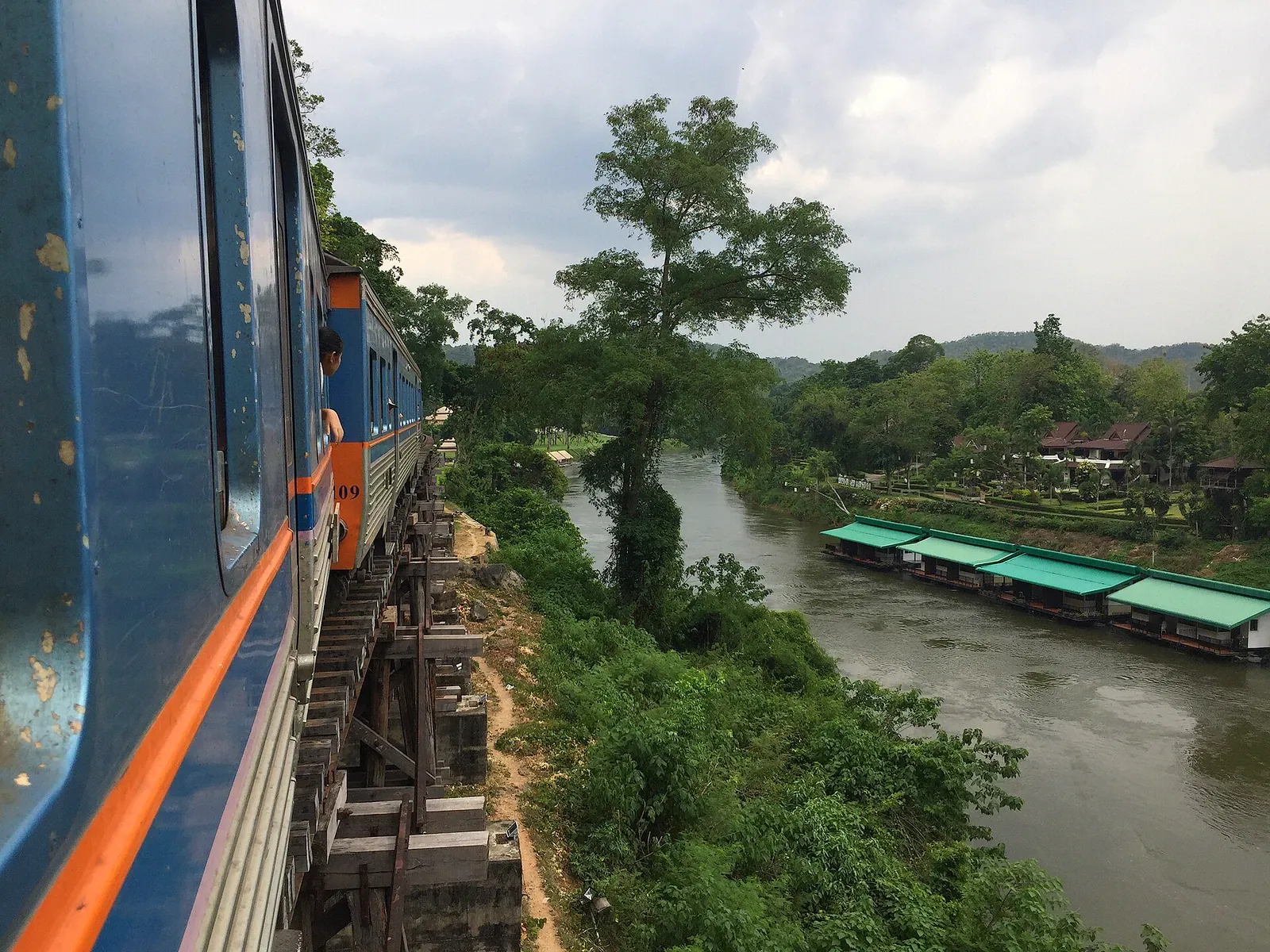
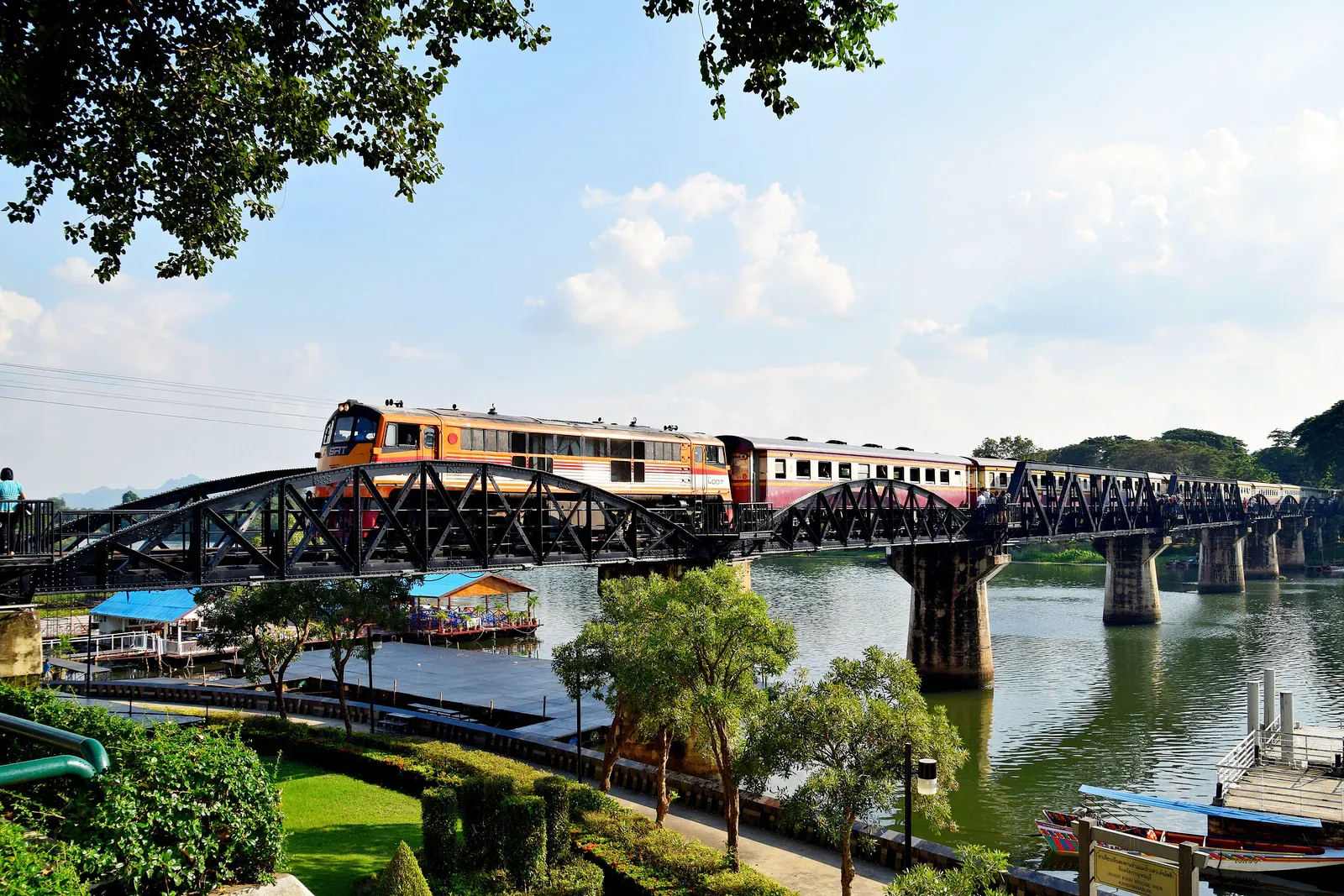
The train runs from Thonburi Station, a smaller terminus on the river’s west bank rather than Bangkok’s main stations, and it’s the single most atmospheric way to make the trip: a slow, ordinary-class ride that eventually crosses the actual bridge over the River Kwai before continuing along a dramatic cliffside viaduct further north, timber trestles built directly into the rock face above the river, with the better views from the left-hand side of the carriage heading out. It’s also the slowest option by a wide margin and runs on a limited daily schedule, which constrains how a self-organised day around it can be built.
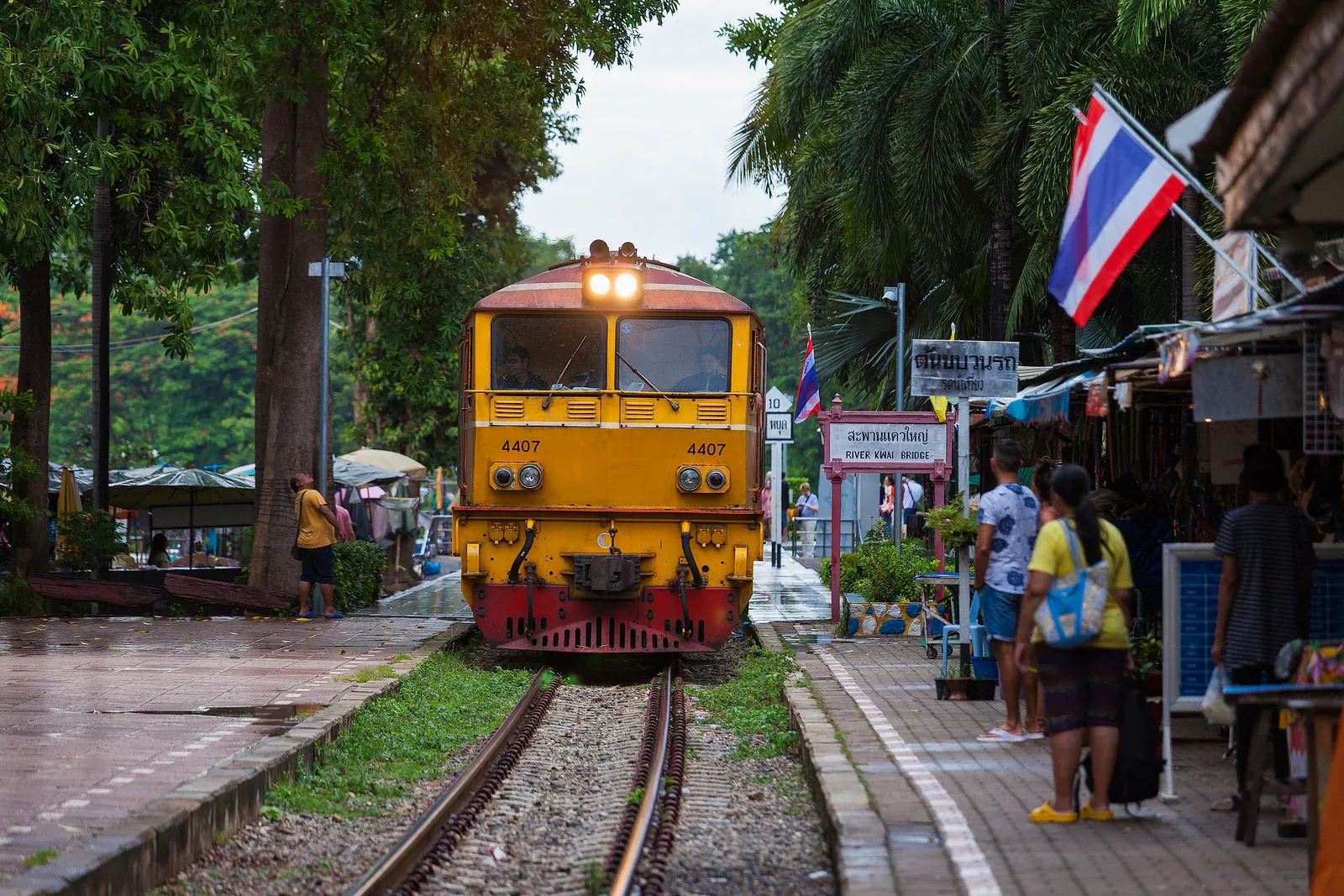
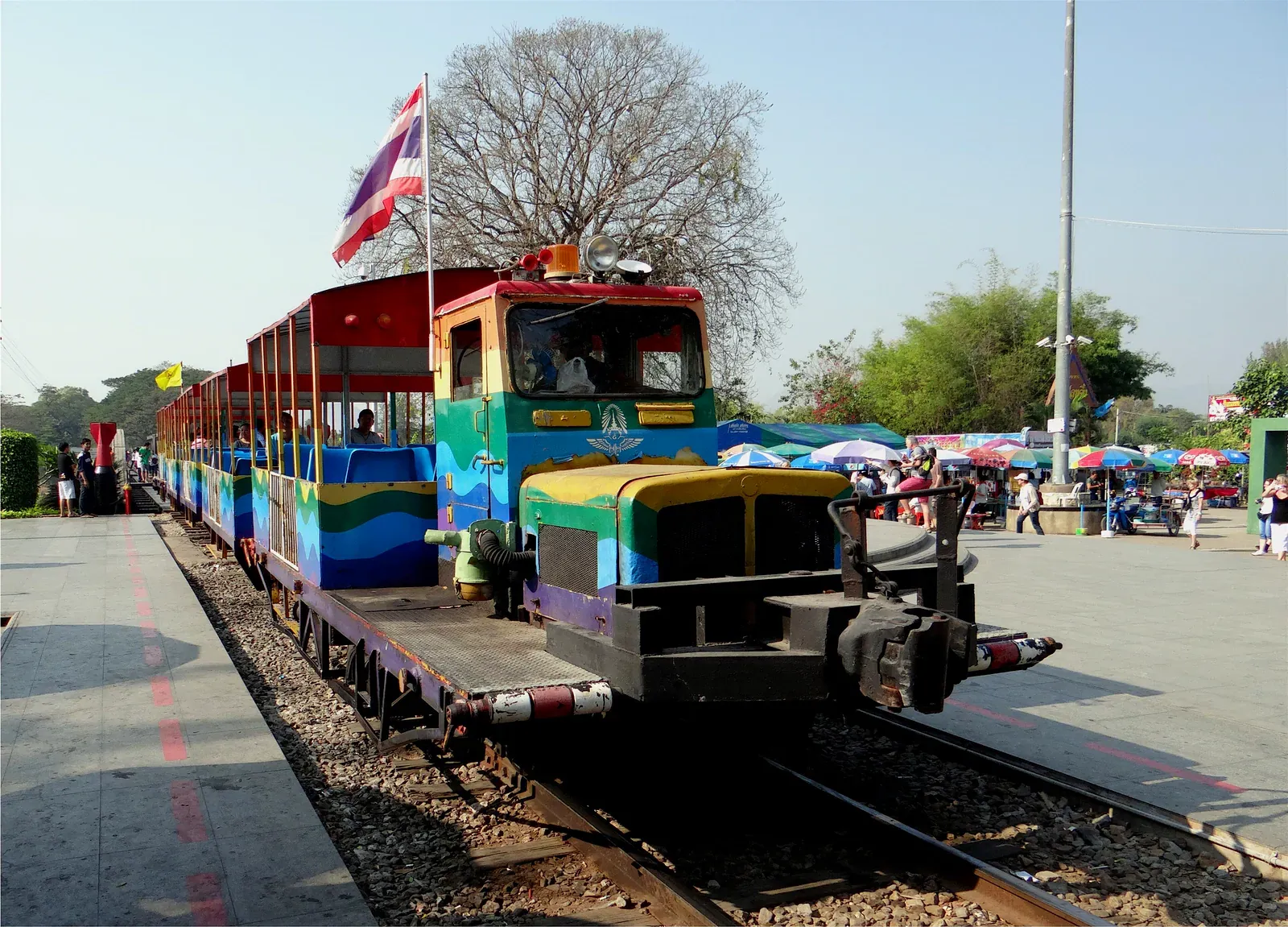
Minivans leave from various depots around Bangkok and cover the distance considerably faster along the motorway, dropping at central Kanchanaburi from where local transport reaches the bridge and, with more effort, the falls. A private car or driver for the day removes the connection problem entirely and is close to necessary if the waterfalls are on the itinerary, since Erawan National Park sits a further hour or so beyond the town itself with no direct rail service. Organised tours bundle the whole day (transport, entrance fees at the sites they visit and usually lunch) into one price and one fixed itinerary, and given the distance and the number of separate sites involved, this is one of the day trips from Bangkok where an organised tour earns its cost most clearly, more so than for a shorter run like the Ayutthaya day trip or a coastal outing (see the beaches near Bangkok guide).
| Option | Cost band (2026, indicative) | Journey time (one way) | Reaches the falls easily? | Notes |
|---|---|---|---|---|
| Train (Thonburi Station) | ฿100 flat fare region (~US$3) | 2.5-3 hours to Kanchanaburi/River Kwai Bridge station | No | Limited daily departures, scenic viaduct section |
| Minivan | ฿120-180 (~US$3.50-5) | 2-2.5 hours | Only with a further local connection | Fixed depot departures |
| Private car/driver, full day | ฿2,500-4,500+ (~US$70-130) | 2-2.5 hours | Yes | Only realistic self-organised way to cover both bridge and falls |
| Organised tour | ฿1,500-3,500+ (~US$45-100) per person | 2-2.5 hours | Depends on itinerary: check before booking | Fixed pace, often covers both in one long day |
The distance is the honest headline: at roughly 130km each way, a self-driven or minivan day trip spends a meaningful chunk of the day simply getting there and back, before any site visits begin.
Two realistic plans, not one crowded one
The history-focused day covers the bridge, a walk along the accessible section of track, one of the two museums, and the war cemetery, with time built in to actually read the displays rather than rush past them. This fits comfortably into a day trip by train or car without feeling compressed.
The waterfall day covers Erawan National Park properly (the tiered climb, time to swim at the pools that allow it, and the walk back down), which on its own fills most of a day once travel time from Bangkok is accounted for.
Trying to do both in one day means doing neither well. The travel time between the bridge area and Erawan National Park, on top of the roughly 2.5-hour trip out from Bangkok and back, leaves an uncomfortably short window at each site if you insist on seeing everything. If both matter to you, the honest recommendation is an overnight stay in Kanchanaburi town, splitting the history and the waterfall across two calmer days rather than one exhausting one: raft-house and riverside accommodation near the bridge area is plentiful and inexpensive enough to make this an easy upgrade rather than a big extra commitment.
The waterfall in practice
Erawan’s waterfall climbs in tiers up a forested hillside, each pool reachable by a marked trail that gets progressively steeper and rougher toward the upper levels: the lower two or three tiers are an easy walk suitable for most fitness levels, while the higher tiers involve scrambling over wet rock and tree roots that punishes flip-flops badly. Proper closed-toe sandals or trainers with grip make a real difference; plenty of visitors turn back partway up simply because their footwear can’t handle the wet rock.
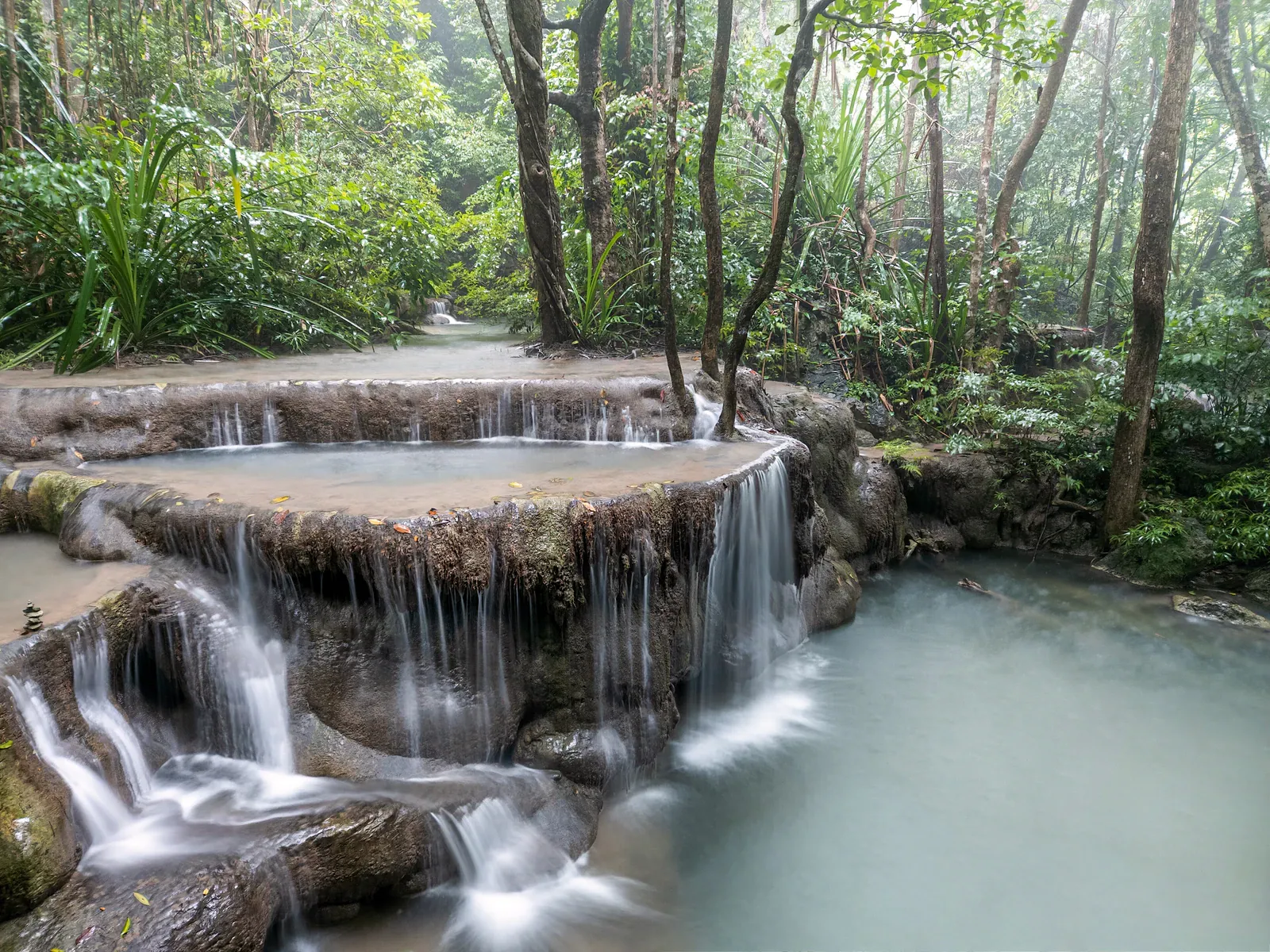
Swimming is allowed in most of the pools and is genuinely one of the best reasons to make the trip: clear, cool water in a genuinely beautiful setting. Expect small fish in several of the pools that will nibble at your skin, a harmless and slightly ticklish natural exfoliation rather than anything to worry about, though it startles first-timers reliably. Water levels and flow vary seasonally: the falls run fuller and more dramatic in the second half of the rainy season, roughly August to October, and can thin out considerably toward the end of the dry season in April, occasionally to the point where the upper tiers are less impressive. Check recent conditions if the waterfall itself is the whole point of your visit.
Park entrance operates on its own fee structure, generally charged once at the gate, with the specific figure best confirmed on the day rather than assumed from anything printed in advance: these do get revised, and 2026 rates should be treated as indicative until confirmed.
Hellfire Pass, for those with more time
Further north along the old railway route, well beyond the bridge and the section still in service, Hellfire Pass marks one of the most brutal cuttings on the entire line: a deep rock cutting dug largely by hand under conditions that gave the site its name among the prisoners who worked it. A memorial museum and a walking trail along part of the original trackbed sit at the site today, run with a genuinely sombre, well-researched tone. It’s too far from Bangkok to add onto a standard day trip alongside the bridge and Erawan, but worth knowing about for anyone extending their Kanchanaburi visit to two days or specifically prioritising the railway’s history over the waterfalls.
Weather, seasons and what to pack
The rainy season, roughly June through October, is when Erawan’s waterfall runs fullest and most dramatic, at the cost of occasional sudden downpours that can interrupt an outdoor day; the dry season’s tail end, around March to May, brings the thinnest water flow and the most punishing heat for the railway and cemetery portion of the trip. The cool season, November through February, is the most comfortable all-round window for combining outdoor walking with the waterfall climb. Whatever the season, pack closed-toe water shoes or trainers with grip for Erawan, a swimsuit under your clothes to avoid changing in the open, a dry bag or plastic bag for phones and wallets near the pools, sun protection, and cash in small notes, since park entrance and small vendor stalls near the falls and the bridge rarely take cards.
Respectful visiting at the cemeteries and bridge
The Kanchanaburi War Cemetery is maintained to a formal, garden-like standard, and visiting is free and unticketed. Keep voices low, stay on the paths between the grave markers, and treat it as you would any war memorial rather than a photo backdrop. At the bridge itself, foot traffic mixes with the (very occasional) actual train crossing, so watch for signage about when to clear the track rather than assuming pedestrians always have priority.
What the museums do differently
The Thailand-Burma Railway Centre takes a research-driven, exhibition-style approach, with detailed interactive displays covering the planning, construction and human cost of the railway, generally considered the more historically rigorous of the two and the better starting point if you’re only visiting one. The older JEATH War Museum, built partly from reconstructed prisoner huts, has a rougher, more personal feel (closer to a memorial assembled from artefacts and testimony than a curated exhibition) and rewards visitors who’ve already read the broader context elsewhere. Visiting both, if time allows, gives a genuinely fuller picture than either alone.
Should you book an organised tour?
For Kanchanaburi specifically, often yes, more so than for closer day trips like Ayutthaya. The distance, the spread of sites, and the awkward transport link to Erawan National Park mean an organised tour solves several real logistical problems at once rather than just adding convenience. Before booking one, check exactly which sites are included and for how long at each: some itineraries pack in the bridge, both museums, the cemetery and the falls in a single day, which risks the same “doing everything badly” problem as planning it yourself, just with someone else driving. Ask specifically how much time is allocated at Erawan, since a rushed 45 minutes there barely reaches the second tier. Check whether lunch and park entrance fees are included in the quoted price or added on top, and avoid any itinerary that treats the war cemetery as a five-minute photo stop rather than the memorial it is.
If animal attractions are on your list, read our tiger parks and elephant sanctuaries guide first.
What to expect at the bridge itself
The bridge that draws most day-trippers is a rebuilt structure (the original spans were destroyed by Allied bombing late in the war and later reconstructed) and it now carries both a still-functioning rail line and a pedestrian walkway alongside it, with small platforms at intervals where visitors can step aside as a train passes. It’s smaller and less dramatic in person than the name’s fame suggests, closer in scale to a modest river crossing than a monumental structure, and first-time visitors sometimes find that surprising. The surrounding area has grown into a small tourist strip of stalls, boat-ride touts and photo opportunities that sits oddly against the bridge’s actual history, which is worth being mentally prepared for rather than expecting a purely solemn site throughout.
A note on staying overnight
Kanchanaburi’s raft houses and riverside guesthouses near the bridge are inexpensive relative to Bangkok and turn a rushed single day into a genuinely relaxed two. If the waterfall, the history and a proper look at the river all matter to you, one night removes the core problem this whole day trip has: not enough hours for everything worth seeing.
Getting between the bridge area and Erawan National Park
This is the connection that makes a self-organised combined day genuinely difficult. There’s no direct train or fixed public bus running between the bridge/town area and the national park entrance; the practical options are a private car or driver continuing on for the day, a taxi or shared songthaew arranged locally, which takes some negotiation and isn’t always readily available at short notice, or joining a tour that already covers both. Anyone arriving by train or minivan without a pre-arranged onward connection should expect to spend real time and effort simply working out how to reach the falls, time that eats directly into however many hours are left in the day. This single logistics gap is the strongest practical argument for either booking a private driver for the whole day from Bangkok or accepting that the bridge and the falls belong on separate visits.
Common questions
Is Kanchanaburi better than Ayutthaya as a day trip?
They’re different trips. Ayutthaya is closer, quicker and easier to do properly in a single day; Kanchanaburi is heavier in subject matter, further away and better suited to an overnight stay if you want to see both the history and the waterfalls without rushing.
How far is Kanchanaburi from Bangkok?
Roughly 130km, translating to a journey of around 2 to 3 hours depending on transport: considerably longer by the scenic train than by road, and longer again if traffic near Bangkok is heavy at the start or end of the day.
Can I visit the bridge and Erawan waterfalls in one day?
You can attempt it, but expect a rushed, tiring day with limited time at each site. The distance between the bridge area and the national park, on top of the round trip from Bangkok, is the real constraint. An overnight stay is the better answer if both genuinely matter to you.
Is the Death Railway train ride worth doing?
Yes, particularly the stretch along the cliffside viaduct north of the bridge, which is one of the more dramatic short rail journeys accessible from Bangkok. It’s slow and runs on a limited schedule, so it suits travellers prioritising the experience over speed.
How many people died building the Death Railway?
The death toll was catastrophic on both sides: a substantial number of Allied prisoners of war, generally described in the tens of thousands, and a considerably larger, less precisely documented number of conscripted Asian labourers. Treat any single exact figure with caution, since historical estimates for the Asian labour force in particular vary.
Do I need shoes for the waterfall climb?
Closed-toe sandals or trainers with real grip, not flip-flops. The lower tiers are an easy walk, but the upper tiers involve wet rock and tree roots that punish poor footwear, and a fall on slick stone is the main injury risk in the park.
Is an organised tour better than doing Kanchanaburi independently?
For most visitors, yes, given the distance and the number of separate sites involved. Check what’s actually included (sites visited, time allotted at each, whether fees and lunch are covered) before booking, since not all itineraries handle the pacing well.
Written by
Mike Brochlowski
Founder and editor, travel photographer and designer
I'm Mike Brochlowski, a travel photographer and designer, and I currently live on Koh Samui, Thailand. I built BangkokWiki to put practical, checked information about Bangkok in one place. Every page is researched from official and primary sources, and the text names them. Where a page shows a checked date, that is when its facts were last confirmed. I also run samui69.com, a non-commercial guide to Koh Samui. If you spot an error or something out of date, tell me through the contact page and I will check it and correct the page.
Read all articles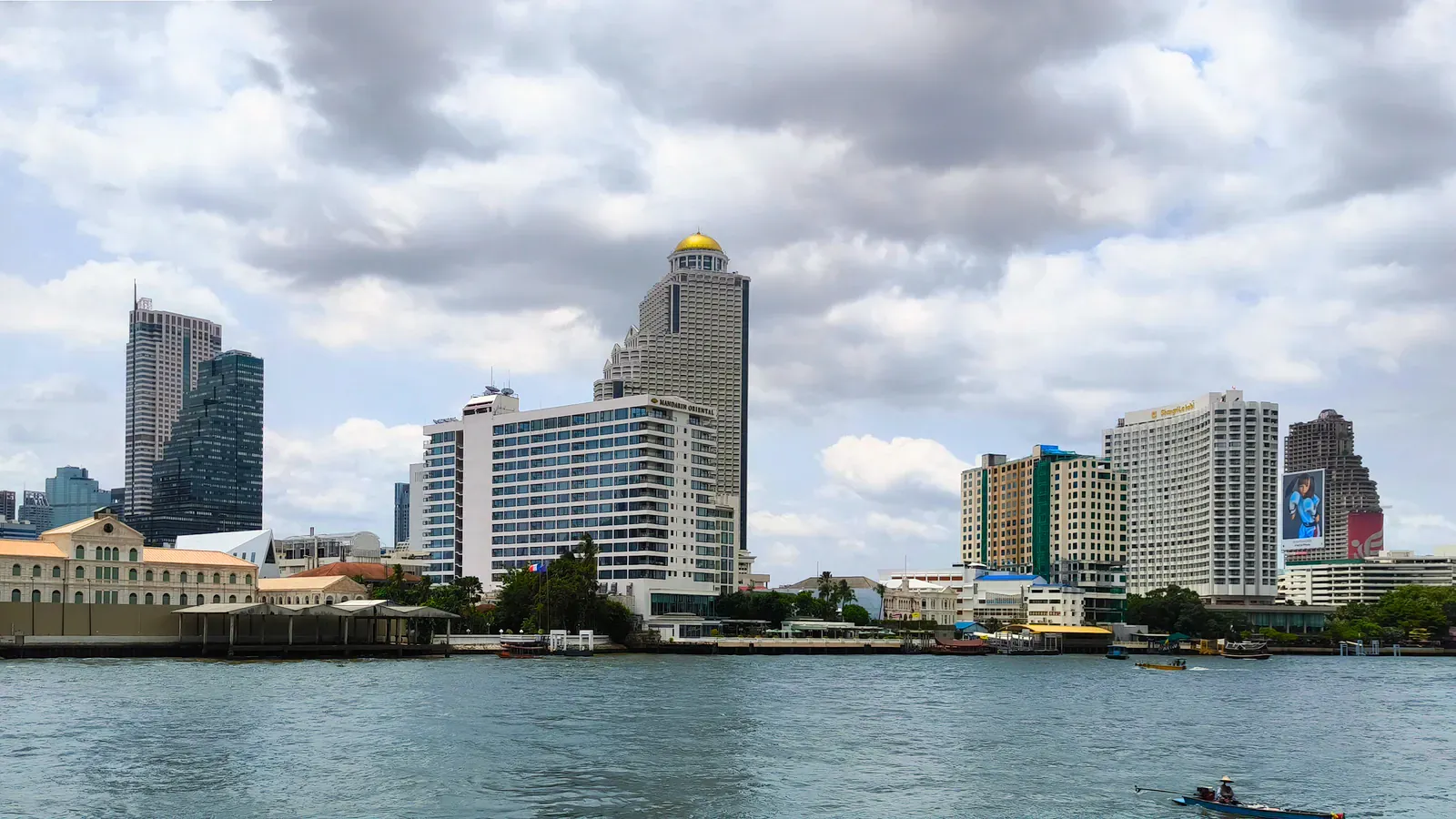
Where to stay
Pick the area before the hotel
Traffic and heat make Bangkok distances feel longer than they look on a map, so the area shapes a trip more than the hotel does. Our guides match areas to trip types and explain the trade-offs.

Places to stay
Find a hotel
More from Things to do
- 13 min read
 12 min read
Beaches Near Bangkok: The Honest Guide
 9 min read
Bangkok Must-Do Experiences, Scored by Time, Cost, Crowd

Newsletter
You're subscribed as