Travel
Bangkok by Season: What Actually Suits Hot, Rainy and Cool
What to actually do in Bangkok's cool, hot and rainy seasons, matched to the weather, crowds and prices of each, not just when to book.
At a glance
- Reading time
- 10 min read
- Chapters
- 10
- Published
- Oct 5, 2026
On this page
Cool season is the postcard answer and it’s not wrong, but it’s incomplete: it’s also the most crowded, priciest and haziest stretch of Bangkok’s year. Rainy season is cheaper and quieter than either alternative, and it rewards a plan built around indoor and covered spaces instead of fighting the afternoon downpour. Hot season is genuinely brutal at midday and genuinely unmissable for one specific week. None of Bangkok’s three seasons is simply “better”; each rewards a different kind of day.
This page matches season to activity, not season to temperature chart, that detail lives at Best Time to Visit Bangkok. For the rainy season’s full indoor game plan, see Bangkok rainy day activities; for the cool season’s specific month, see Bangkok in December.
The three-season shortcut
| Season | Roughly | Heat | Rain | Crowds and price | Best for |
|---|---|---|---|---|---|
| Cool | Nov-Feb | Mildest, still warm by most standards | Minimal | Highest of the year | First-time sightseeing, walking, rooftop time |
| Hot | Mar-May | Peaks in April-May | Low until late May | High around Songkran, then quiet | Songkran itself, indoor/pool-heavy days |
| Rainy | May-Oct | Warm, humid | Frequent afternoon downpours | Lowest of the year | Budget trips, indoor culture, fewer queues |
None of these seasons has a hard edge. They bleed into each other over two or three weeks either side, and any given year can run early or late.
Cool season (Nov-Feb): what’s worth the crowds and the price
This is the season that earns Bangkok’s reputation as a walkable city. Daytime highs sit around 31-32°C with lows near 22°C and rainfall close to nothing, genuinely comfortable by the city’s own standards, if still warm by most others (climate data aggregators including climatestotravel.com and weather-and-climate.com, checked September 2026). Rooftop bars stop being an endurance test, riverside walks are pleasant rather than a chore, and a full day of temple-hopping doesn’t require retreating indoors by noon.
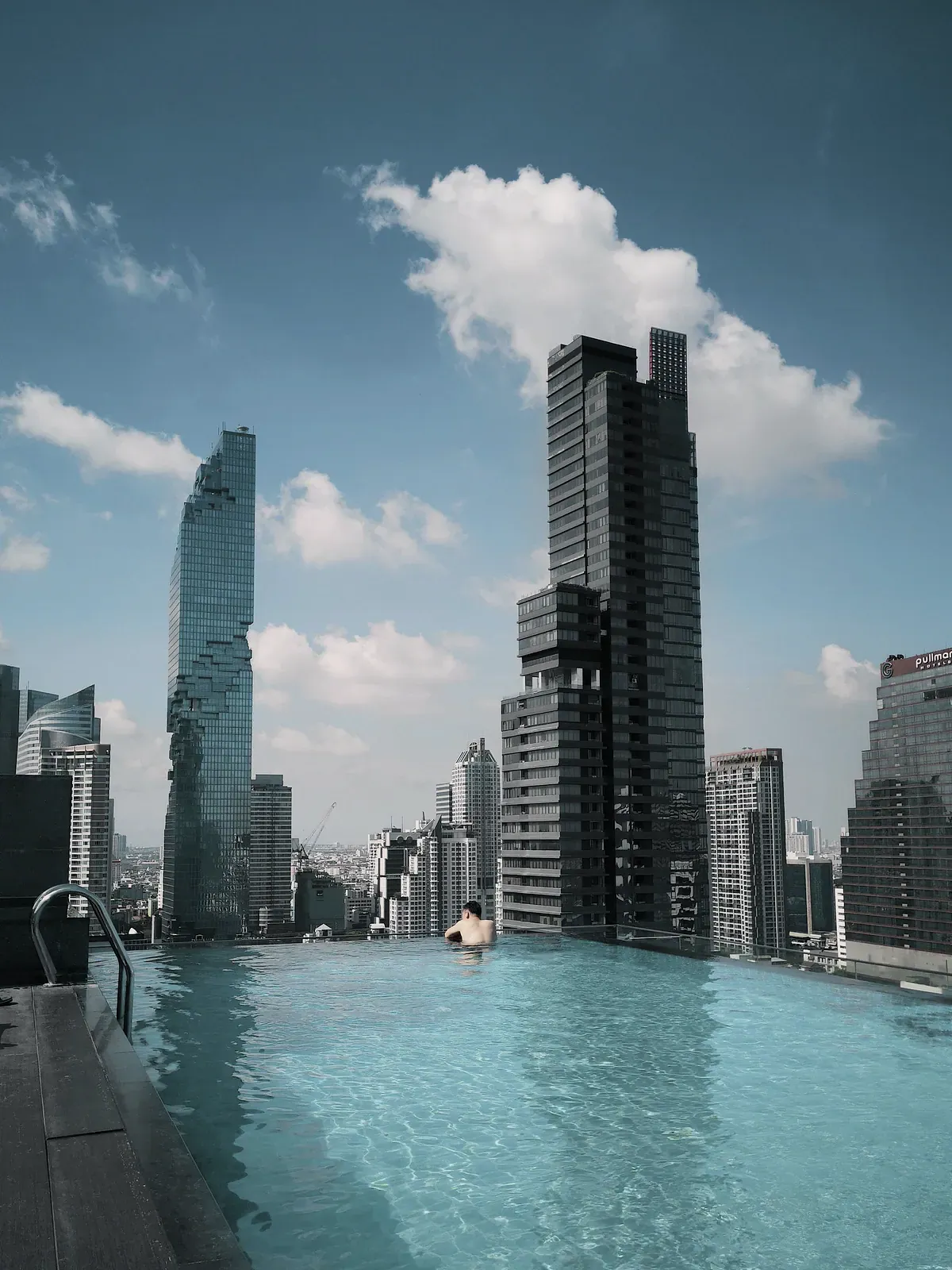
What it’s actually good for: outdoor walking routes through the old town, a proper river cruise at golden hour instead of ducking the heat, a full day at Chatuchak Weekend Market without wilting, and any rooftop bar or evening market that depends on comfortable outdoor seating. It’s also the only season where an early-morning plan and a full-day plan cost roughly the same in comfort, so Bangkok mornings before 9am works as a bonus rather than a heat-avoidance necessity. It’s also the easiest season for slower-paced or mobility-limited sightseeing, since neither heat nor rain forces the pace.
The catch: this is also the year’s most crowded and most expensive stretch, hotel rates and flight prices climb hardest around Christmas and New Year, and regional agricultural burning builds through the season, so air quality quietly worsens from January into February even as the weather stays pleasant. Bangkok in December covers the sharpest version of that trade-off, the King’s Birthday and New Year’s Eve crowd spike included. For the months after, see Bangkok in January and February.
Hot season (Mar-May): Songkran and what else survives the heat
Hot season is the one Bangkok visitors either plan their whole trip around or avoid outright, and both instincts are reasonable. Average highs climb from around 34°C in March to roughly 36°C in May, the year’s hottest month, with June and July only easing slightly (climate aggregators timeanddate.com, traveloka.com, weatherspark.com cross-checked, checked September 2026). Midday outdoor sightseeing in this window is genuinely punishing, not just uncomfortable. For the peak weeks, see Bangkok in April and May, and to read real-feel figures, Bangkok weather and climate.
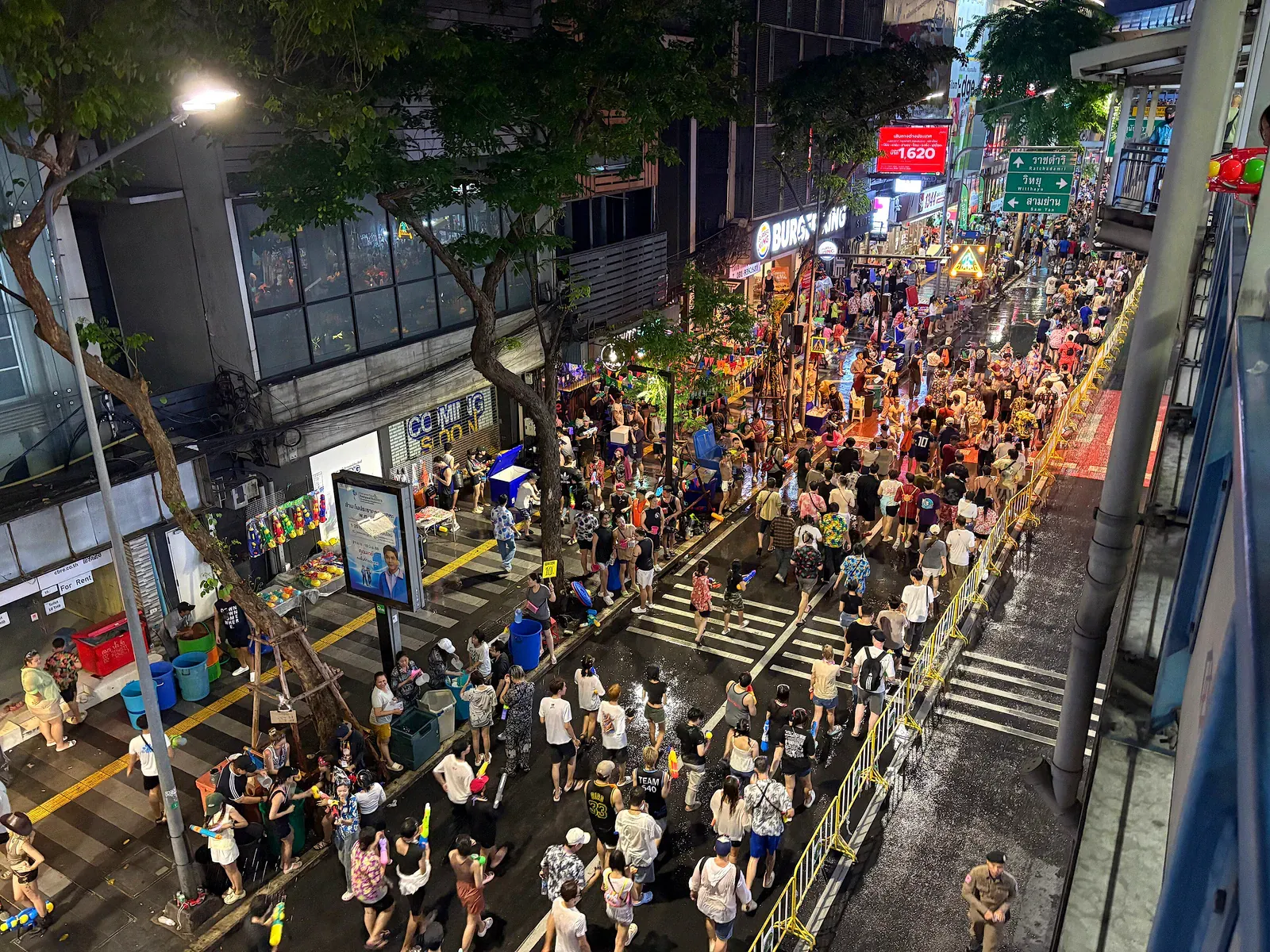
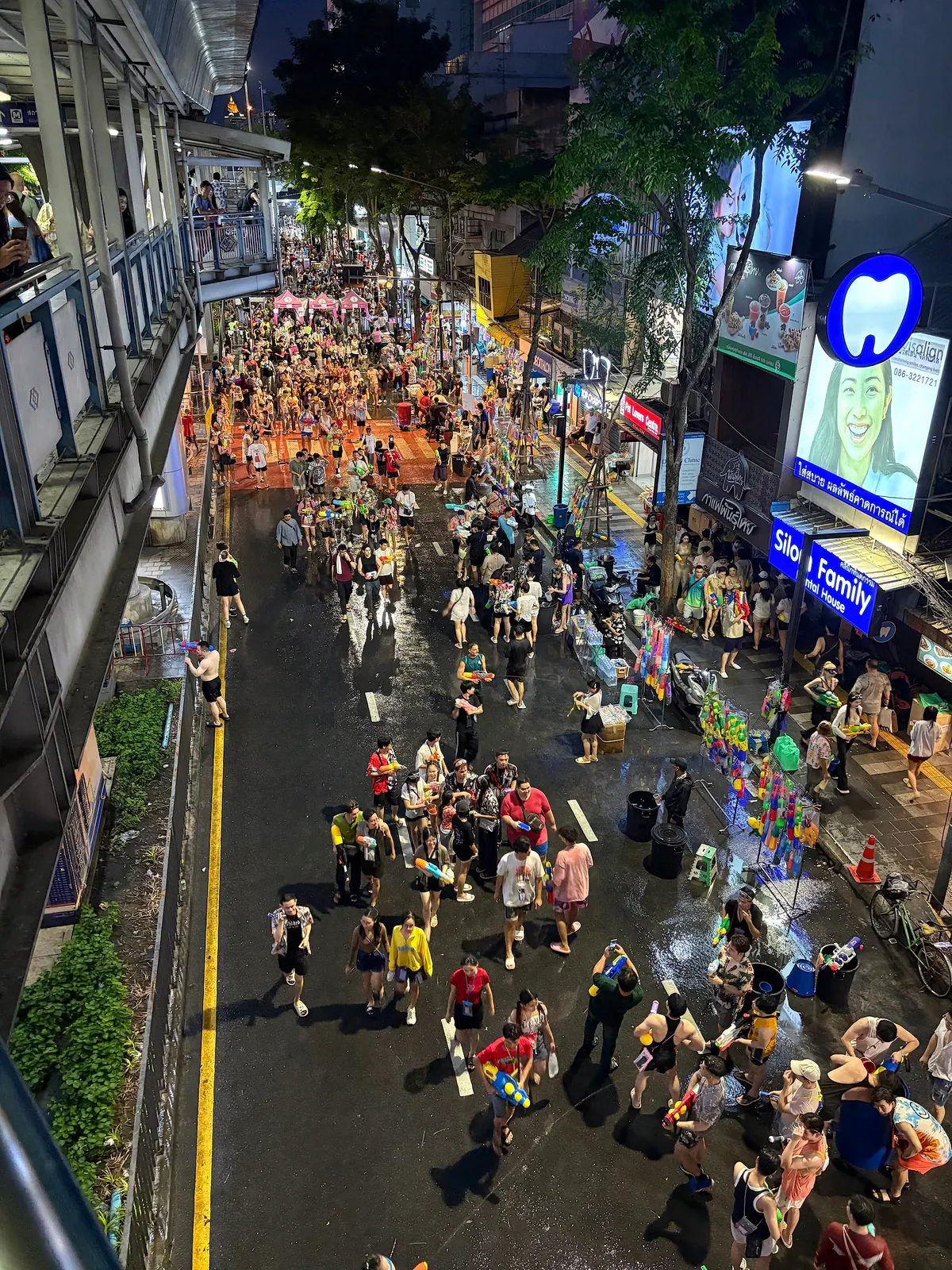
The one unmissable exception is Songkran, Thailand’s water festival, held on fixed dates every year, 13-15 April, with Bangkok’s biggest public water fight running along Silom Road (Sala Daeng BTS or Si Lom MRT) and the Tourism Authority of Thailand running a wider Maha Songkran World Water Festival programme across roughly 11-15 April. It is loud, soaking, good-natured chaos, and it is worth building an entire short trip around if the dates line up, heat and all. For other dates, see the Bangkok festival calendar.
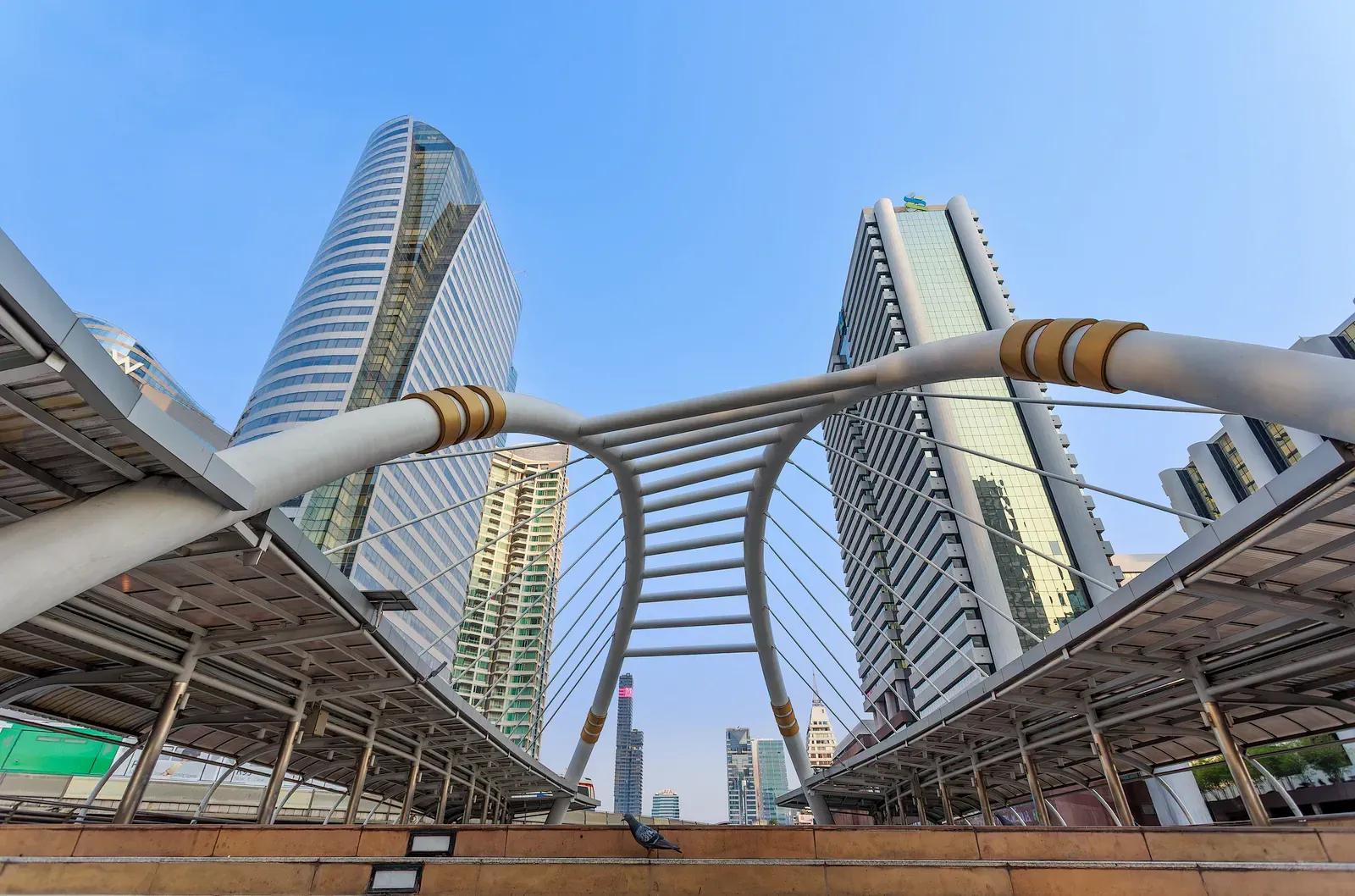
Outside Songkran week, hot season rewards a different rhythm than cool season: mornings and early evenings for anything outdoors, middays reserved for malls, museums, cinemas and a hotel pool. It’s also the one season where a rooftop infinity pool earns its keep as a genuine activity rather than a photo op, since the alternative (standing in direct sun at 2pm) is rarely worth it.
Rainy season (May-Oct): the trade-off nobody advertises
Here’s the part most guides skip past: rainy season is the cheapest and quietest season to visit Bangkok, by a wide margin, and it’s a genuinely good trip if you build the day around it instead of fighting it. The trade-off is real too: expect an indoor-biased day, not an outdoor one.
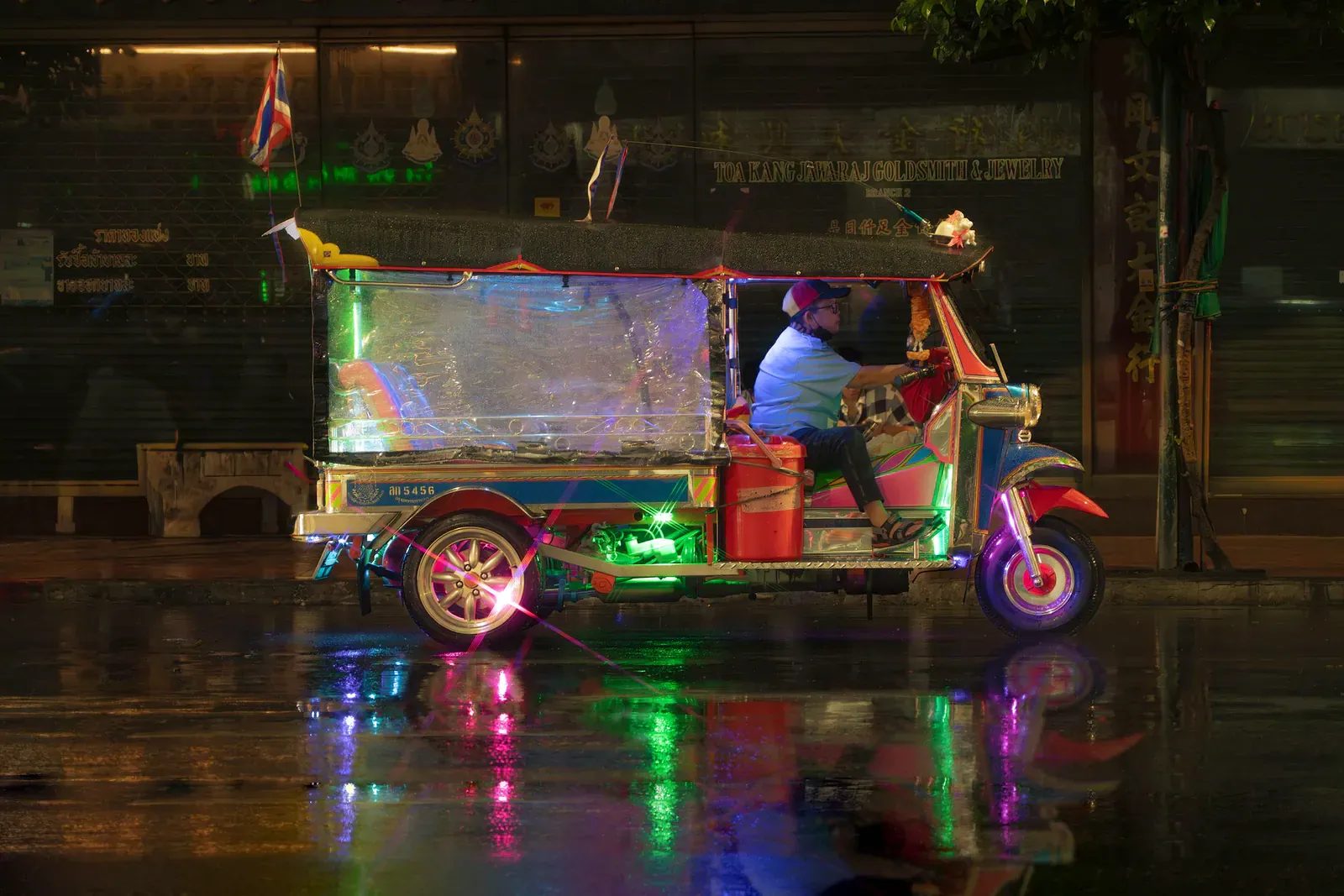
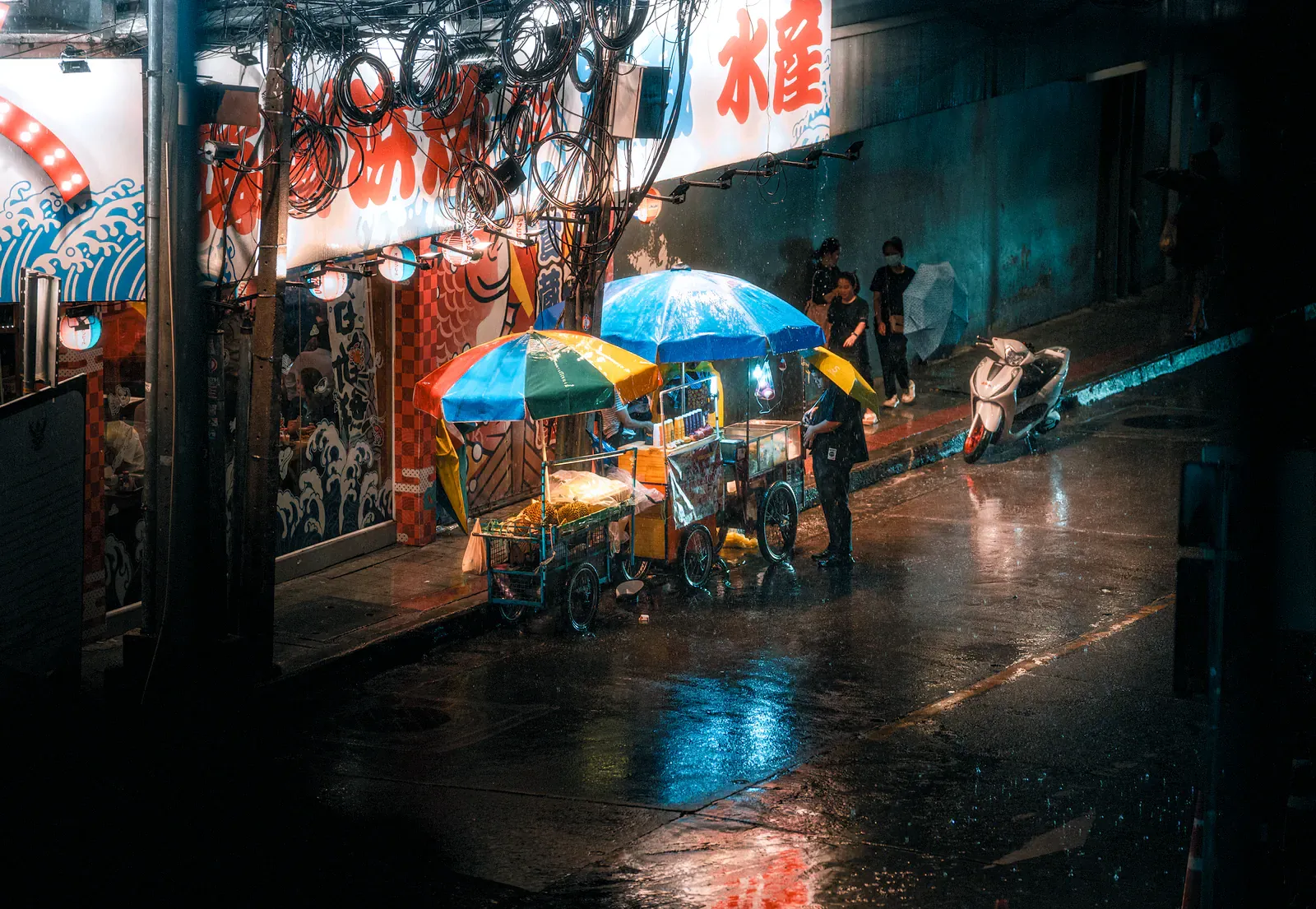
A typical rainy-season day starts clear, builds humidity through the morning, then breaks into a downpour lasting 30 to 90 minutes, usually in the afternoon or evening, before clearing again (consistent with the pattern detailed in Bangkok rainy day activities). September is the wettest month by a wide margin. All-day continuous rain happens but is the exception, not the rule.
What actually works well in this season: Bangkok’s connected mall-and-skywalk spine around Siam, museums and galleries like BACC, cooking classes, spas, and the city’s indoor food hall culture, none of it diminished by rain outside. What doesn’t: full-day walking itineraries, rooftop bars with no covered seating, and open-air markets with no covered sections. The trade-off in one line: lower prices and thinner crowds at every major sight, in exchange for planning around a predictable afternoon window rather than having the whole day outdoors.
Average temperature by season
- Cool season (Nov-Feb)
- 31-32°C
- Hot season (Mar-May)
- 34-36°C, peaking in May
- Rainy season (Jun-Oct)
- 32-35°C, cooling into October
Source: Editorial rounding from cited climate aggregators (climatestotravel.com, timeanddate.com, traveloka.com, weatherspark.com), checked September 2026. Not a single primary dataset.
The three-degree spread between the coolest and hottest season looks small on paper and is not small in practice: humidity, direct sun exposure and how much of the day you spend outdoors matter more than the number itself.
Which season rates best for what
- Cool season: comfort
- 4.5 out of 5
- Cool season: value (lower is pricier) peak pricing and crowds
- 1.5 out of 5
- Hot season: comfort outside Songkran week
- 2 out of 5
- Hot season: value quiet outside the festival week
- 3.5 out of 5
- Rainy season: comfort fine indoors, tough for all-day outdoor plans
- 3 out of 5
- Rainy season: value lowest prices and crowds of the year
- 5 out of 5
Editorial rating, 1 to 5, based on the seasonal facts above. Comfort favors outdoor time; value favors lower prices and thinner crowds.
No season wins on both counts, which is really the whole point of this page. Cool season buys comfort at a real cost in crowds and price. Rainy season buys value at a real cost in outdoor flexibility. Hot season is the extreme version of both, miserable most days, unmissable for one week.
How locals actually plan around it
Long-term residents and frequent visitors tend to stop thinking in terms of “when should I visit” and start thinking in terms of “what does this week’s weather rule out.” A Bangkok local rarely checks a seasonal calendar before making plans; they check whether it rained yesterday afternoon, since that’s a decent predictor for today, and they default to an air-conditioned backup for anything scheduled between roughly 12:00 and 15:00 regardless of the month. That habit is worth borrowing even on a short visit: build a default indoor or shaded option into the middle of every day, then treat a comfortable, dry afternoon as a bonus rather than something to count on.
The other local habit worth copying is booking outdoor-dependent plans (a rooftop dinner, a river cruise, an open-air market crawl) closer to the day itself once the short-term forecast is visible, rather than locking them in weeks ahead regardless of season. Cool season makes this less necessary since the weather is reliably dry; hot and rainy season both reward staying flexible on exactly which day gets the outdoor slot.
Activities that work in any season
A handful of things aren’t seasonal at all, worth knowing if your travel dates aren’t flexible. The BTS and MRT run the same schedule year-round and never care about rain or heat. Mall-based food halls, cinemas and indoor markets work identically in December or July. A Chao Phraya river cruise timed for sunset is pleasant in any season, though a rainy-season booking is worth a same-day weather check. And 3 days in Bangkok pacing advice, mornings for outdoor anchors, middays indoors, applies whether that midday heat is cool-season-mild or hot-season-brutal. For anyone settling in longer term rather than passing through, Bangkok once you’ve already done the tourist list covers the recurring activities that don’t care which season it is.
If you’re stuck with the “wrong” season
Travel dates are rarely built around Bangkok’s weather calendar, and every season has a workable version of a good trip. Landed in the thick of hot season with no Songkran overlap? Shift outdoor plans to the first two hours after sunrise and the two hours before sunset, and treat the middle of the day as mall-and-museum time by default rather than a fallback. Stuck with a rainy week? Build the day around Bangkok rainy day activities rather than checking the forecast every hour, and treat any dry stretch as a bonus. Cool season on a tight budget? Book well ahead, since this is the one season where availability, not just price, becomes the binding constraint.
Common questions
What’s genuinely the worst month to visit Bangkok?
By comfort alone, April, the hottest month, with little rain yet to break the heat outside Songkran week. By air quality alone, February or March, when regional burning peaks. There’s no single worst month across every criterion; it depends what you’re optimizing for.
Is rainy season really worth avoiding?
No, and this page’s core argument is that it shouldn’t be dismissed by default. It’s the cheapest, quietest season, and the daily rain pattern is predictable enough to plan around rather than a random washout risk.
Does hot season ruin outdoor sightseeing entirely?
It reshapes it rather than ruining it. Early morning and early evening outdoor time is still very doable; the failure mode is trying to run a cool-season-style all-day outdoor itinerary in May and being miserable by 11am.
Which season is best for photos?
Cool season for clear skies and haze-free skyline shots early in the window (November, December), though air quality haze can soften those same skyline shots by February. Rainy season gives dramatic storm-light and reflective wet-street shots that cool season simply can’t produce.
What’s the cheapest season to visit?
Rainy season, by a clear margin on both hotel rates and flight prices, outside any specific festival dates. Early hot season (outside the Songkran week itself) runs a close second.
Last verified: September 2026.
Written by
Mike Brochlowski
Founder and editor, travel photographer and designer
I'm Mike Brochlowski, a travel photographer and designer, and I currently live on Koh Samui, Thailand. I built BangkokWiki to put practical, checked information about Bangkok in one place. Every page is researched from official and primary sources, and the text names them. Where a page shows a checked date, that is when its facts were last confirmed. I also run samui69.com, a non-commercial guide to Koh Samui. If you spot an error or something out of date, tell me through the contact page and I will check it and correct the page.
Read all articles
Where to stay
Pick the area before the hotel
Traffic and heat make Bangkok distances feel longer than they look on a map, so the area shapes a trip more than the hotel does. Our guides match areas to trip types and explain the trade-offs.

Places to stay
Find a hotel
Explore the other desks
More from Travel
- 11 min read
 12 min read
Thailand Public Holidays and Alcohol Ban Days
 5 min read
One Day in Bangkok: The Realistic Version

Newsletter
You're subscribed as