
Living
Digital Nomad Meetups and Communities in Bangkok
A guide to digital nomad meetups and communities in Bangkok: Facebook groups, Meetup organisers, coworking hubs and how to actually find your people.

On this page
Bangkok has one of the largest concentrations of remote workers in Southeast Asia, and with that comes a genuinely large, if scattered, community infrastructure (Facebook groups with tens of thousands of members, active organisers running events through Meetup and similar platforms, and coworking spaces that function as much as social hubs as workspaces). The catch is that specific events, venues and schedules change constantly, so rather than listing “go here on Tuesday at 7pm” (which will be wrong within months), this guide covers the durable channels: where these communities actually live online and offline, how to tell a useful one from a sales pitch, and how to turn “I found a group” into an actual social life.
Facebook groups: the biggest first stop
For most newcomers, a Facebook group is the fastest way into the Bangkok nomad scene, simply because of scale. Several groups explicitly branded around Bangkok or Thailand digital nomads have grown into large, active communities, some have reportedly grown past 40,000 members (indicative figure, 2026, and these numbers move constantly), with daily posts covering meetup announcements, housing leads, visa questions and general social chat. Searching Facebook’s groups feature for terms like “Bangkok digital nomads” or “Thailand digital nomads” surfaces the current largest and most active ones; join a couple rather than committing to just one, since activity levels and moderation quality vary and shift over time.
The practical value of these groups isn’t just events: it’s the searchable history. Before asking a question, search the group first; visa questions, coworking recommendations and “is this normal” housing questions get asked repeatedly, and the answers are usually already there. When you do post, a specific question gets a better response than a vague “any tips for Bangkok?” the more established members tend to engage more with people who’ve clearly done some homework already.
Meetup and organised event platforms
Meetup (the platform, not a specific group) hosts several Bangkok-based digital nomad and remote-worker groups with organisers who run recurring events (coffee meetups, coworking socials, and occasional workshops or panel-style evenings). These groups vary in size and consistency; some run weekly, others more sporadically, and organisers change over time, so rather than naming a specific group’s current schedule here (which would be stale within a few months), the useful habit is to search Meetup directly for Bangkok digital nomad or remote worker groups, check which ones have recent (not just historical) event activity, and follow two or three rather than betting on just one. Eventbrite is a secondary platform worth the same search: some organisers post there instead of or alongside Meetup, particularly for one-off or ticketed events.
A pattern worth knowing: some “meetup” listings are lightly disguised sales funnels: a free coffee event that turns into a pitch for a course, coaching programme or investment scheme. This isn’t universal or even common, but it happens often enough in the nomad-event space generally that it’s worth going in with mild scepticism about anything that promises a “life-changing opportunity” alongside the coffee.
Coworking spaces as community hubs
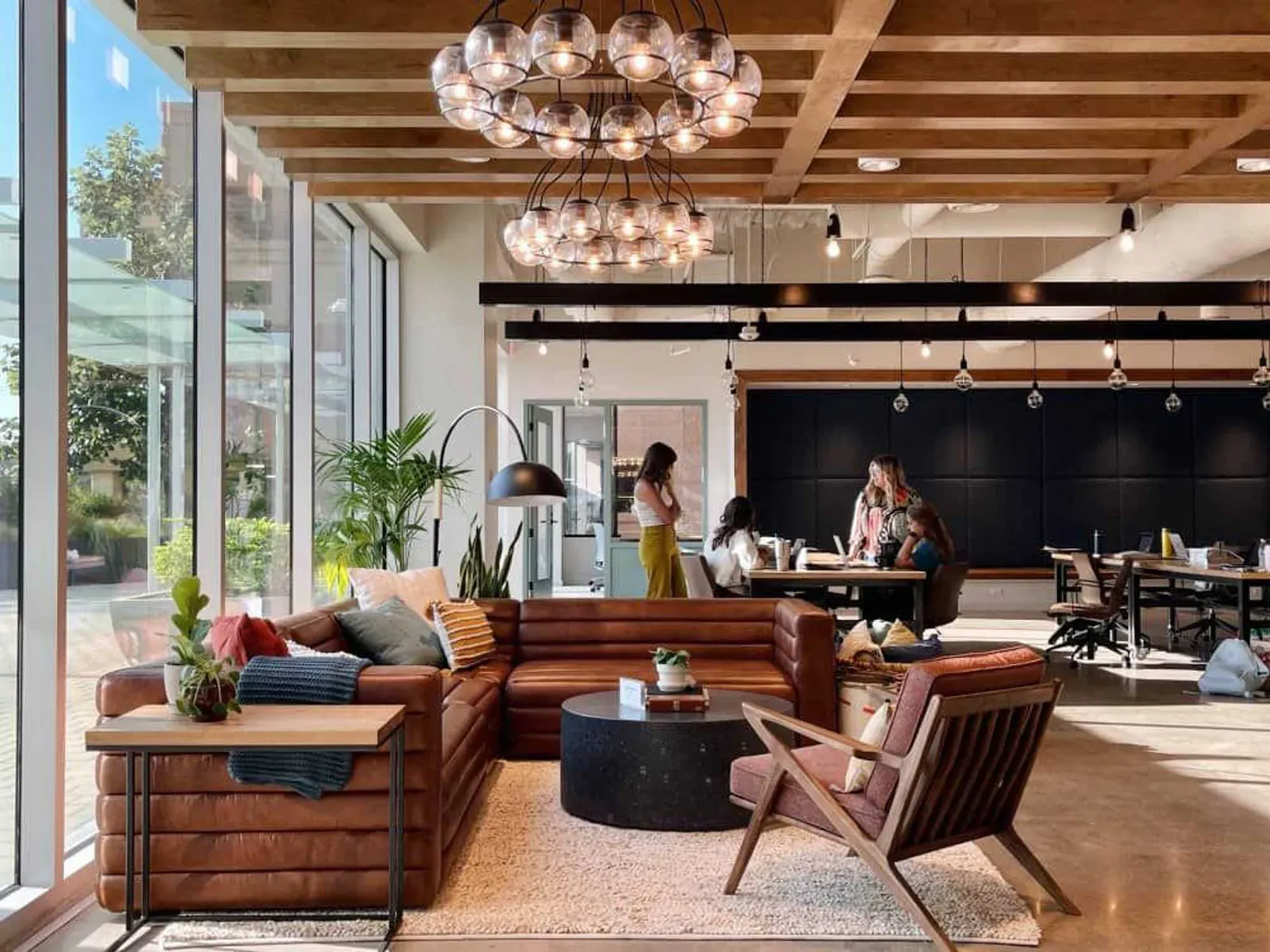
Beyond being workspaces, several of Bangkok’s longer-running coworking spaces function as genuine community anchors, hosting their own internal events, workshops and informal networking that often matter more than any listed public event. True Digital Park (one of the region’s larger dedicated innovation and coworking campuses) has built a community specifically around remote workers, startups and entrepreneurs, with its scale giving it more regular internal programming than a small independent space could sustain. Hubba, one of Bangkok’s pioneering coworking brands with roots going back over a decade, has a longer institutional history in the city’s startup and remote-work scene than most newer entrants, which tends to translate into a more established, if quieter, internal network. Neither of these is the only option: Bangkok has a large and growing number of coworking spaces across most nomad-popular neighbourhoods, covered in coworking vs cafe vs condo office in Bangkok, but a space with an actual community programme, not just desks, is worth prioritising if meeting people matters as much to you as getting work done.
The general pattern: a monthly or day-pass membership at a space with active internal events gives you low-effort, repeated exposure to the same group of people, which builds relationships faster than one-off public meetups where you rarely see the same faces twice.
Entrepreneur and professional-focused meetups
Separate from the general “digital nomad” social scene, Bangkok has a real professional and startup meetup layer: groups oriented around entrepreneurship, specific industries (tech, marketing, e-commerce) or professional networking rather than social mixing. These tend to be smaller and more focused than the big social Facebook groups, often run through the same Meetup and Facebook channels but branded distinctly (search terms like “Bangkok startup,” “Bangkok entrepreneurs” or your specific industry plus “Bangkok” surface the current active ones). If your goal is professional networking rather than making friends, these are usually a better use of an evening than a general social meetup, since attendees are self-selected toward business rather than purely social conversation.
Niche and identity-based communities
The general nomad scene isn’t the only option, and for some people it isn’t the best fit. Bangkok has smaller, more specific communities worth searching for directly: women-in-tech and women-nomads groups, LGBTQ+-focused social and professional groups (Bangkok’s broader LGBTQ+ scene and community resources are covered on the site’s dedicated LGBTQ+ hub), industry-specific groups (writers, developers, marketers), and language-exchange or hobby-based groups (running clubs, book clubs, board-game nights, chess in Bangkok) that attract a heavily expat-and-nomad crowd without being explicitly branded as “nomad” groups. These often build friendships faster than a generic networking event, because you’re starting from a shared interest rather than only a shared visa status.
How to actually turn a group into a social life
Joining a Facebook group or attending one meetup rarely creates a social circle by itself: the people who build a real community in Bangkok tend to follow a similar pattern. They pick two or three recurring anchors (a coworking space with regular events, one or two Meetup groups, a hobby group) and show up repeatedly rather than sampling widely and rarely returning anywhere. Repetition matters more than breadth here, because Bangkok’s nomad population has high turnover (a lot of people are passing through for weeks rather than settling), so showing up to the same thing multiple times is what actually gets you recognised and included, rather than treated as a one-time visitor. This overlaps directly with avoiding the isolation that drives a lot of nomad burnout, see why digital nomads burn out in Bangkok for the wider pattern and what helps beyond just finding events.
It’s also worth being upfront about what you’re looking for. Bangkok’s nomad social scene mixes people looking for business networking, casual friendship, dating, and genuine long-term community, often within the same event: being clear (even just to yourself) about which one you’re actually after helps you filter which groups and events are worth repeat attendance.
What to watch for
A few patterns are worth going in aware of. First, the sales-pitch-disguised-as-meetup pattern mentioned above: a free social event that funnels into a paid course or investment pitch is common enough in this space to warrant mild caution, not paranoia. Second, group and organiser churn: a Facebook group or Meetup organiser that was active a year ago may be dormant now, so always check for recent activity (posts or events within the last few weeks) before assuming a group is still live. Third, verification gaps in large open groups: anyone can post in a 40,000-member Facebook group, so treat visa, tax or legal advice you read there as a starting point for your own research, not a final answer; for anything YMYL (visa rules, tax residency, banking), cross-check against the site’s dedicated guides or an official source rather than a forum comment.
Where the community clusters geographically
Bangkok’s nomad population isn’t evenly spread: it concentrates in a handful of BTS/MRT-connected neighbourhoods, which shapes where most meetups and coworking-driven socialising actually happens. Areas like Thonglor, Ekkamai, Ari and parts of Sukhumvit have a dense mix of coworking spaces, cafes and condos favoured by long-stay remote workers, so a meetup or coworking event advertised as “Bangkok” is disproportionately likely to be in one of these pockets rather than spread evenly across the city. This matters practically: if you choose your accommodation in or near one of these clusters, you’ll bump into the community more by accident (at a cafe, gym or condo common area) than someone based further out, even before attending a single organised event. It’s not a strict rule (plenty of nomads base themselves in quieter or cheaper areas and commute in for events), but it’s worth knowing when you’re deciding where to live if community access is a priority alongside rent.
Low-effort ways in, if events aren’t your thing
Not everyone wants to walk into a room of strangers at an organised meetup, and that’s a legitimate constraint to plan around rather than push through. Lower-friction entry points include: a coworking space’s shared communal desk or cafe area rather than a private booth, which puts you in ambient proximity to the same regulars over time without requiring a scripted introduction; a recurring class or activity with a nomad-heavy crowd (a gym, a Muay Thai gym, a yoga studio, a language class) where the social element is secondary to the activity itself and therefore lower-pressure; and smaller Facebook or Meetup groups organised around a specific interest rather than general networking, which tend to have a warmer, less transactional feel than a big open “digital nomads” mixer. None of these require the performative small talk that puts a lot of people off big meetups, and several nomads report they built their actual friend group this way rather than through the flagship social events.
The seasonal rhythm of the community
Bangkok’s nomad community has a visible seasonal pulse worth knowing about if you’re timing a move. Community activity (event frequency, group posting volume, coworking-space social energy) tends to pick up from around November through February, when Bangkok’s weather is at its most comfortable and a wave of nomads arrives to spend the northern-hemisphere winter in Southeast Asia. It thins out over the hotter and wetter months (roughly April through October), when many long-stay nomads travel elsewhere and turnover in the community increases. If you’re relying on the density of a big meetup scene as a reason to be in Bangkok at a specific time, arriving in the cooler months gives you more to plug into immediately; arriving in the quieter months means slower, more one-on-one relationship-building rather than a packed events calendar. Note that the cooler months also overlap partly with Bangkok’s dry-season air quality dip, so factor that into a winter-arrival plan too.
Community versus the wider expat scene
It’s worth distinguishing the digital-nomad-branded community from Bangkok’s much larger general expat social scene, because they overlap but aren’t the same thing. The nomad-branded groups and events described above skew younger, more transient and more work-focused: people passing through for weeks or months, often prioritising remote-work logistics (visas, coworking, tax) alongside socialising. Bangkok’s broader expat scene, built around longer-term residents, retirees, families and people with Thai partners, has its own separate social infrastructure (sports clubs, hobby groups, religious and cultural associations, and neighbourhood-based social circles) that isn’t branded “digital nomad” at all but is often easier to build lasting friendships in precisely because turnover is lower. If the nomad scene’s transience frustrates you (spending energy on people who leave in a few weeks), it’s worth deliberately looking outside the nomad-branded groups toward this steadier layer, even though it takes more searching to find since it isn’t packaged for newcomers the way “Bangkok digital nomads” groups are.
A realistic first month
Rather than trying every channel at once, a realistic first month looks something like this: week one, join the largest two or three Facebook groups and search Meetup for active current groups, then just observe: read posts, see who’s organising what, get a feel for tone before posting yourself. Week two, attend one or two events from different channels (one social meetup, one coworking-hosted event) purely to calibrate what’s out there, without expecting either to immediately deliver a friend group. Weeks three and four, narrow down to the one or two channels that felt most worthwhile and commit to repeat attendance rather than continuing to sample broadly. This staged approach avoids two common failure modes: giving up after one underwhelming event, or spreading so thin across many one-off events that you never build the repeated exposure that actually creates relationships. It also gives you time to notice which groups are genuinely active versus which look active on paper but have gone quiet, a distinction that only shows up over a few weeks of watching, not from a single visit.
Getting started this week
If you’re new to Bangkok and want to move quickly: join two or three of the largest Bangkok-branded digital nomad Facebook groups today, search Meetup for currently active Bangkok remote-worker or entrepreneur groups and RSVP to whichever has an event in the next week or two, and pick one coworking space with a visible community programme for at least a short trial membership rather than working from a different cafe every day. None of this requires a big time commitment in week one: it just needs to be a repeated habit rather than a single attempt, since a single meetup rarely feels like it “worked” the first time. For the broader practical groundwork of settling in, housing, SIM, banking, first-week logistics, see the Bangkok digital nomad guide.
Common questions
What’s the biggest Bangkok digital nomad Facebook group?
Several large, actively branded groups exist, some reportedly with tens of thousands of members, but exact rankings and sizes shift constantly. Search Facebook groups directly for current “Bangkok digital nomads” or “Thailand digital nomads” branded groups rather than relying on a fixed name, since membership and activity levels change.
Are Meetup.com groups still active for Bangkok nomads?
Yes, multiple organisers run Bangkok-based remote-worker and digital-nomad groups through Meetup, though which specific groups are most active changes over time as organisers come and go. Search Meetup directly and check for recent event activity before committing to one.
How do I find nomad-friendly coworking events in Bangkok?
Look at coworking spaces with a visible internal community programme rather than just desks: larger campuses and longer-running independent spaces tend to run more consistent internal events than smaller newer spaces. A trial day pass is usually enough to gauge whether a space’s community is active.
Is it easy to make friends as a nomad in Bangkok?
It’s easier with a repeated-attendance strategy than a scattergun one: Bangkok’s high nomad turnover means showing up to the same coworking space, Meetup group or hobby event multiple times builds relationships faster than sampling many different one-off events.
Are there professional (not just social) nomad meetups in Bangkok?
Yes: a separate layer of startup, entrepreneur and industry-specific meetups runs alongside the general social nomad scene, usually through the same platforms but branded distinctly around business or a specific industry rather than general socialising.
Part of
Written by
Mike Brochlowski
Founder and editor, travel photographer and designer
I'm Mike Brochlowski, a travel photographer and designer, and I currently live on Koh Samui, Thailand. I built BangkokWiki to put practical, checked information about Bangkok in one place. Every page is researched from official and primary sources, and the text names them. Where a page shows a checked date, that is when its facts were last confirmed. I also run samui69.com, a non-commercial guide to Koh Samui. If you spot an error or something out of date, tell me through the contact page and I will check it and correct the page.
Read all articles
Visas and paperwork
Staying in Thailand longer?
Visas, extensions, documents and banking for longer stays. Rules and fees change often and offices apply them differently, so check the official source before you act.

Places to stay
Find a hotel
Explore the other desks
More from Living
- 12 min read
 10 min read
Freelancer, Employee or Founder: Bangkok Nomad Life
 6 min read
Remote Jobs From Bangkok: What Income Actually Works Here

Newsletter
You're subscribed as