
Living
Remote Jobs From Bangkok: What Income Actually Works Here
Which income actually works while based in Bangkok: freelance clients abroad, remote payroll, your own business, and why a local job needs a work permit.

On this page
Three income types actually work for someone living in Bangkok without a Thai work permit: freelance work billed to clients outside Thailand, a salary from an employer based outside Thailand, and profit from a business you own that earns its money abroad. What doesn’t work, legally, is taking a local job with a Thai company or being paid by Thai clients as if you were staff, and that single mix-up is behind most of the confused advice you’ll find searching “remote jobs Bangkok.”
Why “remote job from Bangkok” and “job in Bangkok” are different questions
Search results for “remote jobs Bangkok” mix two completely different things: job boards listing fully remote roles you could do from anywhere (Bangkok included), and pages that imply you can walk into a Bangkok office and get hired locally as a foreigner without paperwork. The second one needs a Non-Immigrant B visa and a Thai work permit issued by the Department of Employment to a named employer, the same route any foreign hire in Thailand goes through, and it has nothing to do with being a “digital nomad.” This guide is only about the first kind: income you already earn, or could earn, from outside Thailand while your body happens to be in Bangkok.
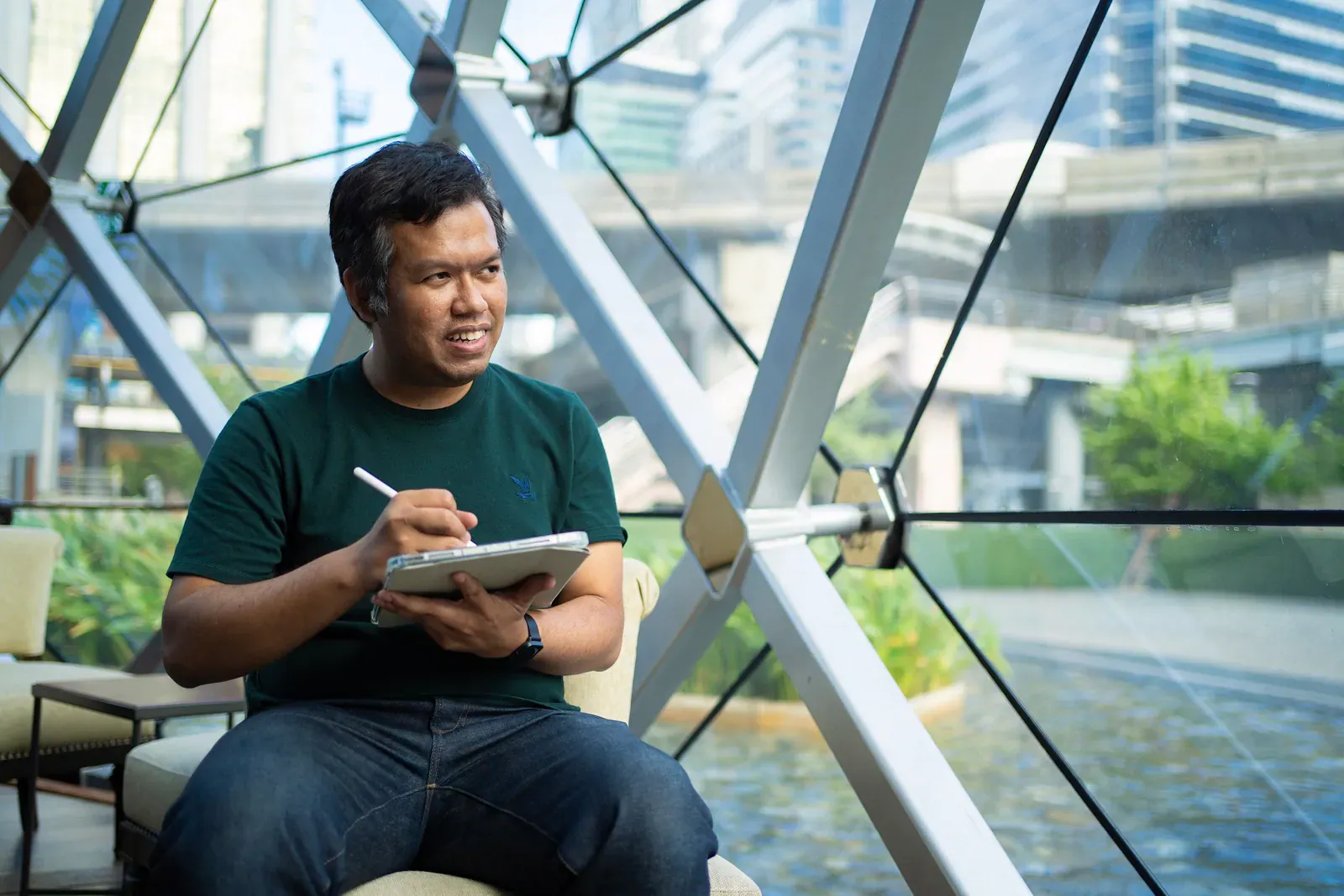
The three income types that actually fit
Thailand’s Emergency Decree on Foreigners’ Working Management B.E. 2560 defines “work” broadly (any occupation, with or without an employer, whether paid or not) and requires a work permit for it, with narrow exceptions. The Destination Thailand Visa (DTV), launched in 2024, was built specifically to give one category of activity a recognised route: earning from abroad while resident in Thailand. It is not a work permit and does not authorise working for a Thai employer or Thai-based clients.

| Income type | What it looks like | Typical visa fit |
|---|---|---|
| Freelance, foreign clients | Invoicing agencies, companies or individuals based outside Thailand for design, writing, dev, consulting work | DTV (remote work / freelancer track) |
| Remote employee | Salaried, on a foreign company’s payroll, reporting to a manager abroad | DTV (remote work track), some also hold long-stay visas tied to other status |
| Own business, foreign income | You run a company incorporated abroad, or freelance-platform income, that bills clients outside Thailand | DTV (soft power / remote work track), or a separate Thai business setup if you also want to operate locally |
| Local Thai employment | Hired by, and paid by, a Thai company | Non-Immigrant B visa plus a Thai work permit, a different and much heavier process |
A quick gut check that holds up across all three working categories: if the money originates outside Thailand and the client or employer is outside Thailand, you’re in the DTV’s intended lane. The moment a Thai company or a Thailand-based client is paying you directly for local work, you’ve crossed into work-permit territory, and that line matters more than how “remote” your day-to-day setup looks.
What doesn’t work, and why the gray area is smaller than forums suggest

Nomad forums love to argue that remote work for a foreign employer, done from a Bangkok condo, isn’t really “work in Thailand” at all. Legally, the Emergency Decree’s definition is broad enough that any activity performed on Thai soil could technically require a permit, foreign client or not. In practice, enforcement has focused on people working for Thai employers or clients without authorisation, not remote workers billing abroad, and the DTV exists precisely because the government recognised this population and built it a lane instead of leaving it in the gray. That’s a real difference between “technically ambiguous” and “actively pursued,” but it isn’t a guarantee, and it’s not advice to freelance for a Thai client without a permit because “nobody checks.”
Matching income to visa, step by step

- Identify your income source. Freelance invoices, an employer’s payroll, or your own company’s foreign revenue.
- Confirm every payer is outside Thailand. This is the test that decides whether you’re in DTV territory at all.
- Apply for the DTV under the remote work / freelancer track if you don’t already hold a longer-stay visa through another route (marriage, retirement, education).
- Keep records: contracts, invoices, and payment sources showing the income originates abroad. This is the paperwork that would matter if your status were ever questioned.
- If a Thai client approaches you, treat it as a separate decision requiring a work permit conversation, not an extension of your existing freelance work.
Where this leaves your income planning
Knowing which income types are viable is only half the picture. What actually clears a comfortable Bangkok lifestyle, and how that differs between a salaried remote employee, a freelancer with lumpy income, and a solo founder, is covered in what income you actually need to live well in Bangkok as a remote worker. If your next step is the visa and banking mechanics rather than the income question, the DTV visa and Thai bank account guide walks through what comes after you’ve confirmed your income fits. Once income is flowing, the cost of living breakdown for Bangkok nomads shows what it actually buys month to month. And once your day-to-day life in Bangkok is settled, Thailand’s 180-day tax residency rule for digital nomads covers the separate question of what you owe, since earning legally and owing nothing are not the same thing. If you’re weighing Bangkok against another Southeast Asian base for the same kind of income, Kuala Lumpur vs Bangkok for digital nomads compares the two directly.
Common questions
Can I just work for foreign clients on a tourist visa?
Not for long, and not as a stable plan. A tourist entry isn’t built for extended remote work and doesn’t give you the standing the DTV does; treat the DTV as the intended route once you’re staying more than a few weeks specifically to work.
Does the DTV let me also take on Thai clients occasionally?
No. The DTV authorises remote work for entities outside Thailand. Thai clients or a Thai employer require a separate work-permit process regardless of how the DTV was obtained.
What if my employer is foreign but has a Thailand office?
This is exactly the case to check with an immigration lawyer or the Department of Employment directly: whether you’re paid by, and report to, the foreign entity or the local one changes the answer, and it’s not a guess worth making on your own.
Written by
Mike Brochlowski
Founder and editor, travel photographer and designer
I'm Mike Brochlowski, a travel photographer and designer, and I currently live on Koh Samui, Thailand. I built BangkokWiki to put practical, checked information about Bangkok in one place. Every page is researched from official and primary sources, and the text names them. Where a page shows a checked date, that is when its facts were last confirmed. I also run samui69.com, a non-commercial guide to Koh Samui. If you spot an error or something out of date, tell me through the contact page and I will check it and correct the page.
Read all articles
Visas and paperwork
Staying in Thailand longer?
Visas, extensions, documents and banking for longer stays. Rules and fees change often and offices apply them differently, so check the official source before you act.

Places to stay
Find a hotel
Explore the other desks
More from Living
- 10 min read
 6 min read
Best Bangkok Neighborhoods for Digital Nomads: Scored
 10 min read
How Long to Stay in Bangkok as a Digital Nomad

Newsletter
You're subscribed as