Living
International Schools in Bangkok: How It Works
How Bangkok's international schools are tiered, what accreditation really checks, and the fee, geography and outcome factors that matter most.
On this page
Bangkok has more than a hundred schools calling themselves international, and no single fact about any of them (curriculum, fees, campus size) settles whether it is right for a particular child. This guide sets out how the sector is actually structured, what accreditation checks and does not check, the variables that predict a good fit better than a prospectus does, and the two decisions every family ends up making together: which tier suits the budget and the child, and which part of the city that choice quietly commits you to living in.
The tiers, honestly
“International school” in Bangkok covers a wide range, and the differences between tiers are not just price.
The long-established, heavily accredited schools. A handful of schools have operated in Bangkok for several decades, hold full accreditation from a recognised international body, run large campuses with extensive facilities, and sit at the top of the fee scale. Their scale brings depth (wide subject choice at senior level, established learning-support and counselling teams, long-serving senior staff) and their history brings institutional memory: settled governance, predictable admissions cycles, alumni networks. The trade-off is fees at the top of the market and, at the most sought-after of them, waiting lists in the most popular year groups.
The strong mid-tier. A larger group of schools, some decades-old and others younger, offer full curricula, solid facilities and genuine accreditation, without the top tier’s price tag or campus scale. This is where most relocating families land, and it is worth taking seriously rather than treating as a compromise: a mid-tier school with a stable staff room and a sensible class size can outperform a prestigious one that has grown faster than its pastoral systems.
Bilingual and Thai-international schools. These run a Thai national curriculum alongside an international strand, often English-Thai bilingual, sometimes with an IGCSE or IB layer added at secondary level. Fees sit below the international tiers. They suit families who want their child fluent in Thai, families staying long-term, and families for whom a lower fee matters more than an all-English environment. The trade-off is a curriculum path that can be less familiar to universities outside Thailand, and less English immersion for a child arriving with no Thai.
Smaller and newer schools. Bangkok’s school market keeps expanding, and newer entrants can be genuinely good (smaller class sizes, newer facilities, keen new leadership) or can be under-resourced and still building a track record. A newer school has, by definition, no multi-year record of staff retention, exam outcomes or accreditation renewal to examine. That is not disqualifying, but it changes the questions a family needs to ask (see below), and it is one of the few places in this sector where caution is the sounder default.
Religious and single-nationality schools. A number of schools serve a specific faith community or a specific nationality (Japanese, Korean, French, German, Indian and others), teaching that country’s curriculum, often substantially in that country’s language. These are the right, sometimes the only sensible, choice for a family planning to reinsert a child into that home system, and largely beside the point for anyone else.
What actually distinguishes tiers, once marketing is stripped away, is fee level, facilities scale, staff experience and turnover, and how long the school has been running the specific curriculum it offers, not any one of these alone. For a single-school profile, see the Bangkok Prep International School guide.
What accreditation means, and what it does not
Every legally operating international school in Thailand is licensed by the Ministry of Education, through the Office of the Private Education Commission (OPEC), and is subject to periodic external quality assessment by the Office for National Education Standards and Quality Assessment (ONESQA), which reviews schools against national standards on a roughly five-year cycle. Thai law also requires an international school to hold accreditation from a Ministry-recognised overseas accrediting body: bodies such as the Council of International Schools (CIS), the New England Association of Schools and Colleges (NEASC), the Western Association of Schools and Colleges (WASC), and CfBT are the ones most commonly cited, normally within the school’s first several years of operation.
That framework tells a family real things: the school is legally licensed, has been through an external review process, and reports against a recognised set of standards. It does not tell a family how good the teaching is in a specific year group, how stable the staff room has been for the last three years, or how the school actually handles a child who needs extra support. Accreditation is a floor, not a ranking. A school can be fully accredited and still be a poor fit for a specific child; a newer school working toward its first accreditation cycle is not automatically weaker, though it does carry more unknowns.
The practical use of accreditation status is as a screening question, not a decision-making one: ask which body accredits the school, when the last review took place, and whether the report (or a summary of it) is available to prospective parents. A school that answers plainly is telling you something useful regardless of the answer’s content.
The variables that actually predict outcomes
Marketing materials tend to foreground facilities and university-destination lists. Neither is a reliable proxy for teaching quality on its own. The variables worth weighing more heavily:
- Teacher qualifications and turnover. Ask what proportion of teaching staff are qualified and experienced in the curriculum the school teaches, and what staff turnover has looked like over the last three years. High turnover, especially among senior leadership or heads of department, disrupts continuity in ways a glossy campus cannot offset.
- Class size and staffing ratio, especially in the early years and in any year with public examinations.
- The proportion of Thai to foreign students. This shapes the everyday language environment far more than the curriculum on paper. A school that is 90% Thai-national families, however excellent, gives a child a different social and linguistic environment from one that is more internationally mixed, not better or worse, but different, and worth thinking through against what the family wants for the child’s peer group and language exposure.
- University destinations as a signal, read critically. A destinations list tells you where past leavers were accepted, filtered through that particular cohort’s ability, ambition and, often, undisclosed selection (some schools are more selective than others about which students sit which exams). It is a weak proxy for “this school will get my child into a good university,” and a much better one for “graduates from this school have historically gone on to study broadly in these kinds of places.” Read it that way, and ask how many students the figures represent.
- Pastoral care. How a school handles a child who is struggling (academically, socially, or with the transition of moving country) matters as much as how it handles a child who is thriving. Ask concretely: who is the point of contact for a worried parent, and how quickly do they respond.
- Additional-needs and EAL support. Provision varies enormously between schools that have dedicated, qualified learning-support staff and schools that offer informal help only. If a child has a diagnosed learning difference, or needs English as an Additional Language support, ask for specifics (staffing, caseloads, whether support is inside or outside the mainstream classroom) well before applying, because capacity in this area is often the real constraint on whether a school can take your child at all.
- Facilities versus teaching quality. A striking campus is not evidence of what happens inside the classroom. It is fair to weigh facilities for what they genuinely add (a well-equipped science lab, a real library, adequate outdoor space) while treating a dramatic atrium or a rooftop pool as a marketing asset, not an educational one.
Geography as destiny: the school run decides where you live
Choosing a school in Bangkok is, in practice, also choosing a neighbourhood, because Bangkok traffic makes a long daily commute a genuine quality-of-life cost for a small child. The city’s schools cluster geographically:
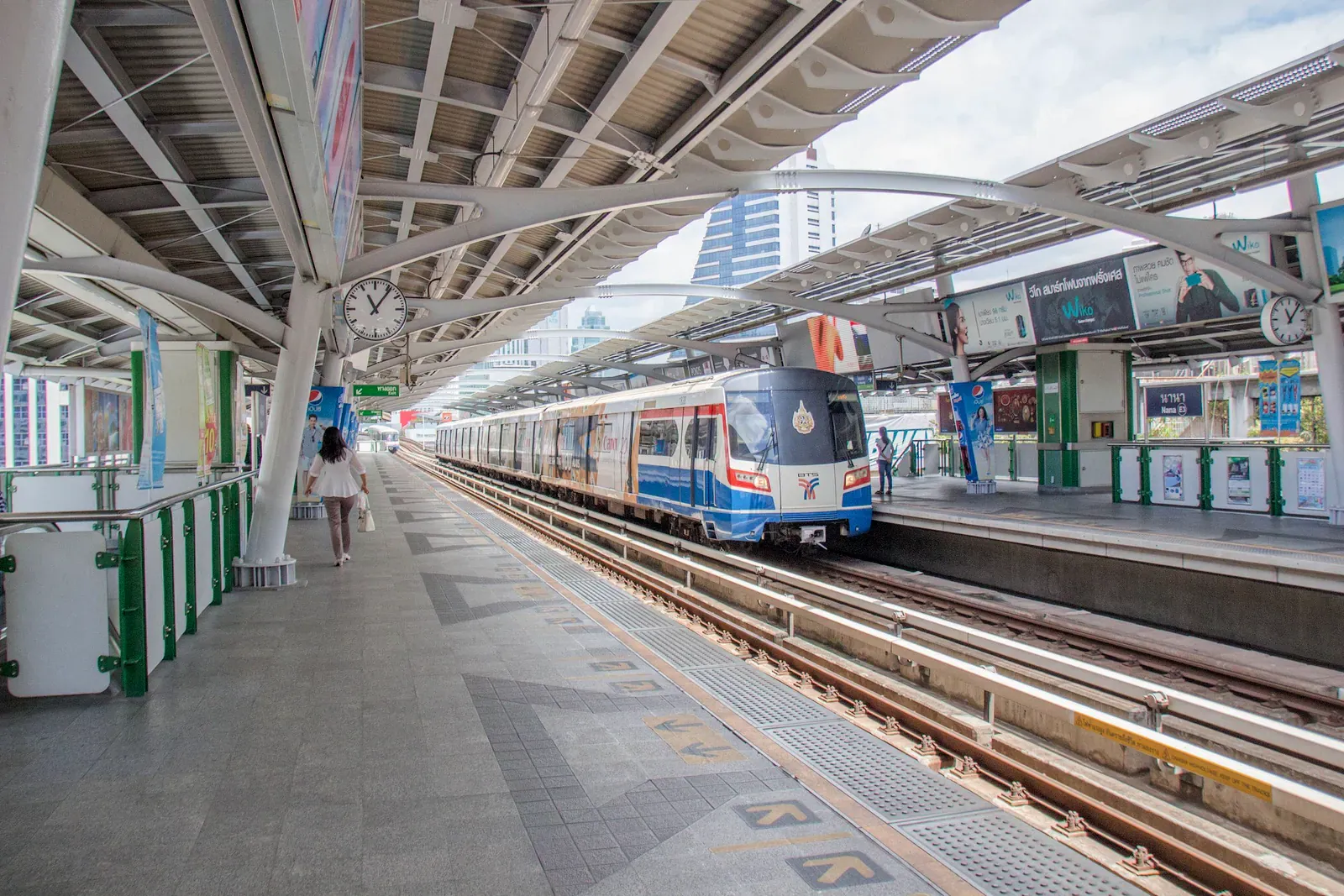
- Central Sukhumvit (roughly Asoke to On Nut) holds a dense concentration of schools, convenient for families who want to live centrally and use the BTS or a short drive; competition for places is correspondingly higher.
- Bang Na and the eastern corridor, toward Bearing and Samut Prakan, has grown fast as a school and family-housing hub, generally with lower housing costs and larger properties than central Sukhumvit, at the cost of a longer commute into the city centre for a working parent.
- The northern Nichada and Pakkret area, near the Chao Phraya north of the city, is built around a small number of large campuses and has developed a whole residential ecosystem (houses, clubs, other families) around them; it works well if a family’s whole life orients around that campus, and poorly if a working parent’s office is on the other side of town.
- Thonburi and the west bank has fewer schools but is increasingly connected by newer BTS and MRT lines, and can suit a family prioritising space and value over proximity to the historic expat centres.
The honest arithmetic: a school bus or a parent’s car covering 15-20 km across Bangkok at peak hours can take anywhere from 30 minutes to well over an hour, each way, depending on the route and the time of day. A family that picks a school first and a home second, without checking the realistic commute, is the single most common and most avoidable mistake in this process. Visit at drop-off or pick-up time before committing to either the school or the address, not just on an open day when traffic is irrelevant to the tour.
Fee structure: what you are actually paying for
International-school fees in Bangkok are rarely a single number. The categories that typically make up the real annual cost:
| Cost category | What it covers |
|---|---|
| Application fee | A one-off, non-refundable fee to process the application and assessment, usually due before the assessment takes place |
| Capital or development levy | A one-off (sometimes annual) fee toward the school’s facilities and capital projects, separate from tuition, occasionally partly refundable on leaving |
| Tuition | The core annual fee, which almost always rises through the year groups from early years to senior secondary |
| Bus service | Optional but common; priced by distance or zone, and a real factor in the geography decision above |
| Lunch | Often optional at younger ages, sometimes compulsory at a set canteen fee |
| Uniform, books and equipment | A start-of-year and ongoing cost, larger in the first year of enrolment |
| Trips and activities | Day trips are often included; residential trips, sports tours and some extracurricular clubs are usually extra |
| Examinations | External examination board fees (IGCSE, A-level, IB Diploma and equivalents) are frequently billed separately from tuition in the exam years |
| EAL or learning-support fees | Some schools include this in tuition; others charge separately, and a few cap or limit the number of EAL places per class |
As a broad, indicative guide for 2026 (not a quote, and not a substitute for a current fee schedule from the school itself) annual tuition alone tends to run from roughly the ฿150,000-350,000 range at the bilingual and lower-mid tier, through the ฿400,000-700,000 range for the strong mid-tier, up toward ฿700,000-1,000,000-plus a year at the most established, top-tier schools for senior year groups. These bands move every year, vary hugely by year group, and say nothing about the extras above; treat them only as an order-of-magnitude starting point and get the school’s actual, current schedule before budgeting.
For a family with two or three children spanning several years, the multi-year cost compounds quickly: capital levies and uniforms recur with each new enrolment, tuition rises as each child moves up the school, and fee inflation typically outpaces general cost-of-living inflation. Ask every shortlisted school for its fee-increase history over the last three to five years, not just this year’s number.
Employer education allowances. Many corporate relocation packages include a fixed education allowance, sometimes per child, sometimes capped as a family total, and sometimes fixed for the duration of an assignment rather than indexed to fee inflation. Get the exact figure and its terms in writing before shortlisting schools: an allowance that covers a mid-tier school comfortably may fall well short of a top-tier one by the child’s final years, and a cap that does not rise with fees becomes a real gap over a multi-year posting. For the visa and paperwork side of a relocation, see the admissions and school-year guide.
Visiting and assessing a school
A tour on an open day shows a school at its best. A useful visit tries to see more:
- Visit during a normal school day if the school allows it, not only on a showcase open day.
- Watch a full class change and a break period: noise, supervision, how children move around the building.
- Ask to see the specific year group your child would join, not just a flagship classroom.
- Look at display work for evidence of what students are actually producing, not just what is framed for visitors.
- Notice staff-student interactions in passing corridors, not just in the classroom you were shown.
- Ask who will be your child’s actual homeroom or form teacher next year, and how long that person has been at the school.
Questions that get honest answers
- What is your staff turnover for the last three academic years, broken down by department if possible?
- What is your current class size in the year group my child would join, and what is the maximum you would allow it to reach?
- What proportion of students are Thai nationals versus other nationalities in this year group?
- What learning-support or EAL provision do you offer, what does it cost, and is there a waiting list or cap?
- Can I see a summary of your most recent accreditation or ONESQA report?
- What has your fee increase been in each of the last three years?
- What is your policy and process if my child is struggling (academically or socially) six months in?
A school’s willingness to answer these plainly, with specifics rather than reassurance, is itself useful information.
Thai state and private (non-international) schools as an alternative
Not every family needs an international school. Thai government schools are free or low-cost and teach in Thai, which suits families planning a long-term or permanent move who want their child to integrate fully and become genuinely bilingual, though the adjustment for a child with no Thai is significant and the curriculum differs substantially from a home-country system. Thai private schools (non-international) sit between government schools and the international sector: lower fees than international schools, Thai as the main language of instruction, often with an English-language strand, and a Thai Ministry of Education curriculum throughout. Both routes deserve consideration for a family for whom cost, long-term settlement, or genuine Thai-language fluency outweighs the portability an international curriculum offers; see the curriculum comparison for how portability actually plays out if the family later moves again.
Homeschooling: the legal position, in outline
Homeschooling is legally recognised in Thailand, but it operates through a formal registration process with the Ministry of Education (via the local educational service area office) rather than as an unregulated choice, and it carries its own paperwork, reporting and, for a foreign family, visa implications that a school-based non-immigrant visa route does not. This is a genuinely specialist area with rules that change, so treat this paragraph as an outline only: verify the current registration process and visa position directly with the Ministry of Education, the Thai Immigration Bureau, or a qualified adviser before relying on it, and see the admissions and school-year guide for how the school-based visa route works by comparison.
Common questions
How many international schools does Bangkok have?
Bangkok has well over a hundred schools operating as international schools, ranging from long-established, large campuses to small, newly opened ones. The right count for a family is not “how many exist” but “how many fit the budget, curriculum and commute”: usually a shortlist of four to eight.
Is a more expensive school automatically better?
No. Fee level correlates with facilities, scale and, often, staff experience, but not reliably with how well a specific child will do at that specific school. A strong mid-tier school with stable staffing and a sensible class size can be a better fit than a prestigious school growing faster than its systems can support.
How much do international schools in Bangkok cost per year?
It varies hugely by tier and year group, roughly from the low hundreds of thousands of baht at the bilingual end to over ฿1,000,000 a year at the top tier for senior students, before extras like the bus, uniform, trips and exam fees. Treat any figure, including the ranges here, as indicative only and get a current schedule from each shortlisted school.
Should I choose the school first or the neighbourhood first?
Neither alone. Shortlist schools on curriculum, tier and fit, then check the realistic commute at peak drop-off and pick-up times before committing to either the school or the address: the school run is a daily constraint that a one-off open-day visit will not reveal.
Does accreditation guarantee a good school?
It guarantees the school has been through a recognised external review and meets a baseline standard, and that Thai authorities license it to operate. It does not guarantee good teaching in a specific classroom, low staff turnover, or a good fit for your child, so treat it as a floor, not a ranking, and ask for specifics beyond the accreditation label itself.
What is the difference between an international school and a bilingual Thai-international school?
An international school teaches largely or entirely in English on a non-Thai curriculum (British, IB, American and others); a bilingual Thai-international school runs the Thai national curriculum alongside an English strand, often with lower fees and a stronger emphasis on Thai-language fluency. Which suits a family depends on how long they plan to stay, whether the child already has some Thai, and how much portability to another country’s system matters.
Part of
Written by
Mike Brochlowski
Founder and editor, travel photographer and designer
I'm Mike Brochlowski, a travel photographer and designer, and I currently live on Koh Samui, Thailand. I built BangkokWiki to put practical, checked information about Bangkok in one place. Every page is researched from official and primary sources, and the text names them. Where a page shows a checked date, that is when its facts were last confirmed. I also run samui69.com, a non-commercial guide to Koh Samui. If you spot an error or something out of date, tell me through the contact page and I will check it and correct the page.
Read all articles
Visas and paperwork
Staying in Thailand longer?
Visas, extensions, documents and banking for longer stays. Rules and fees change often and offices apply them differently, so check the official source before you act.

Places to stay
Find a hotel
Explore the other desks
More from Living
- 12 min read
 12 min read
IB vs British vs American Curriculum in Bangkok
 9 min read
Renting Near an International School in Bangkok

Newsletter
You're subscribed as