Things to do
How to Choose a Thai Cooking Class in Bangkok
A decision framework for picking a Bangkok cooking class: half day vs full day, market tour or not, group size, and the questions to ask before you book.
At a glance
- Reading time
- 5 min read
- Chapters
- 7
- Published
- Nov 1, 2026
On this page
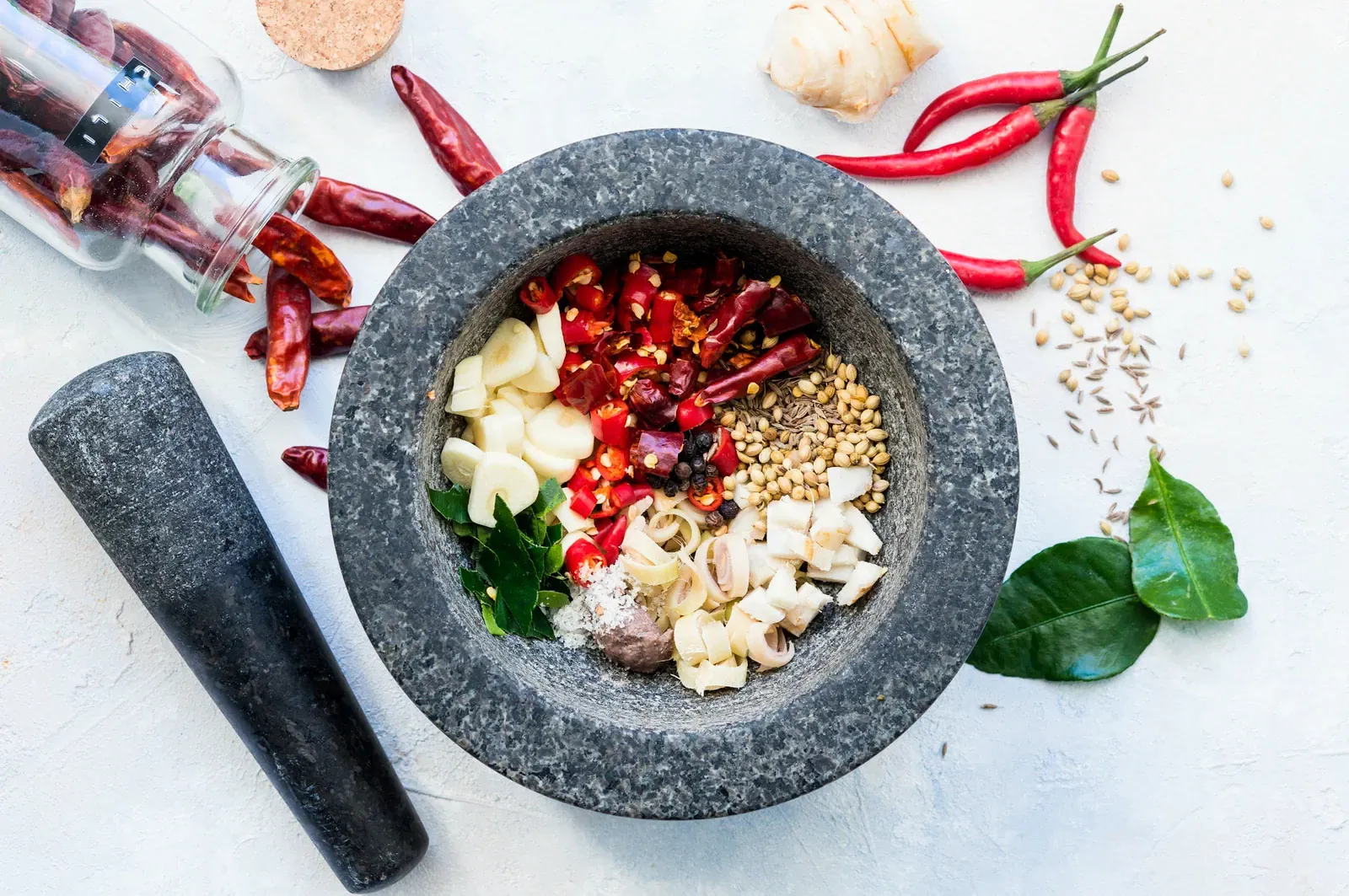
A good Thai cooking class in Bangkok teaches you three or four dishes hands-on, usually starting with a curry paste pounded from scratch, in a class of somewhere between two and twelve people, over three to eight hours depending on the format. The hard part isn’t finding one: search results return dozens of options. The hard part is picking the right shape for you, since “cooking class” here covers everything from a brisk half-day taster to a full-day deep dive with its own market run. This guide gives you a framework instead of a ranked list of named schools, because Bangkok’s class market is crowded and quality shifts with the season, the chef and the day’s menu.
What a class actually looks like
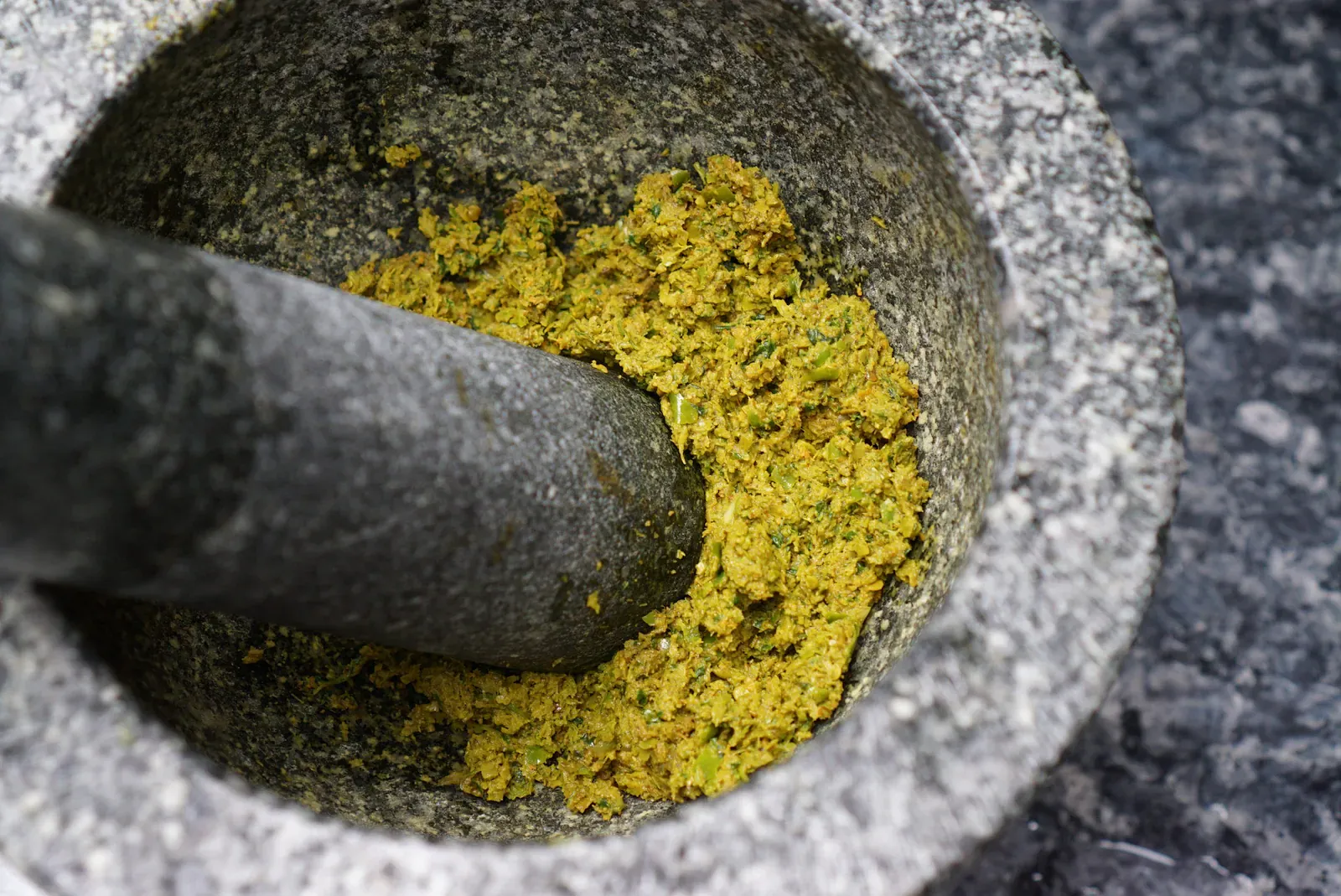
Almost every format follows the same shape: an introduction to the day’s dishes, hands-on cooking at an individual or shared station, and a sit-down meal of everything you made. Curry paste from a stone mortar and pestle is the near-universal opener, since pounding your own paste (rather than buying a ready-made one) is the single biggest difference between home cooking and restaurant shortcuts, and schools know it makes a satisfying first lesson. From there, expect a soup (commonly tom yum), a stir-fry or curry, and a dessert, with the exact menu often rotating by day of the week.
Group size varies more than people expect: some run large shared classes of six to twelve at communal stations, others cap at eight or offer private bookings at a premium. A bigger class means less one-on-one correction, but not necessarily less hands-on time, since most kitchens set up one station per person or pair regardless of numbers.
Half day or full day: what the extra hours buy you
Half-day classes typically run three to four hours and cover three to five dishes, priced roughly 1,200-2,500 THB (~35-70 USD, checked September 2026). Full-day classes run six to eight hours, add one to two dishes, and almost always include a from-scratch curry paste rather than a pre-blended base, priced roughly 2,500-4,500 THB (~70-125 USD, checked September 2026). The gap isn’t just time: a full day means a deeper market component and more independent technique, more of your own knife work and pounding, less pre-prepped mise en place waiting at your station.
- Value for a first-timer half day covers the essentials without the fatigue
- 4.5 out of 5
- Depth of technique full day, more from-scratch work
- 4 out of 5
- Fits a packed itinerary half day slots around other plans
- 4.5 out of 5
- Worth it for a repeat visitor full day rewards more kitchen experience
- 3.5 out of 5
Editorial rating, 1 to 5, based on aggregated class listings checked September 2026.
If this is your first class and Bangkok is a short stop on a longer trip, a half day covers the core skills (paste, wok technique, balancing sweet, sour, salty and heat) without eating your whole schedule. A full day suits someone who already cooks, wants deeper technique, or is treating the class as the day’s main activity.
Does the market tour actually matter?
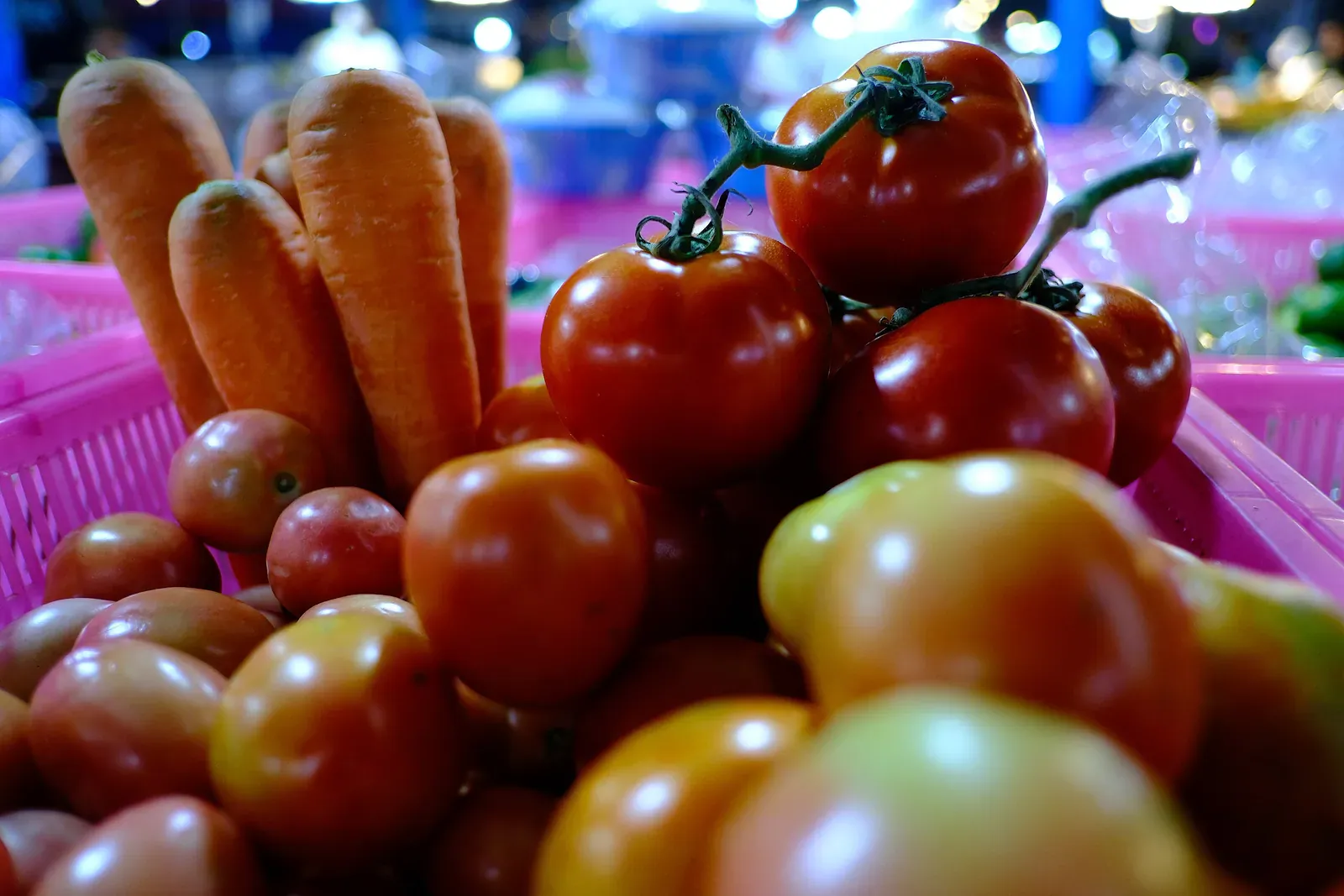
Most schools that include a market tour run it in the morning, for a simple reason: Bangkok’s fresh food markets are morning businesses, and by early afternoon the best produce has already been picked over. An afternoon class typically swaps the market for a fruit-carving segment instead, which is a fine consolation but not the same experience.
It’s worth having if you want to shop like a local: choosing your own chilies, spotting fresh lemongrass and galangal, seeing the ingredient before it becomes a green curry rather than after. It’s skippable if your priority is cooking time, since the market walk eats into stove hours. Check the listed start time before booking: a 9am start signals a market visit; anything starting after lunch almost certainly skips it.
Hands-on or a demonstration in disguise?
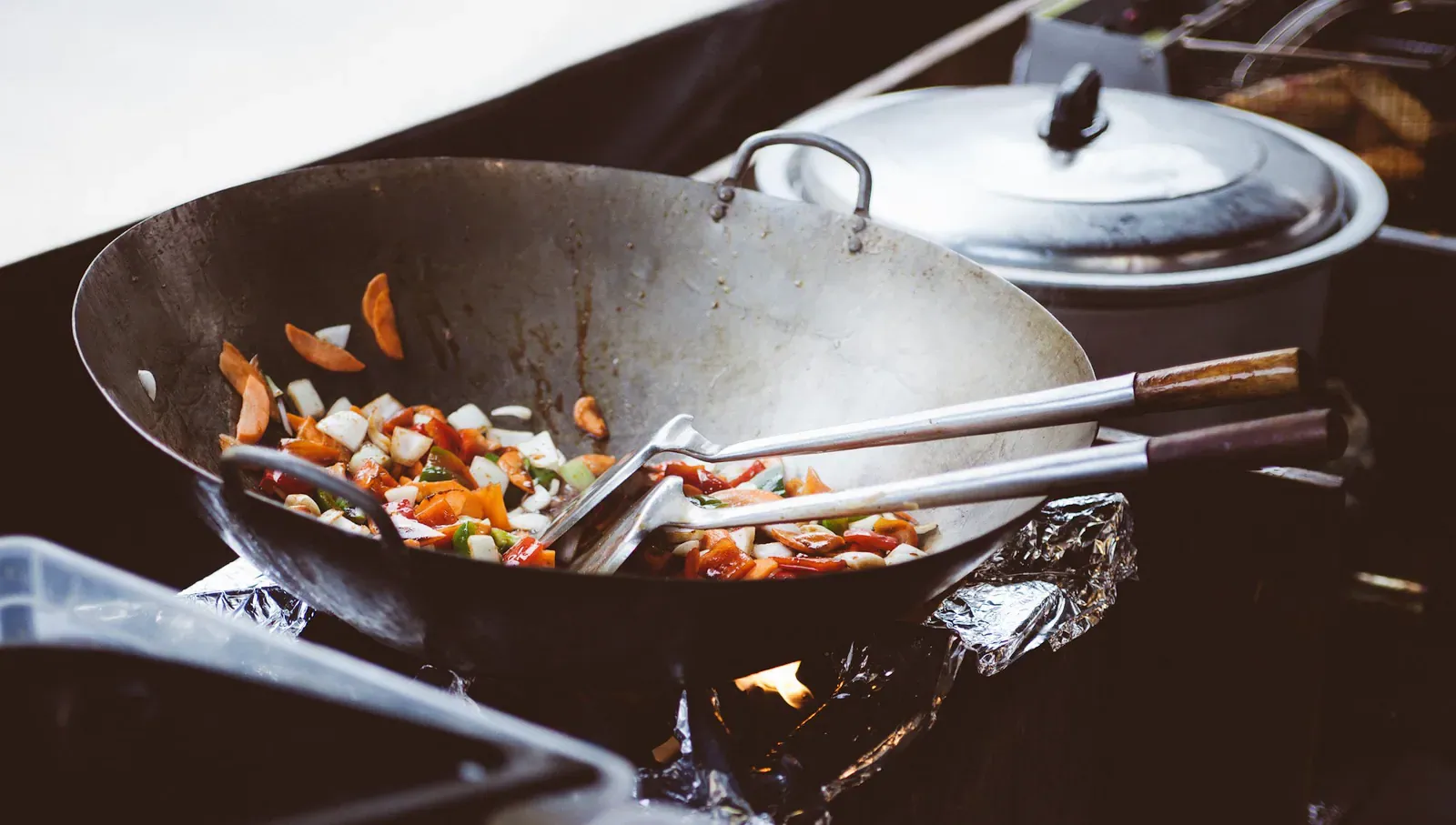
Every legitimate cooking class in Bangkok should give you your own cooking station, your own ingredients, and your own wok or pot, not a seat watching a chef cook while you take notes. Confirm this explicitly before paying, since “cooking class” and “cooking demonstration” get used loosely in listings and the difference matters. A useful check: ask whether each guest gets an individual burner or shares a station in pairs. Either is genuinely hands-on; a class where the chef does most of the actual cooking and hands you a spoon to stir occasionally is not, regardless of what it’s called.
What a fair price looks like
| Format | Typical duration | Typical price (2026) | What’s usually included |
|---|---|---|---|
| Half day, shared class | 3-4 hours | 1,200-2,500 THB (~35-70 USD) | 3-5 dishes, recipe booklet, market tour if morning |
| Full day, shared class | 6-8 hours | 2,500-4,500 THB (~70-125 USD) | 5-7 dishes, from-scratch curry paste, deeper market visit |
| Private or small-group class | Varies | A premium over the shared-class price, per person | Same structure, more instructor attention, flexible menu |
Prices are aggregator-sourced ranges (Viator, Cookly, Tripadvisor listings), checked September 2026, not an official tariff: Bangkok’s cooking-class market is entirely private and commercial, so treat any figure as a band to compare against, not a guarantee.
Before you book: the questions that matter
- Is this hands-on for every guest, or a demonstration with occasional participation?
- What’s today’s specific menu (menus commonly rotate by day of the week)?
- Is the market tour included, and does the start time actually allow for one?
- Is the kitchen air-conditioned?
- Can the school accommodate vegetarian, vegan, halal or allergy needs, and did you confirm this before the day, not on arrival? See Vegetarian and vegan food in Bangkok if this applies to you.
- What’s the group size on your specific date, not just the school’s general claim?
- Do you keep the recipes afterward, and in what format?
Who should skip a cooking class entirely
If your main interest is eating rather than cooking, the hours and cost of a class buy you less than simply working through a good dish-by-dish guide and eating your way around the city, covered in Thai dishes to try in Bangkok, the street food guide, Bangkok’s noodle culture and a moo kata buffet. A class is a genuinely good fit for anyone who wants a takeaway skill, a rainy-day activity, or a structured few hours learning technique rather than just menu recommendations. It’s a weaker fit for a tight visit where every hour spent in a kitchen is an hour not spent seeing the city, and for travellers who already know they don’t enjoy cooking at home: a class won’t change that in an afternoon.
For professional programs, see cooking, baking and bar courses in Bangkok.
Written by
Mike Brochlowski
Founder and editor, travel photographer and designer
I'm Mike Brochlowski, a travel photographer and designer, and I currently live on Koh Samui, Thailand. I built BangkokWiki to put practical, checked information about Bangkok in one place. Every page is researched from official and primary sources, and the text names them. Where a page shows a checked date, that is when its facts were last confirmed. I also run samui69.com, a non-commercial guide to Koh Samui. If you spot an error or something out of date, tell me through the contact page and I will check it and correct the page.
Read all articles
Where to stay
Pick the area before the hotel
Traffic and heat make Bangkok distances feel longer than they look on a map, so the area shapes a trip more than the hotel does. Our guides match areas to trip types and explain the trade-offs.

Places to stay
Find a hotel
More from Things to do
- 9 min read
 7 min read
Budget Things to Do in Bangkok: What Actually Costs Money
 11 min read
Rattanakosin vs Chinatown: Bangkok's Historic Cores Compared

Newsletter
You're subscribed as