Things to do
Rattanakosin vs Chinatown: Bangkok's Historic Cores Compared
Bangkok's old royal island vs Chinatown: MRT access, walkability, food, noise and cost, for tourists, retirees and nomads deciding where to base themselves.
At a glance
- Reading time
- 11 min read
- Chapters
- 10
- Published
- Oct 2, 2026
On this page
Rattanakosin is where Bangkok keeps its monuments: the Grand Palace, Wat Pho, Wat Arun across the river, wide ceremonial streets and Khao San Road’s backpacker strip at its northern edge. Chinatown, centred on Yaowarat Road, is where the city has kept trading and eating since before Bangkok was the capital. Base yourself in Rattanakosin for walkable, monument-dense mornings and a quieter, more spread-out feel. Base yourself in Chinatown for food that runs past midnight, denser MRT access, and a neighbourhood that never stopped being a working district.
This is not a sightseeing list. Both districts get plenty of those. This is about where to actually stay: transit, walking distance, noise, food access and cost, for a short-stay tourist, a slow-travel retiree or a nomad who wants old Bangkok without giving up modern convenience. For the citywide vocabulary these two districts sit inside, see Bangkok’s Districts Explained; for a framework to weigh any area against your own priorities, see What to Check Before Choosing a Bangkok Neighbourhood; for how their cost compares to the rest of the city, see Cost of Living by Bangkok Area. For the story behind these old cores, see Bangkok history and culture, and for the city’s ceremonial name, Bangkok vs Krung Thep.
What Rattanakosin actually is
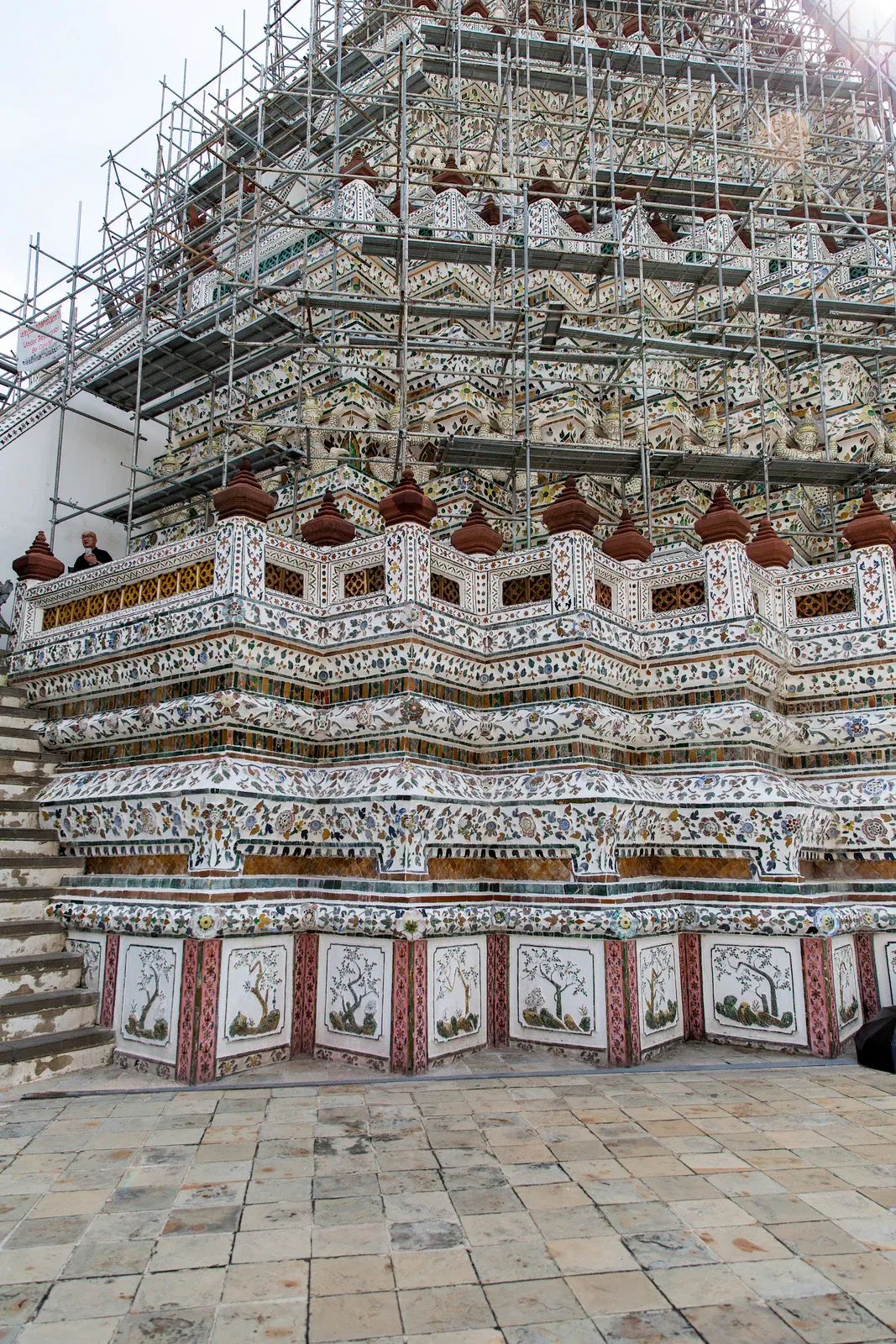
Rattanakosin Island is the artificial island formed by the Chao Phraya River and the canals dug to defend Bangkok’s original royal city, and it holds the landmarks most visitors picture when they think of Bangkok: the Grand Palace and Wat Phra Kaew, Wat Pho with its reclining Buddha, the wide ceremonial ground of Sanam Luang, and Wat Arun facing the whole complex from the river’s far bank. It is a monument district first and a residential one second; much of it is government land, temple grounds or open public space rather than housing stock.
Khao San Road sits at Rattanakosin’s northern edge, in the Banglamphu area, a 400-metre stretch that has been the reference point for budget travel in Southeast Asia since the 1980s (multiple 2026 travel sources). It is not the same experience as the temple zone half a kilometre south: expect open-air bars, street food carts and hostel touts rather than ceremonial quiet, though both sit inside the same broad district.
What Chinatown actually is
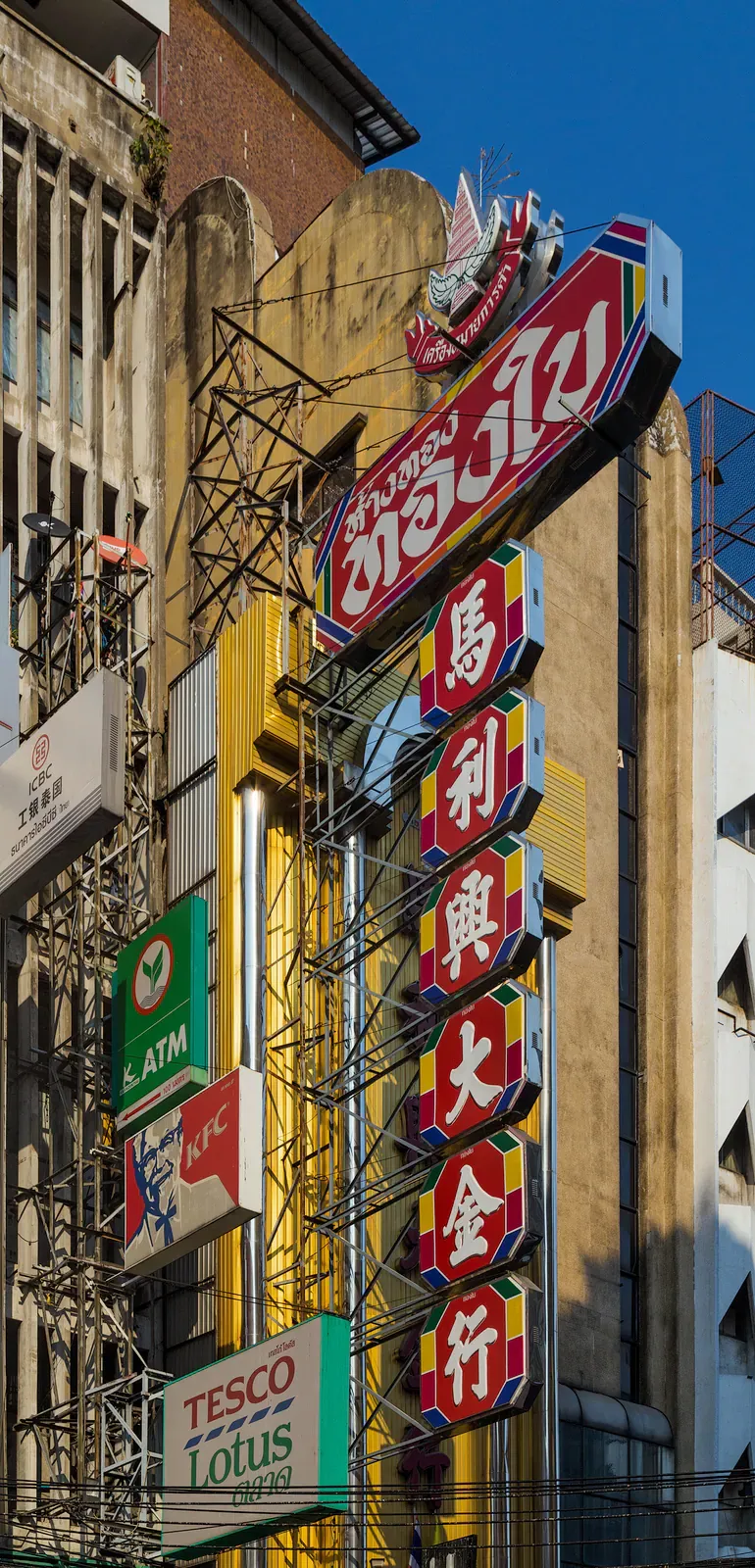
Bangkok’s Chinese community settled what is now Chinatown when Bangkok became the capital in 1782, making it the city’s oldest commercial district, and Yaowarat Road itself was built under King Rama V in 1892 as part of a wider modernisation project (multiple sourced histories). The road’s distinctive curving, one-way layout was laid out to resemble a dragon’s body under Chinese geomancy, and it grew into the city’s gold-trading centre: today it holds over 100 gold shops with prices chalked on the window daily. For the golden Buddha nearby, see our Wat Traimit guide.
Behind Yaowarat’s main strip, Talat Noi holds the area’s quieter, more textured side: crumbling shophouses, Bangkok’s oldest street art, decaying Portuguese-era buildings and a small but genuinely interesting café scene that has grown up in the last decade. Chinatown is a living, working district that happens to also be historic, the inverse of Rattanakosin’s monument-first character.
That working character shows in the housing and short-stay stock too. Chinatown’s buildings are mostly converted shophouses rather than purpose-built hotels, which produces a wide range of guesthouses, small boutique and design hotels and hostels (more in hotels in Chinatown, Pratunam and the old city) squeezed into narrow, deep floor plans rather than the standard hotel-tower layout found elsewhere in the city. It is a genuinely mixed-use district, gold shops and noodle stalls at street level with residents and short-stay guests above, rather than a district zoned primarily for one or the other.
MRT access: the 2019 extension that changed both
Both districts became genuinely easy to reach by rail only in 2019, when the MRT Blue Line’s western extension opened four new underground stations: Itsaraphap, Sanam Chai and Sam Yot serving Rattanakosin, and Wat Mangkon serving Chinatown, all part of an 11-station, 14-kilometre extension (TAT Newsroom, 2019; Wikipedia). Before that, both areas relied on canal boats, buses and taxis, which is a large part of why guidebooks still describe them as harder to reach than they now are.
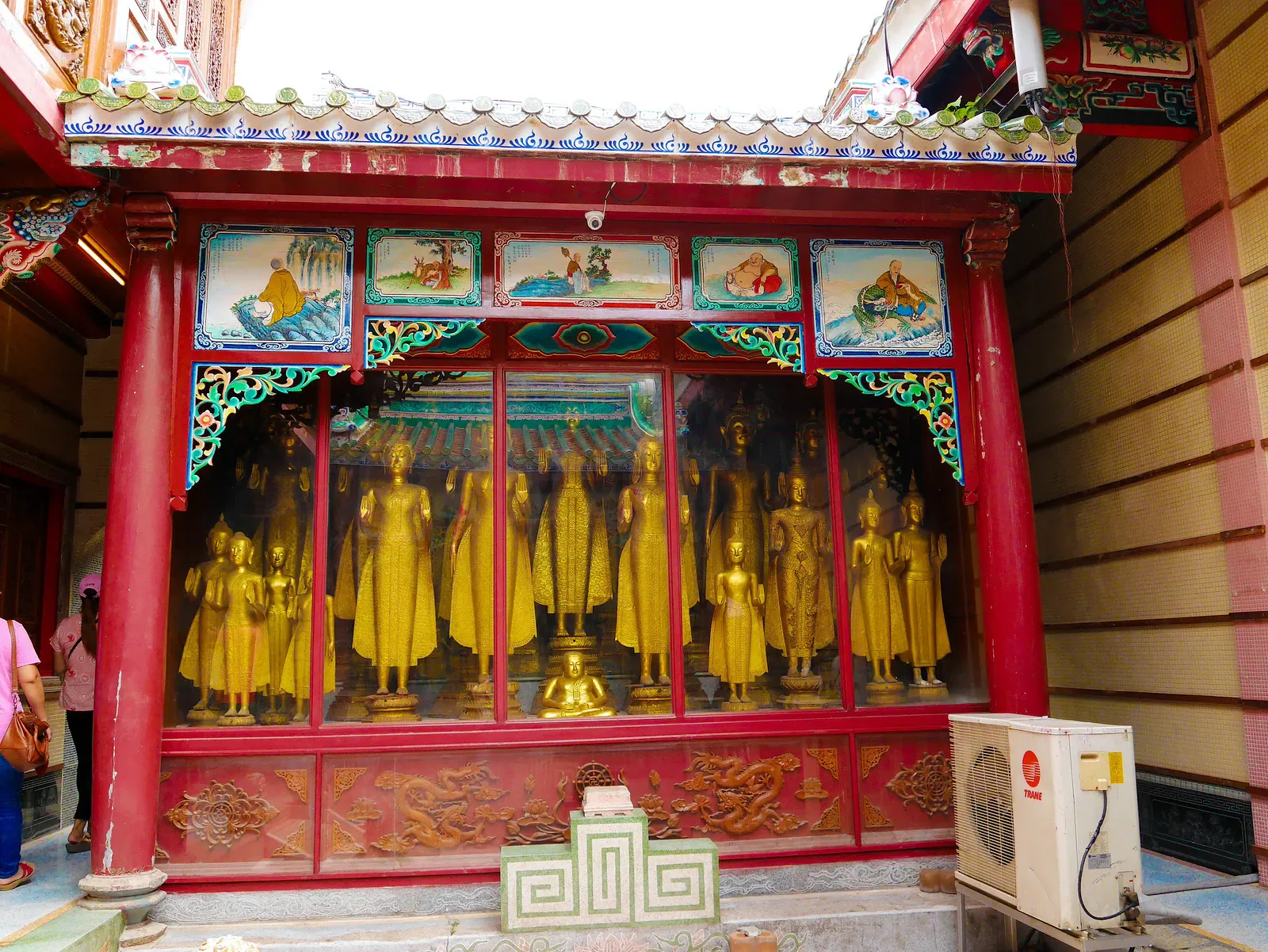
The stations themselves lean into the history: Sanam Chai’s interior was designed under an early-Rattanakosin theme by national artist Pinyo Suwankiri, and Wat Mangkon station is finished in red and gold with a dragon-inspired staircase referencing the temple it’s named for (TAT Newsroom, 2019).
| Rattanakosin | Chinatown (Yaowarat corridor) | |
|---|---|---|
| Nearest MRT | Sanam Chai, Sam Yot, Itsaraphap | Wat Mangkon |
| Walk to main landmarks | Grand Palace, Wat Pho within 10-15 min of Sanam Chai | Yaowarat Road within 5 min of Wat Mangkon |
| Crossing the river | Ferry needed for Wat Arun | Not applicable, district is on one bank |
| After-dark character | Quiet outside Khao San; Khao San itself busy late | Busy well past midnight along Yaowarat |
| Typical stay type | Short sightseeing base, backpacker strip at Khao San | Food-first stay, boutique hotels and hostels |
Walkability and the midday heat
Rattanakosin is widely regarded as one of Bangkok’s most walkable districts: wide sidewalks, pedestrianised stretches near the Grand Palace, and manageable distances between the major sites, with temple courtyards doubling as shaded rest stops along the way. Chinatown is walkable in a different register, dense and covered rather than open, with Yaowarat’s shopfront awnings and side-soi cover offering more shade at street level even without formal green space.
Both districts share Bangkok’s basic heat problem. The sun is genuinely difficult between roughly 11:00 and 15:00, and even a short stretch of unshaded walking at that hour can wear a visitor down fast. Anyone planning a walking-heavy day around either district’s monuments does better scheduling the outdoor stretch for morning or late afternoon and treating midday as an indoor or transit-only window.
Crossing the river to Wat Arun
Basing yourself in Rattanakosin does not put Wat Arun on your doorstep. It sits on the river’s opposite bank, and the standard route is MRT to Sanam Chai, a five-minute walk to Tha Tien pier, then the small cross-river shuttle boat: a roughly three-minute crossing, running every 10 minutes or so from about 05:00 to 19:00, for a few baht in cash (thailandboat.com, checked September 2026). Tha Tien has two separate landings a few metres apart, one for commuter express boats and a smaller booth for the Wat Arun shuttle, so it is worth checking which queue is which before boarding.
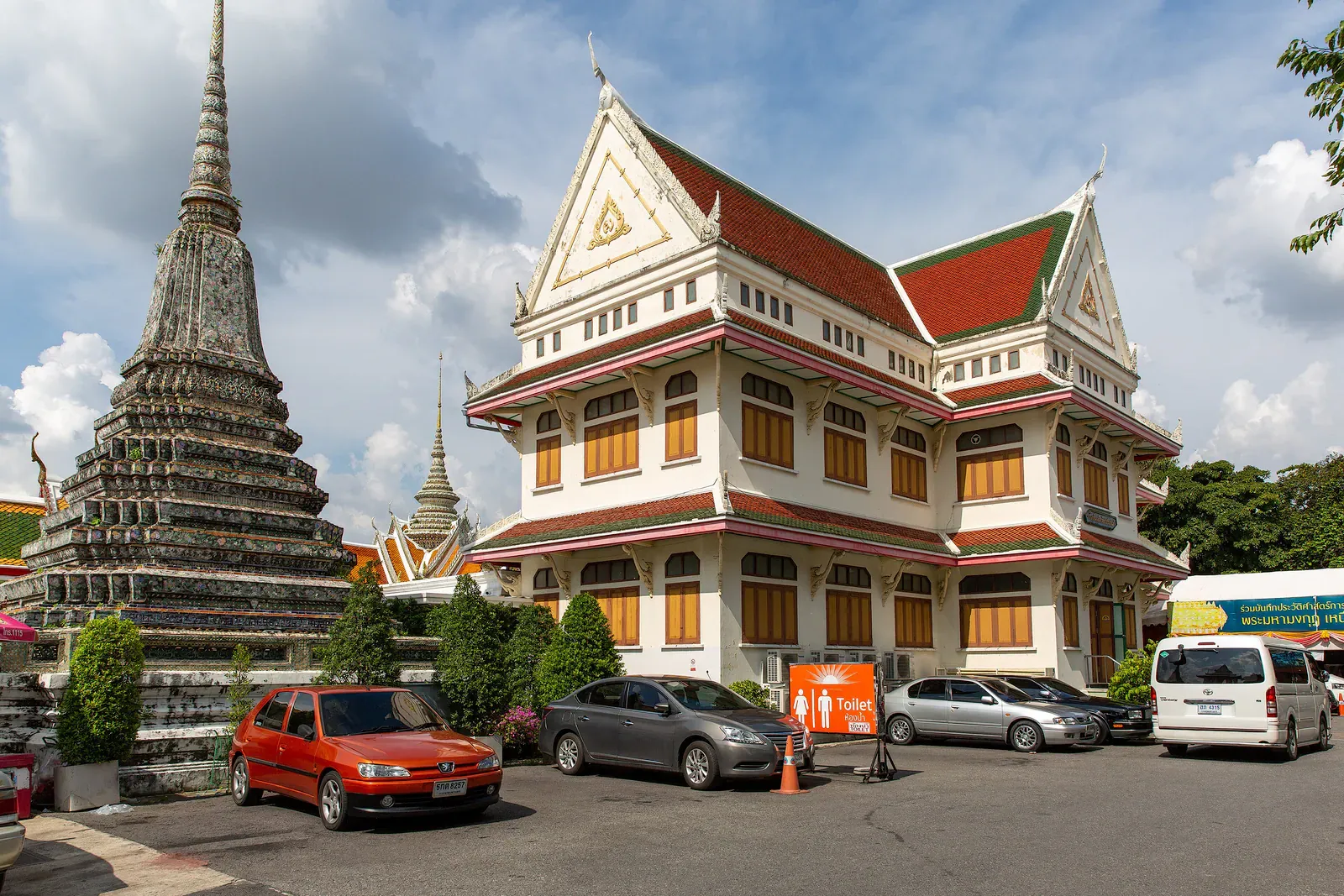
That short crossing is a genuine, if minor, planning factor: anyone basing themselves in Rattanakosin for Wat Arun specifically is still making a short boat trip for it, not a walk. Chinatown residents make the same trip by a longer route, typically MRT to Sanam Chai and the same ferry connection, so the practical distance from either base is similar once you count the whole journey rather than just the walk from your hotel.
After dark: two very different quiet hours
Rattanakosin outside Khao San goes quiet early. The monument zone itself closes to visitors in the late afternoon, and the surrounding streets, being largely government and temple land rather than dense housing, have little of the after-dark commercial activity found elsewhere in the city. Khao San Road is the exception inside the same district: it runs loud and late, open-air bars and street vendors well into the night, a genuinely different register from the temple zone half a kilometre away.
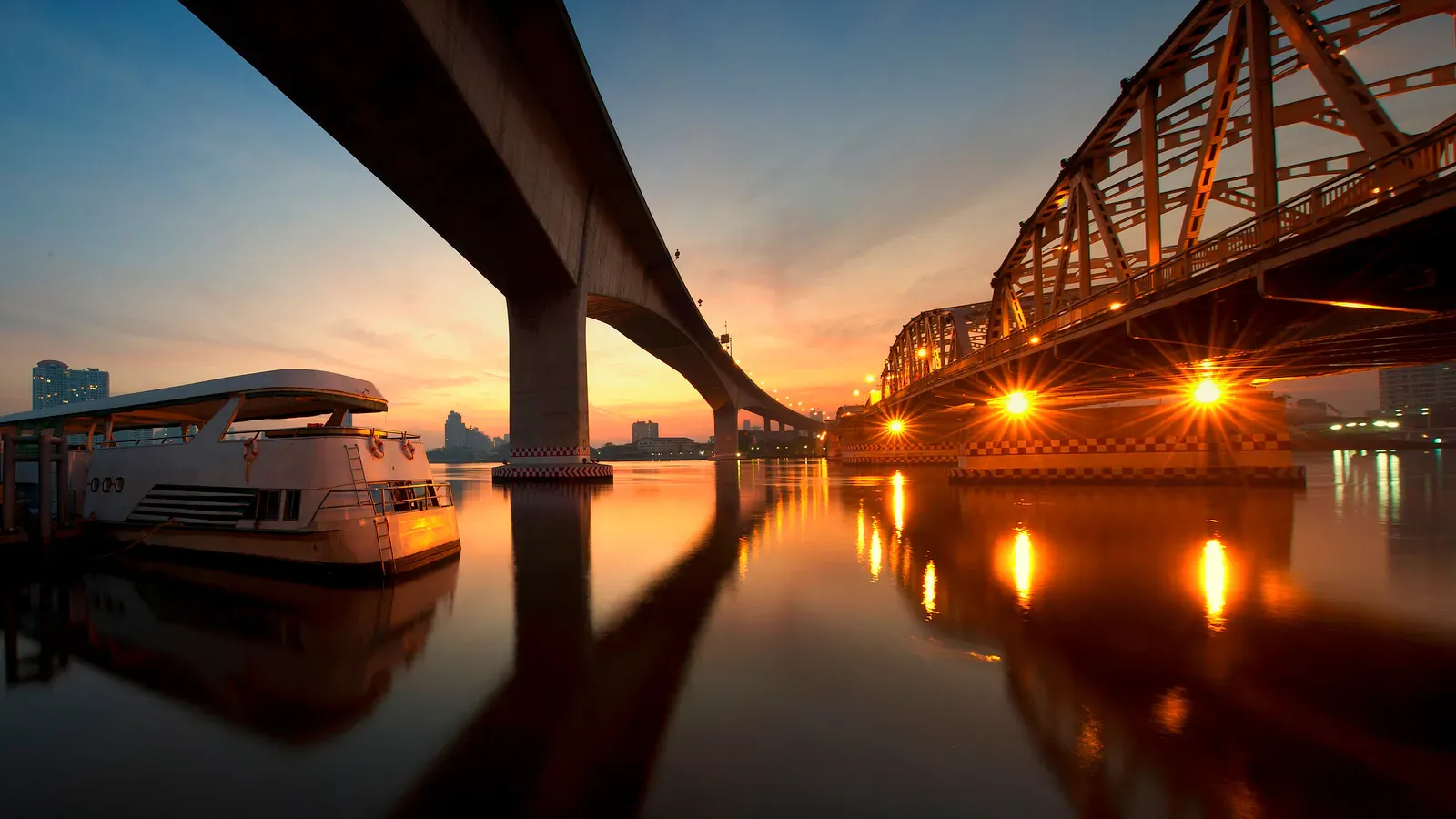
Chinatown runs on close to the opposite schedule. Yaowarat’s gold shops shutter in the early evening, and the street transforms: neon signage switches on, and side-sois fill with food stalls and pop-up kitchens serving late into the night, a pattern that has defined the area for decades. It is Bangkok’s most reliable destination for a genuinely late, genuinely local food scene within a single walkable strip.
Food: destination dining versus everyday convenience
Chinatown wins decisively on food as a reason to be there. Yaowarat is one of the city’s longest-running food streets, known for shark fin and bird’s nest soup at the traditional end and simple noodle and rice stalls at the everyday end, alongside the gold-trade shopfronts that define the street by day. It is destination food: dishes worth planning an evening around, not just a convenient meal between sightseeing stops.
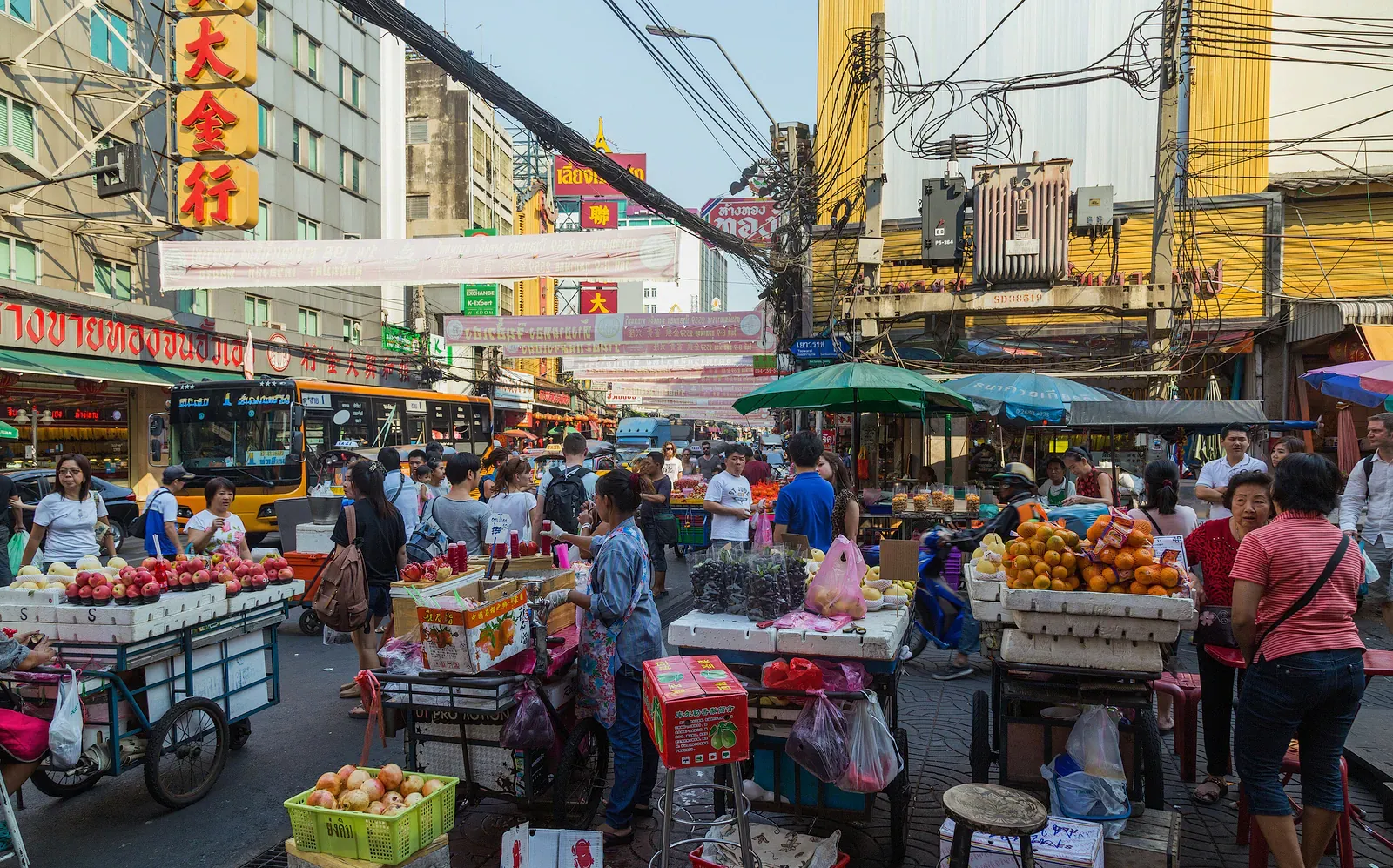
Rattanakosin’s food scene is more mixed by area. Khao San Road has its own dense strip of cheap, tourist-oriented eating, while the quieter monument zone has comparatively few everyday options directly among the temples themselves, since so much of the immediate area is non-commercial government and temple land. A Rattanakosin base generally means walking or taking a short ride to eat well, rather than finding it on the immediate doorstep the way Chinatown does.
What it costs to stay
Accommodation on both sides is genuinely budget-friendly by Bangkok standards, though the price bands differ by type. Hostels near Khao San Road list from roughly 200 THB (around 6 USD, checked September 2026) a night at the very cheapest end, reflecting the area’s decades-long identity as backpacker central (Hostelworld, checked September 2026). Chinatown’s range runs a little wider: budget guesthouses and hostels from roughly 600-900 THB (17-25 USD) a night, mid-range hotels from around 1,000-1,300 THB (28-36 USD), and boutique properties such as Shanghai Mansion running toward 2,800 THB (80 USD) or more (Trip.com and Tripadvisor listings, checked September 2026).
Neither district’s cost sits meaningfully above the citywide budget-to-mid-range band; the difference is more about what you get for it than how much you pay overall, and both are consistently cheaper than a comparable room in Sukhumvit or Sathorn.
Safety and noise, without the folklore
Both districts attract the usual round of secondhand safety warnings that circulate about any dense, tourist-heavy area, most of it repeated rather than documented. What is documented is more mundane: Khao San Road’s late-night bar strip carries the ordinary risks of any nightlife street anywhere, worth the same common-sense caution as a similar strip elsewhere; Chinatown’s crowded evening food streets mean pickpocket-style petty theft is the more realistic concern than anything more serious. Neither district has a documented profile meaningfully different from central Bangkok generally, and claims that go further than that are usually folklore rather than sourced fact.
Noise is a more concrete, unglamorous factor than safety for anyone actually staying overnight. A room directly on Khao San Road or directly on Yaowarat will be loud well into the night in both cases; a room two or three streets back from either main strip drops the noise dramatically while keeping the walk to the action short. This matters more for a slow-travel stay than a short one, since a few loud nights are more tolerable for a three-night tourist visit than a three-week retiree stay.
For a nomad weighing either as a working base, the practical question is less about romance and more about wifi and desk space. Neither district was built with remote work in mind: Rattanakosin has few cafes suited to a laptop day near the monument zone itself, and Chinatown’s food-first character means most ground-floor space is a kitchen or a shop counter rather than seating built for a long working session. Talat Noi’s small café scene is the closest either district gets to Ari-style laptop-friendly cafes, and it is a small handful of venues rather than a genuine cluster. Anyone planning to work daily is better served checking a specific venue’s setup in advance than assuming either district functions like a nomad hub.
Which one for you
- Walkability Rattanakosin
- 4.5 out of 5
- Walkability Chinatown
- 3.5 out of 5
- MRT density Rattanakosin
- 3 out of 5
- MRT density Chinatown
- 3 out of 5
- Food access on foot Rattanakosin
- 2.5 out of 5
- Food access on foot Chinatown
- 5 out of 5
- Quiet after dark (off the main strip) Rattanakosin
- 4 out of 5
- Quiet after dark (off the main strip) Chinatown
- 3 out of 5
Editorial rating, 1 to 5, scored separately for each district where the comparison diverges.
A practical checklist for either choice:
- Pick Rattanakosin if: the Grand Palace, Wat Pho and Wat Arun are your priority, you want a walkable monument cluster, and you’re fine taking a short ferry ride or MRT hop for food and nightlife.
- Pick Chinatown if: food is a priority, not just a between-sights necessity, you want a genuinely late-running neighbourhood, and you’re comfortable with a busier, more commercial street character.
- Either way, book off the main strip if noise matters: a room two or three streets from Khao San or Yaowarat keeps the walk short and the nights quiet.
- Either way, plan around the heat, not just the sights: save outdoor walking for morning or late afternoon and treat the 11:00 to 15:00 window as an indoor or transit block.
Neither district is a compromise pick. They serve genuinely different trip shapes, monument-first sightseeing against food-and-street-life immersion, and the honest answer for many longer stays is splitting nights between the two rather than treating the choice as final.
Written by
Mike Brochlowski
Founder and editor, travel photographer and designer
I'm Mike Brochlowski, a travel photographer and designer, and I currently live on Koh Samui, Thailand. I built BangkokWiki to put practical, checked information about Bangkok in one place. Every page is researched from official and primary sources, and the text names them. Where a page shows a checked date, that is when its facts were last confirmed. I also run samui69.com, a non-commercial guide to Koh Samui. If you spot an error or something out of date, tell me through the contact page and I will check it and correct the page.
Read all articles
Where to stay
Pick the area before the hotel
Traffic and heat make Bangkok distances feel longer than they look on a map, so the area shapes a trip more than the hotel does. Our guides match areas to trip types and explain the trade-offs.

Places to stay
Find a hotel
More from Things to do
- 12 min read
 12 min read
Free Museums in Bangkok: Where Culture Costs Nothing
 12 min read
Best Museums in Bangkok and What Each One Offers

Newsletter
You're subscribed as