Things to do
Bangkok Cabaret Shows Guide: Dance and Live Stages
Bangkok's cabaret, traditional dance, dinner shows and live stages compared honestly, with booking, pricing and how to spot the tourist traps.
At a glance
- Reading time
- 12 min read
- Chapters
- 18
- Published
- Sep 20, 2026
On this page
Bangkok’s stage entertainment spans genuine cultural performance, professional variety theatre, and a tourist-trap end that relies on street-corner hard sell. Knowing which category you’re booking, and going in with the right expectations, is most of what separates a good night from a disappointing one. This guide covers each format on its own terms, the booking mechanics that trip people up, and how to find what’s actually running this week rather than trusting a stale listing.
Ladyboy cabaret revues
Bangkok’s cabaret shows are lip-synced, costume-driven variety productions performed largely by trans women, with a history in Thailand stretching back decades and a professional theatre tradition of their own: closer in spirit to a Vegas revue than to drag performance as it’s understood in Western nightlife, and worth approaching with the same respect you’d give any skilled stage performer rather than as a novelty act. A typical show runs through a sequence of numbers spanning Thai, Chinese, Western pop and show-tune styles, with elaborate costume changes, full sets and choreography, performed by a large cast in a proper theatre rather than a bar stage.
These shows suit almost anyone open to a polished variety performance: families, couples, solo travellers, LGBTQ+ visitors who’ll often find the shows a warm and unpretentious welcome, though very young children may lose interest partway through a longer programme. The show runs roughly an hour to ninety minutes depending on the venue, no spoken dialogue to follow since it’s lip-synced and visual, and dinner packages are sold alongside standalone tickets at the larger venues. Dinner-inclusive packages are convenient if you’re short on time, but the food is generally the least memorable part of the evening; if you have the flexibility, eating separately beforehand and buying just the show ticket usually gets better food for less combined cost.
Traditional Thai dance and khon masked drama
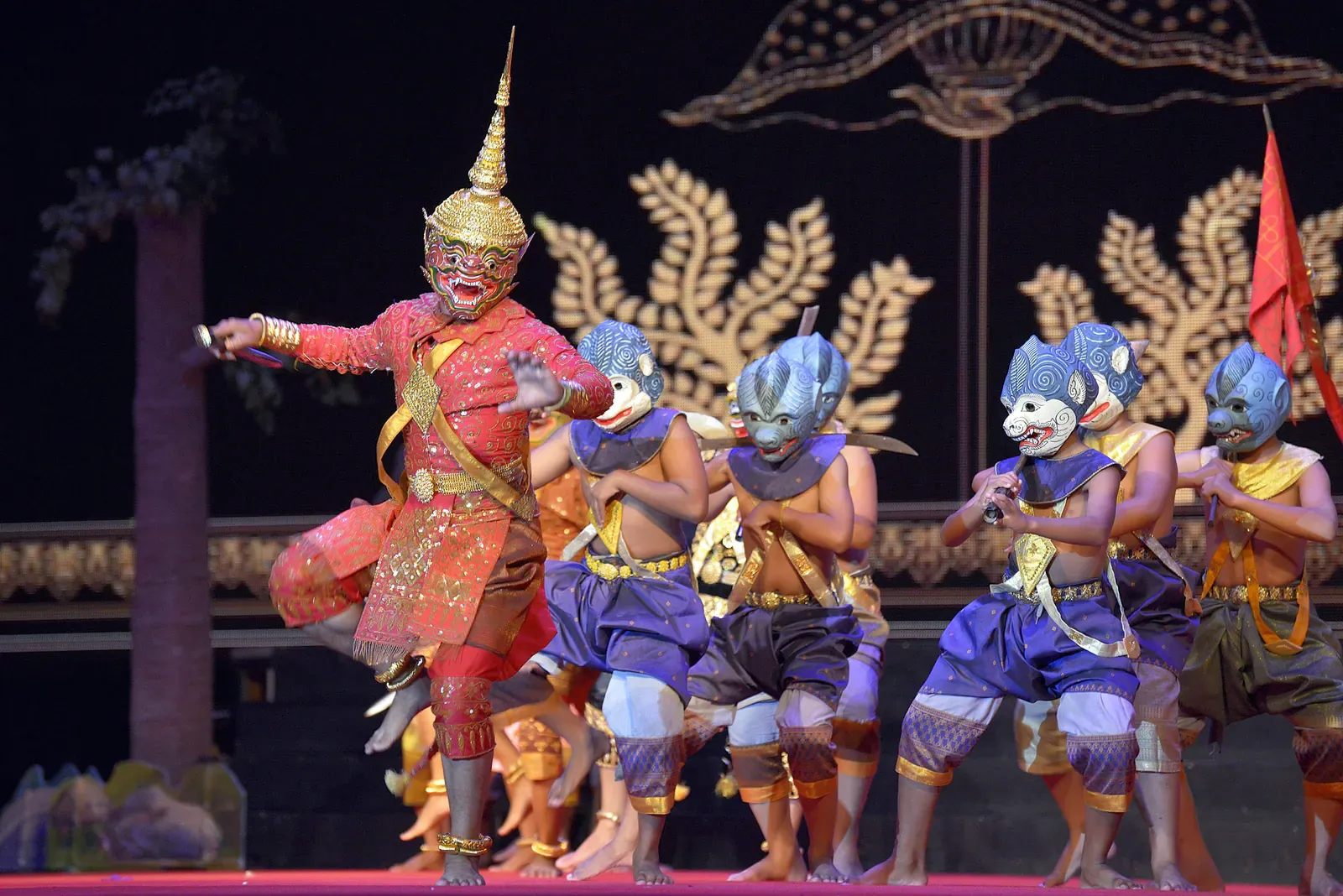
Khon is a masked dance-drama tradition, historically performed for the royal court, that dramatises episodes from the Ramakien (Thailand’s version of the Ramayana epic) through highly stylised movement, elaborate gilded costumes and masks rather than spoken lines, with a narrator and musical ensemble carrying the story. Alongside khon, several venues stage shorter classical Thai dance programmes (a curated set of regional and court dance styles) often paired with a cultural dinner as an easier entry point for visitors unfamiliar with the tradition.
A full khon performance is a serious cultural artwork and rewards some homework beforehand: reading a synopsis of the episode being performed makes a real difference to how much of it lands, since the masks and slow, precise gesture-based storytelling ask more of an unprepared audience than a Western-style narrative would. Shorter cultural dance programmes aimed at visitors are more accessible without preparation, running perhaps 45 minutes to an hour with a handful of distinct dance pieces, spoken or surtitled introductions in English at some venues, and no assumption of prior knowledge. Both formats suit an audience genuinely curious about Thai culture better than one looking for pure spectacle, and neither depends on English fluency to enjoy, since the performance itself is visual and musical rather than dialogue-driven.
Puppet theatre
Thailand has a distinct puppet theatre tradition, including large jointed marionettes historically performed at the royal court and a shadow-puppet tradition with roots shared across mainland Southeast Asia. A small number of Bangkok venues keep this tradition alive for visiting audiences, typically as a shorter programme (45 minutes to an hour) combining a demonstration of the puppetry technique itself with a performed scene, often with English narration or programme notes given the niche, culturally specific subject matter.
This is a good fit for visitors who’ve already done the bigger cultural-show circuit and want something less mainstream, and for anyone travelling with children curious about how the puppets work, since several venues let the audience get close to the puppets before or after the performance. It’s a quieter, more intimate evening than a cabaret or dinner show, with correspondingly smaller audiences and less of a big-production feel.
Large-scale cultural dinner shows
Several Bangkok venues run big-format cultural dinner shows combining a buffet or set Thai meal with a compressed, crowd-pleasing programme of dance, music and sometimes a staged sword fight or ceremonial sequence, designed explicitly for tour groups and first-time visitors wanting a single evening that samples Thai culture without committing to a specialist performance. These run longer overall once dinner is factored in, often two to three hours door to door, and suit larger groups, families and anyone whose priority is an easy, all-in-one evening rather than depth.
The honest trade-off: the performance content is generally a highlights reel rather than a complete artistic work, and the food, while filling, is pitched at group-catering standard rather than a genuine culinary experience. For visitors who want one cultural evening and no more decisions to make, this format does the job efficiently. For anyone wanting either serious dance or serious food, it’s worth choosing a dedicated khon performance and a separate restaurant instead.
Thai classical music performances
Standalone Thai classical music concerts, featuring instruments like the ranat (a xylophone-like instrument), khim and traditional ensembles, are less commercially promoted than the dance and cabaret circuit but do run, often at cultural centres, university venues or as part of a temple or museum programme rather than a dedicated commercial theatre. These suit visitors with a specific interest in the music itself rather than a full theatrical production, tend to be shorter and more intimate, and are the format most likely to require checking listings close to the date rather than booking weeks ahead, since programming is less consistent than the tourist-facing shows.
Contemporary theatre and the English-language scene
Bangkok has a small but active contemporary theatre scene, including English-language productions aimed at the expat and international resident community, small independent Thai-language companies working in modern styles, and the occasional touring international production. This is the format for residents and long-stayers more than short-trip tourists, since programming runs in short seasons rather than a nightly fixture, and finding what’s on requires checking current listings rather than assuming a standing show. Venues tend to be smaller black-box or studio spaces rather than the large theatres used for cabaret and dinner shows, giving a more intimate, dialogue-driven evening for anyone missing a proper theatre fix.
Concerts and the arena circuit
Bangkok is a regular stop for international touring acts and hosts a full domestic concert circuit, from large indoor arenas to mid-sized venues and outdoor festival-format shows depending on the act and season. Pricing and availability depend entirely on the specific act and tour, so there’s nothing generic to say about cost here beyond checking the venue’s own channels once an act is announced. What’s worth knowing structurally: Bangkok’s arena venues are generally well served by rail, but a big show still means a genuine crowd crush at the nearest station afterward, so building in extra time to leave is sensible for anyone with an early start the next day.
Comedy and open-mic nights
A smaller, mostly English-language comedy scene runs in Bangkok, largely centred on expat-oriented bars and small venues hosting stand-up nights, open mics and the occasional touring comedian. These are low-cost or sometimes free-entry-with-a-drink-minimum evenings, informal in dress and atmosphere, and better suited to adults than families given the bar setting and content. Quality varies night to night in the nature of open-mic formats, and this is very much a “check what’s on this specific week” category rather than one with a predictable standing schedule.
Muay Thai stadium nights as entertainment
A Muay Thai stadium night is genuinely one of Bangkok’s best evening entertainments regardless of whether you follow the sport: live music accompanying the fights, a real crowd atmosphere, and a spectacle that doesn’t require any background knowledge to enjoy. This guide treats it only briefly here as part of the wider evening-entertainment landscape; the sport, stadiums, ticketing and etiquette are covered properly elsewhere on the site.
Booking: when walk-up works and when it doesn’t
For the big commercial cabaret and dinner shows, walk-up tickets are often available even on the day, since these venues run nightly with substantial seating capacity, though the best seats do sell out ahead during peak tourist season. For khon, puppet theatre and Thai classical music, schedules are less frequent and seating smaller, so checking and booking ahead matters more: turning up on spec risks a fully sold show or, just as often, no performance scheduled that night at all. Concerts and arena shows obviously need advance booking once tickets go on sale. Comedy nights and open mics are almost always walk-up, informal affairs. As a rule, the bigger and more tourist-oriented the production, the more forgiving the booking window; the more niche or culturally specific, the less forgiving.
Seating tiers and what the cheap seats give you
Most cabaret and dinner-show venues sell tiered seating, with front-and-centre rows priced highest for the clearest sightline to the stage and the best photo opportunities, and rear or side seating sold at a discount. The cheap seats are rarely a bad deal for the show itself: the stage and lighting are designed to read from a distance, and most productions are visually broad enough that a rear seat still delivers the full performance. Where the tiers matter more is at dinner shows, where the seating tier can also determine table position relative to the buffet or service order, which affects the practical dining experience more than it affects the show itself.
Dress codes, photography and tipping
Dress codes at Bangkok’s commercial cabaret and dinner shows are generally relaxed: smart-casual is safe everywhere, and none of the mainstream venues enforce anything close to a strict door policy. Khon and cultural-centre performances lean slightly more formal by convention rather than rule. Photography policy varies by venue and by moment: many cabaret shows allow photos during the performance but restrict video, some restrict flash photography specifically since it disrupts performers and other audience members, and it’s worth checking the venue’s stated policy rather than assuming either way. Tipping performers is a genuine, expected norm at cabaret shows specifically: many performers work partly for tips, and it’s customary to tip during a post-show photo opportunity if you pose with a performer, in cash, at a level that reflects a token of appreciation rather than a large sum. Traditional dance, khon and classical music performances don’t carry the same photo-and-tip convention, since the format is a formal theatrical performance rather than a cabaret meet-and-greet.
Timing against the last train
Most cabaret and dinner shows run an early evening slot with a second, later show on busier nights, and the earlier show is generally the safer choice for anyone relying on the BTS or MRT to get home, since Bangkok’s rail network stops running at around midnight. A later show, or a concert that runs long, can leave you timing an exit against the last train or needing a taxi home, which is easy enough to arrange but worth planning for rather than discovering at the door. Comedy nights and open mics, running later and in bar settings, assume a taxi or ride-hailing trip home as the default rather than the exception.
Going with children
Cabaret shows are broadly fine for children in the sense that there’s no explicit adult content on stage, though the visual spectacle and lip-synced format may not hold a young child’s attention for the full runtime, and some venues set a soft minimum-age expectation more out of practicality than policy. Traditional dance, khon and puppet theatre are generally better suited to children with some patience for a slower, story-driven format, and puppet theatre in particular tends to engage curious children well. Large-scale dinner shows, precisely because they compress the programme into shorter, varied segments, are often the easiest family choice of the bunch. Concerts, comedy nights and the more adult end of the bar-based scene are not really built for children and are best treated as an adults’ evening out.
The tourist-trap end: aggressive street selling and the “free show”
Bangkok has a persistent street-level sales operation around its entertainment scene, particularly near tourist zones in the evening, where touts push show tickets, “special discount” cabaret seats, or a “free show” that turns out to require a minimum bar spend, a commission-laden add-on, or simply isn’t the show advertised. The general rule: a legitimate, well-known show doesn’t need street touts working a corner to sell it, and any offer that sounds unusually cheap or unusually free is worth treating with real scepticism. Booking directly through a venue’s own official channel, or at minimum walking to the venue itself to check current pricing at the box office, avoids almost all of this. This guide won’t name or recommend any booking platform, but the safest practical habit is simple: verify with the venue, not the person on the street.
Finding what’s actually on this week
Because schedules for the smaller and more culturally specific formats (classical music, contemporary theatre, comedy, and even some khon performances) change week to week, a listing found in an older article or a general travel guide is not a reliable source for tonight’s programme. The dependable approach is checking a venue or cultural centre’s own current channel close to your date, since the commercial cabaret and dinner shows run nightly and rarely need this kind of checking, while everything more niche genuinely does. If an evening out is the centrepiece of a trip, it’s worth deciding a day or two ahead rather than assuming a specific niche show will be running on arrival.
Pairing an evening show with an earlier activity is easy to plan around rail access: many of the venues covered here sit near BTS or MRT stations, and the indoor fun and arcades guide covers what to do in the same part of town before a show if you’re building a full day. If a night out is meant to include gambling, read casinos in Bangkok and their legal status first. Families choosing between a cultural evening and a bigger daytime outing might also compare against the theme and water parks guide, since a big outdoor day and a late show on the same day is a genuinely tiring combination for younger children.
Indicative pricing
Indicative bands for 2026 (THB, approximate USD, confirm current pricing directly with the venue before booking):
- Commercial cabaret show, standard seat: roughly ฿800-1,500 (~US$23-43)
- Commercial cabaret show with dinner package: roughly ฿1,500-2,500 (~US$43-72)
- Cultural dinner show (large-scale, buffet-based): roughly ฿1,200-2,200 (~US$34-63)
- Khon or classical dance performance, standard ticket: roughly ฿500-1,500 (~US$14-43) depending on venue and seating
- Comedy night or open mic: often free with a drink minimum, or roughly ฿200-500 (~US$6-14)
Common questions
What is a Bangkok ladyboy cabaret show actually like?
It’s a professional, lip-synced variety show performed by a large cast of trans women, with elaborate costumes, choreography and a mix of Thai, Chinese and Western musical numbers, running roughly an hour to ninety minutes. It’s closer to a Vegas-style revue than adult entertainment, and it suits families, couples and solo travellers alike.
Is dinner worth adding to a Bangkok cabaret or dinner show?
Sometimes, mostly for convenience rather than food quality. Dinner packages save you arranging a separate meal, but the food at both cabaret dinner add-ons and dedicated cultural dinner shows is generally group-catering standard; if food quality matters to you, eating separately and buying just the show ticket usually works out better.
Do I need to book Bangkok cabaret tickets in advance?
Not always. The big commercial cabaret shows run nightly with large seating capacity, and walk-up tickets are often available, though the best seats sell out ahead in peak season. Smaller, more culturally specific performances (khon, classical music, puppet theatre) run less frequently and are worth checking or booking ahead.
Are Bangkok’s cheap street-sold show tickets a scam?
Not always a scam outright, but aggressively touted street tickets and “free show” offers are a genuine tourist-trap pattern, often carrying hidden minimum spends or steering you to a different show than advertised. Booking through the venue’s own channel, or checking at the box office directly, avoids the risk.
Can I take children to a Bangkok cabaret or dance show?
Yes, generally. Cabaret shows have no explicit adult content, though the runtime may test a young child’s patience. Traditional dance, khon and especially puppet theatre tend to suit curious children well, and large-scale dinner shows are often the easiest family option since the programme is varied and compressed.
Where can I watch Muay Thai in Bangkok as an evening out?
A Muay Thai stadium night is a genuine entertainment evening in its own right, with live music and real crowd atmosphere, and needs no background knowledge to enjoy. It’s covered in full elsewhere on this site, including stadiums, ticketing and etiquette.
Part of
Written by
Mike Brochlowski
Founder and editor, travel photographer and designer
I'm Mike Brochlowski, a travel photographer and designer, and I currently live on Koh Samui, Thailand. I built BangkokWiki to put practical, checked information about Bangkok in one place. Every page is researched from official and primary sources, and the text names them. Where a page shows a checked date, that is when its facts were last confirmed. I also run samui69.com, a non-commercial guide to Koh Samui. If you spot an error or something out of date, tell me through the contact page and I will check it and correct the page.
Read all articles
Where to stay
Pick the area before the hotel
Traffic and heat make Bangkok distances feel longer than they look on a map, so the area shapes a trip more than the hotel does. Our guides match areas to trip types and explain the trade-offs.

Places to stay
Find a hotel
More from Things to do
- 14 min read
 14 min read
Bangkok Theme Parks and Water Parks Guide
 9 min read
Bangkok Must-Do Experiences, Scored by Time, Cost, Crowd

Newsletter
You're subscribed as