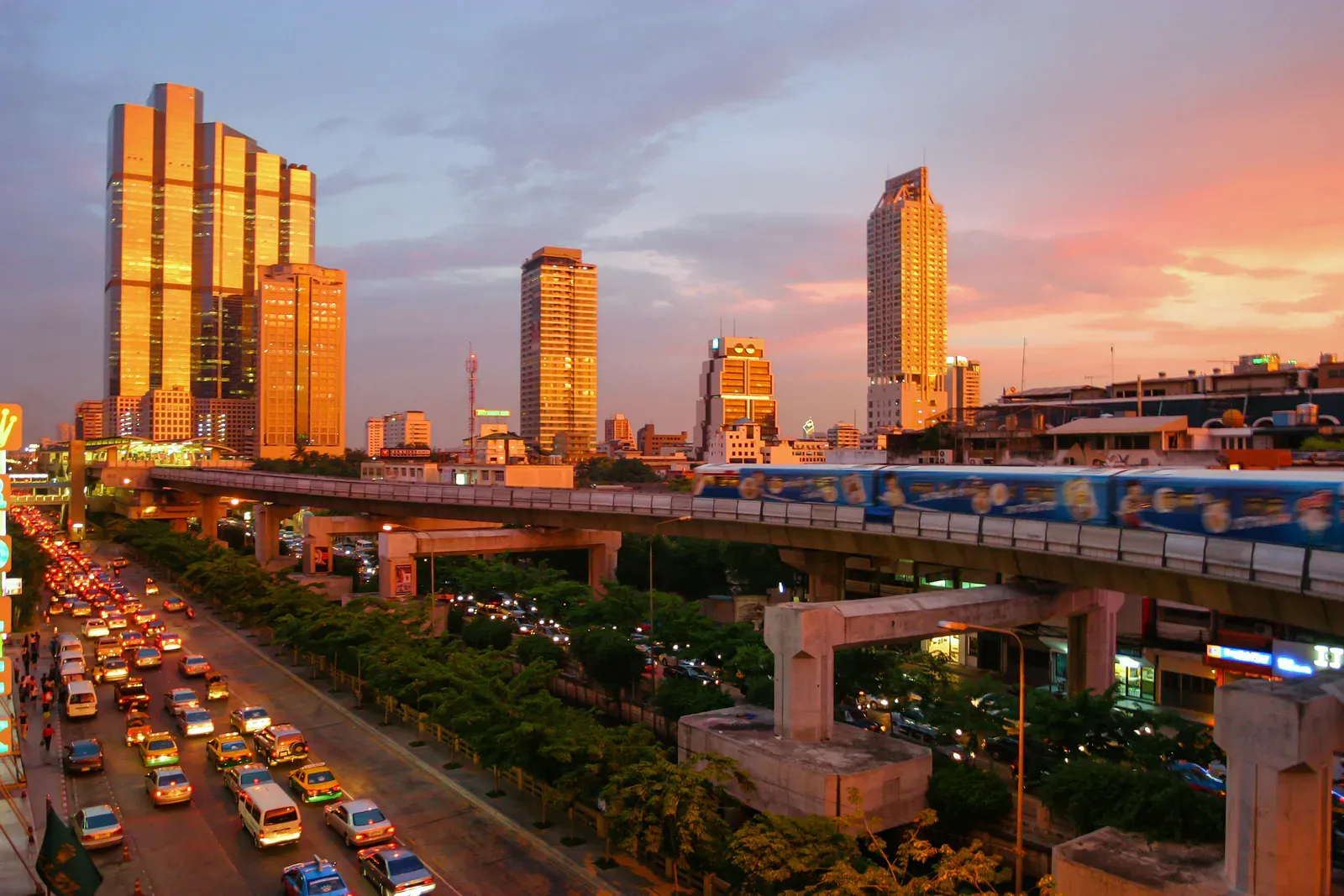
Transport
A Practical Guide to Bangkok's Interchange Stations
What transferring between BTS, MRT and Airport Rail Link actually involves at Bangkok's main interchange stations, and which ones to avoid at rush hour.
On this page
Transferring between Bangkok’s rail systems is where newcomers lose the most time, and occasionally the most money, because a station that looks like a single connected hub on the map is often two separate stations that share a name and a pavement. Knowing which transfers stay inside one paid area and which mean exiting, walking and paying again changes how you plan a route entirely.
What actually counts as an interchange
A real interchange, in the sense of a seamless transfer, means moving from one line to another without leaving the paid area: you stay past the fare gates, walk to a different platform, and board. In Bangkok this happens at exactly one significant point on the core network: between the BTS Sukhumvit and Silom lines at Siam, both run by the same operator under one fare system.
Everywhere else that two systems meet, you are dealing with what is better described as a connected pair of stations: same name, or closely related names, often joined by a covered skywalk or a short stretch of street, but separated by a fare-gate exit on one side and a fare-gate entry on the other. You are not charged extra for “transferring” as such: you are simply buying two separate journeys, because you have moved onto a different operator’s network. This is the pattern behind why two systems don’t share a ticket, and it explains almost every “why did I have to pay again” moment on the network.
Below is what to expect at the stations that handle the most transfer traffic.
Siam: the one true interchange
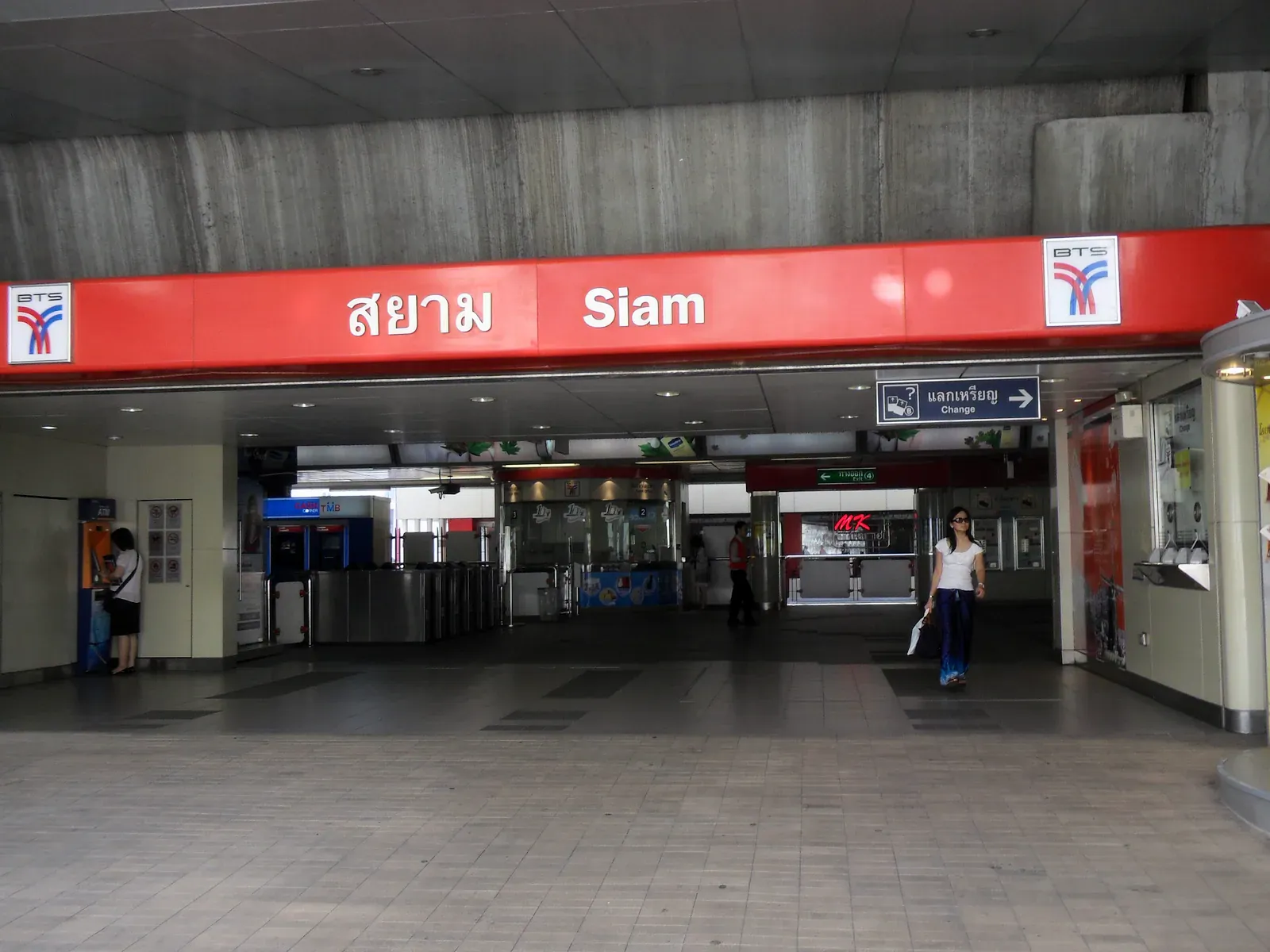
Siam is the pivot of the BTS network, where the Sukhumvit and Silom lines cross on two stacked levels. Because both lines belong to the same operator, moving between them means walking between platforms without exiting the paid area: no new ticket, no gate. It is also the busiest single point on the BTS network, with heavy pedestrian flow at most hours, so the walk itself can be slow even though no payment step interrupts it. At rush hour, allow extra time simply for the crowd, not for the mechanics of the transfer. For the malls and hotels around it, see our Siam area guide.
Asok and Sukhumvit: BTS meets the Blue Line
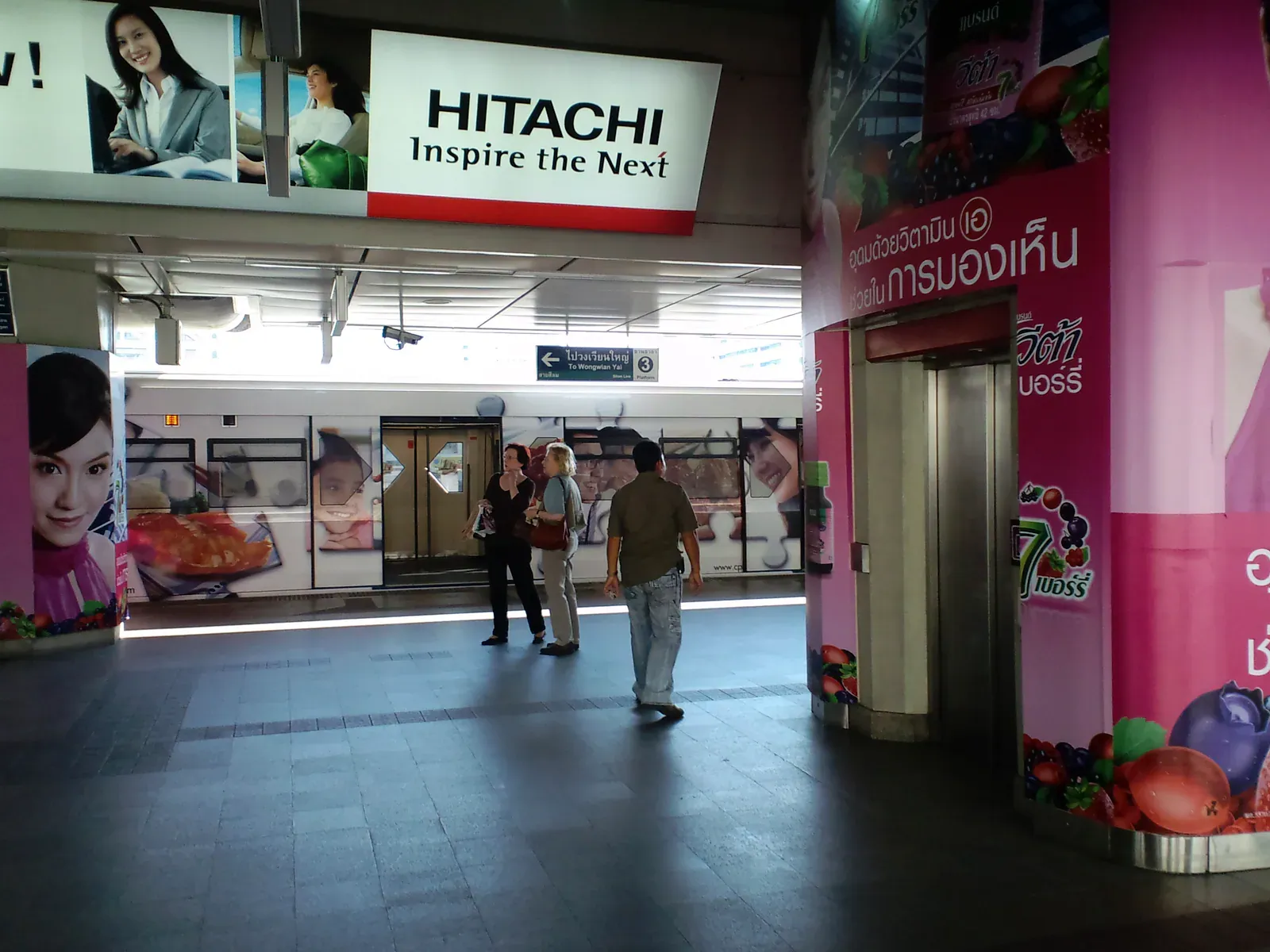
Asok (BTS) and Sukhumvit (MRT Blue Line) sit beside each other in the same busy corner of the Sukhumvit Road corridor, linked by an underground concourse that runs through the basement of a nearby shopping centre. The walk is level, air-conditioned and short by Bangkok standards, which makes this one of the more comfortable transfers on the network, but it is still a two-ticket transfer: you exit BTS fare gates, walk the concourse, and enter MRT fare gates (or the reverse). Expect crowding during the evening rush, when office workers moving between the two systems bottleneck at both sets of gates.
Mo Chit and Chatuchak Park: the northern hub
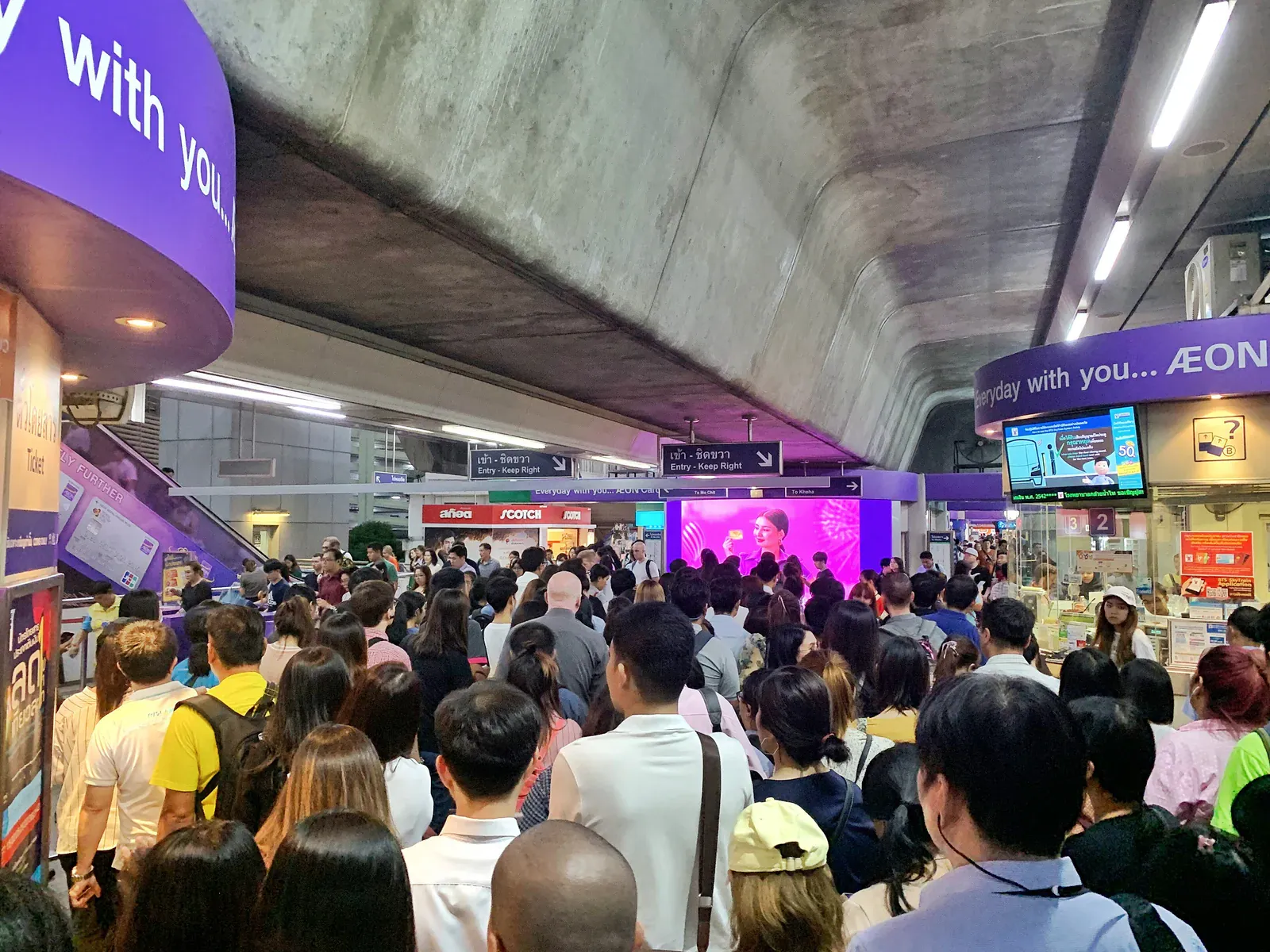
Mo Chit (BTS) and Chatuchak Park (MRT Blue Line) sit close together near Chatuchak Park and the weekend market, connected by a street-level or skywalk route depending on which exits you use. This transfer puts you back in the open air for at least part of the walk, which matters on a hot afternoon or during rain: budget a few extra minutes if you are carrying luggage or shopping from the market. Weekend crowding here is driven less by commuters and more by market visitors, so the worst congestion is Saturday and Sunday daytime rather than a typical weekday rush hour.
Sala Daeng and Si Lom: the Silom business transfer
Sala Daeng (BTS Silom Line) and Si Lom (MRT Blue Line) serve the Silom and Sathorn office district, connected by a short underground or street-level link depending on the exit chosen. This is a heavy weekday-commuter transfer, busiest at the start and end of the standard office day, with a noticeably quieter profile on weekends. Stairs feature at several of the connecting points, so travellers with heavy luggage should look for the lift-equipped exits rather than the nearest one.
Phaya Thai: BTS to the airport line
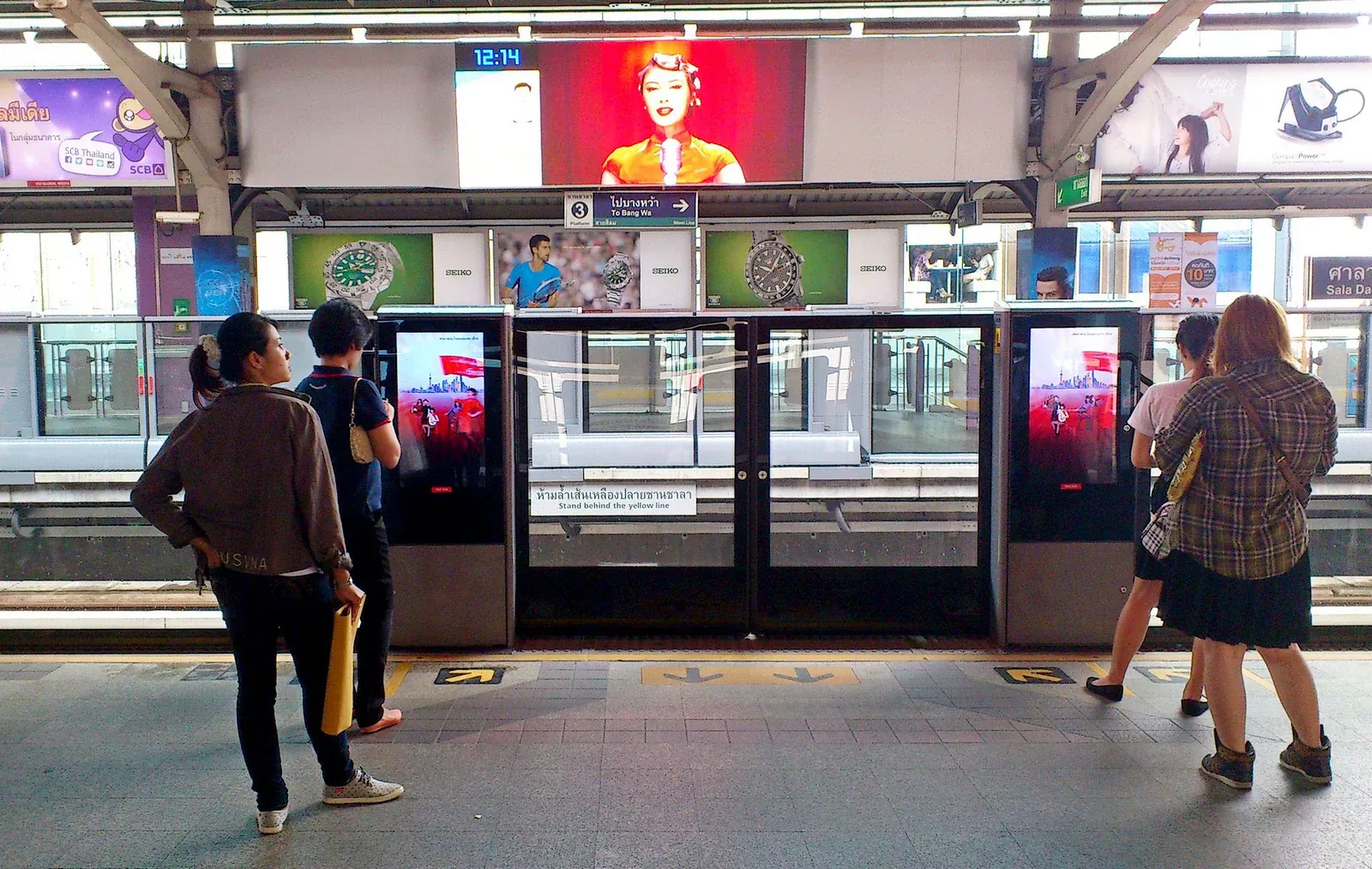
Phaya Thai is where the BTS Sukhumvit Line meets the Airport Rail Link, and it is the transfer most visitors will use at least once, arriving from or heading to Suvarnabhumi. The connection is a covered skywalk, which keeps you out of the sun and rain, but it is a genuine walk rather than a quick platform-to-platform step, and it involves a fare-gate exit and re-entry like every other cross-operator link. If you are travelling with luggage straight off a flight, this is one of the transfers worth allowing real time for, not a rushed connection between trains timed to the minute.
Bang Wa: BTS meets the Blue Line in Thon Buri
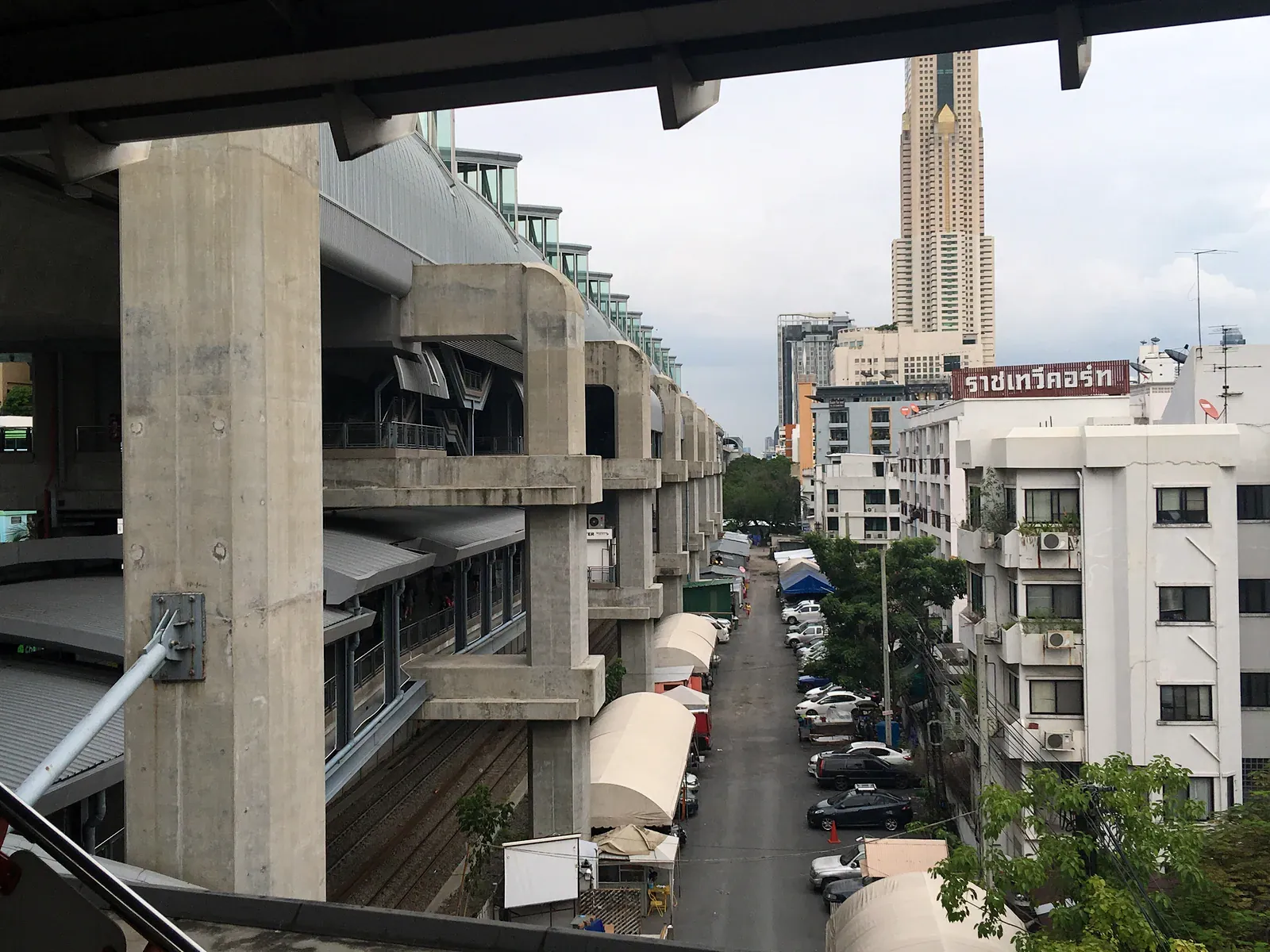
Bang Wa, at the western end of the Silom Line, is also a Blue Line stop, making it the main interchange on the Thon Buri side of the river. The two systems sit close together with a straightforward connecting walk, but again on separate fare systems. Bang Wa carries less pedestrian volume than the central interchanges, so it is a comparatively calm transfer outside peak commuting hours.
Tao Poon: Blue Line meets Purple Line
Tao Poon is the interchange between the MRT Blue and Purple lines, and because both are operated by the same company, the physical transfer is more integrated than most cross-operator links, even though the fare structures are not identical for every journey. Expect a straightforward change of platform within the same station complex, generally faster than the BTS-to-MRT transfers described above.
Phetchaburi and Makkasan: the walk that isn’t obvious
Phetchaburi (MRT Blue Line) and Makkasan (Airport Rail Link) are close together but not obviously so from street level: the connecting route is a walk rather than a single flight of stairs, and first-time users often miss it because the two stations don’t share a name. This is the clearest example on the network of two stations that are genuinely useful to combine but give no visual hint of the link from inside either one. If you plan to use this connection, look up the walking route in advance rather than expecting clear signage to carry you the whole way.
Buying the second ticket without losing the flow
Because most transfers mean a fresh fare rather than a free walk-through, the fastest travellers are the ones who have their second payment method ready before they reach the new gate line, not after. A few habits that keep a cross-operator transfer quick:
- Top up before you need to, not at the gate itself. A card with a low balance is the single most common cause of a hold-up at a busy interchange, because the person in front of you is topping up while you wait.
- Know which card works where. The BTS network’s stored-value card and the MRT’s card are not interchangeable, and neither covers the Airport Rail Link. Carrying small cash for a single ticket on whichever system you use less often avoids the need for a third card.
- Single tickets are fine for an occasional transfer. There is no penalty, financial or otherwise, for buying a one-off ticket at a machine rather than maintaining a stored-value card for a system you rarely use.
- Machines cluster at busy interchanges, but so do the queues. At Siam, Asok/Sukhumvit and Sala Daeng/Si Lom during peak hours, expect a short wait at the ticket machine itself, on top of the walk between systems.
Rush-hour crowding and platform-exit strategy
Bangkok’s rail crowding follows a predictable pattern: a sharp weekday peak from the start of the office day and another in the early evening, with Siam, Asok/Sukhumvit and Sala Daeng/Si Lom the worst-affected because they combine commuter volume with shopping and business-district footfall. A few habits help:
- Move to the platform end away from the main stairs before boarding, since that is usually where the crowd is thinnest and where you can exit into a connecting corridor faster on arrival.
- Avoid the first available train if it is already visibly full at a transfer station: waiting thirty seconds for the next one is often faster than fighting to board and being pinned near the doors.
- At weekday evening peak, treat any interchange near Silom, Sukhumvit or Siam as a ten-to-fifteen-minute event, not a quick change, and build that into your schedule rather than timing a connection tightly.
Accessibility: seniors, wheelchairs, luggage and prams
Lift provision has improved across both networks over the years, but it is not universal at every exit of every station, and the lift is not always beside the most obvious exit. For anyone travelling with a wheelchair, a heavy suitcase or a pram, the general rules that hold up well in practice are:
- Plan the lift route before you arrive, rather than assuming the nearest staircase has a lift alternative next to it.
- Interchange stations with underground concourses (Asok/Sukhumvit, Sala Daeng/Si Lom) tend to have step-free connecting routes, but the walk is often longer than the stair route, so allow extra time rather than extra effort.
- Skywalk transfers (Mo Chit/Chatuchak Park, Phaya Thai) put you outdoors for part of the journey, which matters for heat and rain as much as for mobility.
- Staff at fare gates can usually point towards the nearest working lift if signage is unclear; asking costs little time and avoids a wrong turn into a stair-only exit.
- Seniors and travellers with luggage should treat any transfer during peak hours as worth avoiding if the schedule allows it, since crowding affects lifts and step-free routes as much as stairs.
Which interchange to avoid at 18:00
| Interchange | Evening peak (around 18:00) | Better alternative |
|---|---|---|
| Siam (Sukhumvit ↔ Silom) | Very heavy; same fare zone but slow on foot | Travel slightly earlier or later if not tied to a schedule |
| Asok ↔ Sukhumvit | Heavy at both fare-gate clusters | Use the quieter end of the connecting concourse |
| Sala Daeng ↔ Si Lom | Heaviest of the cross-operator transfers, office exodus | Avoid 17:30-19:00 if carrying luggage |
| Mo Chit ↔ Chatuchak Park | Moderate on weekdays, heavy on weekends | Weekday evenings are calmer than weekend afternoons |
| Phaya Thai ↔ Airport Rail Link | Moderate, spikes around flight-heavy hours | Rarely a true rush-hour bottleneck outside flight clusters |
| Bang Wa (Silom ↔ Blue) | Light to moderate | Comfortable most of the day |
| Tao Poon (Blue ↔ Purple) | Moderate, smoother than cross-operator transfers | Manageable even in peak windows |
For a wider view of how these lines connect into the whole network, see the guide to reading Bangkok’s rail map. Where a river crossing avoids a difficult interchange altogether, the Chao Phraya piers guide covers when the boat is the better move.
Common questions
Which Bangkok interchange is genuinely free of charge?
Only the transfer between the BTS Sukhumvit and Silom lines at Siam stays within one paid area and one fare. Every other named interchange on this page involves exiting one system’s fare gates and entering another’s, because a different operator runs each side.
Is the Asok to Sukhumvit MRT transfer worth the walk?
Yes for most travellers: it is short, level, air-conditioned and reliable, even though it requires a fresh MRT fare. The main cost is time during the evening rush, when both sets of fare gates get busy.
What is the least crowded major interchange?
Bang Wa and Tao Poon generally see lighter foot traffic than the central interchanges, since they sit away from the densest office and shopping districts.
How much time should I allow for a rush-hour transfer?
Ten to fifteen minutes at the busiest central interchanges (Siam, Asok/Sukhumvit, Sala Daeng/Si Lom) during weekday peak hours is a realistic buffer, more if you are carrying luggage or need a lift.
Are lifts guaranteed at every interchange exit?
No. Lift access has expanded across both networks but is not present at every exit of every station, and it is not always beside the busiest exit. Planning the lift route in advance, or asking station staff, avoids ending up at a stair-only exit.
Why isn’t Phetchaburi to Makkasan obviously signed as a transfer?
Because the two stations belong to different operators and different lines that happen to sit close together without sharing a name, the connection between them is easy to miss without checking a route in advance, unlike interchanges that share signage and branding.
Can I use the same stored-value card on both BTS and MRT?
No. Each operator’s card works only on its own network, and neither covers the Airport Rail Link. Anyone who moves between systems regularly typically ends up carrying two cards, or buying single tickets on whichever system they use less often.
Written by
Mike Brochlowski
Founder and editor, travel photographer and designer
I'm Mike Brochlowski, a travel photographer and designer, and I currently live on Koh Samui, Thailand. I built BangkokWiki to put practical, checked information about Bangkok in one place. Every page is researched from official and primary sources, and the text names them. Where a page shows a checked date, that is when its facts were last confirmed. I also run samui69.com, a non-commercial guide to Koh Samui. If you spot an error or something out of date, tell me through the contact page and I will check it and correct the page.
Read all articles
Where to stay
Pick the area before the hotel
Traffic and heat make Bangkok distances feel longer than they look on a map, so the area shapes a trip more than the hotel does. Our guides match areas to trip types and explain the trade-offs.

Places to stay
Find a hotel
Explore the other desks
More from Transport
- 11 min read
 9 min read
Asok BTS Bangkok: Exits, MRT Transfer and Terminal 21
 10 min read
Chao Phraya Express Boat Piers: A Practical Guide

Newsletter
You're subscribed as