Transport
Chao Phraya Express Boat Piers: A Practical Guide
How Bangkok's Chao Phraya express boats, cross-river ferries and canal boats actually work, and which piers connect usefully to rail and to each other.
On this page
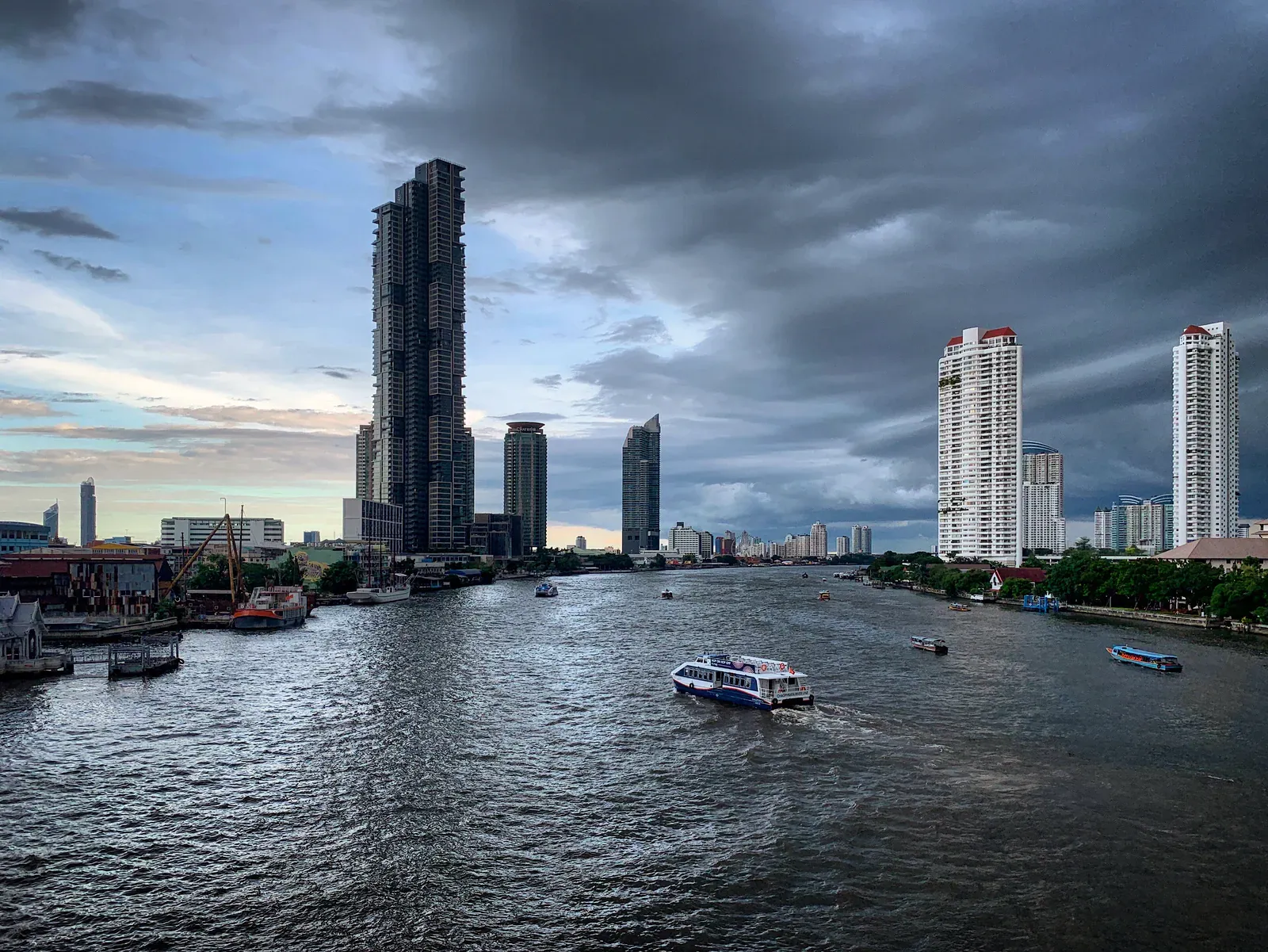
The Chao Phraya River is a working transport corridor, not a scenic extra, and for several journeys across the old city it is genuinely faster than the road. Understanding how the pier system and the boat categories work turns the river from a tourist novelty into a route you can actually plan around.
How the pier numbering works
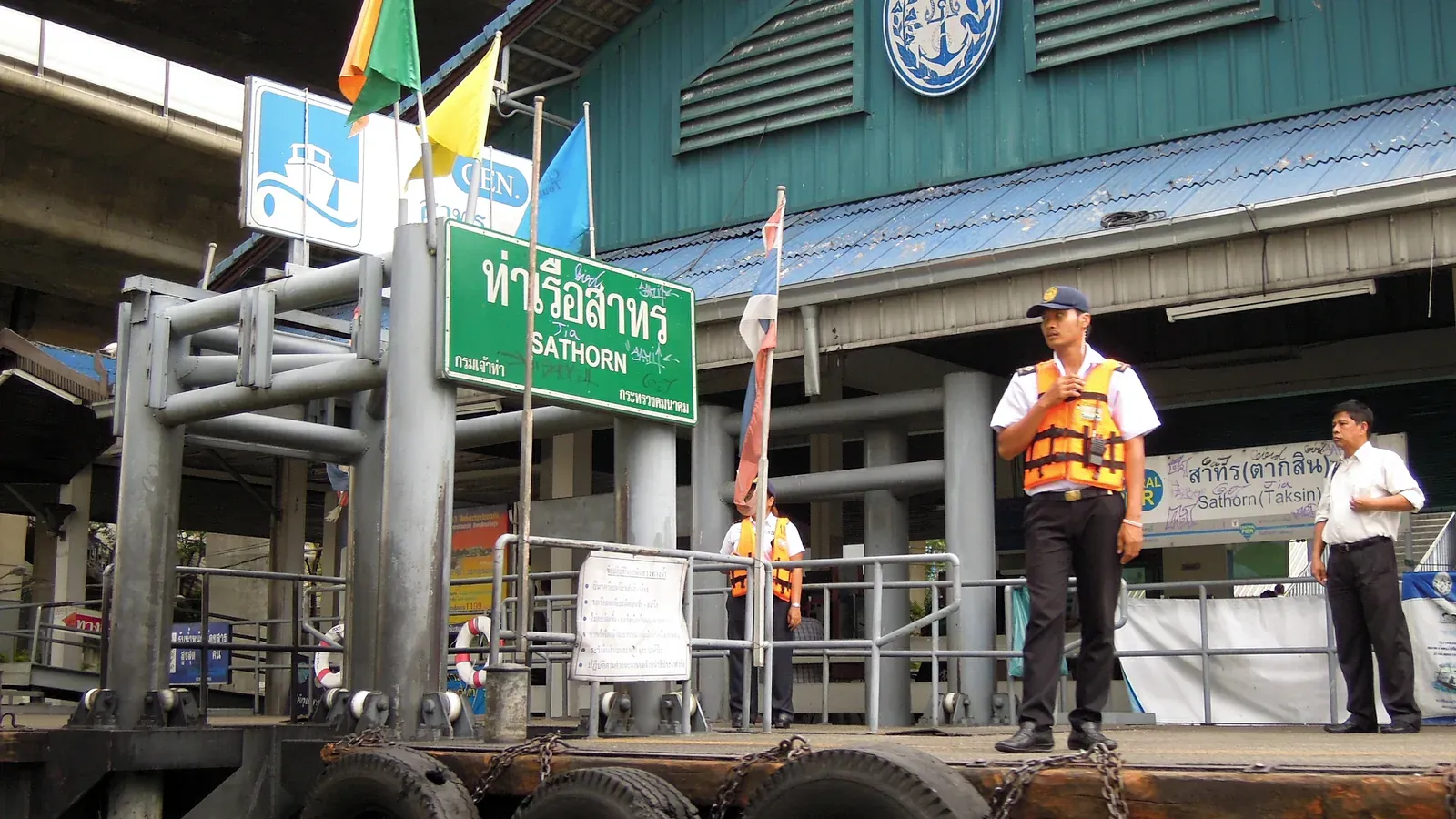
Piers along the Chao Phraya are numbered outward from a central reference point at Sathorn, known as the Central Pier. Piers north of Sathorn carry an N prefix and climb in number heading upriver towards Nonthaburi and beyond; piers are similarly numbered on the arrangement heading through the city centre and old town. A few landmark piers keep their own names rather than a bare code (Tha Chang, Tha Tien, Ratchawong) because they are old, well-known stops in their own right. The numbering is worth knowing loosely rather than memorising: it tells you at a glance whether a pier sits close to the centre or well out towards the suburbs, the same logic as the station codes on the rail network.
The boat services, as categories
“The Chao Phraya boat” is actually several different services sharing the same piers, distinguished mainly by a coloured flag on the boat itself:
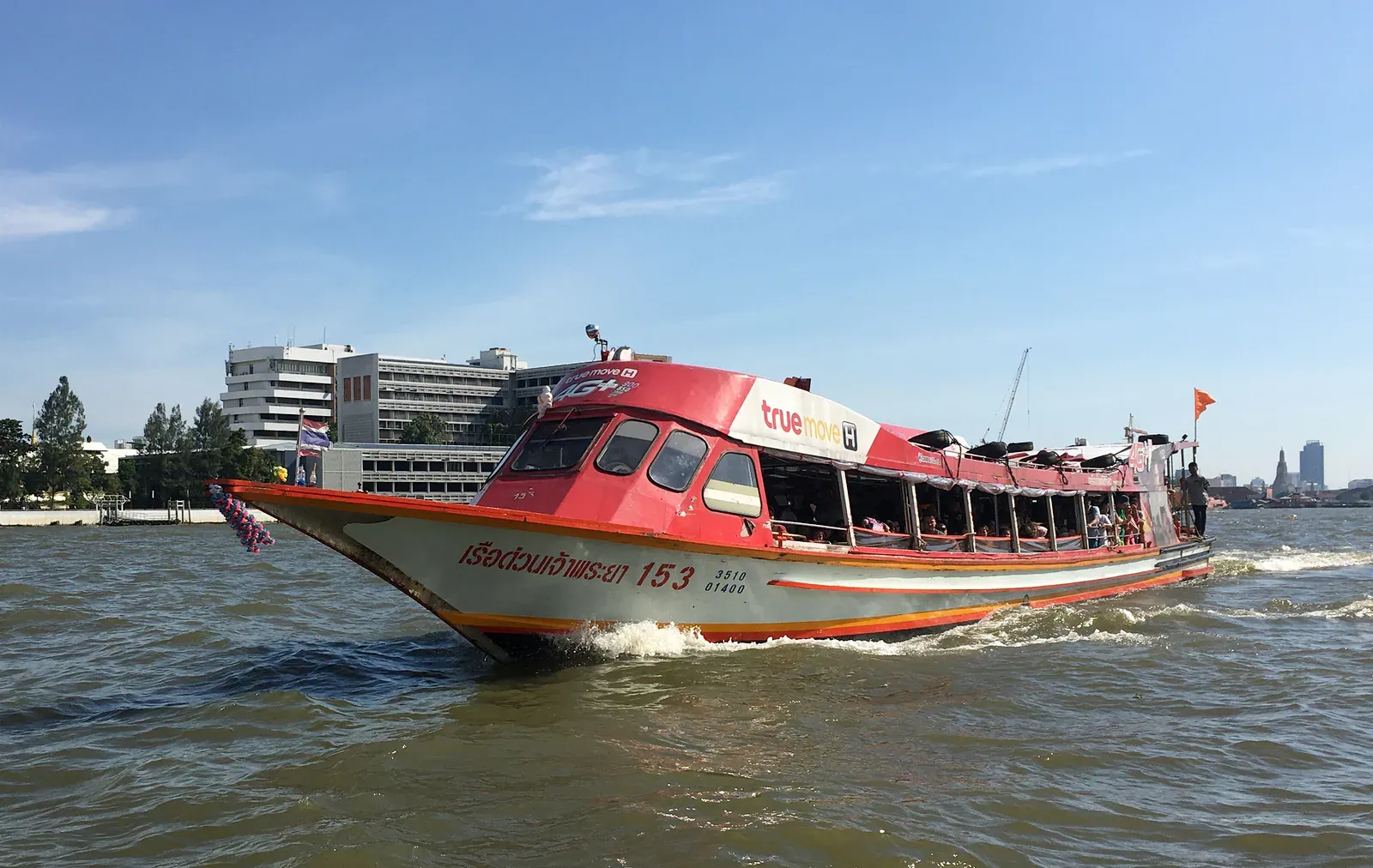
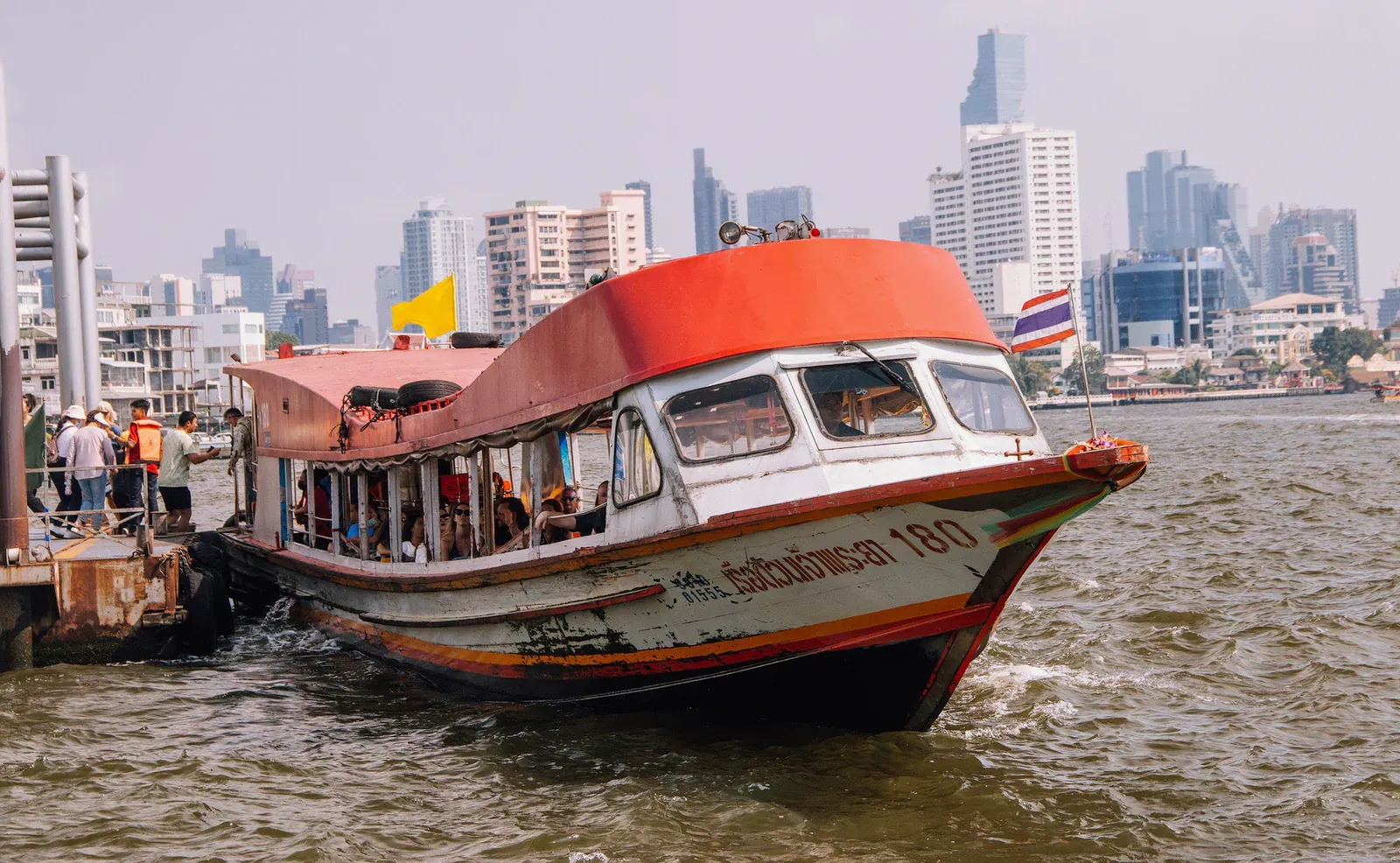
- The all-stops line (commonly flagged in orange) is the workhorse service: it calls at nearly every pier along the central stretch of the river, runs for most of the day, and charges a low flat fare regardless of distance. This is the service most visitors end up using, because it reaches almost every pier that matters for sightseeing.
- Limited-stop express services (flagged in other colours, and historically including yellow and green variants) skip minor piers to run faster between major ones, typically concentrated in weekday rush-hour windows aimed at commuters rather than visitors. Their operating hours and exact stop pattern have shifted over the years, so check current schedules and flag colours on the operator’s own site or app before relying on one for a specific timed trip.
- The tourist boat runs a shorter, curated route between the main sightseeing piers, with a flat all-day fare pitched at visitors rather than commuters, more frequent English signage and announcements, and a slower, more relaxed pace than the commuter lines.
- Cross-river ferries are small boats that do nothing but shuttle directly between two piers on opposite banks, for a low flat fare, running very short point-to-point hops rather than a route along the river. These are the quickest way to cross where no bridge is nearby, and several tourist piers (Tha Tien to Wat Arun, for instance) work exactly this way.
- The Saen Saep canal boats are a separate system entirely, running inland along Khlong Saen Saep rather than on the river itself, connecting the Pratunam and central shopping area eastward towards the outer suburbs. They are faster than road traffic on that corridor at busy times, but are a distinct network with their own piers, boarding style and price level: not part of the Chao Phraya river system, and not interchangeable with it.
Indicative 2026 price levels: the all-stops river service and the cross-river ferries sit at the low end, typically a handful of baht (roughly ฿10-20, well under US$1) per hop; the tourist boat charges a flat day-rate several times higher, more in the ฿150-200 (roughly US$4-6) range; canal boats sit closer to the river service in price but vary by distance. These are broad, indicative figures only: check the operator’s own site or app for the current fare before travelling.
Piers that matter for sightseeing
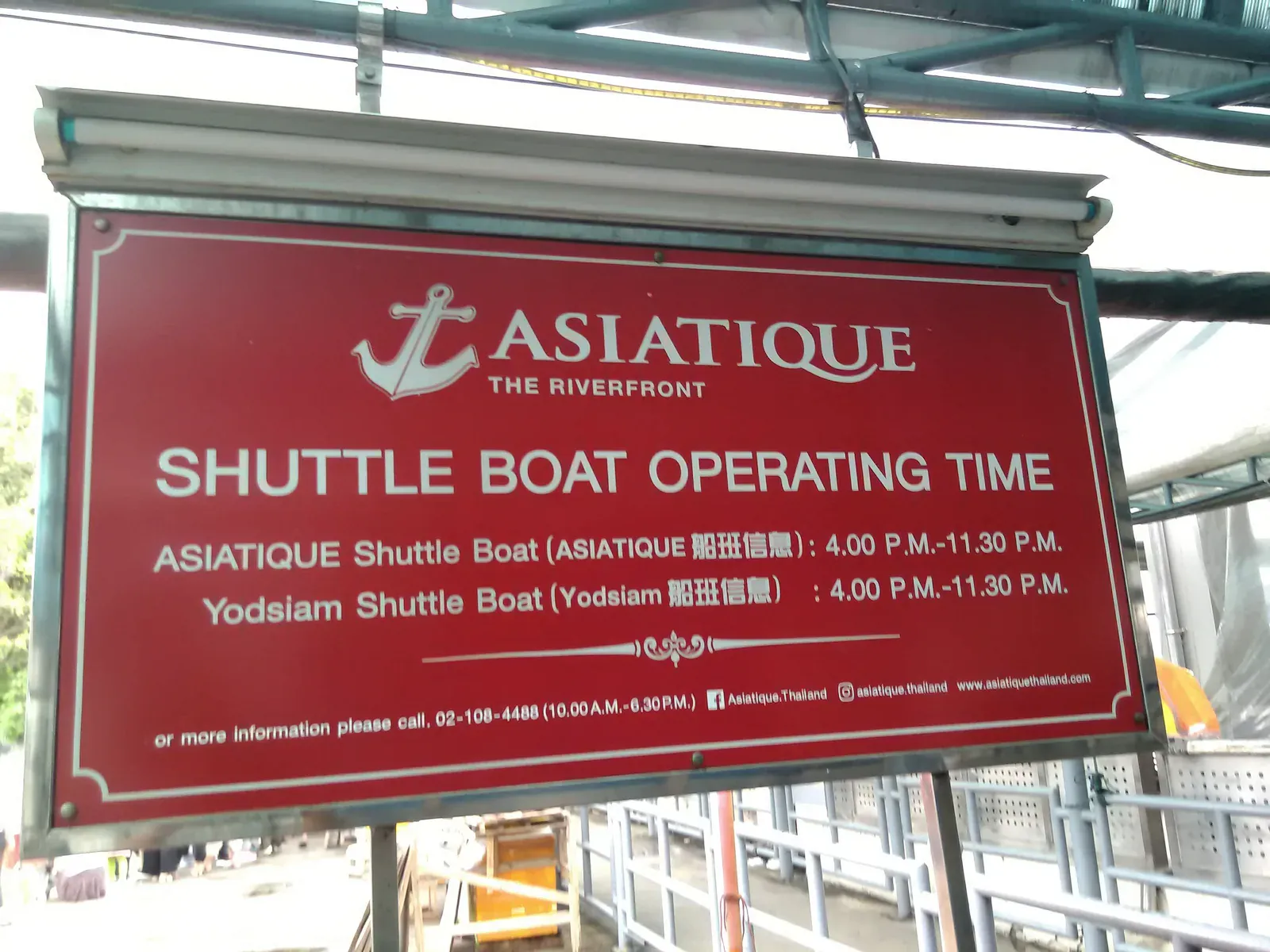
A short list of river piers does most of the sightseeing work: Tha Chang, close to the Grand Palace and Wat Phra Kaew; Tha Tien, next to Wat Pho and the cross-river hop to Wat Arun; Phra Athit, within walking reach of Khao San Road and the old Banglamphu district; Ratchawong, the gateway into Chinatown and Yaowarat; and Si Phraya, close to the River City shopping complex and a short cross-river link towards ICONSIAM. None of these piers require a booking or a schedule beyond checking that a boat with the flag colour you want is still running that day and hour.
Piers that matter for commuting
For residents, the piers that matter less for scenery and more for daily movement include Sathorn (Central Pier), the system’s hub, and the piers serving Thon Buri’s residential riverside and the stretch running north towards Nonthaburi. These piers see heavier weekday-commuter flow at the same rush-hour windows that clog the roads and rail interchanges described in the guide to interchange stations, and the boats along this stretch are correspondingly fuller in the early morning and early evening.
Connecting from rail
Sathorn (Central Pier) sits directly beside Saphan Taksin BTS station, making this the cleanest rail-to-river connection on the network: step off the Silom Line and the pier is immediately at hand, no separate walk to speak of. This single link is why so many river itineraries start by riding the BTS to Saphan Taksin rather than approaching the river from elsewhere. A handful of other piers sit within a short walk of an MRT or BTS station, but none as directly as Sathorn: for most other piers, plan on a short taxi, tuk-tuk or on-foot leg rather than expecting a rail station at the water’s edge.
Paying for a boat
Payment habits differ noticeably from the rail network. On the river services, fares are commonly collected on board by a conductor who moves along the boat after departure, rather than at a gate before boarding, so it is worth having small cash ready rather than expecting a card reader at the pier. The tourist boat is the exception, selling a flat-rate ticket at its own piers or in advance. Canal boats on Khlong Saen Saep follow the same on-board, cash-first pattern as the river service. None of these systems currently share a stored-value card with the BTS or MRT, so a river trip is very much its own small transaction rather than an extension of a rail balance.
Where the river reaches beyond the tourist stretch
The piers listed above cover the central, visitor-facing stretch of the river, but the service continues well beyond it in both directions. Heading north, piers serve Nonthaburi’s old town and give onward reach towards the suburbs that the MRT Purple Line also serves, offering a genuine alternative to the rail route on that corridor for anyone starting from the riverside rather than a Purple Line station. On the Thon Buri side near ICONSIAM, a cross-river hop connects towards the short Gold Line monorail described in the guide to Bangkok’s rail network, giving a rail option to travellers who arrive at the riverside by boat rather than by taxi. None of this replaces checking a live route for a specific trip, but it is a reminder that the river is a corridor in its own right, not merely a shuttle between a handful of postcard piers.
Boarding etiquette and safety
Boats along the Chao Phraya do not always come to a complete, settled stop; on busier routes the boat may nudge the pier only briefly while a crew member holds a line or a hook to steady it. A few habits keep this safe and unhurried:
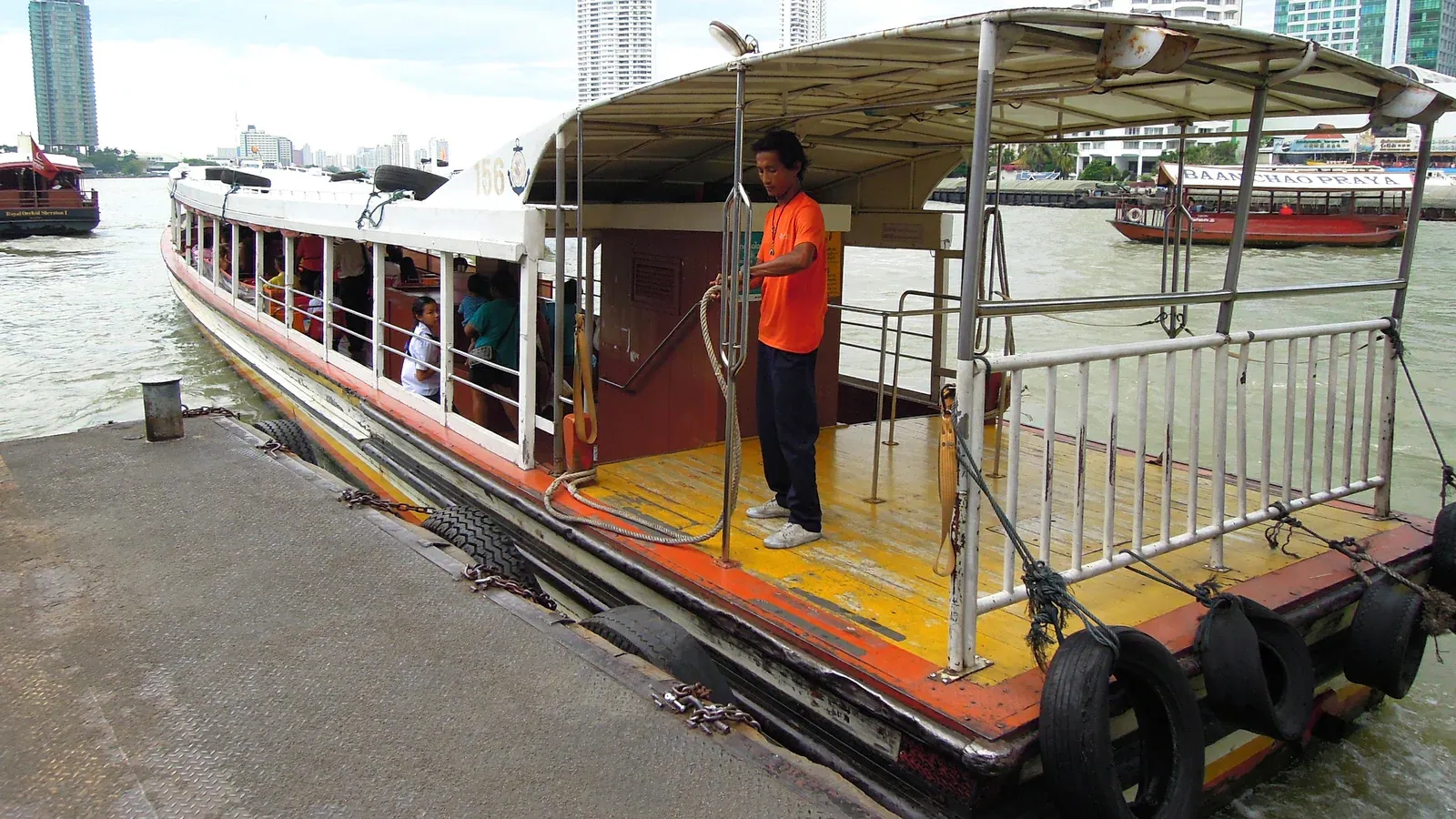
- Wait for the crew’s signal, not just the boat’s arrival, before stepping aboard.
- Move promptly to a seat or a handhold once aboard, since the boat may pull away within seconds and the deck can be uneven.
- Keep clear of the open sides on the lower deck, especially with children, since some boats run with low rails and a genuine wake.
- Hold onto bags and hats, particularly on the faster express services, where spray and wind are routine rather than exceptional.
- On the Saen Saep canal boats specifically, expect a lower, narrower boat, a quick boarding rhythm, and a plastic sheet that crew raise to block splash on the faster stretches: boarding here is brisker than on the river services, and hesitating can mean missing the boat entirely.
Tides, rain and the last-boat problem
The Chao Phraya is tidal for its lower stretch through Bangkok, and river level changes over the day can affect how a pier’s gangway sits and how choppy the crossing feels, particularly during the rainy season when heavy downpours coincide with a high tide. None of this normally stops services, but it is worth being aware that a very heavy squall can briefly disrupt boat schedules in a way it would not disrupt a train. The more practical risk is the last-boat problem: river and canal services generally stop running notably earlier in the evening than the rail network, and once the last boat has gone for a given route, the only way across or along that stretch is by road. If a river leg is part of a late-evening plan, check the current last-service time for that specific route rather than assuming it mirrors rail hours.
When the river genuinely beats the road
The river is at its best precisely where the road grid is at its worst: the old city’s dense, one-way, temple-lined streets around Tha Chang, Tha Tien and Ratchawong, where a taxi can spend as long circling for a drop-off point as the equivalent boat journey takes end to end. It is also a reliable way to move along the riverside corridor during the worst of the afternoon rush, when the parallel roads are at a standstill and the water is not. Where a destination sits well back from the river, though, the calculation flips: a pier that requires a long onward walk or a second taxi leg often ends up slower overall than simply taking the rail network the whole way, especially when factoring in the transfers a cross-system rail trip would involve versus a single uninterrupted boat leg. For a room on the water, see riverside luxury hotels and riverside mid-range hotels.
Key piers and what’s walkable from each
| Pier | Walkable from the pier |
|---|---|
| Sathorn (Central Pier) | Saphan Taksin BTS station directly; Silom Line onward connections |
| Tha Chang | Grand Palace, Wat Phra Kaew |
| Tha Tien | Wat Pho; cross-river ferry to Wat Arun |
| Phra Athit | Khao San Road, Banglamphu old town |
| Ratchawong | Chinatown (Yaowarat), Talat Noi |
| Si Phraya | River City shopping complex; cross-river link towards ICONSIAM |
| Nonthaburi | Nonthaburi old town; onward inland transit towards the outer suburbs |
Common questions
Do I need to book a river boat in advance?
No. The all-stops river service, cross-river ferries and canal boats run on a frequent, walk-up basis with no reservation. The tourist boat sells its flat-rate ticket at the pier or online, but still runs to a simple hop-on schedule rather than a booked seat.
How do I know which boat flag to wait for?
Flags identify the service, not the destination, so check the flag colour against the route board or app for the piers you actually want, since limited-stop express services skip piers the all-stops service calls at. When in doubt, the all-stops service reaches nearly everywhere a visitor needs.
Is the Chao Phraya boat cheaper than the BTS or MRT?
The all-stops river service and the cross-river ferries are generally inexpensive relative to rail for a short hop, while the tourist boat’s flat day-rate is pitched higher, more like a sightseeing pass than a transit fare. Treat any figure as indicative and check the operator’s current pricing before travelling.
Are the Saen Saep canal boats part of the same system as the river boats?
No. They run on an inland canal, not the river, under a different operator with different piers, boarding style and price level. They are a separate, useful option for crossing the city east-west, not an extension of the Chao Phraya service.
What happens if I miss the last boat?
The route reverts to a road journey: taxi, ride-hailing app or bus, depending on the area. River and canal services typically stop earlier in the evening than the rail network, so it is worth checking the last-service time for your specific route before relying on a late boat.
Is the river boat wheelchair or pram friendly?
Provision varies by pier and by boat, and gangways can be uneven, especially when the tide is low. Travellers with mobility needs, luggage or a pram should allow extra time at boarding and consider a quieter pier and a less crowded sailing rather than the first boat to arrive.
Written by
Mike Brochlowski
Founder and editor, travel photographer and designer
I'm Mike Brochlowski, a travel photographer and designer, and I currently live on Koh Samui, Thailand. I built BangkokWiki to put practical, checked information about Bangkok in one place. Every page is researched from official and primary sources, and the text names them. Where a page shows a checked date, that is when its facts were last confirmed. I also run samui69.com, a non-commercial guide to Koh Samui. If you spot an error or something out of date, tell me through the contact page and I will check it and correct the page.
Read all articles
Where to stay
Pick the area before the hotel
Traffic and heat make Bangkok distances feel longer than they look on a map, so the area shapes a trip more than the hotel does. Our guides match areas to trip types and explain the trade-offs.

Places to stay
Find a hotel
Explore the other desks
More from Transport
- 11 min read
 10 min read
A Practical Guide to Bangkok's Interchange Stations
 9 min read
KL Bangkok Flight, Plus Manila, Saigon and Jakarta

Newsletter
You're subscribed as