Travel
Bangkok Dining Etiquette: Mistakes Tourists Make at the Meal
Bangkok-specific table mistakes tourists make and don't hear about: fork versus spoon, sharing dishes, feet position, and why tourist zones won't correct you.
At a glance
- Reading time
- 6 min read
- Chapters
- 7
- Published
- Oct 27, 2026
On this page
Nobody in a Bangkok restaurant will stop you from eating “wrong.” Staff are too polite, and tourist-zone kitchens are used to it. That’s the actual problem: the mistakes below are common enough that guides list them, specific enough to Thai dining that general Southeast Asia etiquette pieces skip them, and quiet enough that you can repeat them for a whole trip without anyone saying a word. None of this is about being caught out. It’s about eating the way the dish was built to be eaten, and about the one habit (feet) that genuinely does register as rude even when nobody mentions it.
Fork and spoon, not fork and knife
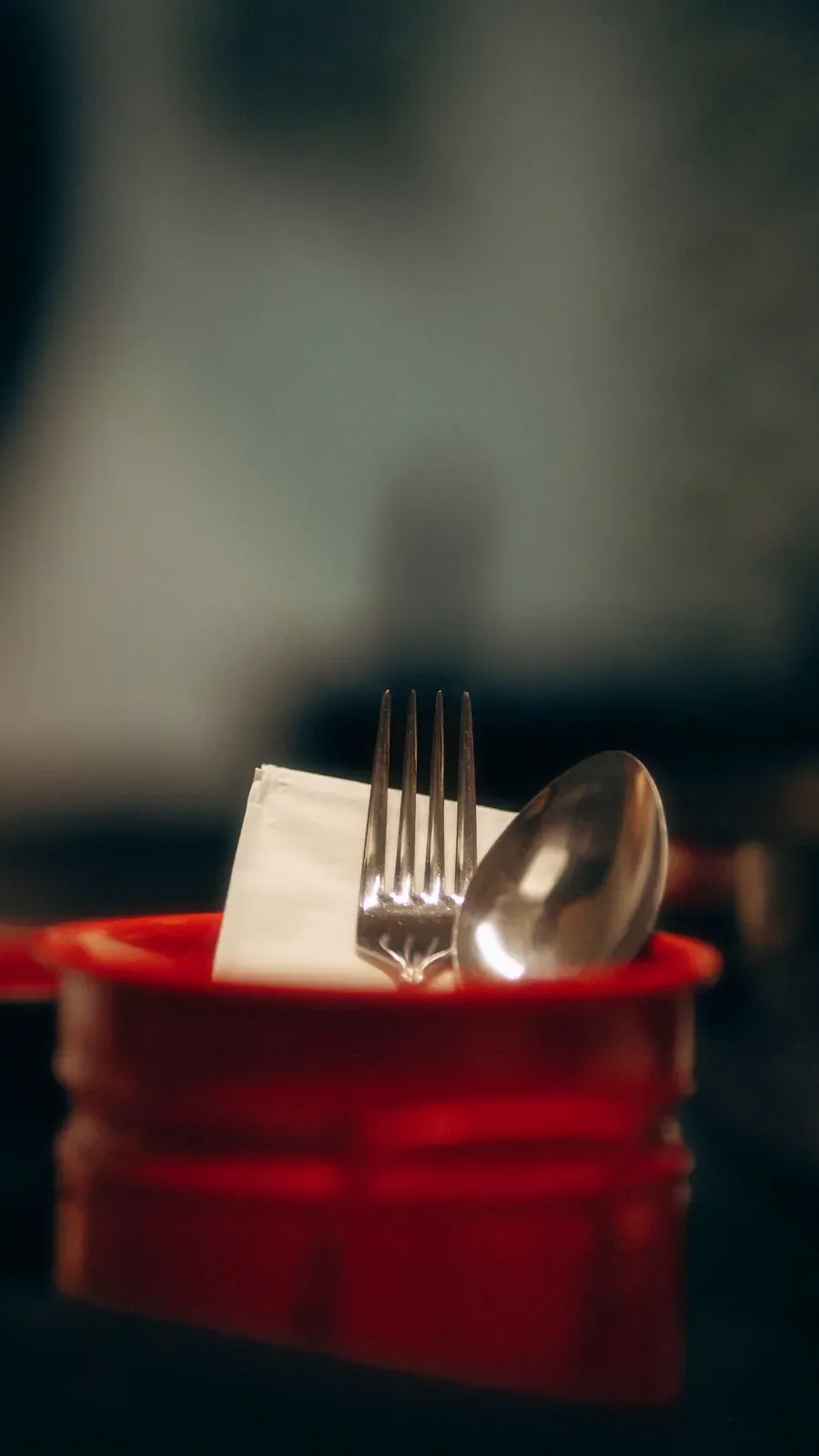
The single most common mistake: eating with a fork the way you would at home. In Thai dining, the spoon is the primary tool for rice-based dishes, and the fork’s job is to push food onto it. The fork does not go in your mouth. If a dish arrives without a spoon, that’s often a signal it’s meant for chopsticks or hands instead (most noodle soups, some regional dishes), not an invitation to switch to fork-only Western technique.
Chopsticks are the other confusion: many visitors expect them everywhere, since they’re the default mental image for “Asian food.” In Bangkok they’re really for noodle dishes, especially ones with Chinese-influenced broths, and for a narrower set of dishes than most first-timers assume. Reaching for chopsticks with a plate of rice and curry marks you as a first-timer faster than almost anything else at the table.
How sharing actually works
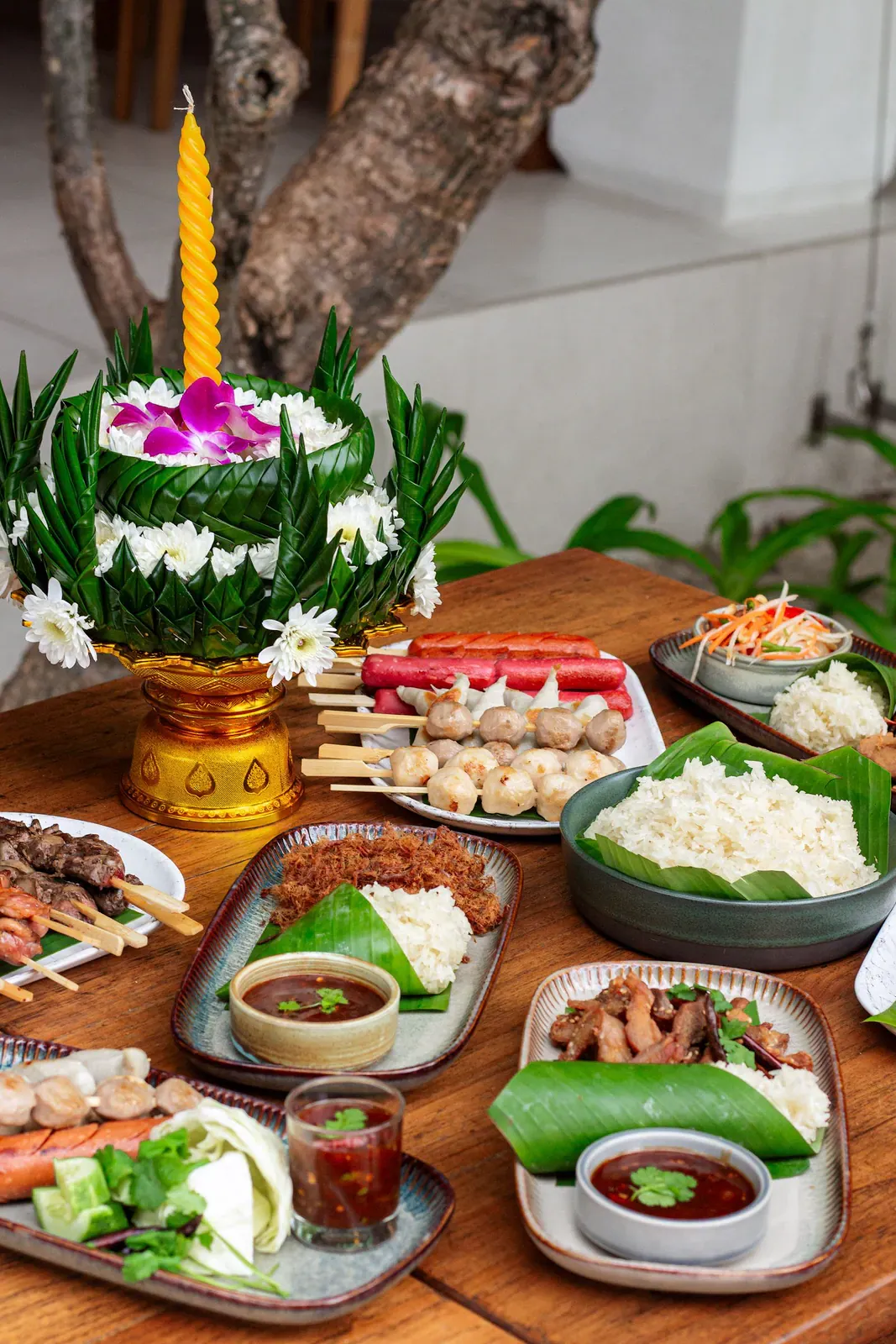
Thai meals for a group are built around variety, not individual plates. The table orders several dishes meant for everyone, and each diner spoons a portion onto their own plate of rice rather than eating straight from the shared dish. Two details trip people up:
- Use the serving spoon provided with a shared dish, never the spoon you’re eating with. Touching communal food with your personal utensil is the specific part that reads as unhygienic to other diners, not the sharing itself.
- Take from the edge of a shared plate closest to you, not from the middle. Digging into the centre of a dish other people haven’t reached yet is read the same way as reaching across someone’s plate would be at a Western table.
If you’re eating solo, none of this applies in the same way, order what you’d like as a full plate. The mistakes below are specifically about group dining, which is the Thai default whenever there’s more than one person at the table.
Feet, and why they matter more than you’d think
Feet rank as the lowest, least respected part of the body in Thai custom, and pointing them at another person, at food, or at a Buddha image is read as genuinely disrespectful, not merely informal. At a normal restaurant table with chairs this rarely comes up. It matters at floor-seated tables, common at some traditional or family-style restaurants, where the instinct to stretch your legs out under a low table can point your feet straight at someone else’s plate. Tuck feet back or to the side instead.
Feet are the one mistake on this list that doesn’t get a pass just because you’re a visible tourist: it registers as rude regardless of who does it.
Rice and curry: which goes where
A small but frequent mix-up: curry gets spooned onto your rice, not the other way around, and you don’t stir your rice into the shared curry pot. Serve yourself a portion of curry onto your own plate of rice, the way you’d plate a sauce, rather than treating the curry bowl as something to dip into repeatedly with a rice-coated spoon.
Portion sizes: the surprise that leads to waste
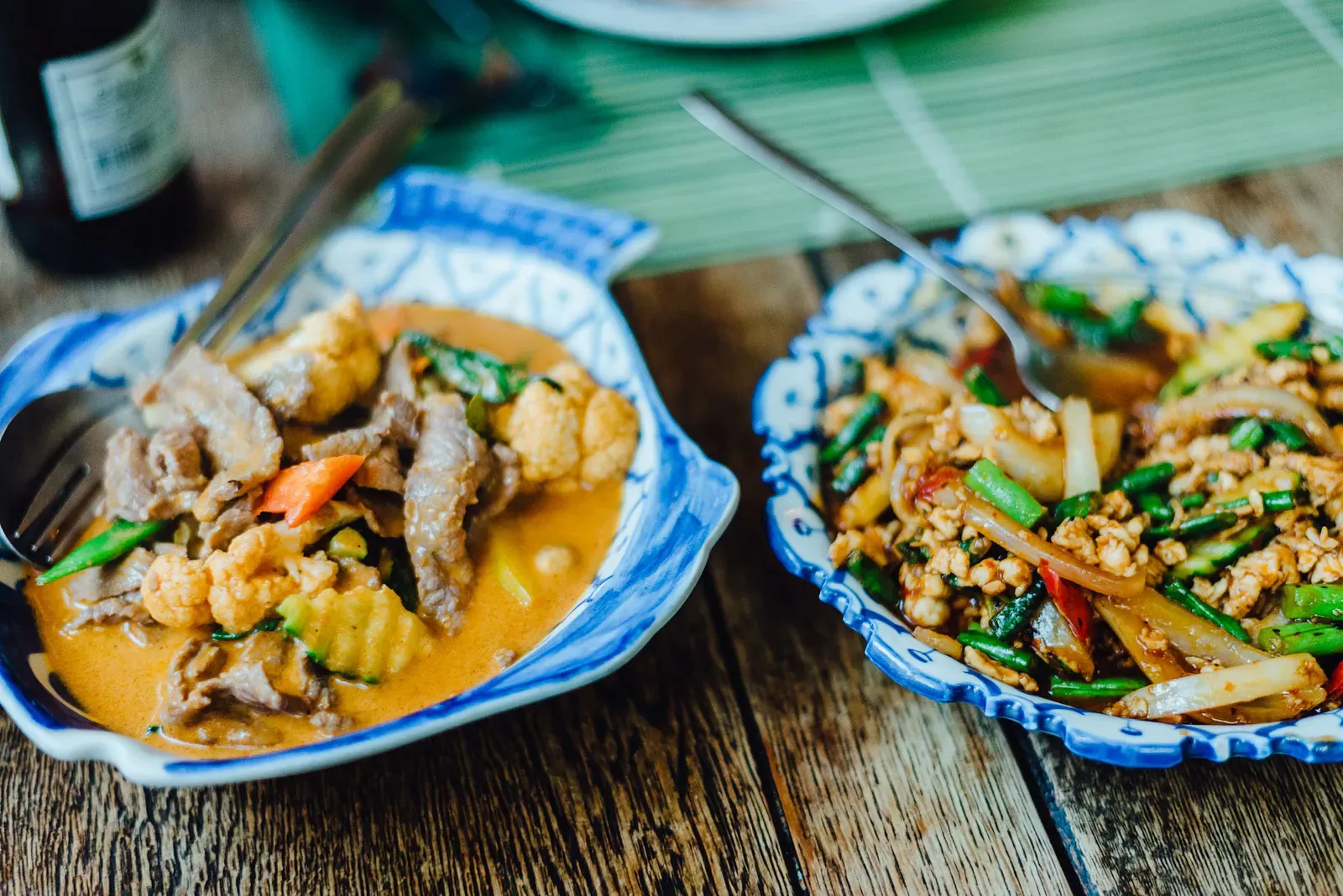
Menu descriptions at restaurants that aren’t set up for tourists can undersell how much food arrives. A coconut-based soup ordered “for the table” can turn up in a bowl sized for four, not one, and staff won’t always flag this if their English is limited. Ordering as if every dish is a single Western entree leads to over-ordering, and leaving food unfinished (especially rice) reads as mildly wasteful in a culture where finishing what’s served is the norm. The fix is simple: order fewer dishes than you think you need for a group, and add more only if the table is still hungry once the first round arrives.
What’s actually fine, despite what you might have heard
A few widely repeated “rules” turn out to be softer than they sound, or specific to situations most visitors won’t hit. Eating with your hands isn’t taboo, sticky rice and some regional northern dishes are traditionally eaten that way, though it’s not the default for a rice-and-curry plate in a Bangkok restaurant. Asking for extra chilli, sugar or fish sauce condiments (the small rack that appears with noodle soups) isn’t rude, adjusting a dish to taste is completely normal and expected, distinct from sending a dish back. And ordering a single dish for yourself at a restaurant, rather than sharing, is entirely fine solo, it’s a group-dining convention, not a rule that applies to every meal.
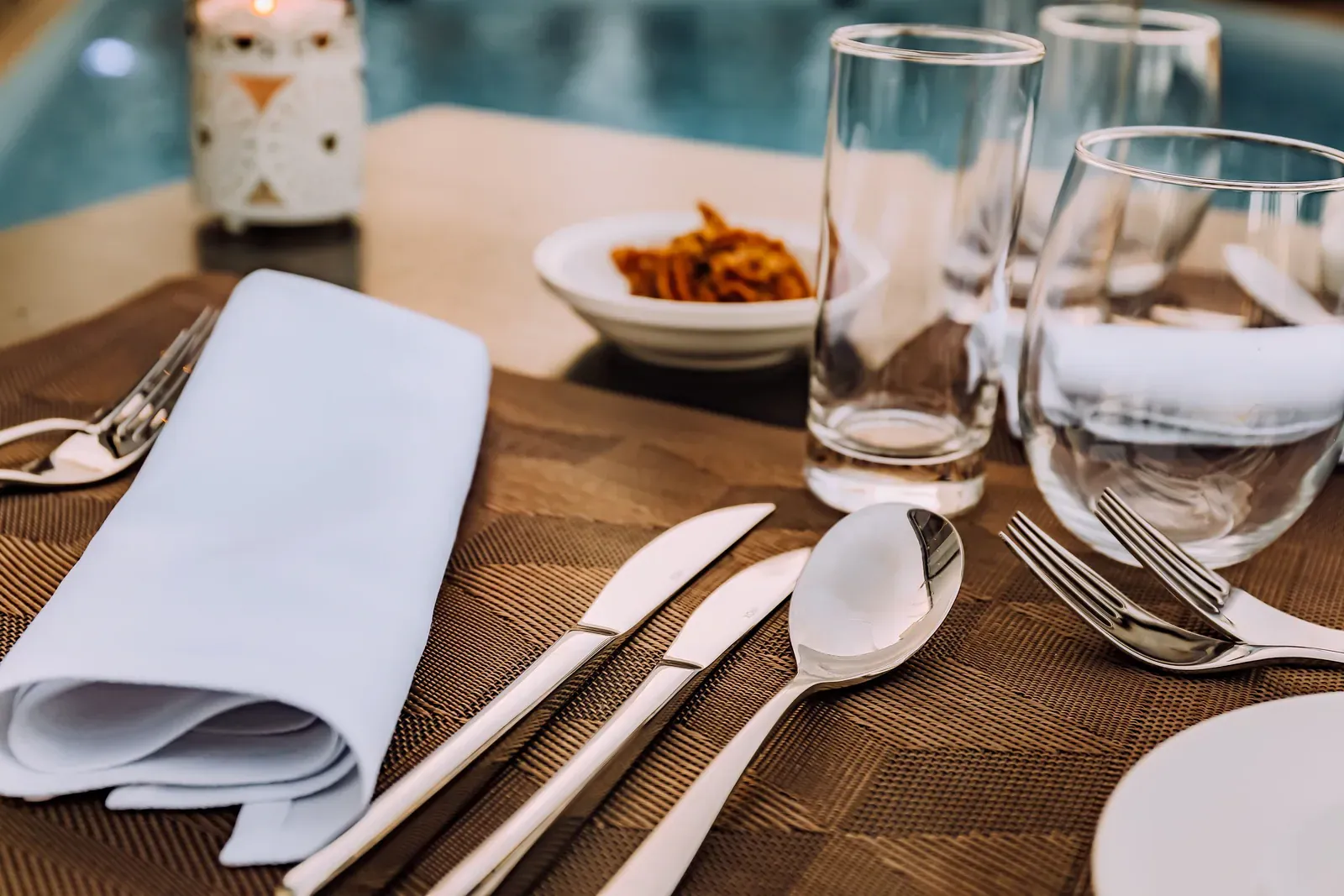
The genuinely firm rules are narrower than the folklore suggests: the spoon-as-primary-tool habit, the shared-versus-personal-utensil distinction, and feet position are the three that actually register with Thai diners at the table. Everything else in the wider “etiquette” genre (which fork goes where, whether you can ask for extra rice, how loudly you can talk) is closer to ordinary restaurant manners anywhere than to a Thailand-specific code.
The mistakes, at a glance
| Mistake | Why it matters | Do this instead |
|---|---|---|
| Eating with a fork straight to your mouth | Spoon is the primary tool for rice dishes; fork only pushes | Push food onto your spoon, eat from the spoon |
| Using chopsticks by default | Reserved mainly for noodle dishes, not rice plates | Check what the dish is before reaching for them |
| Serving yourself with your own spoon | Reads as unhygienic to other diners | Use the shared serving spoon provided |
| Digging into the centre of a shared dish | Treats food others haven’t reached yet as fair game | Take from the edge nearest you |
| Feet pointed at people or food | Feet are the body’s lowest, least respected part | Tuck feet under or to the side, especially floor seating |
| Stirring rice into the shared curry pot | Treats a communal dish as your own bowl | Spoon curry onto your own rice instead |
| Over-ordering, then leaving food unfinished | Portions run bigger than expected; waste reads poorly | Order fewer dishes first, add more if needed |
None of these will end a meal badly if you get one wrong. Staff are used to it, and the overwhelming response to a visible effort at Thai table manners is warmth, not judgment. The point of knowing them isn’t to pass a test. It’s the difference between eating a dish the way it was designed to be eaten and eating around it, which usually changes how good the food actually tastes.
For the tipping side of the bill (service charge, when a tip is expected, what street vendors don’t expect at all), see Tipping in Bangkok restaurants. For the mechanics of street-side seating and communal tables specifically, the street food guide covers that ground. And if a dish on the table turns out to be one you don’t recognise, Thai dishes to try in Bangkok walks through what’s actually in front of you.
If you’re managing a food allergy or other dietary restriction, eating out in Bangkok with dietary restrictions covers the phrases and checks that matter before you order. And for the full sequence these table habits sit inside, from walk-in to paying, see how eating out in Bangkok actually works.
Written by
Mike Brochlowski
Founder and editor, travel photographer and designer
I'm Mike Brochlowski, a travel photographer and designer, and I currently live on Koh Samui, Thailand. I built BangkokWiki to put practical, checked information about Bangkok in one place. Every page is researched from official and primary sources, and the text names them. Where a page shows a checked date, that is when its facts were last confirmed. I also run samui69.com, a non-commercial guide to Koh Samui. If you spot an error or something out of date, tell me through the contact page and I will check it and correct the page.
Read all articles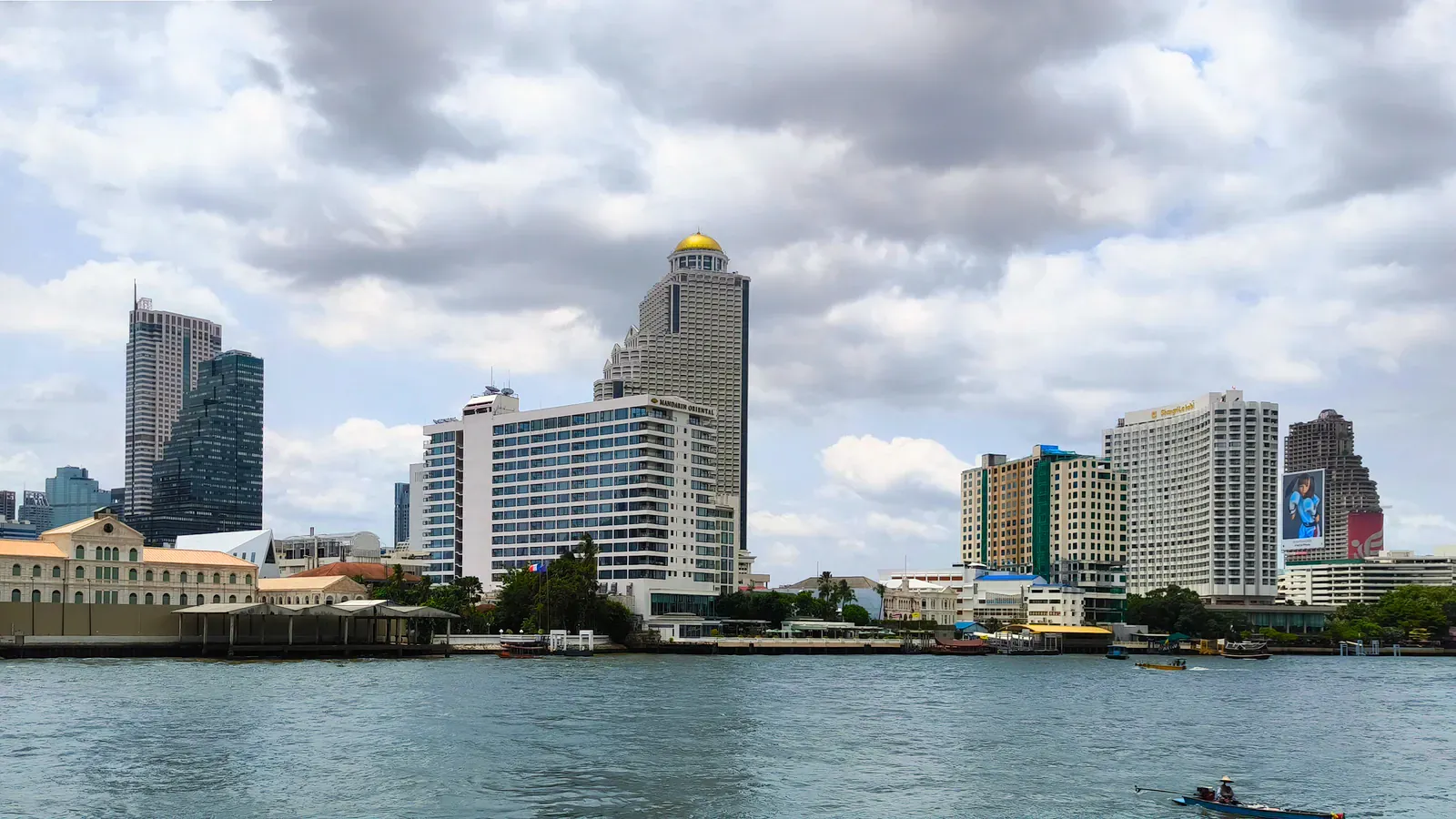
Where to stay
Pick the area before the hotel
Traffic and heat make Bangkok distances feel longer than they look on a map, so the area shapes a trip more than the hotel does. Our guides match areas to trip types and explain the trade-offs.

Places to stay
Find a hotel
Explore the other desks
More from Travel
- 5 min read
 11 min read
Bangkok Scams and Safety: What to Know
 13 min read
Bangkok Temple Dress Code and Etiquette Guide

Newsletter
You're subscribed as