Travel
Bangkok Rainy Season and Flooding Explained
How Bangkok's rainy season and flooding actually play out day to day, why the city floods, and how to move, live, and plan around it.
At a glance
- Reading time
- 15 min read
- Chapters
- 15
- Published
- Sep 20, 2026
On this page
Bangkok’s rainy season runs roughly mid-May to October, and most days it means one heavy downpour, not a wet day from dawn to dusk. Flooding is a separate, rarer problem: a drainage and tide issue that turns up on specific streets in specific conditions, not a citywide event every time it rains. Understanding the difference is most of what you need to live or travel through the wet months without losing a day to either.
The daily pattern, not the forecast
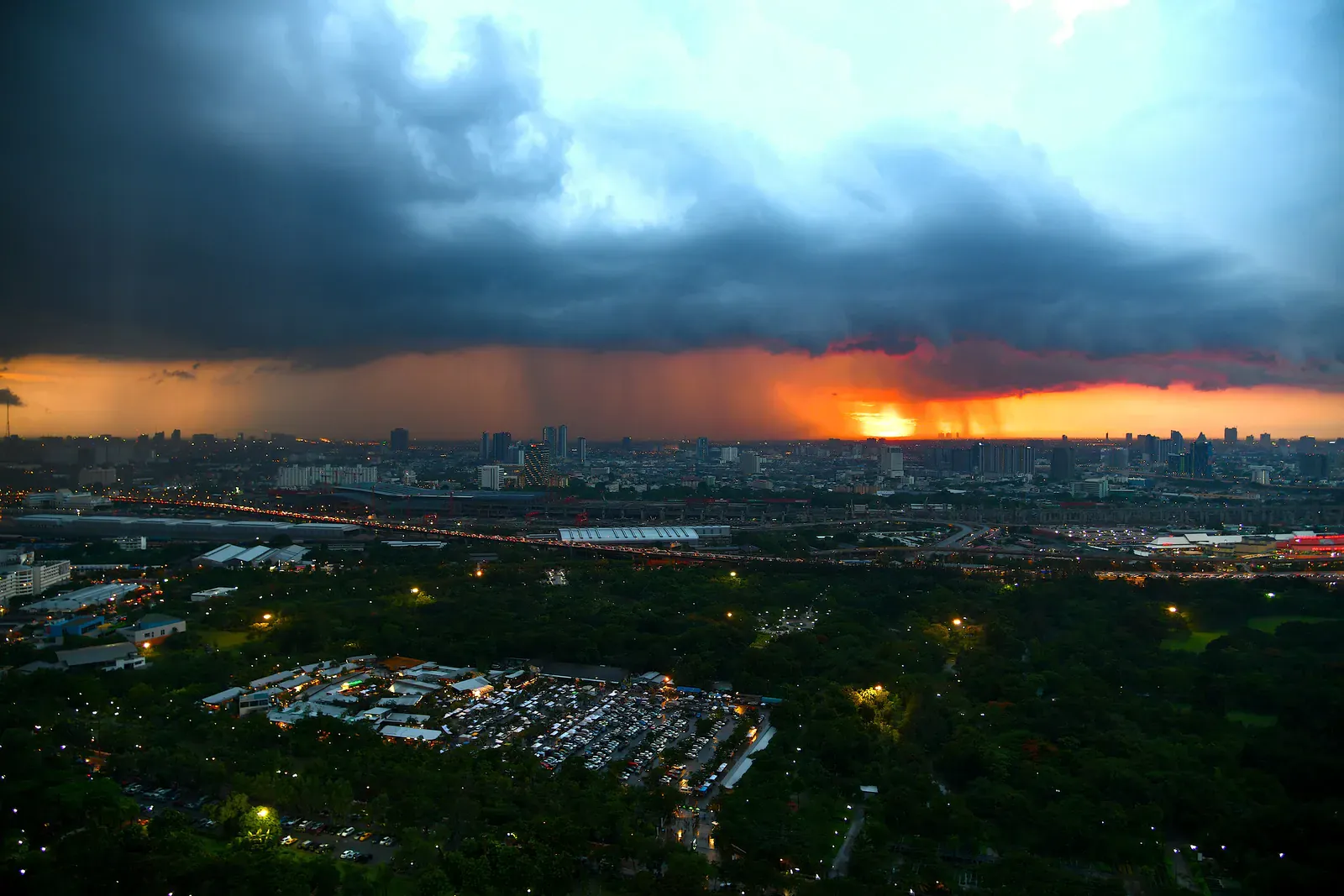
The southwest monsoon pushes moisture in off the Indian Ocean from around mid-May through October, and September is typically the wettest month of the year. Within that stretch, the rain follows a rhythm that repeats often enough to plan around. Mornings are usually clear or partly clear. Humidity builds through late morning and early afternoon under a still, heavy sky. Then, somewhere between early afternoon and evening, it breaks: a genuinely heavy downpour, thunder and all, lasting roughly thirty to ninety minutes. After that it clears, sometimes within the hour, and the evening can be dry and even pleasant.
All-day rain happens, but it’s the exception, not the rule. A tropical depression or a slow-moving weather system can park heavy rain over the city for longer, and that’s usually when the more serious flooding shows up. But the default day is: clear morning, one storm, clear evening. Anyone building a schedule around “it’s the rainy season, so it’ll rain all day” is planning for the wrong problem.
This pattern also shapes when to visit. Travellers weighing the trade-offs between the cool, hot, and rainy seasons can see the fuller month-by-month picture in the Bangkok weather by month guide, which covers heat, crowds and pricing alongside rain. The short version for the wet months: fewer tourists, lower prices, and air that’s dramatically cleaner than the burning-season months, because the rain washes particulate matter out of the sky. For heat, humidity and rain timing, see our Bangkok weather and climate guide; the peak is covered in Bangkok in September, and the early wet months in Bangkok in June and July. Anyone tracking Bangkok’s air quality and PM2.5 patterns will notice the wet season is reliably the best stretch of the year to breathe.
A downpour is not a flood
It’s worth separating two things that get lumped together as “Bangkok flooding” in casual conversation. The first is ordinary rainy-season ponding: water collecting on roads and low ground during and shortly after a downpour, usually clearing within an hour or two once the drains catch up. This happens somewhere in the city on most heavy-rain days and is a normal, low-stakes inconvenience.
The second is an actual flood event: water that doesn’t drain away, rises over kerbs and into ground floors, and can persist for days. This is structural, not just “a lot of rain that day.” It happens when several factors stack at once: sustained heavy rain, a drainage system that’s already at capacity, and a river or tidal condition that leaves the water nowhere to go. Bangkok has had serious citywide flood episodes in its past, and locals and long-term residents generally know which years those were, but the exact scale and figures from any specific event aren’t something to guess at here. If you want the details of a past event, that’s a question for a specific historical source, not a rule of thumb. What matters for living here day to day is the mechanism, because it tells you what to watch for.
Why Bangkok floods: the structural picture
Bangkok sits on a low, flat delta near the mouth of the Chao Phraya River, only a few metres above sea level across most of the city. That alone makes drainage slow: water doesn’t have much gradient to run downhill toward. Decades of groundwater extraction caused parts of the city to subside, effectively lowering the ground further in some areas relative to the river and the sea, which compounds the problem in those spots.
The city manages routine drainage through a network of canals, known as khlongs, which used to be the primary transport arteries before the roads were built over many of them. Pumping stations move water from these canals out to the river and eventually the Gulf of Thailand. On a normal day, this system copes fine with a downpour. It runs into trouble in a few predictable ways:
- Capacity limits. A very heavy or prolonged storm can dump more water than the canals and pumps can move in the time available, so it backs up.
- Clogged drains. Street-level drains and canal mouths collect litter, sediment, and debris. A blocked drain floods its immediate area even in an otherwise unremarkable storm, which is why the same handful of streets seem to flood every year regardless of how much rain actually fell.
- Tidal timing. The Chao Phraya is tidal for a good stretch of its length through the city. If a downpour coincides with high tide, the river is already high and the outflow from the canals and pumps has less room to discharge into it. Water that would normally drain into the river during low tide instead has nowhere obvious to go, and it backs up into the streets nearest the river and its canals.
For a related ground problem, see our guide to Bangkok sinkholes.
None of this is exotic engineering failure: it’s the ordinary physics of a flat delta city with an aging drainage network meeting a tidal river. Understanding it also tells you where trouble is more likely: low-lying districts near the river and its major canals, and areas where you already know the drains are poor, rather than the city at random.
What actually happens on the street
The unevenness is the part that surprises newcomers. A soi (side street) can be knee-deep in water while the main road thirty metres away is merely wet. This is almost always about drainage capacity and camber, not overall rainfall: side streets tend to be lower, narrower, and worse-drained than the arterial roads, and a blocked drain at one end of a soi is enough to turn it into a shallow pond for an hour.
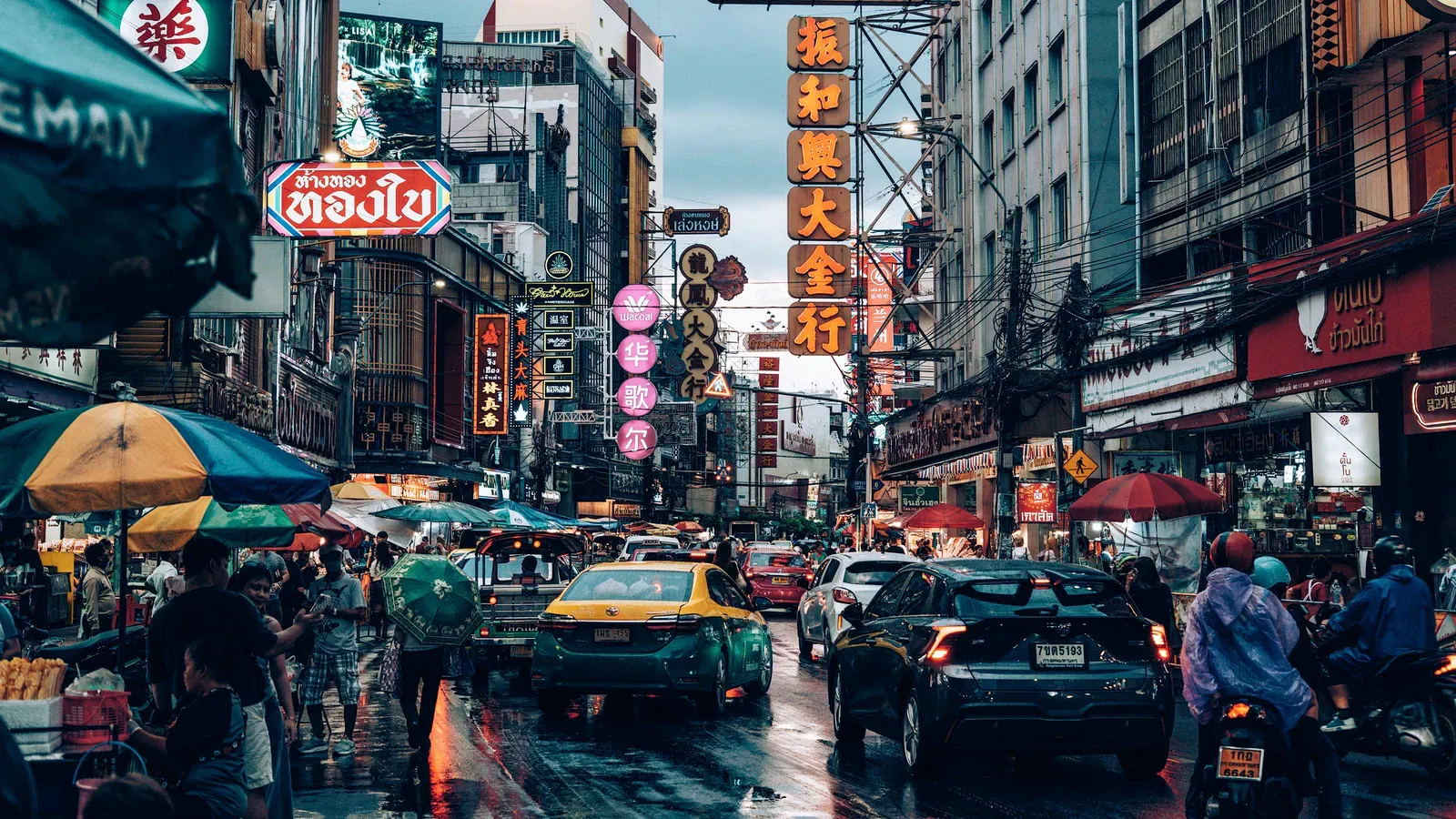
Traffic is the first casualty of any serious downpour. Bangkok’s roads are congested on a dry day; add standing water, drivers slowing to avoid splashing pedestrians or their own engines, and the odd stalled vehicle, and a normal twenty-minute car or taxi journey can become well over an hour. Taxis become scarce almost the moment the rain starts, partly because drivers pull over to wait it out and partly because many simply won’t take short trips in heavy rain when a longer, more lucrative fare is easy to find. Ride-hailing apps see surge pricing and long wait times for the same reason. Motorbike taxis, normally Bangkok’s fastest way through traffic, mostly stop working during the heaviest part of a downpour: riding a motorbike through a tropical cloudburst is unpleasant and unsafe, and most riders wait under cover until it eases, then resume once the road surface is safer.
River and canal boat services are also affected, though differently. The Chao Phraya Express Boat and the khlong ferries can be suspended or slowed during the heaviest rain and in periods of unusually high or fast-moving water, both for passenger safety and because boarding piers become slippery and exposed. In practice this means boats are a fair-weather backup, not a rainy-season guarantee, and it’s worth having a second option in mind if a trip depends on them.
The rail network is the reliable fallback
This is the single most useful fact for getting around Bangkok in the wet season: the BTS Skytrain and the elevated sections of the MRT run above street level, well clear of any surface flooding, and keep running through storms that shut down road traffic. The underground MRT sections are also unaffected by surface ponding under normal conditions. When a downpour turns the roads into a standstill, the rail network is usually still moving at normal speed.
The skywalk network connecting BTS stations to shopping centres, hotels, and office towers around the main interchanges (Siam, Asok, Chong Nonsi, and a growing list of others) means it’s often possible to get from a meeting to a mall to a station without touching the pavement at all. For anyone working or living near these corridors, that’s a genuine planning advantage: schedule the parts of your day that need to happen in the afternoon storm window around stations connected by skywalk, and the rain becomes background noise rather than an obstacle.
The practical rule: if a trip can be done by BTS or MRT, do it that way during rainy season, especially between roughly 2pm and 8pm when the day’s storm is most likely. Save road transport for the clearer morning hours, or accept that an afternoon taxi or car booking may take much longer than the map suggests.
Reading the sky and timing your day
Long-term residents develop a rough instinct for the wet season: watch the sky build through the late morning, and if it’s gone dark and still by early afternoon, a storm is close. Weather radar apps (several free ones cover Thailand well) are more reliable than instinct alone and are worth checking before heading out for anything time-sensitive. A five-minute check before leaving the office or hotel can save an hour of standing under an awning.
The habit that works best is building a buffer into any afternoon plan rather than fighting the rain directly. Two approaches both work:
- Leave early. If you can see a storm building, head out before it breaks rather than after. Ten minutes earlier can be the difference between a dry walk to the BTS and a soaked one.
- Wait it out. A downpour that lasts thirty to ninety minutes is rarely worth fighting through. Ducking into a café, mall, or covered market for the duration is usually faster overall than trying to push through the rain and the traffic it creates.
Trying to “beat” a storm on foot or by road transport is the least reliable option. The storm is short; the traffic it causes lasts much longer.
What to carry
A small, consistent kit removes most of the friction from the wet season:
- A compact umbrella rather than a full-size one: easier to carry all day and manage on crowded BTS platforms and skywalks. Indicative price: ฿150-400 (roughly US$4-11) for a decent folding umbrella, 2026 pricing.
- Quick-dry or water-resistant footwear. Leather shoes and suede are miserable in standing water and slow to dry in humidity; rubber-soled sandals or synthetic trainers cope far better and dry overnight.
- A dry bag or waterproof pouch for phone, wallet, and passport, especially if commuting by motorbike taxi. Indicative price: ฿200-600 (roughly US$6-17) for a small dry bag, 2026 pricing.
- A laptop sleeve with a rain cover, or simply a large zip-lock-style bag, for anyone carrying a laptop between office and home. Splash damage from a soi crossing, not submersion, is the realistic risk.
- A lightweight poncho as backup for when an umbrella isn’t practical, such as on a motorbike or bicycle.
None of this needs to be expensive or elaborate. The goal is removing the “I got caught without anything” scenario, which is the version of rainy season that actually ruins a day.
Choosing where to live with flooding in mind
For anyone renting or buying in Bangkok, flood history is a reasonable factor to weigh alongside the usual criteria of commute, budget, and neighbourhood. A few practical points:
- Ask about flood history directly. Long-term building staff, security guards, and neighbours usually know whether a specific soi or building has flooded in past rainy seasons, even if that information isn’t advertised. This kind of local knowledge is far more useful than general reputation about a district.
- Ground-floor units carry more risk than upper floors, both from street flooding entering directly and from any water that gets into the building at street level. This matters most in older, low-rise buildings on side streets rather than modern high-rises with elevated lobbies and basement parking designed with flood barriers.
- Basement and ground-level parking is the more common casualty. Even in buildings where living units stay dry, underground or ground-floor parking can take on water during a serious storm. Ask whether the building has flood barriers or pumps at the parking entrance, and whether management has a plan for moving vehicles during a warning.
- Elevation and drainage of the immediate street matter more than the district’s general reputation. Two buildings a few hundred metres apart can have very different flood exposure depending on their soi’s drainage and proximity to a canal.
Landlords, insurance, and what’s covered
Thai residential leases vary widely, and flood damage is rarely spelled out in detail in a standard rental contract. In practice, most landlords will address damage to the structure and fixtures they own, but are far less likely to cover a tenant’s personal belongings, electronics, or furniture damaged by water that entered during a flood event, that risk generally sits with the tenant unless the contract says otherwise. It’s worth asking directly before signing, rather than assuming.
Renters’ or contents insurance covering water damage is available in Thailand and worth considering for anyone in a ground-floor unit or a building with known flood exposure, though policies and exclusions vary by insurer and it’s worth reading the flood-specific clauses carefully, since some policies distinguish between water damage from rain ingress and damage from a declared flood event. This is general guidance, not a recommendation of any specific product, check current terms with an insurer or broker before relying on a policy.
Electrical safety and standing water
Standing water and electrical fittings are a genuine hazard, not just a theoretical one, particularly around ground-floor sockets, extension cords, and any equipment plugged in near a door or window that water could reach. A few sensible habits:
- Keep extension cords and power strips off the floor in any ground-floor space prone to water ingress.
- Avoid touching switches, sockets, or plugged-in appliances with wet hands or while standing in water.
- If water has entered a room with live sockets, cut power at the breaker before doing anything else, rather than trying to unplug devices while standing in the water.
- Report a flooded common area or exposed wiring to building management immediately rather than waiting for someone else to notice.
This is general safety awareness, not a substitute for professional advice in a serious flooding situation. If a property is taking on significant water, prioritise getting people out safely and let qualified staff handle the electrical side.
Mosquitoes, dengue, and damp
Standing water after rain is also a mosquito-breeding concern, and dengue fever is a genuine wet-season risk in Bangkok as it is across much of tropical Southeast Asia. General precautions (mosquito repellent, covering up around dawn and dusk when mosquitoes are most active, and clearing any standing water on a balcony or in plant pots at home) reduce exposure but don’t eliminate it. Dengue symptoms can resemble a bad flu, and anyone with a persistent high fever, severe headache, or unusual rash during or after time in Bangkok should see a doctor rather than self-diagnose; this is a matter for a clinician, not a guide.
Separately, the wet season’s constant humidity is hard on condos and apartments, especially units with poor ventilation or air conditioning that isn’t run consistently. Mould can develop on walls, in wardrobes, and on leather goods and shoes within days in a closed-up, humid room. Running a dehumidifier or air conditioning periodically even when out, keeping wardrobes slightly open, and airing out shoes and bags regularly all help. Persistent mould, especially anything affecting air quality or triggering respiratory symptoms, is worth raising with building management and, if symptoms appear, a doctor: general household mould reduction is not a substitute for medical advice if someone in the home has a reaction to it.
A bad-week bag
For anyone living in Bangkok through a stretch of unusually heavy, sustained rain (the kind that goes beyond the normal afternoon pattern), it’s worth having a small kit ready rather than assembling one in a hurry:
- A torch or headlamp, in case of a power cut.
- A portable phone charger, charged in advance.
- A few days of any essential medication.
- Copies (physical or photographed) of passport and important documents, kept somewhere dry.
- Basic cash in small denominations, since card machines and ATMs can be affected by power issues in a serious event.
- Bottled water and any shelf-stable snacks, more as a comfort measure than a genuine survival necessity: Bangkok’s serious flood events are infrequent and localised, not the norm.
This is a sensible-preparation list, not a sign that a bad flood is likely in any given week. Most rainy seasons pass without residents ever needing it.
Is the rainy season a reason to avoid Bangkok
Generally, no. For most visitors and residents, the wet season trades a daily storm for lower prices, thinner crowds, and the cleanest air of the year, since the rain scrubs particulate matter out of the sky in a way the dry season’s stagnant air cannot. The flooding that gets attention in headlines and social media is real but localised and infrequent: it affects specific streets and specific years, not every rainy season uniformly. Anyone who structures their day around the rail network, keeps a light kit on hand, and builds in a buffer for the afternoon storm window will find the wet season more of an inconvenience than an obstacle.
The exception is a trip timed around outdoor events with no fallback plan, or a stay so short that losing even one afternoon to a downpour matters disproportionately. For everyone else, the rainy season is simply a different Bangkok, not a worse one.
What to do when a storm hits
| Situation | What to do |
|---|---|
| On foot | Head for the nearest covered space (mall entrance, skywalk, covered market) rather than pushing through; most downpours pass within 30-90 minutes |
| On a motorbike taxi | Expect the driver to pull over and wait it out; don’t push for a ride through the heaviest rain, it’s genuinely unsafe |
| In a taxi or ride-hail car | Book early if you see the sky building; expect surge pricing and journey times well beyond normal, and consider switching to the BTS/MRT instead |
| At a BTS/MRT station | Stay put or continue your journey as normal; the elevated and underground rail network is the one mode that keeps running through the storm |
| At work or in a meeting | If your route home involves a skywalk-connected station, there’s no need to rush; otherwise, leave a buffer before or after the worst of the storm rather than during it |
| At home | Move anything valuable off the floor in ground-floor units, check windows and door seals, and avoid ground-floor sockets if water is visibly entering |
Common questions
Does it rain every day in Bangkok during rainy season?
Not usually. Most rainy-season days have a dry morning, a heavy downpour lasting roughly thirty to ninety minutes in the afternoon or evening, and clear conditions again afterwards. Genuine all-day rain happens but is the exception, usually tied to a slower-moving weather system rather than the typical daily pattern.
When does Bangkok’s rainy season start and end?
Roughly mid-May through October, driven by the southwest monsoon. The edges of the season are gradual rather than sharp, and any given year can start or finish a few weeks early or late. September tends to be the wettest month.
Does Bangkok flood every year?
Ordinary, short-lived street ponding after a heavy downpour happens somewhere in the city most years and clears within hours. Serious, sustained flooding that affects large areas for days is far less common and depends on a combination of prolonged heavy rain, drainage capacity, and river tide levels lining up badly at the same time.
What’s the best way to get around Bangkok when it’s raining heavily?
The BTS Skytrain and MRT, since both run above or below the level of surface flooding and keep operating through storms that bring road traffic to a crawl. Combine this with the skywalk network around major interchange stations to avoid walking through rain at street level entirely.
Should I avoid visiting Bangkok during the rainy season?
For most travellers, no. The trade-off is lower prices, fewer crowds, and notably cleaner air in exchange for planning around a daily afternoon storm. It’s a poor fit only for very short trips with no flexibility, or plans built entirely around outdoor, uncovered venues.
Is Bangkok’s rainy-season flooding dangerous for tourists?
For most visitors sticking to normal routines, the practical risk is inconvenience (delayed transport, wet shoes, a cancelled outdoor plan) rather than danger. Genuinely hazardous flooding is localised to specific low-lying streets and periods of sustained heavy rain, and is generally well known to hotel staff and locals, who are a good source of current, ground-level advice if conditions look unusually severe.
Written by
Mike Brochlowski
Founder and editor, travel photographer and designer
I'm Mike Brochlowski, a travel photographer and designer, and I currently live on Koh Samui, Thailand. I built BangkokWiki to put practical, checked information about Bangkok in one place. Every page is researched from official and primary sources, and the text names them. Where a page shows a checked date, that is when its facts were last confirmed. I also run samui69.com, a non-commercial guide to Koh Samui. If you spot an error or something out of date, tell me through the contact page and I will check it and correct the page.
Read all articles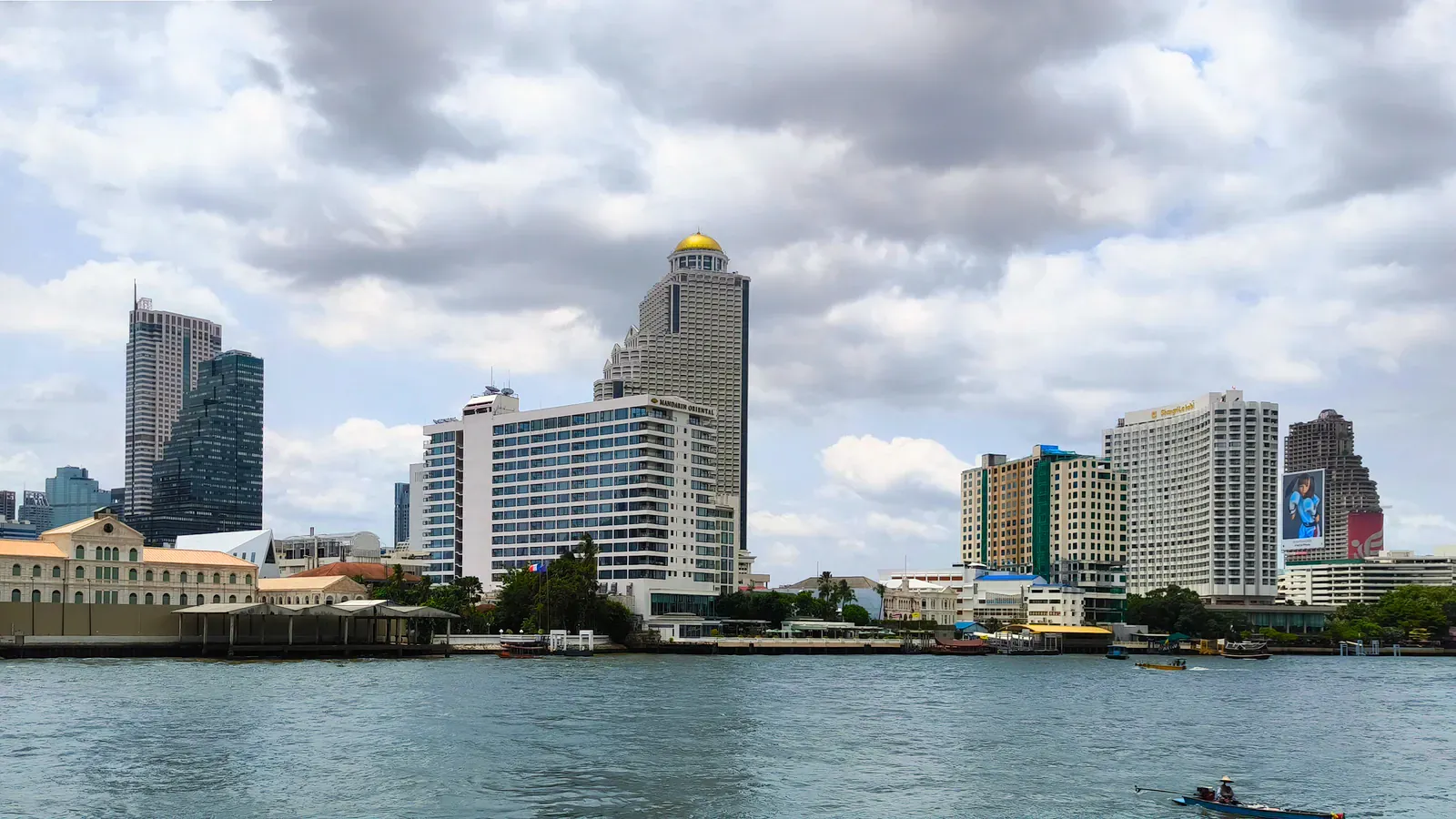
Where to stay
Pick the area before the hotel
Traffic and heat make Bangkok distances feel longer than they look on a map, so the area shapes a trip more than the hotel does. Our guides match areas to trip types and explain the trade-offs.

Places to stay
Find a hotel
Explore the other desks
More from Travel
- 14 min read
 13 min read
Bangkok Air Quality and PM2.5: What to Know
 11 min read
How to Plan a Bangkok Itinerary: Group by Area, Not Day

Newsletter
You're subscribed as