Health
IVF in Bangkok: Who's Eligible Before You Look at the Price
Thailand's legal eligibility rule for IVF, what a Bangkok cycle costs and includes, and reported success rates by age, before you book a clinic.

On this page
Before cost or success rates matter at all, Thai law decides who can access IVF in Thailand in the first place: it has to be a legally married couple, with a marriage recognised under Thai law. Most facilitator pages lead with price and bury this. It belongs first, because it rules some prospective patients out before anything else is worth discussing.
Who is actually allowed to have IVF in Thailand?
Thailand’s Protection of Children Born through Assisted Reproductive Technologies Act, B.E. 2558 (2015), governs IVF, IUI and related fertility treatment, and it restricts access to legally married couples. Clinics require a certified, and for foreigners usually legalised and translated, marriage certificate before starting treatment. This requirement applies to IVF itself, not only to the stricter surrogacy rules covered next, and it is the piece most cost-focused guides skip past.
The Act’s original wording refers to “husband and wife,” reflecting Thai marriage law as it stood in 2015. Thailand’s Marriage Equality Act took effect in January 2025, legalising same-sex marriage, but the ART Act itself has not yet been formally amended to match that language. A draft amendment addressing this was opened for public consultation by the Department of Health Service Support in July 2026. As of this writing, that amendment is still a proposal under ministry review, not a law: only publication in the Royal Gazette makes it one. Anyone in a same-sex marriage considering ART treatment in Thailand should treat this as an open legal question and confirm current clinic practice and legal advice directly, rather than assume either way.
Surrogacy: a separate, stricter rule
Thailand banned commercial surrogacy outright after 2014, and the 2015 Act that followed permits gestational surrogacy only for a legally married couple with a medically documented need, where at least one spouse holds Thai nationality. If only one spouse is Thai, the marriage must have been registered for at least three years. A couple with no Thai spouse is excluded. Paying a surrogate or a broker for arranging surrogacy is a criminal offence, not just a contract dispute.
A draft amendment, opened for public consultation between 2 and 31 July 2026, would let foreign married couples, including same-sex spouses, seek surrogacy if the surrogate shares the nationality of either spouse, and would raise penalties for commercial surrogacy arranging to up to 10 years’ imprisonment and a 2,000,000 THB fine. It is a draft and is not in force. Anyone considering surrogacy in Thailand, foreign or Thai, needs current legal advice rather than a facilitator’s summary of a bill still in draft.
What a Bangkok IVF cycle actually costs
Bangkok’s IVF pricing is quoted per cycle, and what “per cycle” includes varies enough between clinics that the headline number alone is close to meaningless.
| Cost element | Typical range (THB) | ~USD, checked Sept 2026 | Usually included in the base quote? |
|---|---|---|---|
| Base IVF/ICSI cycle (consultation, monitoring, egg retrieval, fertilisation, one embryo transfer) | 180,000-450,000 THB | ~5,290-13,240 USD | Yes |
| Stimulation medication | 40,000-120,000 THB | ~1,180-3,530 USD | Often separate; dose varies by response |
| PGT-A genetic screening | 30,000-70,000 THB | ~880-2,060 USD | Usually separate, optional |
| Embryo freezing and storage | Varies by clinic and duration | Varies | Usually separate |
These figures come from aggregator and clinic-published sources checked September 2026, not a single clinic’s quote, and they move. Ask any clinic for a written, itemised quote naming exactly what a “cycle” covers before you compare prices between providers. For how IVF pricing compares with other Bangkok medical procedures, see the medical tourism cost guide by procedure.

What the reported success rates actually mean
Clinics and aggregators report IVF success by age band, and the pattern is consistent with global fertility data: younger eggs do better. Converging figures from multiple Thai clinic and aggregator sources, checked September 2026, put per-cycle or per-transfer success roughly here:
- Under 35
- 50-60%
- 35-40
- 35-45%
- Over 40
- 15-25%
Source: Editorial estimate from converging clinic and aggregator sources, checked September 2026
Three caveats matter more than the numbers themselves. First, these are typically clinical pregnancy rates per embryo transfer, not live birth rates, and live birth rates generally run lower than clinical pregnancy rates. Second, individual clinics advertise their own figures, sometimes considerably higher; a single clinic’s marketed rate is not independently audited the way a national registry figure would be. Third, donor-egg cycles behave differently and are not reflected in the age bands above, since donor egg age (not the recipient’s) is the driver. Treat any specific number a clinic quotes you as a typical outcome to ask follow-up questions about, not a guarantee.
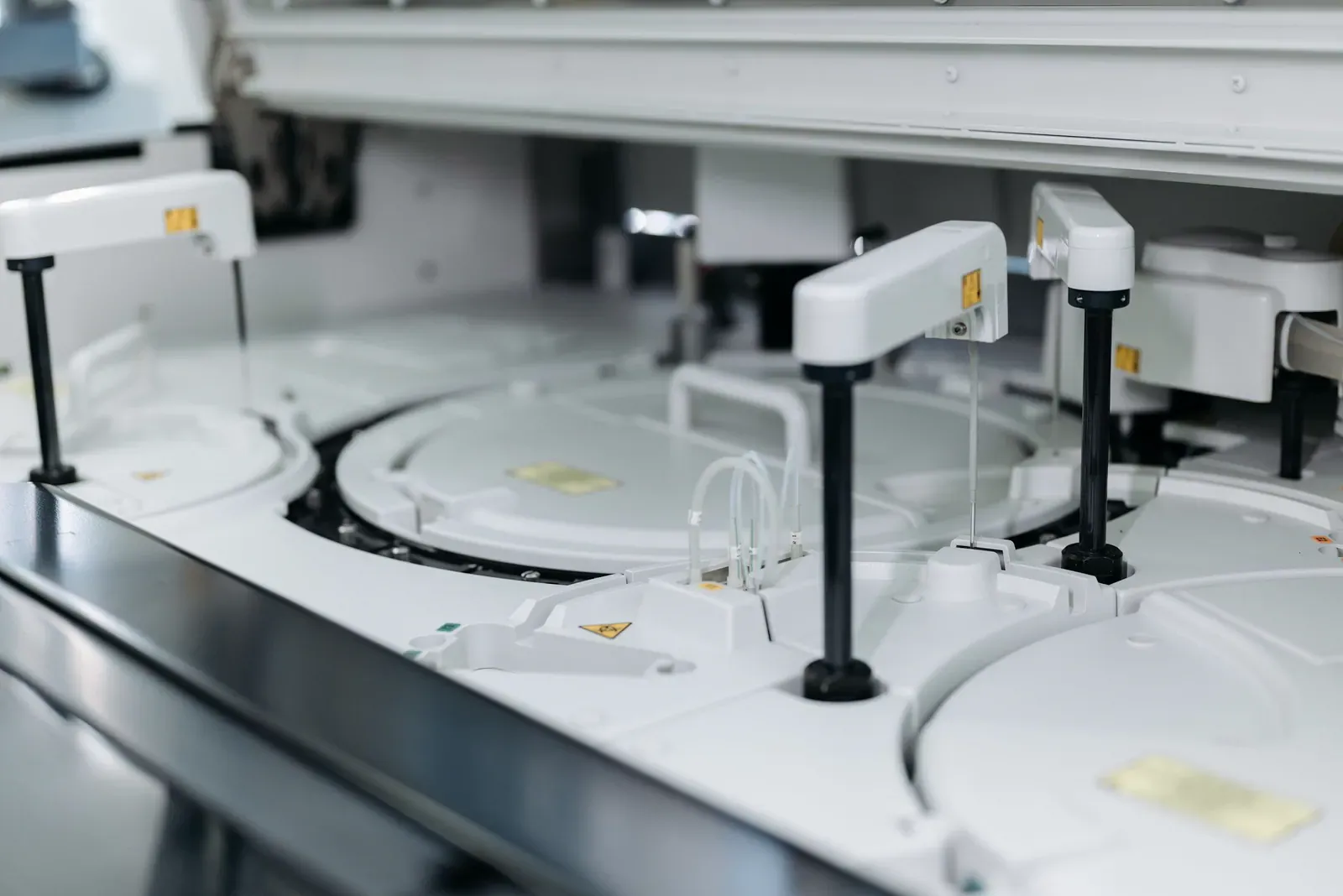
What an IVF cycle at a Bangkok clinic actually involves
- Initial consultation and diagnostic testing for both partners, plus the marriage certificate check.
- Ovarian stimulation: 10-14 days of hormone injections with monitoring visits (ultrasound and bloodwork) every few days.
- Egg retrieval, a short procedure under sedation.
- Fertilisation in the lab (conventional IVF or ICSI, depending on sperm quality) and embryo culture for several days.
- Embryo transfer, either in the same cycle (fresh) or a later cycle (frozen), and a roughly two-week wait before a pregnancy test.
- Optional PGT-A genetic screening between embryo culture and transfer, which adds time and cost.

A full cycle, start to pregnancy test, typically runs 4-6 weeks, though most patients don’t need to be physically in Bangkok for the entire stretch; some early monitoring can sometimes be coordinated with a local clinic at home, with the core stimulation, retrieval and transfer window requiring the Bangkok visit itself. Confirm exactly what your specific clinic requires in person before planning flights.

Where this happens in Bangkok
Bangkok has a genuine concentration of fertility clinics built around international patients, including hospital-affiliated programmes and standalone fertility centres such as SAFE Fertility Group, Genesis Fertility, Superior A.R.T. and Bumrungrad’s fertility programme, among others. Naming them here is descriptive, not a recommendation: this guide does not rank or endorse any single provider, and the right clinic depends on your diagnosis, budget and how a clinic answers the questions below, not on which name is best known.
Risks and typical outcomes, not best-case ones
IVF carries real risks worth discussing with a doctor before starting: ovarian hyperstimulation syndrome from the stimulation medication, the higher multiple-pregnancy rate that comes with transferring more than one embryo, the physical toll of repeated injections and procedures, and the emotional and financial strain of a cycle that doesn’t succeed. Most patients do not conceive on a single cycle, particularly over 35; a realistic plan accounts for the possibility of more than one attempt, both financially and in terms of the marriage-certificate and consent paperwork needing to stay current for a second cycle.
What to ask before you book
- What exactly does the quoted cycle price include, itemised, and what commonly gets added on?
- What is the clinic’s own success rate by age band, and is that per cycle started or per embryo transfer?
- What happens if the first cycle doesn’t result in a pregnancy: is a second cycle discounted?
- What documentation, translated and legalised, does the clinic require to confirm marriage eligibility?
- How many monitoring visits require an in-person Bangkok appointment, and how does that map onto a visa-length stay?
- What is the clinic’s policy on embryo storage if you need to pause or leave the country between cycles?
For the visa side of a treatment stay that runs past a short visit, see Thailand Medical Treatment Visa Explained. Fertility treatment is rarely covered by standard travel or expat health insurance; check the exclusions in your policy against Health Insurance for Expats in Thailand before assuming any of this is reimbursable. For hospital tiers and how to judge a Bangkok provider generally, see Best Hospitals in Bangkok for Foreigners.
Last verified: September 2026, against Thailand’s Protection of Children Born through Assisted Reproductive Technologies Act B.E. 2558 (2015), the Department of Health Service Support’s 2026 draft amendment consultation, and converging clinic and aggregator cost and success-rate reporting. Law, prices and clinic-reported figures all change; confirm each directly before you commit.
Written by
Mike Brochlowski
Founder and editor, travel photographer and designer
I'm Mike Brochlowski, a travel photographer and designer, and I currently live on Koh Samui, Thailand. I built BangkokWiki to put practical, checked information about Bangkok in one place. Every page is researched from official and primary sources, and the text names them. Where a page shows a checked date, that is when its facts were last confirmed. I also run samui69.com, a non-commercial guide to Koh Samui. If you spot an error or something out of date, tell me through the contact page and I will check it and correct the page.
Read all articles
Medical stays
Planning treatment in Bangkok?
See dated price ranges for common procedures, what each package includes and how to choose a hospital or clinic. Prices are indicative only, and nothing here replaces advice from a clinician.

Places to stay
Find a hotel
Explore the other desks
More from Health
- 9 min read
 10 min read
Heart Surgery in Bangkok: Bypass vs Angioplasty Cost
 11 min read
Best Hospitals in Bangkok for Foreigners

Newsletter
You're subscribed as