
Health
Heart Surgery in Bangkok: Bypass vs Angioplasty Cost
Bypass vs angioplasty in Bangkok: the real cost gap, what drives it, typical recovery times, and what a retiree should ask before booking.
On this page
Bypass surgery and angioplasty treat the same underlying problem, blocked or narrowed coronary arteries, in very different ways, and that difference is exactly why one typically costs two to three times the other in Bangkok. Angioplasty threads a stent into the artery through a small puncture; bypass surgery reroutes blood flow around the blockage with an open operation. This guide separates the two procedures, what drives their cost, typical (not best-case) recovery, and what a retiree or medical traveller should ask before booking either one. This guide covers planned bypass and angioplasty procedures, not a heart attack in progress; if you’re facing chest pain or a suspected cardiac emergency right now, see what to do in a medical emergency in Bangkok instead of reading on.
Bypass vs angioplasty: what’s actually different
Angioplasty, formally percutaneous coronary intervention (PCI), is a catheter-based procedure: a cardiologist threads a thin tube through an artery, usually from the wrist or groin, to the blocked section, inflates a small balloon to open it, and typically leaves a stent (a small mesh tube) in place to hold the artery open. It’s done under local anaesthetic with sedation, not general anaesthesia, and does not involve opening the chest.

Coronary artery bypass grafting (CABG), commonly called bypass surgery, is open-heart surgery. A surgeon takes a healthy blood vessel from elsewhere in the body (often from the leg or chest wall) and grafts it to reroute blood around the blocked section of a coronary artery. It’s done under general anaesthesia, traditionally through an open sternotomy (opening the breastbone), though minimally invasive approaches exist for some patients. It is a materially bigger operation than angioplasty, and its cost and recovery timeline reflect that.
Which patients typically get offered which procedure
The choice isn’t preference; it follows from what the coronary angiogram shows. Clinical guidance from cardiology bodies such as the American Heart Association and reviewed in the British Heart Foundation’s patient guidance generally points bypass surgery toward more complex cases: blockage in the left main artery, disease across multiple vessels, reduced heart pumping function, or diabetes combined with multivessel disease, where studies have found bypass gives better long-term survival. Angioplasty is generally favoured for single or double-vessel disease, less anatomically complex blockages, or patients whose surgical risk from a full operation is higher than the risk from a catheter-based procedure.
Neither procedure is simply “better”; they trade off differently. Research comparing outcomes has found repeat revascularisation (needing another procedure later) is more common after angioplasty, while stroke risk runs somewhat higher after bypass surgery. This is general clinical knowledge, not a Thailand-specific finding, and it’s exactly the trade-off a cardiologist should walk you through for your own anatomy before recommending either path.
What bypass surgery costs in Bangkok
Cost aggregators and hospital-published packages, checked September 2026, put a single coronary bypass procedure in Bangkok roughly in the 510,000-850,000 THB range (~15,000-25,000 USD), though individual sources report figures from as low as roughly 9,000 USD to as high as 30,000 USD depending on hospital tier, technique and what’s bundled into the quote. Three things drive most of that spread:
- Number of grafts. A single-graft bypass costs less than a triple or quadruple bypass; more grafts mean more operating time and a more complex procedure.
- Surgical approach. Minimally invasive bypass techniques often cost 30-40% more than traditional open sternotomy, reflecting specialised equipment and technique, even though recovery can be faster.
- Hospital tier and surgeon. International-patient hospitals with the deepest English-language support and highest-profile cardiac surgeons generally charge more than a Thai private hospital’s equivalent department, for comparable clinical outcomes.
What angioplasty costs in Bangkok
Angioplasty and stenting run substantially cheaper, roughly 245,000-420,000 THB (~7,210-12,350 USD) as a representative range from aggregator and hospital-published sources checked September 2026, though quoted figures vary widely across sources (some as low as 3,500 USD, others above 15,000 USD) depending mainly on:
- Stent type. Drug-eluting stents, which release medication to reduce the chance of the artery renarrowing, typically add 30-40% over a bare-metal stent.
- Number of stents. Multivessel disease treated with angioplasty may need more than one stent in the same session.
- Access route and hospital package. A published Bangkok Heart Hospital package, cited here as one factual example rather than a recommendation, quotes a bundled price covering the procedure and a two-night hospital stay; other providers price the components separately.
What a cardiac checkup costs, before any procedure gets discussed
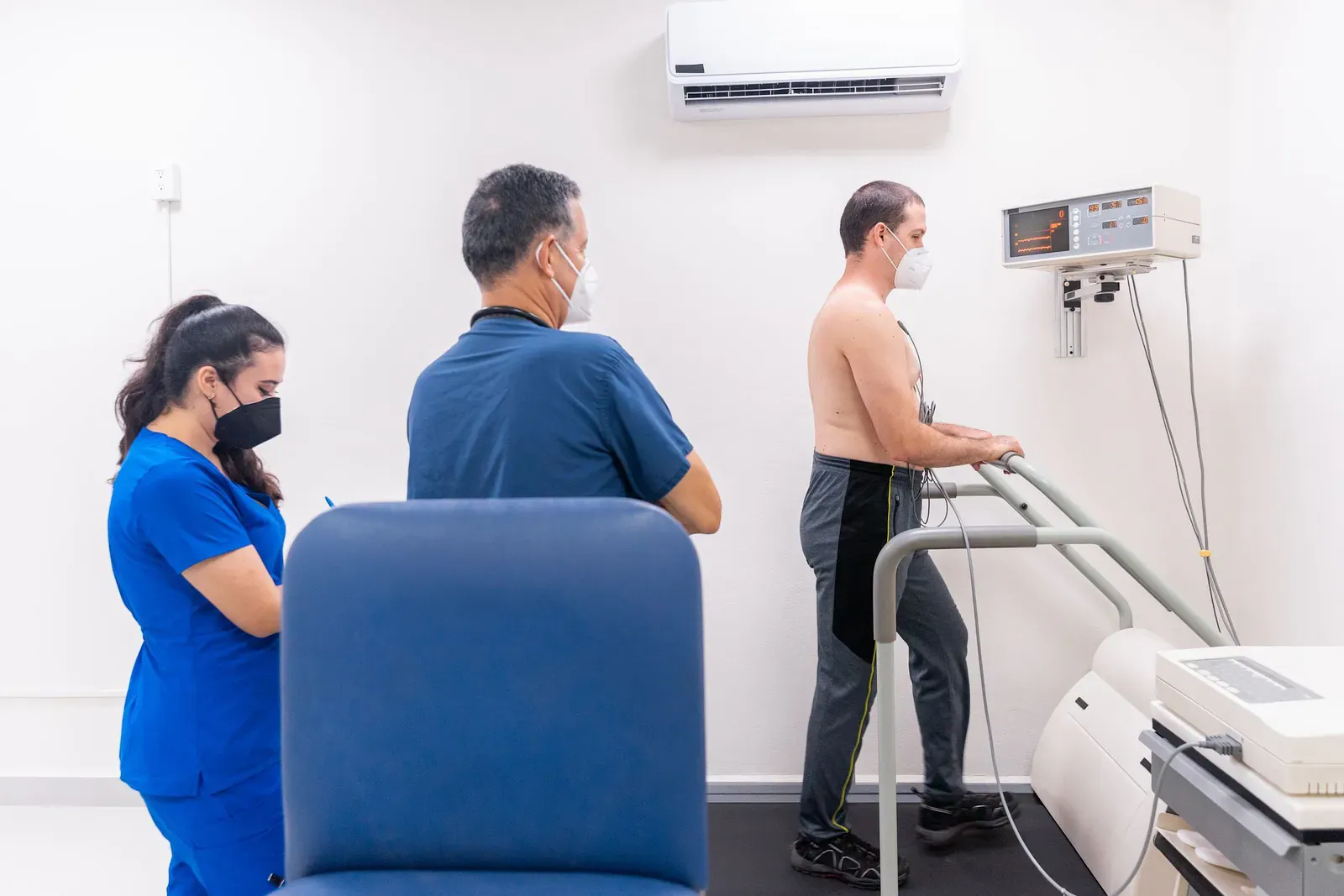
Neither bypass nor angioplasty happens without a diagnostic workup first, and that workup has its own cost that’s easy to leave out of a budget built around the headline procedure price. Bangkok hospitals sell tiered cardiac checkup packages, and the tier you need depends on what your doctor is actually screening for:
| Checkup tier | What it typically includes | Reported price range (THB) |
|---|---|---|
| Basic heart screening | Consultation, ECG, basic blood panel, blood pressure | Roughly 4,000-13,600 THB (~120-400 USD) |
| Coronary calcium score / CT scan | Basic screening plus a CT scan scoring calcium buildup in the coronary arteries | Roughly 6,900-30,600 THB (~205-900 USD) |
| Full CT coronary angiogram | Detailed CT imaging of the coronary arteries themselves, often with cardiac function assessment | Roughly 20,400-51,000 THB (~600-1,500 USD) |
| Comprehensive package with MRI/specialist consult | The above plus cardiac MRI and specialist cardiology consultation | Up to roughly 85,000 THB (~2,500 USD) |
These figures come from hospital-published package pages and aggregators checked September 2026, and packages differ enough between hospitals that the name of a tier doesn’t guarantee what’s inside it. The actual invasive coronary angiogram done immediately before a bypass or angioplasty (the one that decides which procedure you need) is usually priced separately again, often bundled into the procedure quote rather than the screening package. For general, non-cardiac-specific checkup packages, see Executive Health Check-Up Packages in Bangkok, which covers how Bangkok’s broader annual health screening market is priced and structured.
Bangkok cost against a US comparison
The gap between Bangkok and US pricing is the main reason cardiac care draws medical travellers in the first place, and it holds for both procedures, though the exact multiple varies by source and what’s included in each figure.
- Bangkok angioplasty
- 7,000-12,000 USD
- Bangkok bypass
- 15,000-25,000 USD
- US bypass (average)
- roughly 120,000-150,000 USD
Source: Editorial estimate from converging cost-aggregator and hospital-published sources, checked September 2026
Treat both sides of that comparison as dated, sourced estimates, not a quote for any specific patient. US figures vary enormously by state, hospital and insurance status; a US patient with comprehensive insurance may pay a small fraction of the sticker price, while an uninsured patient could pay close to it. The comparison is a general planning reference, not a substitute for real quotes on both sides. For how cardiac pricing compares with Bangkok’s other medical tourism procedures, see the medical tourism cost guide by procedure.
Hospital stay and recovery: typical, not best-case
| Angioplasty (PCI) | Bypass surgery (CABG) | |
|---|---|---|
| Typical hospital stay | Overnight to 2 nights | 5-7 days (3-5 for minimally invasive) |
| Typical ICU/CCU time | Usually none beyond initial monitoring | 1-2 days, sometimes longer |
| Return to light activity | Days to about 1-2 weeks | Several weeks |
| Full recovery | Roughly 1-2 weeks | 6-12 weeks; breastbone healing alone takes about 6-8 weeks |
| Anaesthesia | Local, with sedation | General |
These are typical ranges from clinical recovery guidance (including US National Institutes of Health patient materials), not guaranteed timelines, and complications, other health conditions, or a more extensive procedure can extend any of them. Flying home too early is a real risk after bypass surgery specifically, given the healing sternum and general anaesthesia; see Flying After Surgery: A Realistic Timeline for how airlines and surgeons generally think about that window, and Recovery Stay After Surgery for what a longer in-country recovery period actually involves logistically. Cardiac rehabilitation, often built around structured physiotherapy, typically continues for weeks after discharge; see physiotherapy in Bangkok for what a typical course covers and how insurance treats it.

Risks worth discussing before either procedure
Every cardiac procedure carries real risk, and a page selling the procedure has an incentive to undersell it. Angioplasty risks include artery re-narrowing (restenosis), bleeding or bruising at the access site, and, less commonly, damage to the artery requiring emergency bypass. Bypass surgery carries the risks of major open surgery generally (infection, bleeding, reaction to anaesthesia) plus procedure-specific risks including stroke, kidney strain, and irregular heart rhythm in the days after surgery. Both carry the underlying risk that the procedure doesn’t fully resolve symptoms, particularly in advanced or diffuse coronary disease. None of this is unique to Bangkok; it’s the same risk profile cardiology guidelines describe for either procedure anywhere, and it’s worth hearing from your own cardiologist in terms specific to your case, not a generic list.
Where this happens in Bangkok
Bangkok has a genuine concentration of cardiac centres built for both the domestic and international-patient markets, including dedicated heart hospitals and cardiac departments inside larger private hospitals. Bangkok Heart Hospital and Bumrungrad’s cardiac programme are two factual examples of Bangkok providers with established cardiac surgery and interventional cardiology services; naming them here is descriptive, not an endorsement or a ranking, and neither this article nor the Ministry of Public Health’s advertising rules for private facilities allow a single-hospital “best” claim. For how to judge a hospital’s tier and accreditation generally before choosing one, see Best Hospitals in Bangkok for Foreigners and JCI vs Private vs Public Hospitals.

What a retiree should ask before booking cardiac treatment abroad
- What does the coronary angiogram actually show, and why does the cardiologist recommend this specific procedure over the alternative?
- What exactly is included in the quoted price: pre-op workup, the procedure, a stated number of ICU and ward days, medication, follow-up visits?
- What happens, and who pays, if a complication extends the hospital stay beyond what’s quoted?
- What is the realistic timeline before flying home, given this specific procedure and this specific patient’s recovery?
- Does existing travel or health insurance cover any part of a planned (non-emergency) cardiac procedure abroad, or only emergency treatment?
- What follow-up care is available once home, and how will records transfer to a home-country cardiologist?
- What happens if the coronary angiogram, done after arrival, shows something different from what remote consultation suggested?
Insurance and visa considerations for a longer stay
Planned cardiac treatment is frequently excluded, or only partially covered, by standard travel insurance and many expat health policies, which tend to focus on emergency care rather than elective procedures booked in advance; see Health Insurance for Expats in Thailand for how policy terms generally separate the two. A bypass recovery stretching to several weeks, plus the initial consultation and workup, can run past a short-stay visa exemption; the Thailand Medical Treatment Visa Explained guide covers the visa categories built for exactly this kind of longer, planned medical stay. Ongoing cardiac medication after discharge, blood thinners and statins particularly, sits in Thailand’s tightly controlled prescription categories; see buying medicine in Bangkok for how a Thai pharmacy handles prescription-only drugs like these.
Last verified: September 2026, against converging cost-aggregator and hospital-published pricing, general cardiology guidance on CABG versus PCI indications (American Heart Association, British Heart Foundation, published systematic reviews), and standard post-operative recovery guidance. Prices, clinical recommendations and your own cardiologist’s assessment all take priority over any figure in this article; confirm directly before booking.
Written by
Mike Brochlowski
Founder and editor, travel photographer and designer
I'm Mike Brochlowski, a travel photographer and designer, and I currently live on Koh Samui, Thailand. I built BangkokWiki to put practical, checked information about Bangkok in one place. Every page is researched from official and primary sources, and the text names them. Where a page shows a checked date, that is when its facts were last confirmed. I also run samui69.com, a non-commercial guide to Koh Samui. If you spot an error or something out of date, tell me through the contact page and I will check it and correct the page.
Read all articles
Medical stays
Planning treatment in Bangkok?
See dated price ranges for common procedures, what each package includes and how to choose a hospital or clinic. Prices are indicative only, and nothing here replaces advice from a clinician.

Places to stay
Find a hotel
Explore the other desks
More from Health
- 7 min read
 9 min read
Cancer Treatment in Bangkok: Get a Second Opinion First
 11 min read
Best Hospitals in Bangkok for Foreigners

Newsletter
You're subscribed as