Health
Travel Vaccinations in Bangkok: Which Ones You Actually Need
Which vaccines matter for a Bangkok stay, which are only about onward regional travel, and the yellow fever certificate rule most guides get wrong.
On this page
Most travellers landing in Bangkok need zero vaccines to get through immigration, plus one or two worth having depending on how long they’re staying and where else they’re headed. The online confusion comes from mixing up three separate questions: what the law requires, what protects a Bangkok-based stay, and what only matters for onward travel. This guide sorts those apart.
Do you need any vaccine just to enter Thailand? The yellow fever rule
For most travellers, no. Thailand does not require proof of any vaccination for entry from most countries. The one legal exception, and the source of most confusion, is yellow fever.
Under the World Health Organization’s International Health Regulations, yellow fever is the only vaccine any country can legally require for entry. Thailand exercises that right for one group: travellers arriving from, or transiting, a country the Thai Ministry of Public Health lists as a yellow fever transmission risk (mainly parts of sub-Saharan Africa and tropical South America). If that’s your route, carry an International Certificate of Vaccination or Prophylaxis, the “yellow card,” showing vaccination at least 10 days before landing, and declare it through Thailand’s electronic health pass before entry. This vaccination record is a different document from the medical certificates required for a driving licence, work permit or visa; those are covered separately in medical certificates in Bangkok. Entry rules and the Covid-19 position are in vaccines required to enter Thailand and Covid-19 in Bangkok.
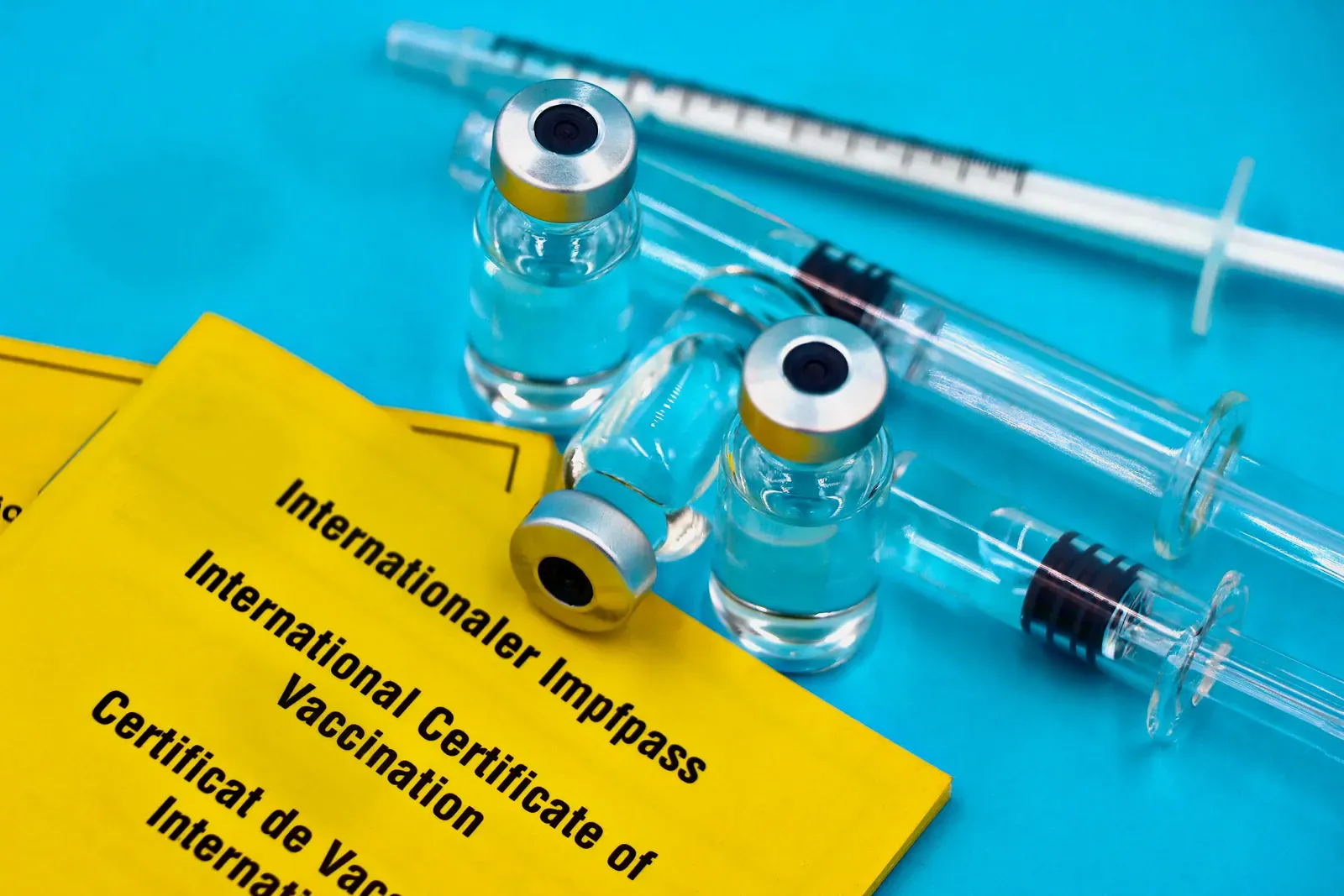
A single dose gives lifelong protection under WHO rules, so the certificate never expires. That’s the entire legal requirement. Everything below is about what’s worth getting, not what’s mandatory.
Vaccines that matter for a Bangkok-based stay
For a stay centred on Bangkok itself, a small list of vaccines covers most of the realistic risk, largely because of food, water and everyday exposure rather than anything exotic:
| Vaccine | Why it’s on the list | Typical lead time |
|---|---|---|
| Hepatitis A | Food and water borne; a real risk anywhere street food and markets are daily life | About 2-4 weeks; a booster extends it long-term |
| Hepatitis B | Spread through blood and body fluids; relevant for longer stays, medical or dental work, tattoos | A 2-3 dose course over weeks to months |
| Typhoid | Also food and water borne; more risk with extended local eating outside major hotels | 1-2 weeks, depending on vaccine type |
| Routine boosters (MMR, flu, tetanus/diphtheria) | Not Thailand-specific, but confirm you’re current | Varies |
This is the core list, not an exhaustive one, and worth discussing with a doctor before travel rather than skipping.
Vaccines that are about onward travel, not Bangkok
A second group gets sold hard by some clinics but has little to do with a Bangkok stay on its own. Japanese encephalitis is the main one: real in Thailand, but the risk sits mostly in rural, rice-farming areas, not central Bangkok. It’s worth discussing if you’re moving to a JE-risk area for a month or more, travelling frequently into rural Thailand, or spending extended nights outdoors without screens. For a trip that stays inside the city, it’s rarely the priority a clinic price list suggests.
Rabies: the one Bangkok-specific risk worth taking seriously
Rabies is the exception to “Bangkok itself is low risk.” Dogs are the main rabies reservoir in Thailand, and most traveller bite exposures come from dogs, then monkeys, then cats. Government-run pet vaccination campaigns have cut the numbers over the years, but the risk hasn’t gone to zero, and Bangkok has plenty of street dogs and temple cats that tourists are tempted to approach. For first aid and treatment after a bite, see rabies risk and animal bites in Thailand. Mosquito-borne illness is covered in dengue and malaria risk in Bangkok.

Pre-exposure rabies vaccination (a course of shots before you travel) doesn’t make you immune. It shortens and simplifies the treatment you need if you’re bitten or scratched, and removes the need for rabies immunoglobulin, which can be harder to source quickly outside major hospitals. It’s most worth considering for longer stays, for anyone likely to be around animals, or for peace of mind where a well-stocked hospital isn’t guaranteed nearby. Post-exposure treatment is available at provincial and most district hospitals in Thailand for anyone bitten without the pre-exposure course; it just means more shots and more urgency.
What a Bangkok travel-clinic visit actually costs
Bangkok’s travel vaccination clinics are mostly hospital-attached, and their published fee structures separate the visit from the vaccine dose. Thai Travel Clinic, cited here only as an example of this setup, published these visit fees as of September 2026: doctor’s consultation 200 THB (~6 USD), rising to 400 THB (~12 USD) extended hours; hospital fee 100 THB (~3 USD), or 200 THB (~6 USD) extended hours; a 20 THB (~1 USD) injection fee; and a 20 THB (~1 USD) registration fee, first visit only.
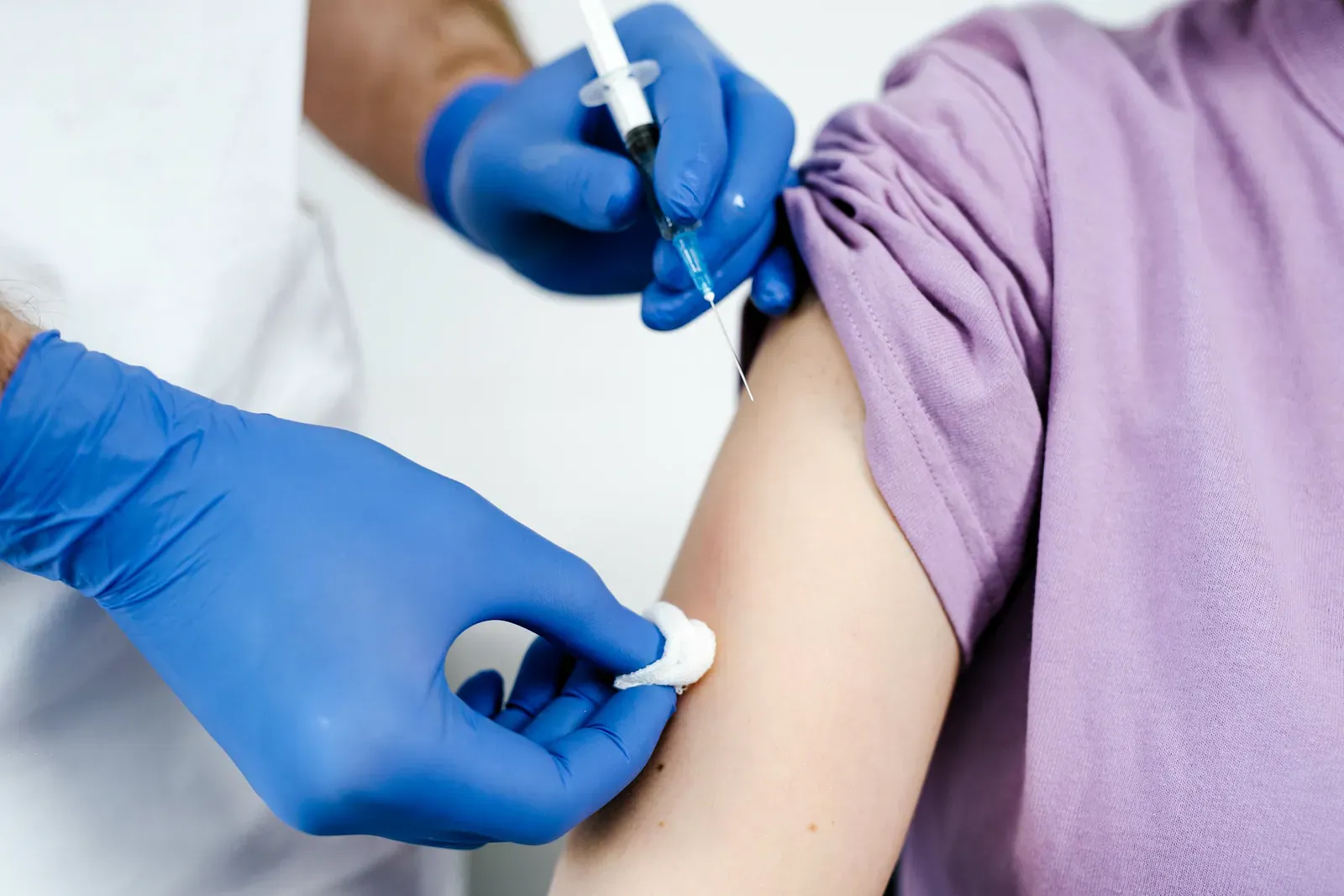
Bumrungrad and BNH Hospital also run travel medicine services; naming them is descriptive, not a recommendation. Clients typically see a doctor first, who reviews travel plans and history before any vaccine, then wait under observation briefly after each shot. These are vaccination visit fees only, not surgical or procedure costs; for how other Bangkok medical costs compare by procedure, see the medical tourism cost guide by procedure.
Before you go: a short checklist
- Check your routing against Thailand’s yellow-fever-risk country list if transiting Africa or South America.
- Book a travel medicine appointment 4-6 weeks out; some vaccines need doses spaced weeks apart.
- Bring any existing vaccination records, even informal ones.
- Confirm routine vaccines (MMR, tetanus, seasonal flu) are current, not just the Thailand-specific ones.
- Ask about rabies pre-exposure vaccination if your stay is long, rural or animal-adjacent.
- Keep a copy of anything you’re given, including a dated receipt, for insurance or a later visit.
For a longer health-related stay, see Thailand Medical Treatment Visa Explained. If you take regular prescription medication, see Bringing and Refilling Prescription Medication in Thailand. For choosing where to get treated generally, see Best Hospitals in Bangkok for Foreigners.
Last verified: September 2026, against the Thai Ministry of Public Health’s yellow fever entry rule, WHO International Health Regulations guidance, CDC Yellow Book recommendations for Thailand, and Thai Travel Clinic’s published fees. Rules and prices change; confirm both before you travel.
Written by
Mike Brochlowski
Founder and editor, travel photographer and designer
I'm Mike Brochlowski, a travel photographer and designer, and I currently live on Koh Samui, Thailand. I built BangkokWiki to put practical, checked information about Bangkok in one place. Every page is researched from official and primary sources, and the text names them. Where a page shows a checked date, that is when its facts were last confirmed. I also run samui69.com, a non-commercial guide to Koh Samui. If you spot an error or something out of date, tell me through the contact page and I will check it and correct the page.
Read all articles
Medical stays
Planning treatment in Bangkok?
See dated price ranges for common procedures, what each package includes and how to choose a hospital or clinic. Prices are indicative only, and nothing here replaces advice from a clinician.

Places to stay
Find a hotel
Explore the other desks
More from Health
- 11 min read
 9 min read
Bangkok Hospital Network: BDMS Branches Compared
 9 min read
Weight Loss Surgery in Bangkok: Eligibility Before the Price

Newsletter
You're subscribed as