Living
Kids Activities and Classes in Bangkok: What Actually Exists
Kids activities and classes in Bangkok, from swimming to Muay Thai to STEM clubs, with pricing bands, term structures and what to ask first.
On this page
Bangkok has a deep after-school and weekend activity market, built largely around the international school calendar and the condo lifestyle that fills weekday afternoons with a driver, a helper or a parent doing pickups. Almost everything a family would expect at home exists here in some form, priced from genuinely cheap to properly expensive, and the main skill is knowing what to ask before signing up rather than discovering the gaps afterwards.
This guide maps what exists, how it is structured and priced, and the mechanics that decide whether an activity actually fits a family’s week: travel time, term dates and refund terms matter as much as the activity itself once you look past the first trial class.
Swimming and Water Safety
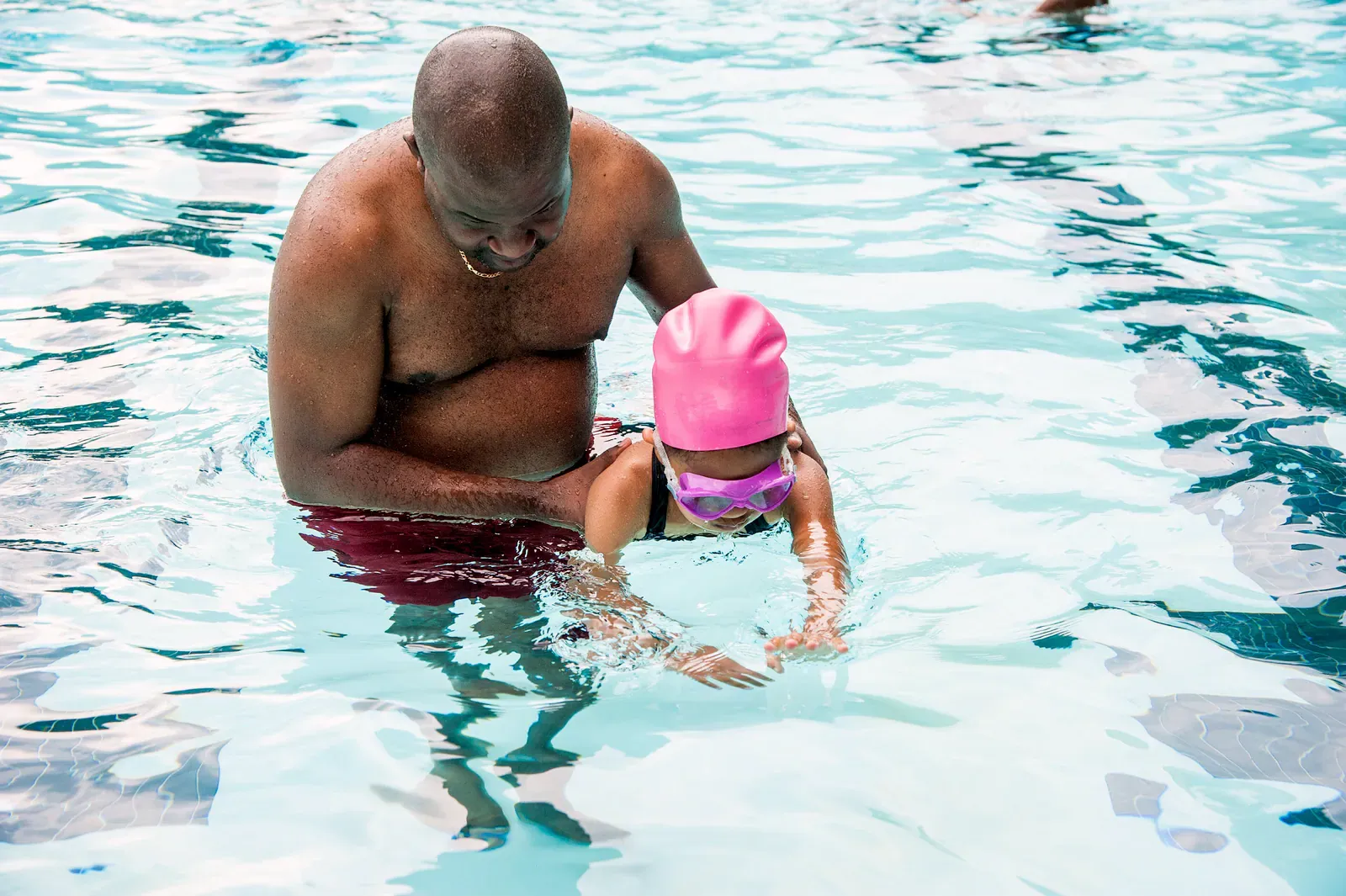
Swimming is close to the default activity for children in Bangkok, and for good reason: pools are everywhere (most condo buildings have one), the climate makes year-round lessons practical, and water safety matters in a city with open water, hotel pools and beach trips all in easy reach. Group and private lessons both exist, starting from baby and parent classes at under a year old through to competitive squad training for older children. Group lessons commonly run ฿400-900 (roughly US$11-25) per session, indicative for 2026, with private lessons costing more; many venues sell blocks of eight to twelve sessions rather than single drop-ins.
What to ask before signing up: instructor-to-child ratio in group classes, whether the pool is shaded or fully exposed (a real comfort issue in the hot season), and what happens to unused sessions in a block if a family travels. Because swimming ability varies so much by how much beach and pool time a family already has, a trial lesson to assess level before committing to a block is standard practice and worth insisting on.
Water safety deserves the same weight as the lessons themselves. Bangkok’s condo culture means many children have pool access from a very young age, often without a lifeguard on duty, and drowning is a real and under-discussed risk in a city where a pool is a five-minute walk from home rather than an occasional outing. Formal lessons help, but they are not a substitute for active supervision, and a “water competent” child is not the same as a child who can be left unsupervised near water.
Team and Racket Sports
Football and basketball have an active club scene, particularly around international schools and larger sports complexes, with age-graded groups typically starting from around four or five for football and slightly later for basketball. Sessions are usually weekly, priced by term or by block rather than per class, and the main differentiator between providers is coaching qualification and squad size rather than the sport itself.
Tennis and badminton both have strong footholds (badminton in particular is played widely by Thai families and courts are easy to find) with lessons available from short-format mini-tennis for young children through to serious junior coaching. Racket sports tend to price per hour of coaching, often ฿500-1,200 (roughly US$14-33) for a private hour, indicative for 2026, with group formats considerably cheaper per child. Ask about court access outside class time, since a family that wants to practise between lessons needs somewhere to book a court, not just a coach. For indoor climbing, see our Bangkok climbing gyms guide.
Gymnastics, Dance and Ballet
Gymnastics, dance and ballet studios cater to a wide age range, often starting from toddler “mini movers” classes around age two and running through to pre-professional tracks for older children. Term-based pricing is standard, usually aligned to the school semester, with exam or performance terms sometimes priced slightly higher to cover costume or venue costs. Before signing up, ask what a term culminates in (a showcase, an exam, nothing at all) since this affects both cost and the time commitment expected from parents.
Martial Arts, Including Muay Thai for Children
Martial arts for children cover a wide range, from judo and taekwondo to Brazilian jiu-jitsu and, distinctively for Bangkok, Muay Thai. Muay Thai for children needs a careful look rather than an assumption either way. Reputable children’s classes are built around technique, fitness, discipline and pad work, run by instructors used to teaching young children, with contact kept light or entirely absent for younger age groups. What to look for: a class structured around drills and conditioning rather than full sparring, an instructor who explains technique rather than just running repetitions, and a visible focus on safety equipment (pads, wraps, appropriately sized gloves) for any contact work. What to avoid: any class that puts young children into full-contact sparring, pushes weight-cutting or competition too early, or cannot clearly explain how it manages contact for the age group in question. A trial class, watched in person rather than judged from a website, tells you more than any description can.
Other martial arts follow more familiar international structures: belt or grading systems, term-based progression, and a strong emphasis on discipline and respect that many parents specifically seek out. Pricing across martial arts generally sits in the ฿1,500-4,000 (roughly US$42-110) per month range for regular group classes, indicative for 2026.
Age of starting varies more by discipline than by provider: judo and taekwondo commonly accept children from around four or five, while Muay Thai classes aimed specifically at young children (rather than adapted adult classes) more commonly start around six or seven, when a child can follow multi-step instruction reliably. A provider unwilling to explain how they adapt for a younger child, rather than simply confirming a minimum age, is a signal to look elsewhere.
Music, Art and Creative Studios
Instrument lessons, from piano and violin to guitar and drums, are widely available, typically priced per half-hour or hour of private tuition, with group options for some instruments and for early-years music appreciation classes. Art and pottery studios offer both drop-in sessions (useful for a single visit or a birthday activity) and term-based courses that build skill progressively; pottery in particular has grown as a category, partly because it suits a wide age range and doubles as a calming, screen-free afternoon.
Music tuition commonly runs ฿600-1,500 (roughly US$17-42) per half-hour lesson, indicative for 2026, varying by instrument and instructor experience; group art or pottery sessions tend to be priced lower per head than private music tuition.
STEM, Drama and Languages
Coding, robotics and STEM clubs have expanded quickly in Bangkok, often run as after-school programmes on school premises or as standalone weekend classes, starting from around age six or seven for the simplest robotics kits and running through to more serious coding tracks for teenagers. Drama and public speaking classes suit children who enjoy performing or need a structured way to build confidence, usually culminating in a term showcase; these classes are less common than sport or music, so availability in a given area is worth checking early rather than assumed.
Thai language classes for children of expatriate families range from casual conversational classes to full literacy programmes, useful both for daily life and, for longer-term residents, for genuine cultural integration. Mandarin classes have a strong presence too, reflecting demand from both Thai and international families who see it as a long-term asset; both languages are typically taught in age-graded groups with materials suited to non-native speakers.
Chess and other strategy games, along with debate clubs for older children, exist in a smaller but growing niche, usually run as after-school programmes or weekend workshops rather than standalone studios. These suit children who prefer a quieter, less physical activity and are often easier to book on short notice than the more oversubscribed sport and music categories.
Scouts, Outdoor Programmes and Holiday Camps
Scouts-style outdoor programmes exist through both international scouting organisations with a presence in Bangkok and independent outdoor-education providers running weekend or holiday programmes. These suit children who need less screen time and more structured outdoor challenge, and they double as a rare chance for city-based children to build the kind of resilience and teamwork skills that a classroom activity does not.
Holiday camps are their own market entirely, running during the school breaks that follow the international and Thai school calendars, and covering everything from sport-specific camps to multi-activity camps to STEM or language-immersion camps. Popular camps, especially the well-reviewed multi-activity ones over the longer school holidays, book out weeks in advance: families who wait until the week before a break often find their first-choice camp full and settle for a second or third option. Booking as soon as camp schedules are published, typically a term or more ahead, is the only reliable way to get a preferred slot.
How Classes Work: Terms, Pricing, Trials and Contracts
Most structured activities in Bangkok follow the international school year, running in terms roughly aligned to August-October, November-January (with camps over the December break), January-March, and April-June (with camps over the long March-May break). Term-based pricing is standard for anything ongoing (sport, music, dance, language) while block pricing (a set number of sessions, used at the family’s own pace within a window) suits activities like swimming or private tuition better. Drop-in pricing exists for art, pottery and some sports, useful for a short stay or an undecided family.
A trial class before committing to a term is standard practice across almost every category, and a provider who resists offering one is worth treating with some caution. Contracts and refund policies vary considerably: some providers offer prorated refunds for a family leaving mid-term (relevant for relocating families with an uncertain length of stay), while others treat a term fee as non-refundable once the term begins. Reading the refund terms before paying, not after a change of plan, avoids a common frustration among both visiting and relocating families.
Payment methods and receipts matter more than they might elsewhere, particularly for families who need documentation for tax, insurance or employer reimbursement purposes. Ask whether a provider issues a proper receipt or tax invoice before paying by cash, which some smaller studios still prefer, since retrofitting paperwork after the fact is harder than requesting it upfront.
Travel time is the real constraint behind most scheduling decisions, more than price or quality. Bangkok’s traffic makes a 20-minute cross-town trip an hour-long commitment at the wrong time of day, which is why most families end up clustering their children’s activities near home or near school rather than chasing the single best option across town. Choosing a slightly less ideal provider five minutes away over an excellent one forty minutes away is, for most families here, the right trade after a term or two of the alternative.
Finding Classes in English and Supporting Additional Needs
English-language instruction is common across sport, music, art and STEM categories, particularly in areas with a strong international school and expatriate presence, and less consistent in language or drama classes, which sometimes assume Thai fluency. Asking directly, before a trial, whether instruction runs in English or Thai (or both) saves a wasted first session.
For children with additional needs, inclusion varies significantly by provider rather than by activity type: some studios and clubs have staff experienced with additional needs and are happy to discuss adaptations in advance, while others have no such experience and will say so if asked directly. The practical approach is to call or message ahead, describe the child’s needs specifically, and ask what the provider has done before rather than what they say they can do in general terms: a provider with genuine experience will usually have specific examples to offer.
Cost Tiers, Short Stays and the Free End
Activities in Bangkok roughly split into three cost tiers: budget (public pools, park-based sport, community programmes, often free or under ฿200 per session, indicative for 2026), mid-range (most group classes in sport, music, art and language, roughly ฿400-1,500 per session or ฿2,000-6,000 per month, indicative for 2026), and premium (private tuition, specialist coaching, some international-branded programmes, which can run considerably higher). None of these tiers reliably predicts quality: a mid-range group swimming class and a premium private one can both be excellent or mediocre depending on the individual instructor.
For a short stay rather than a term-long commitment, drop-in options work best: art and pottery studios, casual sport sessions, and single-day camps or workshops during school holidays all suit a family passing through for a few weeks. Term-locked activities like most dance, music and language classes are a poorer fit for anything under about six weeks, since providers are generally structured around the full term regardless of a shorter stay.
The free and cheap end of the market is larger than many families realise. Public parks across the city have free playgrounds and, in several larger parks, outdoor gym equipment and jogging tracks usable by families. Public pools exist in some districts at low cost, though availability and quality vary. Public libraries increasingly run children’s reading and activity programmes at no or nominal cost, and community centres attached to some parks or municipal buildings run seasonal programmes for local children that visiting or new-resident families can often join.
None of this requires an introduction or a membership beyond turning up: a Sunday morning at a large public park, watching what local families are already doing, is often the fastest way to find the free layer of activity a guide cannot fully capture in writing. Word of mouth among other parents, once a family has been here a few months, tends to surface these free and low-cost options faster than any single source can list them.
Activity Guide at a Glance
| Activity | Typical starting age | Price band (monthly, indicative 2026) | Finding it in English | The catch |
|---|---|---|---|---|
| Swimming | Under 1 (parent classes) | ฿1,600-3,600 | Easy | Pool shading and season affect comfort |
| Football / basketball | 4-5 | ฿1,500-4,000 | Easy | Squad sizes and travel time vary a lot |
| Tennis / badminton | 4-6 | ฿2,000-5,000 | Easy | Court access outside class hours |
| Gymnastics / dance / ballet | 2-3 | ฿2,000-5,000 | Moderate | Performance or exam terms cost more |
| Martial arts (incl. Muay Thai) | 4-6 | ฿1,500-4,000 | Moderate | Vet the class structure, not just the sport |
| Music (private) | 4-5 | ฿2,400-6,000 | Easy | Priced per lesson, adds up fast |
| Art / pottery | 3-4 | ฿1,200-3,500 | Easy | Fewer term commitments, more drop-in |
| Coding / robotics / STEM | 6-7 | ฿2,500-6,000 | Easy | Newer market, quality varies by provider |
| Drama / public speaking | 6-7 | ฿2,000-5,000 | Moderate | Less common, check availability early |
| Thai / Mandarin classes | 4-5 | ฿2,000-5,500 | Moderate | Mixed native/non-native class levels |
| Scouts / outdoor programmes | 6-7 | ฿1,500-4,000 | Moderate | Fewer providers, book weekend slots early |
| Holiday camps | 4 and up | ฿3,000-12,000 per camp week | Easy | Popular weeks book out early |
This layer of structured activity fits naturally once a family has settled the bigger logistics covered in Bangkok with kids and, for the youngest children, baby and toddler essentials: classes are the part of life here that starts to feel normal once transit, heat and routine are already sorted.
Common questions
What age can children start swimming lessons in Bangkok?
Parent-and-baby classes commonly start under one year old, with structured group lessons for independent swimming typically beginning around age three to four. Many venues offer a trial lesson to assess a child’s comfort in water before placing them in a group.
Is Muay Thai safe for children?
Reputable children’s classes focus on technique, fitness and light or no contact for younger age groups, run by instructors experienced with children. Avoid any class that pushes full sparring, weight-cutting or early competition for young children, and watch a trial class in person before committing.
How far in advance do holiday camps book out?
Popular multi-activity camps over the longer school breaks (December and March-May) often fill weeks ahead once schedules are published. Booking as soon as a term’s camp list is released is the most reliable way to secure a preferred week.
Can I find classes taught in English?
Yes, across most categories, particularly sport, music, art and STEM, which commonly run in English in areas with an international school presence. Language and drama classes are less consistent, so it is worth asking directly before a trial.
Are there good free or cheap activities for kids in Bangkok?
Yes: public parks with playgrounds and outdoor gym equipment, some public pools, and library or community-centre programmes all offer low-cost or free options. They are a solid base layer even for families who also pay for structured classes elsewhere.
What if we are only in Bangkok for a few weeks?
Favour drop-in options: art and pottery studios, casual sport sessions, and single-day holiday workshops all suit a short stay. Term-locked activities like most dance, music and language classes are generally a poor fit for anything under about six weeks.
Part of
Written by
Mike Brochlowski
Founder and editor, travel photographer and designer
I'm Mike Brochlowski, a travel photographer and designer, and I currently live on Koh Samui, Thailand. I built BangkokWiki to put practical, checked information about Bangkok in one place. Every page is researched from official and primary sources, and the text names them. Where a page shows a checked date, that is when its facts were last confirmed. I also run samui69.com, a non-commercial guide to Koh Samui. If you spot an error or something out of date, tell me through the contact page and I will check it and correct the page.
Read all articles
Visas and paperwork
Staying in Thailand longer?
Visas, extensions, documents and banking for longer stays. Rules and fees change often and offices apply them differently, so check the official source before you act.

Places to stay
Find a hotel
Explore the other desks
More from Living
- 13 min read
 11 min read
Bangkok Cost of Living Calculator
 9 min read
Renting Near an International School in Bangkok

Newsletter
You're subscribed as