Things to do
Chatuchak Weekend Market Guide: How to Navigate It
How to orient yourself inside Chatuchak's numbered sections, which parts reward a foreigner's time, and plans for a two-hour visit or a serious half-day shop.
At a glance
- Reading time
- 10 min read
- Chapters
- 8
- Published
- Sep 20, 2026
On this page
Chatuchak Weekend Market (JJ Market to most expats) is one of the largest markets on earth by stall count, and it beats first-time visitors not through distance but through sameness: corrugated roofs, narrow alleys and lookalike stalls repeating for hundreds of metres with no sightline out. The fix is not a better map app; GPS barely works under the roofing. It is a navigation method: orient by two fixed landmarks, work the market as sections rather than a single sprawl, and always know which gate you came in by.
Why Chatuchak defeats first-timers
The market covers roughly 35 acres and is organised into numbered sections (often quoted as 27, though the exact count shifts as the market authority reshuffles zones), each with a rough theme that isn’t strictly enforced. A ceramics stall sits inside a clothing section; a food stall interrupts a run of antiques. Aisles are numbered but the numbering resets by section, so “soi 3” means something different depending on which block you’re in. There is very little useful signage once you’re deep inside, phone signal drops in the metal-roofed alleys, and every alley looks like the last one. People don’t get lost because they’re careless; they get lost because the market is designed as a grid with no long view in any direction.
The other trap is scale-blindness. Visitors budget an hour because “it’s just a market,” then discover that an hour barely covers two sections. Chatuchak rewards people who accept upfront that they will not see all of it, pick a strategy, and move on.
Orientation: the clock tower, the ring road and your entry gate
Two fixed points make the map legible.
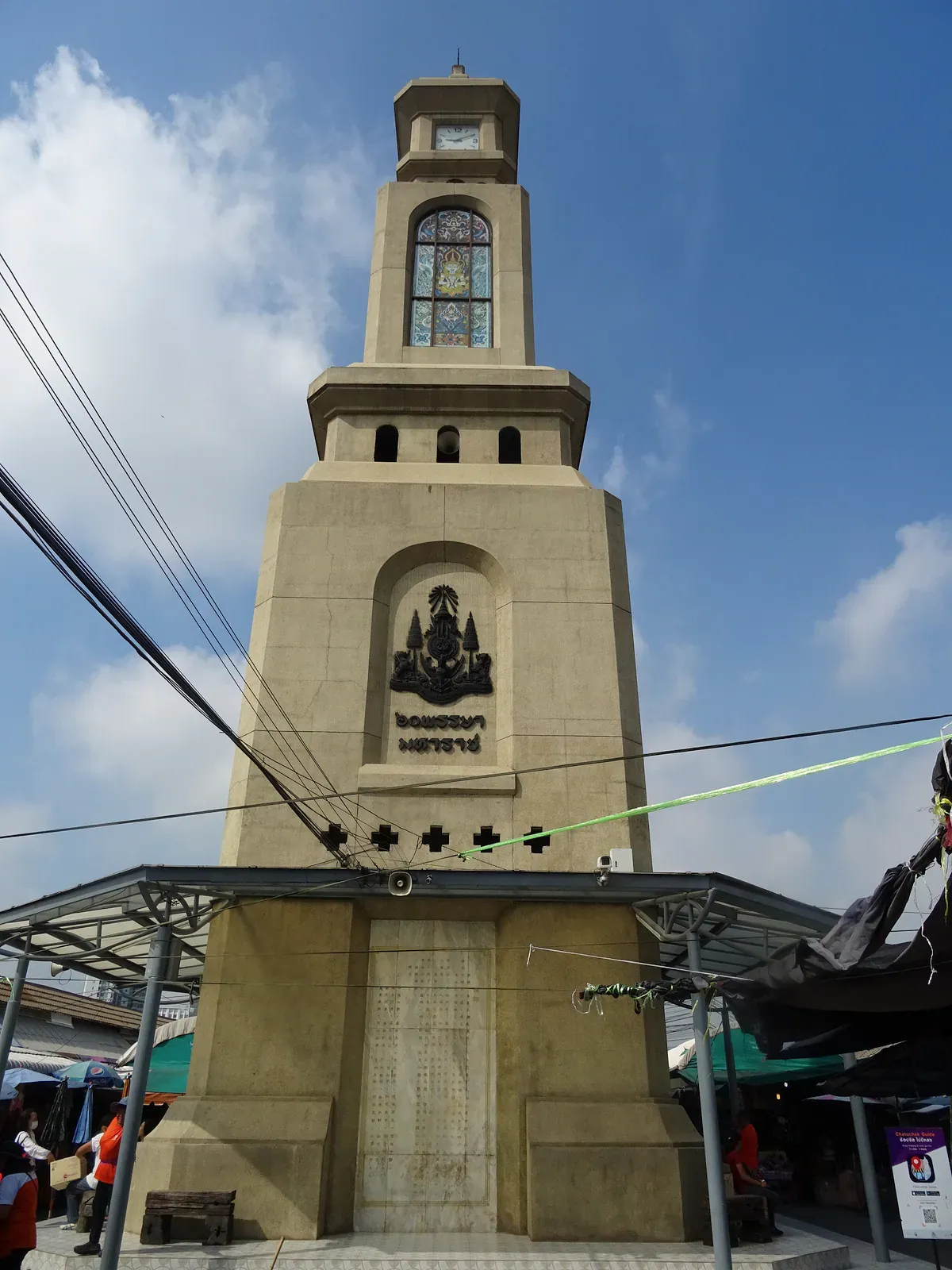
- The clock tower, near the market’s administrative centre, is the closest thing Chatuchak has to a town square. It has a food court, a police box, an information point and a bank of ATMs. When you’re disoriented, “get back to the clock tower” is a workable plan even without a map.
- The outer ring road that circles the whole market. Every section backs onto it, so if you push outward in any direction (not sideways along the aisles) you will eventually hit the ring road, and from there you can walk around the perimeter to your entrance gate rather than trying to retrace an internal path.
Before you go in, note or photograph the gate number and the nearest cross-street landmark (a 7-Eleven, a specific food stall, a mural). Drop a pin on your phone’s map at the entrance even though it won’t help inside: it will get you back to the right side of the market once you’re out. Decide your exit gate before you decide anything else, because entering from Kamphaeng Phet side and trying to leave near Mo Chit, or vice versa, adds a 15-20 minute perimeter walk you didn’t plan for.
Work one section, or one small cluster of adjacent sections, at a time. Finish it, walk out to the ring road, then walk along the outside to the next section’s entrance rather than cutting back through the interior. It feels slower. It’s faster, because it removes the chance of doubling back through an identical-looking aisle you’ve already searched.
The section groups, and what each is actually for
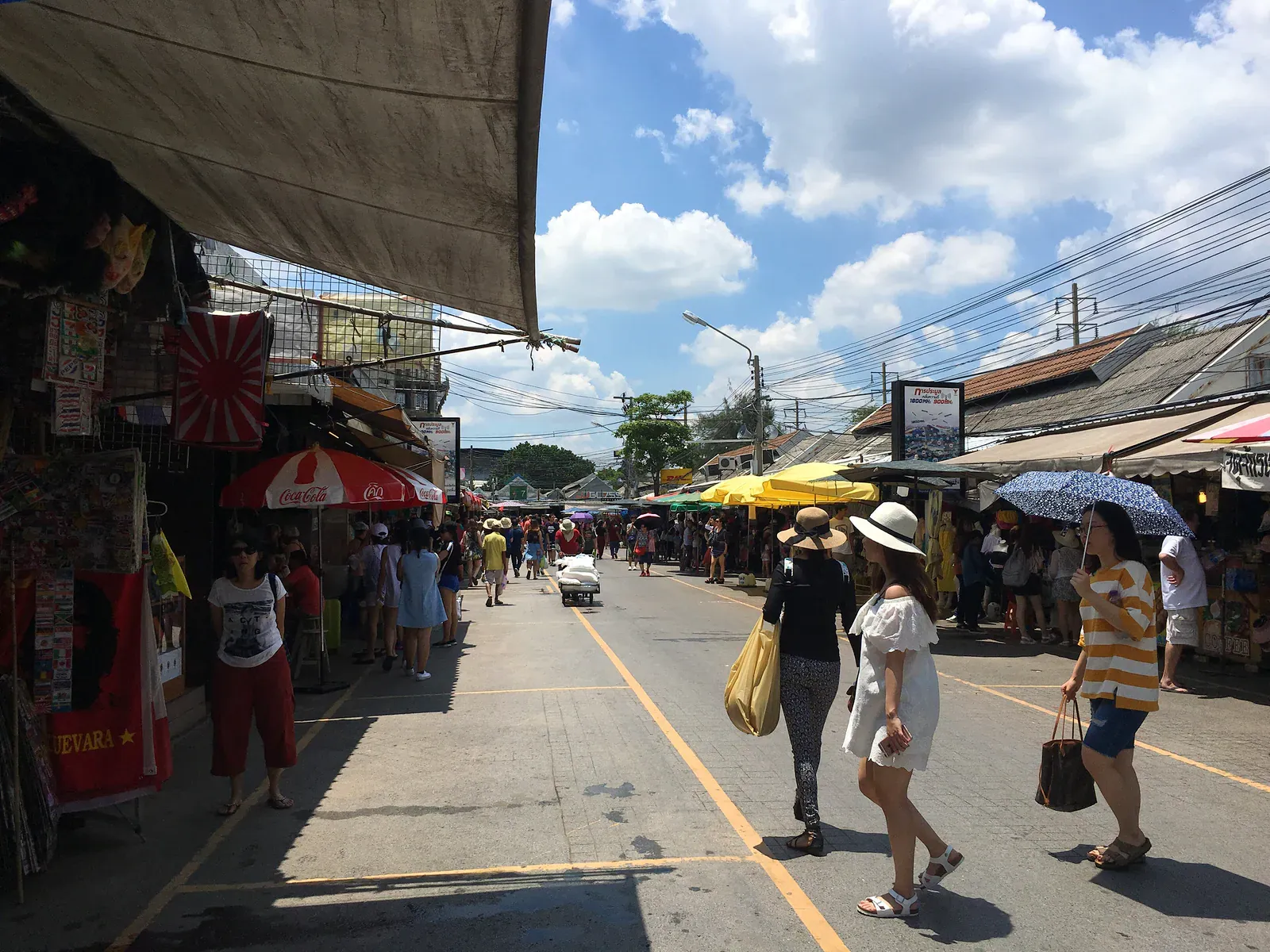
Chatuchak’s sections cluster into a handful of broad groups. Treat this as a shopping menu, not a checklist: most visitors do best picking two or three groups rather than attempting all of them.
- Plants and garden: one of the most pleasant parts of the market to walk through even if you’re not buying, with shaded lanes, orchids, bonsai and garden tools. Genuinely worth a browse for anyone with time to spare; not practical for tourists who can’t transport a plant home.
- Ceramics and home decor: Thai celadon, rustic stoneware, woven baskets and furniture accents. Quality varies enormously by stall; this is where slowing down to inspect glaze and finish pays off (see the quality section below). Some vendors here deal wholesale and aren’t interested in single pieces.
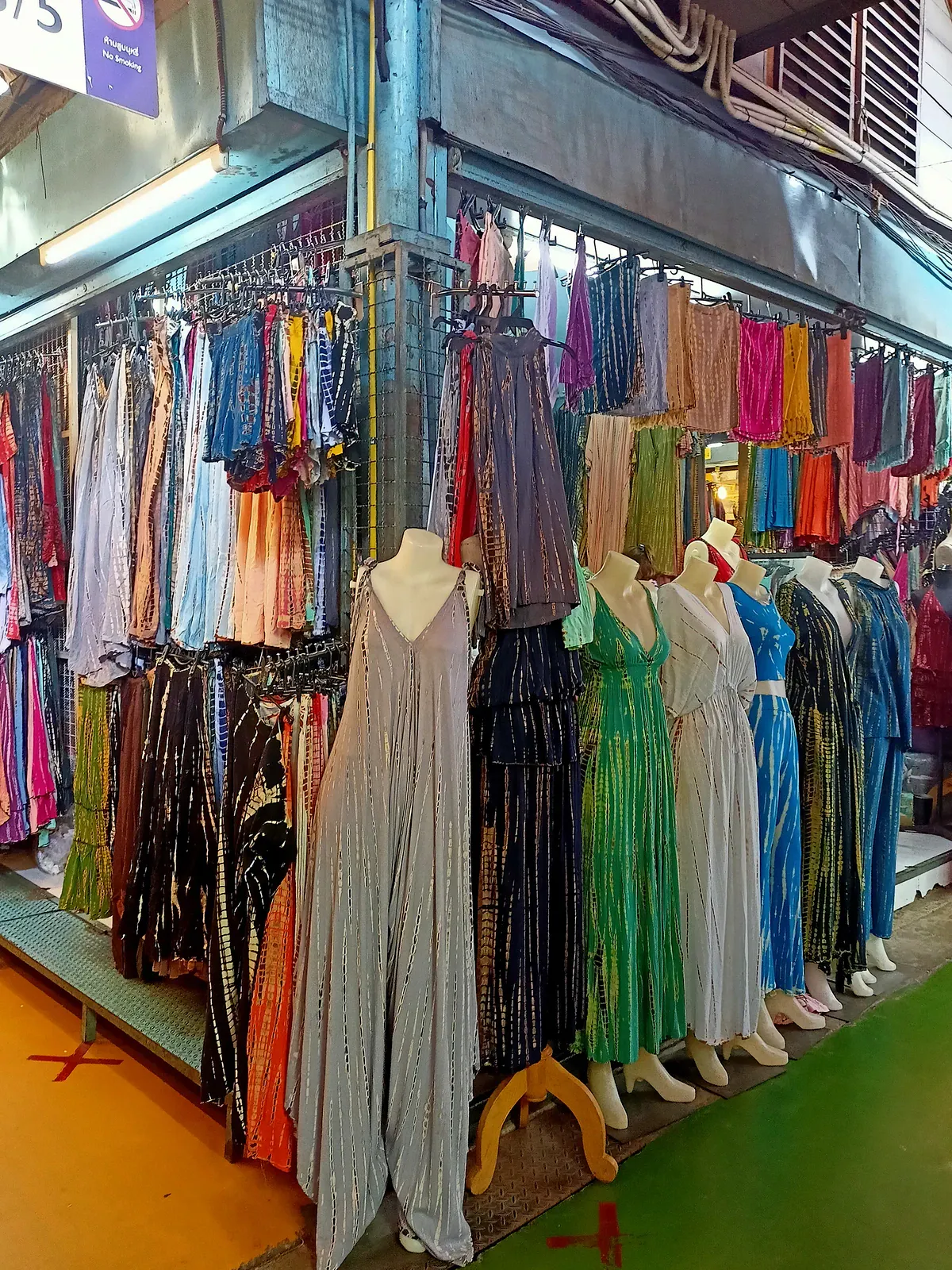
- Clothing and vintage: the biggest single draw for younger shoppers: streetwear, secondhand and vintage Americana, Thai independent designers, band tees, and a large secondhand-denim scene concentrated in a few well-known alleys. Prices and quality both range from junk to genuinely good finds; this is the group where bargaining is most normal and expected.
- Art and handicraft: paintings, woodcarving, textiles and craft goods aimed more at collectors and decorators than casual souvenir buyers. Worth it if you have a specific piece in mind; slow going otherwise because stalls are spread thin among unrelated sections.
- Pets and pet accessories: a real working animal market, historically controversial for its treatment of some species, and not somewhere every visitor will be comfortable browsing. It’s included here for completeness, not as a recommendation.
- Food: scattered throughout, with the densest concentration near the clock tower and along the market’s outer edges. Chatuchak is a legitimate food destination in its own right, not just a place to refuel between purchases.
A useful filter: if a section looks like pallets of identical stock rather than staffed retail stalls, you’ve wandered into a wholesale zone. Nothing stops you buying one item there, but prices assume bulk orders and vendors may be indifferent to single-piece sales.
The craft of shopping: bargaining, payment and judging quality
Bargaining is normal in clothing, accessories, souvenirs, art and most stalls without a visible price tag, but it isn’t universal, and pushing it where it doesn’t apply reads badly. Fixed-price stalls, chain-style vendors and anything with a printed price tag are not up for negotiation; treat a tag as a tag. Where haggling is expected, a friendly opening counter around 20-30% below the asking price is normal, moving toward a middle ground; walking away slowly is a legitimate and often effective tactic, not rudeness. Bargaining hard over the last ฿10-20 (roughly US$0.30-0.60) on a cheap item wastes goodwill for very little gain: save the effort for anything over a few hundred baht.
Payment is a mix. Many stalls now take Thai QR payment (PromptPay-linked apps), but a large share of Chatuchak, especially smaller and older vendors, is still cash-only, and small bills matter: few stalls can break a ฿1,000 note early in the day. Carry cash as the default and treat QR acceptance as a bonus, not a plan.
Judging quality fast, since you rarely get more than thirty seconds per stall:
- Ceramics: check for hairline cracks by tapping gently (a dull thud suggests a flaw) and look at the glaze pooling at the base: an even glaze line signals better control.
- Textiles and clothing: check seams and stitching density before print quality; a garment with loose thread on the inside seam will not survive a wash cycle.
- Wood and lacquerware: smell for fresh varnish (a sign of a rushed finish) and check joints for glue residue rather than a clean fit.
- Leather goods: real leather has an uneven grain and a distinct smell; uniform texture and a chemical smell both suggest PU.
Shipping is offered by some larger stalls, mostly in furniture, ceramics and art, generally at the buyer’s cost and risk, arranged directly with that vendor rather than through the market itself. Get a firm, written total (including packing) before paying, and treat verbal promises about delivery dates as best-effort, not guarantees. Counterfeits are genuinely common in parts of the clothing, accessories and electronics-adjacent sections: branded bags, watches and sportswear at prices that make the branding implausible. Buying them is a personal risk decision, but do not expect after-sales support, and be aware customs rules in your home country may not treat them kindly on the way back.
Heat and crowd management
Chatuchak’s metal roofing traps heat, and by mid-morning on a hot-season weekend the aisles can be genuinely punishing. A few habits make a real difference:
- Go at opening. The market gets progressively busier and hotter through the morning; the first hour or two after opening is the most comfortable window by a wide margin, for both temperature and crowd density.
- Hydrate before you feel thirsty. Bottled water is sold throughout, but the aisles get congested enough that stopping to buy one becomes its own small errand: carry a bottle in.
- Know where the aircon is. A handful of larger buildings and some food court zones are air-conditioned; treat these as scheduled rest stops rather than emergency retreats, and plan a route that passes one roughly every hour.
- Quit when you’re not enjoying it any more. Decision fatigue sets in hard in a market this size: the point where everything starts to look the same is the point to head to the ring road and leave, not push through for another section.
Weekday visits are calmer but see far fewer stalls open, since Chatuchak is fundamentally a weekend market; a smaller overflow trades most days, but it isn’t the same experience.
Getting there and the surroundings
Chatuchak sits directly between two rail lines, which is unusually convenient by Bangkok standards. BTS Mo Chit feeds the market’s northern edge near the clock tower area, with an exit that puts you close to the clothing sections. MRT Chatuchak Park and MRT Kamphaeng Phet both serve the western and southern sides, with Kamphaeng Phet generally the closer walk into the plant, pet and home-goods sections. None of the walks exceed a few minutes from station exit to market gate, so there’s rarely a reason to take a taxi unless you’re arriving with luggage or leaving with a large purchase.
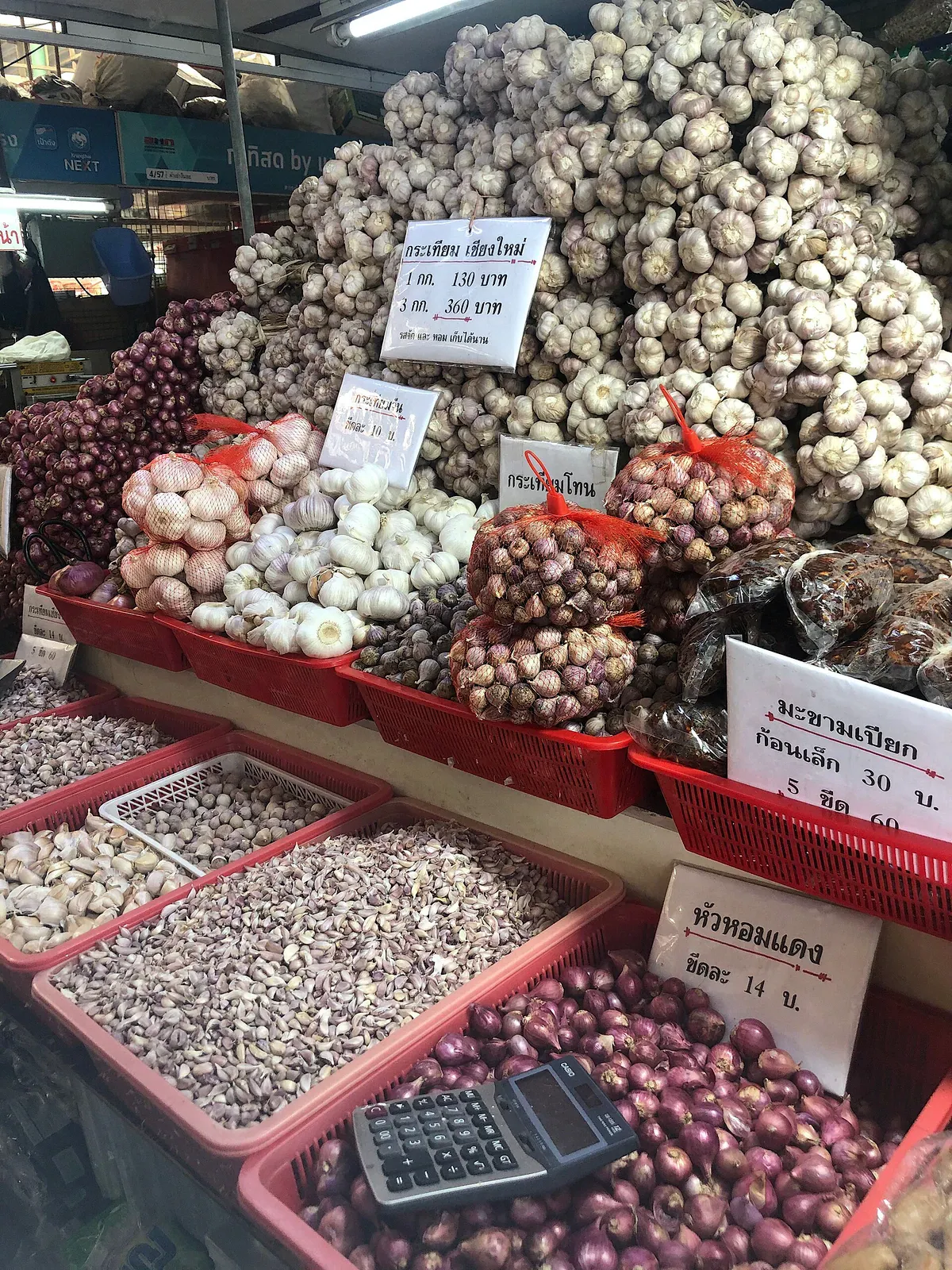
Across the road from the market’s northern side sits Or Tor Kor Market, a fresh-produce and prepared-food hall that is arguably a better food experience than anything inside Chatuchak itself: considerably more comfortable, air-conditioned in parts, and a good place to buy fruit, cut mango or packaged Thai snacks to take home. Chatuchak Park and the adjacent green space give a genuine break from the noise and heat, with benches and shade, and are worth ten minutes even on a tight schedule. In the evening, a smaller overflow market in the wider Chatuchak area picks up some of the JJ Green-style stalls that Chatuchak itself closes down after the day trade, so check current status before planning around it, since this scene shifts often; for the fuller picture of Bangkok’s evening market scene, see the guide to Bangkok’s night markets.
If a weekend trip to Chatuchak is part of a wider market itinerary that includes a trip out of the city, cross-reference against the comparison of floating markets near Bangkok before committing a whole day, since combining Chatuchak with a half-day floating-market trip on the same weekend is tight but doable if you start early.
Two plans
First-timer’s two-hour plan:
- Arrive at opening via Kamphaeng Phet or Mo Chit; note your gate.
- Spend 45 minutes in clothing and vintage (sections nearest your entry).
- Cut through to one home-decor or ceramics section for 30 minutes.
- Finish with 30 minutes of food near the clock tower.
- Exit the way you came in; don’t attempt a full loop.
Serious shopper’s half-day plan:
- Arrive at opening, hydrate, and commit to three or four target section groups in advance.
- Work each group fully before moving on, using the ring-road walk between groups.
- Take a scheduled break at Or Tor Kor around midday for food and air conditioning.
- Return for one more section group in the early afternoon if energy allows.
- Arrange any shipping paperwork with vendors before 3pm, since some close early on slower afternoons.
- Finish at Chatuchak Park before heading to the station, to decompress and check purchases before the walk back.
Common questions
What is the fastest way to get to Chatuchak Weekend Market?
BTS Mo Chit and MRT Chatuchak Park or Kamphaeng Phet all put you within a few minutes’ walk of a market gate. Which one is fastest depends on which section you want first: Kamphaeng Phet leans toward plants, pets and home goods, Mo Chit toward clothing.
Is Chatuchak open on weekdays?
A reduced overflow trades most days, but Chatuchak is fundamentally a Saturday-Sunday market and the bulk of stalls only open then. Check current opening days before planning a weekday visit, since this can change.
Can I bargain at every stall in Chatuchak?
No. Bargaining is normal in clothing, souvenirs and stalls without a marked price, but fixed-price and chain-style vendors don’t expect it, and pushing there is unwelcome. Treat a printed price tag as final.
Are the branded goods at Chatuchak real?
In parts of the clothing and accessories sections, no. Counterfeits are common at prices that make the branding implausible. Buying them is a personal choice, but expect no after-sales support and be aware of customs risk at home.
How do I avoid getting lost inside Chatuchak?
Orient by the clock tower and the outer ring road, note your entry gate before going in, and work one section at a time, exiting to the ring road between sections rather than cutting back through the interior.
What’s the best time of day to visit?
Right at opening, for both temperature and crowd density. The market fills and heats up steadily through the morning, and the metal roofing traps heat badly by early afternoon on a hot-season weekend.
Part of
Written by
Mike Brochlowski
Founder and editor, travel photographer and designer
I'm Mike Brochlowski, a travel photographer and designer, and I currently live on Koh Samui, Thailand. I built BangkokWiki to put practical, checked information about Bangkok in one place. Every page is researched from official and primary sources, and the text names them. Where a page shows a checked date, that is when its facts were last confirmed. I also run samui69.com, a non-commercial guide to Koh Samui. If you spot an error or something out of date, tell me through the contact page and I will check it and correct the page.
Read all articles
Where to stay
Pick the area before the hotel
Traffic and heat make Bangkok distances feel longer than they look on a map, so the area shapes a trip more than the hotel does. Our guides match areas to trip types and explain the trade-offs.

Places to stay
Find a hotel
More from Things to do
- 10 min read
 13 min read
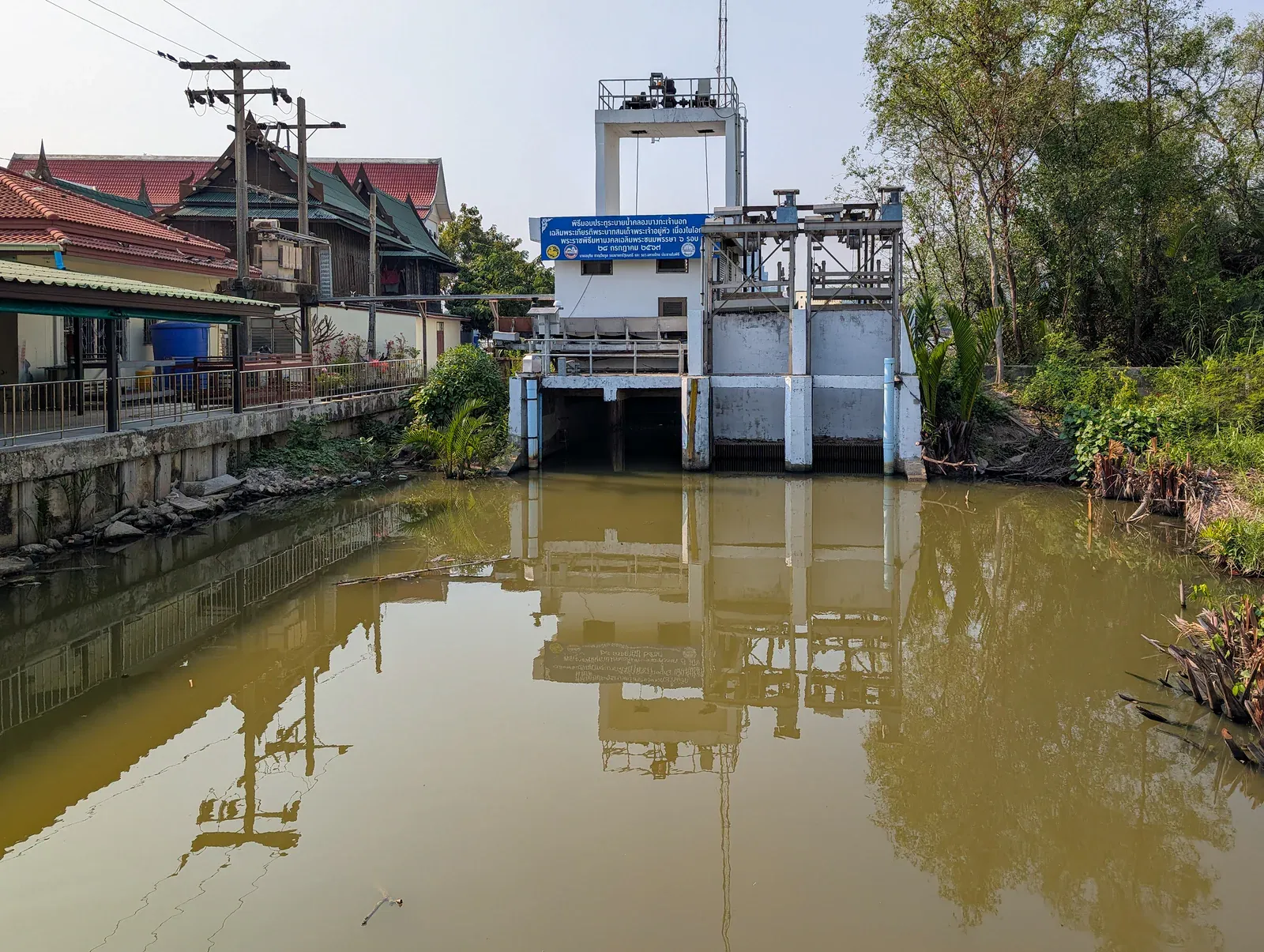
Bang Krachao: a proper day in Bangkok's green lung
 13 min read
The best parks in Bangkok, and what each one is actually for

Newsletter
You're subscribed as