Things to do
Floating Markets Near Bangkok Compared
An honest comparison of Bangkok's floating markets - Damnoen Saduak, Amphawa, Taling Chan and more - on distance, authenticity, cost and crowds.
At a glance
- Reading time
- 10 min read
- Chapters
- 9
- Published
- Sep 20, 2026
On this page
Most visitors pick a floating market from a photo, then end up somewhere that photo doesn’t resemble. The postcard image (boats stacked with produce, a vendor in a wide-brimmed hat, no other tourist in frame) is real, but it’s rarer than the marketing suggests, and the market delivering it best is often the least local of the group. This article compares the main options honestly, including which ones are staged for visitors, which are still a working part of local life, and where the money actually goes.
What a floating market actually is today
A handful of Bangkok-region floating markets grew out of a genuine tradition: canal-side communities selling produce and cooked food from boats because the khlong, not the road, was the main transport route. Almost none of them still function primarily that way. Most have become one of three things: a staged tourist set built around the aesthetic with vendors who arrive by boat because that’s the format, not because it’s their only option; a weekend local market that happens to include some boats among mostly land-based stalls; or something genuinely in between, with a working local morning trade that visitors happen to be allowed into before the tour buses arrive.
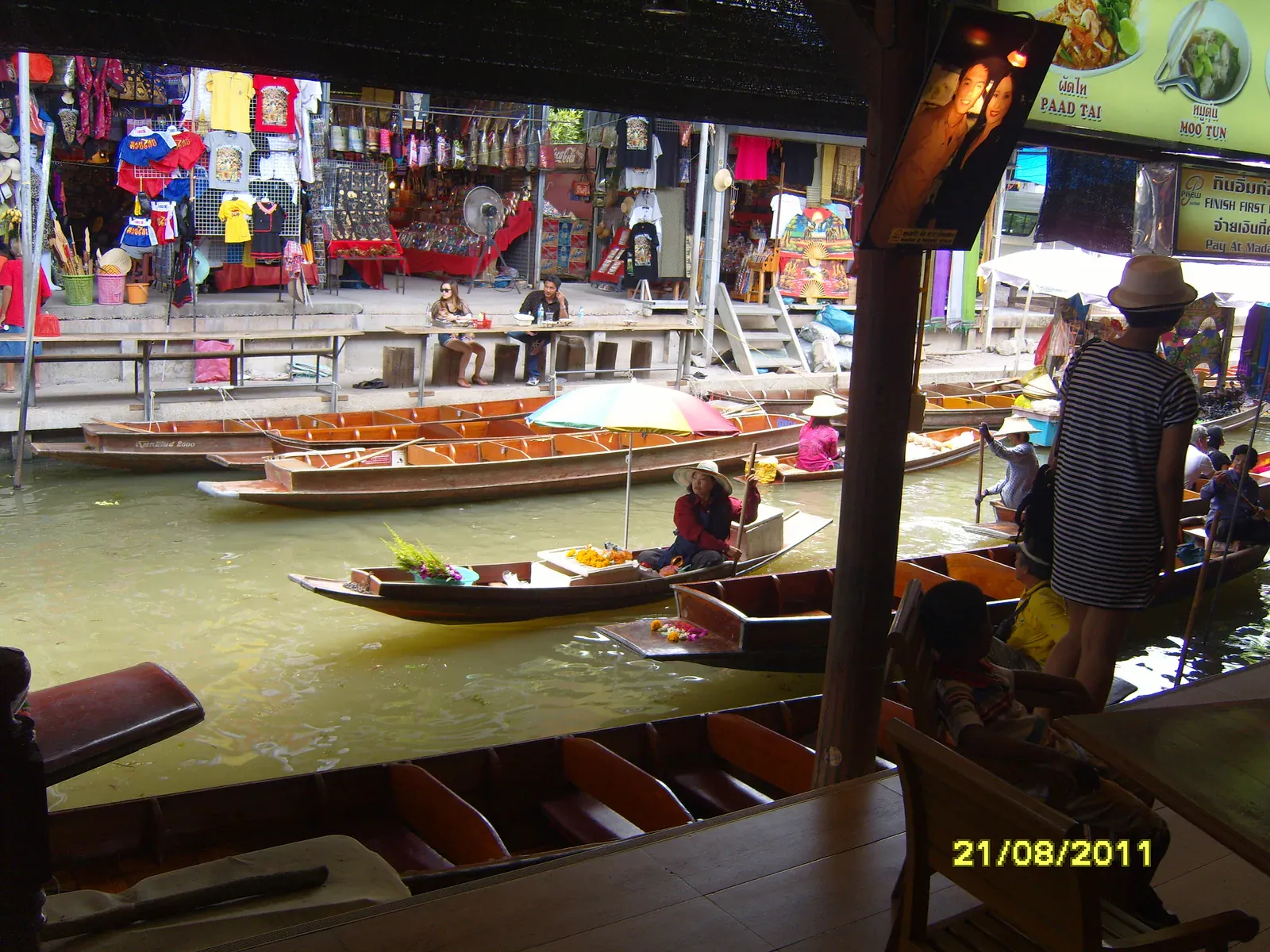
Say this plainly: the most photogenic markets are largely performances for visitors, run on a schedule built around coach tours, with vendors paddling in practised loops past camera-ready sightlines. The quieter, more local markets are less picturesque, often smaller, and easier to enjoy without feeling like part of a show, but they’re also less reliably “floating” in the way the photos promise, since the canal side can thin out to a few boats among many land stalls.
The main options, compared
| Market | Distance/time from Bangkok | Character | Best for |
|---|---|---|---|
| Damnoen Saduak | ~100km, roughly 1.5-2 hours by road | The iconic postcard image; large, well organised, heavily geared to coach tours | People who want the classic photo and don’t mind a tourist-heavy scene |
| Amphawa | ~80km, roughly 1.5 hours by road | Riverside evening market with food stalls on land and boats on the water; livelier and younger crowd | Evening atmosphere, food, combining with a firefly boat tour |
| Taling Chan | Inside Bangkok’s western fringe, roughly 30-45 minutes by road or a longer transit-plus-taxi combination | Small, mostly weekend, boat-cooked food over a narrow khlong; modest and local in feel | A quick, low-effort floating-market taste without a day trip |
| Khlong Lat Mayom | Inside Bangkok’s western fringe, similar distance to Taling Chan | Larger and more food-focused than Taling Chan, popular with Thai weekend visitors more than foreign tourists | Food-first visitors, and anyone who wants a market that still feels mostly local |
| Bang Nam Pheung | Inside greater Bangkok, Phra Pradaeng side, reachable by a ferry-and-walk or a longer road route | Set in a green, semi-rural riverside pocket popular for cycling; market is a smaller, calmer add-on | Combining with cycling in the Bang Kachao green area, a slower pace |
| In-city alternatives (occasional canal-side stalls, e.g. around Khlong Bang Luang) | Within the city, transit-reachable | Small-scale, artsy, sometimes more gallery-and-café than market | Visitors with very limited time who still want a canal-side feel |
Treat the distance and time figures as bands, not fixed numbers: Bangkok traffic can turn a 90-minute trip into two hours-plus depending on the day and time, and none of these should be planned back-to-back with a tight afternoon commitment.
Distance, days and atmosphere in more depth
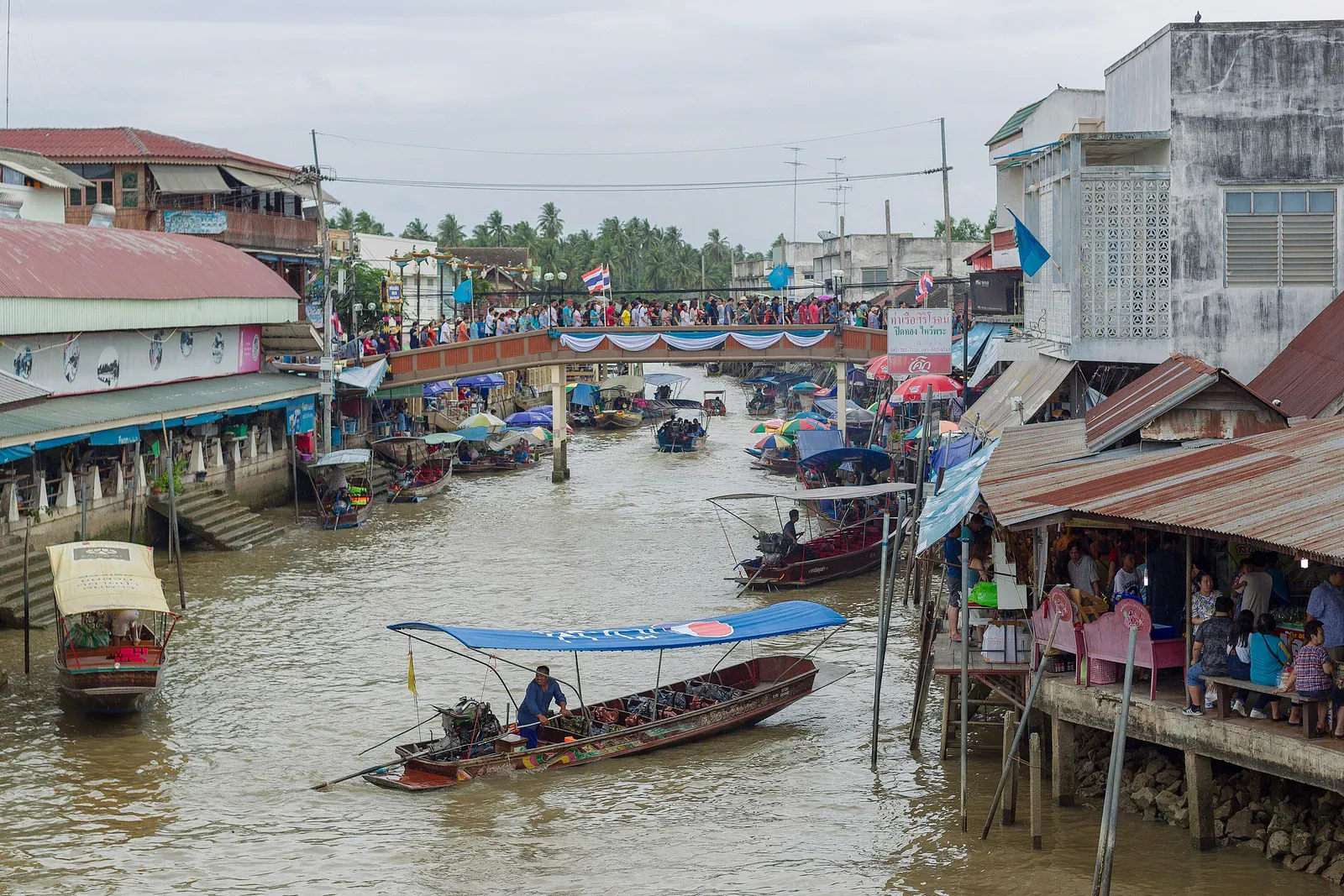
Damnoen Saduak is the furthest out and the most organised for visitor throughput, which is exactly why it feels the least spontaneous. It has historically run daily rather than only on weekends, which makes it the most flexible for a single-day itinerary, but the trade-off is a market whose rhythm is built around bus arrivals rather than local commerce. Go early, before the coach groups arrive, if you want anything close to a quiet boat ride.
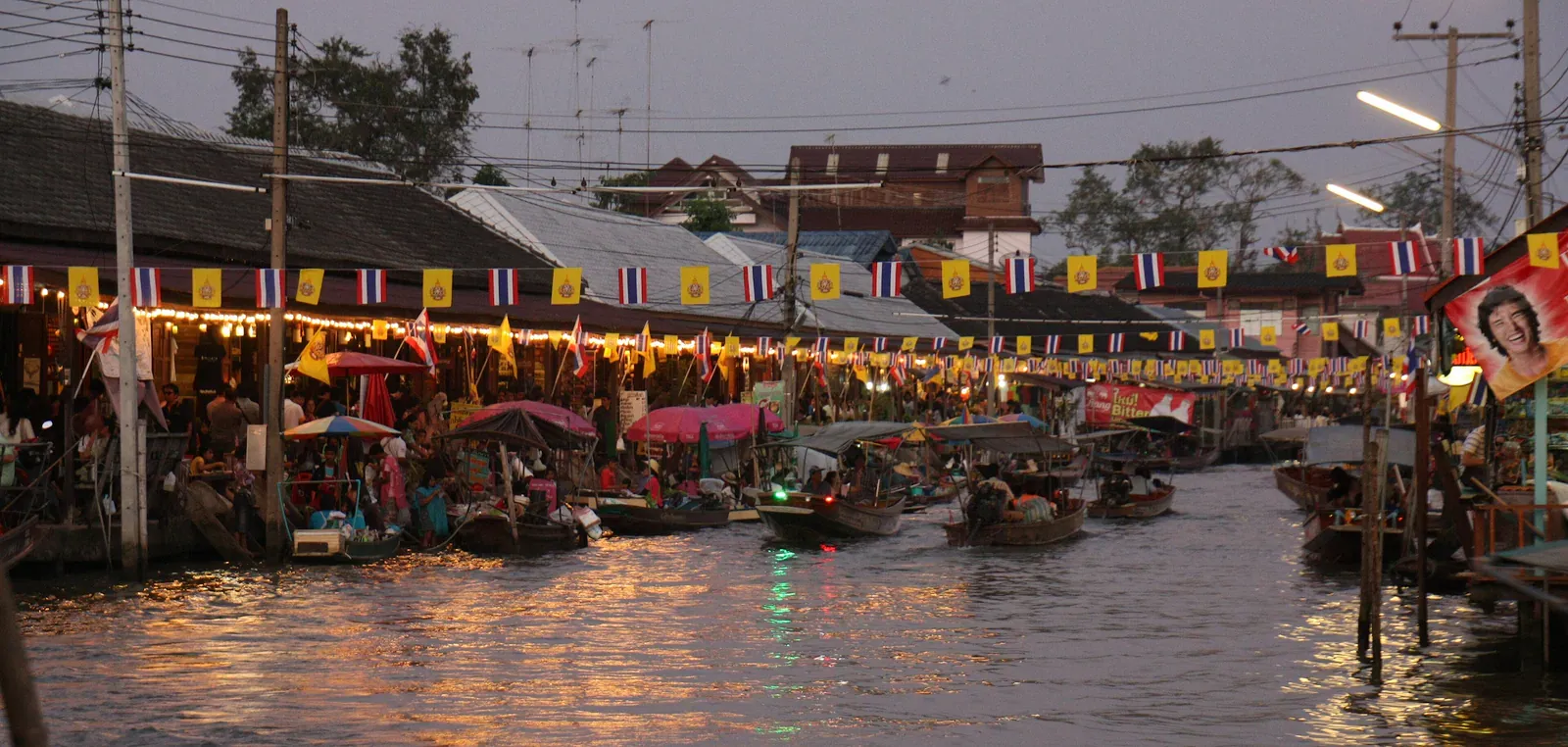
Amphawa trades the daytime produce-market feel for an evening food-and-atmosphere market, with land-based food stalls doing most of the volume and boats supplementing rather than dominating. It has historically operated on a Friday-to-Sunday rhythm rather than daily. It pairs naturally with an evening firefly-spotting boat trip along the river, sold by boat operators at the pier rather than as a separate excursion: treat any firefly-tour price as a band to negotiate, not a fixed rate.
Taling Chan and Khlong Lat Mayom are the two most convenient for a half-day trip without committing to a full excursion, since both sit inside greater Bangkok’s western edge rather than out in Ratchaburi or Samut Songkhram province. Both have historically run mainly on weekends. Khlong Lat Mayom is generally the larger and more food-focused of the two; Taling Chan is smaller and quieter, with khlong-side seating for boat-cooked noodles and grilled seafood. Neither delivers the sweeping canal panorama of Damnoen Saduak, but both feel closer to a genuine local weekend market that happens to have boats.
Bang Nam Pheung, on the Phra Pradaeng peninsula (the green “lung of Bangkok” loop popular with cyclists), is smaller again, and best treated as one stop on a half-day cycling trip through Bang Kachao rather than a destination in its own right. It has historically run on weekends. The market itself is modest; the appeal is the setting.
In-city alternatives are worth mentioning honestly: a few small canal-side spots inside Bangkok proper lean more toward boutique cafés and photo opportunities than an actual produce market, and they suit visitors who want fifteen minutes of the aesthetic without leaving the city, not those chasing the full experience.
Getting there without an overpriced tour
Damnoen Saduak and Amphawa are both realistically difficult without a car or an organised transfer: public transport exists in the form of buses and minivans from Bangkok’s southern routes, but journey times stretch and connections at the market end are limited, so most independent visitors either drive, hire a car with driver for the day, or join a group transfer. This is a case where “no car” and “no tour” don’t fully coexist for these two markets; the honest advice is to accept a transfer or minivan for transport only, and skip any package that bundles in a fixed boat ride and lunch, since those bundles are where the margin sits.
Taling Chan, Khlong Lat Mayom and Bang Nam Pheung are all realistic without a car: a taxi or ride-hailing app from central Bangkok gets you there directly, and Bang Nam Pheung can also be reached via a river crossing and a short walk or bike ride from the Bang Kachao side. None of these three need an organised tour at all.
The longtail boat ride: cost bands and the upselling
At markets with a boat-ride component (most obviously Damnoen Saduak and Amphawa), a longtail boat ride is typically sold in bands rather than a flat published rate: roughly ฿150-400 (about US$4-11) per person for a shared boat on a set route, rising sharply for a private boat or a longer route, and rising further again once a driver starts suggesting “better” extended routes once you’re already on the water. The upsell pattern is consistent enough to expect it: agree the route, duration and total price before boarding, in writing or at minimum stated clearly back to the boatman, and treat any mid-ride offer to extend the route for more money as optional, not part of the deal you already paid for. Where a boat ride is bundled into a coach-tour package, assume the headline price undersells what you’ll actually spend once landing fees, “recommended” stops at affiliated shops, and tips are added.
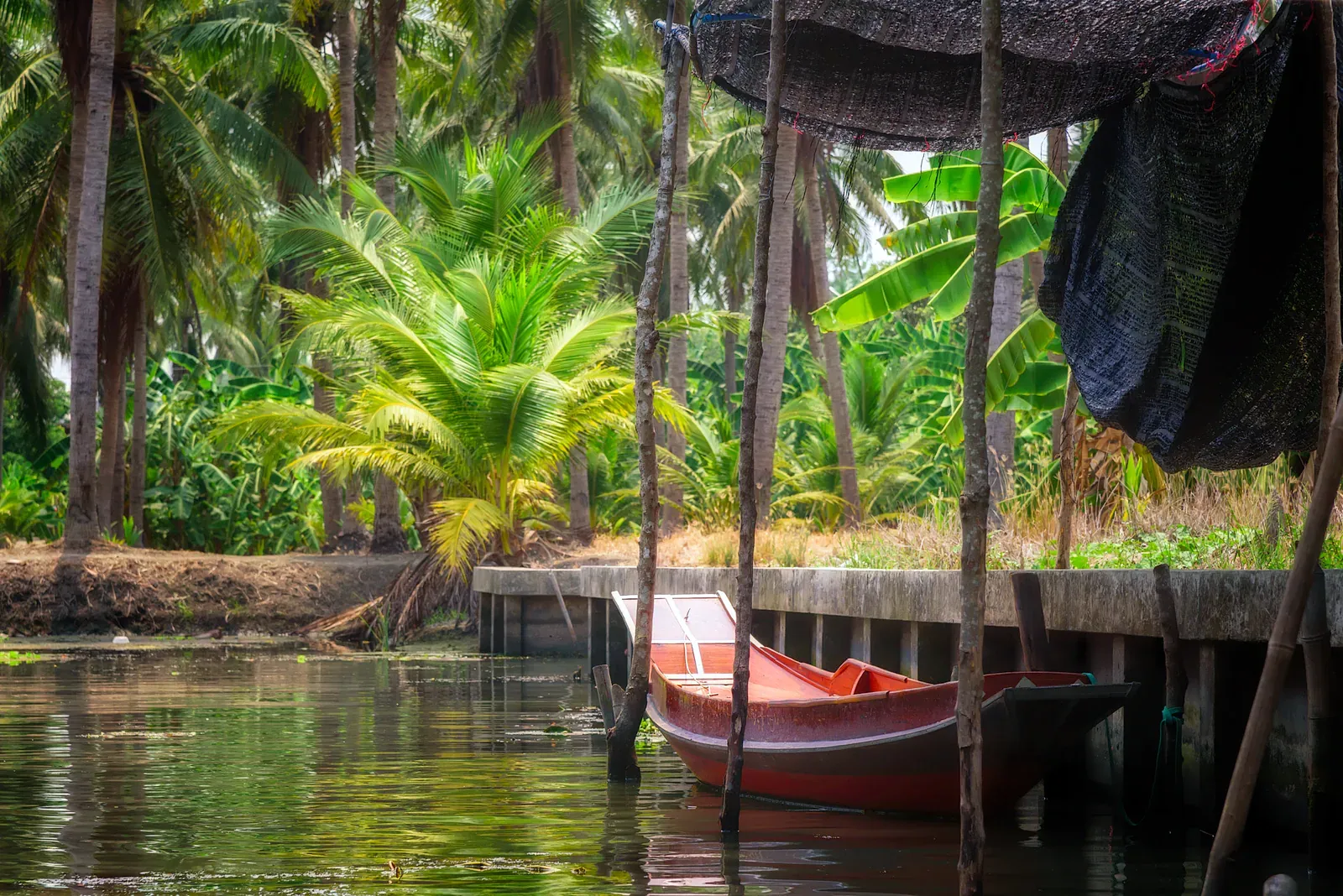
The early-morning rule applies everywhere on this list: arrive as close to opening as you can manage. Every market on this page is calmer, cooler and closer to its “real” character in the first hour or two, and every one of them fills with coach groups and midday heat as the morning goes on. This is the single most reliable lever for a better experience, more useful than choosing between markets.
Combining a market with a railway market or a firefly tour
Damnoen Saduak and the Maeklong Railway Market (where stallholders retract their awnings as a train passes directly through the market) sit close enough together that combining the two into one day trip is common and sensible, though it requires an early start given the distance from Bangkok and the two separate schedules to coordinate. Amphawa’s evening market pairs naturally with a firefly-spotting boat trip, sold locally at the riverside rather than needing to be arranged from Bangkok: go after dark, expect a shared longtail with several other visitors unless you pay for a private boat, and treat the experience as atmospheric rather than guaranteed, since firefly activity depends on season and weather.
The decision table
| What you want | Go to | The catch |
|---|---|---|
| The classic postcard boats-and-produce photo | Damnoen Saduak | The most tourist-heavy and coach-dependent; go at opening or not at all |
| Evening food, atmosphere, maybe fireflies | Amphawa | Evening-only rhythm historically Fri-Sun; check current days before travelling |
| A quick, local-feeling floating market without a day trip | Taling Chan or Khlong Lat Mayom | Smaller-scale, less “floating” than the photos of Damnoen Saduak suggest |
| A scenic add-on to a cycling day | Bang Nam Pheung | The market itself is modest; it’s a stop, not the main event |
| Fifteen minutes of the aesthetic, no travel | An in-city canal-side spot | Closer to a café strip than a working market |
Scams and the “included boat tour” trap
The most common complaint from visitors isn’t about the markets themselves but about pre-booked packages that bundle transport, entry and a boat ride into one price, sold heavily online. The pattern to watch for: a headline price that looks cheap, a boat ride that turns out to be shared and shorter than implied, a mandatory stop at an affiliated shop selling overpriced goods (framed as a “cultural visit”), and pressure to tip or upgrade once you’re already committed. This guide does not recommend or name any booking platform or tour reseller: the practical defence is to arrange transport and the boat ride as separate, transparent transactions where possible (car-with-driver for the trip, boat fare agreed directly at the pier), and to treat any all-inclusive price that seems unusually low as a sign the margin is being made up elsewhere.
A second pattern, more minor but frequent: vendors on the water quoting a noticeably higher price for food or goods than the same items would cost on land, on the reasonable logic that a captive customer mid-boat-ride won’t walk away. This isn’t really a scam so much as a toll for the experience: decide in advance how much of it you’re willing to pay.
If your itinerary also includes Bangkok’s weekend market scene, note that Chatuchak and a floating-market day trip don’t combine well on the same day given travel times; see the Chatuchak Weekend Market guide for a market that’s transit-reachable within the city instead. For an evening plan back in Bangkok after a floating-market day trip, the guide to Bangkok’s night markets covers what’s realistically still open by the time you’re back.
Common questions
Which floating market is closest to Bangkok?
Taling Chan, Khlong Lat Mayom and Bang Nam Pheung are all inside greater Bangkok and reachable by taxi or ride-hailing app in well under an hour. Damnoen Saduak and Amphawa are both out-of-province trips of roughly 1.5-2 hours by road.
Is Damnoen Saduak worth it if it’s touristy?
It still delivers the classic floating-market image better than any other option on this list, which is exactly why it draws the crowds. Go at opening to see it before the coach groups arrive, and accept that authenticity has been traded for scale and organisation.
Can I visit a floating market without a car?
Yes, for Taling Chan, Khlong Lat Mayom and Bang Nam Pheung, all reachable by taxi or ride-hailing app from central Bangkok. Damnoen Saduak and Amphawa are harder without a car or an arranged transfer, given limited public transport at the market end.
How much does a longtail boat ride cost?
Expect a band of roughly ฿150-400 (about US$4-11) per person for a shared boat on a fixed route, indicative for 2026, rising for a private boat or an extended route. Agree the price and route before boarding to avoid mid-ride upselling.
What days do the floating markets near Bangkok operate?
This varies by market and changes over time: some have historically run daily, others mainly on weekends or specific days. Check the current schedule before travelling, since a wasted trip to a closed market is the single most avoidable disappointment on this list.
Can I combine a floating market with the Maeklong Railway Market?
Yes, Damnoen Saduak and the Maeklong Railway Market sit close enough together to combine into one day trip, though it needs an early start and some schedule coordination given the distance from Bangkok.
Written by
Mike Brochlowski
Founder and editor, travel photographer and designer
I'm Mike Brochlowski, a travel photographer and designer, and I currently live on Koh Samui, Thailand. I built BangkokWiki to put practical, checked information about Bangkok in one place. Every page is researched from official and primary sources, and the text names them. Where a page shows a checked date, that is when its facts were last confirmed. I also run samui69.com, a non-commercial guide to Koh Samui. If you spot an error or something out of date, tell me through the contact page and I will check it and correct the page.
Read all articles
Where to stay
Pick the area before the hotel
Traffic and heat make Bangkok distances feel longer than they look on a map, so the area shapes a trip more than the hotel does. Our guides match areas to trip types and explain the trade-offs.

Places to stay
Find a hotel
More from Things to do
- 10 min read
 13 min read
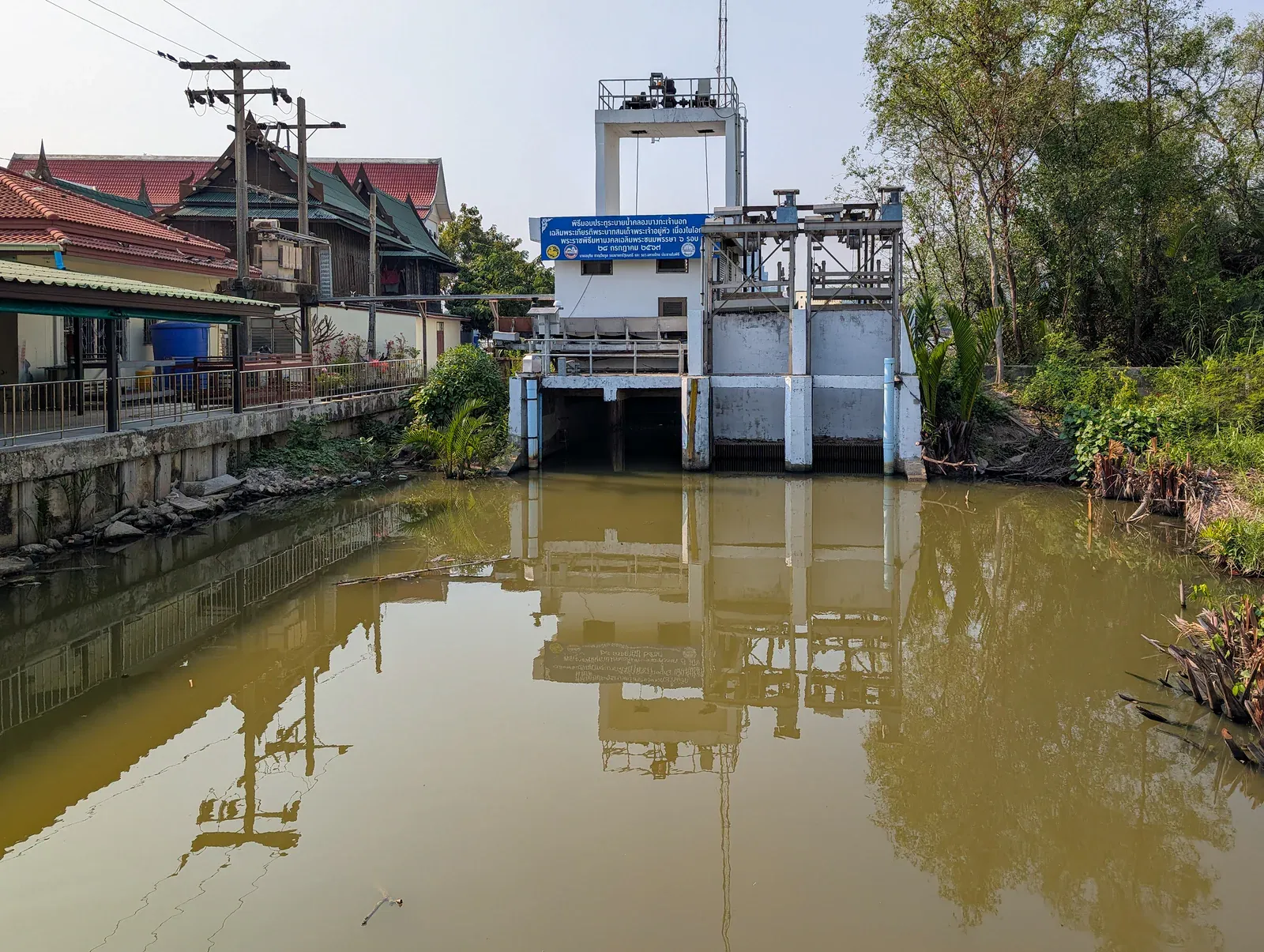
Bang Krachao: a proper day in Bangkok's green lung
 13 min read
The best parks in Bangkok, and what each one is actually for

Newsletter
You're subscribed as