Things to do
Bangkok Observation Decks Compared: Best Views
Paid observation decks, rooftop bars, free vantage points and the river itself compared by view, cost, crowd and who each one suits.
At a glance
- Reading time
- 10 min read
- Chapters
- 8
- Published
- Sep 20, 2026
On this page
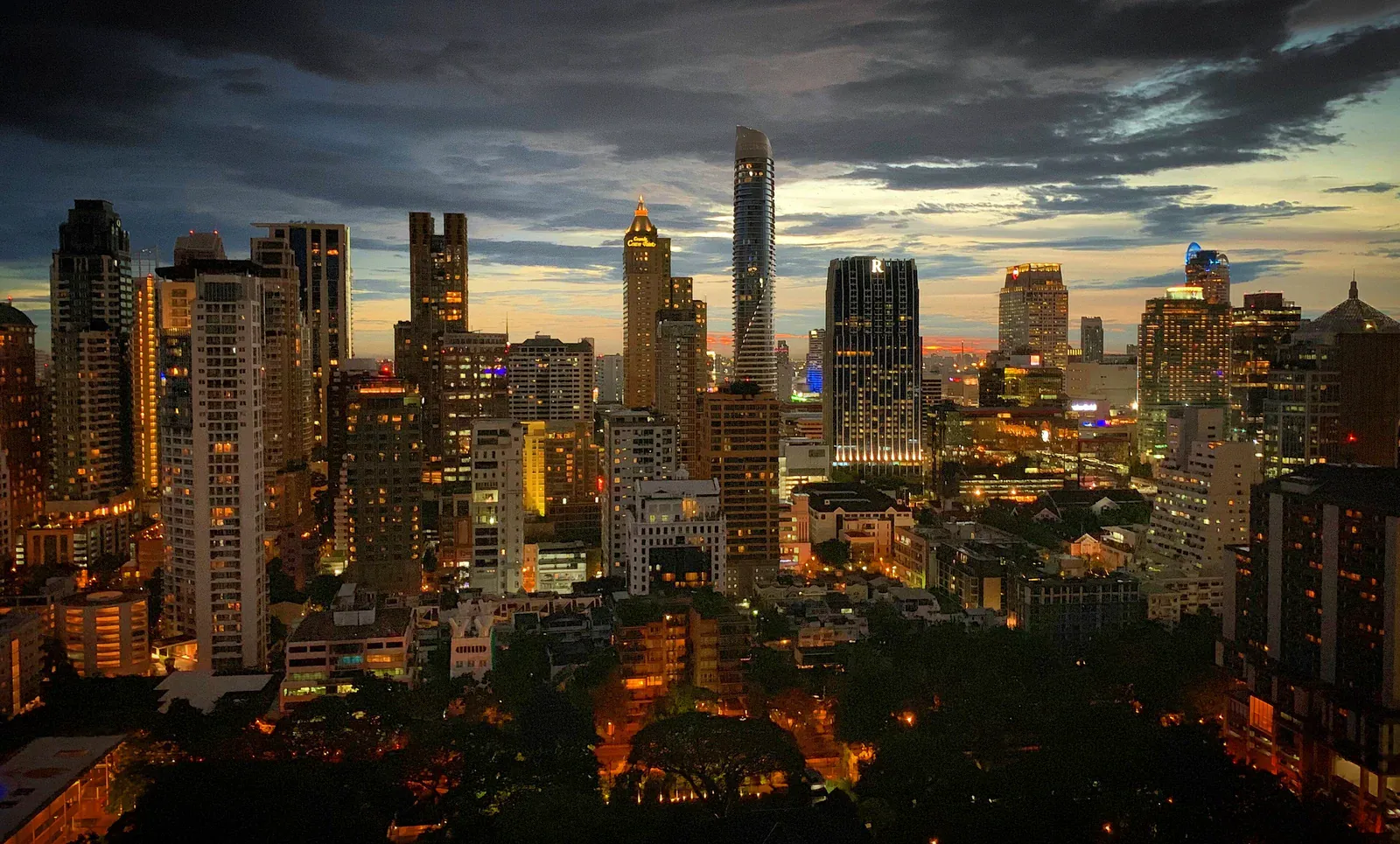
Bangkok’s skyline is the attraction, not any single building, so the real question is where to see it from and what you’re willing to pay for the privilege. The options split into four honest categories (dedicated paid observation decks, rooftop bars with no entry fee but an expected spend, free public vantage points, and the river as a flat, horizontal alternative to height) and each suits a different visitor and budget.
The four categories, honestly
Dedicated paid observation decks charge a ticket at the door and give you an unobstructed 360-degree (or near enough) view with no obligation to buy anything further, though most have a café or bar on the same floor. King Power Mahanakhon, currently Bangkok’s tallest building with its SkyWalk deck and glass floor, and the Baiyoke Sky Tower, an older and shorter building in the Pratunam area with a revolving deck, are the two most visited. Both are entities in their own right and worth checking for current details before you go, since neither this article nor any third-party site should be treated as the source for today’s price or hours.
Rooftop bars charge nothing to enter but expect you to buy at least one drink, and the drink is priced for the view rather than the cocktail. This is the largest category by number of venues (Bangkok has dozens across Sathorn, Silom, Sukhumvit and the riverside) and the honest framing is that you are renting a view for the price of a drink, sometimes with a minimum spend or a dress-code door charge folded in.
Free public vantage points exist but are limited and usually lower or less panoramic than the paid options: some hotel lobby bars with partial views and no minimum spend if you’re discreet, a handful of public rooftops attached to malls or public buildings, and elevated walkways and skytrain platforms that offer brief, framed glimpses rather than a proper vista.
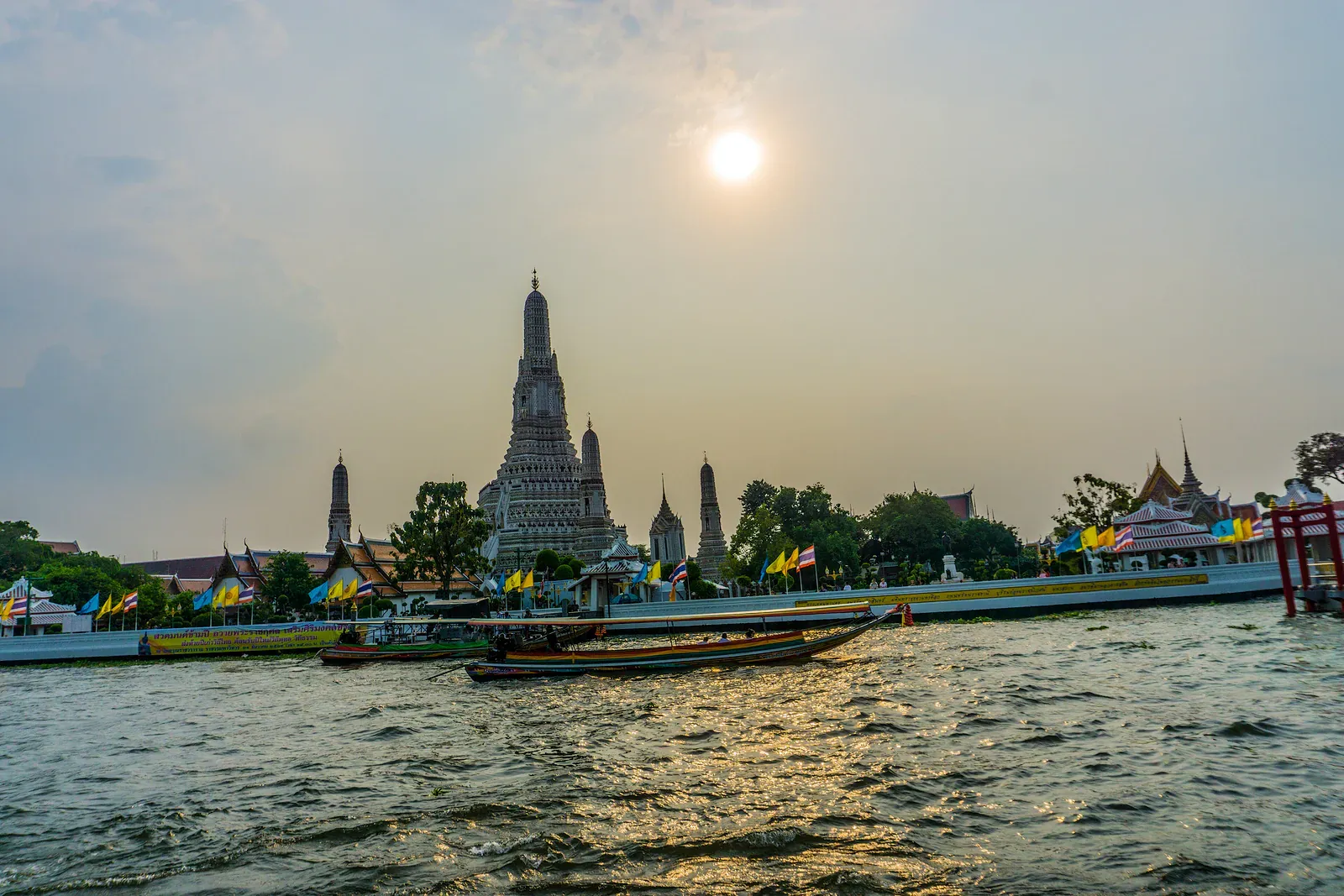
The river is the horizontal alternative: instead of height, you get width and movement, with temples, bridges and the skyline sliding past at water level. It’s covered in full in the river cruise guide, but it belongs in this comparison because for many visitors a sunset boat trip beats paying for altitude.
What each option actually gives you
Mahanakhon SkyWalk
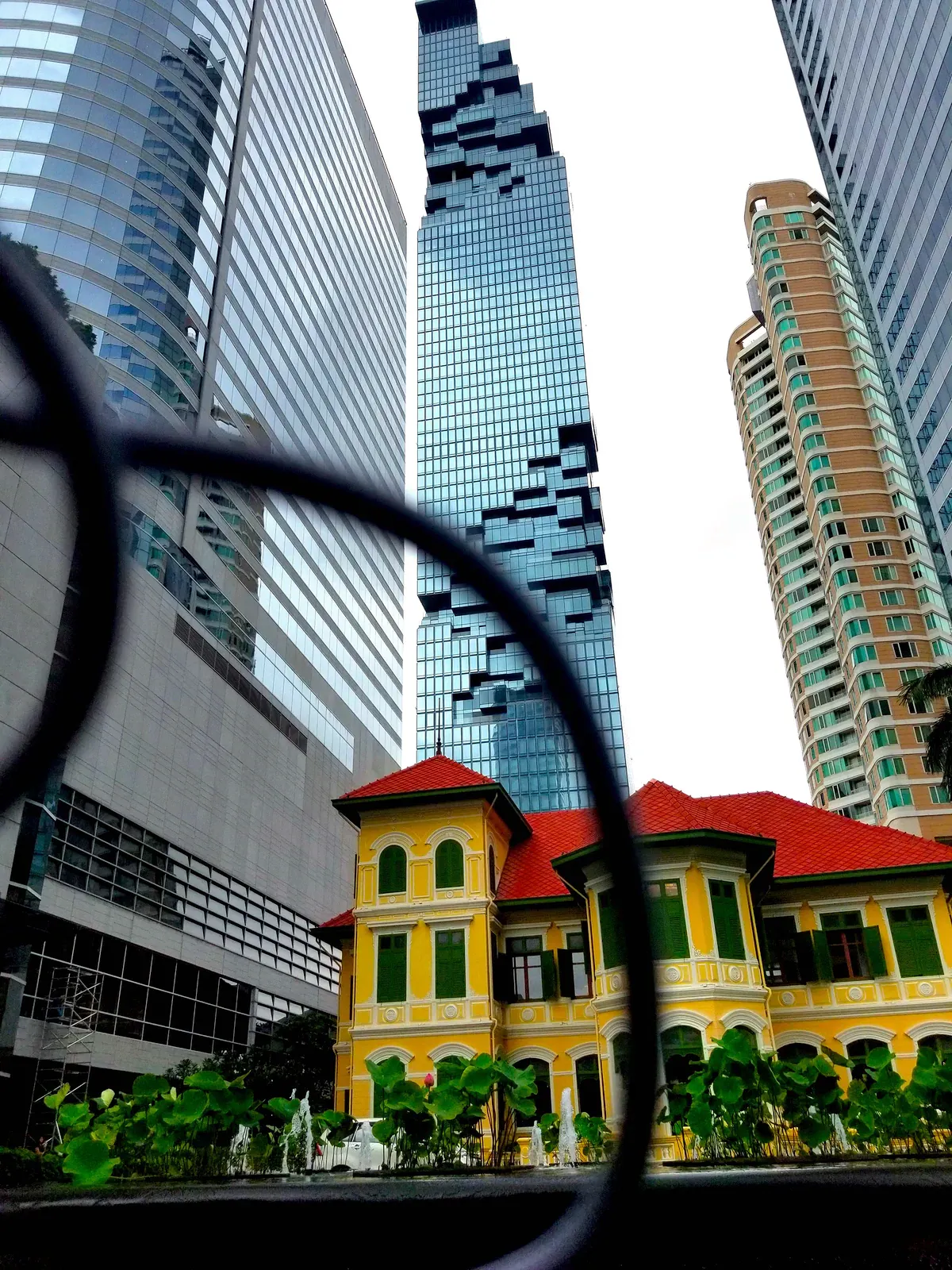
Mahanakhon’s SkyWalk sits near the top of Thailand’s tallest building, with an open-air deck and a glass floor section suspended over the edge: a signature feature that draws a steady queue of its own, since only a limited number of people are allowed on the glass panel at a time and shoe covers are required. The view from here covers the Sathorn and Silom business district in the foreground, the river bending through the middle distance, and on a clear day a genuine sense of how far the city sprawls. Because Mahanakhon stands clear of most other tall buildings nearby, the view isn’t blocked by neighbours the way some rooftop bars’ views are.
Baiyoke Sky
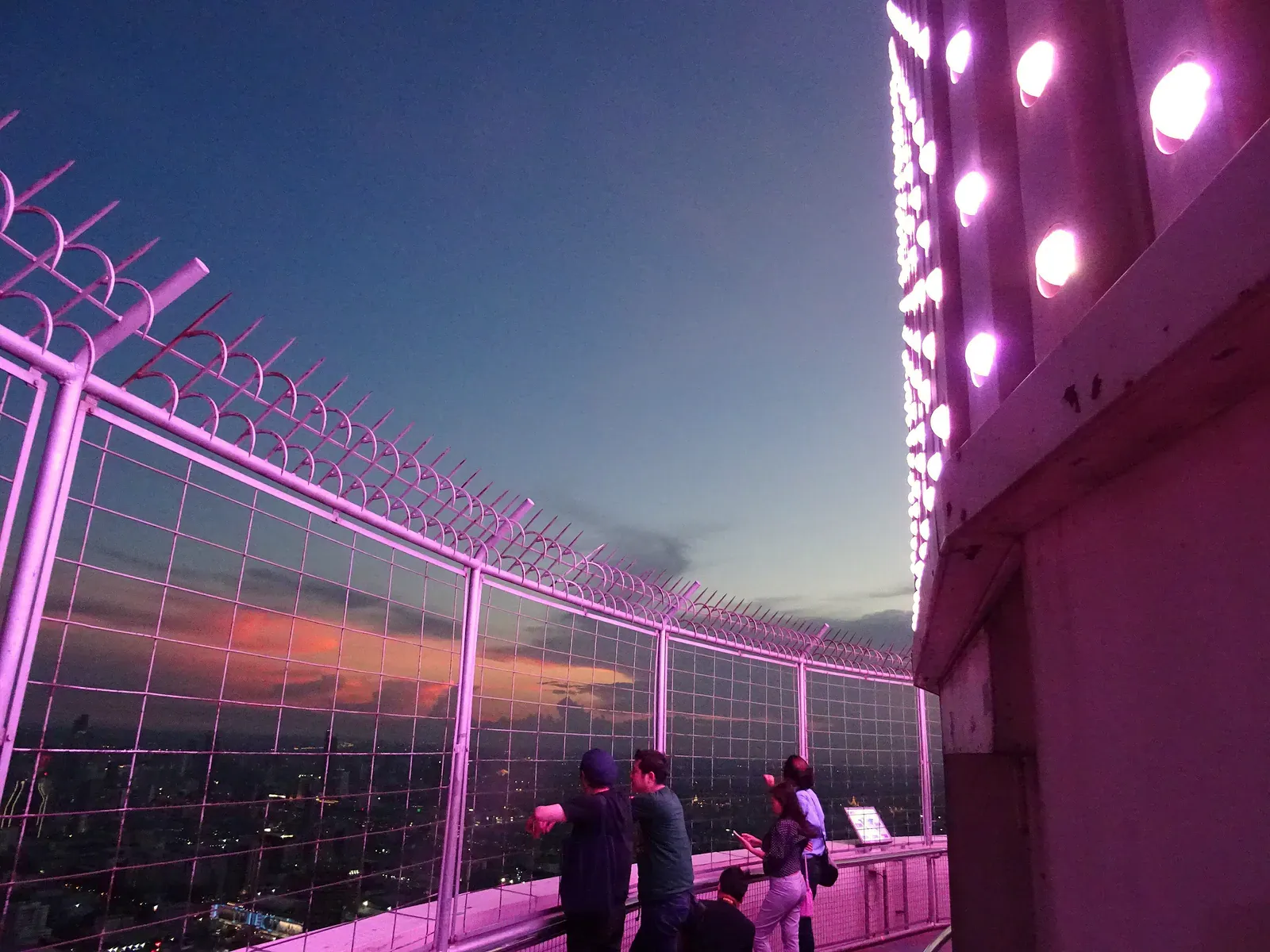
Baiyoke Sky is older, shorter, and in a different part of town (Pratunam, near the garment wholesale district rather than the riverside business core) but it has the advantage of a revolving deck, which does the work of turning the view for you rather than requiring you to walk the perimeter. It’s generally the cheaper of the two dedicated decks and less polished in presentation, but the height and 360-degree sweep are real, and on a clear day it reaches out toward the river in one direction and the eastern sprawl in the other.
Rooftop bars
The best rooftop bars for a view sit atop hotels in Sathorn and the riverside stretch (see luxury hotels in Bangkok compared), where height combines with a clear line to the river bend, genuinely one of the more photogenic elements of the Bangkok skyline, since the river’s course through the city isn’t straight. Others sit in Sukhumvit or Silom with a view dominated by the dense tower cluster rather than the river. A rooftop bar’s view quality depends entirely on which direction it faces and how tall its neighbours are; a bar boxed in by taller buildings on three sides gives a much narrower view than the marketing photos suggest.
Dress codes at rooftop bars are real and enforced more strictly than most tourists expect: smart-casual minimum, often no shorts, sandals or vest tops for men, and some venues turn away flip-flops and beachwear outright. This catches a lot of visitors who’ve spent the day sightseeing in shorts and a t-shirt and haven’t packed a change of clothes.
Are children welcome? Most rooftop bars operate an adults-oriented atmosphere after early evening, and some have a minimum age or don’t permit children at all after a certain hour. A handful allow families earlier in the evening before the bar atmosphere sets in. This is one of the clearest reasons families with young children often do better at a dedicated observation deck, which has no age restriction and no drink-driven pricing.
The real cost, once drinks are counted
A paid observation deck has one clear cost: the ticket. A rooftop bar’s true cost is the ticket-equivalent of at least one drink, and drinks at a sky-high bar in Bangkok are priced well above street level: a cocktail can cost several times what the same drink costs at ground level. For a couple wanting an hour at sunset with two drinks each, a rooftop bar can end up costing as much as or more than a dedicated observation deck ticket, while a solo visitor nursing one drink for an hour might find the bar the cheaper option. Indicative bands for 2026 (THB, approximate USD, confirm current pricing on each venue’s own site before visiting):
- Dedicated observation deck ticket: roughly ฿300-1,000 (~US$9-29), with the glass-floor add-on at Mahanakhon typically priced above the base deck ticket.
- Rooftop bar minimum spend or single cocktail: roughly ฿400-900 (~US$12-26) per drink at the higher-end riverside and Sathorn venues.
- Free vantage points: no direct cost, though a hotel lobby bar may expect a drink purchase if you linger.
Weather, haze and the burning season
Bangkok’s air quality varies sharply through the year, and the burning season, roughly January through April, can flatten even the best view into a grey-brown haze that no amount of height fixes: on a bad PM2.5 day, a view that should stretch for kilometres might barely clear the next few blocks. This affects every option in this comparison equally; there’s no workaround by choosing a different building. Check the day’s air quality before committing to a view-based outing during these months, and treat a hazy day as a good day to redirect toward an indoor attraction or the river instead, where the visual payoff is more about the water and less about distant visibility.
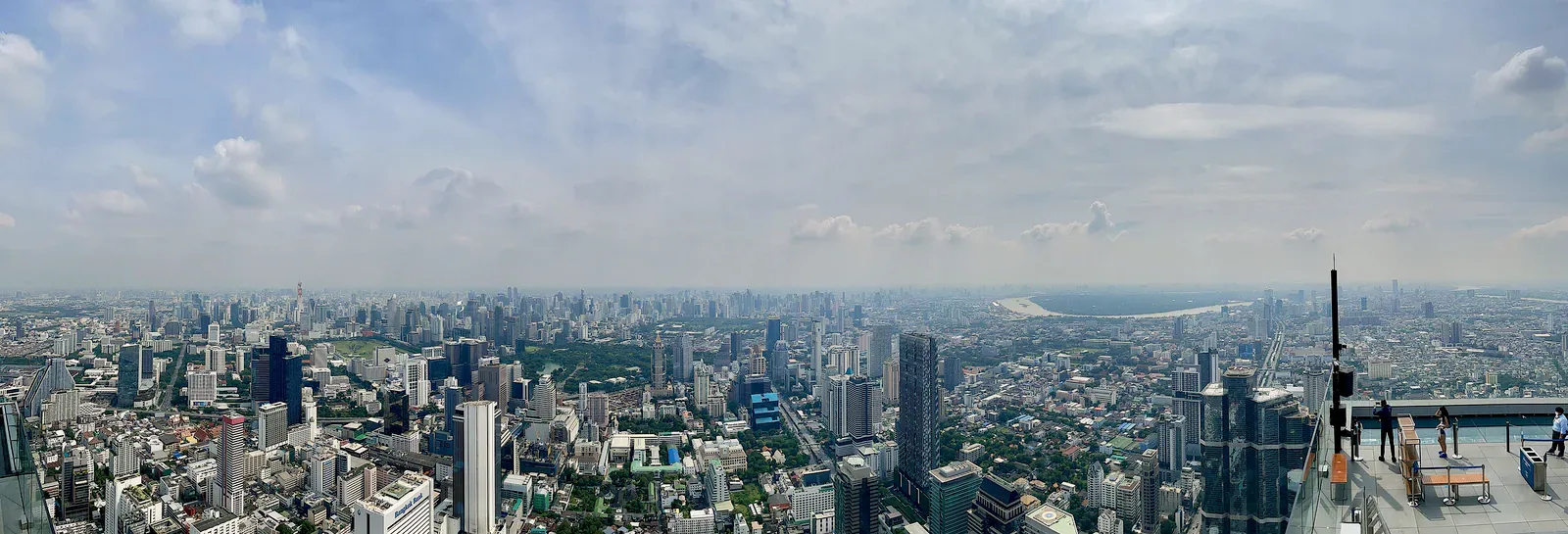
Outside the burning season, the rainy season (roughly May to October) brings its own trade-off: rain can cancel an outdoor deck visit outright, but the air after a downpour is often at its clearest, and a storm rolling across the skyline viewed from height is one of the more dramatic things Bangkok offers, for those willing to time it right and accept the risk of getting rained on getting there.
Timing: golden hour, blue hour and why an hour early wins
The single biggest factor in whether a view-based outing feels worth it is timing, not which building you chose.
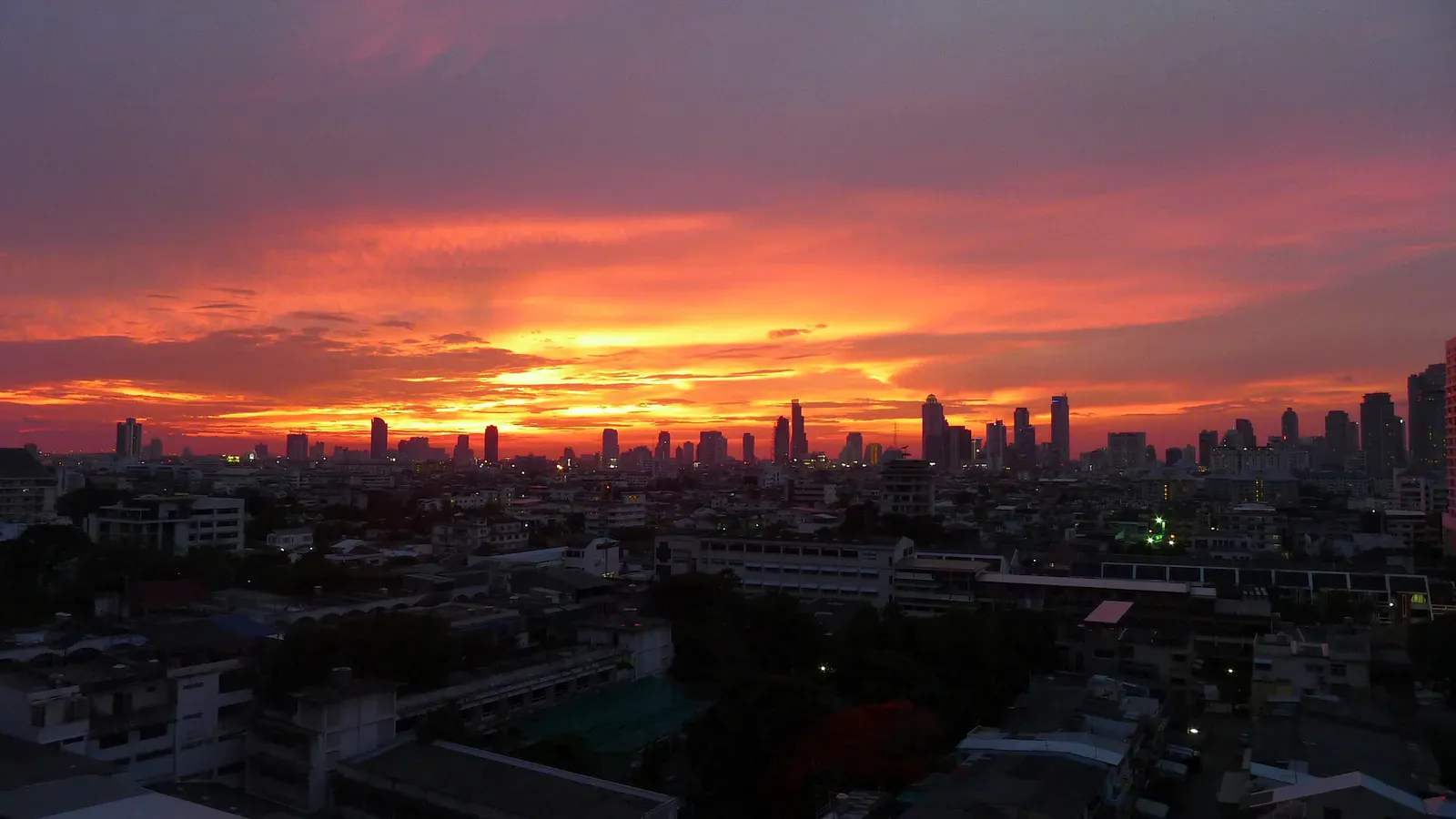
- Arrive at least an hour before sunset, not at sunset. Every option in this list gets busier as sunset approaches, and the best-positioned spots for the actual moment fill up. Arriving early gets you a seat or a rail position, time to acclimatise, and the chance to watch the light change rather than arriving to a scrum.
- Golden hour (the 45-60 minutes before sunset) gives warm light on the building facades and long shadows across the city, generally the most flattering light for photographs of the skyline itself.
- Blue hour (the 20-30 minutes after sunset, before full dark) is when the city’s lights come on against a still-blue sky, and for many visitors this is the more striking window than sunset itself. Most people leave right after sunset and miss it.
- Full dark gives the classic lit-skyline photograph but loses the sense of depth and haze/weather context you get in the two windows above.
Booking or arriving for the golden-hour-to-blue-hour stretch, rather than sunset alone, is the single best piece of timing advice for any of these options.
Comparison table
| Option | View | Cost band (2026, indicative) | Crowd/queue | Dress code | Families | Best for |
|---|---|---|---|---|---|---|
| Mahanakhon SkyWalk | Tallest building, river visible, glass floor | ฿700-1,100 (~US$20-32) incl. glass floor | Moderate-high at sunset, timed glass-floor queue | Casual, no strict enforcement | Yes, no age limit | First-time visitors wanting the definitive view |
| Baiyoke Sky | Wide 360°, revolving deck | ฿300-600 (~US$9-17) | Lower than Mahanakhon | Casual | Yes | Budget-conscious, wide sweep over height |
| Riverside/Sathorn rooftop bar | River bend, business district | Free entry + ฿400-900 (~US$12-26) per drink | High at sunset, booking recommended | Smart-casual enforced | Limited, adults-oriented evenings | Couples, evening atmosphere |
| Free vantage points | Partial, framed | Free | Low | None | Yes | Budget visitors, brief stops |
| River cruise/boat | Horizontal, temples and bridges | See river guide | Varies by boat type | None | Yes | Photography, a different kind of skyline experience |
Choosing between them
For a first Bangkok visit wanting one definitive skyline photo, Mahanakhon’s height and clear sightlines make it the safer choice over Baiyoke, despite the higher price. For families or budget travellers, Baiyoke’s lower cost and revolving deck give most of the same experience for less, and a wide sweep of the city arguably suits a first-timer better than a single glass-floor gimmick. For a couple wanting an evening out rather than a ticketed attraction, a well-chosen rooftop bar in Sathorn or along the river, timed for golden hour into blue hour, generally beats either dedicated deck for atmosphere, provided the drink prices are accepted going in. For anyone visiting during the burning season, or simply preferring a view built around water rather than distance, the river cruise guide covers the alternative properly, and it’s worth comparing against the Grand Palace guide for a river-and-landmarks morning that doesn’t depend on visibility at all.
Common questions
Is Mahanakhon or Baiyoke better for the view?
Mahanakhon is taller and stands clearer of neighbouring buildings, giving a more complete panorama, and its glass floor is a genuine draw with no equivalent at Baiyoke. Baiyoke is cheaper and has a revolving deck that does the work of a full circuit for you; it suits budget-conscious visitors or anyone who wants the 360-degree sweep without paying Mahanakhon’s premium.
Are rooftop bars in Bangkok worth it for the view alone?
They can be, but the true cost is at least one drink priced well above street level, and the view depends heavily on which direction the bar faces and how tall its neighbours are. A riverside or Sathorn-facing bar with a clear line to the river bend is generally worth it; a bar boxed in by taller towers is not.
What is the best time of day to visit an observation deck in Bangkok?
Arrive at least an hour before sunset. Golden hour gives the most flattering light on the skyline itself, and blue hour (the 20-30 minutes after sunset) often gives a more striking result than sunset itself, once the city lights come on against a still-blue sky, and most visitors miss it by leaving too early.
Does the burning season affect the view from Bangkok’s observation decks?
Yes, significantly. Roughly January to April, haze and particulate pollution can reduce visibility to a fraction of a clear day’s range, regardless of which deck or building you choose. Check the day’s air quality before committing to a view-based outing in these months.
Can children visit Bangkok’s rooftop bars?
Some allow children earlier in the evening before the bar atmosphere sets in, but many operate an adults-oriented policy after a certain hour or don’t admit children at all. A dedicated observation deck like Mahanakhon or Baiyoke has no age restriction and is the more reliable choice for families.
Is there a free way to get a good Bangkok skyline view?
Genuinely panoramic free options are limited: a few hotel lobby bars offer partial views without requiring a purchase if you’re not lingering, and some public rooftops and elevated walkways give brief, framed glimpses. For a full, unobstructed view, one of the paid decks or a rooftop bar with a drink purchase is the realistic option.
Part of
Written by
Mike Brochlowski
Founder and editor, travel photographer and designer
I'm Mike Brochlowski, a travel photographer and designer, and I currently live on Koh Samui, Thailand. I built BangkokWiki to put practical, checked information about Bangkok in one place. Every page is researched from official and primary sources, and the text names them. Where a page shows a checked date, that is when its facts were last confirmed. I also run samui69.com, a non-commercial guide to Koh Samui. If you spot an error or something out of date, tell me through the contact page and I will check it and correct the page.
Read all articles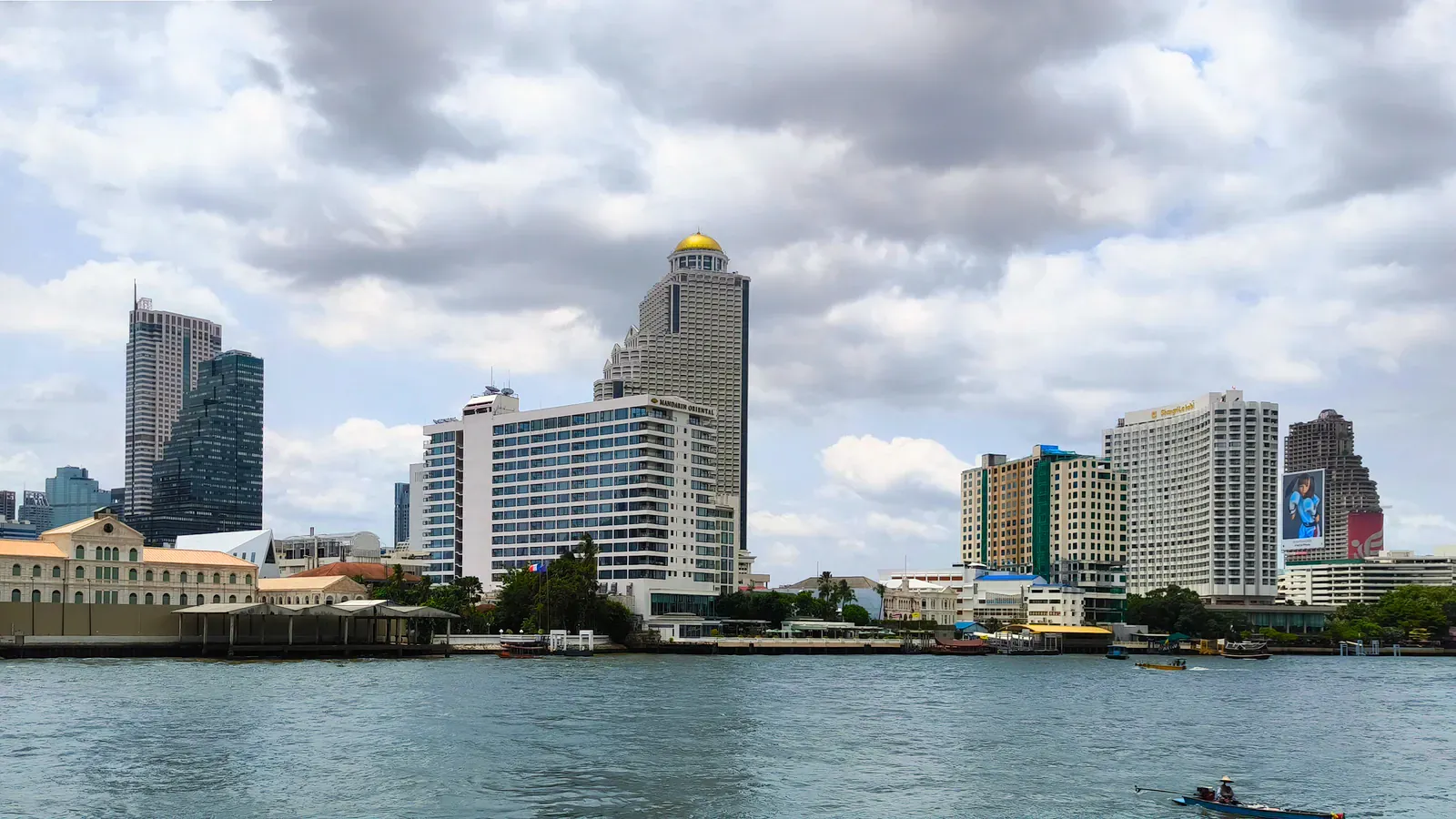
Where to stay
Pick the area before the hotel
Traffic and heat make Bangkok distances feel longer than they look on a map, so the area shapes a trip more than the hotel does. Our guides match areas to trip types and explain the trade-offs.

Places to stay
Find a hotel
More from Things to do
- 11 min read
 13 min read
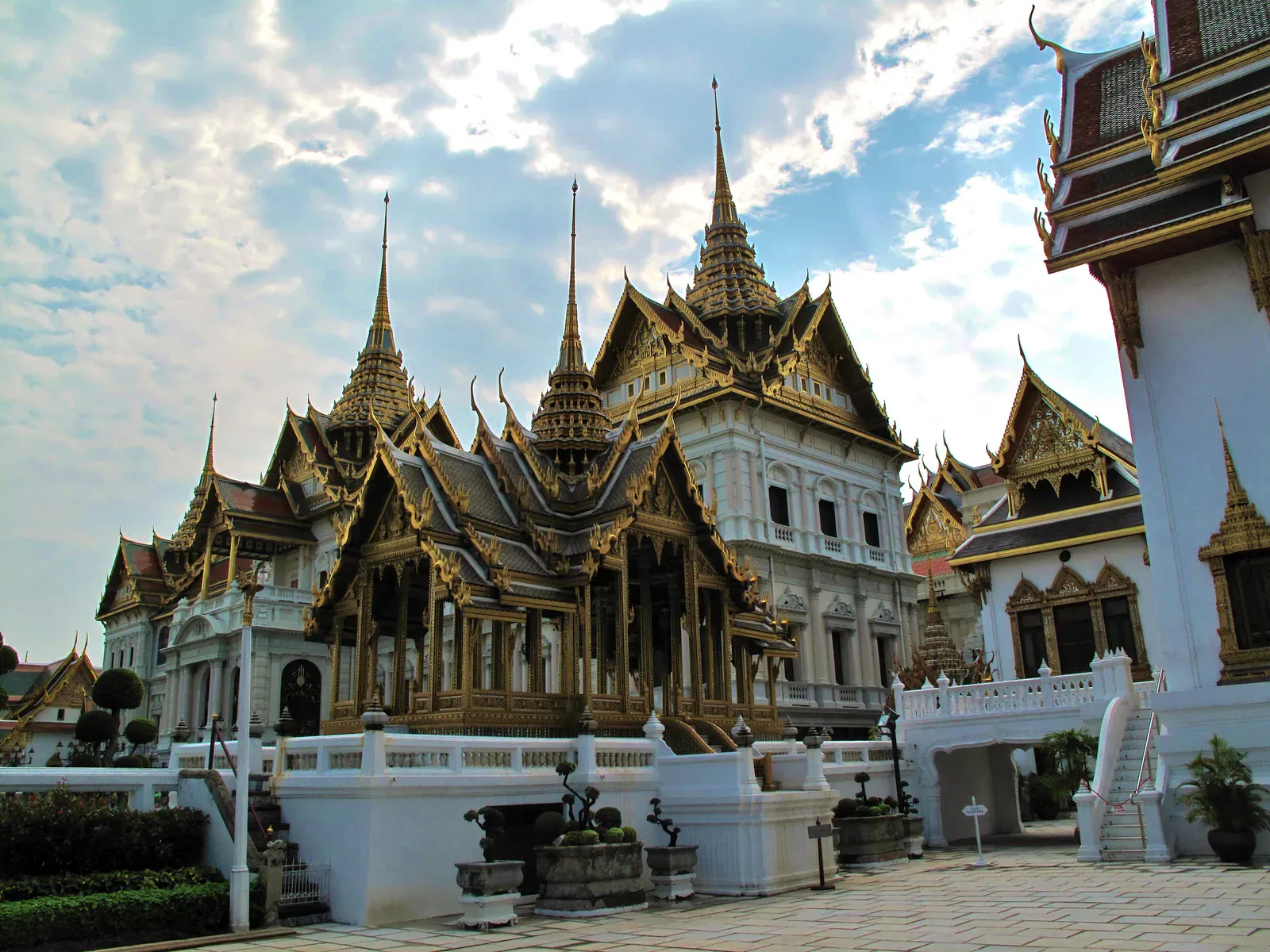
Grand Palace Bangkok: a visiting guide that gets it right
 9 min read
Bangkok Must-Do Experiences, Scored by Time, Cost, Crowd

Newsletter
You're subscribed as