Things to do
Chao Phraya River Cruise Guide: Bangkok Boat Trips
Every way to get on the Chao Phraya and Bangkok's canals compared: express boats, ferries, longtail charters and dinner cruises, by cost and time.
At a glance
- Reading time
- 11 min read
- Chapters
- 14
- Published
- Sep 20, 2026
On this page
The Chao Phraya is Bangkok’s real transport spine and its best free view, and the boats on it range from a public commuter ferry costing less than a coffee to a multi-course dinner cruise costing as much as a night in one of the riverside luxury hotels. Most visitors only ever try one of these, usually the tourist boat or a dinner cruise, and miss that the cheapest option is often also the most interesting one.
The categories, separated properly
Public express boats (the Chao Phraya Express Boat) are genuine public transport, running fixed routes along the river with different coloured flags marking different service patterns, used daily by commuters as much as visitors. Cross-river ferries are short hops directly across the water between piers on opposite banks, typically running for a small flat fare with no schedule beyond “boats come regularly.” The tourist hop-on-hop-off boat runs a fixed circuit of the main sightseeing piers with a day pass, aimed squarely at visitors rather than commuters. Hotel shuttle boats are free or included services run by riverside hotels for their own guests, typically connecting a hotel pier to the nearest public pier or a shopping centre like ICONSIAM. Canal (khlong) boats, chiefly the Saen Saep service and smaller Thonburi-side routes, are a separate public transport network on the city’s canals rather than the main river. Longtail-boat charters are private hires of the narrow, noisy, distinctively Thai boats, priced per boat rather than per person, letting you set your own route and pace. Dinner cruises range from large multi-deck vessels with buffet service and live music to smaller, higher-end operators with a set menu, all selling the same core product: dinner with the lit skyline and riverside temples going past.
What each one costs, shows you and suits
| Boat type | Cost band (2026, indicative) | What you see | Duration | Suits |
|---|---|---|---|---|
| Express boat (public) | ฿15-40 (~US$0.45-1.15) per ride | Working river, temples in passing, real Bangkok life | Minutes per pier, ride as long as you like | Budget travellers, transit-first visitors, photographers |
| Cross-river ferry | ฿5-10 (~US$0.15-0.30) | A few minutes of river, opposite bank temples | 2-5 minutes | Quick crossings, e.g. Wat Arun access |
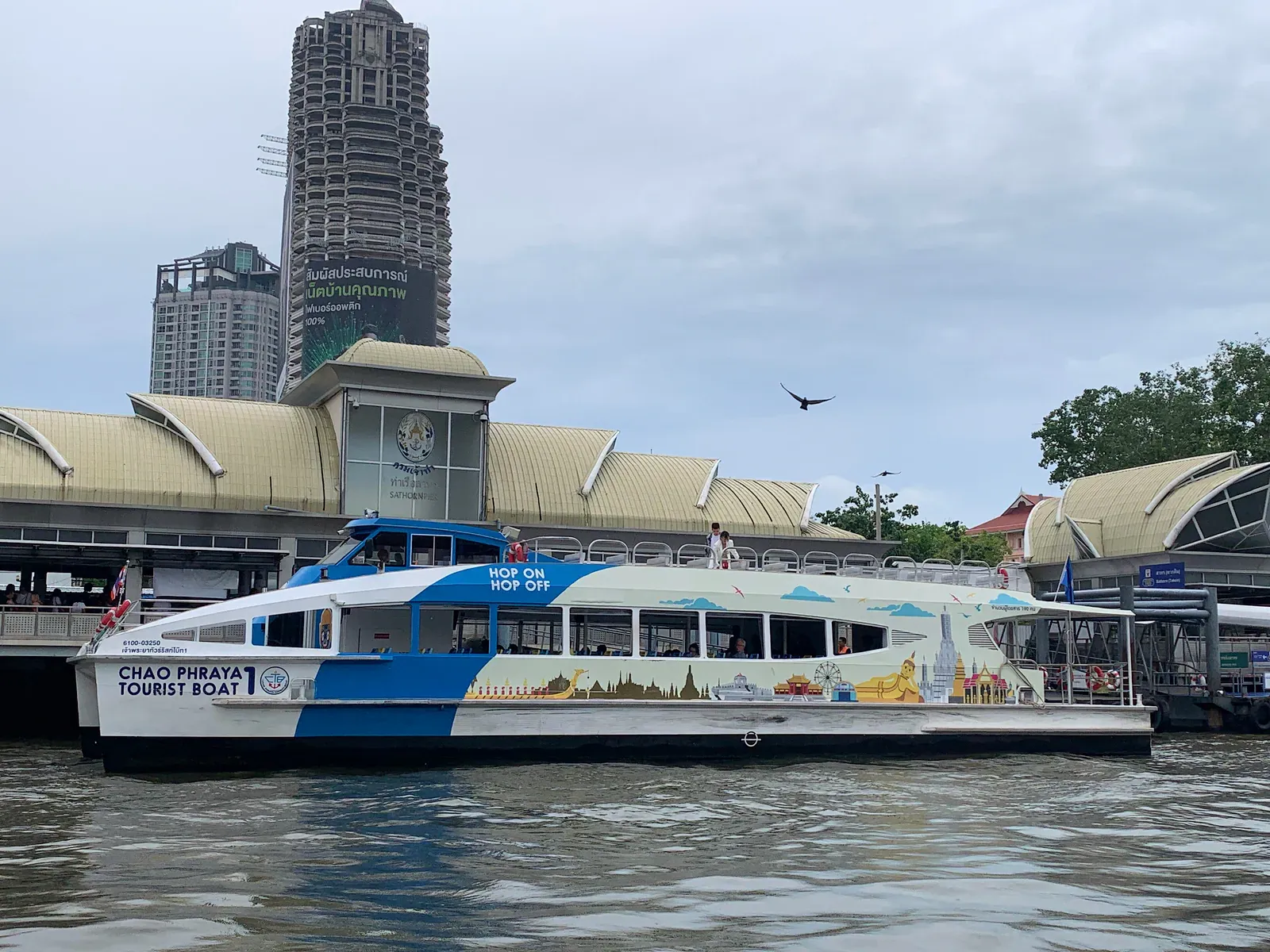
| Tourist hop-on-hop-off | ฿180-300 (~US$5-9) per day pass | Main sightseeing piers, curated stops | All day, unlimited hops | First-time visitors wanting flexibility without navigating express boat flags |
| Hotel shuttle | Free for guests | Short stretch to nearest hub pier or mall | 5-15 minutes | Hotel guests only |
| Saen Saep canal boat | ฿15-25 (~US$0.45-0.70) | Elevated, narrow canal, city life away from the river | Minutes per pier | Budget travellers, cross-town shortcuts, curious visitors |
| Longtail charter | ฿1,500-3,000+ (~US$43-86) per boat, per hour, negotiable | Whatever route you set, incl. Thonburi canals | 1-2 hours typical | Small groups, photographers, flexible sightseeing |
| Dinner cruise | ฿1,500-5,000+ (~US$43-145) per person | Lit skyline, temples at night, buffet or set menu | 2-3 hours | Special occasions, couples, first/last night in the city |
Confirm current fares on each operator’s own site or at the pier before travelling; these bands move and vary by operator and season.
The express boats, properly explained
The Chao Phraya Express Boat network is organised by flag colour, each representing a different service pattern along the same stretch of river, and this is the part that confuses first-time riders more than anything else on the water.
- Orange flag boats run the most frequent service, covering most of the river’s length end to end, and are the safest default choice for a visitor without a flag chart memorised.
- Blue flag boats are the tourist-oriented service, running a shorter core route with fewer stops and, on some schedules, an extension further downriver toward Asiatique in the evening.
- Yellow and yellow-green flag boats run limited, faster services, often only on weekdays and during commuter hours, skipping many intermediate piers.
- No-flag (local) boats stop at every pier and run the full length slowly.
The practical approach for a visitor: look at the pier signage or ask staff which flag reaches your destination, rather than trying to memorise the full network in advance. Boats board and depart quickly, so having your destination pier name ready (not just the attraction name) avoids confusion.
Why Sathorn is the hub
Sathorn Pier (Central Pier) is where most express boat flags converge, where the BTS Saphan Taksin station connects directly to the pier, and where most tourist boats and several dinner cruises depart from. Piers are numbered outward from this hub: N for north, S for south, ascending as you move away from Central Pier in each direction. Knowing this numbering means you can usually work out roughly how far a pier is from the hub just from its code, which is more useful than it sounds when planning a day that involves several stops.
Boarding safely
Express boats and ferries frequently do not come to a full, settled stop: they nose against the pier for a matter of seconds while passengers get off and on, and the boat may still be drifting slightly. A few practical points:
- Wait for the crew’s signal or the gap after arriving passengers have cleared, don’t push forward while people are still disembarking.
- Step confidently and quickly, using the handrail where fitted; hesitating halfway is more dangerous than a decisive step.
- Keep bags secure and close to your body while boarding: pier edges and gaps between boat and pier are the main hazard, not the water itself.
- Sit down promptly once aboard; boats can pull away within seconds of the last passenger boarding.
- Seniors, children and anyone unsteady should board and disembark first or with direct crew assistance where offered, and take the extra few seconds rather than rushing with the crowd.
Where to sit
For photographs, the open sides toward the stern give the clearest unobstructed views without a roof strut in every frame, and boats generally allow standing near the rails on the tourist boats, though not on the crowded commuter express services at peak times. For shade, the covered central sections protect from both sun and the spray that kicks up on faster runs, which matters more than it sounds on a midday ride in the dry season. Longtail charters let you request the route and can be asked to slow near a landmark for photos, something not possible on the fixed-schedule public services.
Temples and landmarks from the water, and their best light
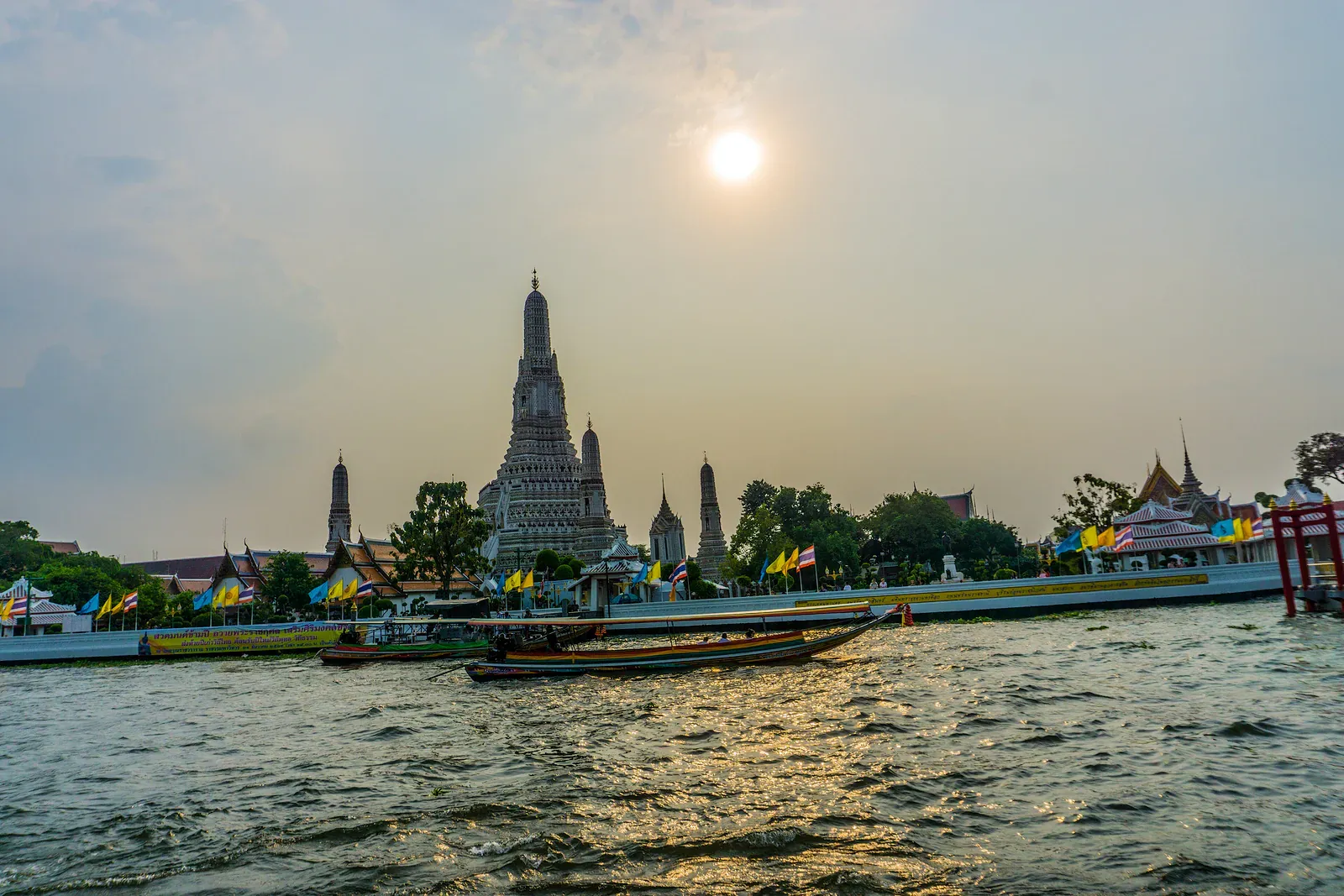
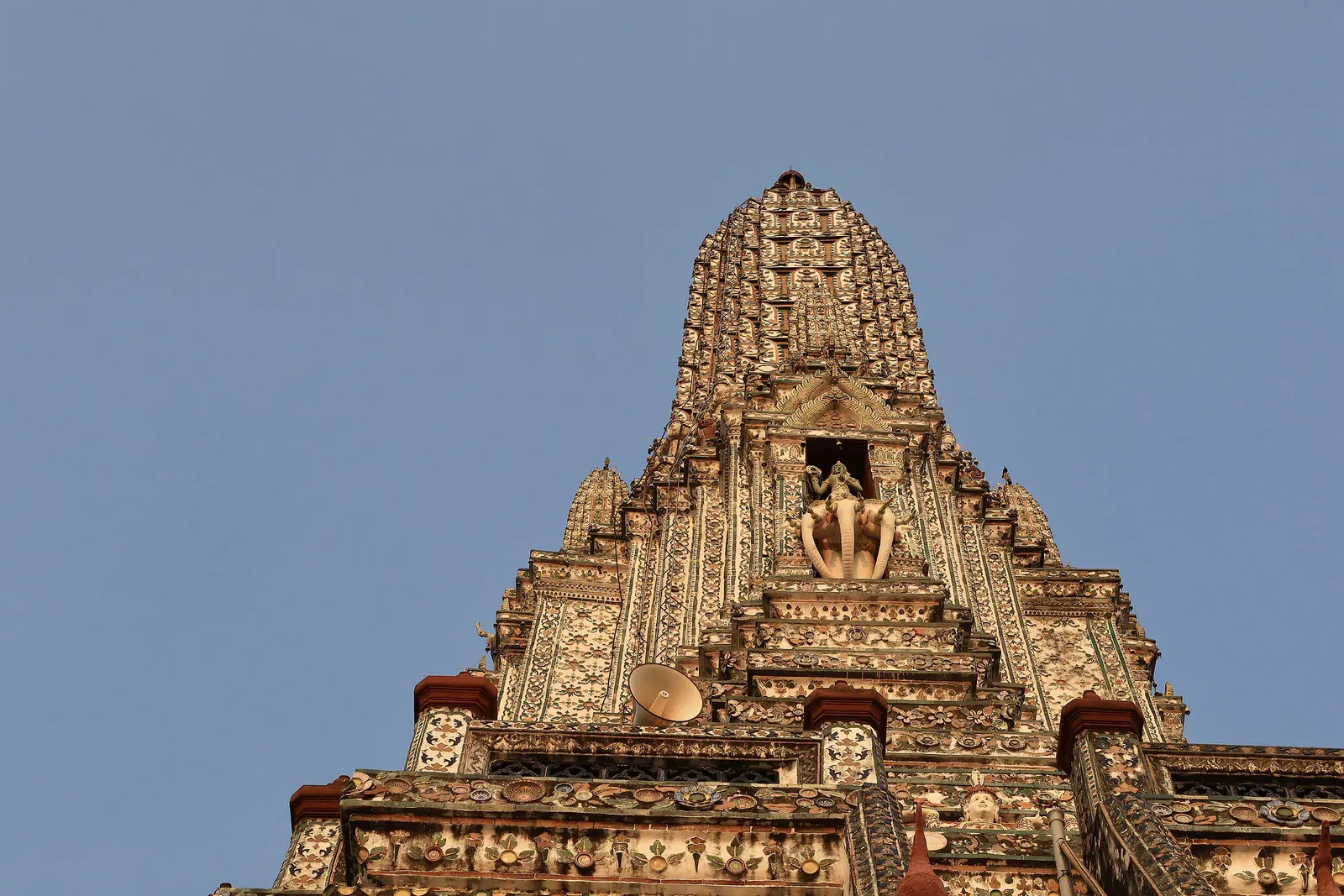
- Wat Arun, the Temple of Dawn, is best seen from the water in late afternoon into golden hour, when the light hits its porcelain-and-shell-encrusted spires directly; it’s also one of the few landmarks that genuinely looks better from the river than from land.
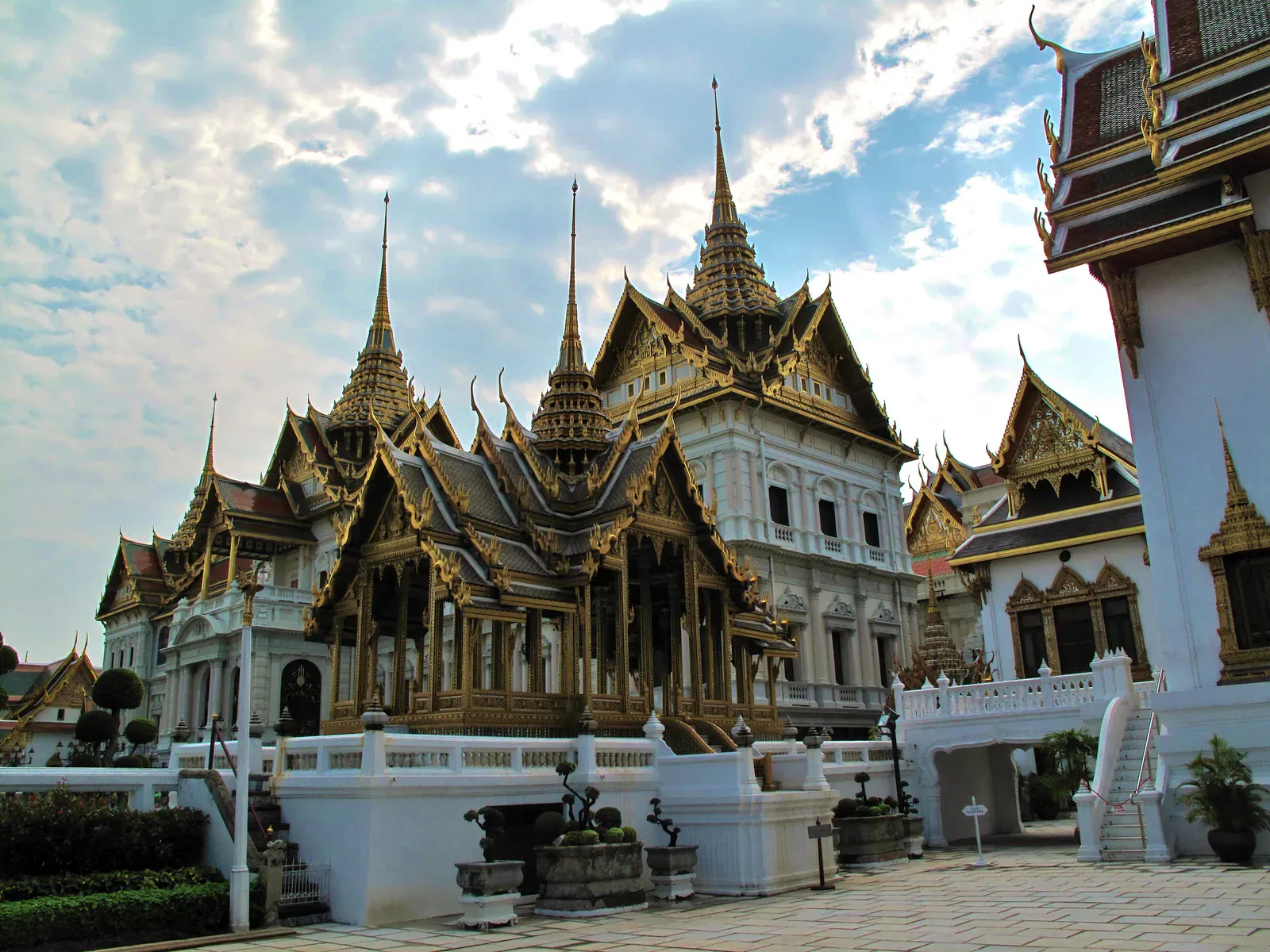
- Wat Pho and the Grand Palace complex back onto the river near Tha Chang and Tha Tien piers, visible in glimpses over the wall rather than in full: worth combining with an actual visit rather than relying on the boat view alone (see the Grand Palace guide).
- The Rama VIII and other river bridges photograph well lit at night, a staple of dinner cruise photography.
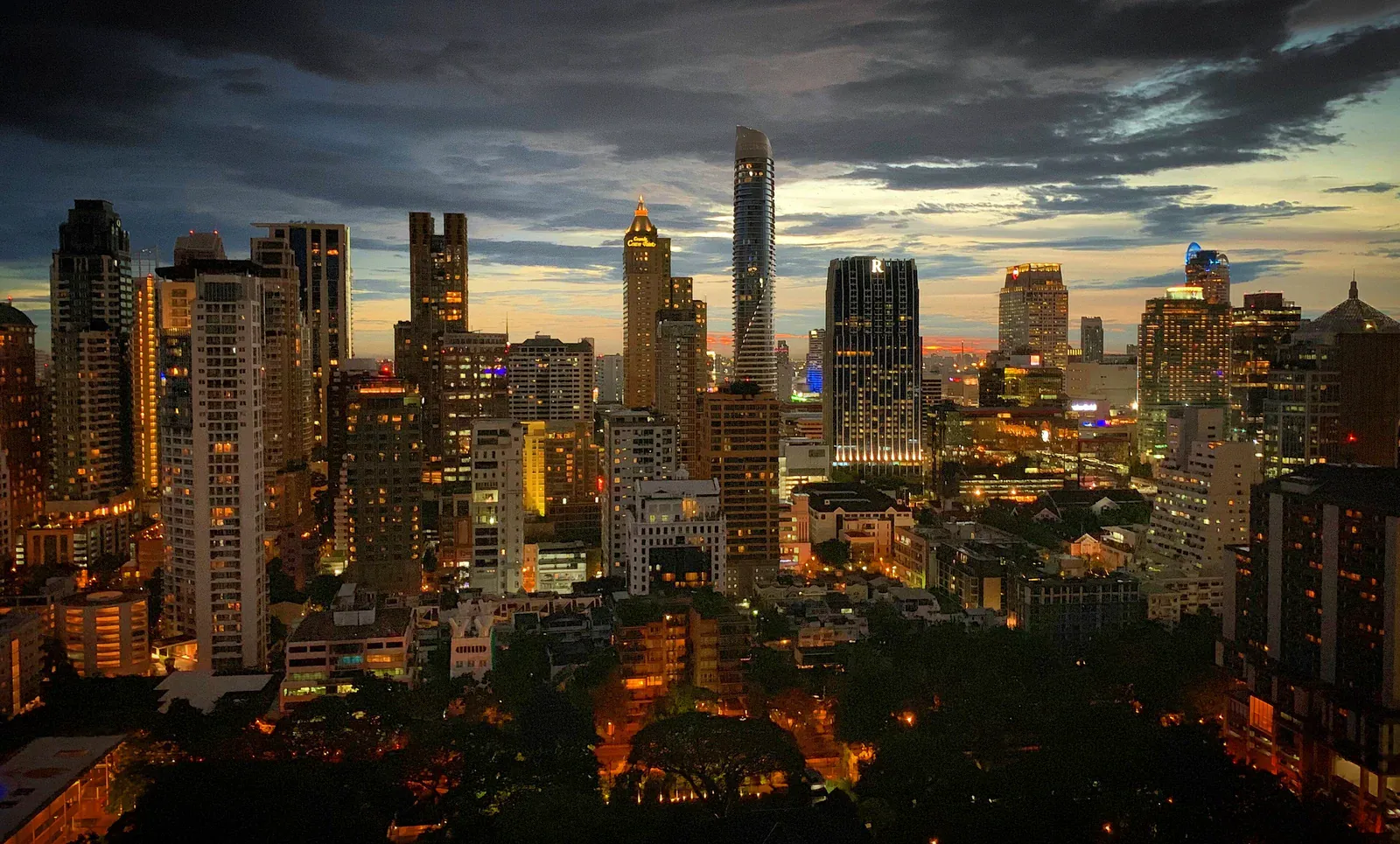
- ICONSIAM and the riverside development stretch show the modern skyline side of the river, a contrast worth including if you’re comparing this horizontal view against the vertical one in the observation decks guide. For another riverside stop, see our River City Bangkok guide.
Dinner cruises: the honest warning
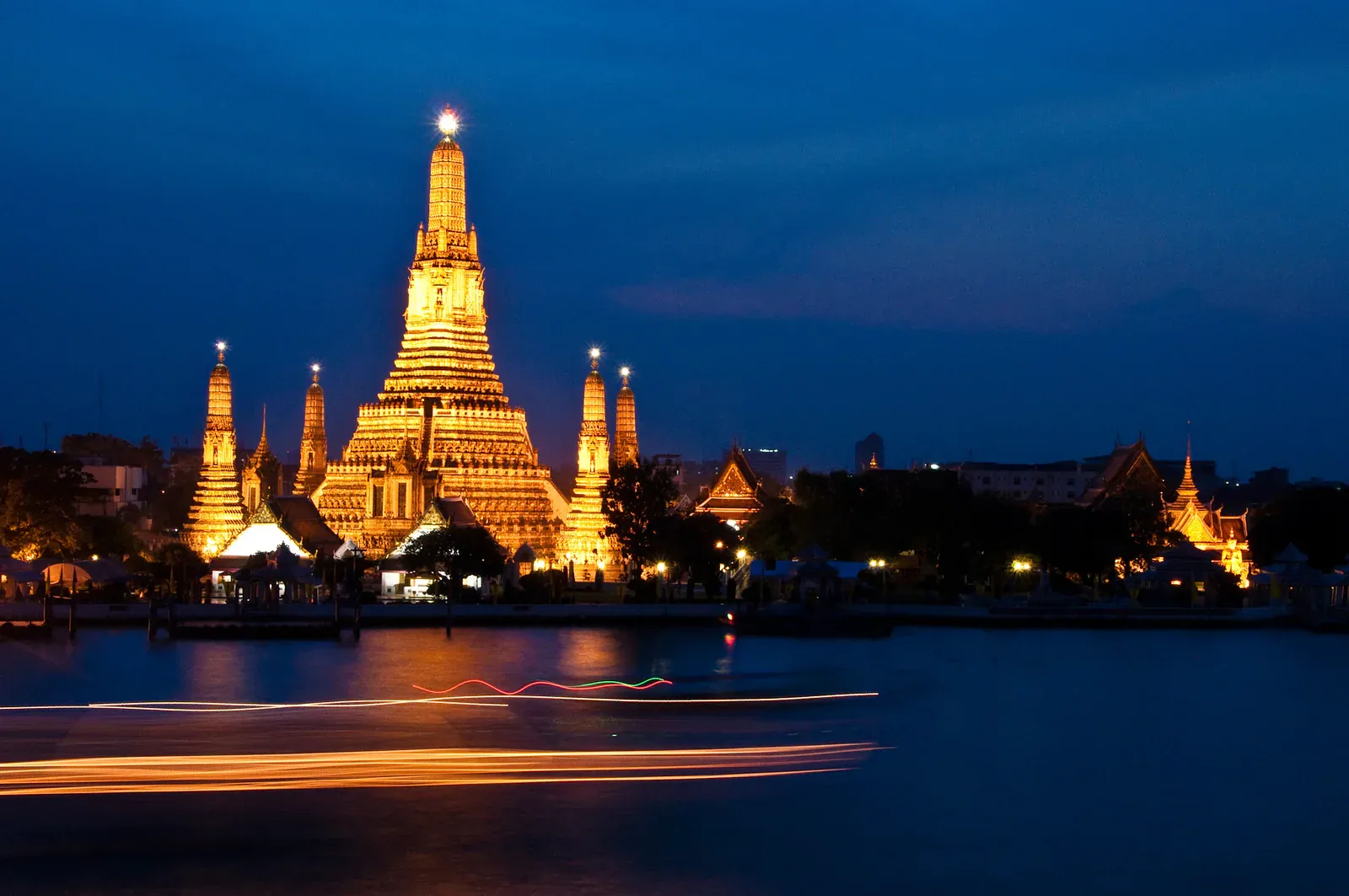
Dinner cruises sell the view, and the view genuinely delivers: a lit Grand Palace wall, Wat Arun floodlit, bridges strung with lights, and the working river quieter at night than by day. The buffet rarely matches the view. Large-volume dinner cruise operators are optimised for turning over hundreds of covers a night, and the food reflects that: broad, crowd-pleasing, and rarely the reason to book. Smaller, higher-end operators with a set menu and fewer covers tend to do noticeably better on food, at a correspondingly higher price. If food quality matters as much as the view to you, research the specific operator’s food reputation separately rather than assuming a higher price alone guarantees a better meal, and treat the view as the product you’re actually paying for.
Live music and MC-led entertainment are common on the larger cruises and are a matter of taste: some visitors enjoy the atmosphere, others find it intrusive against the setting. Smaller boats tend to skip this in favour of a quieter ambience.
Canal tours through Thonburi: genuine versus staged
The Thonburi canal network (Khlong Bangkok Noi, Khlong Mon and Khlong Bang Luang chiefly) is where longtail boat tours take visitors to see a version of Bangkok that existed before the river became the city’s edge rather than its spine: stilt houses, small canal-side temples, and a slower pace of life still visible along the water. Some of this is genuine daily life continuing as it has for generations. Some of it is a curated stop built for tour groups, most obviously craft or souvenir stops along popular routes that exist because tour boats reliably bring visitors, not because they’re an essential part of local life. Neither is dishonest exactly, but it’s worth knowing which is which: a stop at a genuinely operating small canal-side temple is one thing, a stop timed for a shopping opportunity is another, and operators mix both into the same route. Ask what’s included before booking a fixed-route tour, and treat any stop with a hard sales pitch as the same category of thing to sidestep as the scams described in the Grand Palace guide.
Saen Saep: the canal as commuter transport
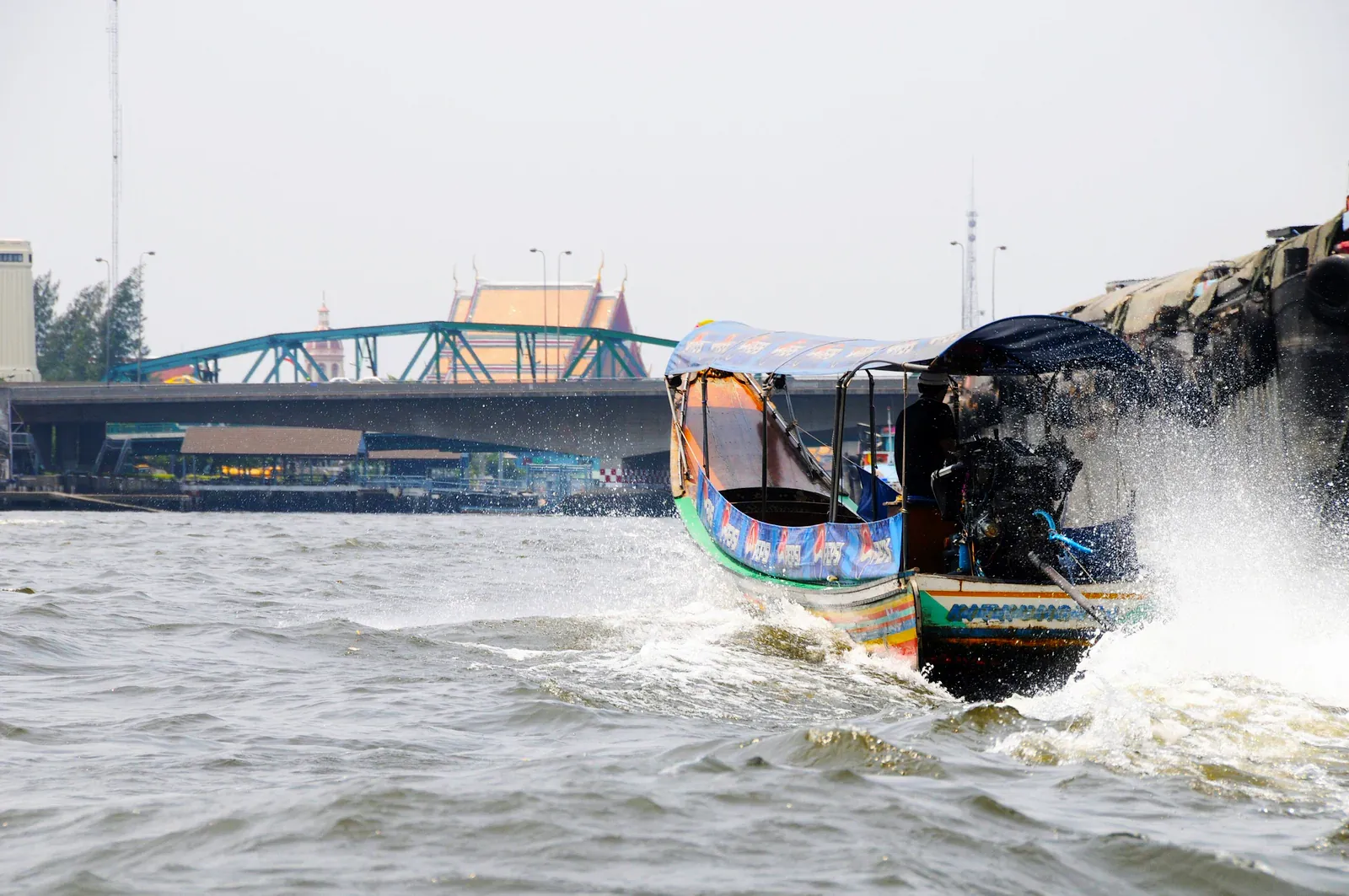
Separate from the tourist longtail routes, the Saen Saep canal boat service is genuine public transport running east-west across the city on a canal far narrower and less visited than the river, connecting central Bangkok toward the eastern suburbs. It’s fast, cheap, and gives a completely different view of the city (elevated walkways, back gardens, and a working canal rather than a sightseeing river) but it is not designed for tourists: boarding is quick, boats can be crowded at commuter hours, and the spray from the fast-moving boats routinely gets passengers wet, with tarpaulin screens raised as a partial defence rather than full protection. It’s worth trying once as a genuinely different Bangkok experience, and useful as a cross-town shortcut when road traffic is bad, but it isn’t a substitute for a leisurely river cruise.
Sunset timing on the water
The same golden-hour and blue-hour logic covered in the observation decks guide applies on the water, with one addition: a moving boat changes your angle to the light constantly, so a sunset cruise timed to be heading roughly downriver as the sun sets tends to deliver a longer, more varied light show than a fixed viewpoint does. Dinner cruises generally time departure to catch this deliberately; if booking a private longtail charter for sunset, ask the boatman to plan the route with this in mind rather than leaving it to chance.
Rainy season and high tide
The rainy season (roughly May to October) brings two practical issues: sudden downpours that can cut a longtail charter or open-boat trip short with little warning, and a river that runs higher and faster, which can affect timings and occasionally suspends some pier services during flood-risk periods. High tide also pushes the river level up against pier structures and can make boarding at some smaller piers awkward underfoot. Neither is a reason to avoid the river in the wet months (the temples and skyline still photograph well, often with more dramatic skies) but build in flexibility rather than a tight schedule, and check conditions on the day for anything time-sensitive like a booked dinner cruise departure.
A combined plan: temple morning, boat afternoon
- Morning: visit the Grand Palace and Wat Pho on foot, arriving early as covered in the Grand Palace guide, finishing by early-to-mid afternoon before the heat peaks.
- Early afternoon: take the express boat or a short ferry hop from Tha Chang or Tha Tien across to Wat Arun, timed for softer light than midday.
- Late afternoon: ride the express boat back toward Sathorn, using the return trip itself as a low-cost, high-value sightseeing ride rather than treating it as pure transit.
- Evening: either a rooftop bar near the river for sunset (see the observation decks guide) or, if it’s a special occasion, a booked dinner cruise departing from one of the Sathorn-area piers.
This sequence uses the cheapest boats for the sightseeing work and reserves any paid cruise for the evening, when the lit skyline genuinely justifies the higher price.
Common questions
Which Chao Phraya Express Boat flag should tourists use?
The orange flag runs the most frequent, most complete service and is the safest default without memorising the full network. The blue flag tourist boat covers the main sightseeing piers with fewer stops. Ask pier staff or check the signage for your specific destination if unsure, since yellow and yellow-green flags run limited weekday-only schedules.
How much does a Chao Phraya river cruise cost?
It depends entirely on the category. A public express boat ride costs a small flat fare, a few tens of baht. A dinner cruise runs into the low thousands of baht per person. Confirm current pricing on the specific operator’s site, since bands shift and vary widely between operators.
Is the food good on Bangkok dinner cruises?
Generally the view is the reason to book, not the food. Large-volume buffet cruises are optimised for serving many guests rather than food quality; smaller, higher-end set-menu operators tend to do better but cost more. Research the specific operator’s food reputation if that matters to you as much as the view.
What is the Saen Saep canal boat like for tourists?
It’s genuine public transport rather than a sightseeing service: fast, cheap and a completely different view of the city, but crowded at commuter hours and prone to splashing passengers with canal spray. Worth trying once for the experience and as a cross-town shortcut, not a substitute for a leisurely river cruise.
Are Thonburi canal tours worth it?
Yes, with the caveat that some stops on fixed-route tours are curated for tour groups rather than purely organic local life, particularly craft or souvenir stops. The canal scenery and stilt-house neighbourhoods themselves are genuine. Ask what a tour includes before booking, and treat any hard sales pitch mid-tour with the same scepticism as a street scam.
What’s the best time of day for a river cruise photograph?
Golden hour into blue hour, the roughly 90 minutes spanning just before to just after sunset, gives the most striking light on both the temples and the modern skyline. A boat’s constantly changing angle to the light during this window tends to produce more varied results than a fixed viewpoint on land.
Written by
Mike Brochlowski
Founder and editor, travel photographer and designer
I'm Mike Brochlowski, a travel photographer and designer, and I currently live on Koh Samui, Thailand. I built BangkokWiki to put practical, checked information about Bangkok in one place. Every page is researched from official and primary sources, and the text names them. Where a page shows a checked date, that is when its facts were last confirmed. I also run samui69.com, a non-commercial guide to Koh Samui. If you spot an error or something out of date, tell me through the contact page and I will check it and correct the page.
Read all articles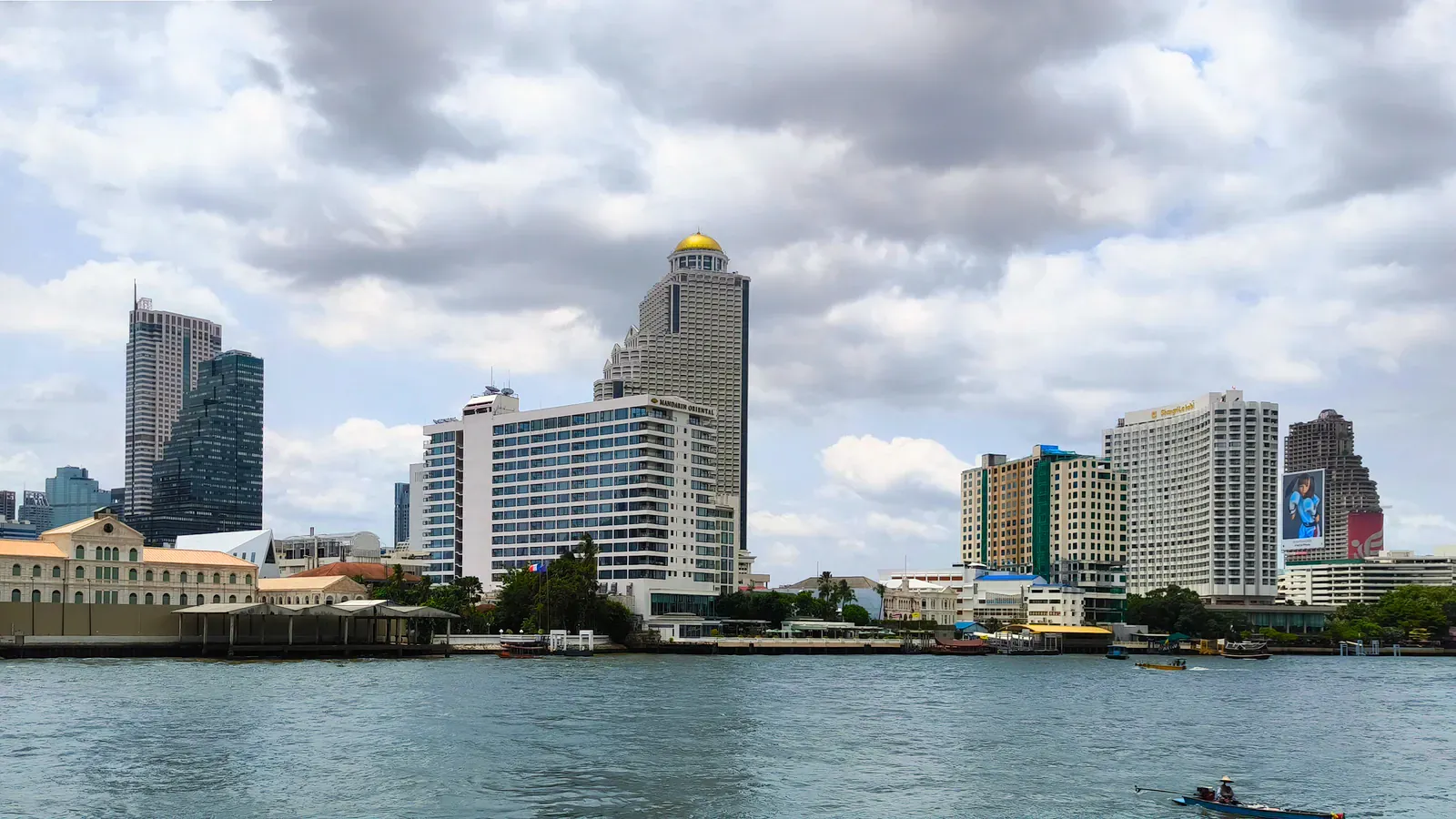
Where to stay
Pick the area before the hotel
Traffic and heat make Bangkok distances feel longer than they look on a map, so the area shapes a trip more than the hotel does. Our guides match areas to trip types and explain the trade-offs.

Places to stay
Find a hotel
More from Things to do
- 10 min read
 13 min read
Grand Palace Bangkok: a visiting guide that gets it right
 9 min read
Bangkok Must-Do Experiences, Scored by Time, Cost, Crowd

Newsletter
You're subscribed as