
Things to do
Muay Thai Stadiums in Bangkok: Tickets Guide
How to watch real Muay Thai in Bangkok: Rajadamnern and Lumpinee explained, ticket tiers, what a fight night involves, and how to avoid tout pricing.
At a glance
- Reading time
- 13 min read
- Chapters
- 12
- Published
- Sep 20, 2026
On this page
Bangkok has two stadiums with real historical weight, Rajadamnern and Lumpinee, plus a growing set of televised entertainment promotions, tourist-facing shows, and local fight nights that most visitors never hear about. Which one you watch changes the evening completely: a stadium main event and a tourist show are both “Muay Thai,” but they are not the same experience.
This guide explains the venues, what actually happens across a five-round card, how tickets and pricing tiers work, and how to get in and out of a fight night without overpaying or missing the fights that matter.
The two historic stadiums
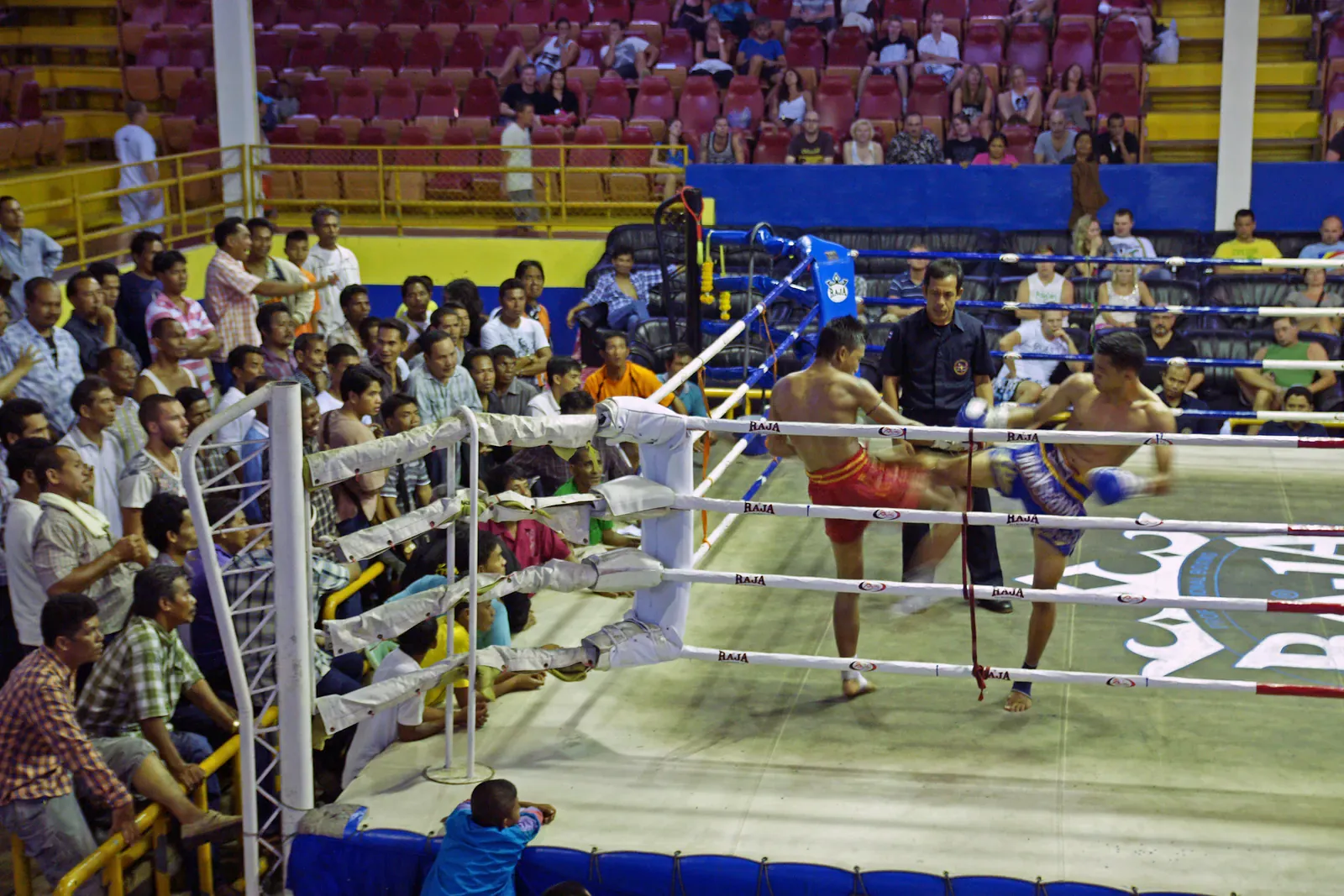
Rajadamnern Stadium is the older of Thailand’s two national stadiums, historically associated with the Muay Thai establishment and often described as the sport’s most prestigious ring. In recent years it has run a modernised promotional format alongside its traditional cards, blending long-standing stadium tradition with slicker production aimed at a wider, more international audience. Treat any specific current schedule, ticket price or promotional branding as something to check on arrival or through the stadium’s own channels. This changes over time.
Lumpinee Stadium, the other historic pillar, relocated from its long-time original site to a newer purpose-built venue some years ago, and continues to host both traditional stadium cards and higher-profile televised events, including international promotions that have used the venue for major fight cards. Fighters who top bills at either stadium are, in the sport’s own hierarchy, considered to be fighting at the top level domestically: this is where a Thai fighter’s reputation is genuinely made, far more than at any tourist-facing show.
Beyond these two, Bangkok and the wider region host newer arena venues and made-for-television promotions that use faster, shorter-round “entertainment” formats designed for broadcast pacing rather than the traditional five-round championship structure. These are worth watching in their own right, but they are a different product from a stadium card, and shouldn’t be confused with one when you’re deciding what to book. For the big arenas and which events they host, see our stadiums and arenas guide.
Where the sport actually lives: local fight nights
The two national stadiums and the television promotions are the visible tip of a much larger scene. Smaller venues, provincial stadiums on the edge of the city, and temple fair fight cards, often set up for a single evening around a local festival, are where a huge amount of everyday Muay Thai happens, watched almost entirely by Thai audiences rather than tourists. These cards can feature fighters at every level, from young up-and-comers to well-known regional names, fought with the same rules and the same seriousness as a stadium bout, just without the polish or the foreign audience.
Finding these requires more effort (they’re rarely marketed in English) but they offer the most unfiltered version of the sport, at a fraction of the price of a stadium ticket, if you’re willing to ask around or go with a Thai-speaking companion.
What a fight night is really like
The card structure
A typical stadium card runs from early evening into the night, opening with fights between younger or less experienced fighters and building toward a main event or two involving more established names. Early bouts are worth watching, not skipping: this is often where the most technically interesting exchanges happen, before the crowd and betting intensity peak for the headline fights.
The five-round format and scoring
Traditional Muay Thai is fought over five three-minute rounds. Scoring rewards clean, effective strikes and ring dominance over sheer volume: a fighter who controls distance, lands the harder and cleaner strikes, and appears to be winning the exchanges tends to be scored ahead of one who is merely busier. The first round is often cautious, used to read an opponent; the final round can go either way depending on the scorecards both fighters believe they need.
The third and fourth rounds are typically where a fight is decided: by this point both fighters have a read on each other and the pace usually rises sharply, whereas a first round spent feeling out an opponent can look slow to a newcomer expecting constant action from the opening bell.
The music and the ritual
Live music, the sarama, a small ensemble of a Thai oboe (pi chawa), drums and cymbals, plays throughout the fight, and experienced fans will tell you the tempo tracks the fight itself: it builds as the pace and stakes rise, and the crowd noise around you often follows it as much as the action in the ring.
Before the bout, fighters perform the wai kru ram muay, a ritual dance around the ring that pays respect to their trainers, gym and teachers. It looks ceremonial to an outsider, and it is, but it also serves a practical purpose: a chance for fighters to read the ring, warm up under the crowd’s eyes, and settle their nerves before the bell.
The gambling section
For anyone weighing up a longer stay that combines watching fights with training, the budget and long-stay guide covers what a training-focused trip costs month to month. A significant part of a stadium’s atmosphere comes from an area of the crowd, usually a distinct, often standing-room section, engaged in live betting on the fight, communicated through rapid hand signals and constant, loud vocal exchange that can sound alarming to a first-time visitor. This is a genuine, longstanding part of stadium culture, not a performance for tourists, and it’s one of the more distinctive things about watching Muay Thai here compared to almost any other combat sport. Visitors should watch and enjoy the atmosphere from a respectful distance rather than attempt to join in: it operates on local rules and relationships that an outsider won’t follow, and it isn’t set up to include casual visitors.
Tickets: tiers, touts, and buying sensibly
Stadium tickets are typically sold in tiers, structured roughly like this:
| Tier | What you get | Notes |
|---|---|---|
| Ringside | Seats closest to the action, best sightlines | Highest price tier, often the section closest to VIP or press seating |
| Club class / second class | Elevated seating with a good general view | A reasonable mid-tier option balancing price and view |
| Third class / general admission | Furthest from the ring, often standing or bench seating | Closest to where the betting crowd concentrates; the cheapest way in |
Exact pricing changes and shouldn’t be treated as fixed: check current tiers directly with the stadium or through its own official ticketing channel before your visit, and be aware that touts operating outside stadium entrances routinely quote a heavily inflated “foreigner price” well above the official rate. The safest general approach is to buy at the venue’s own box office or through its verified official channel rather than from anyone approaching you on the street, and to treat a price quoted by a stranger outside the gates with real scepticism.
Practical: timing, dress, food, and getting home
Arrive earlier than you think you need to if you want to watch the undercard: the genuinely interesting technical fights often happen well before the advertised “main event” time, and a visitor who arrives right before the headline bout misses most of the evening. Dress code is casual but modest; there’s no formal requirement, though very brief clothing is best avoided out of general respect for the venue.
Cameras are generally fine for personal use in most seating areas, though flash photography during a fight can be discouraged, and using footage commercially or professional camera rigs typically requires separate arrangement with the venue. Food and drink are usually available inside or immediately outside the stadium, ranging from simple snacks to more substantial street food nearby; alcohol availability varies by venue and isn’t guaranteed.
Getting home matters more than people expect: fight nights run late, and if you’re relying on the BTS or MRT, check the last-train time for your line before you go: a stadium card easily runs past last-train hours on the busier network lines, at which point a taxi or ride-hailing app is the realistic way home. Bringing children is workable at most venues; the atmosphere is loud and the crowd energetic rather than unsafe, though the betting sections and dense late-night crowds are worth avoiding with younger children in tow.
Reading a scorecard like a regular
Newcomers often assume the fighter who lands the most strikes wins, and that assumption causes most of the confusion first-time viewers feel about a decision. Traditional Muay Thai scoring weights clean, effective, ring-dominant striking far more heavily than volume: a fighter circling and throwing rapid, low-power kicks can lose a round to an opponent who lands fewer but harder, cleaner strikes and visibly controls the exchanges. Knees and elbows in close, when they land cleanly, tend to score particularly well, which is part of why clinch exchanges that look like a stalemate to an untrained eye are often being scored closely by the judges.
Round weighting also surprises newcomers: the first round is conventionally treated as being worth less, since it’s expected to be cautious, and some judges effectively start scoring in earnest from round two or three onward. This is why a fighter can look like they “lost” an entertaining first round on volume, yet the read from ringside regulars is that nothing meaningful has been decided yet. Watching a few fights with this in mind (clean and dominant over busy, later rounds weighted more than the first) makes the sport far more legible than trying to count strikes.
The atmosphere: what a first-timer notices
The sound is the first thing most visitors remark on: the sarama ensemble playing continuously, the crowd’s noise rising and falling with it, and the distinct, rapid patter of the betting section running underneath everything else. It’s loud in a way that’s hard to picture beforehand: closer to a working local sporting venue than a hushed arena, and part of what makes the experience memorable rather than a polished, sanitised show.
Physically, older stadium sections can be basic: hard bench seating, limited air conditioning in general-admission areas, and a layout built for function rather than comfort. This is part of the character rather than a flaw to plan around nervously; dressing for warmth and bringing a small hand fan or a bottle of water is a more useful preparation than expecting an air-conditioned, cushioned experience throughout.
Muay Thai versus other combat sports on the same bill
Some cards, particularly at venues hosting international promotions, mix traditional Muay Thai bouts with kickboxing rules (no clinch, different scoring emphasis) or with mixed martial arts bouts on the same evening. If you’re specifically there to watch Muay Thai, it’s worth checking a card’s rule set in advance where that information is available, since a card billed loosely as a “fight night” can include several different rule sets across one evening, each with a noticeably different look and pace. None of this diminishes the evening (genuinely good fighters are often skilled across formats) but it helps to know what you’re watching rather than assuming every bout follows the traditional five-round Muay Thai structure.
Tourist shows versus a stadium card
Tourist-facing shows, often shorter, earlier in the evening, and marketed directly to visitors through hotels and travel agents, buy convenience and a lighter evening, not the full experience. Rounds may be shortened, the card smaller, and the crowd almost entirely foreign, with none of the betting-section atmosphere or local intensity of a stadium night. There’s nothing wrong with choosing one if your evening is short or you want an easier introduction, but it’s worth knowing honestly that it’s a different, gentler product than a night at Rajadamnern or Lumpinee: closer to a demonstration than a genuine sporting contest. If you’d rather spend that time training instead of only watching, the guide to training Muay Thai in Bangkok covers how to get into a gym as a complete beginner.
Food, drink and general comfort inside the venue
Expect simple, inexpensive food options in and around the stadium: grilled skewers, noodle dishes and cold drinks from vendors near the entrances, rather than a formal concession stand setup. It’s worth eating beforehand rather than relying entirely on what’s available inside, particularly if you’re arriving early to catch the undercard and plan to stay for several hours. Toilets and general facilities in the older stadium sections are functional rather than polished; this is consistent with the venue’s working, sporting character rather than a sign of neglect.
Bring cash (smaller vendors and some ticket windows may not take cards reliably) and keep valuables secured in a bag you can watch easily, since the standing and general-admission sections get crowded and physically animated, especially during betting exchanges on a closely fought bout.
Following the sport afterwards
Once you’ve seen a card or two, following the sport ongoing means paying attention to the major domestic promotions running out of the national stadiums, the growing international broadcast promotions that showcase Thai fighters against a wider field, and the weight classes the sport is organised around, which run from the lighter flyweight and featherweight divisions up through welterweight and beyond, roughly mirroring boxing’s structure. Rather than naming current champions or rankings here (both change quickly and any list would date within months) the more useful habit is watching a stadium’s own fight announcements and following a promotion’s official channels once you know which one you enjoy watching. Fighters build reputations gradually through stadium performances over years, and learning to recognise a handful of gyms’ fighting styles is a more durable way to follow the sport than memorising a single ranking snapshot.
Common questions
Which is better to watch, Rajadamnern or Lumpinee?
Both are historic national stadiums and sit at the top of the sport’s domestic hierarchy; neither is objectively better to watch, and the honest answer is that fight quality depends far more on the specific card than the venue. Check what’s on at each before deciding, since a strong main event at either stadium is a better night than a weak one at the other.
How much are Muay Thai stadium tickets in Bangkok?
Stadiums sell tickets in tiers, roughly ringside, club or second class, and third class or general admission, with ringside costing considerably more than the cheapest general seating. Exact prices change and vary by event, so confirm current tiers with the stadium’s own channel rather than relying on a fixed figure, and be wary of touts quoting an inflated price outside the venue.
How long does a Muay Thai fight night last?
A full stadium card typically runs several hours, from early evening through into the night, covering multiple bouts building up to a main event. The most technically interesting fights are often not the very last one, so arriving early rather than only for the advertised headline time gives a much fuller sense of the evening.
Is it safe to watch Muay Thai gambling at a stadium?
Watching from a normal seating section is entirely safe and a genuine part of the cultural experience; the loud hand-signal betting sections operate on local rules visitors shouldn’t try to join. There’s no expectation that a visitor participates, and stadium staff are used to tourists simply observing the atmosphere from a distance.
Should I book a tourist Muay Thai show or a stadium ticket?
A tourist show buys a shorter, easier evening with a smaller, less intense card, aimed squarely at visitors with limited time. A stadium ticket at Rajadamnern or Lumpinee gives the genuine sporting experience, longer, louder, and with the betting-crowd atmosphere that defines a real fight night, and is worth the extra effort for anyone who wants to understand the sport rather than sample it.
How do I get home after a late fight night in Bangkok?
Check the last-train time for your BTS or MRT line before you leave for the stadium, since cards commonly run past the network’s final services. If you’re travelling home after last train, a taxi or a ride-hailing app is the standard, reliable option, and it’s worth having the fare estimate roughly in mind before you’re negotiating outside a busy venue late at night.
Why does a Muay Thai fight look slow in the first round?
Traditional scoring conventionally treats the opening round as lower-stakes reconnaissance, where fighters read each other’s timing, distance and tendencies rather than committing fully. Regular viewers expect this and read the fight from round two or three onward as the meaningful part, which is why the pace and intensity noticeably rise in the third and fourth rounds compared with the first.
Can I watch Muay Thai in Bangkok without going to a stadium?
Yes: local fight nights at smaller neighbourhood venues and temple fair cards happen regularly around the city and surrounding provinces, usually fought to the same rules and with the same seriousness as a stadium bout, just without English marketing or a foreign audience. These are harder to find without local knowledge or a Thai-speaking contact, but they offer a genuine, unfiltered version of the sport at a much lower cost than a stadium ticket.
Part of
Written by
Mike Brochlowski
Founder and editor, travel photographer and designer
I'm Mike Brochlowski, a travel photographer and designer, and I currently live on Koh Samui, Thailand. I built BangkokWiki to put practical, checked information about Bangkok in one place. Every page is researched from official and primary sources, and the text names them. Where a page shows a checked date, that is when its facts were last confirmed. I also run samui69.com, a non-commercial guide to Koh Samui. If you spot an error or something out of date, tell me through the contact page and I will check it and correct the page.
Read all articles
Where to stay
Pick the area before the hotel
Traffic and heat make Bangkok distances feel longer than they look on a map, so the area shapes a trip more than the hotel does. Our guides match areas to trip types and explain the trade-offs.

Places to stay
Find a hotel
More from Things to do
- 7 min read
 12 min read
Muay Thai Training Cost in Bangkok: Budgets
 14 min read
Muay Thai Training in Bangkok: Gyms and Costs

Newsletter
You're subscribed as