Things to do
Muay Thai Training in Bangkok: Gyms and Costs
How to train Muay Thai in Bangkok: gym types compared, session structure, pad and private costs, gym etiquette, and picking a gym by area and rail line.
At a glance
- Reading time
- 14 min read
- Chapters
- 14
- Published
- Sep 20, 2026
On this page
Bangkok has more Muay Thai gyms than any other city on earth, and the biggest mistake newcomers make is treating them as interchangeable. A traditional camp where fighters live and train is a working gym that happens to accept guests; a foreigner-oriented studio is built around teaching you. Knowing which kind you’ve walked into, and which one actually suits your goals and your body, matters more than any single training tip.
This guide covers the gym types, what a session really involves, what pads and privates cost, and the etiquette and practical detail that separates a good few weeks of training from a wasted, injured one.
Five ways to train in Bangkok
None of these is objectively “better.” They trade authenticity, teaching quality, cost and comfort against each other.
| Type | What it is | Best for | Typical price structure |
|---|---|---|---|
| Traditional Thai camp | A working gym, often training fighters for a living, that takes paying guests around its own schedule | Committed trainers who want the real rhythm of a fight gym and don’t mind being a guest in someone else’s routine | Monthly rate, sometimes with a fighter’s-rate discount for longer stays |
| Foreigner-oriented gym | Built around drop-in classes, clear English instruction, fixed timetables | First-timers, short stays, anyone who wants structure and explanation over immersion | Drop-in, weekly and monthly packages, clearly priced |
| Hybrid camp | A Thai camp that has professionalised its beginner offering while still fielding fighters | People who want some of both, real fighters training alongside a proper beginner programme | Similar to foreigner-oriented, sometimes with a private-fighter track |
| Fitness-studio Muay Thai | Group cardio classes using Muay Thai technique, little to no pad work with a dedicated trainer | Fitness tourists and locals wanting a hard workout, not skill development | Class-pack or studio membership, often bundled with other formats |
| Private trainer | One-on-one instruction, arranged directly or through a gym | Fast technical progress, working around injuries, flexible scheduling | Per-session rate, higher than group pad time |
The honest trade-off: a traditional camp gives you the real texture of the sport but assumes you already know roughly what you’re doing, so early technical correction can be minimal. A foreigner-oriented gym corrects your technique constantly but can feel more like a martial-arts class than a fight gym. Most beginners get more out of a few weeks at the latter before chasing the former.
Inside a traditional session
A full traditional session, whether at a fighters’ camp or a serious hybrid gym, tends to follow the same shape, even if the order and emphasis vary by trainer:
- Run: usually 3-5km, sometimes barefoot, often before the heat builds.
- Skipping: footwork and rhythm, 15-30 minutes.
- Shadow boxing: solo technique work, warming the specific movements you’ll use.
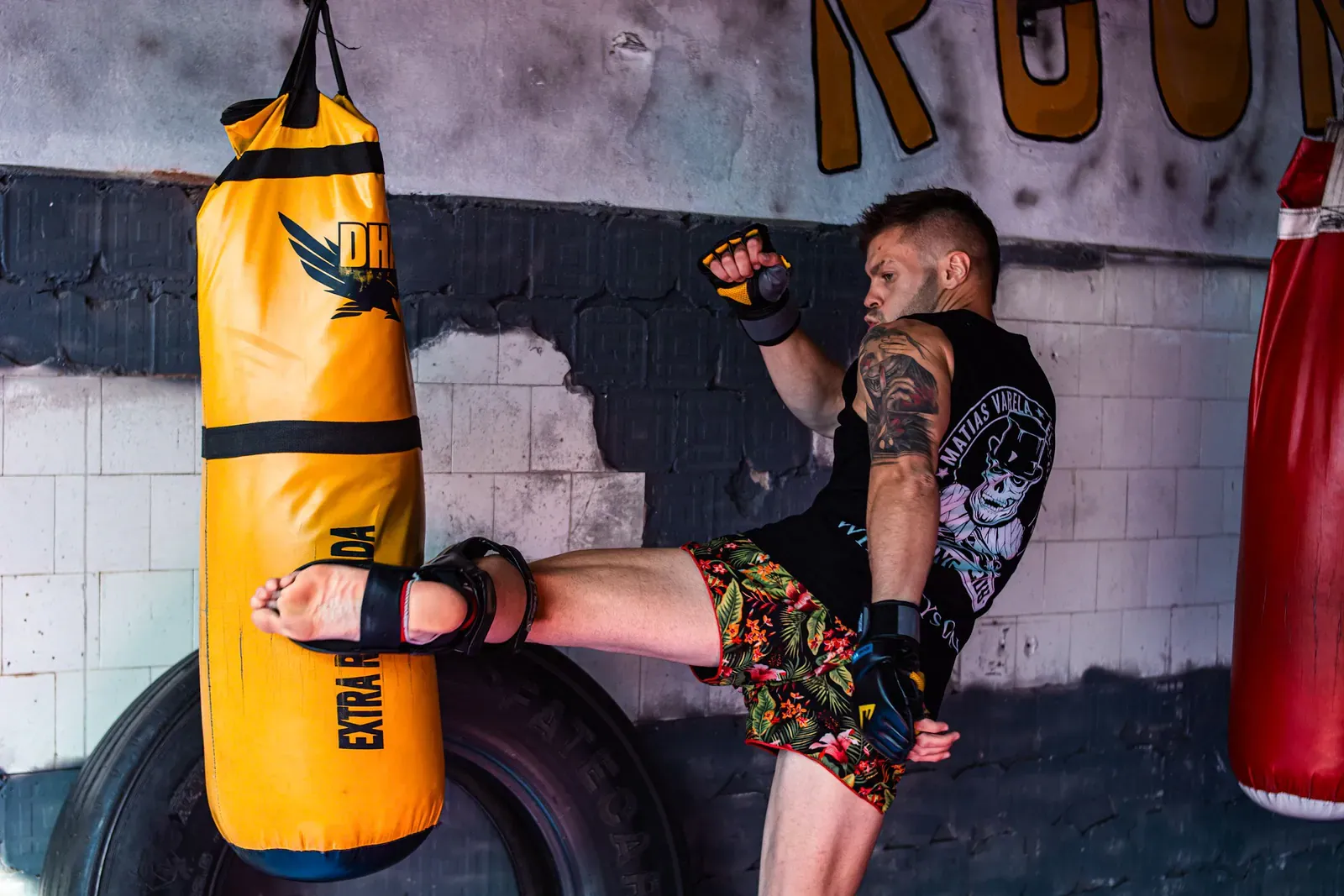
- Bagwork: combinations and power development on the heavy bag.
- Pads with a trainer: the technical core of the session (see below).
- Clinch work: close-range control, off-balancing and knees, usually with a partner.
- Conditioning: sit-ups, push-ups, sometimes shin conditioning or partner drills, to close the session.
A single gym visit rarely covers all seven in one sitting for a drop-in class; foreigner-oriented gyms typically compress this into a 60-90 minute class built around pads and bagwork, with running and heavy conditioning left as optional add-ons.
Pads: the price and the point
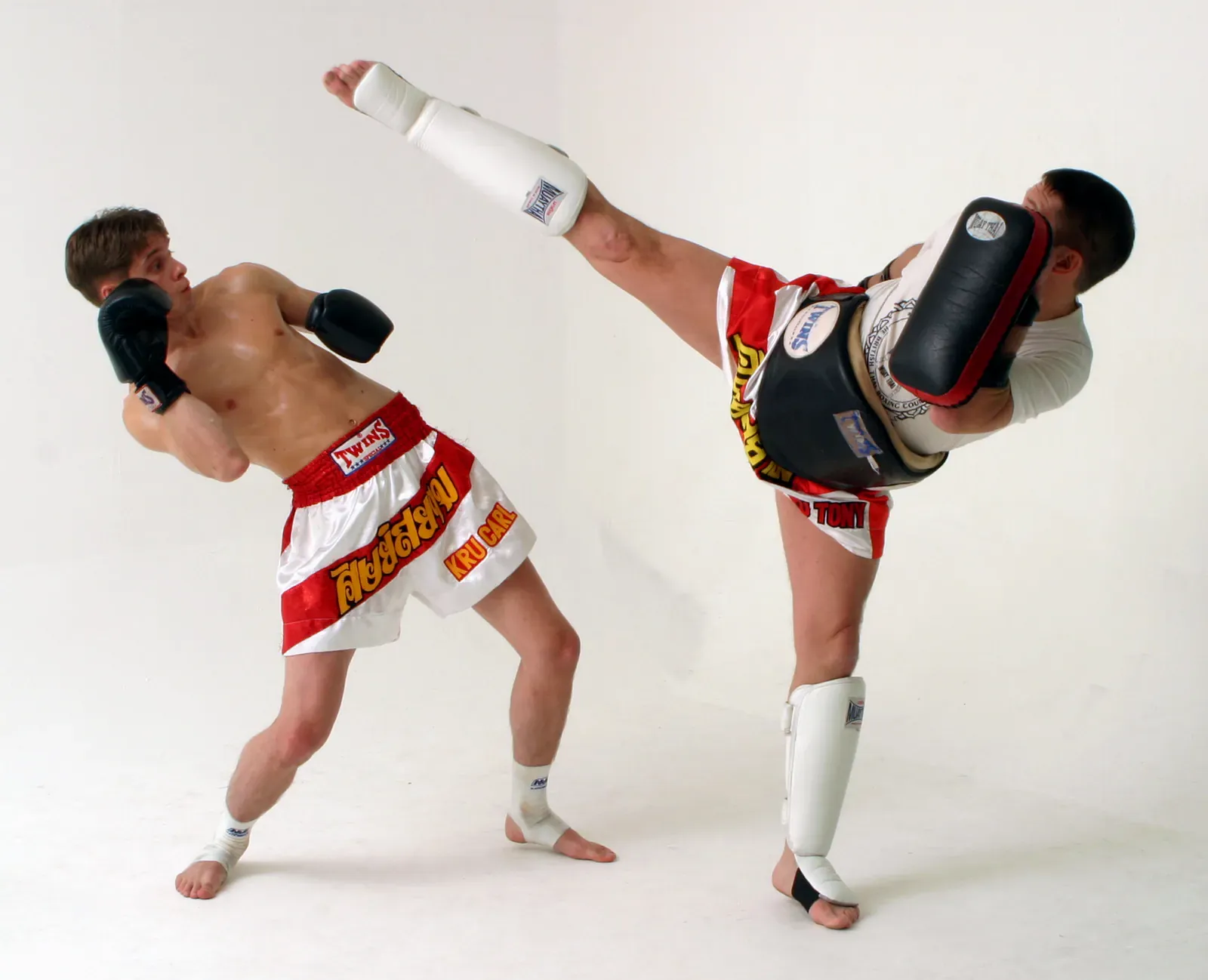
Pad work, combinations held and called by a trainer wearing Thai pads, is the core of Muay Thai instruction. It’s where technique is corrected in real time, timing is built, and a trainer reads your ability and adjusts the pace. Everything else in a session supports this ten-to-fifteen-minute block.
| Format | Indicative price (2026) | Notes |
|---|---|---|
| Drop-in group class | ฿400-900 (approx. $11-25) | Usually includes shared pad rounds with a trainer during the class |
| Weekly unlimited | ฿1,800-3,500 (approx. $50-95) | Common at foreigner-oriented gyms; good for a short trial before committing longer |
| Monthly unlimited | ฿6,000-15,000 (approx. $165-410) | Wide range by area and gym polish; traditional camps often sit at the lower end |
| Private pads (per session) | ฿500-1,500 (approx. $14-41) | One-on-one with a trainer, on top of or instead of group class fees |
Treat every figure here as an indicative 2026 range, not a quote: confirm current pricing directly with the gym before you commit. Areas with more tourist traffic and English-speaking staff generally sit at the higher end; smaller neighbourhood gyms further from the centre are usually cheaper, sometimes markedly so.
Two sessions a day: the rhythm few beginners should attempt in week one
Long-stay fighters and serious hobbyists often train twice daily, a lighter morning session and a heavier evening one, because that’s the rhythm a working camp runs on. It is not a target for someone arriving with no base fitness. Two sessions a day, in Bangkok’s heat, on a body that hasn’t adapted to Thai pad rhythm or the volume of low-impact-but-constant movement, is a fast route to shin splints, tendon strain and burnout in the first fortnight.
A more realistic build for a first few weeks: four to five single sessions a week, adding a second daily session only once your joints, skin (shins in particular) and sleep are coping well with the first. If you’re planning a stay of a month or longer, see the companion piece on budgeting and structuring a longer training stay for a week-by-week approach that avoids the overtraining trap.
Sparring, clinching and how hard is too hard
Sparring in a well-run Bangkok gym is technical, not a fight: light contact, focused on timing and reading an opponent, dialled up only between partners who both want more. If a trainer or partner is hitting you significantly harder than you’re hitting them, or harder than feels sustainable for the rest of the session, it is entirely normal and expected to say so or to step out. No serious gym penalises a beginner for controlling sparring intensity; a gym that pressures you into harder contact than you want is a red flag, not proof of authenticity.
Clinch work is a distinct skill, close-range balance, off-balancing, and knee strikes, and looks rougher than it is because of how much contact and grip is involved. It’s usually taught progressively, starting with balance and control drills before any live clinching. As with sparring, if it feels beyond your current ability or you’re carrying a niggling injury, saying so to the trainer is the norm, not a weakness.
Heat, hydration and acclimatising
Bangkok’s heat is a genuine limiting factor, not a minor inconvenience. Daytime temperatures with high humidity make outdoor running and midday sessions substantially harder than the same workout would be at home, and heat exhaustion is a real risk for anyone training hard in the first week without acclimatising. Morning and evening sessions are cooler than midday ones for a reason: most gyms schedule around this.
Plan on drinking considerably more water than feels necessary, replacing electrolytes on double-session days, and expecting your first week’s performance to be well below your usual fitness level purely because of the climate. This isn’t a sign you’re unfit; it’s a normal adaptation curve that typically improves markedly after ten to fourteen days.
Choosing a gym by area and commute
Gym clusters exist across the city, and commute matters more than most people expect once you’re training four or five times a week.
- Sukhumvit corridor (BTS Sukhumvit line, Ekkamai to On Nut): a dense concentration of foreigner-oriented and hybrid gyms, easy access for anyone based in central or eastern Bangkok.
- Chatuchak and the northern BTS/MRT interchange area: includes some longer-established traditional camps, generally quieter and less tourist-facing.
- Around the MRT Blue Line (Huai Khwang, Lat Phrao, Phra Ram 9): a mix of neighbourhood gyms serving local trainers, generally lower prices, less English instruction.
- Thonburi side (across the river, served by BTS Silom line extensions and connecting transport): some well-regarded traditional gyms, usually needing a longer, multi-leg commute from central Bangkok.
If you’re training most days, pick by commute time first and gym reputation second: a 15-minute journey to a good-enough gym beats an hour each way to a slightly better one, especially once fatigue accumulates over weeks.
Your first session: what to bring, hygiene, and injuries
Most gyms rent or sell gloves, wraps and shin guards on-site, so a first trial session needs little more than: comfortable shorts (Muay Thai shorts if you have them, athletic shorts otherwise), a T-shirt or rash guard, a full water bottle, a towel, and sandals for the walk between mats and changing areas. Don’t wear shoes on the training mat. This is universal.
Hygiene matters in a hot, shared-equipment environment: bring your own hand wraps as soon as you’re training more than once, wash them after every session, and treat any cuts or skin issues (especially on the shins) seriously rather than training through them, since sweat and matting surfaces don’t mix well with open skin. For anything beyond minor knocks, a suspected sprain, a joint that doesn’t settle after a few rest days, persistent shin pain, see a clinician rather than a trainer; gyms are not equipped to diagnose injuries, and Bangkok has several sports-medicine and physiotherapy clinics used regularly by the training community.
Training as a woman, an older beginner, or a remote worker
Women train at every serious gym in Bangkok, including sparring and clinching alongside men at most; a small number of camps separate clinch partners by size or preference rather than gender specifically. If a gym’s culture feels dismissive or unsafe, that’s a reason to try another: there are enough gyms in the city that nobody needs to tolerate one that doesn’t fit.
Older beginners are common too, particularly among the long-stay nomad and retiree population this city attracts, and a good trainer scales pad intensity to the person in front of them rather than running everyone through the same drill at the same speed. Say your age and any joint history upfront; it changes nothing about being welcome, and it helps a trainer pace you sensibly.
For remote workers building training around a work schedule, the practical answer is usually a morning or late-afternoon single session on work days, saving any second session or harder sparring for days without calls. Gyms near coworking-dense areas make this easier logistically than a longer commute to a further-out traditional camp.
Gym etiquette: respect, the wai kru, and how to behave
- Wai kru, the ritual dance performed before a fight to honour a fighter’s trainers and lineage, is not something a beginner is expected to perform, but understanding what it means (respect for teachers, not decoration) matters if you’re a guest in a gym that trains fighters.
- Shoes off the mat, always, without exception.
- Don’t step over equipment or another person’s outstretched legs: walk around. This is a real cultural point in Thai gyms, not a superstition to shrug off.
- Address trainers respectfully: “Kru” (teacher) before a name is the standard and always well received, even from someone who speaks no other Thai.
- Tipping after a private pad session is customary, not obligatory: a modest amount handed directly to the trainer, particularly for a private session, is the norm at most gyms and appreciated without ever being demanded.
- The head is considered the most respected part of the body: avoid casually touching a trainer’s or training partner’s head, even in a friendly gesture.
None of this is complicated, and gyms that host foreign trainers regularly are generally forgiving of small missteps: the point is making the effort, not achieving fluency in gym customs on day one.
Trial classes: what to ask before you commit
Almost every gym worth training at will let you take a single drop-in class before buying a weekly or monthly package, and doing this before committing money is worth the small extra cost every time. Useful questions to ask, or simply observe, during a trial: how many pad rounds did you actually get with a trainer, versus time spent hitting a bag alone? Did the trainer call combinations and correct your technique, or just hold the pads passively while you hit them? How big was the class relative to the number of trainers holding pads: a ratio of six or eight students to one trainer means far less individual attention than a ratio of three or four to one.
It’s also worth watching who else is training at the same time slot. A gym with visible intermediate or advanced students, or fighters doing their own sessions alongside the beginner class, usually has a stronger overall training culture than one where every session is exclusively populated by first-week tourists. Neither tells you everything, but together they give a much clearer picture than a gym’s marketing photos or reviews ever will.
Physio, injuries and the clinics people actually use
Bangkok has a well-developed sports medicine and physiotherapy scene, partly because of how many long-stay trainers, fighters and expats live here year-round. For anything beyond a minor bruise or muscle soreness, a joint that swells, pain that doesn’t ease after a few rest days, numbness, or a suspected fracture, see a doctor or physiotherapist rather than asking a trainer to diagnose it; trainers are coaches, not clinicians, and pushing through an injury on their advice alone is a common way a training trip ends early. Larger hospitals in the city run sports medicine departments used to treating combat-sport injuries specifically, and independent physiotherapy clinics near the main training areas are common enough that a gym can usually point you to one nearby.
Shin conditioning deserves a specific note: the low, dull ache long-stay trainers describe on their shins is normal adaptation, but sharp pain, visible swelling, or a lump under the skin is not something to train through: it’s a sign to rest and, if it persists, get it looked at. Rushing shin conditioning by sparring or doing heavy bag work too early, before the bone and soft tissue have adapted, is one of the more common ways beginners injure themselves in their first few weeks.
Spotting a gym coasting on tourists
Some gyms in heavily touristed areas have quietly shifted from teaching to processing: high class sizes with minimal individual pad time, trainers who hold pads without calling real combinations or correcting technique, a merchandise-and-photo-op atmosphere that outweighs the training itself. Signs to watch for: a trial class where you barely touch pads with a trainer, a gym that pushes photo packages or “certificate” gimmicks harder than it explains your technique, or a near-total absence of visible fighters training at the same times as the tourist classes.
The fix is simple: ask to watch a class before joining, or take a single drop-in before committing to a package. A gym confident in its teaching has no problem with either. For a sense of how the sport looks when it’s not being taught to beginners at all, see the companion piece on watching a fight night at Bangkok’s stadiums: the standard on display there is the benchmark a serious gym is training you toward, however many years away that benchmark actually is.
Common questions
How many days a week should a beginner train Muay Thai in Bangkok?
Four to five single sessions a week is a sustainable starting point for most fit adults arriving without a Muay Thai background. This allows recovery time for shins, wrists and general fatigue while still building the technical repetition needed to progress. Adding a second daily session is worth considering only after a few weeks of consistent single sessions without lingering soreness or skin issues.
Do I need experience before joining a Muay Thai gym in Bangkok?
No. Foreigner-oriented gyms and most hybrid camps run structured beginner classes with no prior experience required, and trainers are used to teaching complete newcomers. Traditional camps that primarily train fighters can still accept beginners, but the experience is less structured and better suited to someone with at least a little base fitness and comfort with unfamiliar surroundings.
How much does Muay Thai training cost in Bangkok?
Expect roughly ฿400-900 (about $11-25) for a single drop-in class, and anywhere from ฿6,000-15,000 (about $165-410) for a monthly unlimited package, depending on the gym’s location and polish. Private pad sessions typically add ฿500-1,500 (about $14-41) per session on top. Always confirm current rates directly with the gym, since prices vary by area and change over time.
Is Muay Thai training in Bangkok safe for beginners?
Well-run gyms manage contact carefully for beginners, with controlled sparring and progressive clinch introduction rather than full-contact fighting from day one. The bigger practical risks for newcomers are heat-related (dehydration, exhaustion from training in humidity without acclimatising) and overuse injuries from doing too much too soon, both of which are avoidable by pacing training realistically in the first few weeks.
Which area of Bangkok is best for Muay Thai training?
There’s no single best area: the right choice depends on your accommodation and how often you plan to train. The Sukhumvit BTS corridor has the densest concentration of foreigner-friendly gyms for anyone based centrally; areas along the MRT Blue Line and further-out neighbourhood gyms tend to be cheaper and less geared toward foreigners. Picking somewhere with a short, reliable commute matters more day to day than picking the single most reputable gym across town.
Do I need to bring my own gloves and gear to Bangkok?
No: gloves, wraps, shin guards and shorts are all sold and rented widely near training areas, usually at reasonable prices, so most people buy on arrival rather than bring bulky gear. Hand wraps are worth buying early once you’re training regularly, for hygiene reasons. For a fuller breakdown of what to buy locally versus what to bring, and indicative price bands for kit, see the guide on budgeting for a longer training stay.
Can I train Muay Thai in Bangkok if I’m not very fit yet?
Yes: gyms deal with a wide range of starting fitness levels constantly, and a good trainer scales the intensity of pad rounds and drills to whoever is in front of them. The heat is a bigger initial obstacle than most people’s base fitness, so expect your first week to feel harder than it should purely because of acclimatisation, not because you’re unsuited to the sport. Building up gradually rather than matching a fitter training partner’s pace from day one is the more sustainable approach for anyone starting from a lower fitness base.
Written by
Mike Brochlowski
Founder and editor, travel photographer and designer
I'm Mike Brochlowski, a travel photographer and designer, and I currently live on Koh Samui, Thailand. I built BangkokWiki to put practical, checked information about Bangkok in one place. Every page is researched from official and primary sources, and the text names them. Where a page shows a checked date, that is when its facts were last confirmed. I also run samui69.com, a non-commercial guide to Koh Samui. If you spot an error or something out of date, tell me through the contact page and I will check it and correct the page.
Read all articles
Where to stay
Pick the area before the hotel
Traffic and heat make Bangkok distances feel longer than they look on a map, so the area shapes a trip more than the hotel does. Our guides match areas to trip types and explain the trade-offs.

Places to stay
Find a hotel
More from Things to do
- 12 min read
 7 min read
Budget Things to Do in Bangkok: What Actually Costs Money
 13 min read
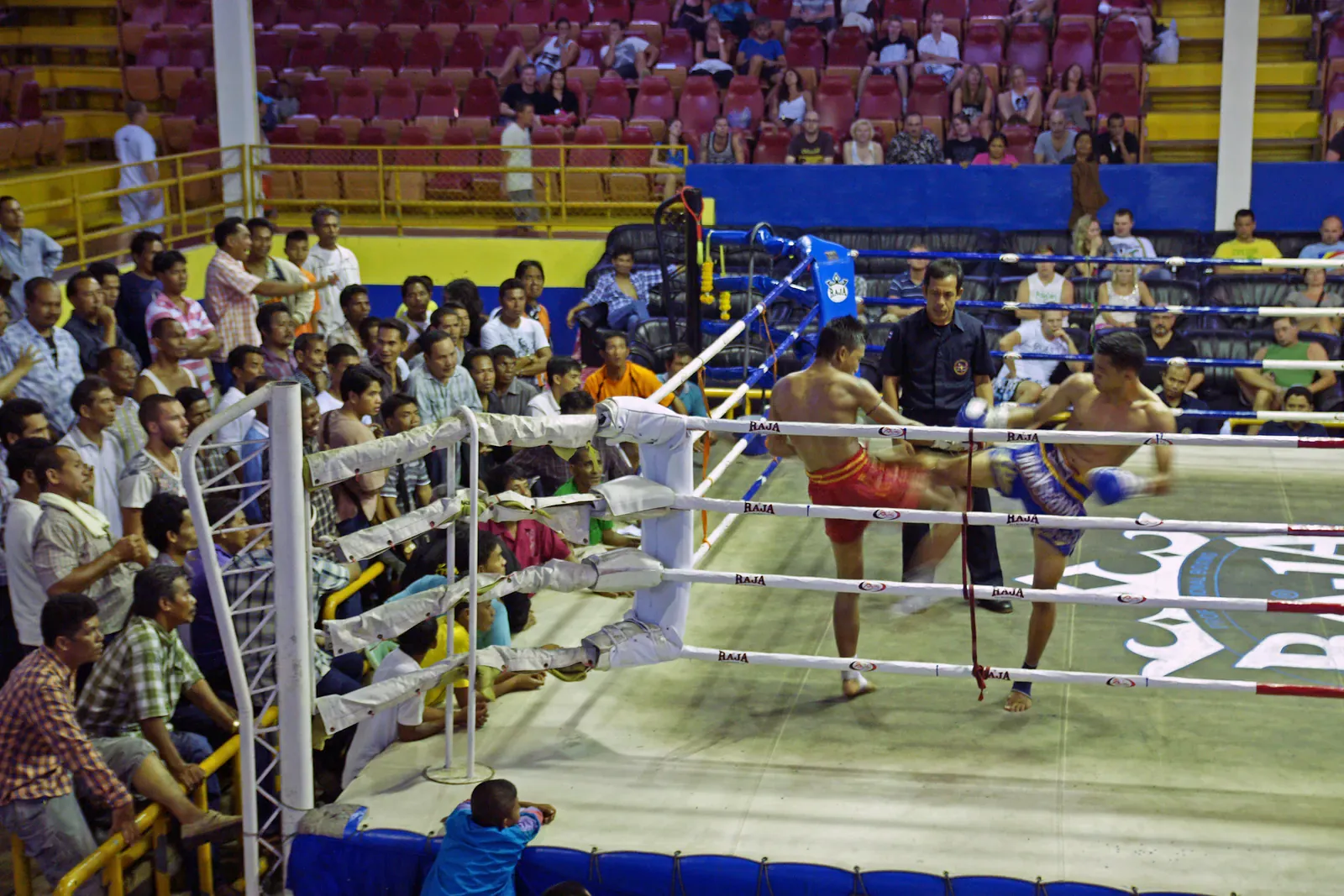
Muay Thai Stadiums in Bangkok: Tickets Guide

Newsletter
You're subscribed as