Transport
Getting Around Bangkok: The Right Strategy for Who You Are
Bangkok transport advice splits by who's asking: the best setup for a tourist, a nomad, a commuting expat, a family, a senior and a founder all differ.
On this page
There is no single best way to get around Bangkok, because “best” depends entirely on who’s asking. A 3-day tourist staying near Sukhumvit needs a different setup than a family with a stroller, a digital nomad who’ll be here for six months, or a retiree who wants to avoid stairs. Every generic “here’s how to get around Bangkok” guide gives one answer for all of them. This one doesn’t.
What actually changes the answer
Five things decide which combination of BTS, MRT, boats, taxis, Grab and walking suits you: how long you’re staying, how much luggage or mobility support you need, whether your days follow a fixed route or a scattered one, your tolerance for heat and crowds, and your budget per trip versus per month. A three-day itinerary optimizes for not wasting daylight on a wrong transfer; a two-year stay optimizes for a routine that doesn’t wear you down by month three. Neither profile is more “correct,” they’re just answering different questions, which is why one generic recommendation can’t serve both. Match your profile below, then check the scenario table and scorecard further down for a side-by-side view.
The short-stay tourist
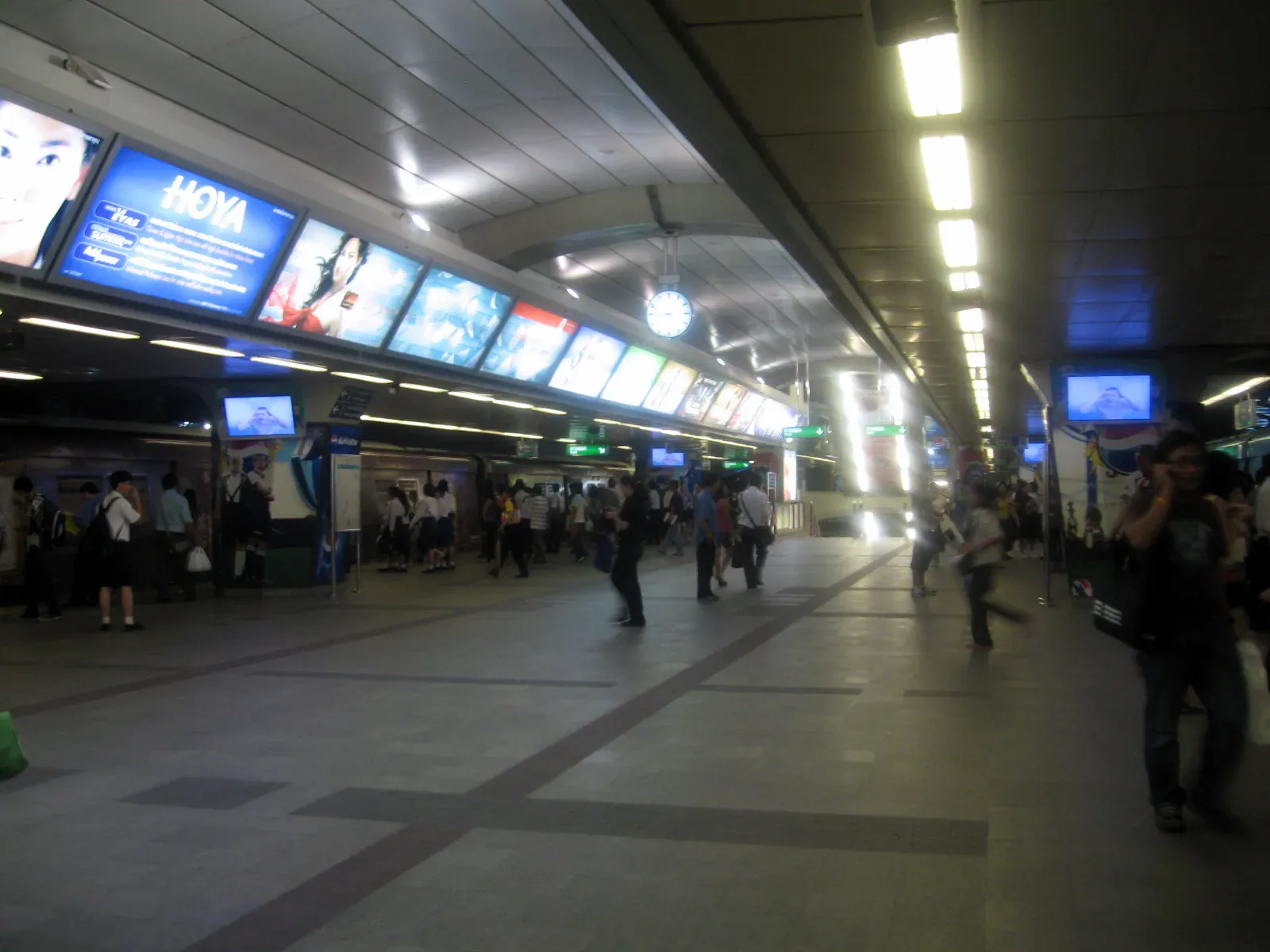
If you’re in Bangkok for a handful of days, your trips split into two kinds: the modern city (rail-served) and the Old Town and river (rail doesn’t reach it). The BTS and MRT cover Sukhumvit, Silom, Chatuchak and the shopping core well; the Grand Palace, Wat Pho, Wat Arun and Chinatown sit along the Chao Phraya River, where the rail network barely touches. Most short visits work best combining a BTS/MRT day for the modern city with a river-boat-plus-walking day for the Old Town, and Grab for anything after dark or when your feet are done. For how far that walking day realistically goes in Bangkok’s heat, see Is Bangkok walkable?
Airport arrival sets the tone: the Airport Rail Link from Suvarnabhumi to Phaya Thai (BTS interchange) runs about 26 minutes for a fare commonly cited around 45 THB (~1.30 USD, checked September 2026), genuinely competitive with a taxi once you count rush-hour traffic. Suvarnabhumi Airport to Bangkok city covers that first leg in full, and how to use Grab in Bangkok covers the app you’ll lean on for everything the trains don’t reach.
The digital nomad staying months, not days
For a remote worker settling in for weeks or months, the question shifts from “what’s the best single trip” to “what’s the sustainable daily setup.” Most nomads anchor to one BTS-served neighbourhood, commonly Sukhumvit, Ari or a Sathorn-adjacent pocket, and build a routine of walking or a short motorbike-taxi hop to a café or coworking space, rail for anything further, and Grab for late nights or heavy shopping. The last mile in Bangkok covers how to judge that walk-versus-motorbike-taxi call for a short daily hop.
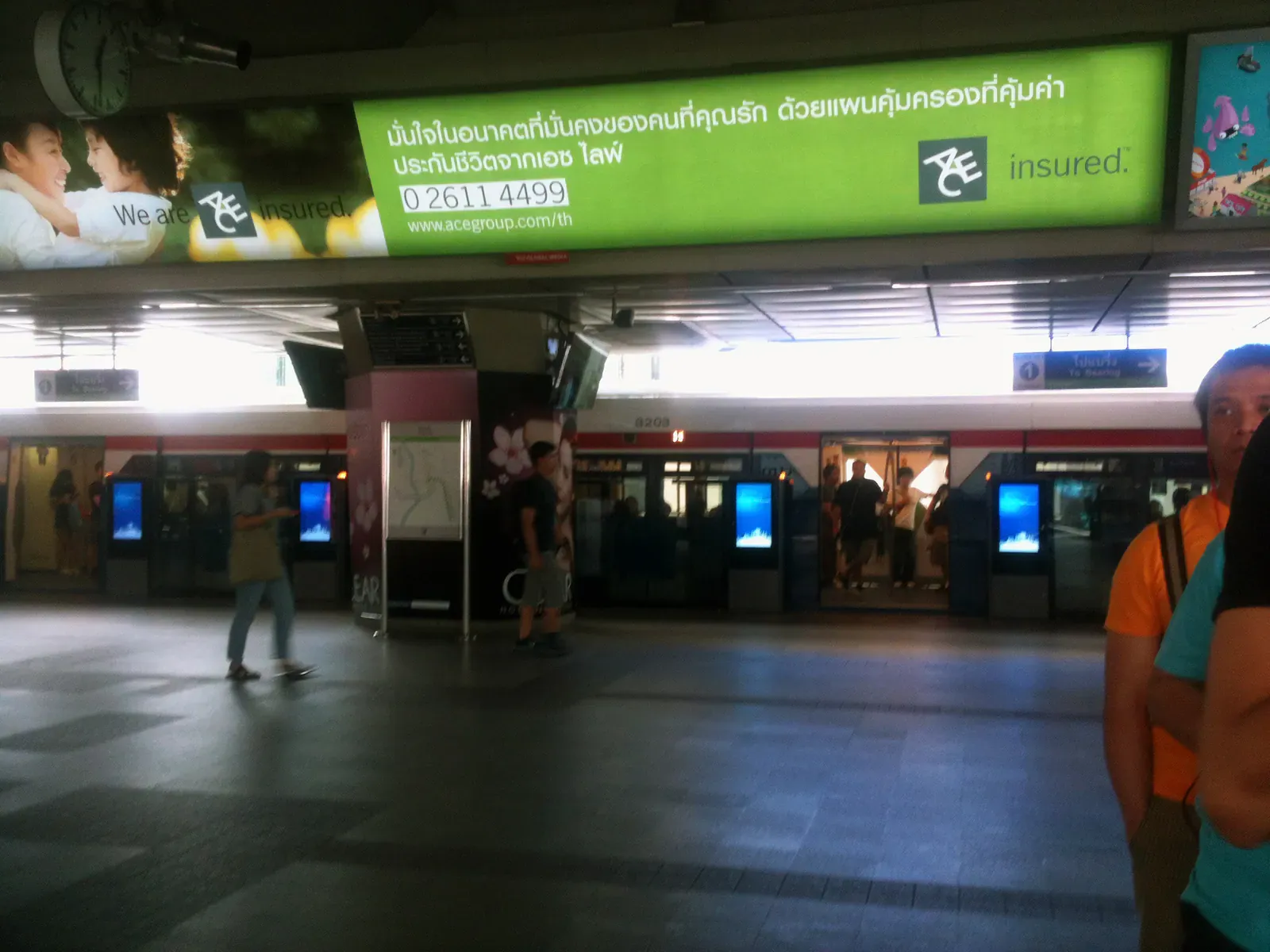
Commonly cited monthly transport budgets for this pattern land somewhere in the 1,500-3,000 THB (~45-90 USD, checked September 2026) range, covering a stored-value rail card plus occasional Grab rides, though this varies with how far your accommodation sits from a station. What transport actually costs in Bangkok breaks scenarios like this down in more detail.
The relocating expat with a daily commute
Once transport becomes a five-days-a-week fact of life rather than an occasional decision, the calculation changes again. Expats commuting into a fixed office benefit most from choosing where they live around their commute line, not the other way round: an address directly on the BTS Sukhumvit or Silom line, or an easy motorbike-taxi hop from one, turns a potential hour-long ordeal into a predictable 20-40 minutes.
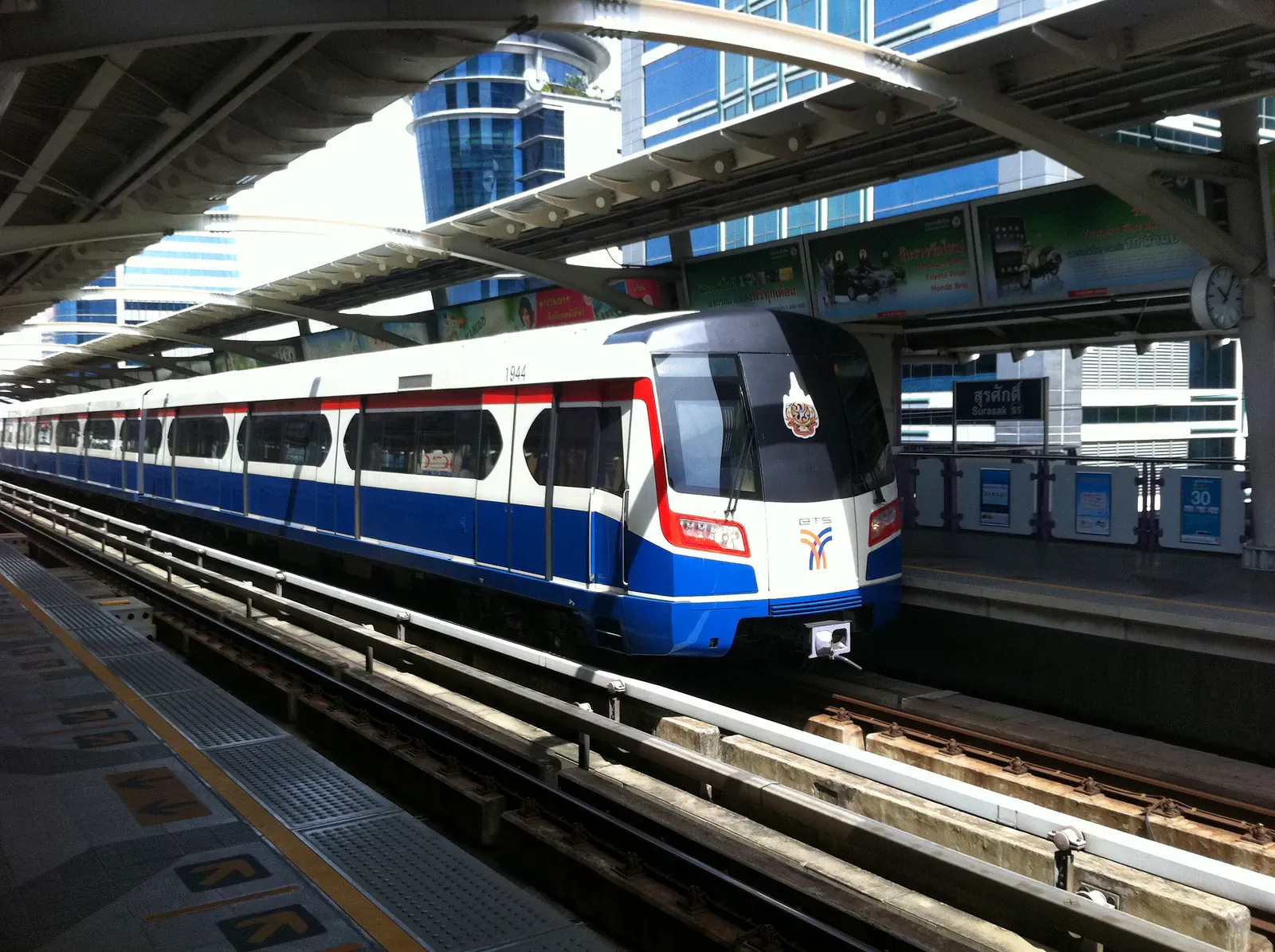
Grab replaces the metered-taxi negotiation almost entirely for this group, used for the trips rail doesn’t cover rather than as a daily commute tool, since a car sitting in the same traffic as everyone else rarely beats the train on a rail-served route. For the mechanics of a reliable Grab setup, see how to use Grab in Bangkok.
The family with kids
Family days in Bangkok run on a different clock: fewer, longer outings, more luggage or stroller gear, and less tolerance for a long, hot, uncertain walk between transport legs. BTS and MRT lift access has improved substantially at many stations, but it isn’t universal, so checking step-free access at both your origin and destination stations before you commit to rail, rather than after you’re stuck at the bottom of an escalator with a stroller, is worth the two minutes.
For multi-stop days, especially with young children, Grab or a private transfer for the harder legs (arrival day, a day with nap-time pressure, a return trip with shopping) tends to beat forcing a rail connection that needs a transfer and a walk. Thai school holidays, roughly late March to mid-May and several weeks in October, bring domestic tourism surges that crowd both attractions and transport, worth factoring into timing if you have flexibility.
The senior or retiree
Heat and stairs are the two real constraints, not stamina in the abstract. The practical pattern that works well: treat mornings and early evenings as the windows for anything active, retreat to air-conditioned malls, cafés or your hotel through the hottest midday hours, and lean on rail plus Grab rather than long walks in direct sun.
Not every BTS or MRT station has a lift, and where one exists it sometimes serves only a single exit, meaning a long walk around the station perimeter if you surface on the wrong side. For any station on your planned route, it’s worth checking step-free access in advance rather than discovering the gap at the top of a staircase; where it’s missing, a taxi or Grab removes the question entirely.
The founder or business traveler on a tight schedule
Back-to-back meetings across different parts of the city reward paying for certainty over saving on fare. Grab or a hired car with a driver waiting between appointments costs more than rail but removes the two things that wreck a meeting schedule: an unpredictable walk to a station and a squeeze through rush-hour crowds in business clothes. Rail still wins for any single leg that runs parallel to a line during peak traffic hours, so the practical approach for most business travelers is rail for the predictable legs and Grab for everything with a tight window either side.
The trade-off sharpens further when a trip involves back-to-back venues on opposite sides of the city, a hotel meeting followed by a client site an hour away by road. Building a 20-30 minute buffer into a schedule that looks tight on a map, rather than trusting a navigation app’s best-case estimate, is the difference between arriving composed and arriving apologising for traffic.
Old Town and the river: the same puzzle for everyone
Regardless of traveler type, one thing doesn’t change: Rattanakosin Island, the Grand Palace, Wat Pho, Wat Arun and much of Chinatown sit along the Chao Phraya River, outside the BTS and MRT’s reach. Every profile above needs the same fallback here, the Chao Phraya Express Boat combined with walking or a short Grab leg, and it’s worth planning that day separately from your rail-served days rather than trying to force one mode to cover the whole trip.
Five scenarios, side by side
| Traveler | Primary mode | Backup for gaps | Biggest risk | Typical spend |
|---|---|---|---|---|
| 3-day tourist | BTS/MRT for the modern city | River boat + Grab for Old Town | Assuming rail reaches the temples | Per-trip fares, low overall |
| Digital nomad (months) | Walking + short motorbike-taxi hops | Rail for longer trips, Grab at night | Underestimating heat fatigue on daily walks | ~1,500-3,000 THB/month |
| Commuting expat | BTS/MRT on a fixed line | Grab for off-line errands | Choosing housing off the rail grid | Rail pass plus occasional Grab |
| Family with kids | Rail where lifts are confirmed | Grab/private transfer for luggage days | A missing lift mid-journey | Higher per-trip, fewer trips |
| Senior/retiree | Rail plus Grab, timed around heat | Taxi for anything uncertain | Assuming every station has a lift | Moderate, discount-eligible on MRT |
| Founder/business traveler | Grab or hired car between meetings | Rail for predictable parallel legs | Cutting a road-transport connection too close | Higher, paid for certainty |
Which mode fits you, at a glance
- BTS/MRT rail best for nomads and expats on a fixed daily route
- 5 out of 5
- Grab or taxi best for families, seniors and business travelers
- 4 out of 5
- Walking best for short-stay tourists based in one neighbourhood
- 3 out of 5
- Motorbike taxi good for solo nomads and expats, a poor fit for families or seniors
- 3 out of 5
- Chao Phraya Express Boat best for tourists targeting the Old Town and riverside
- 3.5 out of 5
Editorial rating, 1 to 5, for general day-to-day fit. Criteria: reach, comfort with luggage or mobility needs, and predictability. See the scenario table above for trip-specific choices.
The one mistake each type tends to make
- Tourists assume the elevated rail network reaches the temples. It doesn’t; the Old Town needs a boat leg.
- Digital nomads underestimate how much a 15-minute walk in Bangkok heat drains a working day, and end up overspending on Grab out of avoidable fatigue.
- Commuting expats pick an address for its character rather than its line, then discover the commute they signed up for.
- Families commit to a rail connection with a stroller before checking both ends have step-free access.
- Seniors assume the BTS senior discount works the same way as the MRT’s; it doesn’t for foreign passport holders.
- Founders and business travelers cut a road-transport connection too close between meetings, forgetting traffic doesn’t care about a calendar.
Common questions
What’s genuinely the best single answer if I only remember one thing?
Rail for any trip that runs parallel to a BTS or MRT line, Grab or a taxi for everything else, and the Chao Phraya Express Boat for the Old Town. Everything else in this guide is how that general rule bends for your specific situation.
Does Bangkok’s transport work without ever needing a car?
Yes, for the large majority of residents and visitors. A car adds parking costs and sits in the same traffic as everyone else; the combination of rail, Grab, walking and boats covers nearly every trip type covered above without one.
How different is a 3-day trip from a 2-year stay, transport-wise?
Substantially. A short trip optimizes for not wasting sightseeing time; a long stay optimizes for a sustainable, affordable daily routine, which usually means living closer to a station rather than relying on Grab for a daily commute.
Where does buying a motorbike actually make sense?
Rarely, for the traveler types covered here. It suits residents with a specific need to reach areas well outside the rail network regularly, and comes with traffic, licensing and safety considerations well beyond what this guide covers; most visitors and even most expats are better served by the combination above.
Is Bangkok transport accessible for wheelchair users?
Partially. Newer BTS and MRT stations generally have lifts; older ones sometimes have only one, covering a single exit, or none. Taxis and Grab cars remove the variable entirely and are the more reliable choice when step-free access at both ends isn’t confirmed.
Written by
Mike Brochlowski
Founder and editor, travel photographer and designer
I'm Mike Brochlowski, a travel photographer and designer, and I currently live on Koh Samui, Thailand. I built BangkokWiki to put practical, checked information about Bangkok in one place. Every page is researched from official and primary sources, and the text names them. Where a page shows a checked date, that is when its facts were last confirmed. I also run samui69.com, a non-commercial guide to Koh Samui. If you spot an error or something out of date, tell me through the contact page and I will check it and correct the page.
Read all articles
Where to stay
Pick the area before the hotel
Traffic and heat make Bangkok distances feel longer than they look on a map, so the area shapes a trip more than the hotel does. Our guides match areas to trip types and explain the trade-offs.

Places to stay
Find a hotel
Explore the other desks
More from Transport
- 9 min read
 11 min read
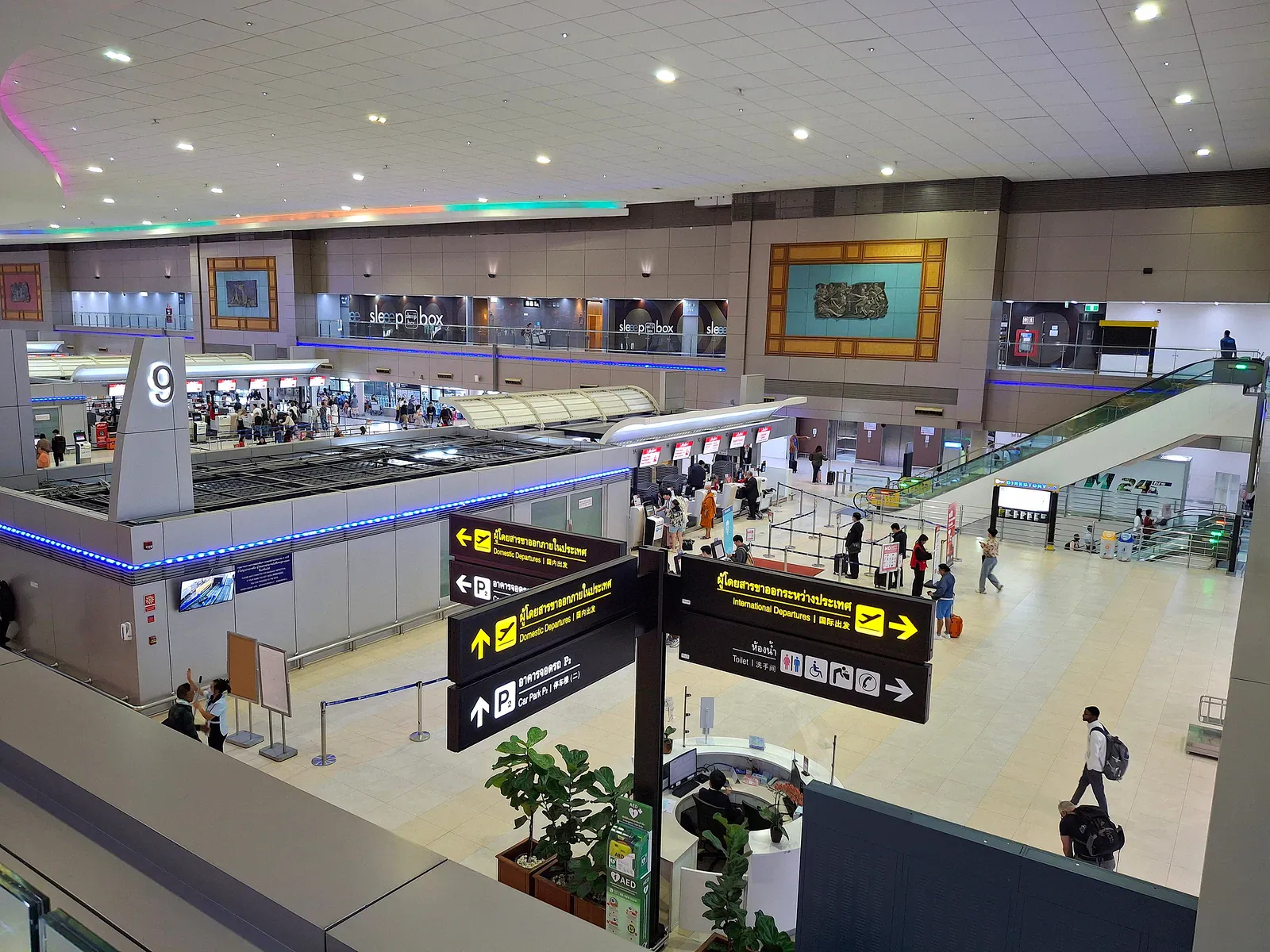
Suvarnabhumi Airport to Bangkok City Guide
 9 min read
Bangkok's Yellow and Pink Line guide: stations and fares

Newsletter
You're subscribed as