Transport
Bangkok's Yellow and Pink Line guide: stations and fares
A full guide to Bangkok's Yellow and Pink Line monorails: stations, fares, interchanges with the older BTS/MRT network, and what's still being built.
On this page
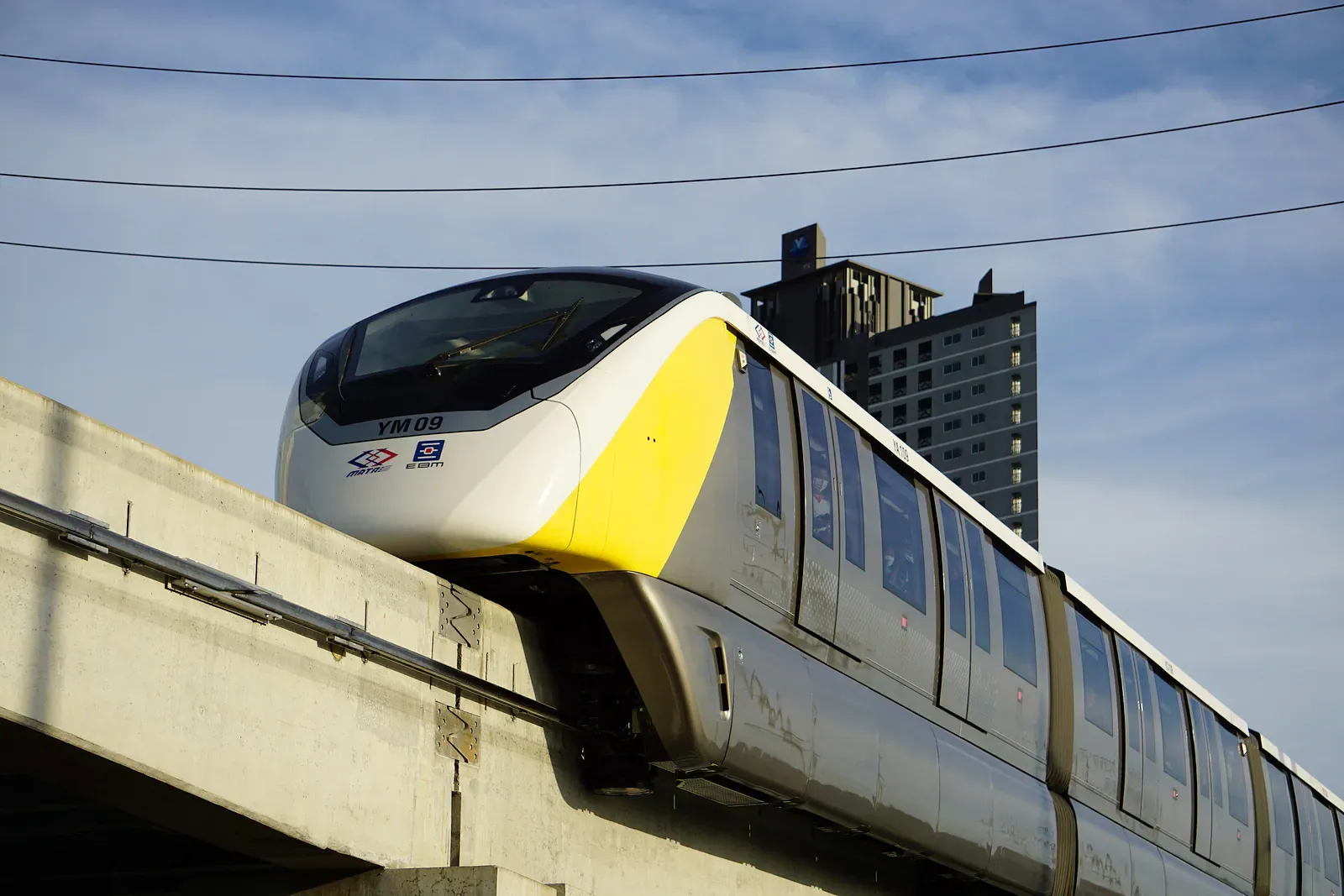
Bangkok has two fully operational rail lines that most guides, including our own network overview, simply leave out: the Yellow Line, an automated monorail running from Lat Phrao to Samrong, and the Pink Line, a longer monorail running from Nonthaburi to Min Buri. Both have been carrying passengers for years. Neither shows up in most “how to use Bangkok’s trains” write-ups, which tend to stop at the BTS Skytrain, the MRT subway, the Airport Rail Link and the SRT Red Lines.
This guide fills that gap: what each line actually covers, how their stations connect to the older network, what a ride costs, and what is still being built around them.
Why this guide exists
Our own BTS and MRT guide covers the Sukhumvit and Silom BTS lines, the Blue and Purple MRT lines, the Airport Rail Link and the SRT Red Lines in detail, and explicitly does not mention the Yellow or Pink Lines. That is not an oversight unique to this site. Competitor “Bangkok train guide” pages researched for this article do the same: they describe the original four-system network and stop there, even though both monorails now carry real, everyday ridership across eastern and northern Bangkok.
The gap matters because both lines solve a specific problem the older network does not: reaching suburbs and satellite districts that sit well outside the BTS/MRT core, without forcing a rider onto the bus or into road traffic for the whole trip.
The two lines at a glance
| Line | Length | Stations | Fully opened | Interchanges with older network |
|---|---|---|---|---|
| Yellow Line | About 28.6 km | 23, Lat Phrao (YL01) to Samrong (YL23) | 2023 | MRT Blue Line at Lat Phrao; BTS Sukhumvit Line at Samrong |
| Pink Line | About 37.3 km, plus a short Muang Thong Thani branch | 32 (30 on the main line, 2 on the branch) | 1 February 2024; branch extended May 2025 | MRT Purple Line near Nonthaburi Civic Center; a future Orange Line connection at Min Buri, not yet open |
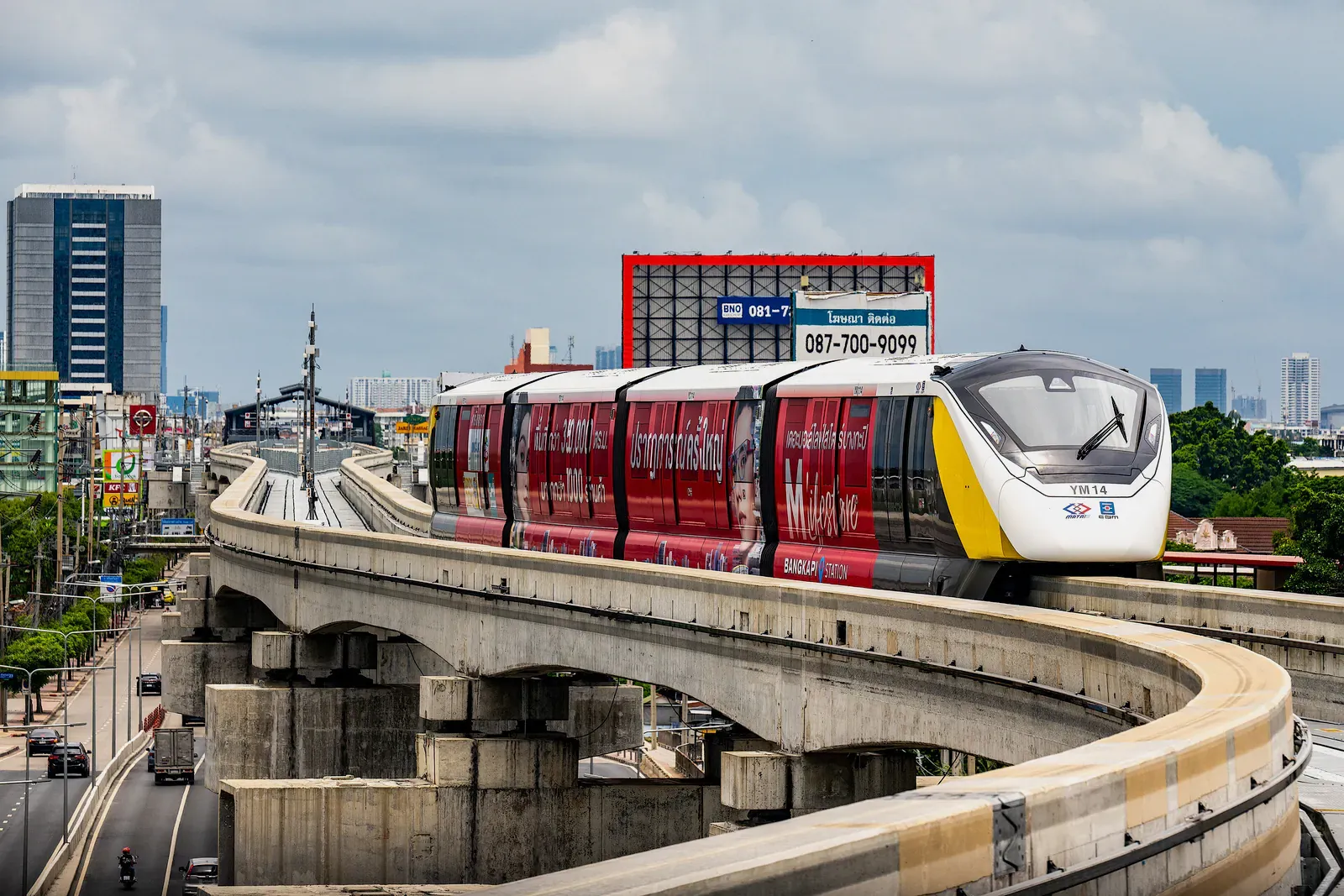
Both lines are automated, driverless monorails running on a single elevated guideway rather than dual steel rails, which is why the trains look narrower and ride slightly differently from a BTS or MRT carriage. Both are operated by Bangkok Expressway and Metro (BEM) through subsidiaries, the same group that runs the MRT Blue and Purple Lines, though that shared operator does not mean shared ticketing, which trips up more riders than almost anything else about these lines.
The Yellow Line: Lat Phrao to Samrong
The Yellow Line runs a diagonal path across eastern Bangkok, starting where Ratchadaphisek and Lat Phrao roads meet and finishing at Samrong in Samut Prakan province, just south-east of the city proper. Along the way it serves the Lat Phrao, Bang Kapi and Srinagarindra corridors, areas with real residential density that the BTS and MRT core never reached directly. Trains run from around 05:30 until midnight, every five minutes at weekday rush hour and every ten minutes off-peak.
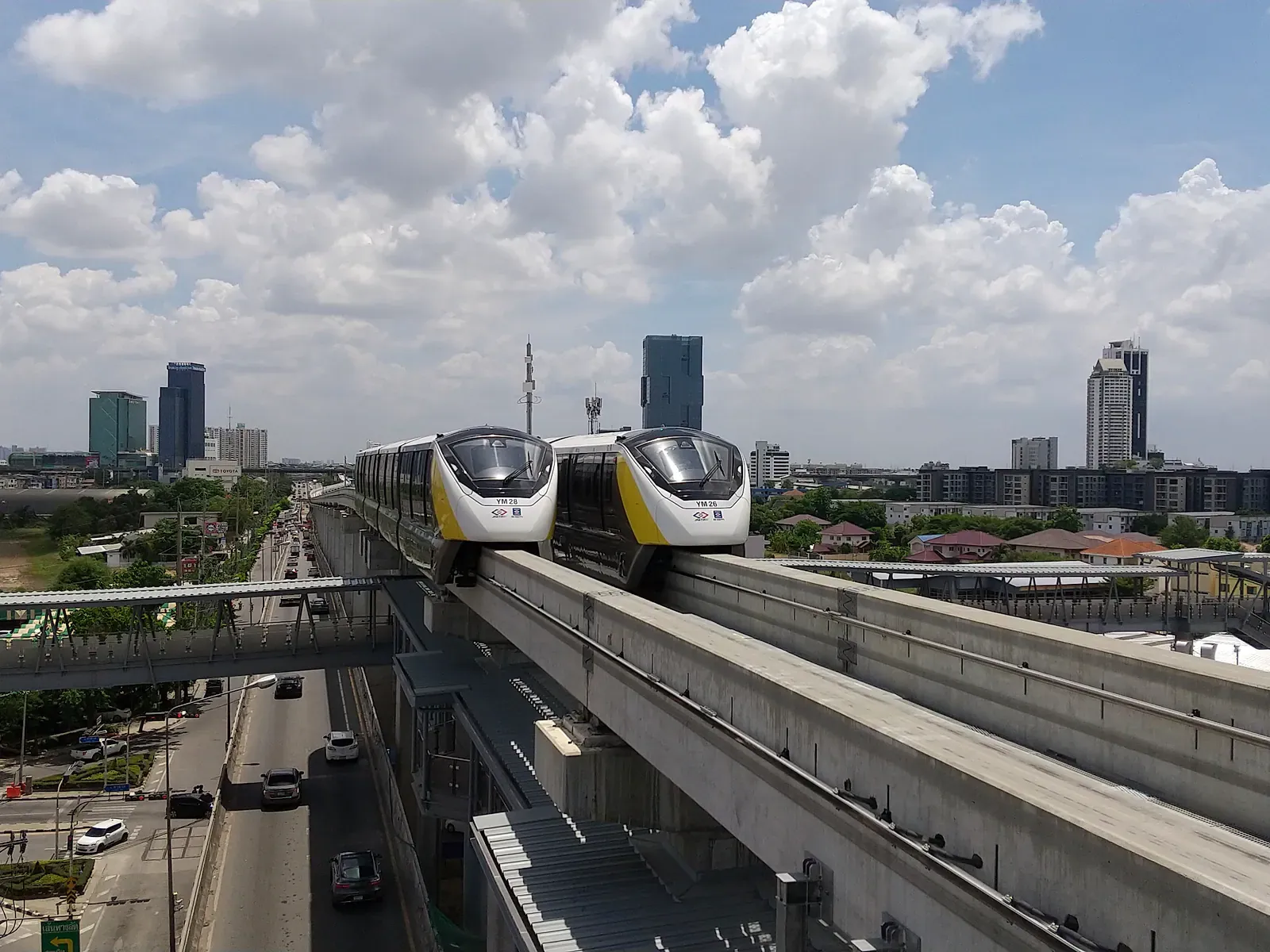
For anyone living or working along this corridor, the Yellow Line is less a novelty and more the only rail option that exists at all; before it opened, this was bus-and-road territory exclusively.
The Pink Line: Nonthaburi to Min Buri
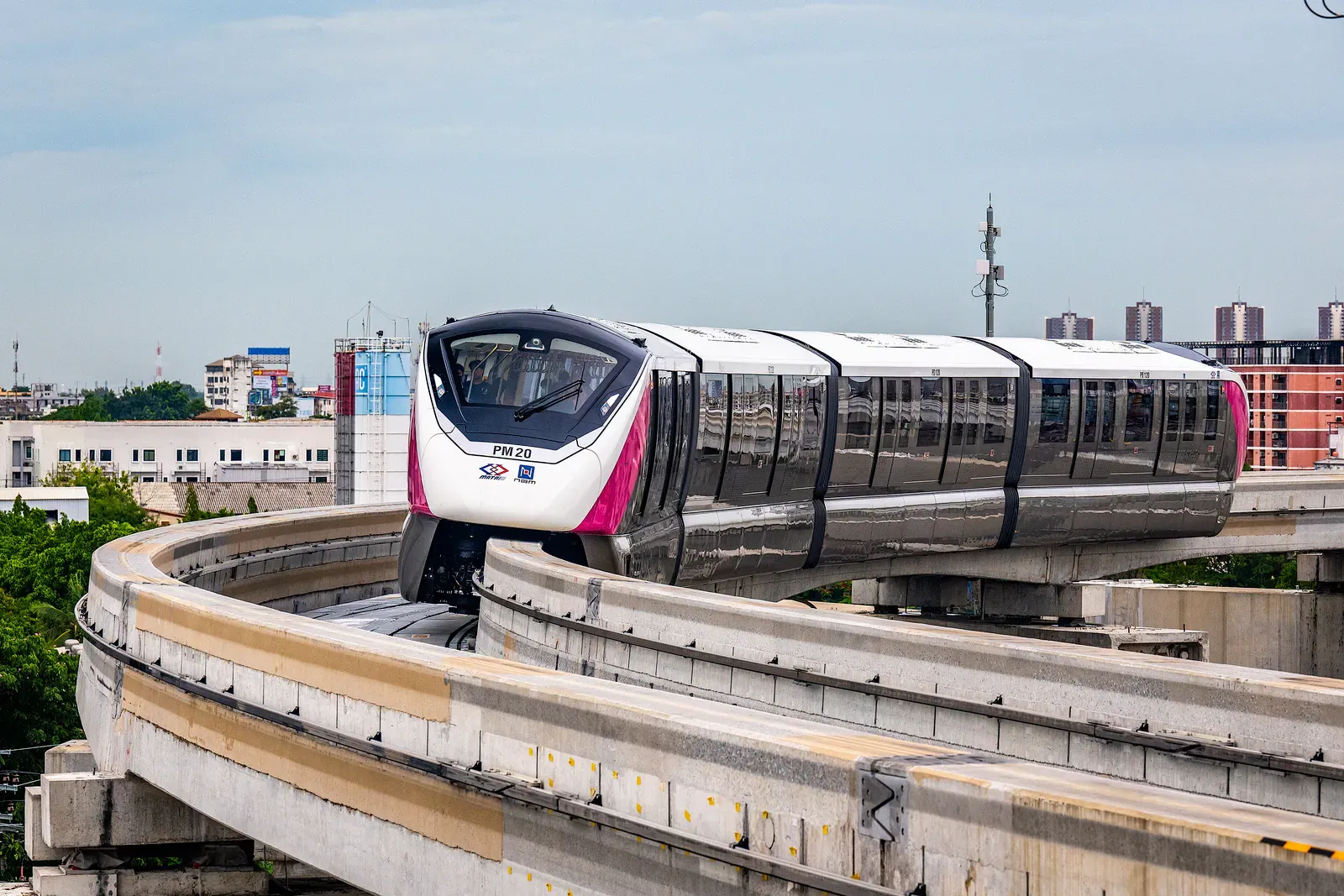
The Pink Line takes the northern arc, running from Nonthaburi Civic Center in the west, across the top of the city, to Min Buri in the east, with a short branch serving the Muang Thong Thani exhibition and residential district. At 37.3 km it is the longer of the two, and its 2024 opening (with the branch following in 2025) makes it the newer of the pair in full operation. Daily ridership was reported at close to 54,000 passengers in 2024, a figure that has likely grown as awareness of the line spreads, since a train serving a route no other rail line has ever covered takes time to become a habit for commuters used to planning around road transport.
How the fares work
Both lines use the same distance-based structure as BTS and MRT: a short hop costs little, a long ride across most of the line costs more, capped at a maximum fare once you pass roughly nine stations. For how that same logic prices out on BTS and MRT specifically, see Bangkok’s BTS and MRT fares explained.
- 1-2 stations
- 15-17 THB
- 3-5 stations
- 25-30 THB
- 6-8 stations
- 35-40 THB
- 9+ stations (max)
- 45 THB
Source: Compiled from mapa-metro.com and operator fare pages for both lines, checked September 2026
Monthly passes covering the full length of a line are also sold, worth checking if you ride the same stretch daily rather than paying per trip each time.
What “interchange” means on the Yellow Line
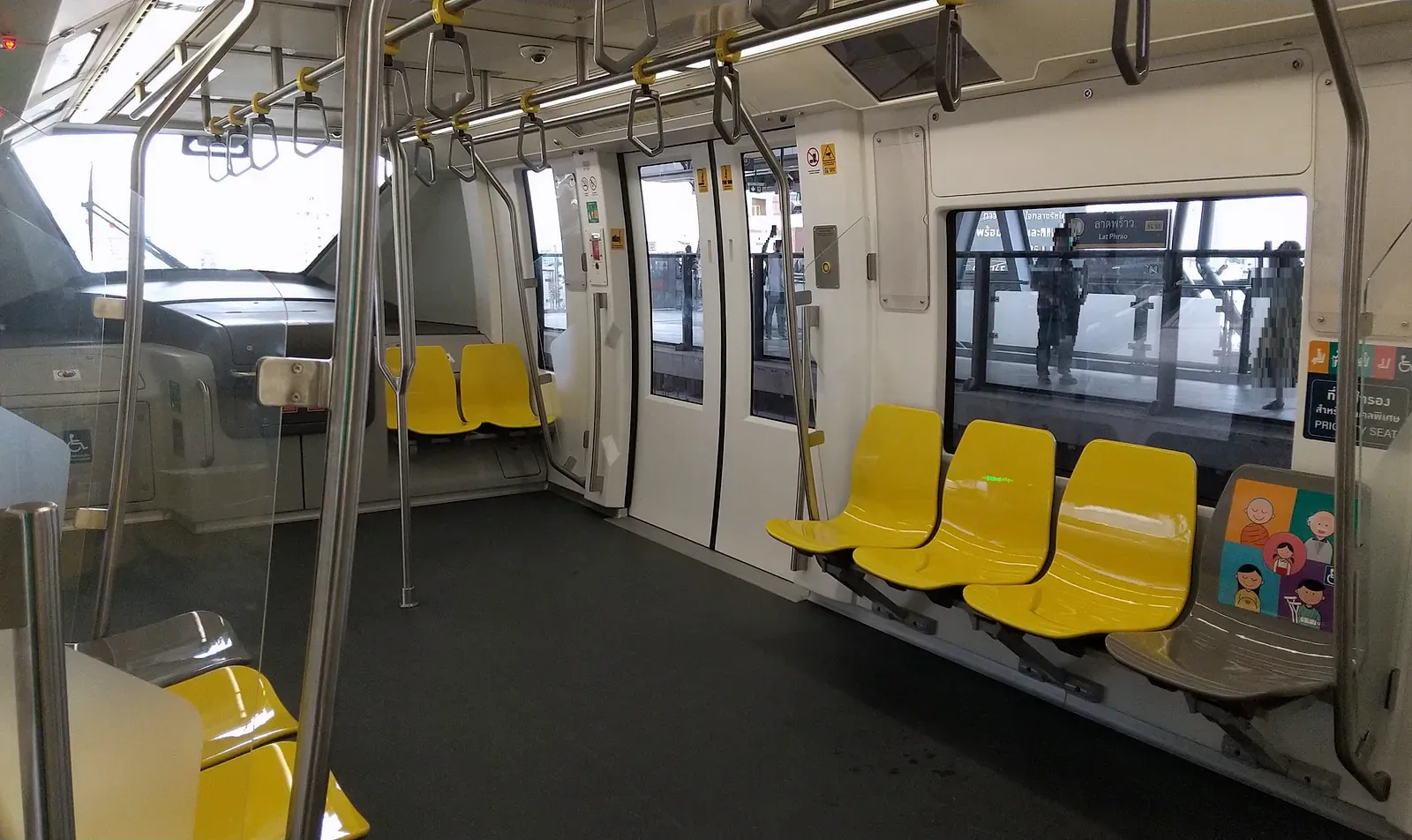
The Yellow Line’s western terminus, Lat Phrao, sits at the same station complex as the MRT Blue Line’s Lat Phrao stop, at the corner of Lat Phrao and Ratchadaphisek roads. It is a walk between concourses rather than a single shared platform, and it charges as two separate systems, exactly like a BTS-to-MRT change elsewhere in the city.
At the opposite end, Samrong connects to the BTS Sukhumvit Line’s own Samrong station, which is itself well south of the original BTS network’s core, out past Bearing. This interchange matters most for anyone whose day involves both a Sukhumvit-line commute and a trip east into the Yellow Line’s catchment, since it turns what would otherwise be a long road detour into a single, if two-fare, rail journey.
What “interchange” means on the Pink Line
The Pink Line’s western end, around Nonthaburi Civic Center, sits near the MRT Purple Line’s own stations serving Nonthaburi, giving riders coming from that side of the river a rail-to-rail option into the Pink Line’s catchment without a road leg in between. As with the Yellow Line, this is a walk-and-re-tap connection, not a shared platform or fare.
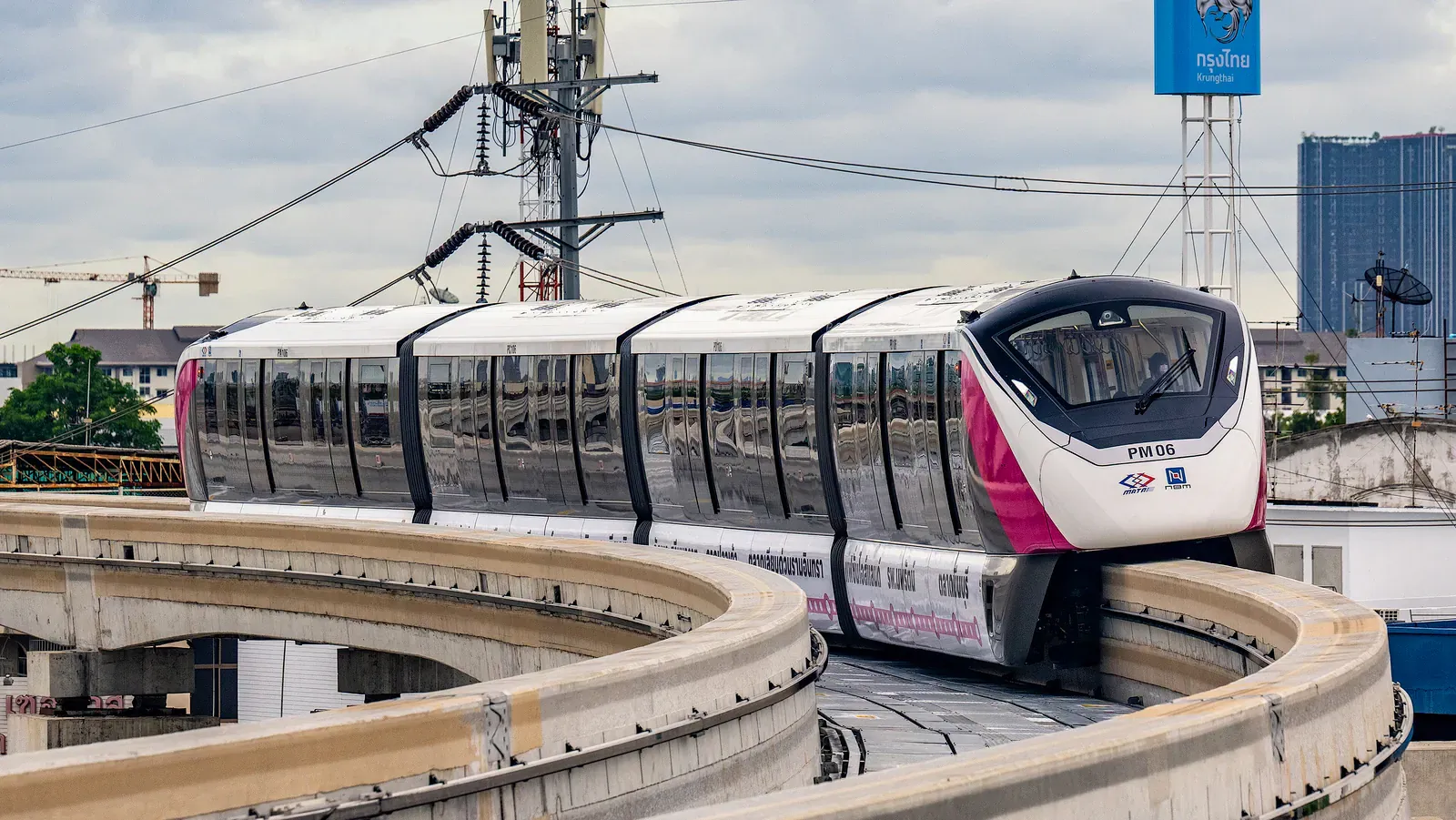
At the eastern end, Min Buri is planned as a future interchange with the still-unopened Orange Line, though as of this guide’s research that connection exists only on planning maps, not on the ground; treat any “interchange” marked there as forward-looking rather than usable today.
Krung Thep Aphiwat: the hub tying the network together
Krung Thep Aphiwat Central Terminal, also widely known by its older working name, Bang Sue Grand Station, is Thailand’s main long-distance rail terminal and the starting point for most SRT services out of the capital. It is not on the Yellow or Pink Line directly, but it is connected to the MRT Blue Line’s own Bang Sue station by a covered walkway with escalators and moving walkways, and it hosts both SRT Red Line services: the Dark Red Line toward Rangsit and the Light Red Line toward Taling Chan.
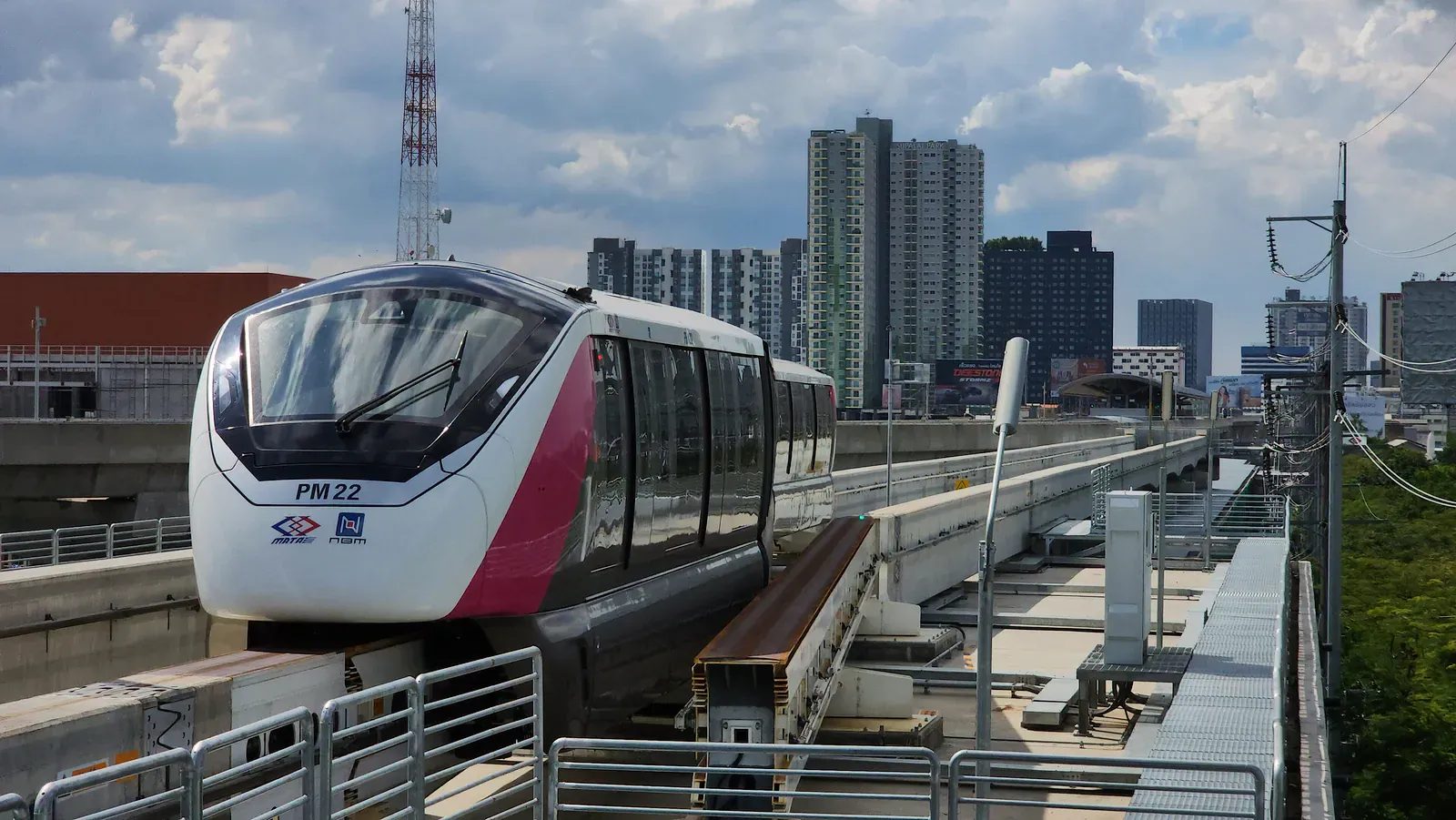
For a rider trying to piece together a route that spans the Yellow or Pink Line, the Blue Line and a long-distance or Red Line service in one trip, Krung Thep Aphiwat is usually the practical pivot point, even though it takes an extra transfer to reach it from either monorail.
What’s still being built
None of this network is finished. Three more projects sit at different stages around the existing Yellow and Pink Lines.
| Project | Scope | Status (checked September 2026) | Expected |
|---|---|---|---|
| Purple Line southern extension | Tao Poon to Rat Burana/Khru Nai, about 23.6 km | Around 53% complete as of April 2025; delayed after a road collapse in September 2025 | 2028 |
| Orange Line, eastern section | Built but not yet in service | Projected opening announced by MRTA in August 2025 | Late 2027 |
| Orange Line, western section | Taling Chan to Cultural Centre | Civil works about 14% complete as of July 2025 | Around 2030 |
| Brown Line | Proposed corridor, not yet under construction | Under review, tied to fare-policy questions and a nearby expressway redesign; bidding expected | Late 2026 (bidding only) |
The Orange Line matters most to Yellow Line riders specifically, since a completed Orange Line would finally connect at Lam Sali, a junction currently marked on maps but not functional. Until then, any map showing that interchange as live is showing the plan, not the current reality.
A related, and unrelated, policy: the 20-baht fare pilot
Anyone researching Bangkok train fares in 2025 and 2026 will run into mentions of a 20-baht flat-fare policy. It is worth being precise about what that actually covered: the pilot applied only to the SRT Red Line and the MRT Purple Line, ran from October 2023, and ended 30 September 2025 after an early cabinet decision to close it two months ahead of schedule. Both lines reverted to standard distance-based fares on 1 October 2025.
The Yellow and Pink Lines were never part of that pilot. Their fares followed the same distance-based structure throughout, and nothing about the Red/Purple policy change affects what you pay on either monorail.
Should this change how you plan a trip?
If your route touches eastern Bangkok along the Lat Phrao-Bang Kapi-Srinagarindra corridor, or the northern arc from Nonthaburi to Min Buri, the honest answer is yes: a route that used to mean a long taxi or bus ride now has a rail option, even if it costs an extra fare at the interchange. For journeys entirely within the original BTS/MRT core, none of this changes anything, and the BTS and MRT guide remains the right reference. For how the interchange mechanics actually work station by station, including the walk times at each transfer point, see BTS and MRT interchanges explained, and for a broader comparison of which app tracks which line reliably, the best transport apps in Bangkok is worth checking before a first trip on either monorail.
Common questions
Is the Yellow Line the same as the BTS?
No. It is a separate, MRT-branded monorail operated through a BEM subsidiary. It connects to the BTS Sukhumvit Line at Samrong, but the two are separate ticketed systems.
Can I use my Rabbit Card on the Yellow or Pink Line?
Ticketing for both lines runs through their own fare gates and stored-value options rather than the BTS’s Rabbit Card by default. Contactless bank card and mobile wallet tap-and-go coverage is expanding across Bangkok’s rail systems generally, so check the current status in the operator’s own app before relying on one card working everywhere.
Do the Yellow and Pink Lines connect to each other directly?
Not yet, and not on the ground: the two lines are geographically apart across most of their routes, and any interchange between them shown on future planning maps is not currently operational.
Is the Orange Line open yet?
No. Its eastern section is built but not yet carrying passengers, with an opening projected for late 2027; its western section is still under construction, targeting around 2030.
Where do the Yellow and Pink Lines fit if I’m only in Bangkok for a short trip?
For most short visits focused on the central tourist and business districts, you are unlikely to need either line, since the original BTS and MRT core covers that ground. They matter most for reaching specific suburban addresses, for longer stays, or for anyone commuting to or from eastern or northern Bangkok.
Written by
Mike Brochlowski
Founder and editor, travel photographer and designer
I'm Mike Brochlowski, a travel photographer and designer, and I currently live on Koh Samui, Thailand. I built BangkokWiki to put practical, checked information about Bangkok in one place. Every page is researched from official and primary sources, and the text names them. Where a page shows a checked date, that is when its facts were last confirmed. I also run samui69.com, a non-commercial guide to Koh Samui. If you spot an error or something out of date, tell me through the contact page and I will check it and correct the page.
Read all articles
Where to stay
Pick the area before the hotel
Traffic and heat make Bangkok distances feel longer than they look on a map, so the area shapes a trip more than the hotel does. Our guides match areas to trip types and explain the trade-offs.

Places to stay
Find a hotel
Explore the other desks
More from Transport
- 10 min read
 6 min read
Bangkok BTS and MRT fares: single trip vs day pass
 9 min read
Getting Around Bangkok: The Right Strategy for Who You Are

Newsletter
You're subscribed as