Travel
Is Bangkok Safe for Digital Nomads? The Real Risk Order
The real Bangkok safety risk order for nomads: traffic and scooters first, petty scams second, violent crime rare. Sourced, dated September 2026.
At a glance
- Reading time
- 5 min read
- Chapters
- 6
- Published
- Oct 13, 2026
On this page
Yes, with a useful qualifier: Bangkok is safer from violent crime than most first-timers expect, and riskier in a way most guides bury near the bottom. The real order, worst first, is traffic and scooters, then petty scams and money disputes, then violent crime, real but rare. Most “is Bangkok safe” content reverses that, spending three paragraphs on muggings and one line on the thing statistically most likely to hurt you: crossing the street. For the wider picture, see the Bangkok digital nomad guide. For short visits, see is Bangkok safe for tourists.
The real risk order, ranked
Here’s the order that the actual data supports, not the order most safety content defaults to.
| Rank | Risk | What the data actually shows | Source |
|---|---|---|---|
| 1 | Traffic and scooters | Thailand ranked 9th of 175 countries for road traffic deaths; motorcyclists made up 83.8% of all road fatalities nationally | WHO Global Status Report on Road Safety, 2023 (2021 data) |
| 2 | Petty scams and money disputes | Recurring, non-violent patterns (rental deposits, overcharging, fake “closed today” redirects) documented across consumer and travel-safety reporting | Pattern reporting, not a single index; see the category’s dedicated scams coverage |
| 3 | Property crime | Moderate perceived risk; Bangkok’s property-crime score sits at 40.71 out of 100 | Numbeo Crime Index, checked September 2026 |
| 4 | Violent crime | Low worry score for mugging or robbery, 35.17 out of 100; overall Safety Index 61.58, a mid-to-high “moderate” band | Numbeo Crime and Safety Index, checked September 2026 |
The pattern holds across almost every reliable source: what feels dramatic (getting mugged) is the least likely, and what feels mundane (crossing a road) has real statistics behind it.
Traffic and scooters: the risk that actually matters
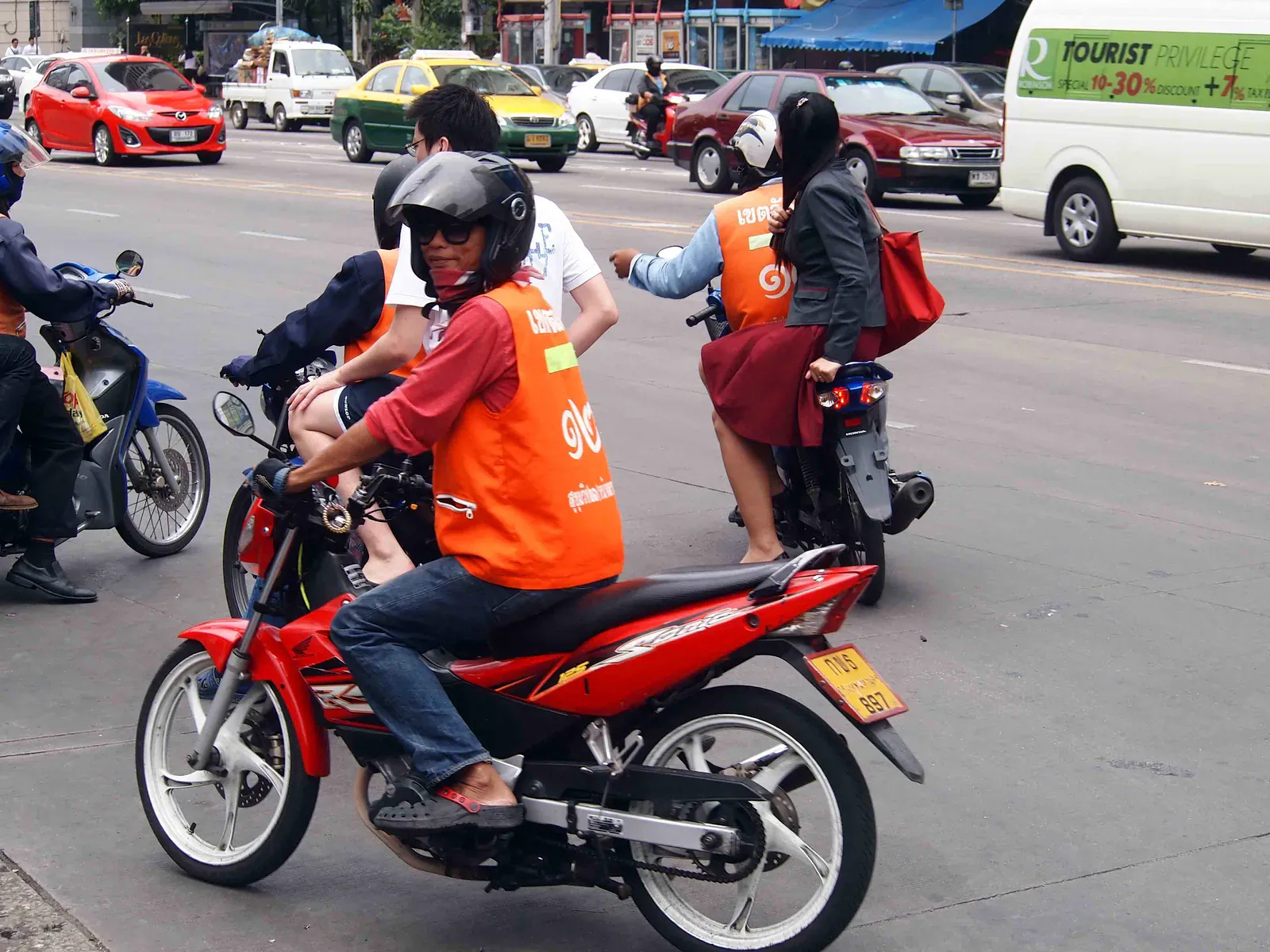
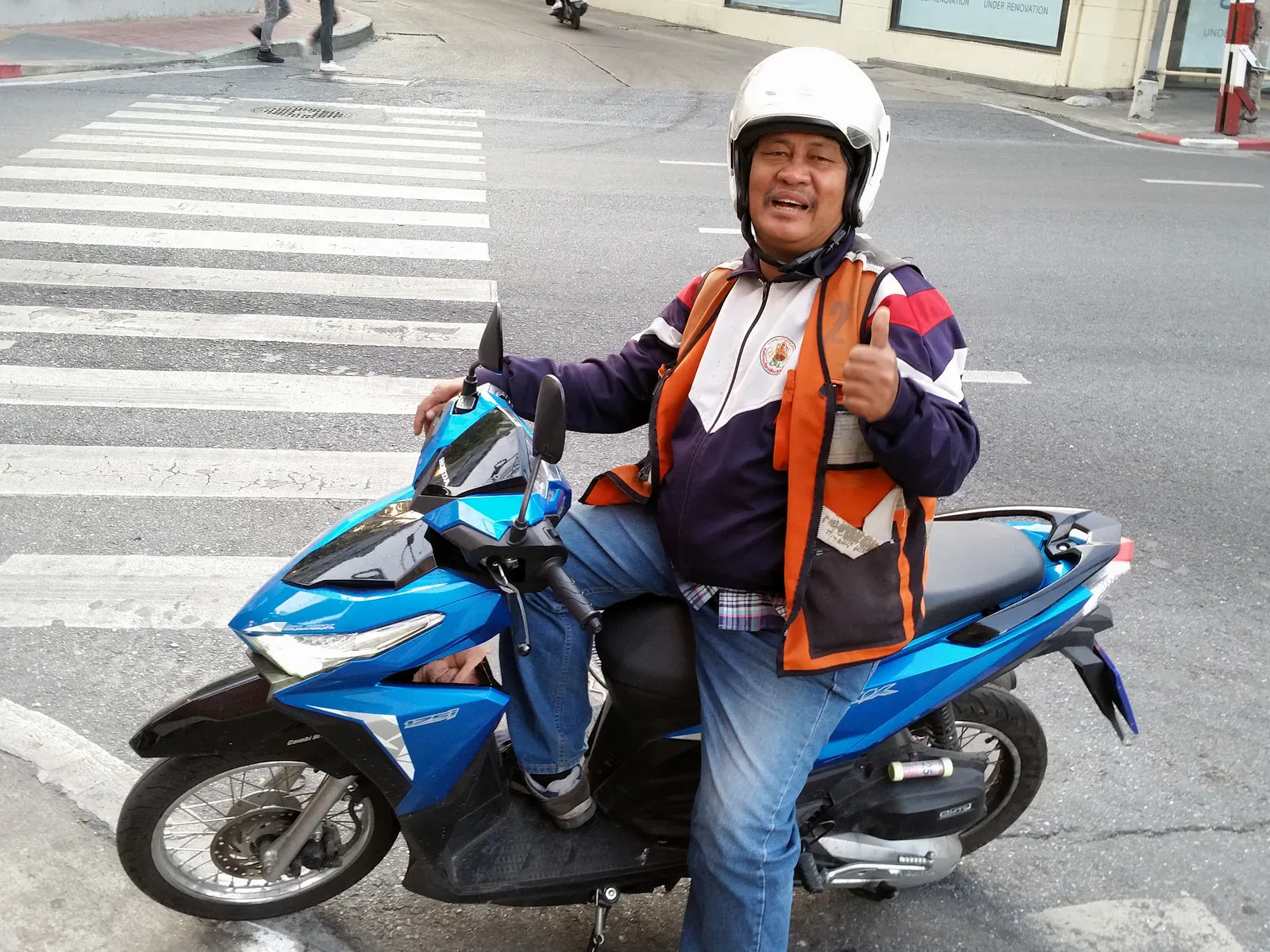
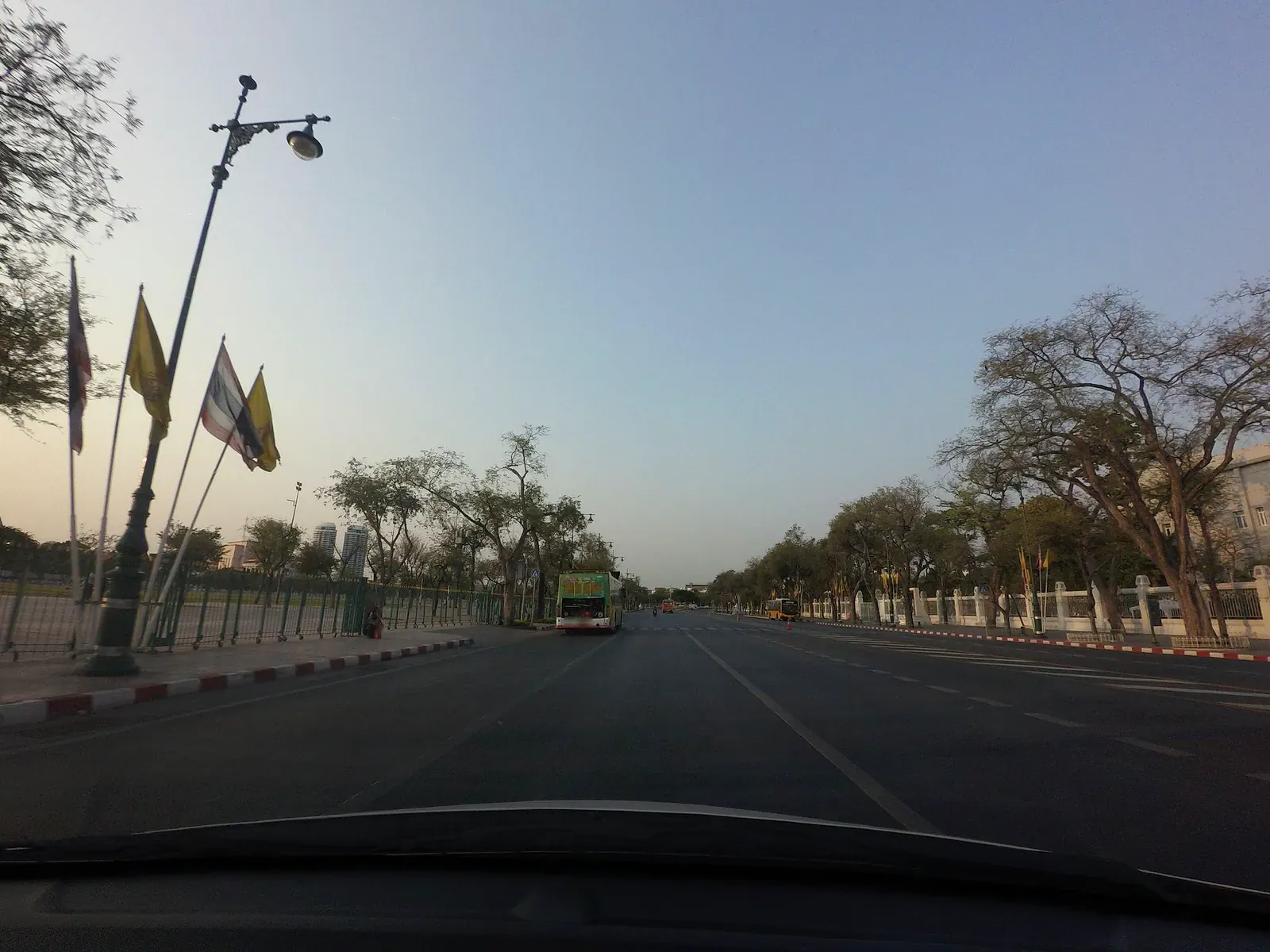
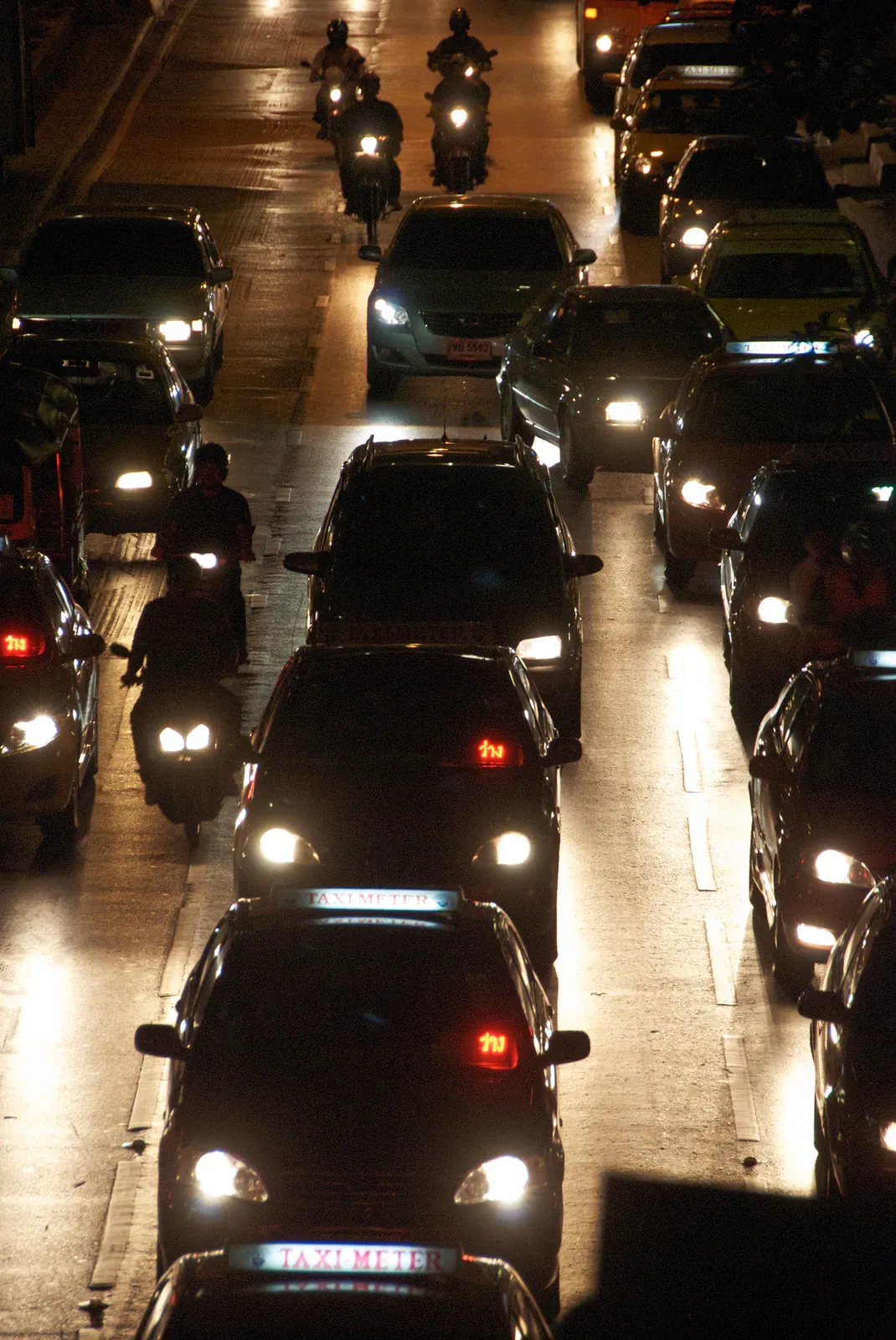
Thailand’s road safety numbers are genuinely bad by global standards, and Bangkok, the country’s largest and busiest city, sits inside that picture. The WHO’s 2023 Global Status Report on Road Safety placed Thailand 9th worst of 175 member countries for road traffic deaths, with motorcyclists accounting for 83.8% of all road fatalities nationally. Pedestrians and cyclists combined made up only about 2% of deaths, far below the roughly 31% Asia-Pacific regional average: the danger here is disproportionately about being on two wheels, not about walking.
That has a practical implication. A motorcycle taxi (“win” in Thai) is often the fastest way to cover the last stretch from a BTS or MRT station, and genuinely useful for that. It’s also, statistically, the single most dangerous common activity available to a nomad here, more so than any scam or neighbourhood. The Bangkok Metropolitan Administration’s TRUST road-safety programme, launched April 2025 with the Asian Institute of Technology, UN-Habitat and Toyota Motor Thailand, has been upgrading crosswalks (2,000-plus) and adding street lighting (100,000-plus units), per Toyota Mobility Foundation’s reporting.
Petty scams and money disputes: the real second-tier risk
This is the tier most people mean by “is Bangkok safe.” The recurring patterns nomads run into over months, not days, are rental deposit disputes, subletting fraud, unpaid freelance clients and fake coworking day-passes, distinct from the one-day-tourist scams (the gem shop, the “temple is closed today” redirect) that dominate most travel-safety roundups. None of it is violent, and most of it is preventable with a written contract, a paper trail and a healthy suspicion of anyone unusually eager to help; the deposit and budgeting side connects to the cost of living in Bangkok for digital nomads. A dedicated scams breakdown is coming as its own guide in this category.
Violent crime: rare, and the data backs it up
Numbeo’s Bangkok figures, checked September 2026, put the city’s overall Safety Index at 61.58 out of 100 and its Crime Index at 38.42, a moderate reading in line with most mid-sized Asian capitals. The worry scores are the useful part: residents and visitors rate their worry about being mugged or robbed at just 35.17 out of 100, and worry about a home break-in at 34.97, both “low.” Property crime (theft, vandalism) reads moderate at 40.71, higher than violent crime but still no headline risk. None of this means violent crime is zero; it means the baseline is low enough that a nomad’s real daily risk is dominated by traffic, not by what generates the most anxious pre-arrival googling.
What to actually do about the real risks
None of the points below are dramatic, and that’s the point: staying alert to traffic daily is a low-grade cost that adds up, one entry on the list in digital nomad burnout in Bangkok if left unmanaged.
Last verified: September 2026.
Common questions
Is Bangkok safe for solo travellers and digital nomads?
Yes, by the numbers: violent crime worry scores are low, and the Safety Index sits in a moderate-to-good band for a major Asian capital. The real risks are traffic and scooters first, then non-violent scams, not the personal safety most solo travellers worry about.
Should I avoid motorcycle taxis entirely?
Not necessarily; they’re useful for the last stretch from a station. The realistic move is deliberate use (helmet on, a ride-hailing app when available, skip heavy rain) rather than avoiding them outright.
What’s the single biggest safety mistake new nomads make in Bangkok?
Under-rating traffic and over-rating crime. Most first-timers arrive braced for theft, then relax once nothing happens in week one, while treating a six-lane crossing as routine within days. The data says that instinct is backwards.
Does Bangkok’s safety picture change at night?
Numbeo’s walking-alone-at-night score sits at a moderate 57.77 out of 100, lower than daytime but not “high risk.” The bigger night-specific factor is visibility for road users, part of what the BMA’s street-lighting upgrades target. For how this risk order fits the wider picture, see Bangkok’s digital nomad scene in 2026.
Part of
Written by
Mike Brochlowski
Founder and editor, travel photographer and designer
I'm Mike Brochlowski, a travel photographer and designer, and I currently live on Koh Samui, Thailand. I built BangkokWiki to put practical, checked information about Bangkok in one place. Every page is researched from official and primary sources, and the text names them. Where a page shows a checked date, that is when its facts were last confirmed. I also run samui69.com, a non-commercial guide to Koh Samui. If you spot an error or something out of date, tell me through the contact page and I will check it and correct the page.
Read all articles
Where to stay
Pick the area before the hotel
Traffic and heat make Bangkok distances feel longer than they look on a map, so the area shapes a trip more than the hotel does. Our guides match areas to trip types and explain the trade-offs.

Places to stay
Find a hotel
Explore the other desks
More from Travel
- 11 min read
 9 min read
Money in Bangkok: ATMs, Exchange and Fees
 11 min read
Bangkok Scams and Safety: What to Know

Newsletter
You're subscribed as