Travel
Bangkok Scams and Safety: What to Know
A practical guide to Bangkok's tourist scam scripts, the phone and app scams targeting residents, and the genuine everyday safety risks worth knowing.
At a glance
- Reading time
- 11 min read
- Chapters
- 8
- Published
- Sep 20, 2026
On this page
Bangkok is, by ordinary measures, a safe city to walk around, eat in and travel through alone. What it also has is a well-organised, long-running tourist-scam economy that operates in full public view, mostly around the handful of streets that see the heaviest tourist footfall. These are two separate things, and mixing them up either makes you paranoid about a city that doesn’t deserve it, or careless about a small set of scripted cons that genuinely do cost people money.
Two different risks, kept separate
The scam economy runs on persuasion, not force: a friendly stranger, a plausible story, a small early cost that becomes a large one. It targets tourists specifically, near tourist sites, using scripts that have barely changed in years because they keep working on people who’ve never heard them before. Nobody is forced into anything; the entire method depends on you agreeing, step by step, to something that sounds reasonable in the moment.
The genuine safety risks are almost entirely different: traffic, heat, food handling, drink safety, and the ordinary hazards of any large, dense city, none of which have anything to do with being conned. Treat the two lists separately, because the defences are different: scepticism and an exit line for one, ordinary caution for the other. For the wider picture, see is Bangkok safe for tourists.
The classic scripts
“It’s closed today” redirect
A friendly stranger near a major temple or palace tells you it’s closed for a holiday, cleaning, or a private ceremony, and offers to help, usually by flagging down a tuk-tuk that happens to be right there. The tuk-tuk then takes you on a “tour” that stops at gem shops or tailors paying the driver commission for delivering you through the door.
The tell: major tourist sites are essentially never closed for the vague, unverifiable reasons given, and the stranger’s solution always involves a vehicle that’s conveniently already waiting. The exit line: keep walking toward the entrance yourself and check the posted hours at the gate; ignore anyone intercepting you before you reach it. Cost of getting it wrong: a wasted afternoon at minimum; a high-pressure gem or tailor sale that’s very hard to reverse once you’ve paid, at worst.
The gem and tailor commission run
A variant and continuation of the above: an unnaturally cheap or exclusive-sounding “government sale” of gems or a custom-tailored suit, reached via a driver or tout who steered you there. The stones or fabric are typically worth a fraction of what’s paid, and the “certificate of authenticity” offered is not independent verification.
The tell: any gem “deal” that depends on urgency, secrecy, or a limited-time government connection. The exit line: “I’m not buying today,” repeated flatly, and walking out. No further explanation owed. Cost of getting it wrong: payments in this scam are often large and very difficult to reverse or refund once made.
Tuk-tuk tours with shopping stops
A tuk-tuk driver offers a suspiciously cheap city tour (sometimes near-free) that turns out to include several stops at shops paying the driver a commission for bringing customers through the door, with real sightseeing squeezed in around the edges.
The tell: a tour price too low to make sense for the driver’s time and fuel. The exit line: agree only to point-to-point fares, or use a metered taxi or a ride-hailing app instead of an informal “tour.” For walking-tour options, see our Bangkok walking tours compared. Cost of getting it wrong: lost time and pressure to buy at each stop, more of a nuisance than a financial disaster if you simply decline to purchase.
The broken-meter taxi
A taxi driver claims the meter is broken and quotes a flat fare well above what a metered ride would cost, or simply refuses to start the meter at all.
The tell: a driver who won’t engage the meter before you’ve even set off. The exit line: ask for the meter directly, and if refused, get out and take the next taxi, or switch to a ride-hailing app where the fare is fixed before you get in. Cost of getting it wrong: typically a moderate overpayment on a single ride, not a large loss.
Jet-ski and rental-damage claims
Rent a jet-ski, scooter or other equipment and return it to find the operator pointing at pre-existing damage, demanding an inflated repair payment on the spot, sometimes holding a passport as informal collateral until you pay.
The tell: an operator who didn’t photograph the item’s condition with you before handing it over. The exit line: photograph and video every surface of any rented vehicle or equipment together with the operator before you take it, timestamped, and decline to hand over a passport as security: a cash or card deposit is the normal alternative. Cost of getting it wrong: demands can run to a significant sum, and a held passport adds real pressure to pay quickly rather than dispute it.
The ping-pong-show bar bill
Touts near certain nightlife strips hand out cards or verbally promise a cheap show; the bill that arrives at the end includes inflated drink prices, cover charges and add-ons never mentioned upfront, sometimes with an implied threat if you don’t pay.
The tell: any offer that undersells the price before you’re seated and can’t easily leave. The exit line: ask for a written price list before ordering anything, and if none is offered, leave before you sit down. Cost of getting it wrong: bills can run unexpectedly high, and disputing them inside the venue is uncomfortable and rarely successful.
The friendly stranger’s card game
A well-dressed, plausible stranger strikes up a genuine-feeling conversation, eventually mentioning a relative overseas or an invitation to a private card or dice game with “easy money.” The game is rigged, and losses escalate once you’re playing.
The tell: any invitation to gambling from a new acquaintance, however genuine the friendship has felt so far. The exit line: decline any invitation to play cards, dice or bet money with someone you’ve just met, full stop, regardless of how the conversation got there. For the legal side, see casinos in Bangkok and their legal status. Cost of getting it wrong: losses can be substantial and are not recoverable.
Fake police and “show me your wallet”
Individuals posing as plainclothes police or officials stop a tourist, claim a document or currency check is needed, and either pressure a cash “fine” on the spot or use the moment to see and potentially lift the contents of an opened wallet.
The tell: genuine Thai police do not conduct impromptu cash “fines” for tourists on the street with no paperwork. The exit line: ask to go to the nearest police station or for a marked vehicle and a written receipt for anything you’re asked to pay; don’t open your wallet on the street for an unverified individual. Cost of getting it wrong: direct cash loss, and in the wallet-theft variant, potential card and cash loss together.
Newer phone and app scams targeting residents
These target people staying longer, not tourists on a first visit, and they run through a phone rather than a street encounter: call-centre fraud, where a caller impersonates a bank, government office or courier and pressures an urgent transfer or code disclosure; fake parcel and police messages, arriving as SMS or app links claiming a package is held or a fine is due, designed to harvest banking details or install malicious apps; and QR and mule-account scams, where a scanned QR code or a “too good” job or investment offer routes money through an account that later turns out to be involved in fraud, leaving the account holder facing real legal exposure.
The tell across all three: unsolicited urgency, a request to move money or click a link right now, or a demand for a banking password or OTP code: no legitimate bank, courier or government office asks for these by phone or unsolicited message. The exit line: hang up, don’t click, and contact your bank or the organisation directly using a number or app you already trust, never one given to you in the suspicious message. Cost of getting it wrong: these can be the most financially serious scams on this list, since they target bank accounts directly rather than a single cash transaction: see money and payments for the card-freeze and account habits that limit the damage.
Genuine safety: traffic is the real risk
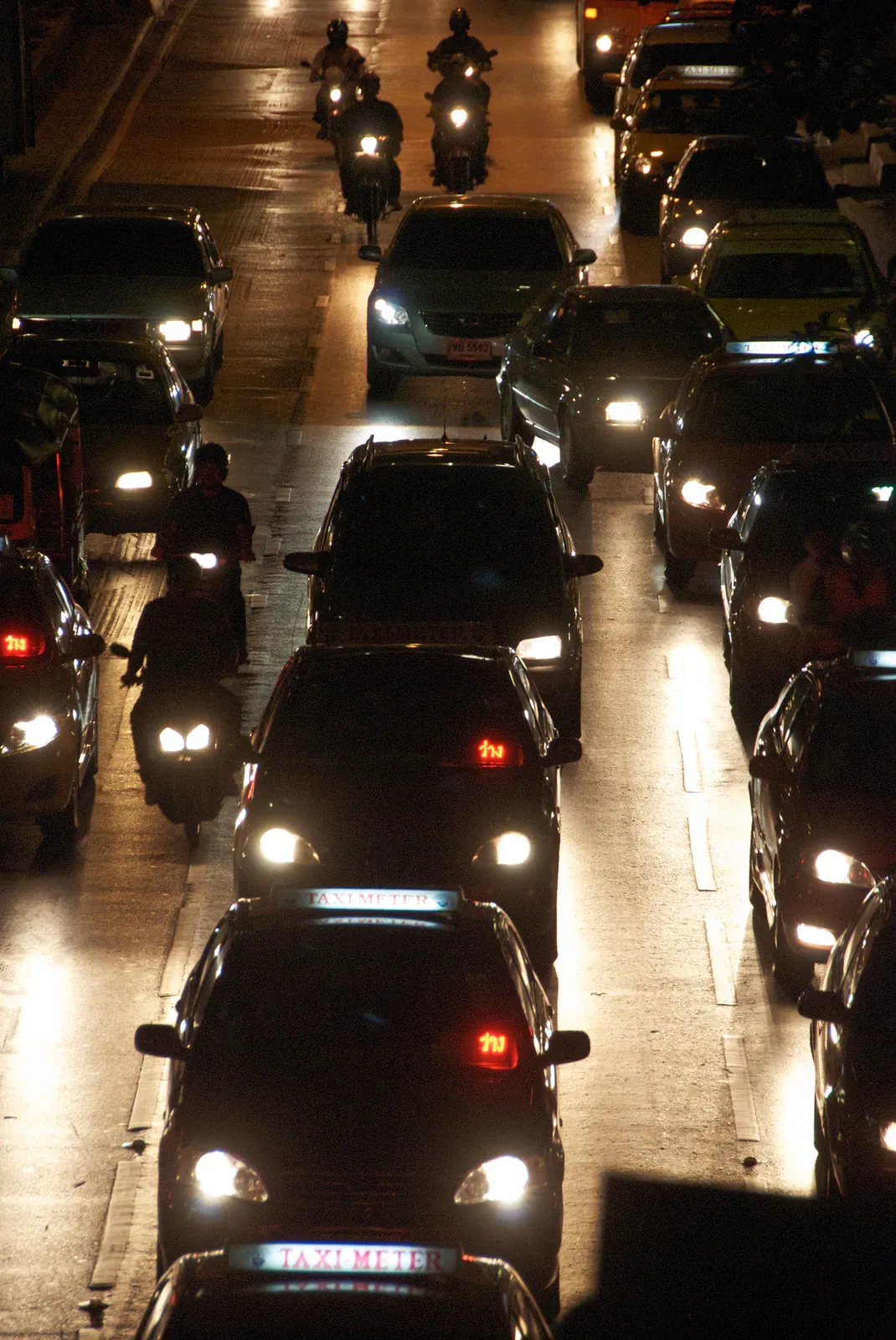
Set the scam economy aside, and the most significant everyday risk in Bangkok is ordinary road traffic: crossing streets, riding motorbike taxis, and sharing pavements with vehicles. This isn’t a Bangkok-specific hazard so much as the reality of any large, dense, motorbike-heavy Asian city, and it deserves more attention from visitors than the scams above.
Crossing roads: use pedestrian bridges and marked crossings where available, cross with a group of locals rather than alone when you can, and don’t assume a car or motorbike will stop for you at an unmarked crossing: right of way in practice often belongs to whoever’s moving.
Motorbike taxis: a fast, practical way to cut through Bangkok traffic, and genuinely useful for time-pressed journeys, but always wear the helmet offered, and don’t be shy about asking for one if it isn’t offered first.
Pavement hazards: uneven paving, open drain covers, low-hanging cables and construction debris are common enough on Bangkok pavements that looking down as often as you look up is a reasonable habit, especially at night. For road collapses, see Bangkok sinkholes explained.
Dogs, flooding and electricity
Street dogs are common and mostly indifferent to passersby; giving a resting or feeding dog space rather than approaching it is sensible anywhere. Heavy seasonal rain can flood streets and low-lying pavements quickly, and standing water near exposed wiring or damaged infrastructure is worth walking around rather than through: a caution worth having regardless of the city.
Heat, hydration and food
Bangkok’s heat and humidity are more likely to affect an unprepared visitor than almost anything else on this list: pace outdoor sightseeing, carry water, and take shade breaks seriously, particularly in the early afternoon. Street food is a genuine highlight of the city and is eaten safely by huge numbers of people daily: the ordinary sensible approach is a stall with a visible high turnover of customers and freshly cooked food rather than food that’s been sitting, and bottled or filtered water rather than tap water.
Drink spiking and solo or late-night travel
Drink spiking, while not a defining feature of Bangkok nightlife, is a risk in any city’s bar and club districts, and the ordinary precautions apply here as anywhere: keep your own drink in sight, be cautious accepting one from a stranger, and travel with people you trust for the late-night stretch home. For solo travel generally, sticking to well-lit, populated streets late at night and using a ride-hailing app rather than hailing an unknown vehicle off the street reduces the same ordinary risks a large city presents anywhere.
Solo female travellers generally report Bangkok as comfortable to navigate alone, with the same late-night and drink-awareness habits above being the main practical precautions rather than anything Bangkok-specific. LGBTQ+ visitors and residents find Bangkok among the more visibly open cities in the region, with well-established LGBTQ+-friendly nightlife and social spaces; the ordinary caveats about late-night travel and unfamiliar company apply equally rather than differently.
After something goes wrong
- Tourist police exist as a dedicated unit in Thailand specifically for visitor-facing incidents, separate from the general police force, and are generally more geared toward English-language assistance for tourists than a standard local station: worth knowing as a concept even without a specific number to hand here; ask your hotel or accommodation for the current local contact, since publishing one directly risks it going stale.
- Document everything at the time, not later: photos of any damage, a note of names, vehicle plates or shopfronts involved, and receipts or timestamps for any payment made under pressure.
- Keep travel insurance documentation accessible: a photo of your policy number and the insurer’s contact details saved on your phone, not just in an email you might not be able to reach.
- Freeze the card immediately through your banking app if any payment or card-skimming incident is suspected, then contact your bank’s fraud line using the number on the card or app, never a number given to you by the other party: the same instinct covered in money and payments for the phone-based scams above, since a fast freeze is the single most effective response once money is moving.
- Report SIM or phone-related fraud to your mobile provider directly if a scam involved your Thai number or a SIM-swap attempt: see SIM cards and eSIMs for how a Thai number becomes linked to banking and delivery app verification, which is exactly why losing control of it matters.
Common questions
Is Bangkok actually dangerous for tourists?
No. Violent crime against tourists is not a defining feature of the city, and the greater practical risks are traffic, heat and the scripted tourist scams above rather than personal danger. Ordinary city caution applies, not special alarm.
What’s the most common Bangkok scam to know before I arrive?
The “closed today” redirect into a tuk-tuk and gem or tailor shop is probably the most widely reported script, usually starting near major temples and palaces with a friendly stranger claiming the site is shut.
Should I trust a taxi driver who says the meter is broken?
No. Ask for the meter directly, and if it’s refused, take a different taxi or switch to a ride-hailing app where the fare is agreed before the ride starts.
Is Bangkok safe for solo female travellers?
Generally yes, with the same late-night and drink-awareness precautions sensible in any large city rather than anything specific to Bangkok; most solo female visitors report the city as comfortable to navigate alone.
What should I do if I think I’ve been scammed out of money?
Document the details immediately, freeze any card involved through your banking app if a payment was made under pressure, and contact tourist police for a visitor-facing report rather than assuming nothing can be done.
Are the phone and app scams a bigger risk than street scams?
For residents and long-stayers, potentially yes, since call-centre fraud and QR or mule-account scams target bank accounts directly rather than a single cash transaction: treat any unsolicited urgent call or message asking for money or a banking code with the same scepticism as a street tout.
Written by
Mike Brochlowski
Founder and editor, travel photographer and designer
I'm Mike Brochlowski, a travel photographer and designer, and I currently live on Koh Samui, Thailand. I built BangkokWiki to put practical, checked information about Bangkok in one place. Every page is researched from official and primary sources, and the text names them. Where a page shows a checked date, that is when its facts were last confirmed. I also run samui69.com, a non-commercial guide to Koh Samui. If you spot an error or something out of date, tell me through the contact page and I will check it and correct the page.
Read all articles
Where to stay
Pick the area before the hotel
Traffic and heat make Bangkok distances feel longer than they look on a map, so the area shapes a trip more than the hotel does. Our guides match areas to trip types and explain the trade-offs.

Places to stay
Find a hotel
Explore the other desks
More from Travel
- 9 min read
 6 min read
Bangkok Dining Etiquette: Mistakes Tourists Make at the Meal
 5 min read
Tipping in Bangkok Restaurants: What to Actually Pay

Newsletter
You're subscribed as