Travel
Money in Bangkok: ATMs, Exchange and Fees
How to move cash, cards and QR payments through a week in Bangkok without losing money to ATM fees, bad exchange rates or dynamic currency conversion.
At a glance
- Reading time
- 9 min read
- Chapters
- 10
- Published
- Sep 20, 2026
On this page
Bangkok runs on three payment layers at once: cash, foreign cards, and a domestic QR rail that most visitors have never used before landing. None of the three covers everything on its own. The way to avoid leaking money is to understand which layer each transaction wants, and to stop paying the fees that exist only because you didn’t check.
Cash, card or QR: know which one a stall wants
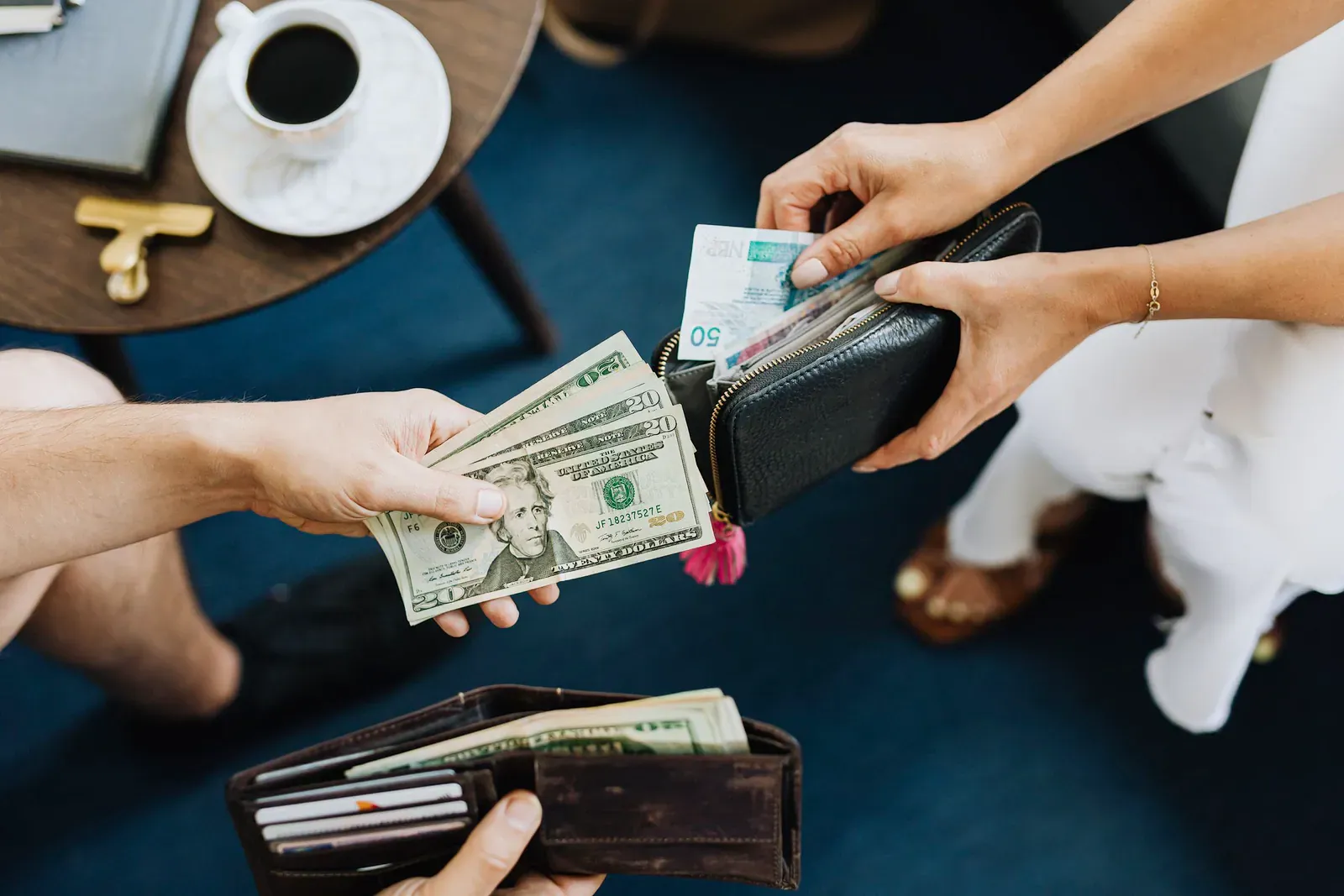
A shopping mall, a hotel, a chain restaurant and most 7-Elevens take foreign Visa and Mastercard without drama. A street-food cart, a wet market stall, a tuk-tuk driver, a small noodle shop and most taxis do not: they run on cash, or on a QR code that expects a Thai bank account behind it. Between those two poles sits a huge middle layer of small restaurants and shops that take one, the other, or both depending on the day and the till.
The practical rule: carry enough cash to cover a full day of small transactions, keep a card for anything over roughly ฿1,000-2,000 in a formal setting, and don’t assume either will work everywhere. Budget for both from the first morning rather than discovering the gap at a market stall with no ATM in sight. To see what a full day adds up to, read our Bangkok trip cost breakdown.
The QR rail: why it’s everywhere and why you mostly can’t use it
Thailand’s domestic instant-payment system, commonly called PromptPay, links Thai bank accounts and e-wallets directly to a QR code at the till. It’s why so many small businesses display a printed QR square instead of a card machine: it’s cheaper for them than a card terminal and settles instantly. For a Thai resident, it has largely replaced small cash transactions.
For a short-stay visitor, the catch is structural: PromptPay is built around a Thai bank account, which you generally can’t open on a tourist visit (more on that below). A handful of visitors from certain neighbouring countries can scan Thai QR codes directly from their home banking apps through cross-border payment links; most Western visitors can’t. Some multi-currency travel apps and wallets have started bridging into the Thai QR network, and the list of what works changes often enough that it’s worth checking your own card or app provider’s current coverage before you rely on it, rather than assuming last year’s answer still holds.
Until that changes for you personally, treat QR as something you watch locals use rather than a payment method you can count on for every purchase: carry the cash to cover the gap.
ATMs: convenient, and quietly expensive in small amounts
Almost every Thai bank charges foreign-issued cards a flat fee for each ATM withdrawal, on top of whatever your home bank charges for using a card abroad. This fee is not a percentage: it’s a fixed amount per transaction, so withdrawing ฿1,000 costs the same flat fee as withdrawing ฿20,000. The number itself moves over time and differs slightly bank to bank; each bank publishes its current foreign-card fee on its own site and at the machine before you confirm, so treat any figure you’ve read as an estimate for 2026 and check the screen before you accept.
The consequence is simple: withdraw less often, in larger amounts, rather than pulling small sums every day or two. A handful of Thai banks and fintech-linked ATMs advertise no-fee or reduced-fee withdrawals for certain card networks, worth a quick look if you’re staying more than a couple of weeks, but don’t plan a trip around finding one.
Two more habits protect you at the machine:
- Always decline dynamic currency conversion. When an ATM or card terminal asks “would you like to be charged in your home currency instead of Thai baht?”, the home-currency conversion rate is almost always worse than what your own bank or card network applies. Choose THB / Thai Baht, every time, at ATMs and at card terminals alike.
- Use machines attached to a bank branch or inside a mall rather than free-standing ones on a quiet street at night, not because street ATMs are inherently unsafe, but because a staffed or well-lit location is easier to deal with if a card is retained or a transaction fails.
Currency exchange: airport counters versus the booths in town
Airport exchange counters are the most convenient option and reliably the worst rate you’ll be offered in Bangkok: you’re paying for the convenience of changing money the minute you land. If you need cash immediately for a taxi and incidentals, change a small amount at the airport and do the rest later. Related guides: Bangkok currency exchange guide, Bangkok baht currency guide, Bangkok Bank TT rate versus notes rate.
Once you’re in the city, dedicated exchange booths (often with a bright yellow or similar branded storefront, common in tourist districts and near BTS stations) consistently beat both the airport and most bank branches on rate, and post their buy/sell rates on a board out front, which makes comparing two booths on the same street trivial. A quick scan of three boards fifty metres apart is usually enough to see the spread; the outlier that’s meaningfully better than its neighbours is worth a second look before you use it, but a rate that’s dramatically better than everyone else’s is more often a sign of a catch (a poor rate on a different note, a hidden minimum, or a fee added at the counter) than a genuine bargain.
What matters when you change cash:
- Note condition. Older, torn, heavily marked or very worn foreign banknotes are sometimes refused or offered a worse rate: bring clean, newer notes if you can.
- Denomination. Large notes (US$100, €100 and similar) typically get a better per-unit rate than small ones at Thai exchange booths; this is standard practice, not a scam, but it means changing a stack of small bills is quietly worse value than changing fewer, larger ones.
- ID. Bring your passport: most booths and all banks require it for exchange above a small threshold.
- Spot-check the maths. Before handing over cash, ask what you’ll receive in baht for the amount you’re changing, and count the baht back before you leave the counter.
Multi-currency cards and transfer apps
A category of travel-focused cards and money-transfer apps (the well-known names include Wise, Revolut and similar multi-currency accounts) let you hold and spend in baht (or convert at the point of sale) at rates close to the interbank rate, with far lower markup than a traditional credit card’s foreign-transaction fee. Many work as a contactless card in Thailand wherever card payments are accepted, and some are starting to bridge into QR payments too.
They’re worth setting up before you fly rather than after you land: verification can take a few days, and the card itself needs to be ordered and delivered, or the app-only virtual card activated, ahead of the trip. They don’t replace cash entirely (see the QR section above), but they meaningfully cut what you lose to conversion on card purchases and ATM withdrawals compared with a standard bank-issued debit card.
Opening a Thai bank account as a foreigner
It’s possible, but it’s not a same-day tourist errand. Requirements vary noticeably from branch to branch and bank to bank: some ask only for a passport and a Thai address; others want a work permit, a long-term visa, a letter from an employer or landlord, or a minimum deposit, and a branch in a tourist area may simply decline a request that a branch used to expat residents would approve without fuss. There’s no single national rule you can rely on walking in cold, which is exactly why the outcome depends so much on which branch, which staff member, and what visa you’re holding on the day.
Because of that inconsistency, most people staying for weeks or a few months rather than settling long-term skip the Thai bank account entirely and lean on a multi-currency card, cash, and (once they have one) a local SIM to unlock the QR and app ecosystem indirectly through a linked foreign card or e-wallet. Long-stayers who do eventually open a Thai account typically do it once their visa situation is settled, not in the first week.
Budgeting rhythm, tipping and the bill itself
Bangkok doesn’t have a single national tipping culture the way some countries do. Rounding up a taxi fare, leaving small change from a restaurant bill, or tipping a spa or massage therapist a modest amount in cash is appreciated and common; it isn’t obligatory, and nobody will chase you down the street for skipping it. Hotel porters and housekeeping are the exception where a small cash tip is more of an expected norm. For casinos and gambling rules, see our guide to casinos in Bangkok.
Service charge and VAT show up on the bill at hotels, many mid-range and upmarket restaurants, and some bars, typically as separate line items added to the subtotal, most often in the range of a 10% service charge plus 7% VAT, indicative for 2026 and worth glancing at before you assume the menu price is the final price. Street food and small local restaurants generally don’t add either; the number on the menu is what you pay.
Splitting a bill is normal and easy in cash, less so on a card, since not every till supports splitting a single card payment multiple ways. If your group is paying by card, it’s often simpler for one person to pay and settle up in cash or via transfer/QR afterwards, especially once everyone has a working local number for the apps that make peer-to-peer transfers easy.
For tour prices and deposits, see our tour companies comparison.
The small-note problem
Taxis, tuk-tuks and street stalls routinely can’t or won’t break a large note for a small fare: a driver genuinely may not be carrying enough change for a ฿1,000 note on a ฿80 ride, and some will simply decline the fare rather than go hunting for change. Keep a working float of smaller notes (the ฿20, ฿50 and ฿100 denominations) topped up whenever you break a large note at a convenience store or restaurant, so you’re never stuck handing over your only note for a fare a tenth of its value.
Cash safety and card skimming
Bangkok is not a city defined by street crime against tourists’ wallets, but ordinary precautions are still worth the ten seconds they take: split cash between a wallet and a separate bag or pocket rather than carrying the whole trip’s float in one place, keep your card in sight at the till when possible, and check your bank’s app periodically for transactions you don’t recognise rather than waiting for a monthly statement. Skimming devices on standalone ATMs are rare but not unheard of anywhere in the world: a machine with a loose or oddly bulky card slot, or a keypad that doesn’t sit flush, is worth walking past in favour of the next one. For the fuller picture of common scams that specifically target payments (fake QR stickers, card-skimming setups and the newer app-based fraud), see the scams and safety guide.
Common questions
How much cash should I carry per day in Bangkok?
Enough to comfortably cover taxis, street food, markets and small tips for a full day: many visitors find a modest daily float plus a card for larger purchases works well, topped up from an ATM every few days rather than daily to avoid stacking flat withdrawal fees.
Is it better to exchange money before I arrive or in Bangkok?
Changing a small amount before or immediately on arrival covers your first taxi and incidentals; for the bulk of your cash, in-town exchange booths in tourist districts consistently beat both airport counters and home-country exchange for rate.
Can I pay for everything in Bangkok with a foreign card?
No. Malls, hotels and chain restaurants are fine; markets, street food, many taxis and small local shops expect cash or a Thai QR payment you likely can’t access directly, so carrying cash remains essential regardless of which cards you bring.
Do I need a Thai bank account as a tourist?
No. It’s genuinely useful for long-stayers and residents, but requirements vary by branch and visa status enough that it’s not a practical goal for a short trip: a multi-currency card plus cash covers a normal visit.
What’s the single biggest way tourists lose money on currency in Bangkok?
Accepting dynamic currency conversion at ATMs and card terminals: always choose to be charged in Thai baht, never in your home currency, since the “convenience” rate offered is reliably worse than what your own card network applies.
Are Bangkok exchange rates better than changing money at home?
Usually yes for major currencies, particularly at dedicated in-town exchange booths rather than airport counters or hotel front desks, though the gap depends on your home currency and current market conditions, so it’s worth comparing rather than assuming.
Written by
Mike Brochlowski
Founder and editor, travel photographer and designer
I'm Mike Brochlowski, a travel photographer and designer, and I currently live on Koh Samui, Thailand. I built BangkokWiki to put practical, checked information about Bangkok in one place. Every page is researched from official and primary sources, and the text names them. Where a page shows a checked date, that is when its facts were last confirmed. I also run samui69.com, a non-commercial guide to Koh Samui. If you spot an error or something out of date, tell me through the contact page and I will check it and correct the page.
Read all articles
Where to stay
Pick the area before the hotel
Traffic and heat make Bangkok distances feel longer than they look on a map, so the area shapes a trip more than the hotel does. Our guides match areas to trip types and explain the trade-offs.

Places to stay
Find a hotel
Explore the other desks
More from Travel
- 11 min read
 5 min read
Is Bangkok Safe for Digital Nomads? The Real Risk Order
 11 min read
Bangkok Bar Bills, Alcohol Hours and Scams: What to Know

Newsletter
You're subscribed as