Health
Halal and Muslim-Friendly Medical Travel in Bangkok
Halal medical tourism in Bangkok explained: halal catering, prayer facilities, Arabic-speaking staff and how to check a hospital's Muslim-friendly claims.
On this page
Bangkok’s largest private hospitals have spent two decades building dedicated infrastructure for Muslim patients, mostly driven by sustained demand from the Gulf and wider Middle East, and mostly invisible to anyone not specifically looking for it. Halal catering, prayer rooms, Arabic-speaking staff and interpreters, and wards designed around Muslim family visiting norms exist at several major hospitals, but the depth of that provision varies enormously between one hospital and the next, and a single hospital-group marketing page is not a reliable way to judge what any specific facility actually offers. This article is a practical orientation to what Muslim-friendly medical infrastructure in Bangkok typically looks like and how to verify it before you book, rather than a ranked list or a recommendation of any single hospital.
Why Bangkok built this infrastructure
Thailand has pursued medical tourism as a deliberate national strategy for over two decades, and patients from the Middle East and wider Muslim world became one of its most consistently invested-in segments. Government-linked promotion has run in parallel with private hospital investment: Thailand’s tourism authorities have worked with the country’s halal-certification body on broader Muslim-friendly travel infrastructure (hotels, food service, wayfinding apps), and several of Bangkok’s largest private hospital groups built entire dedicated service wings for Arabic-speaking patients, some operating continuously since the mid-2000s. This is a genuinely established market segment, not a marketing gesture: the scale of investment by named hospital groups, including purpose-built interpreter teams and dedicated accommodation for Muslim patients and their families, only makes commercial sense against real, sustained patient volume.
What Muslim-friendly infrastructure typically includes
Provision varies by hospital, but the components that recur across Bangkok’s most Muslim-friendly private hospitals are:
| Component | What it typically means in practice |
|---|---|
| Halal-certified catering | An in-hospital kitchen or contracted caterer producing meals certified under Thailand’s halal standard, often with a separate halal-only preparation area rather than shared kitchen facilities |
| Prayer facilities | A dedicated prayer room on or near the hospital premises, sometimes gender-separated, sized for anything from a handful of people to several hundred at the largest hospitals |
| Arabic-speaking staff and interpreters | Dedicated interpreter teams (not just on-call translation) covering doctor consultations, admissions, billing and daily ward communication |
| Family-oriented ward design | Larger companion areas or family rooms, reflecting that Gulf and Middle Eastern patients frequently travel with several accompanying family members rather than alone |
| Gender-sensitive care options | The ability to request a female doctor or nurse for examinations where that matters to the patient, though availability depends on the specific department and rota |
| Dedicated international or Arabic patient service desks | A single point of contact coordinating appointments, transport, translation and billing specifically for Arabic-speaking patients, distinct from the hospital’s general international patient department |
Not every hospital offers all of these, and the depth within each item varies: a “prayer room” at one hospital might be a small quiet room, while another maintains a large dedicated space; “Arabic-speaking staff” might mean a handful of interpreters at one hospital and a full multi-person dedicated department at another. Ask specifically, rather than assuming a hospital that mentions Arabic services on its homepage has matched the scale of another.
Halal certification: what the logo actually means
Thailand’s halal certification system is run through the Central Islamic Council of Thailand (CICOT), the country’s official Islamic authority body, with certification standards and audits handled through its affiliated Halal Standard Institute of Thailand. A certified halal product or kitchen carries a registered halal logo tied to that certification body, the same underlying system used across Thailand’s wider halal food and hospitality sector, not a hospital-specific standard.
What this certification actually verifies is the sourcing, preparation and handling process meeting Islamic dietary law, audited against a published standard rather than simply a hospital’s own claim that its food is “halal-friendly.” The distinction matters in a hospital kitchen specifically because cross-contamination risk is real wherever halal and non-halal meals are prepared in the same space: a genuinely certified, separated kitchen or supplier is a materially stronger claim than a hospital simply describing its food as suitable for Muslim patients without naming the certifying body or showing current certification.
When halal catering matters to you, ask the hospital directly which body certified its kitchen or caterer, and whether that certification is current: the same “ask, don’t assume” principle that applies to accreditation claims generally, covered in more depth in the comparison of JCI, private and public hospitals.
Arabic language support: what to check before booking
Language support for Arabic-speaking patients ranges from a shared on-call interpreter service to a dedicated in-house team covering every stage of a hospital stay. Before assuming a hospital’s Arabic-language claim matches your needs, it’s worth confirming:
- Whether interpretation is available for the specific department or specialist you need, not just at the general admissions desk: a hospital’s flagship interpreter service is sometimes concentrated around its main international patient centre and thinner in a specific specialty department.
- Whether written materials (consent forms, discharge instructions, medication labels) are available in Arabic, or only spoken interpretation is offered: this matters considerably for anyone managing ongoing medication or aftercare instructions once they’ve left the hospital.
- Whether the interpreter is a trained medical interpreter or a general staff member who happens to speak Arabic: the distinction matters for anything beyond routine communication, particularly explaining a diagnosis, consent for a procedure, or a complex treatment plan.
Prayer facilities and daily practice during a hospital stay
For a longer admission or a stay tied to recovery after surgery, daily practice matters beyond the initial consultation. Points worth confirming directly with the hospital or, separately, wherever you’re staying for recovery:
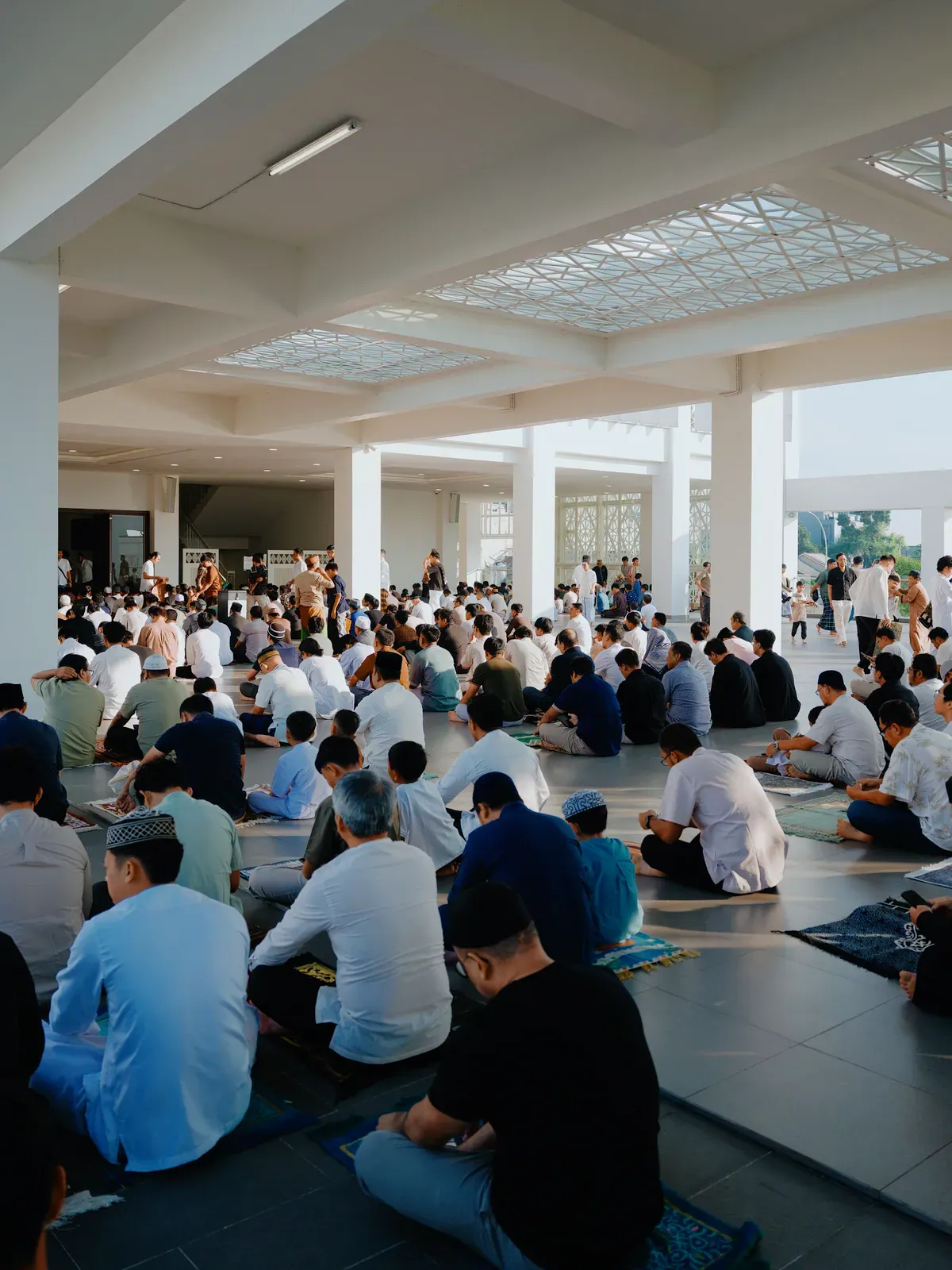
- Prayer room location and access hours relative to the ward or department you’ll actually be in: a prayer room in a different building can be a meaningful inconvenience for a patient with limited mobility after a procedure.
- Qibla direction markers in patient rooms, which some hospitals provide as standard and others don’t.
- Ramadan-specific arrangements, if treatment falls during the fasting month: some hospitals adjust meal timing and medication scheduling on request for fasting patients where medically appropriate, but this needs to be raised explicitly with the treating doctor rather than assumed.
- Modesty and gender preferences during examinations and ward care, which can usually be accommodated with advance notice but are harder to arrange on the day if raised for the first time at check-in.
None of this is guaranteed by a hospital simply advertising itself as Muslim-friendly: each point is worth confirming directly and in writing before you travel, especially for a planned, non-emergency admission where there’s time to ask.
What draws Muslim medical travellers to Bangkok
Middle Eastern and wider Muslim-world patients travel to Bangkok across a broad range of specialities rather than one narrow niche: cardiology, fertility treatment, cosmetic and reconstructive surgery, orthopaedics, and executive-style health screening packages all appear consistently in hospital groups’ own descriptions of their international and Arabic patient services. What tends to draw the trip isn’t a single procedure type but the combination of internationally accredited private hospitals, English- and Arabic-language service infrastructure, and treatment costs that, while never as low as a hospital’s marketing suggests once flights, accommodation and aftercare are added, are still frequently lower than equivalent private treatment in the patient’s home region. None of that changes the core advice here: verify the specific hospital’s clinical strength in your actual condition (see the hospital-choosing guide) independently of how well it markets itself to Muslim patients.
Cost and payment: nothing about this is faith-specific
It’s worth stating plainly: Muslim-friendly infrastructure has no bearing on how a hospital bills, what it costs, or how insurance and payment mechanics work. A hospital with an outstanding Arabic patient service can be more or less expensive than a competitor with none, and the payment mechanics (deposits, guarantees of payment, itemised estimates) work identically regardless of the patient’s faith or nationality. Anyone planning a trip on this basis should read the general mechanics in paying for treatment in Thailand alongside this guide, and should treat any cost figure quoted by an agent, hospital marketing page or this article as an indicative range only, always confirmed in writing, and dated, before committing to travel. Medical evacuation and travel insurance considerations are also identical regardless of the hospital’s faith-based services: check them separately using the same framework any other medical traveller would use.
Accompanying family and the logistics of a longer stay
Middle Eastern and Gulf patients travelling for treatment frequently bring several family members, and that changes the practical planning considerably compared with a solo traveller. Points worth working through before departure:
- Accommodation that suits a family group for the length of the stay, particularly if the patient needs a recovery stay near the hospital rather than an immediate flight home.
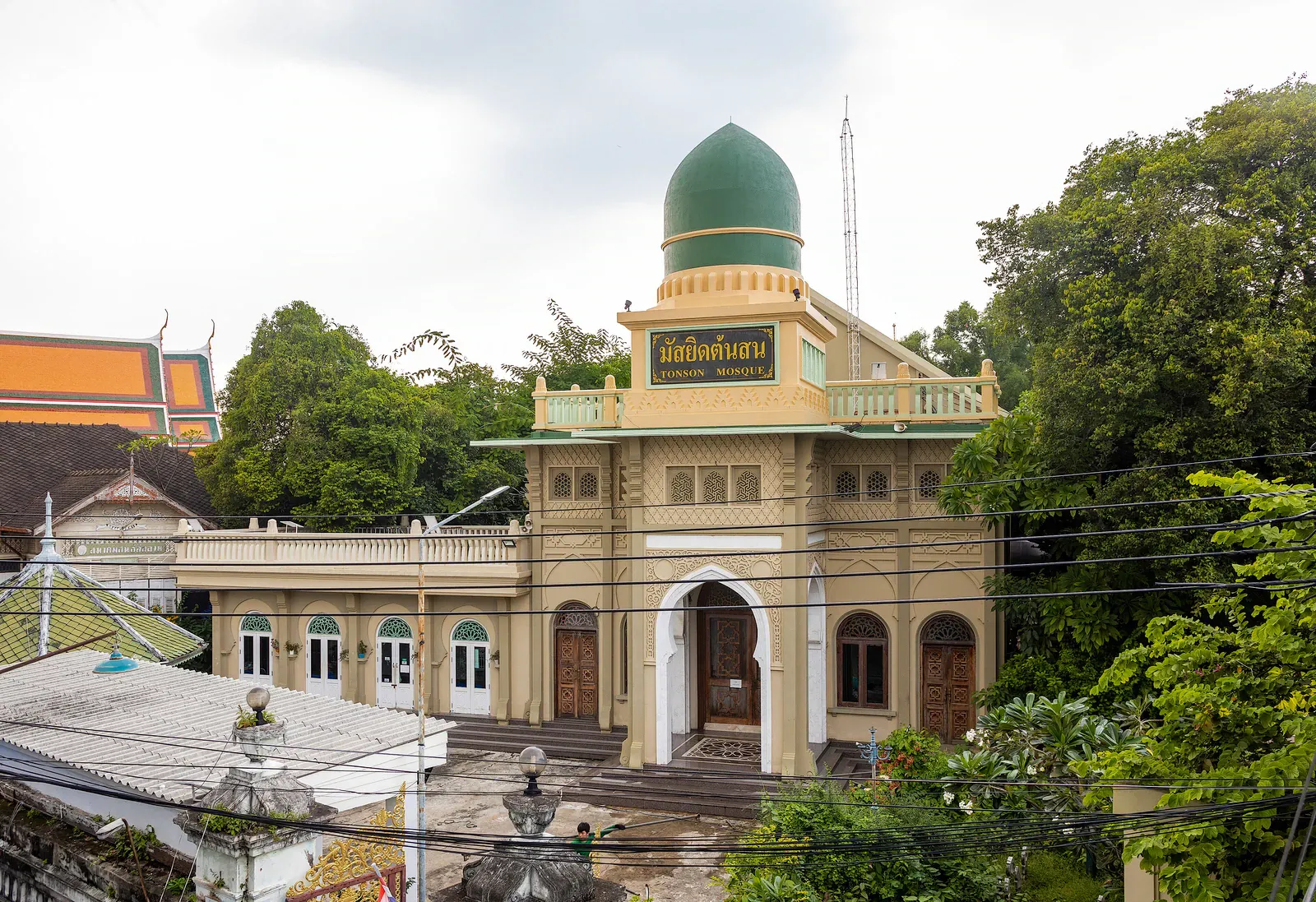
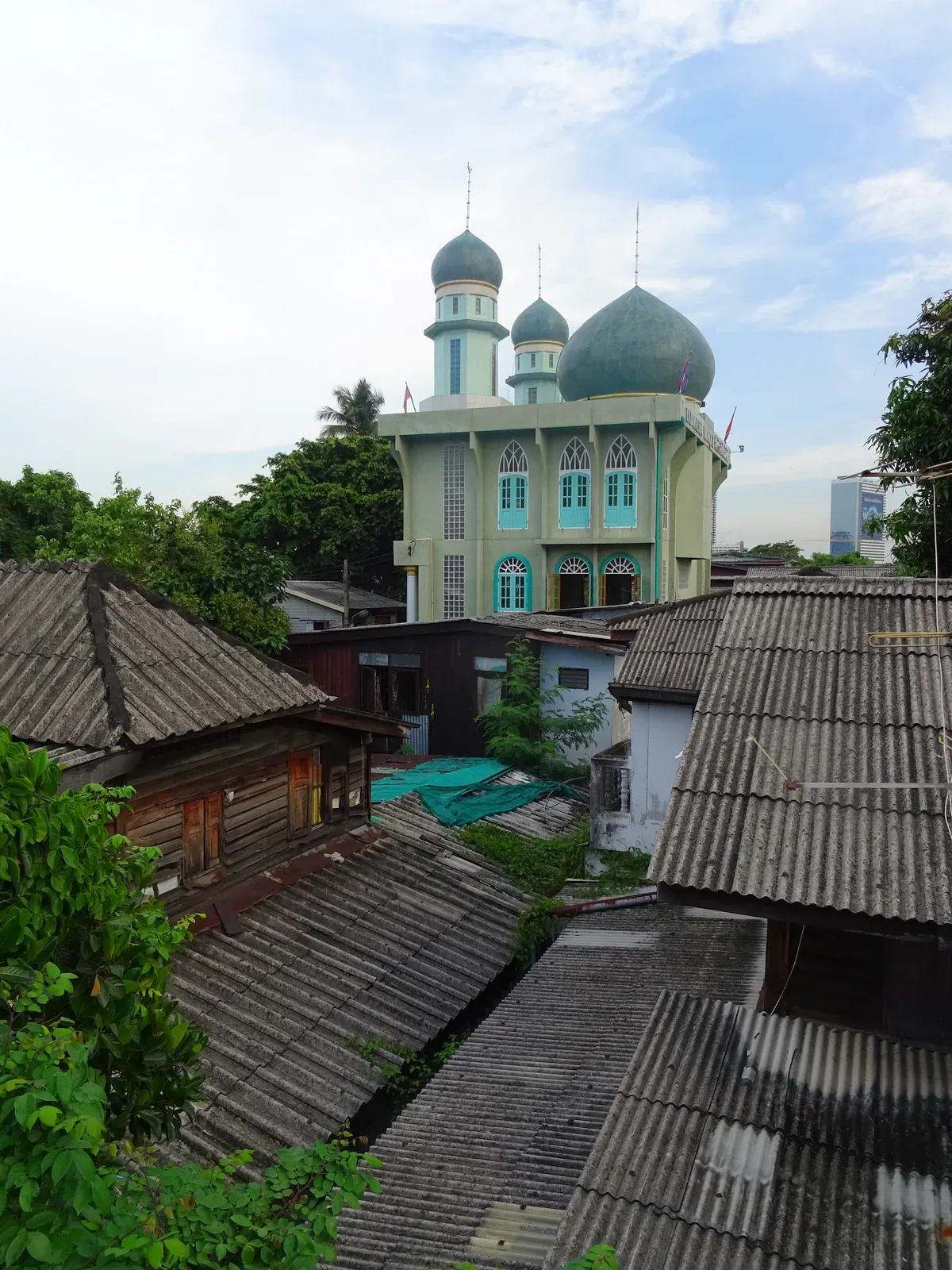
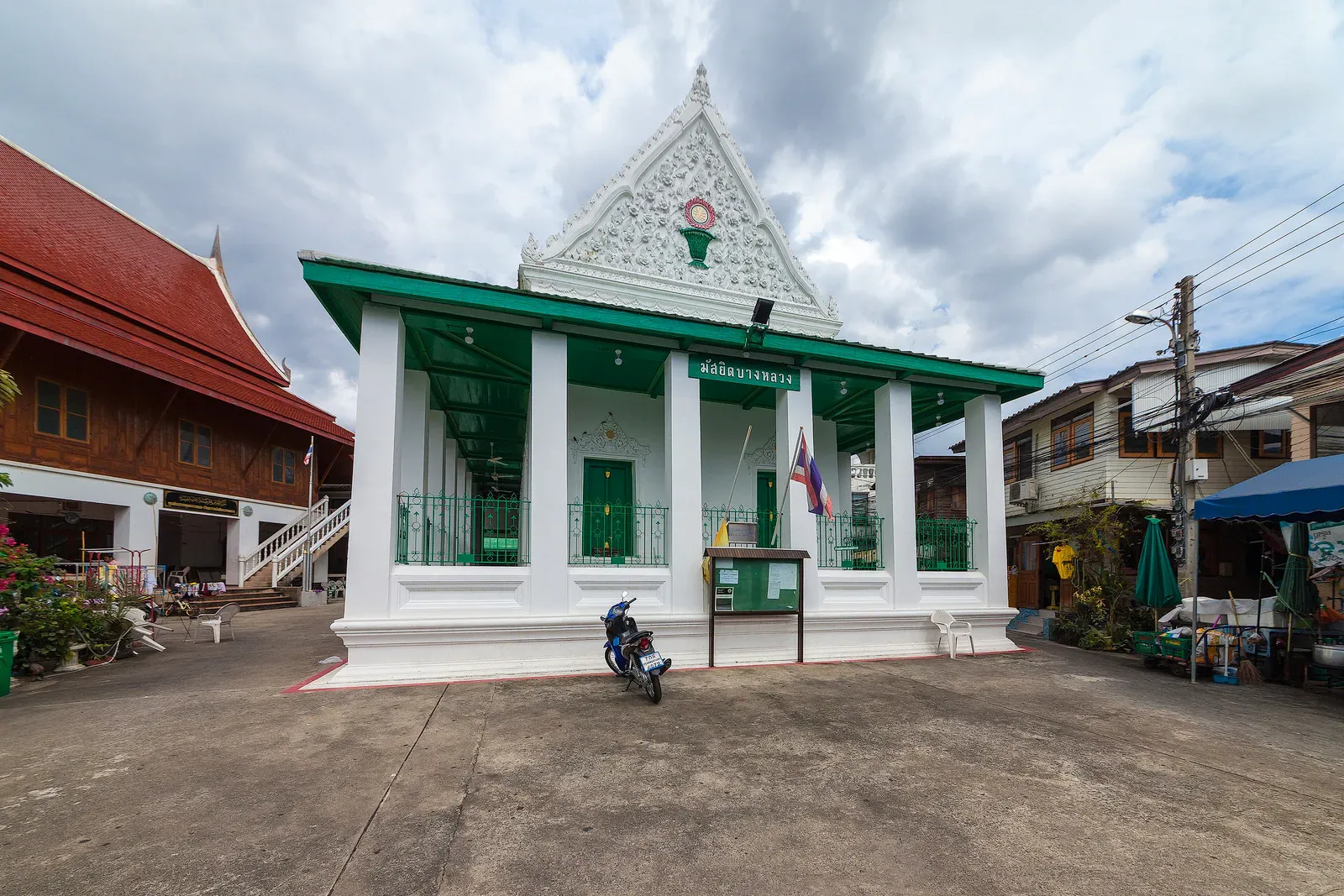
- Halal dining options beyond the hospital itself: several Bangkok neighbourhoods have long-established Muslim communities with halal restaurants and grocers independent of any hospital’s own catering, worth researching for a multi-week visit; see Bangkok mosques and halal food by area.
- Transport for a larger group, especially if the patient has limited mobility post-procedure and needs more space than a standard taxi or ride-hailing car provides.
- Visa and entry logistics for the whole accompanying group, not just the patient: worth checking well ahead of travel rather than assuming every family member’s entry requirements match the patient’s own, particularly if the patient is travelling on a treatment-specific visa route.
A practical checklist before booking
- Ask which body certified the hospital’s halal catering, and request confirmation the certification is current rather than accepting “halal-friendly” as a description alone.
- Confirm interpreter coverage for your specific specialist and department, not just the general international patient desk.
- Ask about prayer room location, hours and gender separation relative to where you’ll actually be admitted.
- Raise any Ramadan, dietary or modesty requirements explicitly and in advance, in writing if possible, rather than at check-in.
- Separately verify the hospital’s clinical accreditation and department strength for your condition: Muslim-friendly infrastructure and clinical quality are two entirely different things to check, covered in the hospital-choosing guide, and a hospital can be strong on one without matching on the other.
- If travel and cost matter to your decision, weigh Muslim-friendly infrastructure alongside the same core factors covered in paying for treatment: insurance networks and payment mechanics don’t differ by faith-based service provision, and are worth checking independently.
Beyond the hospital: the wider trip
Muslim-friendly medical travel to Bangkok usually involves more than the hospital stay itself: halal dining near the hospital, accommodation for accompanying family during a recovery stay, and prayer facilities beyond the hospital building for a multi-week visit. Thailand’s broader halal-tourism infrastructure (halal-certified restaurants, mosques, and Muslim-friendly hotels) has expanded well beyond the hospital sector specifically, and several Bangkok neighbourhoods have long-established Muslim communities and halal food options independent of any hospital’s own facilities, worth researching for the accompanying family’s comfort over what can be a multi-week stay, quite separately from the clinical side of the trip.
Common mistakes
- Trusting a homepage claim without asking for specifics. “Halal food available” and “a certified halal kitchen audited by CICOT” are very different claims: ask which one applies.
- Assuming Arabic support at the main hospital centre extends evenly to every department. Confirm coverage for your specific specialist, not just general reception.
- Treating Muslim-friendly infrastructure as a substitute for checking clinical quality. The two are unrelated; verify both, separately, using the hospital-choosing framework.
- Not raising Ramadan or modesty requirements until arrival. These are usually accommodated on request, but need to be raised with enough notice to actually arrange.
- Assuming every large Bangkok hospital has matched the investment of the best-known Arabic-service hospitals. Provision varies significantly; ask rather than assume based on general reputation.
This article is general information about Muslim-friendly medical travel infrastructure in Bangkok, not medical advice, and it does not recommend or endorse any specific hospital, caterer or certification body. Halal certification status, language services and facility details change over time and vary by hospital: confirm current provision directly with the specific hospital, and with Thailand’s halal certification authority for any certification claim, before you commit to treatment.
Common questions
Is Bangkok a genuine destination for halal medical tourism, or is this mostly marketing?
It’s a genuinely established market. Several of Bangkok’s largest private hospital groups have run dedicated Arabic-language patient services and Muslim-friendly infrastructure for close to two decades, reflecting sustained real demand from Gulf and wider Middle Eastern patients rather than a recent marketing addition.
How do I know if a hospital’s halal food claim is actually certified?
Ask the hospital which body certified its kitchen or caterer. Thailand’s halal certification runs through the Central Islamic Council of Thailand and its affiliated Halal Standard Institute of Thailand: a hospital that can name its certifying body and confirm current certification is offering a stronger, checkable claim than one that simply describes its food as halal-friendly.
Will every large Bangkok hospital have a prayer room and Arabic-speaking staff?
No. Provision varies significantly between hospitals, and even hospitals with strong general reputations don’t all match the scale of the best-known Arabic-service providers. Ask specifically about prayer room location, hours, and interpreter coverage for your actual department before booking.
Can hospital staff accommodate Ramadan fasting during treatment?
Many hospitals will adjust meal timing and, where medically appropriate, medication scheduling for a fasting patient on request, but this needs to be raised explicitly with the treating doctor in advance rather than assumed as standard practice.
Does choosing a Muslim-friendly hospital mean I don’t need to check its clinical accreditation separately?
No, the two are unrelated. Muslim-friendly infrastructure tells you nothing about a hospital’s clinical accreditation or department strength for your specific condition; check that separately using an accreditation-based framework.
Are Arabic interpreters at Bangkok hospitals trained medical interpreters?
It depends on the hospital and department. Some hospitals maintain dedicated, trained medical interpreter teams; others rely on general staff who happen to speak Arabic. Ask directly, especially for anything involving a diagnosis, consent for a procedure, or a complex treatment plan.
Is halal medical travel to Bangkok more affordable than treatment at home?
It can be, but the comparison depends heavily on the specific procedure, hospital and what’s included once flights, accommodation for an accompanying family, and aftercare are added. Treat any cost comparison, including figures in hospital marketing, as an indicative range to verify directly, not a fixed saving.
Do I need a special visa for medical treatment in Bangkok?
Thailand offers a dedicated medical treatment visa route for longer or more involved medical stays, separate from a standard tourist entry. Requirements and the length of stay it permits change over time, so confirm the current route and documentation with the Thai embassy or consulate handling your application well before booking treatment, particularly if bringing accompanying family.
Written by
Mike Brochlowski
Founder and editor, travel photographer and designer
I'm Mike Brochlowski, a travel photographer and designer, and I currently live on Koh Samui, Thailand. I built BangkokWiki to put practical, checked information about Bangkok in one place. Every page is researched from official and primary sources, and the text names them. Where a page shows a checked date, that is when its facts were last confirmed. I also run samui69.com, a non-commercial guide to Koh Samui. If you spot an error or something out of date, tell me through the contact page and I will check it and correct the page.
Read all articles
Medical stays
Planning treatment in Bangkok?
See dated price ranges for common procedures, what each package includes and how to choose a hospital or clinic. Prices are indicative only, and nothing here replaces advice from a clinician.

Places to stay
Find a hotel
Explore the other desks
More from Health
- 11 min read
 9 min read
Bangkok Hospital Network: BDMS Branches Compared
 9 min read
Weight Loss Surgery in Bangkok: Eligibility Before the Price

Newsletter
You're subscribed as