
Health
Hip and Knee Replacement in Thailand: What to Expect
Hip and knee replacement surgery in Thailand explained: indicative 2026 cost bands, what a package includes, and a realistic recovery timeline.

On this page
Hip and knee replacement is one of the most searched procedures among foreigners considering treatment in Bangkok, and for a clear reason: it’s a well-defined, high-volume operation with a predictable recovery arc, performed at scale in the city’s private orthopaedic units. This guide sets out what to actually expect: indicative 2026 cost bands set against the UK and US, how a typical hospital package is put together, the real difference between standard, computer-navigated and robotic-assisted techniques, and a realistic timeline from arrival to flying home. Every figure below is a planning range, not a quote, and should be re-verified with a hospital before you commit to anything.
Why people travel to Bangkok for this specific procedure
Joint replacement sits in a narrow category of medical travel: the diagnosis is usually already confirmed by a doctor at home, the operation itself is highly standardised worldwide, and the deciding factor is often price and waiting time rather than a search for a treatment unavailable elsewhere. In the UK, the National Health Service publishes reference waiting times that commonly run well over a year from referral to operation in many areas, and a self-pay private hip or knee replacement typically costs several times more than the same operation booked directly in Thailand. In the US, list prices for a total knee replacement often run into the tens of thousands of dollars before insurance. Thailand’s private hospital sector has built an entire logistics layer (international patient coordinators, package pricing, airport transfers, dedicated recovery floors) around exactly this gap between what patients are quoted at home and what the same implant and surgical team cost in Bangkok.

That said, joint replacement abroad is not a small decision, and it isn’t right for everyone. It requires a period of genuine immobility in an unfamiliar country, a longer stay than most tourist visits, and a recovery period where complications (infection, blood clots, an implant that doesn’t sit quite right) are harder to manage at a distance from your usual doctor. The rest of this guide assumes you’ve already had the operation recommended by a doctor and are weighing where to have it done, not trying to decide whether you need it in the first place: that’s a clinical decision for you and a specialist, not something a guide like this can make for you.
Indicative costs: Thailand against the UK and US
Thai private hospitals don’t publish a single comparable price list (the final figure depends on the implant brand, the surgical approach, whether one or both joints are done, room class and length of stay), so treat the ranges below as a 2026 planning guide only, gathered from publicly available package information, not a quote from any specific hospital.
| Procedure | Thailand (indicative, 2026) | UK private self-pay (indicative) | US list price (indicative) |
|---|---|---|---|
| Total knee replacement, one knee | ฿370,000-฿580,000 (~$10,500-$16,500) | roughly £11,000-£17,000 | roughly $35,000-$70,000 |
| Partial knee replacement | ฿220,000-฿270,000 (~$6,300-$7,700) | not commonly separated in UK self-pay pricing | varies widely |
| Robotic-assisted knee replacement | ฿730,000-฿1,150,000 (~$20,900-$32,800) | a smaller subset of UK private providers offer this, generally at a premium over standard | typically a premium over standard US pricing |
| Total hip replacement, one hip | ฿245,000-฿440,000 (~$7,000-$12,600) | roughly £11,000-£17,000 | generally comparable to or above the equivalent knee procedure |
A few things move a quote within these bands: the implant manufacturer and design (a standard cruciate-retaining knee versus a rotating-platform or custom-cut design costs differently), whether the surgeon uses computer navigation or robotic assistance, your room category during the inpatient stay, and how many nights are bundled into the package. On the UK side, the National Health Service remains free at the point of use, but the trade-off is waiting time rather than cost: this comparison only applies if you’d otherwise pay privately or travel for faster access. Ask any hospital for a written, itemised quote after a proper case review rather than relying on a headline number from any website, including this one.
What a package usually includes, and what’s often billed separately
Bangkok’s international hospitals typically sell joint replacement as a bundled package rather than itemising every line, which makes comparison easier in theory but requires reading the inclusions list carefully. A typical package commonly bundles:
- The surgeon’s fee and the anaesthesiologist’s fee
- The implant itself
- A set number of inpatient nights: often four for a single knee or hip, five if both sides are done in the same admission
- Standard pre-operative tests (bloodwork, weight-bearing X-rays or an MRI, a cardiac clearance check)
- In-hospital physiotherapy during the admission
- Airport-to-hospital and hospital-to-hotel transfers
What’s commonly billed separately, or only included at a higher package tier, includes: any complication requiring extended care beyond the standard stay, a private-duty nurse after discharge, outpatient physiotherapy sessions once you’ve left the hospital, a companion’s own accommodation and meals, and post-discharge recovery accommodation, a distinct line item covered in full in the guide to recovery stays after surgery. Ask specifically what happens, cost-wise, if your recovery doesn’t go exactly to plan; a package quote is built around an uncomplicated case, and it’s reasonable to ask what an extended stay or a return to theatre would cost before you sign anything.
Standard, computer-navigated or robotic-assisted: is the extra cost worth it
Three broad techniques are marketed in Bangkok for knee replacement specifically, and the terminology gets used loosely enough that it’s worth understanding the actual distinction rather than assuming “robotic” is simply the premium, better option in every case.

Standard (manual, jig-based) technique is the long-established approach: the surgeon uses mechanical cutting guides positioned from anatomical landmarks. It has decades of outcome data behind it and remains the majority approach worldwide, including in Thailand.
Computer-navigated surgery adds a real-time tracking system that helps the surgeon align the cuts and implant more precisely against the patient’s own anatomy, without a robotic arm doing the cutting itself. It sits at a modest premium over standard technique.
Robotic-assisted surgery uses a robotic arm, guided by a pre-operative CT scan, to execute the plan the surgeon sets, with the aim of tighter precision on implant positioning and soft-tissue balance. It commands the largest premium of the three, and is offered at a smaller number of Bangkok’s more specialised orthopaedic units.
The honest answer on whether the premium is worth it: the evidence for meaningfully better long-term outcomes from robotic assistance over a well-executed standard technique, in the hands of an experienced surgeon, is still being built and isn’t settled either way in the wider orthopaedic literature: this is a genuine, ongoing clinical debate, not a marketing claim this guide can resolve for you. What robotic and navigated techniques more reliably offer is tighter, more consistent alignment data at the time of surgery. Whether that translates into a materially better outcome for your specific joint, your bone quality and your activity goals is a question for the orthopaedic surgeon reviewing your case, not a default assumption that more technology automatically means a better result. It’s a reasonable question to raise directly with a surgeon during a consultation, alongside their own personal case volume with whichever technique they recommend.
A realistic timeline: from arrival to flying home
Most single-joint packages are built around a stay of roughly ten to fourteen days in Thailand, structured something like this:
| Day | What typically happens |
|---|---|
| 1-2 | Arrival, pre-operative assessment: weight-bearing X-rays, bloodwork, anaesthesia consultation, surgeon consultation |
| 2-3 | Surgery |
| Day of surgery to day 4-5 | Inpatient recovery, in-hospital physiotherapy starting the day after surgery in most protocols |
| 5-10 | Discharge from hospital to a hotel or dedicated recovery accommodation, continued outpatient physiotherapy, wound checks |
| 10-14 | Final follow-up consultation, clearance to travel, departure |
A double procedure (both knees, or both hips, in one admission) generally adds a night or two to the inpatient stay and pushes the whole window closer to two weeks. Before booking a flight home, read the guide to flying after surgery: orthopaedic surgery carries its own blood-clot risk considerations around long-haul flights that are separate from, and generally longer than, the minimum wound-healing window, and your surgeon’s own fit-to-fly clearance should be the final word, not a generic rule of thumb from any website.

Recovery milestones after you leave hospital
Recovery from joint replacement follows a broadly predictable arc, though individual pace varies with age, fitness before surgery and whether one or both joints were replaced. As general planning ranges rather than a guarantee for any individual case:
- First 24-72 hours after discharge are the period where a companion or a professional carer is most useful: getting to the bathroom safely, managing pain medication on schedule, and recognising early warning signs (unusual swelling, fever, calf pain) that should prompt an immediate call back to the hospital, not a wait-and-see approach.
- Weeks two to six typically see steady improvement in walking distance and a reduction in walking-aid dependence, alongside ongoing outpatient physiotherapy. Return to sedentary desk work is commonly reported in this four-to-six-week window for patients who are managing well.
- Weeks eight to twelve are the more realistic window for returning to physically demanding work involving standing, lifting or kneeling: considerably later than the desk-work milestone, and a distinction worth planning around if your job or travel plans depend on it.
- Months three to six generally see continued strength and range-of-motion gains, with many patients reporting a genuinely settled joint by around six months, and full return to higher-impact activity sometimes extending toward the year mark.
None of these figures replace your own surgeon’s assessment of your specific case, and a complication at any stage (infection, unexpected stiffness, a blood clot) resets the timeline and needs direct medical attention in Thailand or at home, not a generic recovery script.
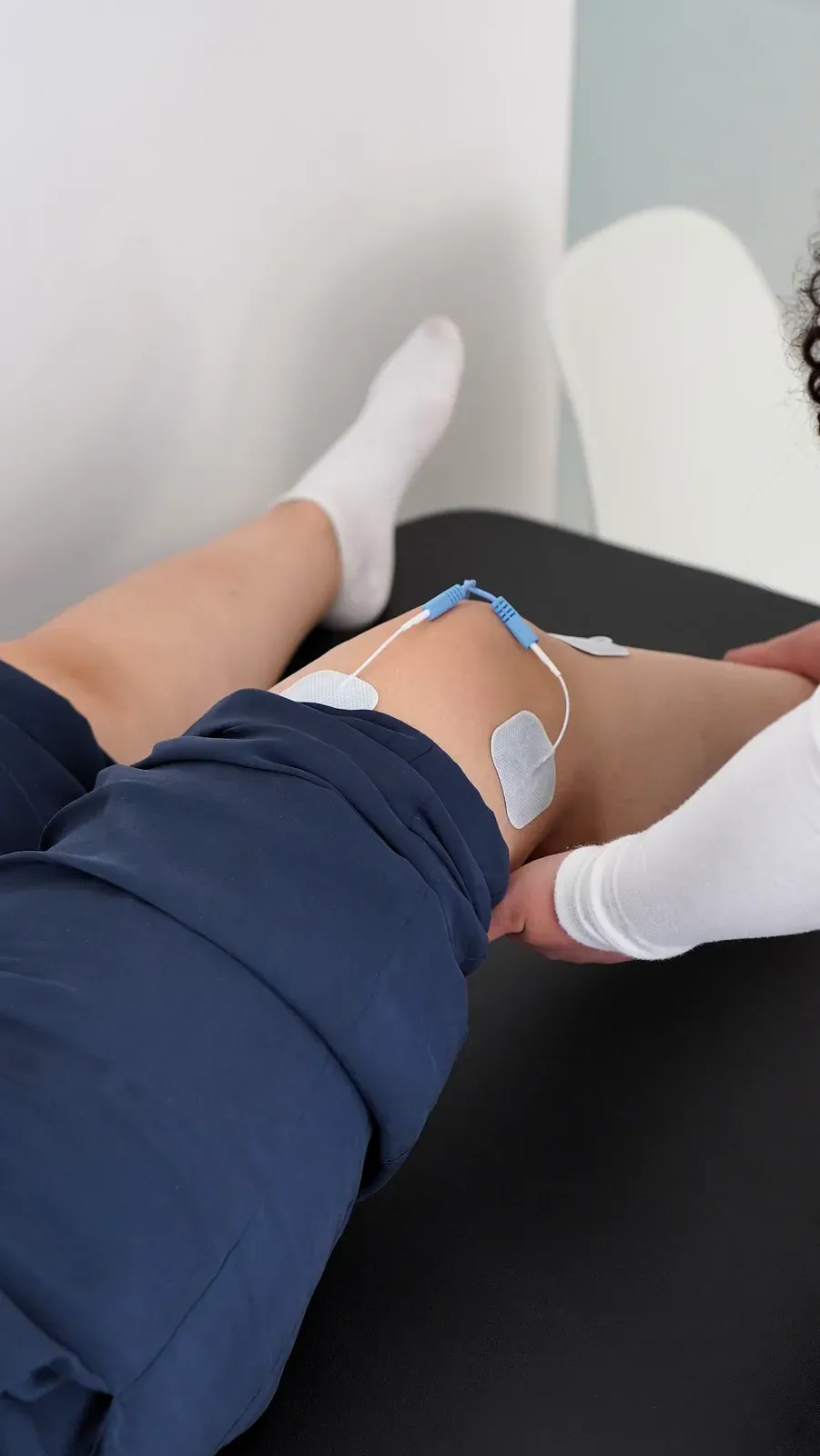
Choosing the hospital and the surgeon, not just the price
A cost comparison is only half the decision. As covered in full in the guide to choosing a Bangkok hospital, accreditation status and hospital reputation are a starting filter, not the final answer: the department’s specific depth in joint replacement and the named surgeon’s own training and case volume in your exact procedure matter more than the hospital’s general brand. The distinction between JCI accreditation, Thailand’s own Thai HA system and disease-specific certification is explained in detail in the comparison of JCI, private and public hospitals: for an elective, planned procedure like a joint replacement, it’s a reasonable and normal step to ask directly about a surgeon’s specific case count with your chosen technique before committing, and to seek a second opinion if anything about the recommended treatment plan feels unclear.
Paying for it: insurance, deposits and cash
Elective joint replacement is frequently excluded or only partially covered under standard travel or expat health insurance, and coverage varies enormously by policy and by whether the condition is treated as pre-existing. Thai private hospitals generally expect a deposit calculated from the estimated cost of the admission before proceeding with a planned, non-emergency operation, unless your insurer has a direct-billing relationship with that specific hospital and issues a guarantee-of-payment letter in advance. The mechanics of cash-upfront payment versus insurer-arranged guarantee of payment, and what questions to ask your insurer before you travel, are covered in the insurance versus cash guide. If your stay in Thailand for a planned procedure and its recovery will run longer than a standard tourist entry allows, it’s also worth reading about the medical treatment visa before you book flights.
This is general information about how joint replacement surgery is typically packaged and priced in Thailand, not medical advice, and it isn’t a recommendation of any specific hospital, surgeon or technique. Whether you’re a suitable candidate for surgery, which technique fits your case, and the actual price you’ll be quoted should always be confirmed directly with an orthopaedic surgeon and the treating hospital before you travel.
Common questions
Is robotic-assisted knee replacement worth the extra cost in Bangkok?
It commands a real premium and offers more precise, data-driven alignment at the time of surgery, but whether that translates into a meaningfully better outcome for your specific case is still debated in the wider orthopaedic literature and depends heavily on the surgeon’s own experience with the technique. Ask the surgeon directly about their case volume with whichever method they recommend.
How long do I need to stay in Thailand after hip or knee replacement?
Most single-joint packages are built around ten to fourteen days from arrival to the final clearance-to-travel consultation, with a double procedure typically adding a night or two. Your own surgeon’s clearance, not a generic timeline, determines when you’re actually fit to fly.
Does travel or expat insurance cover joint replacement in Thailand?
Often only partially, or not at all, particularly if the condition could be classed as pre-existing: coverage varies enormously by policy. Confirm directly with your insurer before booking, and read the guide on paying for treatment in Thailand for how guarantee-of-payment and cash-upfront arrangements actually work.
Can I have both knees or both hips replaced in the same trip?
Bilateral procedures in a single admission are offered by some Bangkok hospitals, generally with an extended inpatient stay and a longer overall recovery window before flying is advisable. This is a decision for the treating surgeon based on your overall fitness for a longer single procedure, not a default option for every patient.
Will I need physiotherapy after I leave Thailand?
Very likely, and it’s worth arranging before you travel home. In-hospital physiotherapy during the admission is standard, but the fuller recovery (regaining strength, range of motion and confidence walking) typically continues for weeks to months after discharge, ideally with a physiotherapist near where you live who can pick up from the hospital’s own notes.
How do I know if a Bangkok hospital’s orthopaedic department is actually strong, not just its marketing?
Ask about the department’s case volume specifically for your procedure, the named surgeon’s training and sub-specialty, and whether the hospital holds relevant accreditation: covered in full in the hospital-choosing and accreditation guides linked above. A hospital’s general reputation and lobby don’t tell you much about one specific department’s depth.
Written by
Mike Brochlowski
Founder and editor, travel photographer and designer
I'm Mike Brochlowski, a travel photographer and designer, and I currently live on Koh Samui, Thailand. I built BangkokWiki to put practical, checked information about Bangkok in one place. Every page is researched from official and primary sources, and the text names them. Where a page shows a checked date, that is when its facts were last confirmed. I also run samui69.com, a non-commercial guide to Koh Samui. If you spot an error or something out of date, tell me through the contact page and I will check it and correct the page.
Read all articles
Medical stays
Planning treatment in Bangkok?
See dated price ranges for common procedures, what each package includes and how to choose a hospital or clinic. Prices are indicative only, and nothing here replaces advice from a clinician.

Places to stay
Find a hotel
Explore the other desks
More from Health
- 11 min read
 9 min read
Bangkok Hospital Network: BDMS Branches Compared
 9 min read
Weight Loss Surgery in Bangkok: Eligibility Before the Price

Newsletter
You're subscribed as